Annual License Price Gap Between Residents and Nonresidents
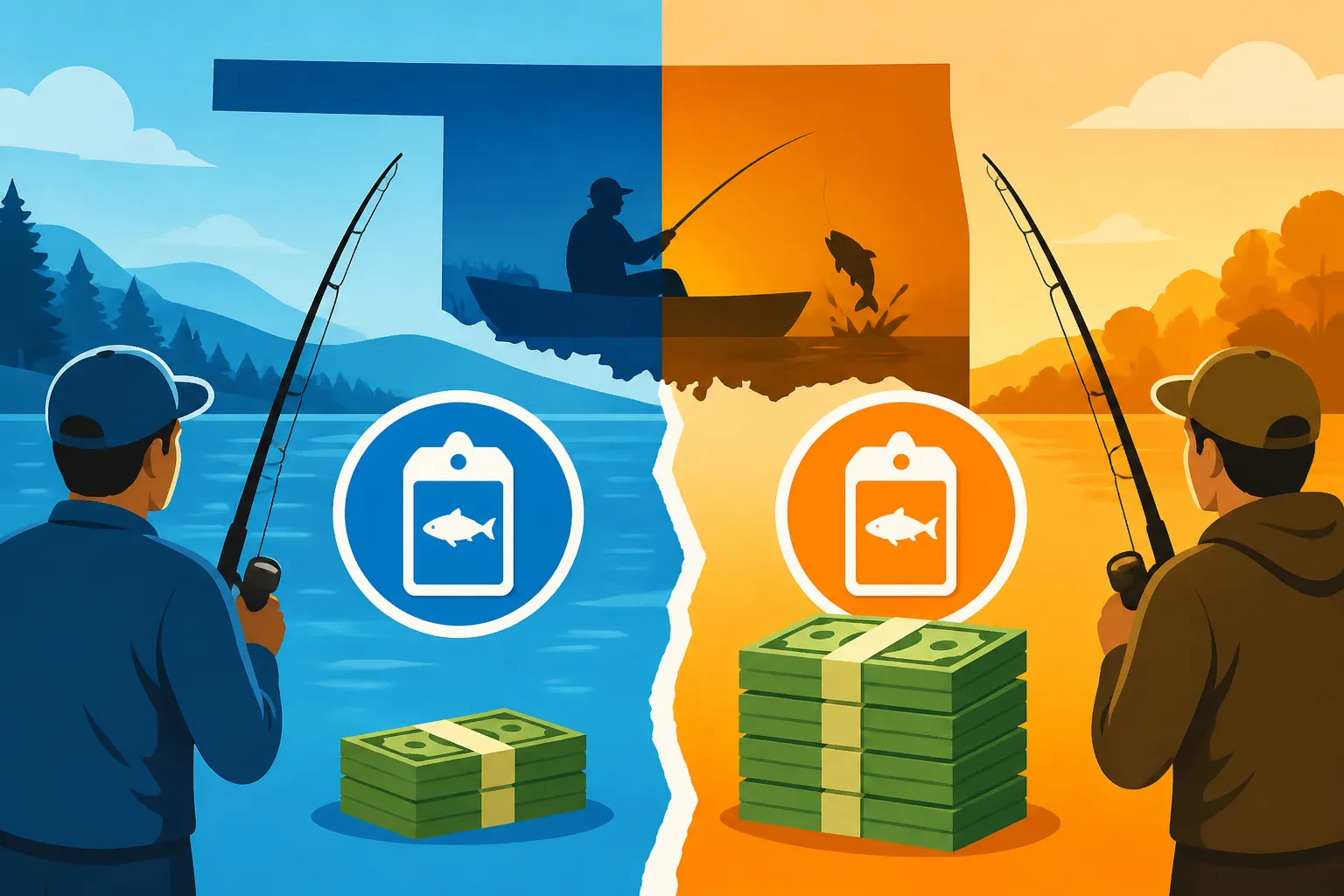
It can be incredibly frustrating to look at fishing license prices in Oklahoma and see a significant difference depending on whether you call the Sooner State home or you're visiting from out of town. You just want to enjoy a peaceful day on the water, but the sticker shock for nonresidents can be a real deterrent, leaving many wondering why there's such a noticeable price gap. This guide aims to demystify those costs, explaining the core reasons behind the annual license price disparity between Oklahoma residents and nonresidents, helping you plan your fishing adventures with clarity.
Understanding the Foundation of License Pricing in Oklahoma
The pricing structure for fishing licenses in Oklahoma isn't arbitrary; it's rooted in a system designed to fund wildlife conservation and ensure sustainable fishing opportunities for everyone. However, who pays what, and why, is a key piece of the puzzle.
Resident License Costs: What Your Dollars Cover
For those lucky enough to call Oklahoma home, the annual fishing license is quite a reasonable investment. Currently, a standard annual resident fishing license typically runs around $31. This single purchase opens up a whole year of angling opportunities, from chasing lunker largemouth bass to filling a stringer with crappie, or even battling a big blue catfish.
Your $31 isn't just a fee; it's a contribution directly funding the Oklahoma Department of Wildlife Conservation (ODWC). These funds are crucial for things like fish stocking programs in our lakes and rivers, habitat restoration projects, scientific research that helps manage fish populations, and the enforcement efforts of our dedicated game wardens. It means that when you're out enjoying a day on Lake Eufaula or Grand Lake O' the Cherokees, your license fee is actively supporting the very ecosystems you're enjoying. We even have options like the annual combination hunting/fishing license for those who enjoy both pursuits, offering even more bang for your buck. You can learn more about specific fees in our guide on Oklahoma Resident Annual Fishing License Cost.
Nonresident License Costs: A Steeper Price Tag
Now, if you're visiting from a neighboring state like Texas, Arkansas, or Kansas, you'll quickly notice that the price tag for an annual fishing license is significantly higher. A standard annual nonresident fishing license is currently about $81. This can certainly feel like a considerable jump, especially if you only plan a couple of trips a year. Many anglers from out of state express frustration, feeling like they're being penalized simply for not living within Oklahoma's borders.
While it might sting a bit to pay more, there's a practical and widely accepted reason for this difference, one that most states across the U.S. employ. Nonresidents typically don't contribute to Oklahoma's fish and wildlife resources through state income taxes, property taxes, or other state-level revenues in the same way residents do. Therefore, the higher license fee is designed to help nonresidents contribute their fair share to the management and conservation efforts of Oklahoma's natural resources. It's a way to ensure that visitors are also helping to sustain the fisheries they enjoy, directly compensating for their use of resources funded primarily by resident taxpayers. Our guide on Nonresident Annual Fishing License Cost in Oklahoma delves deeper into these figures.
The Core Disparity: Why Nonresidents Pay More
The financial gap between resident and nonresident fishing licenses isn't unique to Oklahoma; it's a standard practice across virtually every state wildlife agency. This disparity is designed to address fundamental differences in how residents and nonresidents contribute to the state's infrastructure and conservation efforts.
Funding Conservation and Management
At its heart, the higher fee for nonresidents is about equitable funding for conservation. The Oklahoma Department of Wildlife Conservation relies heavily on license sales, along with federal excise taxes on fishing equipment (through the Dingell-Johnson Act), to operate. These funds support everything from hatcheries that stock our lakes to biologists who monitor fish health, and game wardens who ensure fair play and adherence to regulations.
Residents of Oklahoma already contribute to the state's general fund through various taxes. While these tax dollars aren't always directly earmarked for wildlife, they form the broader financial bedrock of the state, which includes departments like the ODWC. Nonresidents, on the other hand, don't have that ongoing tax contribution. So, when a nonresident buys an annual fishing license for around $81, that additional cost helps bridge the gap, ensuring that everyone who uses Oklahoma's natural resources contributes to their long-term health and availability. It’s not about keeping people out; it’s about making sure the system is sustainable for future generations of anglers. This is a core point when discussing Why a Nonresident License Costs More Than a Resident License.
Maintaining Fair Access and Resource Allocation
Another crucial aspect of the price difference is resource allocation and maintaining fair access. Oklahoma's lakes and rivers are cherished resources, and the ODWC is tasked with managing them for all. If nonresident licenses were priced identically to resident licenses, there could be a significant increase in out-of-state angling pressure without a corresponding increase in local tax contributions.
This could strain fish populations, impact local infrastructure around popular fishing spots, and potentially detract from the experience for residents who contribute year-round to these resources. By having a tiered pricing system, the state can better manage the flow of anglers and ensure that the financial input from all users is proportionate to their impact on, and enjoyment of, the state's fishing opportunities. It creates a balanced approach where both residents and visitors can enjoy the fantastic fishing Oklahoma has to offer, knowing that their contributions are helping to preserve it. You can see a direct comparison in our article Resident vs Nonresident Fishing License Prices in Oklahoma.
Breaking Down the Annual Investment
Deciding whether to buy an annual license or opt for shorter-term permits can be a tricky calculation, especially for nonresidents. It really boils down to how often you plan to wet a line in Oklahoma.
Comparing Annual vs. Short-Term Options
For many, the idea of paying $81 for an annual nonresident license feels like a big commitment. But what if you only plan to visit Oklahoma for a few fishing trips? That's where the short-term licenses come into play, offering flexibility for those who aren't here year-round.
Let's look at the costs for different license durations:
| License Type | Cost (Approx.) | Duration | Notes |
|---|---|---|---|
| Resident Annual | $31 | 1 year | Best value for Oklahoma residents. |
| Nonresident Annual | $81 | 1 year | Good value for frequent nonresident visitors. |
| Resident 1-Day | $15 | 24 hours | Great for a single day trip, less frequent resident anglers. |
| Nonresident 1-Day | $15 | 24 hours | Cost-effective for a single day trip for nonresidents. |
| Nonresident 6-Day | $31 | 6 consecutive days | Excellent for a week-long vacation. |
As you can see, the daily nonresident license is actually the same price as the daily resident license, which is a nice touch! However, the real question for nonresidents is often: "Is the $81 Nonresident Annual License Worth It Over Multiple 1-Day Trips?" If you only plan one trip, a 1-day license at $15 is clearly the most economical choice. If you're coming for two separate weekend trips, two 1-day licenses would be $30. If you plan three trips, that's $45. Once you hit six individual days of fishing over the year, whether as single days or across multiple short trips, the annual $81 nonresident license starts to become a better value. For a family vacation spanning a week, the 6-day nonresident license at $31 is a fantastic deal, much cheaper than buying individual 1-day licenses for each day.
Remember, these are base costs, and some specialized licenses or combination licenses (like those for trout or paddlefish) might add a few dollars to the total. Also, keep an eye on special categories. For instance, Oklahoma doesn't offer an annual senior discount for residents; instead, there's a highly affordable Senior Lifetime Fishing License in Oklahoma for those 65 and older who meet residency requirements. However, this isn't an option for nonresidents.
Planning Your Oklahoma Fishing Trip with License Costs in Mind
Armed with this knowledge, you can make an informed decision that best suits your fishing plans. Before you head out, always double-check the latest fees and regulations on the Oklahoma Department of Wildlife Conservation (ODWC) website. Prices can occasionally change, and specific rules apply to certain bodies of water or species.
- For the Occasional Visitor: If you're only making one or two trips a year to fish Lake Texoma with your buddies or enjoy a quiet day on Lake Murray, then purchasing a Nonresident 1-Day Fishing License Price in Oklahoma or a 6-day permit for a longer stay will likely be your most cost-effective approach.
- For the Frequent Angler: If you find yourself drawn back to Oklahoma's waters multiple times a year, perhaps you live just across the border or have family in the state, then investing in the annual nonresident license makes a lot of sense. The convenience of having it for an entire year, without needing to buy a new one for each trip, can be well worth the upfront cost.
No matter your situation, understanding these price differences helps eliminate surprises and ensures you're fishing legally. You can find out more details on how to get started in our comprehensive guide, Oklahoma Fishing License Requirements in Oklahoma, or by checking out how to go about How to Buy an Oklahoma Fishing License Online. Planning ahead means more time with a line in the water and less time worrying about paperwork.
Disclaimer
Please note that fishing regulations and license fees are subject to change by the Oklahoma Department of Wildlife Conservation. Always consult the official ODWC website or their current regulations guide for the most up-to-date and accurate information before planning your fishing trip. This guide is for informational purposes only and does not constitute legal advice.