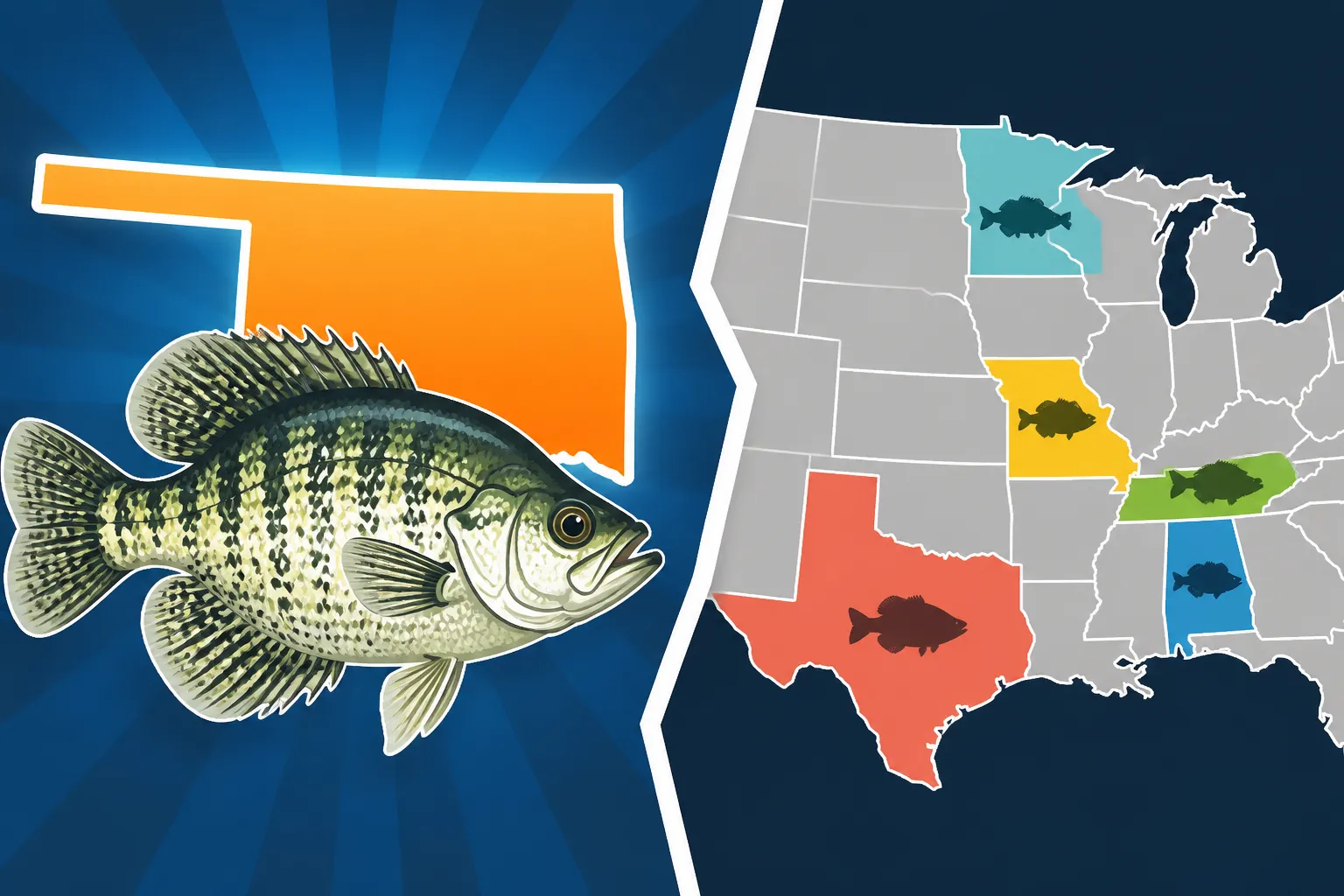
How the Crappie Limit Compares to Other States
It can be incredibly confusing to keep track of fishing regulations, especially when you’re talking with buddies from out of state or planning a trip to a new reservoir. You might hear about someone catching a huge stringer of crappie and wonder, "Wait, is that even legal in Oklahoma?" Well, you’re not alone in that thought! This guide is here to shed some light on how Oklahoma’s crappie limits stack up against those in our neighboring states and other well-known crappie fishing destinations, helping you understand the nuances of these important rules.
Oklahoma's Crappie Limits: A Detailed Overview
Before we start comparing, let's firmly establish what Oklahoma's crappie regulations entail. It’s essential to know these rules inside and out because, as any seasoned angler knows, a game warden isn’t going to accept "I didn't know" as an excuse. Oklahoma's crappie management aims to balance angler opportunity with sustainable fish populations, leading to both statewide rules and specific lake-by-lake variations.
Statewide Daily Bag Limits
For most of the state's incredible fishing waters, the Oklahoma Department of Wildlife Conservation (ODWC) sets a generous daily bag limit for crappie. This applies to both black and white crappie, which are typically counted together in your daily creel. This means you can keep a combined total of crappie from any given body of water. Understanding this baseline is crucial for any angler. The statewide daily bag limit is quite consistent across many of Oklahoma's vast lakes and numerous smaller ponds, offering ample opportunity for a good day out on the water.
You might be wondering, "What exactly is the magic number?" Well, for the vast majority of Oklahoma’s waters, the statewide crappie bag limit is 37 fish per person, per day. This number is often a pleasant surprise for anglers visiting from states with stricter limits. There’s no minimum size limit statewide either, meaning if a crappie bites, and you want to keep it within your bag limit, you generally can, unless you’re on one of the special regulation lakes. This flexibility allows anglers to enjoy catching crappie of all sizes, from pan-sized fryers to larger slabs. For a deeper dive, check out our guide on the Oklahoma Statewide Crappie Bag Limit.
Special Lake Regulations and Size Limits
Now, here's where things get a little trickier, and it’s where many anglers can accidentally run afoul of the rules if they're not careful. While the 37-fish bag limit is broad, several prominent Oklahoma lakes have much stricter, localized regulations. These aren't arbitrary rules; they're put in place by biologists who have studied the specific crappie populations in those lakes and determined that different management strategies are needed to foster healthy, robust fisheries and even trophy potential. These special regulations usually include a reduced daily bag limit and often a minimum length limit, meaning you can't keep crappie below a certain size.
For instance, lakes like Arbuckle, Tenkiller, Hudson, Fort Gibson, and Grand Lake O' the Cherokees, among others, feature these more stringent rules. At many of these lakes, you'll find a 10-inch minimum size limit, and the daily bag limit can drop significantly, sometimes to as low as 15 crappie per angler. Lake Texoma, being an interstate lake shared with Texas, has its own unique set of crappie fishing rules that are important to understand. These specific rules are designed to protect smaller crappie, allowing them to grow larger and contribute to a more sustainable fishery. Ignoring these local rules can lead to fines and a ruined fishing trip, so always double-check the regulations for your specific destination. You can find more information in our detailed post about Stricter Crappie Limits at Six Oklahoma Lakes and another on Crappie Fishing Rules on Oklahoma's Ten-Inch Lakes.
Comparing Oklahoma to Neighboring States
Oklahoma is right in the heart of the "Crappie Belt," so it's only natural that we look to our neighbors to see how their rules stack up. Fishing regulations are often influenced by shared waterways, angler pressure, and differing conservation philosophies.
Texas Crappie Regulations
When you cross the Red River into Texas, particularly if you're fishing the Texas side of Lake Texoma, you'll immediately notice some differences. Texas typically has a statewide daily bag limit of 25 crappie. That's a noticeable drop from Oklahoma's general 37-fish limit. Furthermore, Texas almost universally implements a 10-inch minimum size limit for crappie, which is a stricter default than Oklahoma's statewide "no minimum" rule. While the Oklahoma side of Lake Texoma has a 10-inch minimum and a 25-fish bag, matching Texas, it's an exception to Oklahoma's broader rules, demonstrating the unique management challenges of shared waters. This difference can be a real eye-opener for Oklahoma anglers heading south, or for Texas Anglers Fishing in Oklahoma Waters.
The reason for these differences often boils down to population density and fishing pressure. Texas has a larger population base, meaning potentially more anglers hitting the water, which can put greater stress on crappie populations. Therefore, stricter limits are often a proactive measure to ensure the fishery remains robust.
Arkansas Crappie Regulations
To our east, Arkansas also presents a different picture. Arkansas is renowned for its crappie fishing, particularly on its many bayous and flood control lakes. Their statewide daily bag limit for crappie is generally 20 fish, which is lower than Oklahoma's standard. They also have a general 10-inch minimum length limit. However, like Oklahoma, Arkansas has numerous exceptions and special regulations for specific lakes and river systems. For example, some lakes might have a 12-inch minimum or a higher bag limit in certain seasons, but the default is usually 20 fish at 10 inches.
This variation highlights a common theme: fishery management is highly localized. What works for a large reservoir in central Oklahoma might not be suitable for a riverine lake system in Arkansas. For anglers coming from Arkansas Anglers Fishing in Oklahoma Waters, the 37-fish bag limit on many of Oklahoma's lakes can feel like hitting the jackpot.
Missouri and Kansas Crappie Regulations
Heading north, both Missouri and Kansas offer distinct crappie fishing experiences and regulations. Missouri, known for its vast impoundments like Lake of the Ozarks and Truman Lake, generally has a statewide daily bag limit of 15 crappie. That's a significant difference from Oklahoma’s 37-fish limit. Many Missouri lakes also implement a 9-inch minimum length limit, though specific lakes might have higher or lower numbers depending on their management plans.
Kansas typically follows a similar pattern to Missouri, with many of its major reservoirs having a daily bag limit of 20 crappie and a 10-inch minimum length limit. These states, with their often colder climates and different aquatic ecosystems, may have crappie populations that grow and reproduce at different rates, necessitating different limits. It's a prime example of how local conditions dictate local rules. For those who frequently fish between states, understanding Kansas Reciprocity for Oklahoma Fishing Licenses and the specific limits in each state is crucial. Missouri Anglers Fishing in Oklahoma will also find a good comparison here.
How Oklahoma Stacks Up Against Other Top Crappie States
Beyond our immediate neighbors, it's insightful to look at states celebrated nationally for their crappie fishing to get a broader perspective on Oklahoma's position. Are we in line with the crappie powerhouses, or are we outliers?
Mississippi and Tennessee Crappie Fishing Laws
States like Mississippi and Tennessee are often lauded as crappie fishing paradises. These states have incredibly fertile waters, long growing seasons, and deep-rooted crappie fishing cultures. Mississippi typically has a statewide daily bag limit of 25 or 30 crappie, with a 9-inch minimum length limit on many of its major reservoirs. Similarly, Tennessee often has a 15-fish daily limit for crappie with a 10-inch minimum on many of its lakes, although some specific waterways might have higher limits or no size limits in certain areas.
Comparing these, Oklahoma's statewide 37-fish bag limit with no minimum size on most waters stands out as quite liberal. This isn't to say one is "better" than the other, but it reflects the different approaches taken by various state wildlife agencies. Oklahoma's vast, productive reservoirs can often sustain higher harvest rates without compromising the long-term health of the fishery.
General Trends in Crappie Management Across the U.S.
Across the United States, crappie management generally revolves around two main factors: daily bag limits and minimum size limits. While exact numbers vary wildly, the overarching goal is always the same: to ensure a sustainable, quality fishery for current and future generations.
Many states, especially those with high angler pressure or where crappie populations tend to be smaller, lean towards lower bag limits (10-25 fish) and stricter size limits (9-10 inches). This strategy protects younger fish, allowing them to reach spawning maturity and grow to a more desirable eating size.
Oklahoma, with its blend of a generous statewide limit and specific, stricter lake-specific rules, offers a somewhat hybrid approach. This allows our less-pressured waters to remain highly productive for casual anglers, while more popular or biologically sensitive lakes receive tailored protection. It's a dynamic system that tries to adapt to the unique characteristics of each body of water.
Here’s a quick glance at how crappie limits compare in Oklahoma and some key surrounding states:
| State | Statewide Daily Bag Limit (Crappie) | Statewide Minimum Size Limit (Crappie) | Notable Exceptions (Lakes/Rivers) |
|---|---|---|---|
| Oklahoma | 37 | None (statewide) | 15-25 fish, 10-inch minimum on several lakes (e.g., Arbuckle, Tenkiller, Grand, Texoma) |
| Texas | 25 | 10 inches (common) | Varies by specific lake, but 10-inch minimum is widespread |
| Arkansas | 20 | 10 inches (common) | Some lakes may have 12-inch minimum or higher bag limits |
| Missouri | 15 | 9 inches (common) | Varies by lake, some 10-inch minimums |
| Kansas | 20 | 10 inches (common) | Specific lakes and reservoirs may have slight variations |
| Mississippi | 25-30 | 9 inches (common) | Depends on lake or region, some exceptions |
| Tennessee | 15 | 10 inches (common) | Varies significantly by specific reservoir |
Note: These are general statewide guidelines; always check current regulations for specific water bodies before fishing, as rules can change and vary greatly.
Why These Differences Exist
Understanding the "why" behind these varied regulations helps put the whole picture into perspective. It's not just about drawing lines on a map; it's about science, ecology, and human factors.
Biological Factors and Lake Ecology
One of the primary drivers of differing crappie limits is the unique biological makeup and ecological conditions of each lake or river system. Factors like water fertility, average water temperature, forage availability, and the presence of predatory species all influence how quickly crappie grow, how large they get, and how successful they are at reproducing. A highly fertile, warm-water lake might support a faster-growing, more abundant crappie population than a colder, less fertile reservoir.
For example, a lake with an abundance of shad (a primary food source for crappie) and ideal spawning habitat can sustain a higher harvest rate. Conversely, a lake where crappie growth is slow or recruitment (the number of young fish surviving to adulthood) is consistently low will likely need more conservative limits to maintain its fishery. This is precisely why Oklahoma’s biologists spend countless hours studying our diverse waters, leading to specific rules like those found in the Crappie Fishing Rules on Oklahoma's Ten-Inch Lakes.
Management Goals and Angler Pressure
Another crucial aspect is the specific management goals of the state's wildlife agency and the level of angler pressure a particular water body experiences. Some states or specific lakes are managed for "trophy" fisheries, aiming to produce fewer, but much larger, crappie. This often involves very low bag limits and high minimum size limits, sometimes 12 inches or more, to ensure that most fish have multiple opportunities to spawn before being harvested.
Other areas might be managed for "opportunity" or "numbers," where the goal is to allow anglers to catch a high volume of fish, even if they aren't all trophy-sized. Oklahoma's statewide limits lean more towards this "opportunity" model, providing abundant chances to catch fish. However, for heavily fished lakes or those with specific biological needs, the ODWC implements stricter rules to shift towards quality or sustainability. This is why you'll find different approaches, from the liberal statewide rule for Black and White Crappie Counted Together to the focused restrictions on Lake Texoma's Crappie Rules Compared to the Statewide Limit. It’s all about balancing the desires of the angling public with the long-term health of the fish population.
Ultimately, these regulations are dynamic. They are reviewed periodically and can change based on new scientific data, shifts in angler behavior, or environmental factors. As anglers, staying informed and respecting these rules is part of being a responsible steward of our natural resources.
Disclaimer
Please remember that fishing regulations can change. While this guide provides a comprehensive overview based on current information, it is always your responsibility to consult the most recent regulations published by the Oklahoma Department of Wildlife Conservation (ODWC) or the equivalent agency in any other state you plan to fish. Always check before you cast your line!