Lake Eufaula Fishing Spots Near McAlester, Oklahoma
Trying to pinpoint the absolute best fishing spots on a lake as sprawling and diverse as Lake Eufaula, especially when you're specifically looking near McAlester, can feel like searching for a needle in a haystack. With countless coves, channels, and open water, it’s easy to get overwhelmed and waste precious fishing time. This comprehensive guide is designed to cut through that confusion, giving you the insider scoop on where to cast your line for success near McAlester, covering everything from the prime locations to seasonal strategies and essential gear.
Why Lake Eufaula is a Prime Destination Near McAlester
Lake Eufaula isn't just Oklahoma's largest lake; it's a genuine angler's paradise, boasting an incredible variety of fish species and diverse fishing environments. For those coming from or staying near McAlester, this massive body of water offers unparalleled convenience and endless opportunities for a memorable day on the water.
The Sheer Size and Diverse Habitats
At over 100,000 surface acres and with 600 miles of shoreline, Lake Eufaula is often lovingly called "Oklahoma's Gentle Giant for Bass and Crappie." This immense size isn't just a number; it translates directly into a wide array of habitats. You've got everything from vast stretches of open water, perfect for trolling for stripers, to intricate submerged timber fields that are classic hideouts for monster bass. Then there are the countless creek channels, rocky points, and shallow coves teeming with crappie and sunfish. This ecological diversity means that no matter what kind of fishing you prefer or what species you're targeting, Eufaula has a spot that caters to your specific needs. It’s like having a dozen different lakes rolled into one, each offering a unique challenge and reward.
Accessibility from McAlester
One of the biggest advantages for anglers in the region is just how accessible Lake Eufaula is from McAlester. You don't have to drive for hours to find prime fishing. The city sits conveniently close to several major access points on the lake's southern and central regions. Popular ramps like those at Arrowhead State Park, or various public and private ramps sprinkled along Highway 69, mean you can be launching your boat or casting from the bank within minutes of leaving town. This easy access is a game-changer, especially for those spontaneous half-day trips or when you want to maximize your time on the water rather than in the car. Plus, the nearby towns offer plenty of bait shops, tackle stores, and amenities, so you're never far from what you need, whether it's a fresh supply of minnows or a quick bite to eat before hitting the water.
Top Fishing Spots on Lake Eufaula Accessible from McAlester
When you're looking for where to drop your line on Lake Eufaula near McAlester, certain areas consistently produce better results for specific species. Knowing these hotspots can drastically improve your chances of a successful outing, whether you're chasing trophy catfish or a limit of crappie.
Deep Water Haunts for Catfish and Striper
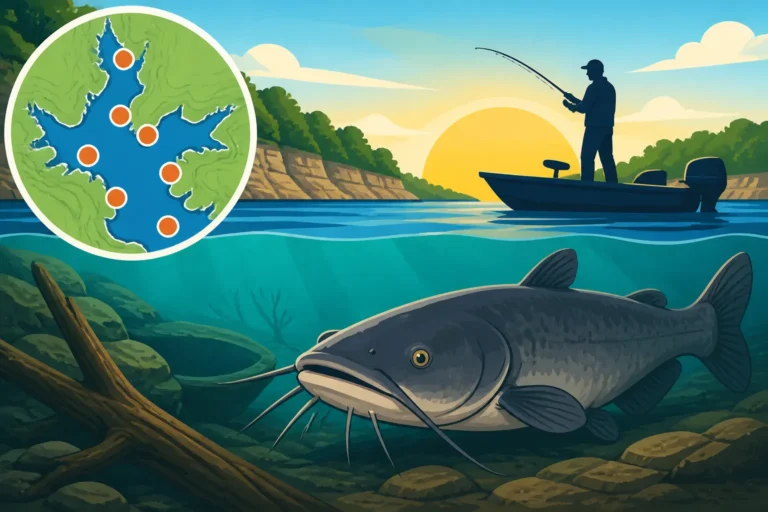
For those who love the fight of a powerful fish, the deeper sections of Lake Eufaula are where you'll want to focus for catfish and striped bass. The main river channel of the Canadian River, which feeds into Eufaula, provides excellent deep-water structure.
One prime area is around the old river bends and submerged creek channels, particularly where they meet the main lake basin. These are textbook locations for large blue catfish and channel catfish, especially during the warmer months when they'll retreat to cooler, deeper water. Drifting cut bait or live shad over these depths, often in 20-40 feet of water, can yield impressive results. Remember to check Oklahoma's Catfish Fishing Rules and Limits before you go.
For striped bass and their close cousins, the hybrid stripers, the open water flats and deep humps are key. Look for areas where the main channel comes close to a large, relatively flat area of the lake bottom. These fish often school up and chase baitfish in these zones. Using your fish finder to locate schools of bait and the predatory fish beneath them is crucial here. Trolling deep-diving crankbaits or presenting live shad on downriggers can be incredibly effective. Sometimes, you can even spot them busting bait on the surface during low light hours, creating an exciting topwater opportunity. Many anglers even hire a local guide through platforms like FishingBooker to help pinpoint these elusive schools, especially for a chance at bigger stripers.
Shallow Coves and Structures for Bass and Crappie
If largemouth bass and crappie are your targets, you'll want to pivot towards the shallower, more structured areas of the lake. These fish love cover, and Lake Eufaula has it in spades.
The numerous coves and bays found along the shoreline near McAlester, especially those with standing timber, brush piles, or rocky banks, are fantastic for bass. Think about areas like the numerous small inlets just south of Arrowhead State Park, or the protected coves near the Highway 9 bridge. During the spring spawn, bass will move into these shallows, making them accessible to both boat and bank anglers. Post-spawn, they often hold near submerged timber or lily pads, ambush points for unsuspecting baitfish. Flipping jigs, Texas-rigged worms, or throwing spinnerbaits and crankbaits around these structures can be very productive. Keeping an eye on Oklahoma's Bass Fishing Rules and Limits is always a good practice.
Crappie, being structure-loving fish, can be found congregating around brush piles, submerged timber, and bridge pilings. The many bridges that cross arms of Eufaula, such as the one carrying Highway 69 across the Gaines Creek arm, create excellent crappie habitat. Using a good fish finder to locate submerged brush or vertical timber is a huge advantage. Spider-rigging with minnows or small jigs, or simply vertical jigging over these structures, is a popular and effective method. In colder months, crappie will often move to deeper brush piles, while in spring, they’ll push into incredibly shallow cover to spawn. Understanding the Crappie Fishing Rules and Limits in Oklahoma is essential, as some lakes have specific regulations.
River Arms and Tributaries
Don't overlook the river arms and smaller tributaries that feed into Lake Eufaula, especially during periods of higher water flow or seasonal migrations. These areas often provide unique fishing opportunities.
The Canadian River arm itself, upstream from the main lake body, offers a different environment. Here, you'll find more current, and the fish behave differently than in the main lake. It's excellent for channel catfish, especially after rains when the river flow is up. The smaller creeks and feeder streams are also crucial for spawning runs. White bass, for instance, make significant runs up these tributaries in early spring, creating fantastic action for anglers throwing small inline spinners or curly-tailed jigs. Look for areas where the creek narrows or where there are natural pinch points that concentrate the fish. These areas can be fantastic for a fast and furious day of fishing, particularly if you're targeting panfish or smaller game species.
Best Seasonal Fishing Strategies for Eufaula Near McAlester
Fishing success on Lake Eufaula, like any large body of water, is heavily influenced by the changing seasons. What works in spring might not be effective in summer, and knowing how to adapt your approach to the conditions is key to consistent catches.
Springtime Spawn Bonanza
Spring on Lake Eufaula is a magical time for anglers, as many species become highly active, moving into shallower water to spawn. This is arguably the most anticipated season for many.
For largemouth bass, the pre-spawn period (typically March to early April, depending on water temperature) sees them staging on secondary points and creek channel bends just outside their spawning coves. This is when they're feeding heavily, making them susceptible to crankbaits, spinnerbaits, and jerkbaits. As the water warms further and the Spring Bass Spawn Timing in Oklahoma kicks in, they'll move onto the beds in shallow, protected areas, becoming prime targets for sight fishing with soft plastics or jigs. Remember, catch-and-release is often practiced by ethical anglers during this sensitive time.
Crappie also make their annual pilgrimage to the shallows in spring, often before the bass. They'll seek out brush piles, standing timber, and even emergent vegetation in just a few feet of water. Tiny jigs, often tipped with a minnow, fished under a bobber or slowly retrieved, are incredibly effective. Look for them in protected coves or along brushy banks. White bass, too, will be making their way up the river arms and major tributaries for their spawning run, offering exciting bank fishing opportunities for those targeting schooling fish.
Summer Night Bites and Deep Water Tactics
As Oklahoma's temperatures soar in the summer, fish often retreat to deeper, cooler waters or become more active during low-light hours. Adapting to these conditions is crucial for continued success.
During the day, chasing bass means focusing on deep structure – submerged humps, ledges, and creek channels, often at depths of 15-30 feet. Large crankbaits, Texas rigs, and Carolina rigs worked slowly along the bottom can entice sluggish bass. For crappie, they'll often suspend over deep brush piles or hug the main lake channel drops. Spider-rigging with multiple rods, or deep vertical jigging, can be very productive. Catfish, however, often remain active in the deeper sections of the river channels throughout the summer. Using stink baits or cut bait on the bottom in 25-40 feet of water, particularly in areas with good current, can lead to some impressive hauls.
Night fishing truly comes into its own during the summer on Lake Eufaula. The cooler air and water temperatures bring fish, especially crappie and stripers, closer to the surface and shorelines. Many anglers use submersible lights to attract baitfish, which in turn draws in crappie, white bass, and sometimes even catfish and stripers. Setting up under a bridge or near a deep drop-off with lights is a fantastic way to experience the Summer Night Fishing Techniques in Oklahoma. Consider hiring a local fishing guide through FishingBooker for specialized night-fishing charters.
Fall Turnover and Active Feeding
Fall brings a welcome cool-down to Lake Eufaula, and with it, a phenomenon known as "turnover," where the upper and lower water layers mix. This re-oxygenates the entire water column and revitalizes the fish.
After turnover, which typically happens in early to mid-fall, fish become highly active as they feed aggressively to prepare for winter. Bass will spread out across the lake, chasing baitfish in both shallow and deep water. Crankbaits, spinnerbaits, and topwater lures fished along rocky points, creek channels, and the backs of coves can be incredibly productive. Look for schooling activity on the surface, especially early mornings and late evenings.
Crappie also go on a strong bite in the fall, often congregating in large schools near channel swings, deep brush piles, and submerged timber. The Fall Crappie Fishing Patterns in Oklahoma often involve them suspending at various depths, so experimenting with different jig depths is key. Many anglers switch to slightly larger jigs or incorporate minnows for a more enticing presentation. This is a fantastic time for both numbers and size.
Winter Persistence
While winter can be challenging, Lake Eufaula still offers excellent fishing opportunities for the persistent angler, especially for certain species.
Bass will typically hold tight to deep structure, often in 20-40 feet of water near main lake points, ledges, and humps. They're much less active, so a slow presentation is vital. Jigs, jigging spoons, and slow-rolled shaky heads are effective. Look for tight schools on your fish finder. Crappie also school up tightly in deep water, often suspending over the main river channel or congregating around very deep brush piles or bridge supports. Vertical jigging with tiny jigs or minnows is the go-to method, and patience is a virtue.
Winter is also a prime time for trophy catfish on Lake Eufaula. Blue catfish, in particular, will gorge themselves in the cooler water, and they can be found in deep holes and channels. Using fresh cut bait, like shad or skipjack, on the bottom can attract some truly massive fish. Don't let the cold deter you; with the right gear and patience, winter fishing on Eufaula can be incredibly rewarding.
Essential Gear and Tips for Fishing Lake Eufaula
Being prepared with the right gear and knowledge can make all the difference between a frustrating day and a fantastic one on Lake Eufaula. Considering its size and diverse fishing opportunities, a versatile approach to your tackle box is a smart move.
Rods, Reels, and Line Choices
For Lake Eufaula, versatility is key when it comes to your rod and reel setup.
- For Bass: A couple of medium-heavy to heavy casting rods (6'6" to 7'6") paired with baitcasting reels spooled with 15-20 lb fluorocarbon or braided line will cover most bass techniques, from flipping jigs to throwing crankbaits. For finesse techniques or lighter lures, a medium-action spinning rod (6'6" to 7') with a 2500-3000 series reel and 8-12 lb fluorocarbon or braided line is ideal. Understanding the Best Bait for Largemouth Bass in Oklahoma often dictates your rod choice.
- For Crappie: Light to ultralight spinning rods (5' to 7') are perfect. Pair them with small 1000-2000 series reels spooled with 4-6 lb monofilament or braided line. This setup allows for maximum sensitivity when detecting subtle crappie bites.
- For Catfish: If you're targeting big blue cats, you'll want heavy-duty conventional or spinning rods (7' to 9') paired with reels capable of holding 50-80 lb braided line, or heavy monofilament. For channel catfish, a medium-heavy rod with 15-20 lb monofilament will suffice. The Best Bait for Catfish in Oklahoma Lakes and Rivers will vary, but your tackle needs to be strong.
- For Striped Bass: Medium-heavy casting or spinning rods (7') with reels spooled with 20-30 lb braided line are a good general choice. If you're trolling, dedicated trolling rods are often used.
Must-Have Baits and Lures
Your tackle box should reflect the diversity of Eufaula's fish.
- Bass: A selection of soft plastics (worms, creature baits, flukes), jigs (football, swim, casting), crankbaits (deep and shallow divers), spinnerbaits, chatterbaits, and topwater lures (poppers, walking baits) will cover most conditions.
- Crappie: Small (1/16 to 1/8 oz) soft plastic jigs in various colors (chartreuse, white, black/chartreuse), live minnows, and small curly-tail grubs are essential.
- Catfish: Live shad, cut bait (shad, perch), chicken livers, and various stink baits are staples.
- Striped Bass: Live shad are king, but large swimbaits, heavy spoons, and umbrella rigs can also be effective when trolling.
- General: A variety of hooks, sinkers, swivels, and bobbers should always be on hand.
Navigation and Safety on Big Water
Lake Eufaula is a massive body of water, and proper navigation and safety precautions are paramount.
- Navigation: A reliable GPS-enabled fish finder is almost a necessity. Devices with detailed mapping, like those from Humminbird or Lowrance, will help you navigate the main channels, avoid submerged hazards (like timber, which is plentiful), and mark productive spots. A good understanding of Fish Finder Features That Matter Most on Oklahoma Reservoirs will serve you well. Many of the best spots near McAlester involve navigating creek channels and finding subtle depth changes, which sonar excels at revealing.
- Safety: Always have all required safety equipment on board, including enough life jackets for everyone. Remember the Oklahoma Life Jacket and PFD Rules for Boaters, especially concerning children 12 and under. A working marine radio or fully charged cell phone is also crucial, as is checking weather forecasts before heading out. The lake can get rough quickly on windy days. Telling someone your float plan (where you're going and when you expect to return) is always a good idea. Even if you're fishing from the bank, be aware of your surroundings, especially if fishing near steep banks or areas with heavy vegetation.
| Species Targeted | Prime Location Near McAlester | Best Season | Recommended Bait/Lure |
|---|---|---|---|
| Largemouth Bass | Shallow coves, submerged timber | Spring, Fall | Jigs, soft plastics, crankbaits |
| Crappie | Brush piles, bridge pilings | Spring, Fall | Minnows, small jigs |
| Blue Catfish | Main river channel, deep holes | Year-round | Cut bait, live shad |
| Channel Catfish | River arms, creek mouths | Spring, Summer | Stink bait, chicken liver |
| Striped Bass | Open water flats, deep humps | Summer, Fall | Live shad, trolling lures |
| White Bass | Tributary mouths, shallow points | Spring, Fall | Inline spinners, small jigs |
Disclaimer
The information provided in this guide is for general informational purposes only and is subject to change. Fishing regulations, conditions, and fish behavior can vary. Always consult the latest Oklahoma Department of Wildlife Conservation (ODWC) regulations before fishing. Exercise caution and prioritize safety on the water.