Best Catfish Holes on Skiatook Lake
Trying to find those sweet spots for catfish on a big lake like Skiatook can sometimes feel like searching for a needle in a haystack. You hear stories of monster blues and feisty channels, but when you get out there, it's easy to spend hours without a bite, leaving you wondering if you're even fishing in the right area. This guide is all about cutting through that frustration, pinpointing the best catfish holes on Skiatook Lake so you can spend less time guessing and more time reeling in those whiskered beauties.
Why Skiatook Lake is a Catfish Haven
Skiatook Lake, nestled in Osage County just northwest of Tulsa, is often celebrated for its clear waters and excellent bass fishing. But what many anglers might overlook, or perhaps just haven't cracked the code on yet, is its incredible catfish potential. This sprawling reservoir, with its deep channels and diverse underwater topography, creates an ideal environment for all three major species of catfish found in Oklahoma: blue, channel, and flathead. The lake's robust ecosystem provides an abundant food source, allowing these fish to grow to impressive sizes, making it a true hidden gem for serious catfishermen.
Understanding Skiatook's Catfish Species
Each species of catfish in Skiatook Lake has its own preferences when it comes to habitat and forage, and understanding these can drastically improve your success. Blue catfish are generally found in deeper, open water areas, especially around main lake points and humps where current or wind can concentrate baitfish. They are primarily piscivores, meaning they love to eat other fish, and they grow big. We're talking about the kind of fish that can really test your tackle and your resolve! You can learn more about how big these giants get in Oklahoma by checking out our guide on How Big Do Blue Catfish Get in Oklahoma.
Channel catfish, on the other hand, are more adaptable and can be found throughout the lake, from shallow coves to deeper main lake areas. They are opportunistic feeders, eating everything from insects and crawfish to small baitfish and even decaying organic matter. This makes them a great target for bank anglers and those looking for consistent action. Flathead catfish are ambush predators, preferring to hide in heavy cover like submerged timber or rocky crevices, waiting to ambush live prey. They're often solitary and present a thrilling challenge for anglers who specifically target them with live bait. Knowing these differences is your first step to unlocking Skiatook's catfish secrets.
Key Forage and Habitat in Skiatook
Skiatook Lake's clear waters are teeming with a variety of baitfish, which are crucial for supporting a healthy catfish population. Shad, particularly gizzard and threadfin shad, are the primary forage for blue catfish and larger channels. These baitfish congregate in schools, often near submerged structure, ledges, or where oxygen levels are favorable. Areas where you find large schools of shad are almost always going to hold catfish, as they follow their food source.
Beyond baitfish, Skiatook also offers abundant populations of crawfish, insects, and smaller panfish, which are vital for channel catfish and smaller flatheads. The lake's structure includes a mix of rocky areas, steep bluffs, submerged timber (especially in the upper reaches of the lake and its feeder creeks), and former creek channels that wind through the lake bed. These varied habitats provide shelter, ambush points, and foraging grounds for catfish at different times of the year and throughout their life cycles. Understanding the relationship between these food sources and the underwater topography is key to consistently finding the best catfish holes.
Top Catfish Holes on Skiatook Lake
When you're out on Skiatook, don't just cast blindly. Focus on these proven areas that consistently hold catfish. These aren't just random spots; they're chosen for their unique characteristics that appeal to the different catfish species found here. If you're using a service like FishingBooker to scout guides, make sure to mention these areas when discussing your trip!
Deep Channels and Creek Beds
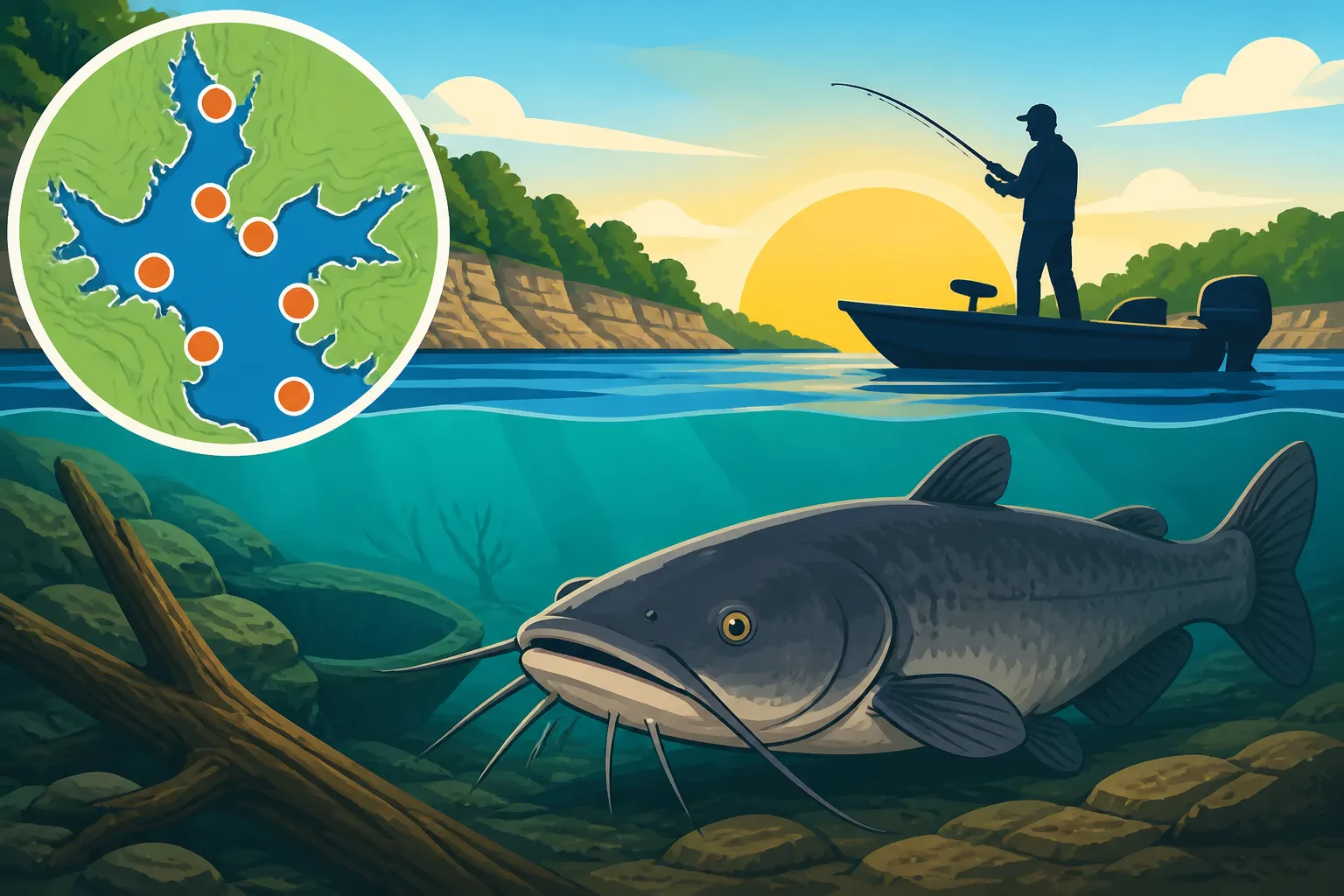
The old Arkansas River channel and the submerged creek beds that crisscross Skiatook Lake are absolute magnets for blue and channel catfish, especially during the warmer months and into the fall. These channels offer deeper, cooler water when the surface heats up, providing comfort and a highway for fish moving throughout the lake. Look for bends in the channel, underwater humps, or any sharp drop-offs along the channel edges. These irregularities create current breaks and ambush points where catfish will lie in wait for passing baitfish.
A good depth finder is invaluable here. Scan these channel areas for schools of baitfish or larger arcs that signify big catfish holding tight to the bottom. Once you locate a promising spot, anchor upcurrent and present your baits, allowing them to drift naturally into the holding areas. The main river channel runs generally north to south through the lake, with many smaller creek channels feeding into it. Pay particular attention to where the Hominy Creek arm and the main Caney River arm meet the main body of the lake; these confluences often hold substantial numbers of fish due to concentrated forage and varied depths.
Rocky Points and Riprap Areas
Skiatook Lake boasts numerous rocky points and stretches of riprap, particularly along its dam and bridges, which are often overlooked by catfish anglers in favor of timber. However, these hard structures are goldmines. During the spring, channels and even some flatheads will move into these rocky areas to spawn, and they remain excellent feeding grounds throughout the year. The rocks attract baitfish and crawfish, providing a readily available food source.
These areas also provide excellent bank access for those without a boat. The riprap along the Skiatook Dam or around certain bridge pilings (like the US-Highway 20 bridge) can be particularly productive, especially in the evenings and at night when catfish move shallower to feed. Cast cut bait, stink baits, or live perch tight to the rocks, letting your bait settle near the bottom. On windy days, the wave action against these rocks can stir up food, making them even more attractive to hungry catfish.
Timbered Coves and Submerged Structure
For flathead catfish enthusiasts, and often for larger blue and channel catfish as well, the abundant submerged timber and brush piles in Skiatook's coves and deeper pockets are prime territory. These areas provide the perfect ambush cover for flatheads, which are notoriously structure-oriented. The upper reaches of the Hominy Creek and Caney River arms, where the original creek beds were heavily timbered before inundation, are fantastic spots to explore.
When fishing timber, precise bait placement is crucial. You'll want to get your bait right in among the snags, but be prepared for hang-ups. Using heavier line and a stout rod can help you pull fish out of the cover and minimize lost tackle. Drifting through these timbered areas with live bait (like bluegill or sunfish) on a trotline or jug line can also be highly effective for flatheads. Just remember to be mindful of any specific regulations regarding these methods, as detailed in our comprehensive guide on Oklahoma's Catfish Fishing Rules and Limits. For a focused approach, consider booking a trip with a local guide via platforms like FishingBooker, who can skillfully navigate these tricky areas.
Best Times and Techniques for Skiatook Catfish
Knowing where to fish is only half the battle; understanding when and how to fish can turn an average day into an exceptional one. Catfish behavior changes throughout the year and even throughout the day, so adapting your approach is crucial for consistent success on Skiatook Lake.
Seasonal Catfish Movements and Peak Times
Catfish are active year-round in Skiatook, but their locations and feeding patterns shift with the seasons.
- Spring (March-May): As water temperatures rise, catfish become very active, moving shallower to feed heavily before the spawn. Channel catfish will often be found in relatively shallow coves and along rocky banks. Blue catfish will be more widespread, moving between deep channels and shallower flats. This is an excellent time for targeting channels from the bank.
- Summer (June-August): This is prime time for big blue catfish! As the lake warms, blues often move to deeper main lake points, humps, and the main river channel, following schools of shad. Night fishing becomes incredibly effective as catfish move shallower under the cover of darkness. Many anglers have great success with Summer Night Fishing Techniques in Oklahoma. Flatheads will be tight to heavy cover, especially in the timbered areas.
- Fall (September-November): Catfish go on a major feeding binge in the fall, bulking up for winter. Blues will be very active in creek channels and on main lake flats, often in shallower water than summer, chasing shad. Channels will also be widespread, offering excellent opportunities for both boat and bank anglers.
- Winter (December-February): Don't overlook winter catfishing! While slower, big blue catfish can be caught in deep holes along the main river channel, often schooled up tightly. This is a time for patience and precision, focusing on vertical jigging or slow-drifting baits right on their noses. Our article on Winter Catfishing Techniques in Oklahoma has some great tips for colder weather.
Recommended Baits and Rigging for Skiatook
The right bait can make all the difference. For blue catfish on Skiatook, fresh cut bait is king. Shad, carp, or even perch cut into chunks are highly effective. For channel catfish, stink baits, punch baits, chicken livers, and nightcrawlers work wonders. Flatheads, being apex predators, almost exclusively prefer live bait – live bluegill, sunfish, or even small carp are excellent choices.
When it comes to rigging, a simple slip-sinker rig is versatile and effective for most situations. Use a main line (20-30 lb monofilament or braid for channels, 40-80 lb braid for blues and flatheads), a barrel swivel, an 18-36 inch fluorocarbon or monofilament leader (20-60 lb test depending on target species), and a strong circle hook (3/0 to 8/0). Circle hooks are fantastic for catfish as they tend to hook fish in the corner of the mouth, minimizing harm and making release easier if you're not keeping them. For an even deeper dive into bait selection, check out Best Bait for Catfish in Oklahoma Lakes and Rivers.
Bank Fishing vs. Boat Fishing Strategies
Both bank fishing and boat fishing can be incredibly productive for catfish on Skiatook, each with its own advantages.
- Bank Fishing: Skiatook offers good bank access, particularly around public parks, the dam, and bridge areas. Bank fishing is fantastic for channel catfish and smaller blues, especially in the spring and fall, and during summer nights. Focus on areas with a quick drop-off near the bank or where current might sweep bait past your location. A rod holder and patience are your best friends here. Don't be afraid to cast out several rods with different baits to see what the fish are hitting.
- Boat Fishing: A boat opens up the entire lake, allowing you to access deep channels, submerged timber, and remote points that bank anglers can't reach. For serious trophy blue or flathead fishing, a boat is almost essential. Techniques like controlled drifting over channels, anchoring on humps, or setting out trotlines and jug lines become possible. If you're new to the lake or catfishing from a boat, consider a guided trip. Guides listed on FishingBooker, for example, often specialize in these techniques and can put you right on the fish. For those looking for multi-species trips, a guide can also show you how to target bass, crappie, and catfish effectively.
Essential Gear and Regulations for Skiatook Catfishing
Having the right equipment and knowing the rules are non-negotiable for a successful and legal fishing trip on Skiatook Lake. You don't want a game warden cutting your trip short!
Must-Have Tackle for Big Skiatook Cats
When you're chasing catfish, especially the potentially massive blue and flathead catfish in Skiatook, your gear needs to be up to the task. Light tackle might be fun for panfish, but it's a recipe for heartbreak with a 50-pound blue cat.
- Rods: Look for medium-heavy to heavy action rods, 7 to 9 feet long. These rods provide the backbone needed to cast heavy weights and pull large fish away from snags. A durable graphite or fiberglass blank will handle the stress.
- Reels: Depending on your preference, a good quality baitcasting reel or a robust spinning reel (size 5000 or larger) with a strong drag system is essential. Make sure your reel can hold plenty of heavy line.
- Line: For channel catfish, 20-30 lb monofilament or braided line is usually sufficient. For blue and flathead catfish, especially those over 30 inches, you'll want to step up to 40-80 lb braided line. Braid offers superior strength-to-diameter ratio, no stretch for better hooksets, and excellent abrasion resistance against underwater structure. Learn more about optimal gear in our article on Best Gear for Catfish Fishing in Oklahoma.
- Hooks: As mentioned, circle hooks are highly recommended. Sizes ranging from 3/0 to 8/0, depending on your bait and target species, are common. For bigger baits and bigger fish, go with larger hooks.
- Sinkers: A variety of weights will be useful. Pyramid or no-roll sinkers (1-6 ounces) are great for bottom fishing in current or on slopes, while egg sinkers are perfect for slip-sinker rigs.
- Other Essentials: Don't forget heavy-duty pliers for hook removal, a strong pair of fish grips or a large landing net for safely handling big fish, a headlamp for night fishing, and a sturdy cooler for your catch.
Navigating Oklahoma's Catfish Rules and Limits
Oklahoma has specific regulations for catfish, and these are enforced to maintain healthy fish populations. It's your responsibility as an angler to know and follow them.
- Fishing License: First and foremost, anyone aged 16 or older needs a valid Oklahoma fishing license. This is non-negotiable. You can easily purchase one online through the Oklahoma Department of Wildlife Conservation (ODWC) website or from authorized vendors. Check out How to Get a Fishing License in Oklahoma for detailed steps.
- Statewide Bag Limits: For forked-tail catfish (blue and channel catfish combined), the statewide daily bag limit is 15 fish. Flathead catfish have a daily bag limit of 10 fish. It's crucial to understand that blue and channel catfish are generally counted together towards that 15-fish limit.
- Size Restrictions: There's a notable exception for blue catfish: you can only keep one blue catfish over 30 inches long per day. This rule is designed to protect the trophy-sized breeding stock of blue catfish. So, if you catch a monster blue over 30 inches, you can keep it, but any other blue cats you keep that day must be under 30 inches, up to your 15-fish total for forked-tail catfish. This specific rule is often missed by anglers, so ensure you're familiar with The 30-Inch Blue Catfish Rule in Oklahoma. Our guide on Blue and Channel Catfish Counted Together in Oklahoma provides even more clarity on these combined limits.
Always consult the latest Oklahoma Fishing Regulations guide from the ODWC, as rules can change. It's better to be safe than sorry!
Skiatook Lake Catfish Hotspots and Best Practices
| Catfish Species | Primary Forage | Preferred Habitat | Best Bait | Recommended Technique | Peak Season |
|---|---|---|---|---|---|
| Blue Catfish | Shad, smaller fish | Deep channels, humps, main lake points | Fresh cut shad/carp | Bottom fishing, controlled drifting | Summer, Fall, Winter |
| Channel Catfish | Shad, crawfish, insects | Shallow coves, rocky banks, creek beds | Stink bait, chicken liver, cut bait | Bank fishing, slip-sinker rig | Spring, Summer, Fall |
| Flathead Catfish | Live fish, crawfish | Heavy submerged timber, rock crevices | Live bluegill/perch | Live bait on trotlines/jugs, tight to cover | Summer, Fall |
Remember to always practice catch and release for larger trophy fish if you're not planning to mount them or if you've already met your daily limits. Handling big catfish requires care; hold them horizontally to support their weight, especially if they are very heavy, to avoid internal organ damage. A picture is always a great way to remember the catch, and then release them quickly and safely so they can continue to thrive in Skiatook Lake. If you're looking for other premier spots, don't miss our comprehensive guide on Best Catfish Fishing Spots in Oklahoma.
Disclaimer
Fishing conditions and regulations can change. Always check the current Oklahoma Department of Wildlife Conservation regulations before heading out on the water. This information is for general guidance and informational purposes only.