Where Do Largemouth Bass Hide in Weedy Lake Water
There's nothing quite as frustrating as seeing a promising patch of lily pads or a thick bed of hydrilla, knowing those big largemouth bass are probably lurking deep within, but having no idea how to get your lure to them without getting completely hung up. It's a common dilemma for Oklahoma anglers – bass love those weedy havens, but fishing them can feel like an impossible task. This guide is here to unravel that mystery, showing you exactly why bass choose these spots and how you can effectively target them, turning those frustrating snags into exciting catches.
Why Largemouth Bass Seek Refuge in Weeds
Largemouth bass are incredibly efficient predators, and they're always looking for an advantage. Aquatic vegetation, whether it's submerged grass or towering lily pads, offers them a natural buffet of benefits that make it an irresistible hideout. Understanding these motivations is the first step to figuring out where they'll be in the green stuff.
Cover and Ambush Points
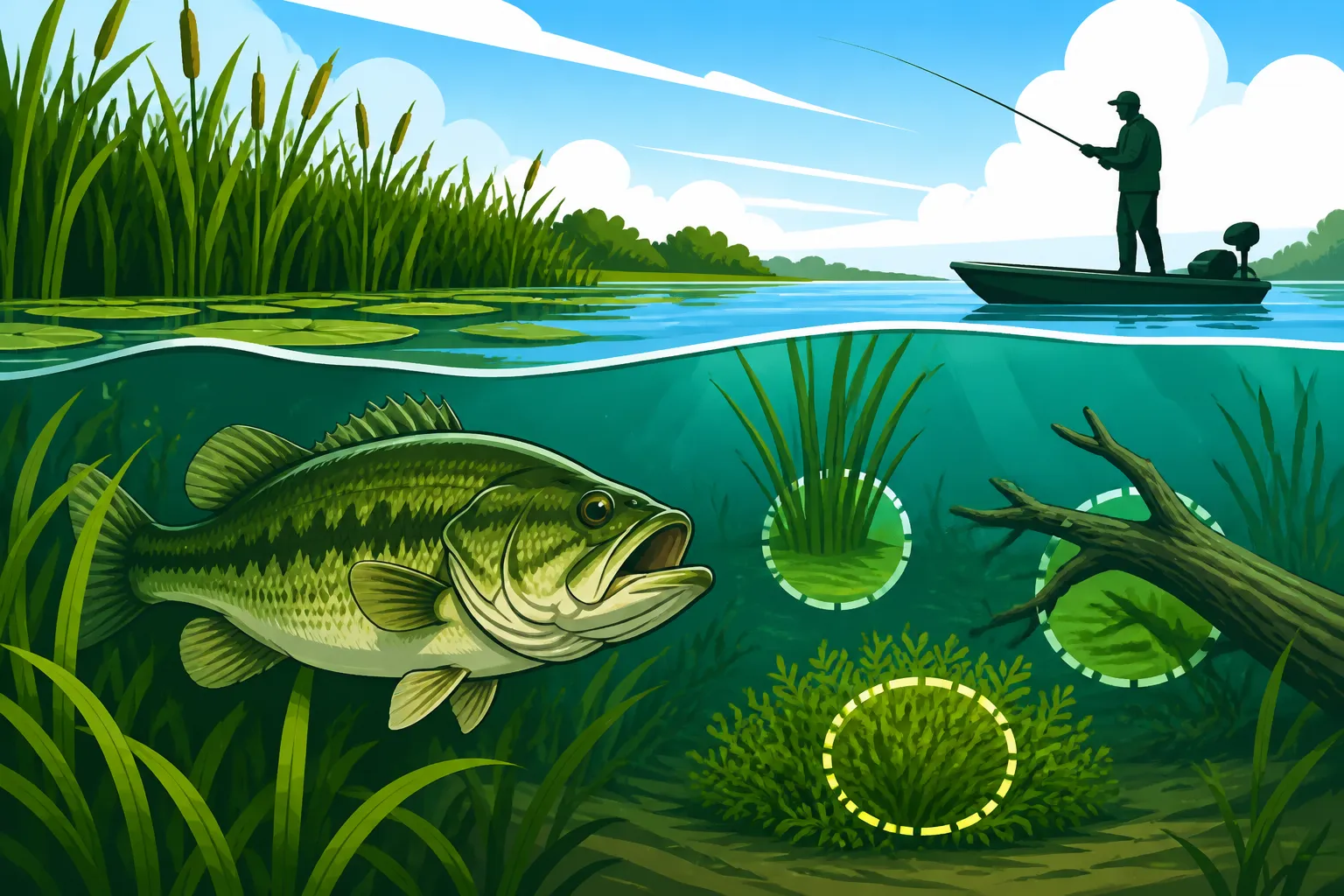
Think about it from a bass's perspective. Those thick weed beds aren't just pretty scenery; they're fortresses. The dense foliage provides excellent camouflage, allowing a bass to blend seamlessly into its surroundings. This is crucial for both offense and defense. From a hidden position, a largemouth can lie in wait, perfectly concealed from unsuspecting baitfish, crawfish, or even frogs that might swim or hop by. It's like a secret sniper's nest.
On the defensive side, those same weeds protect bass from larger predators, like osprey or even bigger bass. A small bass darting into a dense mat of coontail can quickly disappear, making it a difficult target for anything trying to eat it. This safety net allows bass to conserve energy, feel secure, and focus on feeding. When you're fishing these areas, you're not just casting into random weeds; you're casting into a bass's chosen sanctuary and hunting ground, which is why a well-placed lure can trigger an aggressive strike.
Food Source and Temperature Regulation
Beyond just cover, aquatic vegetation is a thriving ecosystem. It attracts a host of baitfish like shad and sunfish, which in turn attract bass. Insects, crawfish, and even small frogs also call these weed beds home, creating a constant, readily available food supply. A bass doesn't have to chase its food far when it's living in a pantry like a lush hydrilla bed. This also means the bass might not be in a super aggressive mood if food is plentiful, so presentation becomes key.
Furthermore, these weed beds act like natural climate control. During the scorching Oklahoma summers, the dense canopy of lily pads or the shaded depths of submerged grass can offer a significant temperature drop compared to open water. Bass are cold-blooded creatures, and they'll seek out these cooler, oxygen-rich pockets to stay comfortable and active. Conversely, in the cooler months, dying vegetation can absorb sunlight and warm up slightly faster than open water, offering a slight thermal advantage. This seasonal shift in temperature preference can dictate whether the bass are hunkered deep in the weeds or cruising along the edges. Understanding Oklahoma Fishing Seasons: A Month-by-Month Guide can really help predict these movements.
Decoding Oklahoma's Aquatic Plant Life: Where Bass Live
Oklahoma lakes are diverse, and so is their aquatic vegetation. Knowing the common types of weeds you'll encounter and how bass typically relate to each one can give you a significant edge. It’s not just "weeds" – each type presents a unique challenge and opportunity.
Submerged Weeds: Hydrilla and Coontail
Submerged vegetation like hydrilla, pondweed, and coontail grows entirely underwater, often forming vast, dense mats that can reach from the bottom right up to the surface. These are arguably some of the most challenging, yet rewarding, places to fish for largemouth bass. These deep, green forests offer incredible cover, ambush points, and oxygenation. Bass often sit inside these mats, creating tunnels and pockets they use for travel and feeding.
When you're fishing hydrilla, especially if it's topped out, look for subtle irregularities. A slight indentation, a small opening, or a thin lane can be a golden opportunity. Bass will often patrol the edges of these mats or sit just inside any breaks in the canopy, waiting for prey to swim by. If you can get a weedless lure, like a Texas-rigged creature bait or a weighted frog, into one of these openings, you’re often rewarded with a vicious strike. Anglers often refer to these as "punching" or "flipping" techniques, requiring a heavy setup to get through the thick stuff. Don't be afraid to fish heavy cover for bass, as this is where the big ones often live.
Emergent Weeds: Lily Pads and Cattails
Emergent vegetation includes plants like lily pads, cattails, and bulrushes, which root in the bottom but have leaves and stalks that extend above the water's surface. These provide a different kind of cover than their submerged counterparts, creating visible structure and shade. Lily pads are a classic bass habitat, offering a shady canopy during sunny days and a perfect spot for bass to ambush prey from below. Cattails and bulrushes, often found in shallower, marshier areas or along shorelines, create dense vertical cover that bass can use for protection and as a pathway to deeper water.
Fishing around lily pads often involves targeting the open pockets between the pads, the edges of the pad fields, or even casting directly onto the pads and dragging your lure off into the water. Topwater frogs and weedless worms are absolute killers in these areas. For cattails and bulrushes, focus on pitching jigs or Texas-rigged plastics right into the thick of them, especially where the weeds meet open water or a slight drop-off. Bass often use these vertical stalks as visual references and hunting lanes. You might be surprised at how close to the shore a big bass will hold in these environments.
Floating Weeds: Duckweed and Water Hyacinth
Floating vegetation, such as duckweed, water hyacinth, and even some types of algae, can form thick, impenetrable mats on the surface of the water. While these can be frustrating to navigate, they create an incredible, shaded ecosystem beneath them. These mats block out sunlight, creating cooler water temperatures and excellent ambush cover for bass. Oxygen levels can sometimes be an issue under extremely dense mats in stagnant water, but in areas with good circulation, these are prime bass real estate.
Fishing these dense floating mats often requires specialized techniques and heavy tackle. "Punching" or "mat flipping" involves using a heavy tungsten weight (often 1 to 2 ounces) and a compact, weedless bait, like a creature bait or a beaver-style plastic, to literally punch through the mat and into the water column beneath. The idea is to break through the surface, creating a disturbance that draws the bass's attention, and then let your bait fall into their strike zone. This technique is highly effective for targeting big, aggressive bass that live deep within the cover. Ensure your hooks are super sharp and strong enough to handle the powerful hooksets needed to pull a bass out of such heavy cover. Sometimes, a simple frog lure walked across the top can also draw explosive strikes.
Mastering the Art of Fishing Heavy Cover for Bass
Getting your lure into a thick patch of weeds is one thing; getting a bass out of it is another. Successfully fishing weedy lake water requires a blend of patience, observation, and the right approach. It’s a rewarding challenge that often separates good anglers from great ones.
Reading the Water and Identifying Key Areas
Before you even make a cast, take a moment to "read" the weed bed. It's not just a uniform mass of green. Look for irregularities: points where the weeds extend further out, inside turns, clumps of different weed types, small gaps or holes within a mat, or areas where the weeds thin out. These are often the "sweet spots" where bass will congregate. Also, pay attention to the depth of the water around the weeds. A weed line that runs along a drop-off or next to a channel swing can be particularly productive. Look for signs of baitfish or even ripples that indicate a bass might be stirring beneath the surface. How Water Temperature Affects Fishing Patterns on Oklahoma Lakes is also critical to understanding where in the weeds bass will hold.
The edges of weed beds are often the first place to start, especially early in the morning or late in the evening when bass might be more actively patrolling for food. As the sun gets higher, they'll likely push deeper into the cover for shade and security. Don't be afraid to get close and personal with the cover; sometimes, the best fish are holding tight to the densest parts. A good pair of polarized sunglasses, which you can often find a wide selection of on Amazon, can make a huge difference in spotting these subtle clues beneath the surface.
Approach and Presentation Techniques
When fishing heavy cover, your approach needs to be stealthy and precise. Long, wild casts often lead to snags and spooked fish. Instead, opt for shorter, more accurate pitches or flips. This allows you to place your lure exactly where you want it – into those small pockets, along a distinct weed line, or right up against a clump of pads. Think about how your lure will enter the water; a gentle entry is often preferred, but sometimes a slight splash from a frog can mimic a natural falling prey item.
For submerged weeds, techniques like Texas rigging worms or creature baits, Carolina rigging for a deeper presentation, or using bladed jigs (chatterbaits) along the edges can be very effective. How to Fish a Texas Rig for Bass is a fundamental technique you'll want to master. When punching through mats, a straight, vertical drop is key. For emergent cover like lily pads, topwater frogs, weedless spoons, or even weightless flukes worked across the surface are excellent choices. The speed of your retrieve is also important; sometimes a slow, deliberate presentation is best to tempt a reluctant bass, while other times a fast, erratic retrieve can trigger a reaction strike. Experiment with both until you find what the fish are responding to on that particular day.
Essential Gear for Taming the Weeds and Catching Bass
Fishing heavy vegetation demands specialized gear. You can't just throw your ultralight spinning rod into a mat of hydrilla and expect to get a fish out. The right rod, reel, line, and especially the right lures make all the difference between frustration and triumph.
Rods and Reels for Heavy Cover
When it comes to fishing dense weeds, you need power. That means a heavy or extra-heavy action baitcasting rod, typically between 7 and 7.5 feet long. This kind of rod has the backbone necessary to drive a hook through tough weeds and into a bass's jaw, and then haul that bass out of the thick stuff without the rod breaking or giving up too much leverage. Best Rod for Largemouth Bass Fishing in this scenario means something stout.
Pair that with a baitcasting reel that has a high gear ratio, something in the 7.1:1 to 8.1:1 range. This fast retrieve speed is crucial for quickly picking up slack line, moving your lure effectively, and most importantly, getting a bass headed in your direction the moment it bites before it can bury itself deeper into the cover. Many anglers find great deals on high-quality baitcasting reels on Amazon for this kind of fishing. Look for reels with strong drag systems that can withstand the pressure of pulling fish out of heavy cover.
Line Selection for Abrasion Resistance
This is where many anglers make a mistake. Monofilament or even standard fluorocarbon lines simply won't cut it in heavy weeds. You need a line that can withstand constant abrasion from stalks, branches, and rough edges, and also has the brute strength to pull fish. Braided line is king for this application. Opt for braided line in the 40 to 65-pound test range. Its lack of stretch provides excellent sensitivity for feeling subtle bites and incredible hook-setting power.
The abrasion resistance of braided line is second to none, and it cuts through vegetation much better than other line types, making it easier to retrieve your lure even after a snag. While some anglers might tie a short fluorocarbon leader to their braid for invisibility, many punching and mat-flipping enthusiasts go straight braid, recognizing that the benefit of durability and strength outweighs the need for invisibility in such thick cover. You can find robust braided lines from various reputable brands on Amazon, ensuring you're ready for the toughest conditions.
Weedless Lures: Your Best Friends in the Green Stuff
This is where the magic happens. The right weedless lure allows you to present your bait effectively without constantly getting hung up. There's a wide world of options, each suited for different weed types and presentations.
Texas-Rigged Plastics
The Texas rig is probably the most fundamental weedless presentation. It involves threading a worm, creature bait, or stick bait onto an offset worm hook, with the hook point embedded back into the plastic body. This makes the hook virtually snag-proof. Paired with a bullet-shaped weight, it can be punched through mats or worked along submerged weed edges. How to Fish a Texas Rig for Bass is a skill every angler fishing in Oklahoma needs. For fishing thicker mats, you’ll often peg your weight right above the hook with a bobber stop to keep the bait compact and prevent the weight from separating from the lure.
Topwater Frogs and Toads
When bass are looking up, especially over lily pads or sparse mats of duckweed, topwater frogs are irresistible. These soft plastic lures are designed with hooks that ride upward, making them extremely weedless as they glide over the surface. The walk-the-dog or pop-and-stop retrieve can entice explosive strikes. There are countless variations, from hollow-bodied frogs to solid soft plastic toads, each with its own action. They're not just for lily pads; I've had great success throwing them over matted hydrilla with a few sparse openings.
Weedless Jigs and Bladed Jigs
Jigs are incredibly versatile and can be made weedless with a brush guard. Flipping jigs, with their compact profile and heavy brush guard, are perfect for pitching into dense cover, whether it's submerged grass or the base of cattails. Pair them with a craw trailer for added bulk and action. Bladed jigs (often called chatterbaits) combine the flash and vibration of a crankbait with the weedless properties of a jig, making them excellent for ripping through the edges of grass beds or over submerged vegetation. They can be particularly effective in slightly stained water. You might even find some unique weedless jig designs from smaller tackle companies that are gaining popularity and are often sold through Amazon.
Weedless Spoons and Swim Jigs
Weedless spoons, like the famous Johnson Silver Minnow, are simple yet effective. Their single, upturned hook is protected by a weed guard, allowing them to slither through pads and grass without snagging. They flutter enticingly on the fall and can be retrieved with a steady pull or a stop-and-go motion. Swim jigs, essentially a jig with a skirt and a weed guard, are designed to be retrieved steadily through cover. They often have a pointed head that helps them shed weeds, and when paired with a paddle-tail swimbait as a trailer, they create an irresistible profile and vibration. When considering your Best Bass Lures for Summer Fishing, these weedless options should definitely be at the top of your list.
Here’s a quick overview of popular weed types and recommended lure presentations:
| Vegetation Type | Common Oklahoma Examples | Bass Behavior | Recommended Lure Presentations |
|---|---|---|---|
| Submerged Weeds | Hydrilla, Pondweed, Coontail | Inside mats, along edges, in lanes | Texas-rigged worms/creatures, Carolina rigs, Bladed Jigs |
| Emergent Weeds | Lily Pads, Cattails, Bulrushes | Under shade, along vertical stalks, pockets | Topwater Frogs, Weightless Flukes, Flipping Jigs |
| Floating Weeds/Mats | Duckweed, Water Hyacinth, Algae | Deep under mat for shade and ambush | Heavy Punching Jigs/Creatures, Hollow-bodied Frogs |
| Mixed Vegetation | Combinations of above | Transitional areas, specific pockets | Versatile weedless jigs, Swim jigs |
Ultimately, fishing weedy lake water in Oklahoma is a game of patience, precision, and the right gear. Don't let the green stuff intimidate you. With these strategies, you'll be well on your way to pulling some impressive largemouth bass out of their natural fortresses.
Disclaimer
This article is for general informational purposes only and does not constitute professional advice. Laws, prices and regulations vary by location and change over time. Consult a qualified professional for guidance on your specific situation.