Spotted Bass Identification Tips for Oklahoma Anglers
There's nothing quite like the thrill of feeling a strong tug on your line here in Oklahoma, but sometimes, the excitement is quickly followed by a moment of head-scratching. You pull in a beautiful bass, and then you start to wonder: is it a largemouth, a smallmouth, or could it be a spotted bass? It's a common dilemma for many anglers, and getting it right isn't just about bragging rights – it’s often crucial for following those important regulations. This guide is designed to help you confidently identify the spotted bass, a feisty fighter that calls many of our Oklahoma waters home.
Why Knowing Your Bass Species Matters
Before we dive into the nitty-gritty of distinguishing a spotted bass, let's talk about why it's so important to know exactly what you've hooked. It might seem like a minor detail, but for Oklahoma anglers, proper identification is key to adhering to fishing regulations and contributing to conservation efforts. Our state wildlife department sets specific bag limits and size restrictions that can differ wildly between species, even within the bass family.
Avoiding Accidental Violations
Imagine you're out on a beautiful reservoir, the bite is on, and you're catching fish after fish. You're counting your bass, making sure you stay within the daily limit. But what if you've mistakenly identified a spotted bass as a largemouth? If the regulations for spotted bass are stricter, or have a different size slot, you could unknowingly be breaking the law. Game wardens are out there to protect our fisheries, and they expect anglers to know the rules. A simple mistake in identification could lead to a fine, and nobody wants their peaceful day on the water to end that way. Understanding the specific characteristics of each bass species is your first line of defense against an accidental violation. For instance, sometimes lakes have specific length limits or slot limits that only apply to one species, and if you can't tell them apart, you could be in a bind. You can always check out Oklahoma's Bass Fishing Rules and Limits to refresh your memory on the general regulations.
Contributing to Conservation Efforts
Beyond personal compliance, accurate fish identification plays a huge role in the bigger picture of conservation. When anglers correctly report their catches, whether in tournaments or just casual observations, it provides valuable data to fisheries biologists. This data helps them understand population health, growth rates, and the overall ecological balance of our lakes and rivers. If everyone is misidentifying spotted bass as largemouths, for example, the reported populations for both species could be skewed, leading to less effective management strategies. By taking the time to learn these identification tips, you're becoming a more responsible angler and a better steward of Oklahoma's precious aquatic resources.
Key Identification Features of a Spotted Bass
The spotted bass, or Micropterus punctulatus, is often affectionately called a "spot" by anglers. While it shares some family resemblance with its largemouth and smallmouth cousins, it has several distinct features that, once you know them, make it relatively easy to pick out from the crowd. Let's break down these tell-tale signs.
The Mouth and Jawline
This is often the first place many experienced anglers look. Gently hold the fish and observe its mouth. For a spotted bass, when its mouth is closed, the back corner of its jaw (the maxilla) will typically extend to, but not beyond, the middle of its eye. This is a crucial distinction. In contrast, a largemouth bass's jaw will almost always extend past the back of its eye, sometimes significantly. A smallmouth bass, on the other hand, will usually have a jawline that ends well before the back of its eye, giving it a more compact appearance. This simple visual cue is incredibly helpful in the field.
Lateral Line and Scale Patterns
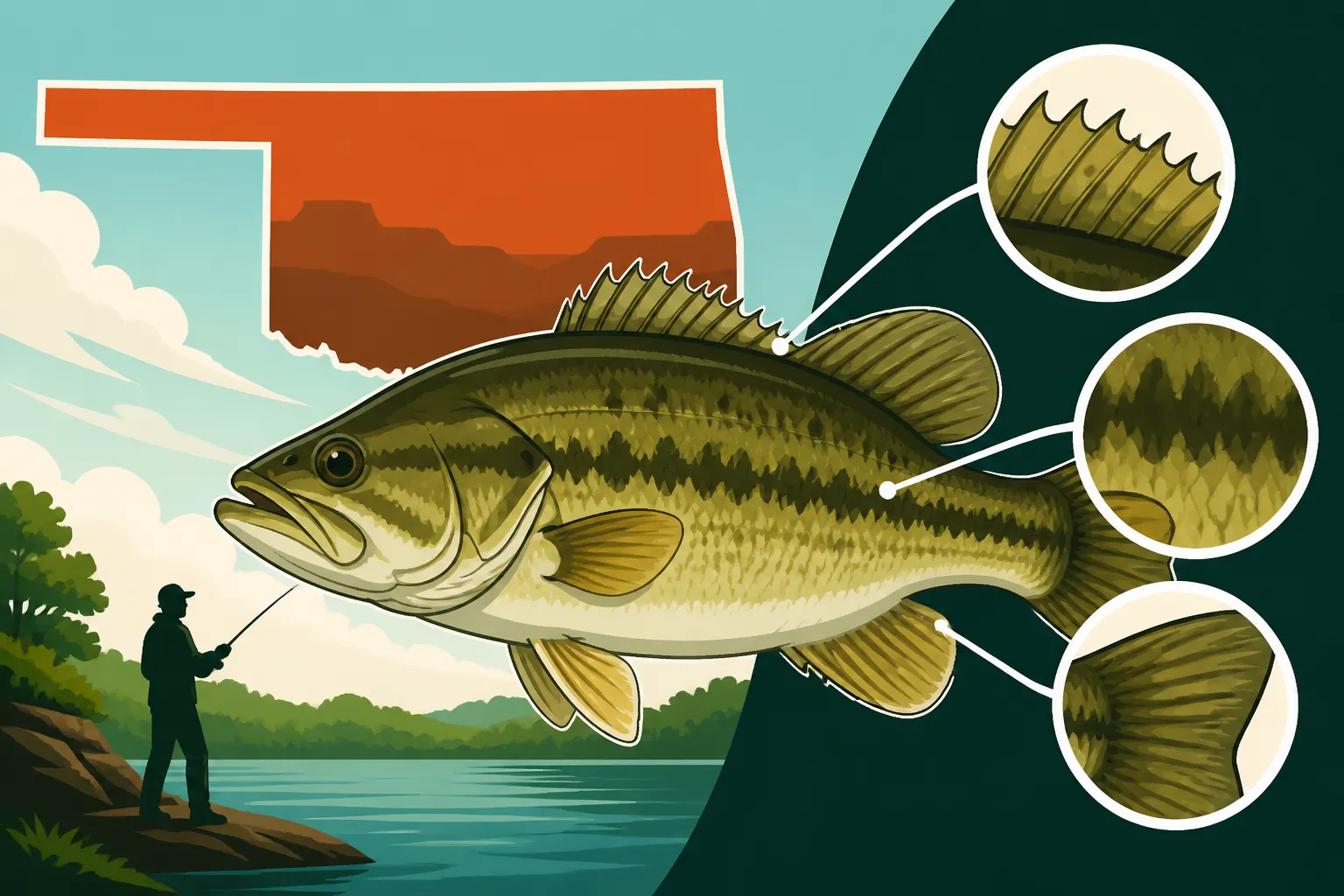
Now, let's look at the body. The spotted bass gets its name from the rows of distinct, dark spots that run along its lower side, below the lateral line. These spots often look like they've been individually dabbed on with a dark pencil, and they're usually quite prominent. While largemouths also have a dark, often broken, lateral stripe, they typically lack these clear, individual spots on their belly scales. The spotted bass also has more scales on its cheek than a largemouth, but that's a bit harder to count accurately on a squirming fish! The dark lateral line itself on a spotted bass is usually pretty distinct, and these blotches or spots beneath it are one of the most reliable visual cues.
The Dorsal Fin Gap and Tongue Patch
Moving to the fins, pay attention to the dorsal fin (the one on its back). Both the largemouth and spotted bass have two dorsal fins that are technically connected, but the spotted bass will have a less pronounced, or sometimes almost non-existent, notch or separation between its spiny dorsal fin and its soft-rayed dorsal fin. The largemouth usually has a much deeper, more obvious separation, making it look almost like two distinct fins.
Here's another super important, almost foolproof trick: carefully feel the tongue. A spotted bass will have a small, rough patch of teeth on its tongue. You can usually feel this by gently running your finger across the tongue. Neither a largemouth nor a smallmouth will have this distinct patch. If you're still not sure after looking at the mouth and spots, this tongue patch is often the definitive indicator. It's a unique characteristic that sets the spotted bass apart immediately.
Coloration and Body Shape
While coloration can vary greatly depending on water clarity, diet, and habitat, spotted bass generally have a greenish-gold to olive-green body with a prominent, often broken, dark lateral stripe. Their belly is usually white to cream, fading into the darker sides. They tend to be more "football-shaped" or stockier than a largemouth, but not as streamlined or bronze-colored as a smallmouth. They often have a slightly smaller head in proportion to their body compared to a largemouth. Remember, color is the least reliable indicator, but it can be a supporting clue when combined with other features.
Comparing Spotted Bass to Their Lookalikes
The biggest challenge in identifying a spotted bass usually comes down to differentiating it from largemouth and, less commonly, smallmouth bass. They are all part of the black bass family, after all, and they share some similar traits. But knowing the subtle nuances can make all the difference. For a deeper dive into the family tree, check out Largemouth vs Smallmouth vs Spotted Bass: How to Tell Oklahoma's Bass Apart.
Spotted Bass vs. Largemouth Bass
This is the most frequent point of confusion in Oklahoma, and for good reason—they often inhabit similar waters and share a similar overall greenish hue.
| Feature | Spotted Bass | Largemouth Bass |
|---|---|---|
| Upper Jaw (Closed) | Ends at or slightly before the middle of the eye | Extends noticeably past the back of the eye |
| Tongue | Has a distinct rough patch of teeth | Smooth, no rough patch of teeth |
| Lateral Spots | Rows of distinct, dark spots below the lateral line | Generally absent, or very faint |
| Dorsal Fin | Less pronounced notch, appearing more connected | Deep, obvious notch, almost two separate fins |
| Body Shape | More "football" shaped, slightly stockier | More elongated, somewhat less robust |
| Overall Feel | Often feels firmer, more muscular | Can feel a bit softer, especially larger fish |
Think of it this way: if you're holding a bass and that jaw goes way back past the eye, and the tongue feels smooth, you've likely got a largemouth. If the jaw stops around the middle of the eye, and you feel those little sandpaper-like teeth on the tongue, it's almost certainly a spotted bass. Learning to recognize these differences on your own can be tough initially, but with practice, it becomes second nature. There are many great resources available, and even a waterproof fish ID card from a place like Amazon could be a handy tool to keep in your tackle box.
Spotted Bass vs. Smallmouth Bass
While less common to confuse in Oklahoma's typical spotted bass range, it can happen, especially in clearer, rockier waters where smallmouth might also thrive. Smallmouth bass generally prefer cooler, clearer water and rocky habitats, often more riverine environments.
The most obvious difference with a smallmouth is its overall coloration – they're typically bronze, brown, or even yellowish, not green. Their vertical bars are more common than horizontal stripes or spots. Their mouth is also significantly smaller, with the jawline rarely reaching the center of the eye. Smallmouths also lack the tongue patch that defines a spotted bass. If you're fishing a clear, rocky river in eastern Oklahoma, and you catch a bronze-colored bass with vertical bars, you're probably looking at a smallmouth. However, if it's green with distinct spots and has that tongue patch, it's definitely a spot. Smallmouth Bass in Oklahoma: What Anglers Should Know covers these bronze beauties in more detail.
Habitat and Behavior Clues
Sometimes, where you catch a fish can give you a pretty good hint about what species it is. While there's always overlap, spotted bass do have some general preferences that can aid in your identification process.
Preferred Environments
Spotted bass are often found in environments that are a bit of a mix between what largemouths and smallmouths prefer. They love clear to moderately clear water, and they're not afraid of current. You'll find them in many of Oklahoma's larger reservoirs, particularly those with good rock structure, bluffs, and standing timber. They're also quite common in larger rivers and streams with good flow and rocky bottoms. They seem to thrive in reservoir systems that have deeper, clearer sections but also offer some submerged cover.
You might catch a spotted bass in the same cove as a largemouth, but often, the spot will be holding a little deeper, or closer to a rocky point or bluff wall. They are excellent ambush predators, often holding near submerged trees, rock piles, or ledges, waiting for baitfish to swim by. They're less likely to be buried deep in thick lily pads or extremely shallow, muddy backwater coves, which are often prime largemouth territory.
Behavior on the Line
When you hook a spotted bass, you'll generally know it! They are renowned for their feisty, hard-fighting nature. While they might not make the same spectacular jumps out of the water as a smallmouth, they tend to make strong, relentless runs and pull hard. They're often described as fighting "down and dirty," staying deep and pulling like crazy, rather than leaping. A largemouth, especially a big one, might head for heavy cover and try to dig in, or make a big head shake and jump. Smallmouths are famous for their acrobatic leaps and quick, darting runs. The spotted bass often feels like a constant, powerful pull, testing your rod and reel. Having a good, sturdy spinning or baitcasting combo is key for these fighters, and you can find a wide range of options on platforms like Amazon.
Knowing these behavioral tendencies can also help you narrow down your identification, especially if you're not getting a clear look at all the physical features. If you're consistently pulling in green bass that fight like angry pit bulls and stay deep, there's a good chance you're on a school of spotted bass.
What to Do if You're Still Unsure
It's okay to still have questions! Fish identification can be tricky, especially with subtle variations and hybrids that sometimes occur. If you're on the water and still not 100% sure, the safest bet is always to err on the side of caution.
Photograph and Release
If you're unsure about the species and its relation to bag or size limits, take a clear photo of the fish from multiple angles. Focus on the mouth, jawline, lateral spots, and dorsal fin. Then, if you're not keeping fish for dinner anyway, practice catch and release. This ensures you're not accidentally violating any regulations. You can then review the photos later with a reliable identification guide or even post them on fishing forums for help from other anglers. Having a good camera on your phone is almost as important as your fishing rod these days!
Consult a Local Expert
Don't hesitate to ask for help from seasoned anglers at the boat ramp, local bait shops, or even park rangers. Many of them have years of experience on our local lakes and rivers and can quickly identify a fish. They often love sharing their knowledge, and it's a great way to learn. They can also point you to reliable local resources, like the Oklahoma Department of Wildlife Conservation's official guides. It's always better to ask than to guess.
Review Official Resources
The Oklahoma Department of Wildlife Conservation (ODWC) provides fantastic resources, including detailed fish identification guides on their website. These often include clear diagrams and photos that highlight the key features we've discussed. Keep a copy of these guidelines saved on your phone or print them out to keep with your gear. Understanding Oklahoma Fishing License Requirements in Oklahoma and all the associated rules is part of being a responsible angler, and knowing your fish species is a big part of that.
By taking the time to learn these identification tips, you'll not only become a more confident angler but also a more informed participant in the conservation of Oklahoma's incredible fisheries. Happy fishing!
Disclaimer
This article is for general informational purposes only and does not constitute professional advice. Laws, prices and regulations vary by location and change over time. Consult a qualified professional for guidance on your specific situation.