Best Cooler for a Fishing Boat
There's nothing quite like reeling in a trophy bass or a stringer full of crappie on a warm Oklahoma day, feeling the sun on your face and the spray from the lake. But then the reality hits: how are you going to keep that precious catch, or even your ice-cold drinks and lunch, perfectly chilled under the blazing Oklahoma sun for hours on end? Choosing the right cooler for your fishing boat is more than just picking a pretty color; it's about preserving your efforts, your refreshments, and ensuring a comfortable day on the water. This guide will walk you through the ins and outs of finding the absolute best cooler for your Oklahoma angling adventures.
Why Your Cooler Choice Matters on Oklahoma Waters
When you're out on a lake like Texoma or Eufaula, the conditions can be demanding. It's not just about tossing a cheap cooler in the boat; it's about investing in a piece of gear that can stand up to the elements and protect your valuable catch. A poorly chosen cooler can lead to melted ice, spoiled fish, and warm drinks, turning a perfect day into a frustrating one.
The Oklahoma Heat and Ice Retention Challenges
Let's face it, Oklahoma summers are no joke. Triple-digit temperatures aren't uncommon, and even on milder days, the sun beating down on a boat can quickly turn a cooler into a lukewarm bath. This is where a cooler's ice retention capabilities truly come into play. You need a cooler that can hold ice for days, not just hours, especially if you're planning an all-day trip or even an overnight camping and fishing excursion. The frustration of opening your cooler to find a puddle of water where your ice used to be, and your fish not quite as firm as they should be, is something no angler wants to experience.
Good ice retention means thicker insulation, better gasket seals, and often a rotomolded construction process that creates a seamless, durable shell. Think about those long hauls across a hot lake: a premium cooler is designed to fight against that heat transfer, keeping the cold in and the heat out. It’s the difference between coming home with fresh fillets and wondering if your catch is still good.
Durability for Rough Lake Conditions
Oklahoma lakes can be unforgiving. From the occasional rogue wave on Grand Lake to navigating rocky shorelines for that perfect crappie spot, your gear is going to take a beating. A fishing boat cooler isn't just sitting still; it's getting jostled, sliding around, potentially having heavy tackle boxes stacked on top, and getting splashed. A flimsy cooler simply won't last. The latches might break, the hinges could snap, or the plastic could crack from impacts.
That's why durability is paramount. You need a cooler built to withstand the realities of fishing. This often means heavy-duty materials, reinforced stress points, and robust hardware. Imagine loading your cooler onto your boat from a steep ramp, or having it tumble from the back of your truck – a durable cooler can take that abuse and keep on performing. It's an investment that pays off by not needing replacement after just a season or two.
Managing Space on a Fishing Boat
Every square inch on a fishing boat is valuable real estate. Whether you're in a compact jon boat or a spacious bass boat, you're constantly trying to optimize your setup for tackle, rods, electronics, and, of course, space to move around. Your cooler needs to fit efficiently without becoming a tripping hazard or hogging too much prime fishing space. A massive cooler might offer superior ice retention, but if it means you can't cast comfortably, it's not the right choice for your vessel.
Consider the dimensions and footprint of any cooler you're looking at. Some boat designs have specific cooler cutouts or designated areas, while others offer more flexibility. For instance, a long, low cooler might fit perfectly under a console or bench, whereas a tall, bulky one could block access or visibility. Thinking about how you use your boat – do you need seating? a casting platform? – will help you determine the optimal size and shape for your cooler. Best Boats for Grand Lake's Open Water talks about optimizing space for other gear, and the same principle applies here.
Key Features to Look For in a Fishing Boat Cooler
When you're ready to start shopping, don't just grab the first one you see. Take a moment to consider these essential features that separate a good fishing cooler from a great one. These details are what will make your life easier and your ice last longer.
Ice Retention Power
This is often the number one priority for Oklahoma anglers. How long can a cooler actually keep ice frozen solid? The answer lies in several design elements. First, look for coolers with rotomolded construction. This process involves molding plastic in a way that creates a single, seamless piece, eliminating weak points where heat can seep in. It's the gold standard for high-performance coolers. Second, examine the insulation thickness. The more insulation, usually pressure-injected polyurethane foam, the better it will perform. Premium coolers boast several inches of insulation in their walls and lid.
Finally, a quality gasket seal around the lid is crucial. This is usually a freezer-grade rubber gasket that creates an airtight seal when the lid is latched, preventing cold air from escaping and warm air from entering. Without a good seal, even the thickest insulation won't do its job effectively. Features like robust T-latches help compress the lid against the gasket for that optimal seal.
Material and Construction
Beyond rotomolding, the specific materials used and the overall construction quality contribute to both durability and performance. Most high-end hard coolers are made from high-density polyethylene (HDPE) or linear low-density polyethylene (LLDPE). These plastics are incredibly tough, impact-resistant, and won't easily crack or shatter under pressure or impact. They also resist UV degradation, which is vital when your cooler is sitting in direct sunlight all day.
Pay attention to the hardware. Are the hinges robust and preferably integrated or heavy-duty? Are the latches strong and easy to operate, even with cold or wet hands? Stainless steel hardware is a big plus for corrosion resistance, especially if you're ever fishing brackish water or just dealing with constant moisture. A well-constructed cooler feels solid, substantial, and ready for abuse.
Practical Design Elements
It's the little things that often make the biggest difference in day-to-day use. Consider the latches: are they easy to open and close, even when your hands are full or wet? Some prefer simple rubber T-latches, while others like cam-style or push-button mechanisms. What about the handles? Padded grips or sturdy rope handles are much more comfortable for carrying a heavy, ice-filled cooler from the truck to the boat, especially if you're making multiple trips.
A good drain plug is also essential. You want one that's large enough for quick draining, easy to open without tools, and securely attached so you don't lose it. Non-slip feet on the bottom of the cooler are also a game-changer on a rocking boat deck, preventing it from sliding around and becoming a hazard. Some coolers even offer integrated tie-down slots, allowing you to secure it firmly to your boat, particularly useful on windy days on open water.
Capacity and Size Considerations
How much cooler do you actually need? This largely depends on what you're fishing for, how many people are with you, and how long you plan to be out. A solo angler targeting crappie for a few hours might only need a 20-quart cooler for a drink and a small stringer. A group of friends on an all-day striped bass hunt on Lake Texoma will need something much larger – perhaps a 65-quart or even 100-quart model to hold a significant catch and plenty of provisions.
Think about the dimensions carefully. Will it fit under a seat? Does it serve double duty as a casting platform or extra seating? Can you still open the lid fully without hitting something? It's a balance between capacity and practicality on your specific vessel. Measure the available space on your boat and compare it to the cooler's external dimensions before making a purchase. Remember, a cooler full of ice and fish gets incredibly heavy, so ensure it’s a size you can manage to move.
Types of Coolers for Oklahoma Fishing Boats
The cooler market has exploded with options, and understanding the different types can help you narrow down your search for the perfect fishing companion. Each type has its own strengths and weaknesses that make it suitable for different kinds of Oklahoma fishing trips.
Roto-Molded Hard Coolers
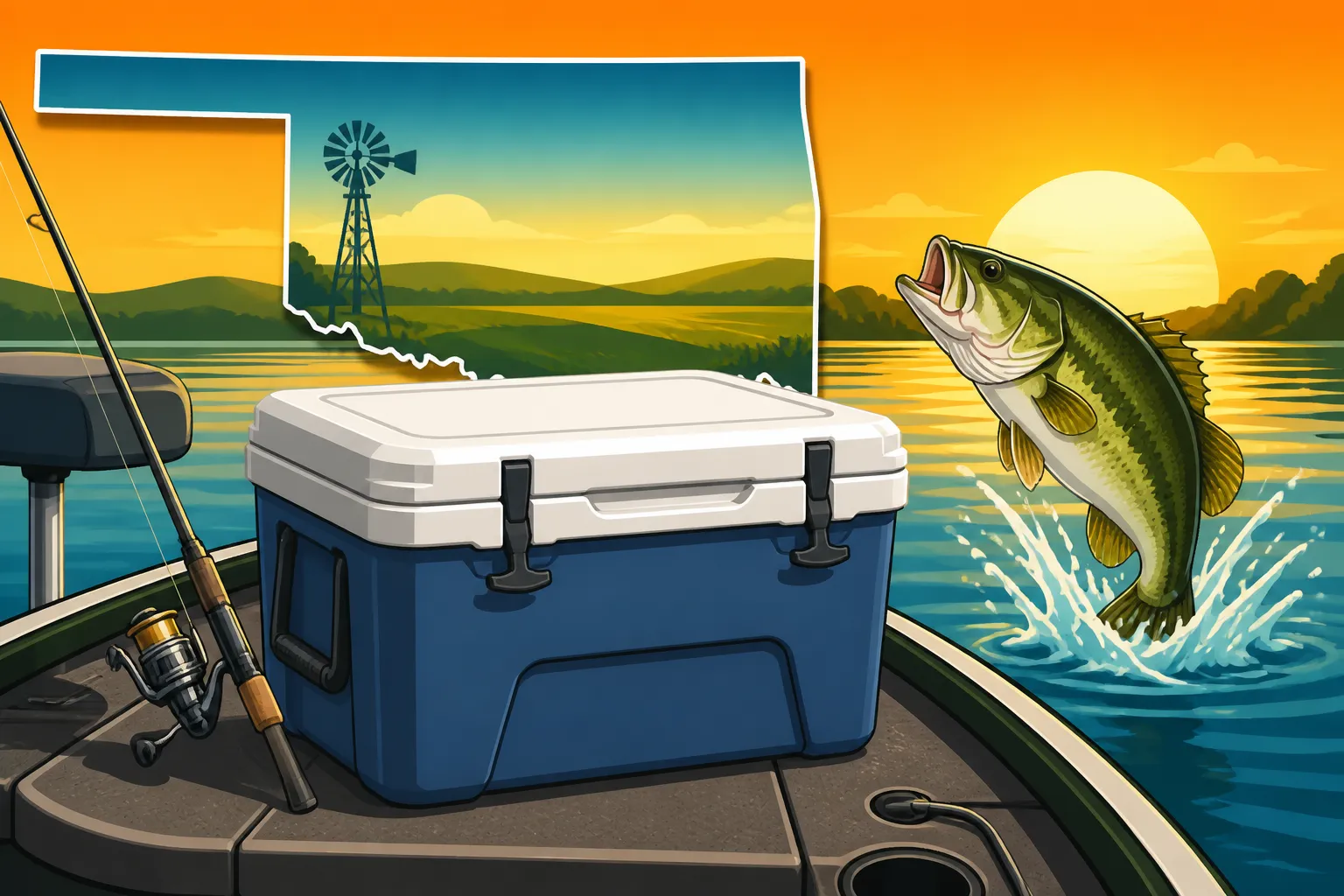
These are the heavy hitters, the titans of ice retention, and often the choice of serious anglers. Roto-molded coolers, like those you might find at Bass Pro Shops, are characterized by their thick, seamless walls and premium insulation. They offer exceptional durability and can typically hold ice for multiple days, even in scorching Oklahoma heat. Their robust construction means they can withstand bumps, drops, and the general abuse of a fishing environment, often doubling as a sturdy seat or casting platform.
However, this performance comes with a trade-off. Roto-molded coolers are generally heavier and more expensive than other types. Their bulk can also make them challenging to move around, especially when fully loaded. For anglers who prioritize maximum ice retention and extreme durability for extended trips or large catches, the weight and cost are often well worth it. They're a long-term investment that rarely disappoints when it comes to keeping your Oklahoma Statewide Bass Bag Limit Explained fresh.
High-Performance Soft Coolers
If portability and lighter weight are high on your list, a high-performance soft cooler might be your best bet. These coolers typically feature advanced insulation layers, waterproof outer shells, and leak-proof zippers or roll-top closures. While they won't match the multi-day ice retention of their rotomolded hard cousins, many models can keep ice for a full day or even two, which is perfect for shorter trips or when you need something easier to carry. You'll find many options on Amazon with thousands of reviews to help guide your choice.
Soft coolers are much more flexible and can sometimes be stashed in tighter spaces on a boat. They're also much more comfortable to carry, often featuring shoulder straps or backpack designs. They are excellent for packing lunch, drinks, and smaller catches when you don't need the bulk or extreme ice life of a hard cooler. However, they are generally less durable than hard coolers and can be susceptible to punctures or tears if not cared for properly.
Electric Coolers
Electric coolers, sometimes called thermoelectric coolers, offer a unique advantage: they don't require ice! Instead, they plug into a 12V power source (like your boat's cigarette lighter or a portable power station) and use a thermoelectric chip to cool their contents. This can be fantastic for keeping sandwiches and drinks chilled without dealing with melting ice and water.
The main downside is that they usually can only cool to a certain degree below the ambient temperature (e.g., 40 degrees Fahrenheit below outside air), so they might not get as cold as ice in a premium cooler, especially on a sweltering Oklahoma afternoon. They also require a continuous power supply, which can be a drain on your boat's battery if you're not careful. Electric coolers are generally better for keeping pre-chilled items cold rather than rapidly cooling warm ones, and they aren't ideal for storing a large number of fish that need to stay near freezing.
Here's a quick comparison of these cooler types:
| Feature | Roto-Molded Hard Cooler | High-Performance Soft Cooler | Electric Cooler |
|---|---|---|---|
| Ice Retention | Excellent (3-7+ days) | Good (1-2 days) | No ice needed (Cools vs ambient) |
| Durability | Superior | Good | Moderate |
| Portability | Low (Heavy, bulky) | High (Light, flexible) | High (No ice weight) |
| Cost | High | Moderate to High | Moderate |
| Primary Use | Long trips, large catches | Day trips, personal items | Food/drinks, supplemental |
| Power Needs | None | None | 12V DC (continuous) |
| Maintenance | Simple clean | Simple clean, zipper care | Clean, monitor power |
Choosing the Right Cooler for Your Oklahoma Fishing Style
Your fishing habits and the kind of trips you take will heavily influence which cooler is truly "best" for you. There's no one-size-fits-all answer, especially with the diverse fishing opportunities across Oklahoma.
Day Trippers and Casual Anglers
If your typical fishing trip involves a few hours on a local pond or a morning on a lake like Lake Murray, you probably don't need the absolute top-tier, multi-day ice retention of a massive rotomolded cooler. For these scenarios, a high-performance soft cooler or a mid-range hard cooler (think 25-45 quarts) is often ideal. You want something that's easy to transport, can keep your drinks cold, and has enough space for a modest catch.
A soft cooler is fantastic for bank fishing or quick trips where you're not planning to keep a huge stringer. They're lightweight and comfortable to carry from the parking lot to the water's edge. For boat anglers, a smaller hard cooler offers a good balance of durability and ice retention without taking up too much deck space. It's about convenience and adequate performance for shorter durations, without overspending on features you won't fully utilize. Consider the ease of cleaning and how quickly you can get it ready for your next outing. Best Fishing Techniques for Beginners often emphasizes simplicity, and your cooler choice can follow suit.
Tournament Anglers and Multi-Day Trips
Now, if you're hitting the tournament trail, chasing trophy bass, or planning a multi-day camping and fishing adventure, your cooler needs are entirely different. For these serious endeavors, a rotomolded hard cooler is virtually a non-negotiable. You're going to need maximum ice retention to keep live bait viable, harvested fish fresh for the weigh-in or long drive home, and enough provisions for days on the water.
Sizes in the 65-quart to 125-quart range are common for tournament anglers, allowing ample space for a full bag limit of Oklahoma's Bass Fishing Rules and Limits, plus ice. The durability of these coolers also means they can handle being bounced around in a truck, loaded and unloaded repeatedly, and serving as a stable casting platform. Many serious anglers even have multiple coolers: a large one for fish and main provisions, and a smaller one for easily accessible drinks and snacks. You'll often see these high-end coolers on the boats of pros on Lake Eufaula or Grand Lake.
Family Fishing Adventures
Fishing with the family is all about fun, comfort, and creating lasting memories. Your cooler needs to support that mission, often balancing the need for chilled drinks and snacks with space for any fish caught. For family outings, versatility is key. You might want a cooler that can serve as extra seating or a table, and one that's easy for everyone to access.
A medium-sized hard cooler (45-65 quarts) often hits the sweet spot for family trips. It's large enough for drinks, sandwiches, and a decent haul of What is the Easiest Fish to Catch in Oklahoma, but not so massive that it dominates the boat. Look for models with comfortable handles, easy-to-use latches, and possibly cup holders integrated into the lid. If you're planning a full day at a state park or a longer weekend trip, consider a second, smaller soft cooler specifically for drinks, allowing your main hard cooler to be dedicated to food and fish. This separation can keep everything organized and prevent cross-contamination. Don't forget to check out Safety Gear Checklist for Oklahoma Boaters as well to ensure all your equipment is up to snuff for family safety.
Ultimately, the best cooler for your fishing boat is one that seamlessly integrates into your fishing lifestyle, keeping your catch pristine and your provisions perfectly chilled, no matter where your Oklahoma angling adventures take you. Happy fishing!
Disclaimer
This article is for general informational purposes only and does not constitute professional advice. Laws, prices and regulations vary by location and change over time. Consult a qualified professional for guidance on your specific situation.