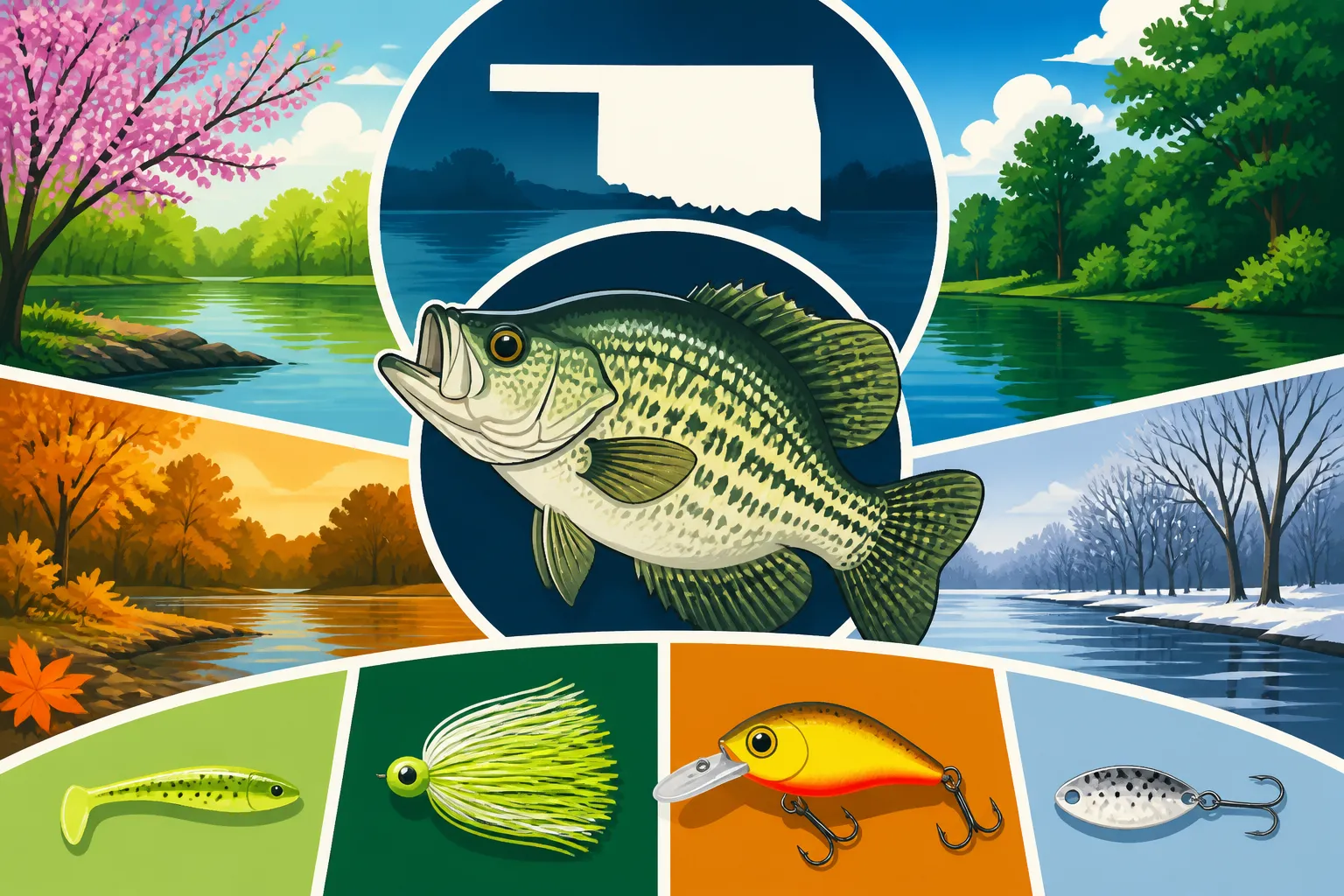
Seasonal Lure Selection for Crappie
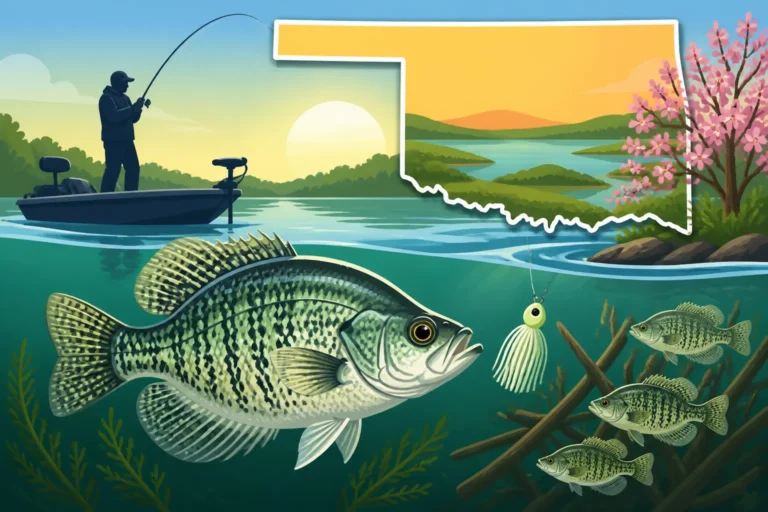
Crappie fishing in Oklahoma can be incredibly rewarding, but there’s nothing more frustrating than knowing the fish are there but they just won't bite. Often, the missing piece of the puzzle isn't your skill, but simply having the wrong lure for the conditions. This comprehensive guide will walk you through how to choose the perfect crappie lures for every season, ensuring your tackle box is always ready for success on the water.
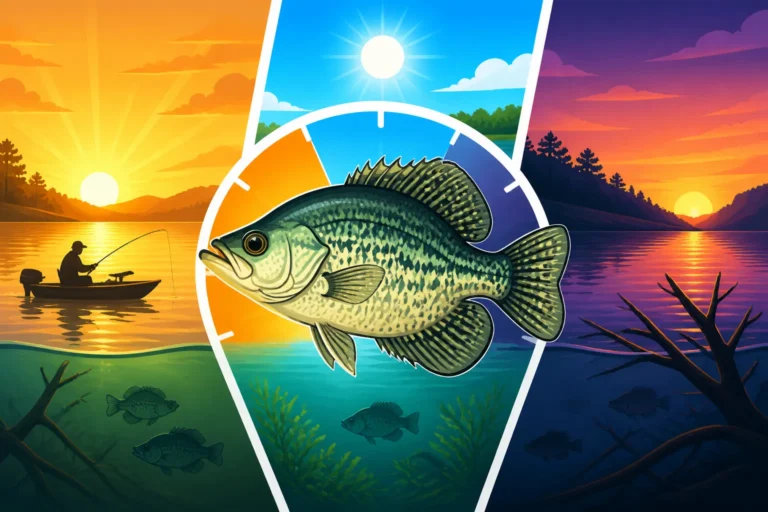
Understanding how crappie behave throughout the year, from their shallow-water spawning rituals to their deep-water winter hideouts, is absolutely essential. The lures and techniques that fill your livewell in March will likely leave you empty-handed in August. It’s a dynamic dance with nature, and having the right artificial bait or live offering for the time of year is your ticket to a successful day on Oklahoma’s many fantastic crappie lakes.
Spring Crappie Lure Selection: Capitalizing on the Spawn
Ah, spring! The season of renewal, warmer weather, and for crappie anglers, the most anticipated time of year. As the water temperatures begin their steady climb, crappie, both black and white, start to shake off their winter lethargy and embark on their annual journey toward the shallows to spawn. This period offers some of the most consistent and exciting crappie fishing, but even within spring, the "best" lure can change dramatically from week to week.
Pre-Spawn Aggression and Early Spring Bites
When the water temperatures in Oklahoma lakes are hovering in that 45-55°F range, crappie are really starting to move. They're transitioning from their deep-water winter haunts to shallower staging areas. Think creek channels that lead into coves, brush piles near drop-offs, and submerged timber at the edges of flats. They're still a bit cool and cautious, but they're actively feeding to build up energy for the upcoming spawn.
During this pre-spawn phase, your presentation needs to be relatively slow. Small jigs, typically in the 1/16 to 1/8 ounce range, are often the ticket. The heavier side of that spectrum helps you get down to where they're staging more efficiently. Focus on vertical jigging right on top of brush piles or slowly dragging your lure along those creek channel edges. Colors can be crucial here; brighter options like chartreuse, white, or a vibrant electric chicken pattern often get their attention in the still cool and sometimes stained water. Many anglers swear by the effectiveness of tipping their jigs with a live minnow during this period, adding that irresistible natural scent and movement. You're trying to coax a bite from fish that are still a little sluggish, so a slow, methodical approach pays off.
Peak Spawn: Shallow Water Targets
Once those water temperatures hit the sweet spot, typically between 58-68°F, it's game on! This is when crappie fully commit to the shallows for their spawning ritual. You'll find them congregated in surprisingly skinny water, often in just a few feet, around any kind of cover they can find: reeds, lily pads, submerged stumps, dock pilings, and even sparse brush. They become territorial and are less concerned with feeding for sustenance and more about protecting their nests.
For peak spawn, scale down your jig size significantly. Tiny jigs, in the 1/32 to even 1/64 ounce range, become incredibly effective. The lighter weight allows for a very slow, natural fall, which is often what triggers a strike from a spawning crappie. Colors tend to shift towards more natural or subtle hues during this time, especially in clearer waters. Think pearl, light pink, white, or a classic black and chartreuse combo. You're not trying to entice a chase; you're often provoking a defensive strike. Pitching these small jigs directly to visible cover and letting them slowly waft down is a deadly technique. Sometimes, simply suspending a small jig under a bobber can keep it in the strike zone long enough to aggravate a nesting crappie. For more specific insights, check out our guide on how to catch crappie during the spring spawn at Lake Eufaula, Oklahoma.
Post-Spawn Recovery and Retreat
After the intense period of spawning, crappie are often exhausted and in need of some recovery time. As water temperatures continue to climb and the shallows get too warm, they begin to retreat to slightly deeper water, though usually not as deep as their winter homes. They'll often suspend near cover or structure just off the main lake points or in the mouths of coves, typically in the 8-15 foot range. They're still feeding, but they might be a bit more spread out.
During this post-spawn recovery, a slightly heavier jig (1/16 to 1/8 ounce) allows you to cover these slightly deeper areas effectively. Small spinnerbaits, like a classic Beetle Spin, can also be quite effective as they offer a bit more flash and vibration to attract scattered fish. You might also start experimenting with tiny crankbaits that dive to the 5-10 foot range. As the primary forage—shad—becomes more active, adjusting your lure colors to mimic these baitfish (silver, white, gray, light blue) can be highly productive. A slower retrieve with occasional pauses is often key, giving those recovering crappie time to react. If you're looking for prime spring opportunities, make sure to read up on the Best Oklahoma Lakes for a Spring Crappie Run.
Summer Crappie Lure Selection: Beating the Heat
Summer fishing for crappie in Oklahoma brings its own set of challenges, mainly due to the rising water temperatures. Crappie are cold-blooded creatures, and as the surface water heats up, they seek out cooler, more comfortable environments. This often means moving deeper, or changing their feeding patterns to coincide with cooler parts of the day. Don't let the heat deter you, though; summer crappie fishing can be incredibly rewarding if you know where to look and what to use.
Deep Water Presentations
As the dog days of summer arrive and water temperatures soar into the 70s and 80s, crappie will head for the comfort of cooler, more oxygenated water. You’ll typically find them suspended over old creek channels, along deep ledges, around submerged humps, or tucked into the dense branches of deep brush piles. These fish might be holding anywhere from 15 to 30 or even 40 feet deep, depending on the lake and the thermocline.
To reach these depths efficiently, you'll need heavier jigs, often in the 1/8 to 1/4 ounce range, sometimes even heavier if you're battling current or wind. Trolling with multiple rods, often referred to as "spider rigging," is a popular and highly effective technique. This involves deploying several rods from the front of the boat, each with a different depth and lure. Bright colors can still be effective for getting attention in the depths, but natural shad patterns are also a go-to. Small diving crankbaits that reach these deeper zones can also be deadly when trolled through schools of suspended crappie. Learning how to find crappie in deep water in summer is a skill that will consistently pay off during these hot months.
Evening and Night Fishing Tactics
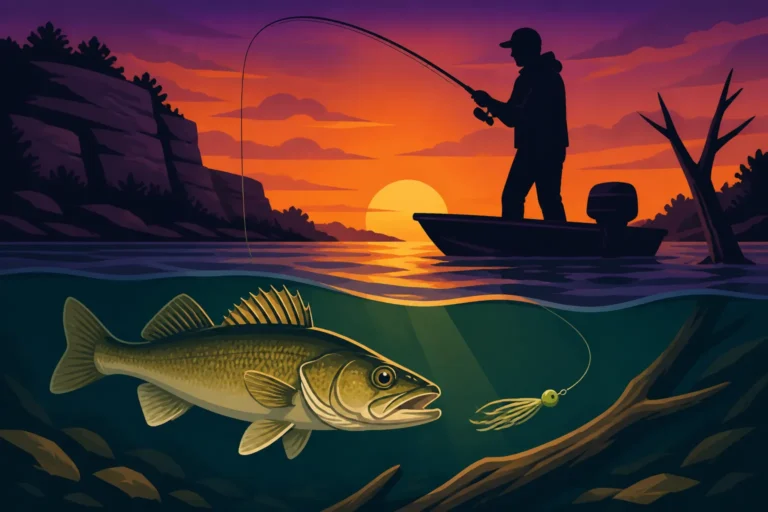
One of the most exciting and productive ways to target summer crappie is by fishing during the evening and night hours. As the sun dips below the horizon, water temperatures begin to cool slightly, and crappie often move shallower to feed on baitfish and insects that also become more active. This brief window, from dusk into the darkness, offers fantastic action.
Night fishing for crappie, especially under lights, is a summer staple in Oklahoma. Many anglers use submerged green LED lights or traditional lanterns hanging over the water to attract plankton, which in turn draws in baitfish like shad, and then the crappie follow. Small jigs, typically 1/32 to 1/16 ounce, in glow-in-the-dark, white, or chartreuse colors, are incredibly effective. You're usually vertical jigging directly under the lights or casting around the edges of the illuminated cone where crappie ambush prey. The bites can be incredibly subtle in the dark, so a sensitive rod is a must. If you haven't tried it yet, learning how to catch crappie at night under lights can totally transform your summer fishing experience.
Fall Crappie Lure Selection: Following the Bait
As the scorching Oklahoma summer gives way to the crisp air of autumn, crappie undergo another significant shift in behavior. The cooling water temperatures signal an urgent need to feed aggressively, piling on reserves for the leaner winter months ahead. This period can offer some of the most consistent and action-packed crappie fishing of the entire year, as fish move and feed with renewed vigor.
Transition to Cooler Water
When fall officially sets in and the water temperatures start to drop from their summer highs, crappie become much more active. They'll begin to spread out from their deep-water summer sanctuaries and move to shallower, yet still significant, structure. Think main lake points, brush piles situated at the mouths of creek arms, and channel bends in that 10-20 foot range. They're still looking for cover, but they're also actively hunting.
During this transition, jigs remain a top choice, with the 1/16 to 1/8 ounce sizes being standard. Small crankbaits, particularly those with a tight wiggle and a diving depth appropriate for the 10-15 foot range, can also be highly effective. The key here is that crappie are often schooling up and actively chasing baitfish. Your best bet is to find those baitfish schools – often visible on your electronics – and present your lure accordingly. Matching the hatch with shad-colored lures (silver, white, light blue) is a smart strategy, but don't shy away from classic chartreuse or orange patterns, especially if the water has some stain. Keeping an eye on fall crappie fishing patterns in Oklahoma can really help you dial in your approach.
Shad Migration and Active Feeding
One of the defining characteristics of fall crappie fishing is the dramatic migration of shad. As the water continues to cool, shad, which are a primary food source for crappie, begin to move into shallower creek arms and coves seeking warmer water. This movement creates an incredible feeding frenzy opportunity for crappie, who will relentlessly follow these baitfish schools. This is often when you'll find some of the largest crappie of the year.
For this period, small crankbaits that mimic shad, lipless crankbaits, and soft plastic swimbaits (again, in shad patterns) are absolutely deadly. Trolling these lures through schools of baitfish or casting them into feeding frenzies can result in rapid-fire action. Look for signs of surface activity – diving birds, ripples from schooling baitfish – as indicators of where the crappie might be. When fish are tightly schooled within a bait ball, vertical jigging with minnows or scented plastics can also be incredibly effective. Make sure you're up-to-date on your regulations, as even during prime feeding, bag limits apply, such as Oklahoma's statewide crappie bag limit, and some lakes like Texoma have specific rules that differ from the statewide limits.
Winter Crappie Lure Selection: Slow and Deep
Winter fishing for crappie in Oklahoma can be a bit more challenging than the other seasons, but it can also be incredibly rewarding if you embrace the cold and understand crappie behavior. With very cold water temperatures, crappie become lethargic and less active, seeking out stable, deeper environments where they can conserve energy. This means your lure selection and presentation need to shift dramatically towards finesse and precision.
Locating Deep Water Sanctuaries
During the coldest months, crappie will move to the deepest parts of the lake. They often congregate in massive schools around significant underwater structure: think standing timber in deep channels, expansive brush piles, submerged roadbeds, and severe channel swings. These areas provide stable temperatures and cover from predators. Finding these schools is 90% of the battle in winter. Your electronics (fish finder, sonar) become your best friend, helping you pinpoint these deep-water sanctuaries.
Once you’ve located a school, precision is paramount. Small, dense jigs, typically 1/16 to 1/8 ounce, are crucial for vertical presentations. You need to get your lure down quickly and accurately right into the heart of the school. Metallic colors like silver or gold can sometimes trigger strikes, as can dark colors like black/blue, especially in clear water. Many anglers find success with glow-in-the-dark jigs, as they can stand out in the low light of deep water. The bite during winter is often incredibly subtle—sometimes feeling like nothing more than extra weight on your line, or a slight twitch. A very slow, almost imperceptible lift-and-drop, or simply holding the jig absolutely still, is often what it takes to get a crappie to commit. Tipping your jig with a live crappie minnow is highly recommended for added scent and appeal, increasing your chances when fish are finicky.
Suspended Crappie and Finesse Tactics
In winter, crappie frequently suspend at specific depths, sometimes just off the bottom, sometimes mid-water column, over deep water. They might be in a feeding mood, or just holding, but either way, they are often less willing to chase a fast-moving lure. This calls for extreme finesse.
Tiny jigs, including ice fishing jigs (if you're fishing a very cold open-water reservoir), or tiny hair jigs in the 1/32 ounce range are excellent choices. To achieve maximum lure action and sensitivity, using the lightest line possible – 2 to 4 lb test monofilament or fluorocarbon – is critical. This lighter line allows your small jig to fall more naturally and helps you detect those faint bites. Your fish finder is essential for identifying the exact depth of the suspended crappie. Once you know their depth, present your lure directly to them. This often means carefully lowering your jig to that exact mark and holding it steady, or imparting minimal action. Sometimes, a tiny grub on a bare jig head, barely moving, is all that will convince a cold-water crappie to bite. While focused on spring, many of the finesse principles in how to jig for crappie in spring can be adapted for winter success.
Essential Lure Types and Colors for Oklahoma Crappie
To be a consistently successful crappie angler in Oklahoma, you need a diverse arsenal of lures and a solid understanding of when and how to deploy them. While crappie are known for their love of small jigs, there's more to the game than just one type of bait.
Jigs: The Versatile Workhorse
Jigs are, without a doubt, the most fundamental and versatile crappie lures. They come in an astonishing array of shapes, sizes, and colors, making them adaptable to virtually any crappie fishing scenario. The basic setup involves a lead head molded onto a hook, which is then paired with a soft plastic body. These soft plastic bodies can be grubs, tubes, paddletails, or minnow imitations, each offering a slightly different action.
The weight of your jig head (ranging from 1/64 oz up to 1/4 oz or even heavier) is crucial. Lighter jigs (1/32, 1/16 oz) are perfect for shallow water, a slow, natural fall, and when crappie are finicky. Heavier jigs (1/8, 1/4 oz) are essential for reaching deeper water quickly, fishing in wind or current, and maintaining contact with your lure. Experiment with different sizes to find what the crappie prefer on a given day, or what's needed to get to the fish's depth.
As for colors, the options are endless. In Oklahoma, popular soft plastic jig colors include chartreuse, white, pearl, black/chartreuse, blue/chartreuse, pink, and natural shad patterns. It's wise to carry a variety and be prepared to experiment. Often, crappie will show a preference for a specific color on a particular day. You can find a huge selection of these jigs, sometimes in bulk packs, on platforms like Amazon, which is great for building up your collection without breaking the bank. For a deeper dive into bait, consider our guide on the best bait for crappie in Oklahoma.
Crankbaits and Spinners: For Aggressive Bites
While jigs often get the job done, don't overlook small crankbaits and inline spinners, especially when crappie are actively feeding and more aggressive. These lures excel at covering water and triggering reaction strikes, particularly during the active feeding periods of spring and fall, or when trolling in summer.
Small crankbaits are designed to imitate baitfish and are excellent for locating scattered crappie. The key is to select models that dive to the depth where the crappie are holding. Brands like Strike King and Bandit make excellent crappie-sized crankbaits that have proven effective. Shad patterns (silver, white, gray, light blue), chrome finishes, and vibrant firetiger or clown patterns are great starting points. When crappie are chasing bait, a crankbait can be incredibly effective.
Inline spinners, such as the classic Johnson Beetle Spin or various Rooster Tail patterns, add flash and vibration that can attract attention in stained water or when fish are spread out. The spinning blade creates an irresistible visual and sonic appeal. They work well for casting and retrieving around cover, along weed lines, or even for trolling at slower speeds. The flash can often trigger a crappie's instinct to strike even if it's not actively feeding.
The Undeniable Power of Live Bait
Let's be real, sometimes nothing, and I mean nothing, beats a live minnow. While artificial lures are incredibly effective, there are days when crappie are so finicky or lethargic that only a natural, wiggling minnow will get their attention. Tipping a jig with a minnow is a classic, unbeatable combination that adds both scent and that irresistible natural movement, making it deadly, especially in colder water.
Minnows can be fished in various ways. A simple hook under a bobber is a time-tested method, particularly effective in shallow water around cover. For deeper presentations, minnows can be fished vertically on a tight-line rig, with a small weight to get them down to the crappie's depth. When crappie are slightly more active, a small minnow hooked through the lips and fished on a jig head can be incredibly potent.
Beyond minnows, sometimes other live offerings like small pieces of worms or even small pieces of cut bait can attract crappie, especially if they are feeding on different forage. However, for sheer consistency and universal appeal, live minnows are generally considered the prime live bait choice for crappie anglers across Oklahoma.
Factors Influencing Your Crappie Lure Choices
Beyond the changing seasons, several environmental factors play a huge role in determining which crappie lures will be most effective on any given day. Ignoring these conditions means you might be fishing with the "right" seasonal lure, but still coming up empty. A keen eye and a willingness to adapt are the hallmarks of a successful crappie angler.
Water Clarity and Color
The visibility of the water is perhaps one of the most immediate and impactful factors for lure selection. Crappie, like most fish, rely heavily on their sight to hunt, and water clarity directly affects how well they can see your lure.
In crystal-clear lakes, such as Broken Bow Lake, where visibility might be several feet, natural and subtle lure choices are often key. Greens, browns, pearl, and translucent plastics that blend into the environment tend to outperform bright, gaudy colors. Crappie in clear water are often more wary and can spot unnatural presentations from a distance. Slow, finesse presentations with smaller baits are also typically more effective.
Conversely, in stained or muddy water, the rules reverse. Here, crappie rely more on other senses – the vibration and silhouette of your lure. Bright, high-contrast colors like chartreuse, orange, neon green, and hot pink become much more effective because they stand out visually. Lures with a lot of movement, like a jig with a paddletail or an inline spinner, also help crappie locate the bait through the murk. You need to create a disturbance that they can detect. Always carry a range of colors in your tackle box; you might be surprised at what works!
Forage Base and Matching the Hatch
Crappie are opportunistic feeders, but their diet primarily consists of small baitfish (especially shad and various minnow species) and insects. The principle of "matching the hatch" – selecting a lure that mimics the size, shape, and color of the prevalent food source – is fundamental to consistent success. This applies whether you're targeting crappie or a trophy largemouth bass fishing in Oklahoma.
If you observe schools of shad on your sonar, or see them "nervously" jumping on the surface, that's your cue to switch to shad-colored lures. Silvers, whites, grays, and light blues in the appropriate size are excellent choices. During certain times of the year, particularly late spring and summer, insects can be a significant part of the crappie diet. In such cases, tiny black, brown, or olive jigs can be surprisingly effective.
Paying attention to what the fish are actually eating can give you a significant edge. Sometimes, when cleaning your catch, you might find small baitfish or insects in their stomachs, providing a direct clue to what they’re currently keying in on. The right lure, at the right time, mimicking the right food source, is a recipe for success.
Depth and Structure
The depth at which crappie are holding, and the type of structure they are relating to, are critical factors that dictate your lure selection and presentation method. Crappie are masters of relating to cover, whether it’s a brush pile, standing timber, a submerged rock pile, or a bridge piling.
When crappie are in shallow water (typically under 5 feet), often during the spawn or early morning/late evening, lighter jigs (1/32 to 1/16 oz) are preferred. These allow for a slow, natural fall and can be pitched precisely to visible cover. For crappie holding in mid-depths (5-15 feet), medium-weight jigs (1/16 to 1/8 oz), small crankbaits, or slow-trolling techniques are often most effective. You need lures that can reach that depth and stay there.
For deep-water crappie (15+ feet), common in summer and winter, heavier jigs (1/8 to 1/4 oz and up) are necessary to get down quickly and efficiently. Vertical presentations are often key, dropping your lure directly onto the fish you see on your fish finder. Your lure also needs to be able to navigate the structure without constant snagging. A jig that can be worked through a brush pile with minimal hang-ups is invaluable.
The combination of depth and structure creates a specific scenario that your lure choice must address. Understanding these variables will allow you to quickly adapt and select the most appropriate lure for the conditions, leading to more successful crappie trips.
| Season | Typical Water Temperature | Primary Lure Types | Recommended Jig Colors | Key Techniques |
|---|---|---|---|---|
| Spring | 50-68°F | Small Jigs, Tube Jigs, Spinners | Chartreuse, White, Pink, Natural Shad | Vertical Jigging, Pitching, Bobber Fishing |
| Summer | 70-85°F | Heavier Jigs, Small Crankbaits | Shad, Bright Green, Glow | Deep Trolling, Spider Rigging, Night Fishing |
| Fall | 60-75°F | Jigs, Crankbaits, Soft Swimbaits | Shad, Silver, White, Orange/Red | Casting, Trolling, Following Baitfish |
| Winter | 35-50°F | Small, Dense Jigs, Hair Jigs | Dark, Metallic, White, Glow | Vertical Jigging (slow), Finesse, Tipping Minnows |
Disclaimer
Fishing regulations, including lure restrictions and bag limits, can change. Always consult the latest Oklahoma Department of Wildlife Conservation (ODWC) regulations before heading out on your fishing trip to ensure compliance. This guide is for informational purposes and should not be considered legal advice.