When Is the Best Time to Fish Lake Texoma for Striped Bass in Oklahoma
It's a common challenge for anglers to pinpoint the absolute sweet spot for catching striped bass on a massive lake like Texoma. You know the fish are there, but figuring out when they're most active, where they'll be, and what they'll bite can feel like solving a complex puzzle. This guide is here to break down the seasonal and daily patterns of Lake Texoma's legendary stripers, helping you plan your next trip for maximum success.
Understanding Striped Bass Behavior in Lake Texoma
Lake Texoma, straddling the Oklahoma and Texas border, is truly unique. It's one of the few freshwater lakes in the United States where striped bass naturally reproduce, making its fishery a powerhouse. These hard-fighting fish are drawn to Texoma's vast, nutrient-rich waters and abundant forage, primarily gizzard shad and threadfin shad. However, their behavior and location change dramatically with the seasons, dictated largely by water temperature and the movement of their food.
Knowing these shifts is the key to consistent success. Without understanding the annual cycle, you could be fishing the right spots at the wrong time, or using the wrong techniques. Stripers are apex predators, and their entire lives revolve around finding and ambushing shad. So, if you can figure out where the shad are, you're usually not far from the stripers.
The Influence of Water Temperature and Forage
Water temperature acts as the master switch for striped bass activity. As the water warms and cools throughout the year, it triggers different biological responses in the fish, from spawning to feeding frenzies. In cooler water, their metabolism slows down, making them less active. In warmer water, they become highly energetic, needing to eat more frequently. This directly impacts their preferred depths, the types of cover they seek, and how aggressively they'll strike a lure or bait.
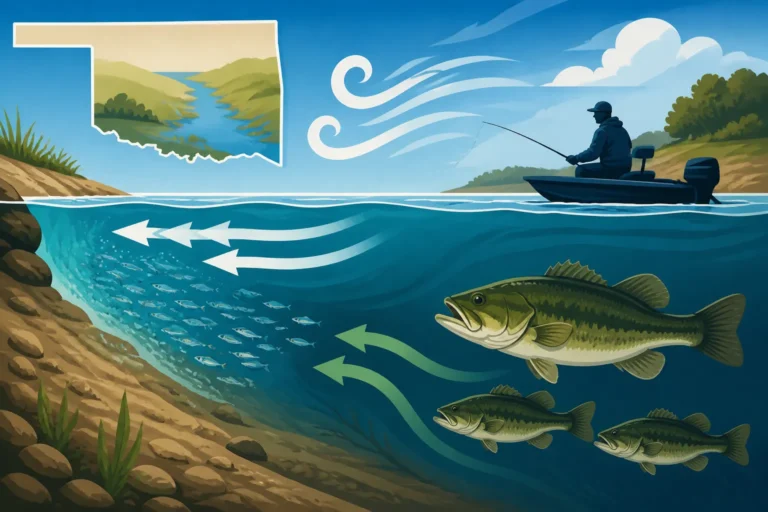
The availability and movement of baitfish, primarily shad, are equally critical. Shad are sensitive to temperature and light, and they'll move into shallower coves, open water, or deeper channels depending on these factors. When shad school up in massive bait balls, stripers won't be far behind, herding them against structure or into open water for an easy meal. Understanding this predator-prey relationship is foundational to understanding when and where to fish.
Spring: The Prime Striper Run
Ah, spring! This is when Lake Texoma truly comes alive for striped bass fishing. After the chill of winter, the warming waters signal a massive shift in striper behavior, leading to some of the most exciting and productive fishing of the year. Many anglers consider this the undisputed best time to target these powerful fish.
The spring run often kicks off in March and can extend well into May, sometimes even early June, depending on how quickly the water heats up. This period is characterized by the stripers' push up the main river arms of the Red River and Washita River to spawn. It's an incredible natural phenomenon that creates predictable fishing opportunities.
March and April: The River Spawn Ascensions
As early spring arrives in March, the water temperature in Lake Texoma starts to climb from the low 50s into the 60s Fahrenheit. This warming trend, coupled with increased water flow from spring rains, signals the stripers to begin their migration up the rivers. They are heading towards their spawning grounds, which are often found in the rocky, turbulent sections of the Red and Washita rivers. During this time, the fish are exceptionally aggressive, focused on their biological imperative to reproduce.
Anglers often target these fish in the rivers themselves or at the mouths of the river arms where they enter the main lake. Live bait, particularly gizzard shad, is king during this period. You'll often see boats anchored in the river channels, suspending live bait at various depths. Another highly effective technique is throwing large swimbaits or lipless crankbaits that mimic shad, especially in areas with current. Many anglers also have great success casting jigs with soft plastic trailers or bucktail jigs into the current breaks and eddies. This is a time when the fish are concentrated and actively feeding, making for a thrilling experience. For more detail on this specific time, you can check out our guide on Lake Texoma May Striper Fishing in Oklahoma.
May and Early June: Post-Spawn Recovery and Lake-Wide Spread
By May, and sometimes extending into early June, the primary spawning activity usually winds down. The water temperatures are consistently in the mid-60s to low 70s. While some fish may still be in the rivers, many stripers begin to move back into the main body of Lake Texoma. However, they're not just dispersing randomly. Post-spawn stripers are often hungry and eager to replenish their energy reserves. This is when you'll find them congregating around main lake points, humps, ledges, and submerged islands, wherever large schools of shad are present.
Surface action can explode during this time, especially at dawn and dusk. Keep a close eye on the water for birds diving and stripers busting on the surface, pushing schools of shad. Topwater lures like poppers, "walk-the-dog" baits, and big pencil poppers can be incredibly effective and exhilarating to fish. If the surface bite isn't happening, trolling with deep-diving crankbaits or umbrella rigs can cover a lot of water and locate active schools. For gear, a medium-heavy rod with a good baitcasting reel spooled with 15-20 lb monofilament or braid will handle these powerful fish. You can find a vast array of these lures and rods on platforms like Amazon if your local tackle shop is out of stock.
Summer: Deep Water and Night Fishing Tactics
When the scorching Oklahoma summer sun beats down on Lake Texoma, pushing surface temperatures into the 80s and even 90s, the stripers change their habits dramatically. They seek refuge from the heat and bright light in deeper, cooler waters, often suspending over structure or following baitfish into the thermocline. This doesn't mean the fishing stops; it just means you need to adjust your approach significantly.
Summer fishing for stripers on Texoma can be incredibly productive, but it requires patience, good electronics, and often a willingness to fish during the cooler parts of the day or even at night.
July and August: Going Deep and Trolling Success
During the peak summer months of July and August, the stripers move to deeper parts of the lake. They'll generally be found in the main lake basins, around creek and river channels, and near submerged humps and ledges, often at depths of 20 to 50 feet or even deeper. The key here is using your electronics to locate schools of baitfish and the stripers feeding on them. Look for "arches" on your fish finder that indicate fish holding close to the bottom or suspended in the water column.
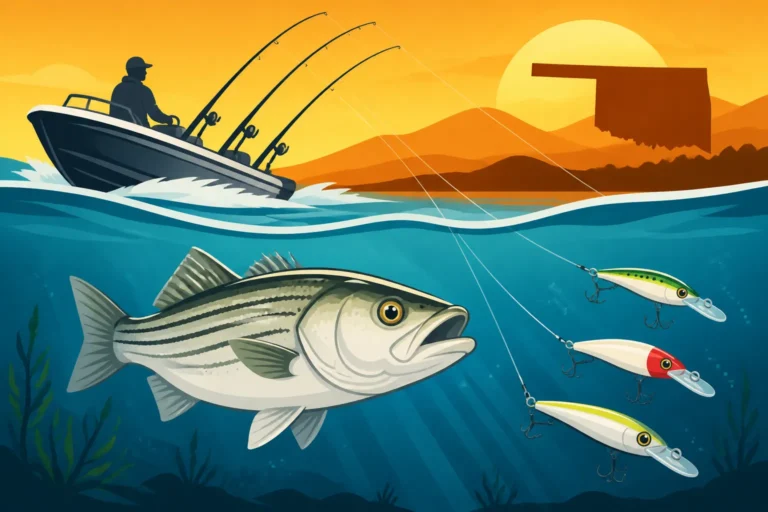
Trolling is a hugely popular and effective technique for summer stripers. Anglers will deploy large, deep-diving crankbaits, swimbaits, or umbrella rigs behind their boats, often using downriggers or lead core line to get their baits down to the fish's depth. Pay attention to your trolling speed – typically 2.5 to 4 mph – and experiment with different lures and depths until you find what the fish are keying in on. Live bait, especially large gizzard shad, is also still a top producer, fished on downlines directly over marked schools. Our guide on Deep Water Striper Fishing Techniques can give you even more insights here.
Night Fishing: Escaping the Heat
One of the best-kept secrets, or perhaps not-so-secret for Texoma regulars, is night fishing for striped bass during the summer. As the sun sets and the lake cools, stripers become much more active, often moving into shallower areas to feed. The cover of darkness provides them with an advantage over their prey, and the cooler water is more comfortable.
Anglers targeting stripers at night will often use powerful submersible green or white lights to attract baitfish to the side of their boats. These lights draw in tiny plankton, which attract small shad, and then the stripers follow. Once the bait is gathered, you can fish live shad on downlines or freelines, or cast glow-in-the-dark jigs and swimbaits into the illuminated area. This is a fantastic way to escape the heat and often results in some of the biggest fish of the season. Always remember your safety gear when night fishing – it’s easy to get disoriented on a large lake in the dark.
Fall: The Autumn Feeding Frenzy
As summer heat gives way to the crisp air of autumn, Lake Texoma experiences another incredible transformation, prompting the stripers into a voracious feeding frenzy. This period, roughly from September through November, is another prime window for catching active striped bass, often characterized by explosive topwater action and aggressive schooling behavior. The cooling water temperatures invigorate the fish, and they instinctively begin to gorge themselves in preparation for the leaner winter months.
This is a favorite time for many anglers because the fish are often more cooperative and can be found in more predictable patterns than in the dog days of summer.
September and October: Back to the Surface
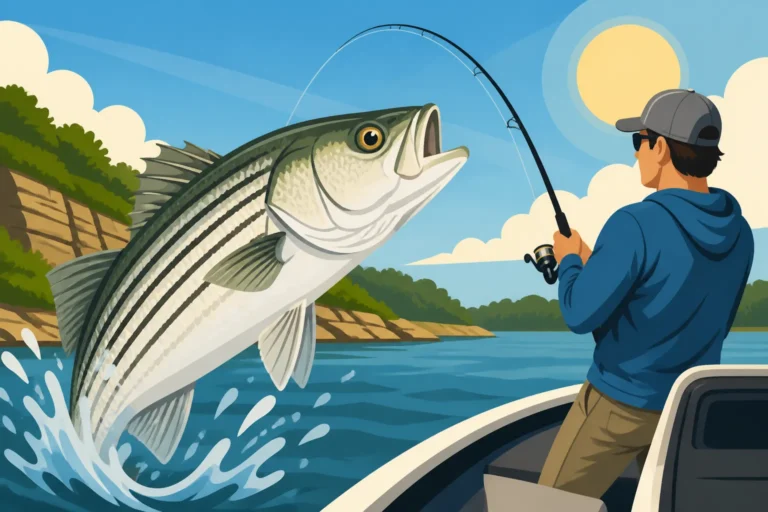
In September and October, as the lake's surface temperatures gradually drop into the 70s and then 60s, the stripers start to push schools of shad into the open water and against main lake points more frequently. This often leads to spectacular "topwater boils" where large numbers of stripers are seen crashing the surface, herding and devouring shad. This surface action can happen at any time of day but is most common in the early morning, late evening, and on overcast days.
Keep a keen eye on diving birds, as they are your best indicators of a feeding frenzy. Where the birds are diving, the stripers are likely pushing bait from below. Fast-moving lures like topwater plugs (Spooks, Poppers), rattletraps, and chrome spoons are excellent choices when the fish are actively busting. If they go down, quickly switch to a jigging spoon or a heavy swimbait to drop into the school before they disperse. Trolling with large crankbaits or swimbaits is also highly effective for locating these roaming schools of fish, particularly on the big flats and main lake points. For a deeper dive into seasonal changes, see How Striped Bass Fishing Changes Through the Seasons at Lake Texoma, Oklahoma.
November: Transition to Winter Patterns
By November, water temperatures continue to drop, moving into the low 60s and 50s. While you can still find good surface action, especially early in the month, the stripers generally start to transition towards their winter patterns. They'll often move to deeper structures, but will still make forays into shallower areas, particularly sunny banks and points, during warmer parts of the day.
Live bait remains a strong choice throughout the fall. However, as the water cools, the fish might be less willing to chase fast-moving lures. Slower presentations become more effective. Jigs, especially those with soft plastic trailers that mimic dying shad, fished vertically or on a slow retrieve, can be very productive. Look for fish congregating around submerged timber, channel bends, and deeper ledges. This is a great time to experiment with different depths and retrieves. Many anglers use their fish finders extensively during this period to pinpoint bait and fish concentrations before deploying their lines. Quality fish finders, with features like side imaging, can be found on Amazon.
Winter: Slower But Still Productive
Don't let the cold weather deter you; winter fishing for striped bass on Lake Texoma can still be quite rewarding, especially for those seeking bigger, less pressured fish. While the frenetic action of spring and fall may subside, a more subtle, strategic approach can still yield impressive catches. The key to success in winter is understanding that stripers become lethargic in cold water, conserving energy and often schooling tightly in predictable locations.
The winter period typically runs from December through February, when water temperatures dip into the 40s and low 50s.
December and January: Vertical Jigging and Deep Live Bait
In December and January, the coldest months, stripers seek out the warmest available water, which is often found in the deepest parts of the lake. They'll school up tightly in these deeper channels, river bends, and around major lake structures. Their metabolism is slow, so they won't chase baits aggressively. This means your presentation needs to be right in front of their faces.
Vertical jigging becomes a dominant technique. Heavy slab spoons, blade baits, or large bucktail jigs dropped directly onto schools of fish marked on your electronics can be deadly. The key is to keep your bait close to the bottom or suspended at the same depth as the fish, using a subtle lift-and-drop motion rather than an erratic retrieve. Live bait, particularly gizzard shad, fished on downlines or Carolina rigs right in the heart of these deep schools, is arguably the most consistent producer. You might only get a few bites, but they're often from larger, more mature stripers. Our article on Winter Catfishing Techniques in Oklahoma shares some general cold-water fishing wisdom that can apply here too.
February: Pre-Spawn Stirrings
As February rolls around, there's a subtle shift. While still cold, the days are getting longer, and there's often a hint of spring in the air. Water temperatures may begin a slow climb, sometimes triggering the stripers to become a bit more active. They're not yet in full pre-spawn mode, but they might start moving out of the very deepest holes and exploring secondary points or channel edges.
You can still use deep live bait and vertical jigging, but it's worth experimenting with a slightly faster retrieve or trying medium-diving crankbaits in areas where you mark fish. Keep an eye on weather patterns; a few consecutive warm, sunny days can really stir up the fish and bait, making them more willing to chase. This pre-spawn stirring is the prelude to the massive spring run, so it's a good time to start looking for those earlier signs of activity.
Daily Patterns: Timing Your Trip for Success
Beyond the seasonal shifts, understanding the daily patterns of striped bass on Lake Texoma can drastically improve your fishing success. The time of day, current weather conditions, and light levels all play a significant role in how and when these powerful fish decide to feed.
It's not just about what month you go, but what time you're on the water, and how you adapt to what Mother Nature throws at you.
Dawn and Dusk: The Golden Hours
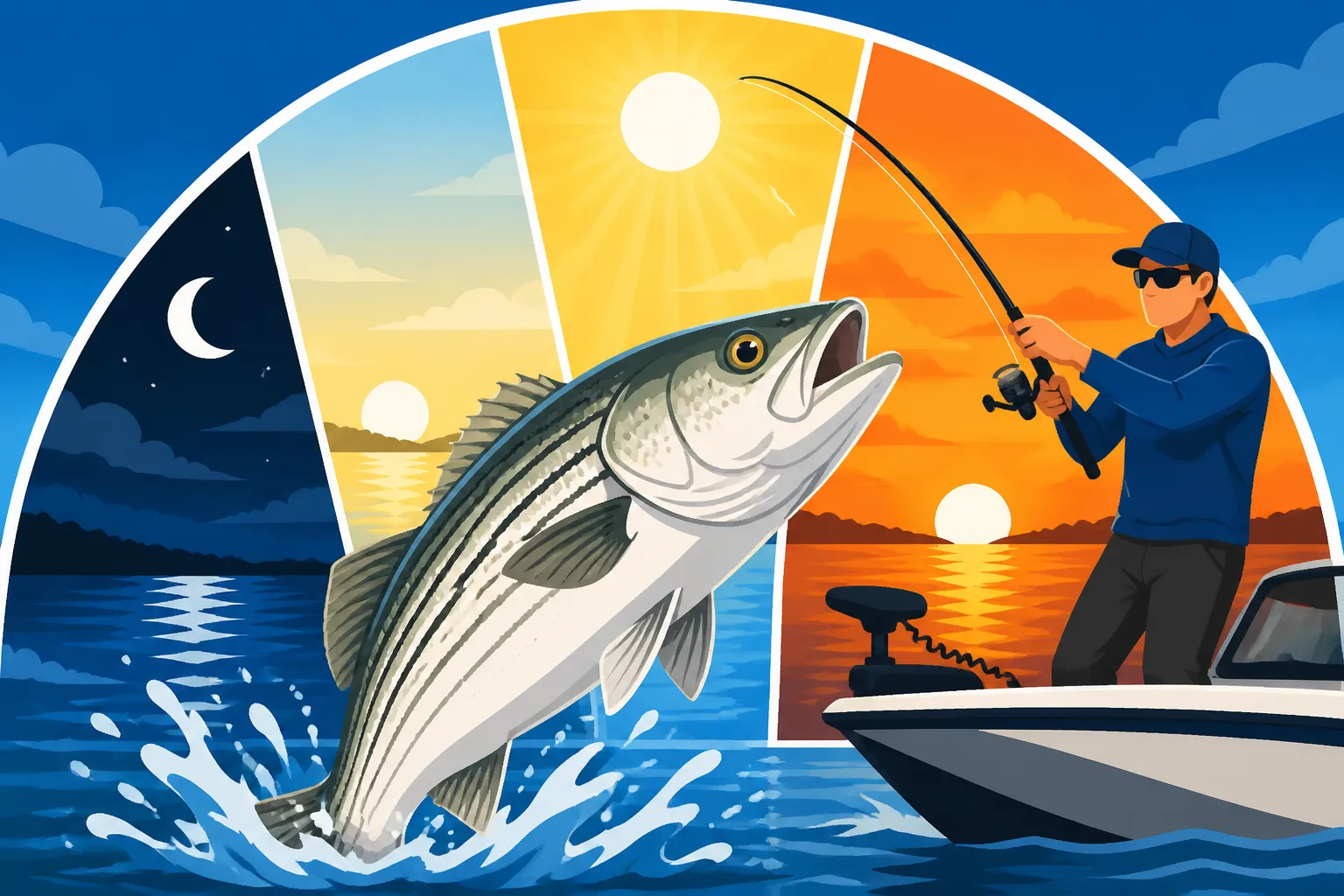
Just like many other predatory fish, striped bass are often most active during the low-light periods of dawn and dusk. The reduced light gives them an advantage over their prey, and the cooler temperatures (especially in summer) are more comfortable. This is when you're most likely to witness those exciting topwater blowups, as stripers push shad to the surface.
If you're planning a trip, try to be on the water at least an hour before sunrise and stay an hour or two after, or fish the last few hours before sunset until it's completely dark. During these "golden hours," focus on main lake points, coves, and areas where you've marked baitfish. Topwater lures, shallow-running crankbaits, and swimbaits are excellent choices. Even if you're primarily a live bait angler, these times are great for casting artificials to quickly locate active fish.
Midday and Overcast Conditions
Midday fishing, especially on bright, sunny summer days, can be tough. The stripers retreat to deeper, cooler water. This is when your electronics become invaluable for finding those suspended schools. Vertical jigging or deep trolling are your best bets. However, midday fishing on overcast or rainy days can be surprisingly productive. The diffused light mimics dawn and dusk conditions, often encouraging stripers to stay shallower or be more active throughout the day.
During overcast conditions, don't be afraid to try some of your shallow-water or topwater tactics, even in the middle of the day. The fish might just be looking for an easier meal in the low light. Always be prepared to adapt your techniques based on current conditions, not just the clock.
Weather Fronts and Their Impact
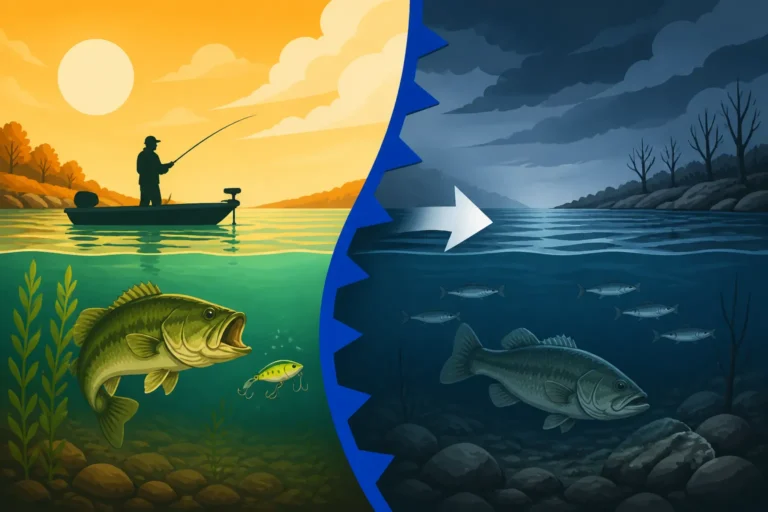
Weather fronts can drastically affect fishing success, and stripers on Lake Texoma are no exception. A stable period of weather, whether warm or cold, generally leads to more predictable fishing. However, rapidly changing conditions, particularly cold fronts, can shut down the bite. Before a cold front moves in, fish often feed aggressively (a "pre-front bite") as they sense the change. After the front passes, and high pressure moves in, the fish can become lethargic and difficult to catch for a day or two.
When a cold front hits, stripers often move deeper and become less active. You'll need to slow down your presentation, use smaller baits, and be extremely precise with your depth and location. Conversely, a warm front can sometimes spark a feeding frenzy, especially in spring or fall, as the fish become more comfortable. Pay attention to local weather forecasts and adjust your expectations and techniques accordingly. Our article on How Cold Fronts Change Fishing Patterns on Oklahoma Lakes provides broader context for this.
Essential Gear for Texoma Stripers
Having the right gear makes all the difference when you're chasing these powerful fish. Lake Texoma stripers can be absolute beasts, and an under-equipped angler will quickly find themselves outmatched.
Rods, Reels, and Line
For striped bass on Lake Texoma, you generally want robust equipment that can handle hard fights.
| Gear Type | Recommendation | Why It Matters |
|---|---|---|
| Rods | Medium-heavy to Heavy action, 7-8 feet in length | Provides backbone for setting hooks and fighting powerful fish, length aids in casting distance and leverage. For trolling, longer, more moderate action rods are preferred. |
| Reels | High-quality baitcasting or spinning reels with strong drag system (20+ lbs) | Smooth, reliable drag is crucial. Baitcasters are often favored for casting heavier lures and trolling. |
| Line | 15-30 lb monofilament or 30-65 lb braided line | Mono offers stretch and shock absorption; braid offers sensitivity, strength, and thin diameter for deeper dives. A fluorocarbon leader (20-40 lb) is often used for stealth. |
For deep water trolling, many anglers opt for specialized trolling rods that are longer and have a more parabolic bend. These are great for absorbing the shock of a big striper hit and keeping the line tight. If you're new to the game, a good combo might be a 7-foot medium-heavy baitcasting setup, which is versatile enough for casting lures or drifting live bait. When it comes to finding dependable brands, many anglers will start their search on Amazon, looking for reputable names like Shimano, Penn, or Daiwa.
Baits and Lures
Your bait and lure selection will vary by season and technique, but here are some Texoma staples:
- Live Bait: Gizzard shad are the undisputed kings for Texoma stripers. Threadfin shad also work. Catching your own fresh bait can be a game-changer.
- Topwater Lures: Spooks, poppers, and pencil poppers (e.g., Heddon Super Spook, Yo-Zuri Sashimi Pencil) are essential for surface action, especially in spring and fall.
- Swimbaits: Soft plastic swimbaits on jig heads or hard-bodied swimbaits are versatile and effective year-round.
- Crankbaits: Deep-diving crankbaits (e.g., Strike King, Rapala DownDeep Husky Jerk) for trolling in deeper water, and medium-running crankbaits for shallower areas.
- Jigs: Bucktail jigs, soft plastic paddle tail jigs, and slab spoons are excellent for vertical jigging or casting.
- Umbrella Rigs: Also known as Alabama rigs, these mimic a school of baitfish and are highly effective for trolling, especially in spring and fall.
Having a diverse tackle box is key, as stripers can be finicky. Sometimes they want a fast retrieve, sometimes a slow roll. Experimentation is half the fun!
Electronics and Safety Gear
Good electronics are not a luxury but a necessity for consistently catching stripers on Lake Texoma, especially in deeper water. A reliable fish finder with side imaging or down imaging capabilities can help you locate bait balls and striper schools quickly. GPS functionality is also crucial for marking hot spots and navigating the vast lake, particularly at night or in unfamiliar territory.
Safety gear is paramount on a lake as large as Texoma. Always ensure you have enough U.S. Coast Guard approved life jackets for everyone on board, a throwable flotation device, a whistle or horn, navigation lights (if fishing at night), and a fully charged cell phone. A marine radio is also a smart addition for emergency communication. Check out our detailed guide on Oklahoma Boat Safety Equipment Checklist for more information on regulations.
Planning Your Trip to Lake Texoma
With such a vast and productive lake, planning your striped bass fishing trip to Lake Texoma takes a little forethought to maximize your chances of success. It’s not just about what time of year you go, but where you launch, where you stay, and if you need a guide.
Best Access Points and Marinas
Lake Texoma offers numerous access points on both the Oklahoma and Texas sides. On the Oklahoma side, popular spots include Catfish Bay Marina, Alberta Creek Resort & Marina, and Lighthouse Resort & Marina. These marinas offer boat ramps, fuel, bait, and often lodging and dining options. Catfish Bay is particularly well-known and bustling, especially during peak season.
Choosing your access point might depend on where you plan to focus your fishing efforts. For example, if you're targeting the Washita River arm, launching from Alberta Creek might be more convenient. Always check ramp conditions, especially after heavy rains or during periods of low lake levels.
Considerations for Guides vs. DIY Fishing
For first-time visitors or those new to striper fishing on Texoma, hiring a professional fishing guide is highly recommended. A good guide knows the lake intimately, understands the seasonal patterns, has all the right gear, and can put you on fish quickly. They can teach you techniques, locate bait, and ensure you have a safe and productive day. It's an investment that often pays off in knowledge gained and fish caught.
If you prefer a do-it-yourself approach, make sure you've done your homework. Study lake maps (physical or digital via apps like Navionics), pay attention to online fishing reports, and use your electronics diligently. Being self-sufficient on such a large lake means having confidence in your boat, navigation skills, and safety precautions.
Licenses and Regulations
Remember, Lake Texoma straddles two states, which can sometimes lead to confusion about fishing licenses. Generally, you need either an Oklahoma fishing license or a Texas fishing license with a Lake Texoma endorsement. Anglers holding an Oklahoma license may fish in both Oklahoma and Texas waters of Lake Texoma without a Texas license, provided they are within the reciprocal agreement boundaries. However, always double-check the latest regulations as they can change. Our guide to Oklahoma Fishing License Requirements in Oklahoma is a good starting point, as is Texas Anglers Fishing in Oklahoma Waters if you're coming from the south.
Be aware of specific bag and length limits for striped bass on Lake Texoma, which can differ from statewide Oklahoma limits. Currently, the daily bag limit is often 10 striped bass, with only two allowed over 20 inches in length. These limits are in place to protect the fishery, so always measure your fish and release any oversized or undersized fish promptly and carefully.
Disclaimer
Fishing conditions and regulations can change. Always consult the latest Oklahoma Department of Wildlife Conservation (ODWC) regulations before heading out on your trip. This guide provides general information and recommendations, but it is the angler's responsibility to adhere to all current laws and safety guidelines.