Best Time of Day to Catch Crappie
Ever spent a glorious sunny afternoon out on the water, only to find the crappie bite mysteriously shut down? It's a common, frustrating experience for many Oklahoma anglers. You've got the right bait, the perfect spot, but the fish just aren't cooperating. This comprehensive guide is going to peel back the layers of crappie behavior and shed light on when these delicious panfish are most active, helping you plan your next trip for maximum success.
Understanding Crappie Behavior Throughout the Day
Crappie, both black and white, are fascinating fish with predictable daily patterns that are largely dictated by their environment. Understanding these rhythms is the key to consistently putting fish in the boat or on the bank. It's not just about tossing a minnow in the water; it's about knowing when they're most likely to be looking for that minnow.
Crappie's Sensitivity to Light
One of the biggest factors influencing crappie activity is light. Crappie have large eyes that are highly adapted for low-light conditions. This means that bright, direct sunlight isn't their favorite thing in the world. When the sun is high and blazing, crappie often retreat to deeper, shadier areas where they feel more comfortable and less exposed. Think of it like us on a scorching summer day – we're heading for the air conditioning or a big shade tree, not lounging directly in the sun. This instinctual drive to avoid intense light means they're often less active and harder to tempt during the brightest parts of the day.
This sensitivity is why you'll often hear experienced anglers talk about "low-light bites." It's not just a myth; it's rooted in the crappie's biology. They're built for twilight and darkness, making them ambush predators that thrive when visibility is reduced for their prey, but still sufficient for their keen eyesight. This also explains why you often find them hugging structure like brush piles, submerged timber, or docks – these spots offer crucial shade and cover from the harsh sun, allowing them to conserve energy and feel secure.
Daily Feeding Rhythms
Just like we have meal times, crappie have peak feeding periods. These periods are almost always linked back to light conditions. As the sun rises and sets, the light penetration into the water changes, triggering their hunting instincts. During these "crepuscular" periods (dawn and dusk), crappie become much more aggressive and willing to chase down prey. They're opportunistic feeders, meaning they'll take advantage of whatever is available, from small baitfish like shad and minnows to insects and crustaceans.
Outside of these prime windows, crappie tend to be more lethargic. They'll still eat, but it might be more of a casual snack than an active hunt. Imagine walking into a buffet versus grabbing a quick bite at your desk – the intensity is different. Knowing these feeding rhythms allows you to tailor your approach, using more active presentations during peak times and more subtle, enticing ones when they're less inclined to chase. It's about working with their natural habits, not against them.
Temperature and Depth Migration
Water temperature also plays a huge role in crappie behavior and their location throughout the day. Fish are cold-blooded, meaning their body temperature is the same as the water around them, and their metabolism speeds up or slows down accordingly. In the heat of an Oklahoma summer, surface waters can become uncomfortably warm, pushing crappie to deeper, cooler zones where the temperature is more stable and oxygen levels are often better. You can learn more about how water temperature affects crappie by checking out our guide on How Water Temperature Affects Fishing Timing in Oklahoma.
Conversely, during colder months, they might seek out slightly warmer pockets of water, though they still prefer deeper holding areas. As the day progresses, particularly on sunny days, the top layers of water warm up first. This can cause crappie to migrate vertically in the water column, moving deeper as the sun climbs higher, and then pushing shallower again as the water cools in the evening. This constant ebb and flow means that the crappie you found at 10 feet deep in the morning might be at 20 feet by noon, then back to 10 feet at dusk. Adapting to these depth changes is crucial for success.
Prime Windows: Dawn, Dusk, and Night Fishing
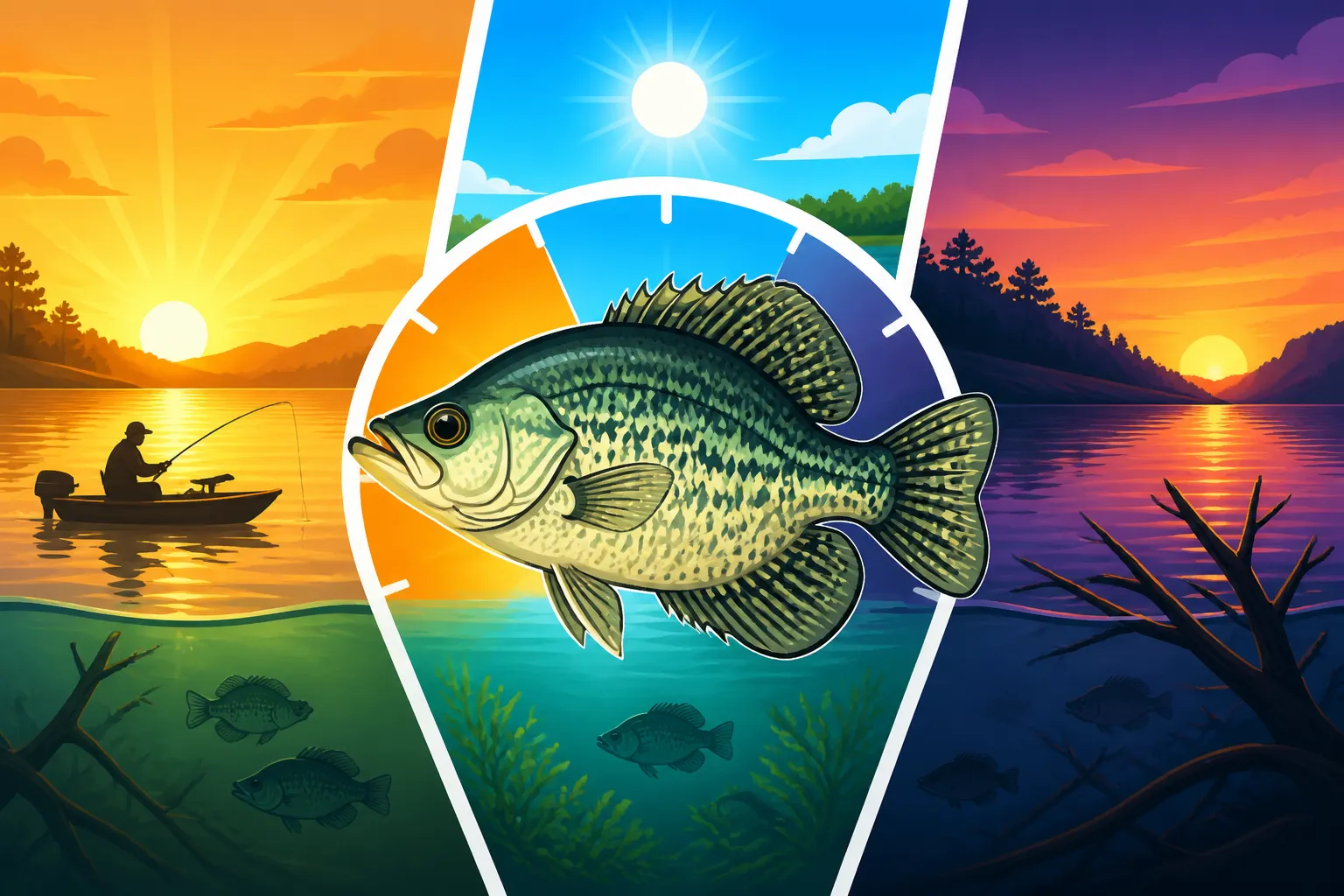
If there's one golden rule for crappie fishing, it's this: low light is prime time. These periods offer the perfect balance of reduced visibility for predators (making crappie feel safer) and sufficient light for them to hunt effectively. Don't underestimate the power of these transitional hours.
The Magic Hour of Dawn
There’s a reason many serious anglers are on the water before the sun even peeks over the horizon. The hour leading up to sunrise, often called "the magic hour," is incredibly productive for crappie. As the sky lightens, but before direct sunlight hits the water, crappie are often at their most active. They've spent the night possibly feeding, and now, with the first hint of morning, they come alive, moving from their deeper night-time haunts or heavy cover to shallower feeding areas.
During this time, baitfish become more active too, creating a feeding opportunity that crappie are quick to exploit. You'll often find them suspended over brush piles, along weed lines, or cruising shallow flats adjacent to deeper water. This is when a small jig, a live minnow under a bobber, or even a tiny spinnerbait can be absolutely deadly. The cool, calm air and the gentle awakening of the lake create an atmosphere that's both peaceful for the angler and perfect for the crappie.
Dusk: The Evening Feeding Frenzy
Just as the day begins with a burst of activity, it ends with another. The period from late afternoon through sunset and into the early evening is another fantastic window for crappie. As the sun dips lower and the light fades, crappie once again become more emboldened, venturing out from dense cover or deeper water to chase down a meal. This "evening feeding frenzy" can be just as, if not more, productive than the morning bite, especially if you're hitting spots that have been baking in the sun all day.
The cooling water temperatures during this time can also stimulate crappie activity. They might move closer to shore, near docks, or along points where baitfish are congregating. This is an excellent time for tightlining a minnow or slowly reeling in a small jig. Pay attention to structure that transitions from shallow to deep, as crappie will often use these highways as they move up and down the water column. Many anglers find the evening bite to be more consistent and easier to plan around, especially after a day of work.
Unlocking Night Fishing Success
If you've never tried night fishing for crappie, you're truly missing out. Crappie are naturally inclined to feed in low light, and under the cover of darkness, they can become incredibly aggressive. The best way to target them at night is often with lights, whether it's submerged green fishing lights, boat-mounted lights, or even a lantern over the side of the boat. These lights attract plankton, which attracts baitfish, which, you guessed it, attracts crappie. You can find more specific guidance on How to Catch Crappie at Night Under Lights to really dial in your approach.
When fishing at night, crappie often suspend directly in or around the cone of light, feasting on the concentrated bait. This is a fantastic opportunity for vertical jigging or fishing minnows under a slip bobber. The quiet of the night, combined with the focused activity around the light, creates a unique and often highly productive fishing experience. Just remember your safety gear, like a good headlamp and PFDs, and let someone know your float plan, especially if you're on a larger body of water like Lake Texoma or Lake Eufaula.
Midday Challenges and Solutions
While dawn, dusk, and night offer the best chances, it's not impossible to catch crappie during the brightest parts of the day. You just have to adjust your tactics and understand that you're playing a different game. It requires more patience and a more targeted approach.
The Harsh Realities of Midday Sun
The midday sun, particularly during the warmer months in Oklahoma, can be brutal for crappie fishing. The bright light sends crappie deep into the shadows or down to cooler thermoclines. They often become less active, conserving energy and essentially "resting." This can lead to those frustrating hours where you feel like you're fishing in a bathtub – no bites, no action. Many anglers throw in the towel during these periods, believing the fish aren't biting, and honestly, for the casual approach, they're probably right.
However, the fish don't just disappear. They're still there, but their behavior has changed significantly. They're less likely to chase a fast-moving bait and more likely to be lethargic. This is where the empathetic side of fishing comes in: accept that it's going to be tougher, manage your expectations, and then adapt. Don't waste time fishing wide open, exposed areas; focus your efforts where they're most likely to be holding up.
Strategies for Midday Crappie
To combat the midday doldrums, you need to think like a crappie seeking refuge. The most effective strategy is to go deep. Crappie will often suspend over or near deep structure like brush piles, submerged creek channels, or ledges where the water is cooler and darker. This is when a good fish finder becomes an invaluable tool. Look for schools of baitfish or arches representing crappie near these deep structures.
Another effective tactic is slow, vertical presentations. Instead of casting and retrieving, try dropping a jig or a minnow straight down to the depth where you're marking fish. Often, they'll be holding in tight schools, so once you find them, you can really pick them off. This is a common method for anglers spider rigging, slowly trolling multiple lines at specific depths. During this time, a crappie might not be willing to chase, but if a tasty minnow or a subtle jig floats right by its nose, it's much more likely to strike. Consider experimenting with different jig colors; sometimes a subtle, natural color found on Amazon will outperform brighter options in clear, deep water.
Finding Cover and Structure
Even in midday, some crappie will remain shallower if there's abundant, dense cover providing shade. Think thick lily pad fields, dense stands of cattails, large overhanging trees, or particularly deep and wide boat docks with significant overhead cover. Crappie will tuck themselves into these spots, waiting for prey to swim by. While they might not be actively cruising, they're still ready to ambush.
When targeting these areas, stealth is key. Approach quietly, and use a longer rod to gently drop your bait into pockets within the cover. This is a great time to experiment with weedless jigs or small plastics that can be worked through dense vegetation. For dock fishing, skip your jig far back under the dock where the shadows are deepest. Remember, any structure that provides shade and a sense of security can hold crappie, even when the sun is high. Our guide on Best Bank Fishing Spots in Oklahoma often highlights areas with natural cover perfect for these situations.
Here's a quick overview of crappie activity windows:
| Time of Day | Light Conditions | Crappie Activity | Preferred Depth/Location | General Tactics |
|---|---|---|---|---|
| Pre-Dawn | Very Low Light | High, Active | Shallow flats, creek channels, near cover | Jigs, minnows under bobbers, subtle retrieves |
| Dawn-Sunrise | Low to Moderate | High, Active | Moving from deep to shallow, brush piles | Jigs, minnows, small crankbaits |
| Mid-Morning | Moderate | Decreasing | Deeper edges of cover, transition areas | Slower retrieves, deeper presentations |
| Midday | Bright, High Sun | Low to Moderate | Deepest shade, submerged structure, thermocline | Vertical jigging, slow trolled minnows |
| Mid-Afternoon | Moderate | Increasing | Moving from deep to shallower cover | Slower retrieves, finding shaded structure |
| Dusk-Sunset | Moderate to Low | High, Active | Shallow flats, points, around cover | Jigs, minnows, small crankbaits, faster retrieves |
| Night | Dark | High, Active | Around artificial lights, deep structure | Vertical jigging, minnows under bobbers |
Factors Beyond Time of Day
While knowing the best time of day is crucial, it's just one piece of the crappie fishing puzzle. Many other elements can influence their willingness to bite, and a savvy angler considers all of them.
Seasonal Shifts and Spawning
The time of year dramatically impacts crappie behavior, even within the best times of day. During the spring spawn, for instance, crappie are often found in extremely shallow water, regardless of the time of day, as they build and guard nests. This period, which you can learn more about in When Do Crappie Spawn in Oklahoma Lakes?, can offer some of the most consistent fishing, often from morning to evening, though the low-light bites remain strong. As the seasons change, crappie move to different depths and habitats, shifting their feeding patterns.
Summer sees them moving deeper and holding near thermoclines, while fall brings them back to shallower areas as water temperatures cool. Winter fishing often means finding them tightly schooled in deep water. Each season requires adjustments to your depth, presentation, and even your choice of bait. A small jig that worked wonders in spring might be ignored in summer if it's not presented at the right depth.
Weather and Water Conditions
Weather fronts, cloud cover, wind, and water clarity are all critical elements. Overcast days can extend the "prime" low-light bite throughout the entire day, making midday fishing much more productive than on a sunny day. A gentle chop on the water, caused by a light breeze, can break up the surface, providing more cover for crappie and making them more active. However, a strong, sustained wind can make boat control difficult and muddy up the water, often turning off the bite.
Water clarity is another huge factor. In clear water, crappie might be more skittish and require lighter line, smaller baits, and more subtle presentations. In stained or murky water, they rely more on scent and vibrations, making brighter jigs or baits with scent attractants more effective. Even the subtle changes from a recent rainstorm can dramatically shift where crappie are located and how they're feeding, prompting them to move into newly flooded areas or along current seams.
Bait and Lure Choices
Finally, no matter the time of day or conditions, having the right bait or lure is paramount. Live minnows are almost always a top choice for crappie, but jigs, especially small soft plastic jigs, are incredibly versatile. The size, color, and action of your jig can make a huge difference. For example, in clear water during prime low-light hours, a more natural color might be better, whereas on a cloudy day in stained water, a bright chartreuse or pink jig might grab their attention more effectively. You can always stock up on a variety of colors and sizes on Amazon to be prepared for any situation.
Experimentation is key. If one color or retrieve speed isn't working, don't be afraid to change it up. Sometimes a simple twitch-twitch-pause is all it takes to trigger a strike, while other times a slow, steady retrieve is preferred. Consider the size of the baitfish in the lake you're fishing – matching the hatch is often a recipe for success. Don't forget to explore our article on Best Crappie Jig Colors for Clear Water for more specific recommendations on lure selection. Ultimately, combining an understanding of crappie behavior throughout the day with these other factors will elevate your fishing game and lead to more memorable catches.
Disclaimer
Fishing regulations and conditions can change. Always check the latest Oklahoma Department of Wildlife Conservation regulations before heading out. Safety first on the water!