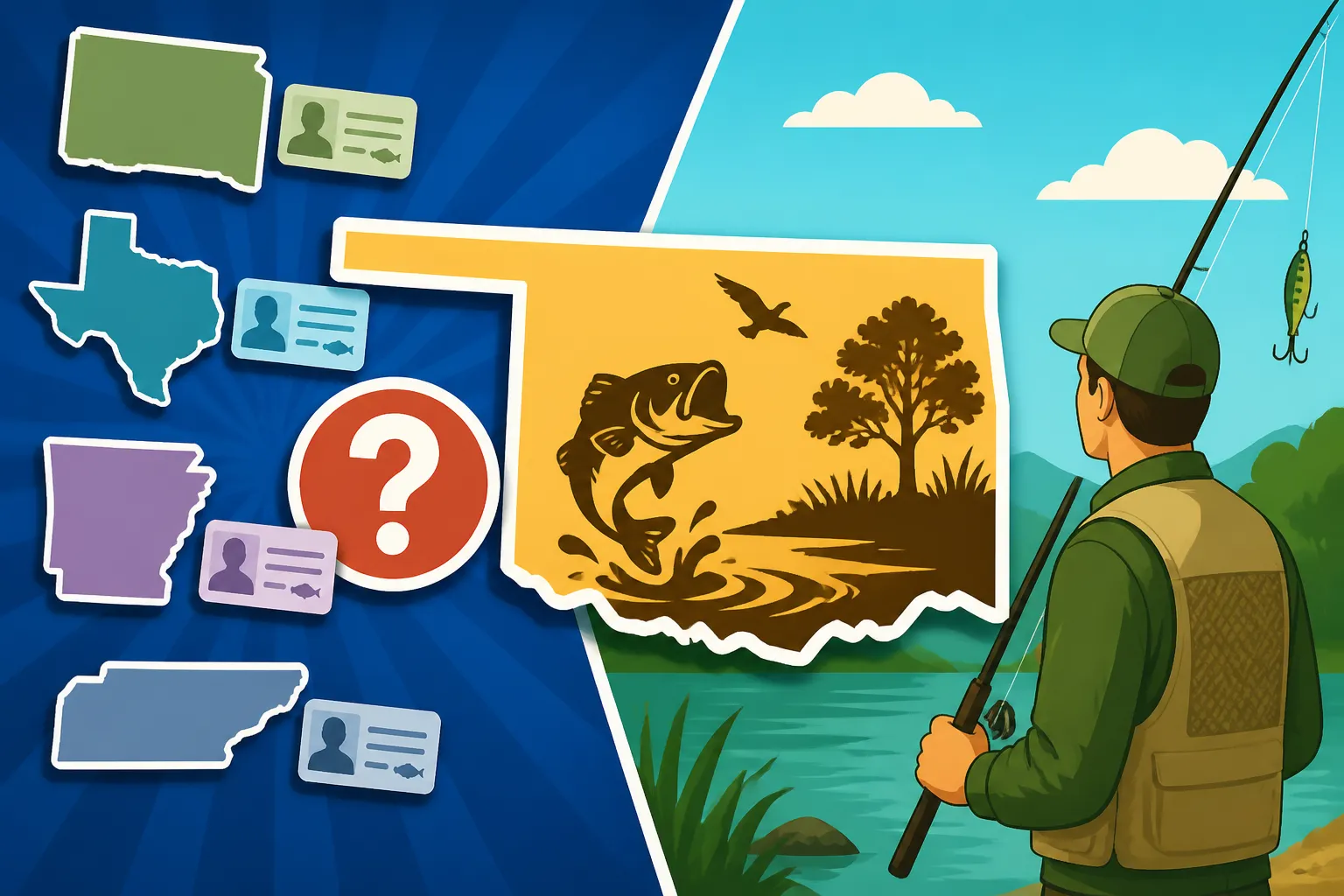
Does Any Neighboring State’s License Work in Oklahoma?
It's a common scenario: you're planning a fantastic fishing trip, maybe just across the state line, only to be hit with that nagging question – "Does my current fishing license even work there?" The frustration of navigating different state regulations can be a real headache, making you wonder if you need to buy a whole new license just to cast a line a few miles from home. This guide is here to clear up that confusion, specifically for anglers eyeing Oklahoma's abundant waters, and to help you understand exactly what's required to fish legally and without a hitch.
The General Rule: Oklahoma Requires Its Own License
Let's cut right to the chase because this is where many folks get tripped up: generally speaking, no, your fishing license from a neighboring state won't work in Oklahoma. Oklahoma has its own set of rules, its own wildlife management programs, and its own licensing system to support those efforts. It's not about making things difficult for out-of-state anglers, but rather ensuring that funds generated from licenses stay within the state to manage and conserve its specific fisheries.
This is a fundamental principle in wildlife management across the United States. Each state operates independently when it comes to regulating hunting and fishing within its borders. While this can feel inconvenient, especially if you live near a state line and regularly fish on both sides, it's how each state maintains control over its natural resources and ensures sustainable populations of fish for everyone to enjoy. So, if you're standing on Oklahoma soil, or floating in Oklahoma waters, the expectation is that you possess a valid Oklahoma fishing license. This rule is firm, and understanding it upfront will save you a lot of potential hassle down the road.
Why State Lines Matter for Fishing Licenses
When you purchase a fishing license in your home state, those funds directly contribute to the conservation efforts, fish stocking programs, habitat restoration, and enforcement activities within that state. The Oklahoma Department of Wildlife Conservation (ODWC) uses the revenue from its license sales to manage Oklahoma's lakes, rivers, and streams. This includes everything from monitoring fish populations and conducting scientific research to maintaining public access points and educating anglers.
Imagine if everyone could just use their Texas or Arkansas license in Oklahoma; the ODWC wouldn't receive the necessary funding to manage its fisheries, leading to potentially depleted resources and neglected habitats. It's a matter of funding and jurisdiction. Each state agency is responsible for its own territory, and licenses are their primary tool for both regulation and revenue generation. It's a system designed to protect local ecosystems, even if it means carrying multiple licenses for avid cross-border anglers. It validates the frustration you might feel, but it's a necessary part of how our natural resources are managed responsibly.
What This Means for Out-of-State Anglers
For you, the angler venturing into Oklahoma from a neighboring state, this means you absolutely need to purchase an Oklahoma fishing license. There's no getting around it, with one very specific and important exception we'll discuss shortly concerning Lake Texoma. Even if you only plan to fish for a single day, or just a couple of hours, you'll need to be properly licensed.
The good news is that Oklahoma makes it relatively easy to obtain a nonresident license. You have options, whether you're planning a quick day trip or a longer fishing vacation. These licenses are specifically designed for individuals who don't reside in Oklahoma, and they come in different durations to suit your needs. Understanding that your home state license, no matter how comprehensive it is, generally doesn't cover you in Oklahoma is the first and most crucial step in planning your trip. Failing to secure the correct license can lead to fines and a ruined fishing day, which is the last thing anyone wants when they're out on the water.
Specific Neighboring States and Reciprocity Agreements
While the general rule is "no reciprocity," there are specific nuances, especially when it comes to shared border waters. It’s vital to understand these details, as they can sometimes lead to confusion or, in rare cases, offer a bit of flexibility.
Texas Anglers and Lake Texoma's Unique Situation
Ah, Lake Texoma! This massive reservoir, straddling the Oklahoma and Texas border, is the one shining exception to the general rule of no reciprocity. Because of its unique position and immense popularity as a fishing destination, Oklahoma and Texas have a special agreement in place for Lake Texoma. This is a huge relief for many anglers who regularly fish both sides of the lake.
Here's how it works: if you possess a valid annual fishing license from either Oklahoma or Texas, you are permitted to fish the entire Lake Texoma. This means if you're a Texas resident with an annual Texas fishing license, you can fish the Oklahoma side of Lake Texoma without needing an additional Oklahoma license, and vice versa for Oklahoma residents. This special agreement applies only to annual licenses and only to Lake Texoma. However, there's another convenient option: the Lake Texoma license. This is a specific license that, for a lower price than a full annual nonresident license, allows you to fish the entire lake, regardless of your state of residency, if you don't hold an annual license from either state. It’s a fantastic option for those planning a dedicated Texoma trip.
It's absolutely critical to remember that this reciprocity only extends to the waters of Lake Texoma itself. If you decide to venture off Texoma into any other Oklahoma lake or river, even if it's just a few miles away, your Texas license will not be valid, and you will need a separate Oklahoma fishing license. The exact rules are detailed in the Texas Anglers Fishing in Oklahoma Waters guide.
Arkansas, Kansas, and Missouri: No Reciprocity Here
For anglers coming from Arkansas, Kansas, or Missouri, the situation is much simpler, but perhaps less convenient: there are no reciprocal agreements in place for fishing licenses between Oklahoma and these states. If you're an Arkansas resident and you cross into Oklahoma to fish, you need an Oklahoma fishing license. The same applies if you're coming from Kansas or Missouri.
This holds true even for bodies of water that might technically share a border or are just a stone's throw away. For instance, if you're fishing on the Arkansas River and you cross into the Oklahoma section, your Arkansas license won't cut it. Similarly, if you live near the Oklahoma-Kansas border and regularly fish lakes close to the line, like Grand Lake O' the Cherokees in northeastern Oklahoma, a Kansas license is not valid. You'll need to ensure you have the appropriate Oklahoma license before you cast your line. Guides like Arkansas Anglers Fishing in Oklahoma Waters, Kansas Reciprocity for Oklahoma Fishing Licenses, and Missouri Anglers Fishing in Oklahoma go into more detail about these specific situations. It's a bummer, I know, but game wardens strictly enforce these regulations to protect their state's resources.
Colorado and New Mexico: Even Further Afield, Still No Reciprocity
For those traveling from Colorado or New Mexico, the answer remains consistent with the general rule: your state's fishing license does not grant you permission to fish in Oklahoma. While these states don't share extensive, popular fishing waters directly on the border with Oklahoma in the same way Texas does, the principle remains.
If you're making a longer journey from these states to experience Oklahoma's fantastic fisheries, be it for the diverse bass populations, crappie, or massive catfish, planning for an Oklahoma nonresident license is an essential part of your trip preparation. There are no special agreements or unique situations that override the requirement for an Oklahoma license for anglers from Colorado or New Mexico. Just assume you'll need an Oklahoma license as soon as you hit the Oklahoma state line and plan to fish. You can find more information about this in our guide on Colorado and New Mexico Anglers Fishing in Oklahoma.
How to Get Your Oklahoma Nonresident Fishing License
So, you've accepted that you'll need an Oklahoma license. Great! Now, let's talk about the easiest ways to get one and ensure you're squared away before your lines hit the water. It’s usually a pretty straightforward process, designed to get you fishing as quickly as possible.
Options for Purchasing Your License
The Oklahoma Department of Wildlife Conservation (ODWC) has made it quite simple to acquire a nonresident fishing license. You're not stuck having to visit a single, remote location. There are several convenient avenues to choose from, depending on your preference and where you are when you decide to buy.
First and foremost, the most popular and often easiest method is purchasing your license online through the ODWC's Go Outdoors Oklahoma portal. This is a fantastic option because you can do it from the comfort of your home, or even on your phone as you're driving into the state (just make sure you're not the one driving!). You simply visit the website, create an account if you don't have one, select the appropriate nonresident license, pay, and you can usually print it out or keep a digital copy on your phone. This method ensures you have your license in hand (or on screen) immediately. Our How to Buy an Oklahoma Fishing License Online guide walks you through the steps.
Secondly, if you prefer a more traditional approach or find yourself without internet access, you can purchase a license from authorized license vendors across the state. These typically include many sporting goods stores, bait and tackle shops, and even some larger retailers like Walmart. These locations have terminals that connect directly to the ODWC system, allowing you to get a physical printout of your license on the spot. It's always a good idea to call ahead to confirm that a particular vendor sells fishing licenses, especially if you're headed to a smaller town.
Choosing the Right Nonresident License Type
Oklahoma offers a few different nonresident fishing license options, and picking the right one depends entirely on how long you plan to fish in the state. This is where you can save a little money and avoid overpaying for a license you don't fully utilize.
The most common choices for nonresidents are the annual nonresident fishing license and the one-day nonresident fishing license. The annual license, as its name suggests, is valid for a full calendar year from the date of purchase (or in some cases, a specific license year, so always double-check the exact expiration). This is the best value if you anticipate making multiple trips to Oklahoma throughout the year or if your single trip extends beyond a couple of days. You can learn more about its cost in the Nonresident Annual Fishing License Cost in Oklahoma article.
If your trip is a spur-of-the-moment decision, or you're just passing through and want to wet a line for a single day, the one-day nonresident license is your best bet. It's significantly cheaper than the annual option and covers you for a 24-hour period, typically expiring at midnight on the day it's purchased or activated. This license is perfect for short excursions and ensures you're legal without a big financial commitment. Our guide on Nonresident 1-Day Fishing License Price in Oklahoma details this option.
Here's a quick comparison of general nonresident license costs:
| License Type | Typical Cost (Approx.) | Best For | Coverage Area |
|---|---|---|---|
| Nonresident Annual Fishing | $81 | Multiple trips or extended visits (3+ days) | All Oklahoma waters (except specific private) |
| Nonresident 1-Day Fishing | $15 | Single-day trips | All Oklahoma waters (except specific private) |
| Lake Texoma Fishing (Annual) | $12 | Dedicated Lake Texoma trips (if no annual OK/TX license) | Entire Lake Texoma only (both OK and TX sides) |
Note: Prices are approximate and subject to change by the Oklahoma Department of Wildlife Conservation. Always check the official ODWC website for the most current pricing and details.
Choosing wisely can save you money. For example, if you plan to fish for three separate days spread across a month, buying three one-day licenses would cost you more than a single annual license. However, if you're only going for one long weekend, a single annual license might still be the most cost-effective if it’s cheaper than multiple 1-day licenses. These specifics are part of what's covered in Oklahoma Fishing License Costs and Types. You can find various fishing gear to complement your trip on Amazon, from tackle boxes to specialized rods, making sure you're well-equipped.
Common Misconceptions and Avoiding Fines
Fishing regulations can sometimes feel like a maze, and it’s easy to fall into common traps if you’re not fully informed. Don't let a misunderstanding ruin your day on the water or, worse, lead to an unwelcome fine.
The "I Didn't Know" Excuse Won't Fly
It's a harsh reality, but ignorance of the law is rarely an excuse that will get you out of a penalty. Oklahoma Game Wardens are dedicated professionals who patrol lakes, rivers, and even remote ponds to ensure that anglers are compliant with state fishing regulations, including proper licensing. They're not out to spoil your fun, but to enforce the rules that protect Oklahoma's valuable fisheries.
If a Game Warden approaches you and requests to see your fishing license, you are legally obligated to present it. If you cannot produce a valid Oklahoma fishing license (and aren't covered by an exception like the Lake Texoma agreement or age exemptions), you could face a citation. Penalties for fishing without a license can range from significant fines to having your fishing equipment confiscated, and even court appearances. It's simply not worth the risk. Always make sure your license is easily accessible, whether it's a physical copy in your wallet or a digital version on your phone. Even if you're just "trying it out" or "only casting a few times," the moment your line hits the water, you're considered to be fishing, and the license requirement applies. For a full rundown on what can happen, check out Penalties for Fishing Without a License in Oklahoma.
What About Kids?
This is another area where confusion often arises, especially for families planning a fishing trip. It's natural to assume that younger children might not need a license, and in Oklahoma, that assumption is largely correct, but there are age cutoffs to be aware of.
For both Oklahoma residents and nonresidents, children under the age of 16 are generally exempt from needing a fishing license to fish in Oklahoma waters. This is fantastic news for families, making it easier and more affordable to introduce kids to the joys of fishing. So, if you're bringing your 10-year-old nephew from Arkansas or your 14-year-old daughter from Texas, they can fish without a license. This policy encourages youth participation in outdoor activities and is a wonderful way to foster a love for nature and fishing from a young age.
However, once a child turns 16, they are no longer exempt and must possess the appropriate Oklahoma fishing license for their residency status. So, if your child or grandchild is 16 or older and not an Oklahoma resident, they will need to purchase a nonresident annual or one-day license. It's a key detail that can easily be overlooked but is crucial for staying legal. Always confirm the current age requirements before your trip, as regulations can occasionally change. More specific information can be found in our comprehensive guide, Do Kids Need a Fishing License in Oklahoma?. When you're out there with the youngsters, don't forget to pack plenty of snacks and perhaps a portable tackle box from Amazon filled with kid-friendly lures and bobbers!
Disclaimer
Please note that fishing regulations, license costs, and reciprocal agreements are subject to change. While every effort has been made to provide accurate and up-to-date information, it is always the angler's responsibility to verify the current regulations with the Oklahoma Department of Wildlife Conservation (ODWC) before fishing. This guide is for informational purposes only and should not be considered legal advice.