Kansas Reciprocity for Oklahoma Fishing Licenses
The frustration of living near a state border and wanting to enjoy a simple day of fishing without navigating a bureaucratic maze is incredibly real. Many anglers, especially those just across the line in Kansas, often wonder if their home state fishing license will just magically work when they cross into Oklahoma waters. It’s a common misconception, and frankly, a headache for many. This guide is here to untangle that confusion, explain the realities of reciprocity (or lack thereof) between Kansas and Oklahoma, and help you get legally set up for a fantastic fishing adventure in the Sooner State.
The Reciprocity Reality: Do Kansas and Oklahoma Licenses Cross Borders?
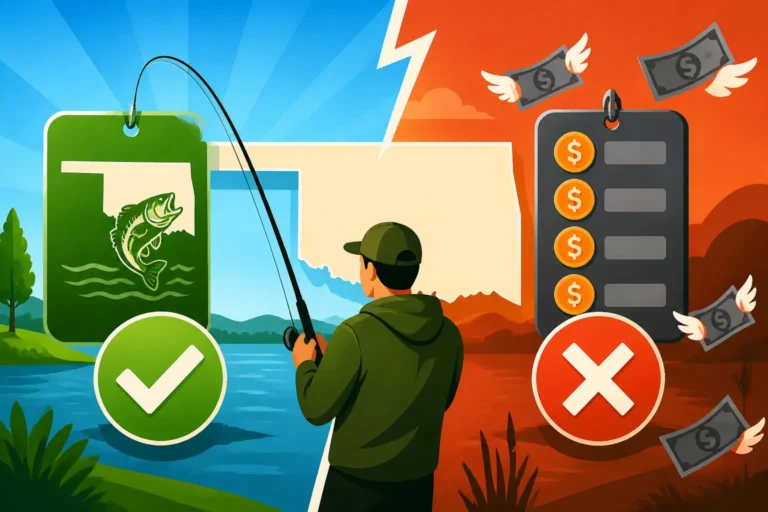
Let's get straight to it because this is where the rubber meets the road for many border anglers. The short answer for Kansas residents looking to fish in Oklahoma is generally "no," there isn't a widespread, blanket reciprocity agreement that allows your Kansas fishing license to be valid in Oklahoma, or vice-versa. This can be a real bummer, especially if you’re used to certain states having agreements on shared waterways.
The General Rule: No Automatic Reciprocity
When you look at fishing licenses, each state operates with its own set of rules, regulations, and revenue structures. The Oklahoma Department of Wildlife Conservation (ODWC) and the Kansas Department of Wildlife and Parks (KDWP) are separate entities, each responsible for managing their state's natural resources and generating funds to do so. A Kansas fishing license contributes to Kansas's conservation efforts, stocking programs, and enforcement, not Oklahoma's.
This distinct management means that unless a very specific, often geographically limited, reciprocal agreement has been hammered out and signed by both states, your license is only valid within the borders of the state that issued it. It’s not just about drawing a line on a map; it's about the legal framework and financial mechanisms that support wildlife management. Anglers often express frustration over this, feeling like they're being nickel-and-dimed, but from a resource management perspective, it makes a certain kind of sense. Each state wants to ensure that anyone benefiting from their waters is contributing to the upkeep of those waters. So, for the vast majority of Oklahoma lakes, rivers, and ponds, if you're holding a Kansas fishing license, you're going to need an additional Oklahoma nonresident license.
Specific Agreements: Where Reciprocity Does Exist (or Doesn't)
Now, it's true that some states do have specific reciprocal agreements, especially on shared border waters. The most well-known example that comes to mind for Oklahoma anglers is Lake Texoma, where there's a specific agreement with Texas. Anglers with a valid Texas or Oklahoma fishing license, along with the appropriate Lake Texoma fishing license or stamp, can fish the entire lake, regardless of the state line running through it. This kind of arrangement is fantastic and eases a lot of the border-crossing hassle. You can learn more about this in articles like Texas Anglers Fishing in Oklahoma Waters.
However, when we talk about Kansas and Oklahoma, such widespread agreements for shared border waters are not currently in place for fishing licenses. This means if you're planning a trip from, say, Wichita, Kansas, down to Kaw Lake or Keystone Lake in Oklahoma, your Kansas license won't cover you. You'll need to purchase an Oklahoma nonresident fishing license. It's a key distinction that can save you from a very unpleasant encounter with a game warden. This lack of reciprocity can feel counterintuitive, especially when you consider how close some of these lakes are to the Kansas border. It simply highlights the need to always check the specific regulations for the state you plan to fish in, rather than assuming. Even with neighboring states like Missouri, the rules are specific and not universally reciprocal, as you can see if you look into Missouri Anglers Fishing in Oklahoma.
Understanding Oklahoma's Nonresident Fishing License System
Since your Kansas license won't cut it, let's dive into what Oklahoma offers for out-of-state anglers. The ODWC has a pretty straightforward system for nonresidents, giving you a few options depending on how often you plan to visit the state for fishing.
Types of Nonresident Licenses Available
Oklahoma understands that not every out-of-state angler is looking for a full-year commitment. They've designed their nonresident license options to cater to different needs, from a quick day trip to a full year of fishing adventures.
The most popular choices are:
- Nonresident Annual Fishing License: This is your go-to if you anticipate making multiple fishing trips to Oklahoma throughout the year. As of my last check, the Nonresident Annual Fishing License Cost in Oklahoma typically sits around $81. This license is usually valid for one calendar year from the date of purchase. It gives you the freedom to fish most public waters in Oklahoma without having to buy a new license for each visit. It’s a solid investment if you’re serious about exploring Oklahoma’s diverse fisheries, from the bass-rich lakes to the catfish-laden rivers. Think of it as your all-access pass for 365 days.
- Nonresident 1-Day Fishing License: For those spontaneous road trips or planned single-day excursions, the 1-Day license is a lifesaver. This license costs significantly less, usually around $15, and is valid from the moment of purchase until midnight of that specific day. It's perfect if you're just dipping your toes into Oklahoma fishing or passing through and want to wet a line for a few hours. However, a crucial detail to remember is that "midnight of that specific day" means it expires quickly. If you plan to fish on a Friday evening until Saturday morning, you'll need two separate 1-day licenses or the annual option. Knowing When a 1-Day Oklahoma Fishing License Actually Expires is key to avoiding issues.
It's really important to differentiate these from resident licenses, which have different pricing and eligibility requirements based on living in Oklahoma. The state makes a clear distinction because residents contribute through other taxes and often have different impacts on local resources.
The Cost-Benefit Analysis for Kansas Anglers
Deciding between an annual and a 1-day nonresident license often comes down to a bit of math and an honest assessment of your fishing habits.
Let's break down the economics:
- Occasional Angler (1-5 trips per year): If you're only planning one or two trips into Oklahoma, the 1-day license is clearly the most economical choice. At around $15 a pop, two trips would be $30, and three would be $45. This keeps your costs low for those rare visits. However, once you hit around six or seven trips, you start approaching the cost of the annual license. It can be a hassle to remember to buy a new license each time, too.
- Frequent Angler (6+ trips per year): This is where the Is the $81 Nonresident Annual License Worth It Over Multiple 1-Day Trips? topic really comes into play. If you foresee yourself making half a dozen or more trips to Oklahoma within a 12-month period, the annual license becomes not just cost-effective, but also incredibly convenient. You buy it once, print it out (or save it to your phone), and you're good to go for any spur-of-the-moment decision to hit an Oklahoma lake. For example, if you fish seven days in Oklahoma over a year, seven 1-day licenses would cost you $105, which is significantly more than the $81 annual license. The peace of mind alone, knowing you're always covered, is worth a lot to many anglers.
Consider a Kansas angler living in Coffeyville, right on the border. They might find themselves frequently driving down to Oologah Lake or Grand Lake O' the Cherokees. For them, an annual nonresident license makes perfect sense. They save money over multiple single-day purchases and don't have to worry about forgetting to buy a new license before each outing. For someone from Topeka who might only come down once a year, the 1-day option is likely best. It truly depends on your individual fishing plans and proximity to Oklahoma's diverse fishing spots.
Navigating Regulations When Crossing State Lines
Alright, so you’ve got your Oklahoma nonresident fishing license. That’s a huge first step! But holding the license is just one piece of the puzzle. You absolutely must familiarize yourself with Oklahoma’s specific fishing regulations, which can differ significantly from what you’re used to in Kansas. Ignoring these rules, even unknowingly, can lead to fines and a ruined fishing trip.
Species-Specific Bag and Size Limits
This is probably the most critical area where anglers get into trouble. While you might know the bass limits in Kansas like the back of your hand, Oklahoma has its own distinct set of rules, and they can even vary from lake to lake within the state.
Let’s take a look at some common species:
- Bass: Oklahoma has statewide regulations for black bass (largemouth, smallmouth, and spotted bass), but there are often special regulations for specific lakes. For example, the statewide bag limit for black bass is generally six fish per day, but with a restriction that only one of those six can be over 16 inches in length. However, some popular trophy bass lakes might have even stricter slot limits or minimum length requirements. It’s imperative to check these local rules. You can dive deep into the nuances in a guide like Oklahoma's Bass Fishing Rules and Limits. This means that a 15-inch bass you’d keep in Kansas might be illegal to possess in certain Oklahoma waters, or the number of fish you can keep might differ.
- Crappie: Crappie are incredibly popular in Oklahoma, and like bass, they have statewide limits that can be superseded by local lake regulations. The statewide limit for crappie (black and white combined) is 37 fish per day, but many popular lakes, such as Lake Arbuckle, Lake Tenkiller, and Fort Gibson Lake, have a 10-inch minimum length limit and sometimes a reduced bag limit, such as 15 fish. Misunderstanding these specific lake regulations is a common mistake. Imagine driving hours to a lake, having a fantastic day, only to realize your cooler full of crappie are all undersized for that particular lake! Be sure to check Crappie Fishing Rules and Limits in Oklahoma or even Crappie Fishing Rules on Oklahoma's Ten-Inch Lakes before you go.
- Catfish: Oklahoma is a fantastic state for catfish, but again, the rules are specific. For channel and blue catfish, the statewide daily bag limit is 15 fish combined, but with an important twist: only one blue catfish over 30 inches can be kept per day. Flathead catfish have their own separate limit of 5 fish daily. These distinctions are crucial. If you're targeting big blues, knowing that "one over 30 inches" rule is paramount. Get all the details on Oklahoma's Catfish Fishing Rules and Limits.
The bottom line here is never to assume. Always check the current ODWC fishing regulations guide, available online or at most license vendors, before heading out. This is your bible for Oklahoma fishing. You can even find a comprehensive breakdown in Oklahoma's Bag Limit Rules by Species.
Special Stamps and Endorsements
Beyond your basic nonresident fishing license, Oklahoma, like many states, requires additional endorsements or permits for certain types of fishing or specific species. If you're a Kansas angler looking to broaden your horizons in Oklahoma, these are important to know.
- Trout License: Oklahoma has several popular trout fisheries, primarily catch-and-release or put-and-take programs in designated areas like the Lower Mountain Fork River or the Illinois River. If you plan to target trout, you'll need to purchase a special Oklahoma Trout License in addition to your general fishing license. This is often an inexpensive add-on but is legally required.
- Paddlefish Permit: Paddlefish snagging is a unique and exciting experience in Oklahoma, especially at Grand Lake O' the Cherokees. If you're heading down for the paddlefish season, you'll need a paddlefish permit, often referred to as a "paddlefish tag," in addition to your fishing license. These permits are specific to the species and ensure the state can monitor harvest and manage the population effectively.
- Hunting & Fishing Combo: While this article focuses on fishing, it's worth noting that if you combine fishing with hunting during your visits, Oklahoma also offers nonresident combination licenses that might simplify your purchasing process. However, for just fishing, sticking to the fishing-specific licenses is usually the way to go.
These stamps and endorsements are usually available at the same places you purchase your main fishing license and are part of the state’s funding for specific species management. Always double-check if your target species requires one of these extra permits; it’s better to be safe than sorry when a game warden checks your credentials.
Where to Purchase an Oklahoma Nonresident License
So, you’ve decided which license you need. Now, how do you actually get your hands on one? Luckily, Oklahoma has made it quite convenient for both residents and nonresidents to purchase fishing licenses, whether you prefer the digital route or a physical transaction.
Online Purchase Options
For most anglers, the easiest and quickest way to buy an Oklahoma fishing license is online, directly through the Oklahoma Department of Wildlife Conservation (ODWC) website.
Here’s a typical step-by-step process:
- Visit the ODWC Website: Navigate to the official Oklahoma Department of Wildlife Conservation website. Look for a section clearly labeled "Licenses" or "Buy a License."
- Create an Account or Log In: If it's your first time purchasing an Oklahoma license online, you'll likely need to create a customer account. This usually involves providing some personal information like your name, address (your Kansas address in this case), date of birth, and possibly a driver's license number. If you've purchased one before, you can log in to your existing account.
- Select License Type: Browse the available license options and select the "Nonresident Annual Fishing" or "Nonresident 1-Day Fishing" license, along with any necessary endorsements like a trout stamp or paddlefish permit.
- Complete Purchase: Add the selected licenses to your cart and proceed to checkout. You'll use a credit or debit card for payment. The process is generally secure and user-friendly.
- Print or Save: Once your purchase is complete, you'll typically receive an email confirmation that includes a printable copy of your license. You can print this out and carry it with you, or, even more conveniently, save a digital copy to your smartphone. Most game wardens accept a digital display of your license on your phone, but having a physical backup is never a bad idea, especially if you're out in areas with spotty cell service. This process is detailed further in How to Buy an Oklahoma Fishing License Online.
The online method offers incredible convenience, allowing you to purchase your license from the comfort of your home in Kansas, anytime, day or night. This means no last-minute scrambling to find an open vendor before you hit the water.
Authorized Vendors and Retailers
While online is great, sometimes you just prefer the traditional way, or you might find yourself already in Oklahoma and realize you forgot to buy your license. Thankfully, you have plenty of options for in-person purchases.
Oklahoma has a wide network of authorized license vendors across the state. These typically include:
- Sporting Goods Stores: Major retailers like Academy Sports + Outdoors or smaller local tackle shops are almost always authorized to sell ODWC licenses. These places are great because you can also pick up bait, lures, and other essentials while you’re there. You might even find some useful fishing accessories or fishing apparel on Amazon before your trip that complements what local shops offer.
- Chain Stores: Larger retail chains such as Walmart and Atwoods Ranch & Home often have a customer service desk or a dedicated area where you can purchase hunting and fishing licenses.
- Bait and Tackle Shops: Many smaller, independent bait and tackle shops, often located close to popular fishing lakes, are also authorized vendors. These places can be a goldmine for local fishing tips and current conditions.
- ODWC Offices: You can also purchase licenses directly from Oklahoma Department of Wildlife Conservation regional offices, though these might not be as conveniently located for a quick stop.
When purchasing in person, you'll still need to provide the same personal identification information. The vendor will print out your official license on the spot. It's always a good idea to confirm their operating hours before you make a special trip, especially if you're trying to buy a license early in the morning before hitting the lake. Remember that while Amazon is a fantastic place to get gear like a new fishing reel or a tackle box, you cannot purchase official state fishing licenses directly from them.
Common Misconceptions and Avoiding Penalties
It’s easy to make assumptions, especially when regulations vary so much from state to state. However, understanding and respecting Oklahoma's fishing laws is paramount to a successful and stress-free trip. Don't let common misunderstandings lead to a ruined day.
"Just One Quick Cast" Mentality
This is perhaps one of the most dangerous traps for anglers. You're driving through Oklahoma, see a beautiful pond or stream, and think, "I'll just make a few casts, no one will know." Or perhaps you're on a multi-day trip, your 1-day license expired at midnight, and you figure a few early morning casts won't hurt. This "just one cast" mentality can lead to significant trouble.
Here’s why it’s never a good idea:
- Vigilant Game Wardens: Oklahoma game wardens are dedicated professionals who patrol both popular and remote fishing spots. They are well-trained and observant. They're not just looking for major violations; checking licenses is a routine part of their job. They operate to protect Oklahoma's natural resources and ensure fair play.
- Immediate Consequences: Getting caught fishing without a valid license in Oklahoma is not a slap on the wrist. It’s a misdemeanor offense and can result in significant fines, court costs, and potentially even the confiscation of your fishing gear. Imagine losing your favorite rod and reel, plus paying a few hundred dollars in fines, all for a "quick cast." The penalties for fishing without a license in Oklahoma can be a real eye-opener, as detailed in Penalties for Fishing Without a License in Oklahoma.
- Unnecessary Stress: Why invite that kind of stress onto your relaxing fishing trip? The cost of a 1-day or even an annual nonresident license is a small price to pay for the peace of mind and the legal right to enjoy Oklahoma's beautiful waters.
It's better to spend a few minutes purchasing the correct license than to risk a citation that could sour your entire experience and potentially impact future privileges. Always ensure your license is current and valid before your line touches the water.
Reciprocity with Other States vs. Kansas
It bears repeating: the existence of reciprocity agreements with some states, or on some shared bodies of water, does not mean universal reciprocity across all borders. This is a very common source of confusion.
Oklahoma does have specific, limited reciprocity agreements. For instance, as mentioned earlier, there's the well-known agreement with Texas on Lake Texoma. This is a testament to cooperation between state wildlife agencies for a uniquely shared resource. However, such agreements are typically exceptions, not the rule.
When it comes to Kansas, there is no blanket reciprocity for fishing licenses. If you're coming from Kansas, you need an Oklahoma license. Period. It's not a matter of whether Kansas is a "friendly" state; it's about specific legislation and resource management policies.
Understanding this distinction is crucial:
- Don't Assume: Just because a friend from Arkansas mentioned they can fish a certain river that flows into Oklahoma with their Arkansas license, don't assume the same applies to your Kansas license on Oklahoma waters. Always verify.
- Check the ODWC Regulations: The most reliable source of information is always the Oklahoma Department of Wildlife Conservation’s official regulations guide or their website. If a reciprocal agreement exists, it will be clearly outlined there.
- Why the Difference?: Reciprocal agreements are complex. They involve balancing shared resource management, enforcement logistics, and revenue sharing. Sometimes, the administrative complexity or the perceived benefit doesn't warrant such an agreement for certain border areas. This is often the case with Kansas and Oklahoma.
By dispelling these common myths, you can ensure your fishing trip is not only productive but also entirely legal and hassle-free.
Planning Your Cross-Border Fishing Trip to Oklahoma from Kansas
With a clear understanding of license requirements and regulations, you're well on your way to planning an epic fishing trip from Kansas to Oklahoma. A little preparation goes a long way in ensuring a smooth and enjoyable experience.
Essential Pre-Trip Checklist
Before you even think about loading up the car, run through this checklist to make sure all your ducks (or rather, fish) are in a row:
- License Verification: Double-check that your Oklahoma nonresident fishing license is valid for the dates you plan to fish. If you bought a 1-day license, confirm the date. If it's an annual, make sure it hasn't expired since you last checked. You can usually find the expiration date clearly printed on your license. Also, verify you have any necessary stamps or endorsements (like a trout or paddlefish permit) for the species you intend to target.
- Regulation Review: Don't just glance; actively review the specific bag and size limits for the species you're after in the particular Oklahoma lake or river you'll be fishing. As we discussed, these can vary from statewide limits, especially for popular species like crappie (e.g., Crappie Fishing Rules on Oklahoma's Ten-Inch Lakes). The ODWC website is your best friend here, or grab a physical copy of the regulations booklet.
- Weather and Water Conditions: Check the forecast for your destination. Oklahoma weather can be unpredictable. Also, look up recent lake levels, water temperatures, and clarity, as these factors significantly impact fish behavior and your fishing success. Websites for local bait shops often have up-to-date reports.
- Boat Ramp and Access: If you're bringing a boat, research the condition of the boat ramps at your chosen lake. Some ramps can be shallow during drought or crowded during peak season. If bank fishing, identify good public access points beforehand.
- Gear Check: Make sure your rods, reels, and tackle are in good working order. Restock on lines, hooks, sinkers, and lures. This is where retailers like Amazon can be really helpful for ordering specific baits or gear you might need, from high-quality fishing line to a comfortable fishing chair for bank fishing. Don’t forget essentials like a cooler, plenty of water, sunscreen, and bug spray. You can even find specialized fishing hats and sunglasses on Amazon to enhance your comfort and visibility on the water.
- Safety Equipment: If boating, ensure all required safety gear is on board and in good condition (life jackets, throwable device, fire extinguisher, etc.). Remember that children 12 and under must wear a life jacket when underway on an Oklahoma vessel.
Recommended Oklahoma Waters for Kansas Anglers
Given your starting point in Kansas, there are several excellent Oklahoma lakes that are relatively accessible and offer fantastic fishing opportunities for nonresident anglers. Many of these offer a diverse range of species, making them appealing for different fishing preferences. You can always start by checking out comprehensive resources like Best Fishing Spots in Oklahoma or Best Fishing Lakes in Oklahoma.
Here are a few popular choices:
- Kaw Lake (near Ponca City): Located in north-central Oklahoma, Kaw Lake is known for its excellent populations of striped bass hybrids (wipers), white bass, crappie, and catfish. It's a large reservoir with plenty of open water for trolling and numerous coves for crappie and bass fishing. Its proximity to the Kansas border makes it a prime destination for a day trip or a weekend getaway.
- Keystone Lake (near Tulsa): While a bit further south, Keystone Lake is still very accessible from southern Kansas. It's famous for its striped bass, white bass runs, and good populations of crappie and catfish. The Arkansas River flows into and out of Keystone, offering diverse fishing environments. It’s a great lake for both boat and bank anglers.
- Oologah Lake (near Oologah): Northeast of Tulsa and closer to the Kansas border, Oologah Lake is another large impoundment known for its abundant populations of white bass, crappie, catfish, and excellent opportunities for hybrid striped bass. The lake features extensive timbered areas that provide great habitat for crappie and bass.
When picking your spot, think about what you want to catch and what kind of fishing experience you're after. Some lakes are better for trophy bass, while others might be crappie factories. Each offers its own unique charm and challenges. By planning thoroughly, you're setting yourself up for a memorable and legal fishing adventure in the great state of Oklahoma.
Disclaimer
Please note that fishing regulations, license fees, and reciprocal agreements are subject to change. While this guide provides the most current information available, it is always the angler's responsibility to consult the official Oklahoma Department of Wildlife Conservation (ODWC) website or current regulations guide before heading out on the water. This content is for informational purposes only and does not constitute legal advice.