The One 16-Inch Bass Rule Anglers Miss
It's a beautiful day out on the water, the sun is shining, and the fish are biting! You've got your rod bent, the line is screaming, and after a thrilling fight, you land a magnificent black bass. You measure it quickly, realize it's over the minimum, and happily toss it in the livewell. Then you catch another big one, and another, and suddenly, you're looking at your limit and wondering if you've actually followed all the rules. For many anglers in Oklahoma, one crucial detail about bass limits often gets missed: the "one over 16 inches" rule. This guide is here to clear up that confusion, help you understand exactly what the regulation means, and ensure your next bass fishing trip is both successful and fully compliant with state law.
Unpacking Oklahoma's Statewide Bass Limit: It's More Than Just Six Fish
When you're out chasing largemouth, smallmouth, or spotted bass in Oklahoma, it's easy to get caught up in the excitement. But understanding the regulations is just as important as knowing where to cast your line. The statewide black bass limit isn't just a simple number; it has a critical caveat that many seasoned anglers sometimes overlook.
The Foundation: Six Black Bass Daily
First things first, let's establish the basic rule: the daily aggregate bag limit for black bass – that's largemouth, smallmouth, and spotted bass combined – is six fish. This means that if you catch three largemouth, two spotted bass, and one smallmouth, you've reached your six-fish limit. You can't then go out and catch six more of a different species. It's a combined total for all "black bass" species. This aggregate approach is a smart conservation strategy, treating these closely related species as one unit to protect their overall populations. You can learn more about Oklahoma's Bass Fishing Rules and Limits to get a broader overview of these important regulations.
The idea here is to allow anglers to enjoy a good day of fishing and take home a decent meal, without putting undue pressure on any single species of black bass. It's a balance designed to keep our fisheries healthy and thriving for years to come. Think of it as a shared resource; everyone gets a piece, but no one takes too much.
The Critical Detail: Only One Over Sixteen Inches
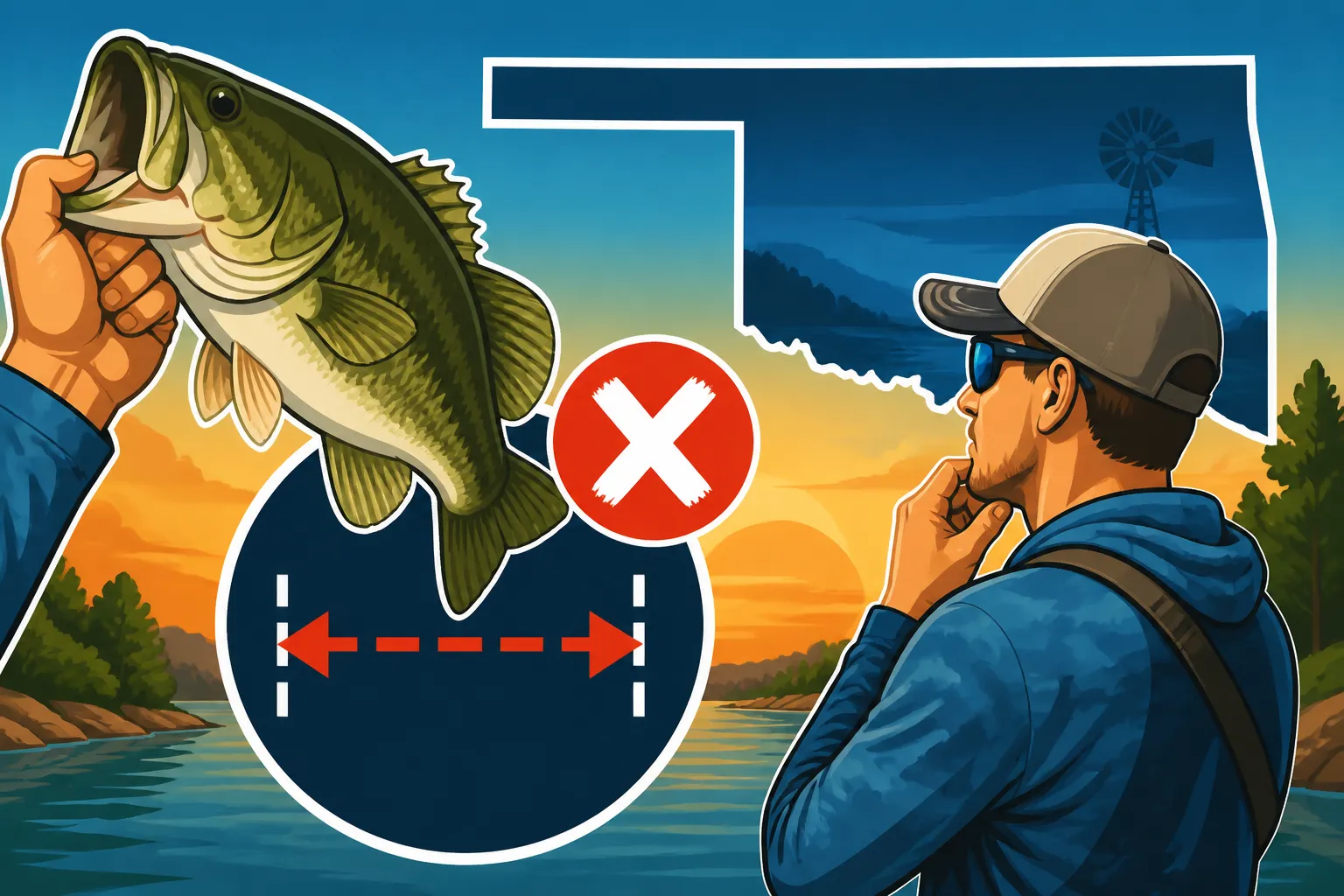
Now, here's where the rule often trips people up, and it's something you absolutely need to remember: of your six-fish daily limit, only one black bass may be 16 inches or longer. Let that sink in. It's not a minimum size for all fish, nor is it a traditional slot limit where you keep fish within a certain size range. This rule specifically restricts the number of larger bass you can keep.
Imagine this scenario: you're fishing a fantastic spot, and you land a beautiful 17-inch largemouth. You measure it, it's legal, and you put it in your livewell. Great start! Later, you catch a 14-inch spotted bass, then a 13-inch smallmouth. So far, so good. You've got three fish, one of which is over 16 inches. But then, an hour later, you hook into another monster, a 19-inch largemouth. Your heart races, you land it, measure it… and suddenly, you realize you're in a tricky spot. You already have one fish over 16 inches. Keeping this second 19-inch bass would put you over the legal limit for large fish, even if you still have room in your six-fish bag limit. Many anglers, focused on just the "six fish" part, might accidentally keep that second large bass, leading to a potential violation. This is the single biggest misunderstanding of Statewide Bass Bag Limits in Oklahoma. It’s a very common mistake, and game wardens are well aware of it.
This particular rule is a targeted conservation effort. Those larger bass, typically 16 inches and up, are often the prime spawners in the population. They've proven their ability to survive, grow, and reproduce. By limiting the harvest of these larger fish to just one per angler per day, the Oklahoma Department of Wildlife Conservation (ODWC) aims to keep plenty of breeding stock in the water, ensuring a healthy future for the bass fishery.
Avoiding Common Mistakes and Misunderstandings
Navigating fishing regulations can sometimes feel like trying to untangle a particularly stubborn fishing knot – frustrating and confusing! But with a little clarity, you can easily avoid the pitfalls that catch many anglers off guard, especially when it comes to that 16-inch bass rule.
"Wait, I Thought It Was a Slot Limit!"
This is a really common point of confusion. Anglers often hear "size limits" and automatically think of slot limits, which are a different beast entirely. A true slot limit might say something like, "all bass between 13 and 16 inches must be released," or "only bass within a 13 to 16-inch slot can be kept." Our statewide rule for black bass in Oklahoma isn't a slot limit. It's a straightforward maximum of one fish 16 inches or longer within your total six-fish bag limit.
Let's illustrate the difference. If Oklahoma had a 13-16 inch slot limit, you would have to release any bass under 13 inches and any bass over 16 inches. You could only keep fish that fall within that specific range. With our statewide rule, you can keep bass under 16 inches (assuming they meet any general minimum length, which for black bass across most of the state, isn't specified, but again, always check lake-specific rules!). The crucial part is that once you've kept one bass that measures 16 inches or more, you cannot keep any additional bass of that size or larger for the rest of the day.
So, you could keep five 14-inch bass and one 17-inch bass. That's legal. You could also keep six 15-inch bass. That's also legal. What you can't do is keep two 17-inch bass, even if you only have two fish in your livewell. This nuance is why so many anglers miss it, and it's why understanding How Many Bass You Can Keep in Oklahoma involves more than just counting up to six.
Measuring Your Catch Accurately
When dealing with length limits, precision is key. A quick guess or an approximate measurement isn't going to cut it, especially when a game warden comes knocking. You need a reliable way to measure your fish, and you need to do it correctly.
For black bass, the standard measurement is "total length." This means you measure from the tip of the snout (with the mouth closed) to the very end of the tail (with the tail lobes pinched together to give the maximum length). Don't measure along the curve of the body; lay the fish flat, nose against a flat surface, and measure straight to the tail.
It's always a good idea to invest in a quality measuring device. A sturdy, flat bump board is excellent for consistency, as you can press the fish's snout against the "bump" and get an accurate reading. Even a good flexible measuring tape can work, but make sure it's clearly marked and easy to read. You can find excellent options for these on sites like Amazon, ensuring you're always prepared. Many serious anglers even mark their boat gunwale with clear, permanent ruler lines. If you're ever in doubt about a fish's length, especially if it's borderline, the safest bet is always to gently release it. Better safe than sorry when it comes to conservation and potential fines.
Specific Lake Regulations vs. Statewide Rules
Here's another layer of complexity that can trip up even experienced anglers. While the "one over 16 inches" rule is a statewide regulation, Oklahoma has numerous lakes with specific, different black bass regulations. These lake-specific rules always supersede the statewide rule for that particular body of water and species. This is a critical point that can lead to major confusion if you're not careful.
For example:
- Lake Spavinaw and Lake Eucha both have a 16-inch minimum length limit for largemouth bass. This means any largemouth bass you keep from these lakes must be 16 inches or longer. In this scenario, the statewide "only one over 16 inches" rule is effectively overridden because all your kept bass would be 16 inches or longer. So, if you catch six bass from Lake Spavinaw, all of them must be 16 inches or longer, and you've met your limit.
- Lake Lawtonka and Lake Texoma have a 14-inch minimum length limit for largemouth bass. If you're fishing these lakes, any largemouth bass you keep must be at least 14 inches. However, the statewide "only one over 16 inches" rule still applies to your kept fish that are 14 inches or longer. So, you could keep five 14-inch bass and one 17-inch bass. But you couldn't keep two 17-inch bass, even if they were both over the 14-inch minimum for that lake.
It's absolutely vital to check the current Oklahoma Fishing Regulations Guide or the ODWC website for any specific lake you plan to fish before you even cast your first line. These local variations are put in place for very specific reasons, usually to manage particular fisheries for optimal health, growth rates, or to create trophy opportunities. Don't assume that just because you know the statewide rules, you're covered everywhere. Always verify! Knowing these subtle differences is key to successful Largemouth Bass Fishing in Oklahoma: The Complete Guide on any particular body of water.
Here’s a simplified breakdown to keep these rules straight:
| Rule Type | Description | Applies Where? | Common Misunderstanding |
|---|---|---|---|
| Statewide Black Bass Daily Bag Limit | 6 black bass (largemouth, smallmouth, spotted combined). | Most Oklahoma lakes and rivers (unless superseded). | Thinking you can keep 6 of each species, or not realizing they are combined. |
| Statewide "Only One Over 16 Inches" Rule | Of your 6 fish, only ONE may be 16 inches or longer. | Most Oklahoma lakes and rivers (unless superseded by different lake rules). | Confusing this with a slot limit, or thinking you can keep multiple large bass as long as you don't exceed 6 total. |
| Lake-Specific Minimum Length Limits | All kept fish must meet or exceed a specified minimum length (e.g., 14 inches, 16 inches, 18 inches). | Specific lakes (e.g., Lawtonka, Spavinaw, Carl Etling). | Not realizing these local rules override the statewide "one over 16 inches" rule when they directly conflict. |
| Lake-Specific Slot Limits | Fish must fall within a specific size range to be kept. | Very few, check regulations carefully. | Assuming all "size rules" are slot limits; the statewide rule is not a slot limit. |
Remember, the Oklahoma Department of Wildlife Conservation publishes annual fishing regulations that are your ultimate source of truth. Take the time to read them, especially the sections on specific bodies of water.
The Conservation Logic Behind the Rule
It might seem arbitrary to say "only one over 16 inches," but like all good wildlife management practices, this rule isn't just pulled out of a hat. There's sound ecological and biological reasoning behind it, designed to protect and enhance our bass fisheries for both current and future generations of anglers.
Protecting Trophy Potential and Spawners
Larger, older bass, particularly those 16 inches and above, represent a significant asset to any fishery. These fish are typically mature, proven breeders that contribute genetic diversity and maintain robust populations. They’ve successfully navigated predation, food scarcity, and angling pressure to reach their size. If too many of these larger, dominant spawners are removed from a system, it can have several negative impacts:
- Reduced Reproductive Output: Larger female bass produce significantly more eggs than smaller ones. Protecting them means ensuring a healthier, more consistent supply of new fish entering the population.
- Genetic Health: These are often the fish that possess superior genetics for growth and survival. By limiting their harvest, the rule helps ensure these beneficial genes continue to be passed down through the population.
- Trophy Potential: For many anglers, the dream is to catch a true lunker. By allowing only one large fish to be kept, the ODWC ensures that many of these potential trophy fish remain in the water to continue growing, offering exciting opportunities for anglers seeking that once-in-a-lifetime catch. It’s all about creating and sustaining those chances. This is a crucial element when considering Oklahoma's Bass Fishing Rules and Limits.
Think of it as an investment in the future. By exercising a little restraint on the number of large bass we take today, we're ensuring that the next generation of anglers (and the next generation of bass!) will have plenty to enjoy.
Balancing Harvest and Sustainability
Conservation isn't about preventing people from fishing or keeping fish; it's about finding a sustainable balance. The "one over 16 inches" rule is a perfect example of this philosophy in action. It allows anglers to keep a generous six-fish limit, providing plenty of fish for the dinner table or for tournament weigh-ins, while still putting a safeguard on the largest and most valuable members of the bass population.
This rule acknowledges that there's usually a healthy population of smaller bass (under 16 inches) that can withstand more fishing pressure. Harvesting these smaller fish can even be beneficial, as it can reduce competition for food and resources, potentially allowing the remaining bass to grow faster and healthier. Meanwhile, the larger fish are given a better chance to continue their crucial role in the ecosystem.
Ultimately, this regulation helps maintain a healthy age structure within the bass population. It keeps a good mix of young, growing fish and mature, breeding adults, which is essential for a resilient and productive fishery. So, the next time you're out on the water, whether you're using classic Bass Fishing Techniques by Season or trying new baits you found online, and you land that beautiful bass, remember that this specific rule is there for a reason – to make sure that the thrill of Oklahoma fishing lasts for generations to come.
Disclaimer
Please note that fishing regulations can change. While every effort has been made to provide accurate and up-to-date information, it is always the angler's responsibility to consult the current Oklahoma Fishing Regulations Guide published by the Oklahoma Department of Wildlife Conservation (ODWC) before fishing. This article is for informational purposes only and should not be considered a substitute for official regulations.