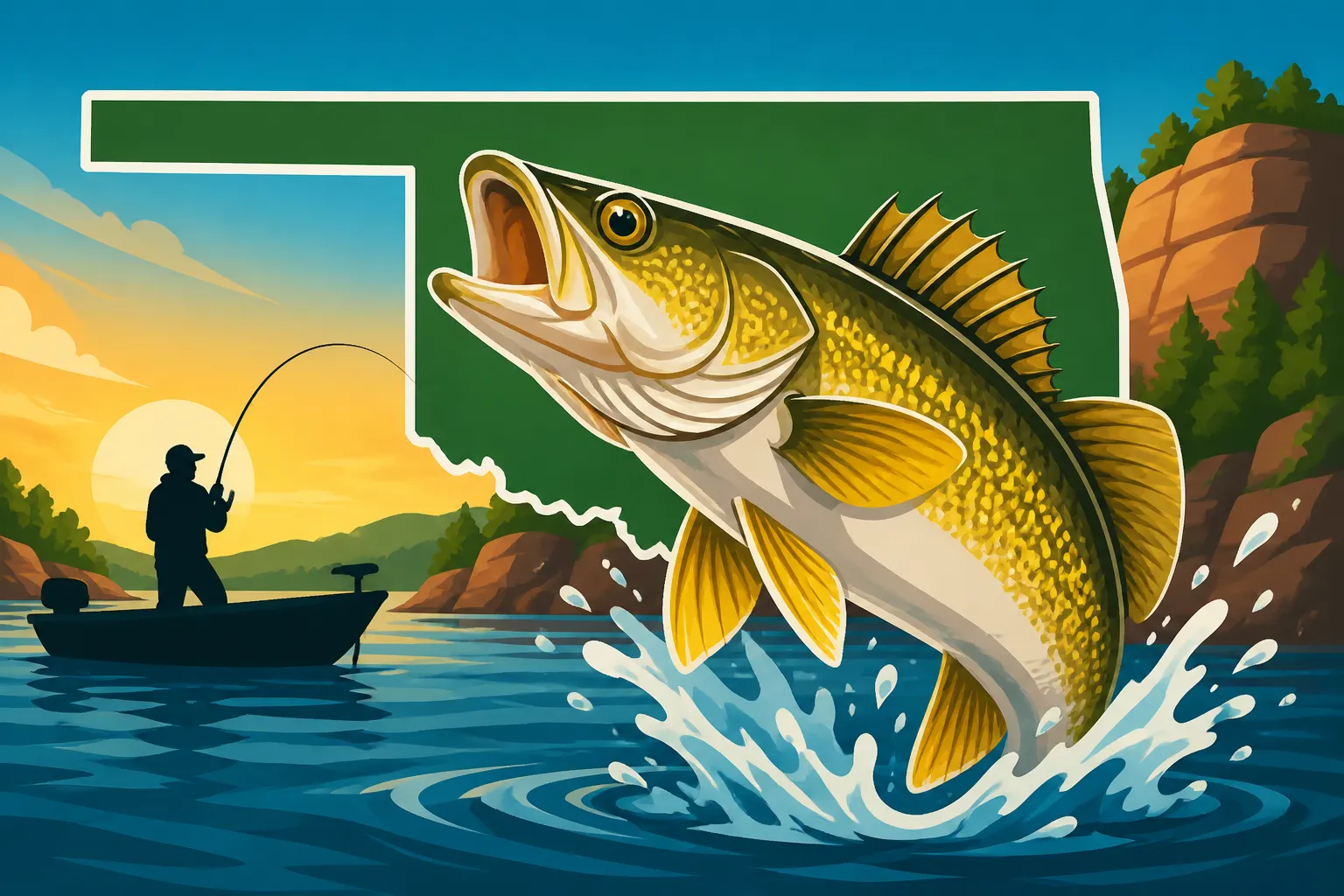
Best Walleye Fishing Spots in Oklahoma
Finding reliable information on where to chase that elusive, delicious walleye in Oklahoma can feel like sifting through a tackle box full of tangled lines. Many anglers struggle to pinpoint the true hotspots and techniques for catching this prized game fish, often wasting precious time on waters better suited for bass or crappie. This comprehensive guide will cut through the confusion, revealing Oklahoma's top walleye fishing destinations and the proven strategies you need to put these sought-after fish in your cooler.
The Allure of Walleye Fishing in Oklahoma
Walleye might not be the most common species in every Oklahoma lake, but where they thrive, they offer some truly rewarding angling experiences. Known for their keen eyesight, preference for cooler, deeper waters, and incredible table fare, they present a unique challenge that many anglers wholeheartedly embrace.
Why Walleye Are a Prized Catch in the Sooner State
Let's be honest, one of the biggest draws to walleye fishing is the taste. Their firm, flaky, white meat is considered a delicacy by many, easily rivalling some saltwater species. But beyond the dinner plate, the pursuit of walleye offers a distinct kind of excitement. Unlike the aggressive, structure-oriented fight of a largemouth bass, walleye often deliver a subtle, almost imperceptible bite, requiring a delicate touch and focused attention. When you do hook into one, their strong, determined runs and headshakes can really test your gear and your angling prowess. It’s a rewarding challenge, especially in a state where other species often take center stage. Plus, catching a decent-sized walleye – say, anything over 20 inches – often means you’ve successfully deciphered the water, conditions, and fish behavior, which is a triumph in itself.
Identifying Prime Walleye Habitat
Understanding where walleye prefer to hang out is half the battle. These fish are masters of camouflage and often relate to specific types of underwater structure that provide both ambush points and easy access to forage. Think about areas where baitfish congregate and where walleye can quickly dart out to grab a meal without expending too much energy.
In Oklahoma's large reservoirs, prime walleye habitat typically includes rocky points, main lake humps, submerged islands, channel swings, and areas with hard bottom like gravel or sand. They often gravitate towards the edges of creek channels or riverbeds within the main lake, especially where there's a current or a significant depth change. Look for areas with a good mix of cover and depth, usually between 15 and 30 feet, though they will move shallower during certain times of the year, particularly the spawn. Walleye are highly light-sensitive, so they’ll often be found deeper during bright daylight hours or tucked away under ledges and brush piles, only venturing shallower to feed during low light conditions like dawn, dusk, or under cloudy skies.
Oklahoma's Premier Walleye Hotspots
While walleye can occasionally pop up in unexpected places, a few specific lakes in Oklahoma consistently produce strong numbers and impressive sizes. These are the places where dedicated walleye anglers focus their efforts.
Canton Lake: The Walleye King
Without a doubt, Canton Lake, located in Blaine County, holds the crown for walleye fishing in Oklahoma. This roughly 7,900-acre reservoir is meticulously managed for its walleye population by the Oklahoma Department of Wildlife Conservation (ODWC) and hosts an annual Walleye Rodeo, attracting anglers from all over. The lake's relatively clear water, vast expanses of sand and gravel flats, and abundance of shad and other forage make it ideal walleye territory.
During the spring, the sandy, shallow areas of the lake's upper end, particularly near the river channels of the North Canadian River, become critical spawning grounds. Anglers target these areas with crankbaits, jigs, and live bait, especially at night or during twilight hours. As the water warms, walleye move to deeper main lake structures. Look for them holding on the vast flats, humps, and points, especially those with rocky or gravel bottoms. The "Walleye Wall" area, a long rip-rap dam, is also a notorious hotspot. Using a good fish finder is essential here to locate schools of fish relating to subtle depth changes or isolated cover. Many successful anglers on Canton employ trolling techniques with crankbaits or bottom bouncers rigged with live nightcrawlers or minnows, covering large areas until they find an active school.
Kaw Lake: Consistent Walleye Action
Up in north-central Oklahoma, Kaw Lake offers another fantastic walleye opportunity, often flying a bit under the radar compared to Canton. This 17,000-acre reservoir on the Arkansas River provides a diverse environment for walleye, with extensive flats, rocky points, and submerged timber. The river's influence also contributes to a nutrient-rich environment that supports a healthy walleye population.
Similar to Canton, spring is a prime time for walleye at Kaw, particularly in the river sections upstream where fish migrate to spawn. Key areas include the rip-rap along the dam, rocky points, and feeder creek channels. Trolling crankbaits like Berkley Flicker Shads or Rapala Shad Raps along these structures can be highly effective. As summer approaches, walleye will move to deeper water, often suspending over main lake humps or relating to the deep side of channel bends. The submerged timber fields, while challenging to fish, can hold significant numbers of walleye, requiring precise boat positioning and jigging tactics. Live bait, especially shiners or large minnows, fished on a slip-sinker rig or under a bobber, can be deadly when walleye are holding tight to structure. Many local guides on FishingBooker specialize in Kaw Lake and can provide invaluable insights into current patterns.
Lake Fort Gibson: Northern Strain Walleye
Lake Fort Gibson, located in northeastern Oklahoma near Wagoner, is another excellent destination for walleye, particularly notable for its population of northern strain walleye. This 19,900-acre lake on the Grand River has a reputation for producing some larger-than-average walleye, thanks to its extensive rocky structure, deep river channels, and abundant forage base. The lake's clear-to-moderately stained water conditions make it a prime hunting ground for these sight-feeding predators.
During the spring spawn, walleye concentrate on the rip-rap along the dam, rocky shorelines, and main lake points, especially in the northern reaches of the lake where the Grand River enters. Shallow-running crankbaits and jigs tipped with soft plastics or live minnows are effective for targeting these shallower fish. As the seasons progress, Fort Gibson's walleye will move to deeper submerged humps, ledges, and channel edges, often holding near timber or rock piles in 20-40 feet of water. Vertical jigging with spoons or blade baits directly over schools of fish detected on sonar is a popular and productive technique here. Trolling deep-diving crankbaits or bottom bouncers with nightcrawlers along the old river channel can also yield great results. Understanding the movement patterns of Walleye, Sauger and Saugeye: Oklahoma's Cousin Fish can further enhance your success here.
Proven Walleye Fishing Techniques for Oklahoma Waters
Walleye fishing demands a combination of patience, precision, and an understanding of their subtle habits. While they might not strike a topwater lure like a bass, mastering a few key techniques will significantly improve your catch rates.
Trolling for Open Water Walleye
Trolling is often the most efficient way to cover vast expanses of water in Oklahoma's larger reservoirs, particularly when walleye are scattered or suspended. This method involves dragging lures or bait behind a slow-moving boat, allowing you to present your offering at a consistent depth over potential holding areas.
The key to successful trolling is matching your lure and speed to the depth and behavior of the fish. Deep-diving crankbaits like Bandits, Reef Runners, or Rapala Deep Tail Dancers are staples for targeting walleye suspended over open water or relating to deeper humps and ledges. You'll want to experiment with different colors, paying attention to water clarity; brighter colors like firetiger or chartreuse often work well in stained water, while more natural patterns excel in clearer conditions. Employing planer boards can allow you to spread out multiple lines, covering a wider swath of water and keeping your lures away from the boat's disturbance. A slow, steady speed, typically between 1.0 and 2.5 mph, is generally effective, but varying your speed with small accelerations and decelerations can often trigger strikes. Don't forget to check your line for weeds or debris regularly, as even a small piece can throw off your lure's action.
Jigging and Bottom Bouncing Strategies
When walleye are holding tight to specific structures or concentrated in smaller areas, jigging and bottom bouncing become incredibly effective. These techniques allow for a more precise presentation, getting your bait directly into the strike zone.
Jigging involves using a lead-head jig tipped with a soft plastic, live minnow, or piece of a nightcrawler, and vertically working it near the bottom. This is particularly effective over submerged humps, rock piles, or channel edges where fish are tightly schooled. Popular jig styles include traditional ball head jigs, stand-up jigs, or even blade baits like the Sebile Vibe or Johnson ThinFish. The retrieve typically involves lifting the rod tip sharply a foot or two, then letting the jig fall back on a semi-slack line, mimicking a struggling baitfish. The bite often occurs on the fall, so paying close attention to your line is crucial. Bottom bouncing, on the other hand, is excellent for covering areas where walleye are relating to the bottom, but might be slightly more scattered than in a jigging scenario. It involves a "bottom bouncer" weight that drags along the lake bed, keeping your bait (usually a spinner rig with a live nightcrawler or minnow) just off the bottom. This setup is often slow-trolled or drifted, making it perfect for covering flats or breaking areas. For those looking to refine their approach, exploring specific Walleye Fishing Techniques can provide deeper insights.
Mastering the Art of Live Bait Presentation
While lures certainly catch their share of walleye, live bait often reigns supreme, especially when the bite is tough. Walleye are opportunistic feeders, and a natural, struggling baitfish or worm can be irresistible.
Minnows, particularly shiners or fatheads, are perhaps the most popular live bait for walleye. They can be fished in various ways: on a simple jig, under a slip bobber over structure, or on a slip-sinker rig. When using a slip-sinker rig, thread your line through an egg sinker, tie on a swivel, then attach a leader with a small, sharp hook. The length of the leader can vary, but generally 18-36 inches works well. Hook the minnow lightly through the lips or just behind the dorsal fin to keep it lively. Nightcrawlers are another walleye favorite, especially when fished on a spinner rig behind a bottom bouncer or simply on a plain hook under a bobber. You can thread a whole nightcrawler onto a hook or "half-harness" it to create more action. Leeches, though less common in Oklahoma, can also be highly effective where available, as they are incredibly hardy and active in the water. Remember, fresh, lively bait is key; change your bait often if it becomes sluggish.
Seasonal Patterns and Best Times to Fish for Walleye
Walleye behavior is highly dictated by the seasons and corresponding water temperatures. Understanding these patterns is crucial for consistent success. Knowing Best Time to Catch Walleye in Oklahoma is vital for planning your trips.
Spring Spawning Runs: Your Best Bet
Spring is arguably the best time to target walleye in Oklahoma, largely due to their annual spawning migration. As water temperatures begin to rise, typically when they hit the 45-55°F range, walleye move from their deeper wintering grounds to shallower, hard-bottomed areas to reproduce.
This usually occurs from late February through April, depending on the lake and specific weather patterns. Look for these fish congregating on rip-rap banks (like those found at Canton or Kaw dams), rocky points, and shallow gravel flats near inflowing rivers or creeks. These areas offer the perfect substrate for egg deposition. During this period, walleye are often aggressive as they prepare to spawn, making them more vulnerable to a variety of techniques. Casting jigs tipped with minnows or soft plastics, slow-rolling crankbaits along the bottom, and even simple live bait rigs can be incredibly effective. Many anglers find the hours just before and after sunrise, or after sunset, to be the most productive during the spawn, as walleye are often shallower and more active in low light conditions. Keep an eye on local reports and water temperature, as a sudden cold front can temporarily halt the bite.
Summer Deep Water Strategies
Once the spring spawn is over and water temperatures climb into the 70s, walleye retreat to deeper, cooler waters. They often set up shop along the thermocline (the layer in the water where temperature changes rapidly) or relate to deep main lake structures like humps, points, and channel swings.
During summer, walleye typically become less active during the bright daylight hours, preferring to feed in low light. This means early mornings, late evenings, and especially night fishing can be highly productive. At night, walleye will often move shallower, sometimes into depths of 10-20 feet, to ambush baitfish. Trolling deep-diving crankbaits that reach depths of 20-30 feet is a staple technique, as is bottom bouncing with live nightcrawlers or large minnows over deep flats. When fish are located on specific deep structures, vertical jigging with heavy spoons or blade baits can entice strikes. Another effective method is drifting live bait over deep humps or contours using a slip-sinker rig. Pay close attention to your fish finder during this time; marking baitfish schools is often the first step to finding hungry walleye. Understanding How Water Temperature Affects Fishing Success is particularly crucial during the hot summer months.
Fall Feeding Frenzy and Winter Holds
As autumn arrives and water temperatures begin to drop, walleye often enter a "feeding frenzy" phase, actively putting on weight in preparation for winter. This can be another excellent time to catch them, as they become more aggressive and predictable.
In the fall, walleye will often return to shallower main lake points, rocky flats, and even creek channels, following schools of baitfish that are also moving shallower as the thermocline breaks down. Trolling crankbaits, casting jigs, and drifting live bait can all be highly effective. Look for them concentrated in depths ranging from 15 to 30 feet, often near transition areas between deep and shallow water. The bite can be strong throughout the day, especially on cloudy or windy days. As winter sets in and water temperatures drop further, walleye generally move to their deepest haunts, often congregating in large schools in the deepest parts of the lake or in river channels. Here, vertical jigging with spoons, blade baits, or heavy jigs tipped with minnows becomes the dominant technique. Slow trolling deep-diving baits can also pick off active fish. While the winter bite can be slower, finding these deep schools can lead to multiple hookups.
Essential Gear and Electronics for Oklahoma Walleye
Having the right tools for the job can make a huge difference in your walleye fishing success. From sensitive rods to advanced sonar, investing in quality gear tailored for walleye will pay dividends.
Rods, Reels, and Line Choices
Walleye fishing often calls for gear that combines sensitivity with backbone. You need to feel those subtle bites but also have enough power to handle a decent-sized fish.
For most walleye applications, a medium-light to medium-power spinning rod, typically 6'6" to 7'6" in length, is ideal. Look for a fast action tip, which provides the sensitivity needed to detect light bites and a quick hook-set. For trolling or bottom bouncing, a slightly longer, medium-power casting rod (7'-8') can be advantageous for managing lines and absorbing the shock of strikes. Matching these rods with a good quality spinning reel (size 2500-3000) or a low-profile baitcasting reel (for trolling/bottom bouncing) that has a smooth drag system is crucial. When it comes to line, a good rule of thumb is to use 6-10 lb test monofilament or fluorocarbon for casting and jigging, which offers good knot strength and shock absorption. For trolling or when using a fish finder, 10-20 lb braided line with a 6-10 lb fluorocarbon leader can be a game-changer. Braid's no-stretch properties offer superior sensitivity, helping you detect those subtle walleye bites, and its thinner diameter cuts through the water, allowing lures to run deeper. You can find excellent options among the Best Rods and Reels for Oklahoma Fishing articles.
| Technique | Rod Type | Reel Type | Line Type & Test | Lure/Bait Presentation |
|---|---|---|---|---|
| Trolling | 7'-8' Medium Power Casting Rod | Baitcasting | 10-20 lb Braid w/ Fluoro Leader | Deep-diving crankbaits, Bottom Bouncers |
| Jigging (Vertical) | 6'6"-7' Medium-Light Spinning Rod | Spinning (2500-3000) | 6-10 lb Braid w/ Fluoro Leader | Jigs (tipped), Blade baits, Spoons |
| Casting Jigs/Lures | 6'6"-7'6" Medium-Light Spinning Rod | Spinning (2500-3000) | 6-10 lb Monofilament/Fluoro | Jigs, Shallow crankbaits, Swimbaits |
| Live Bait (Slip Sinker) | 7'-7'6" Medium-Light Spinning Rod | Spinning (2500-3000) | 8-12 lb Monofilament | Minnows, Nightcrawlers (slip-sinker rig) |
Fish Finders and Mapping: Your Underwater Eyes
In Oklahoma's vast reservoirs, a quality fish finder is not just a luxury; it's practically a necessity for consistent walleye success. These electronics are your window into the underwater world, helping you locate fish, identify structure, and understand depth contours.
Modern fish finders offer an array of features that are incredibly valuable for walleye anglers. Down imaging and side imaging technologies, available on units from brands like Humminbird (Helix, Solix series) and Lowrance (HDS Live, Elite FS series), allow you to see detailed images of what's directly beneath and to the sides of your boat. This is critical for identifying subtle rock piles, submerged timber, or schools of baitfish and predators that walleye often relate to. GPS mapping, often integrated into higher-end units, allows you to mark waypoints of productive spots, navigate safely, and follow contour lines precisely, which is especially important when trolling. Knowing the specific contour of an old creek channel or a submerged hump can make all the difference. Understanding how to interpret your sonar readings – distinguishing between baitfish, larger fish, and structure – takes practice but will dramatically increase your efficiency. Many guides on FishingBooker leverage these advanced electronics to put clients on fish. For a deeper dive, check out Fish Finders and Electronics for Oklahoma Reservoirs.
Navigating these large lakes safely and effectively also requires good judgment. Always be aware of your surroundings, especially during low light conditions or when fishing in areas with heavy boat traffic. Even experienced anglers use their electronics not just for finding fish, but for general navigation and avoiding underwater hazards that aren't visible from the surface. A detailed map combined with accurate GPS and sonar can save you time and prevent damage to your boat or motor.
Walleye fishing in Oklahoma offers a challenging yet highly rewarding experience for anglers willing to learn their habits and master the appropriate techniques. While it might require a bit more finesse than some other types of fishing, the payoff, both in terms of the fight and the table fare, is truly worth the effort. By focusing on proven hotspots like Canton, Kaw, and Fort Gibson lakes, employing effective strategies like trolling, jigging, and live bait presentations, and understanding seasonal movements, you'll be well on your way to consistent walleye success.
Disclaimer
Fishing conditions and regulations in Oklahoma can change frequently. Always consult the latest Oklahoma Department of Wildlife Conservation (ODWC) regulations and local advisories before heading out on the water. This guide is for informational purposes only and does not supersede official government regulations. Practice safe boating and fishing habits at all times.