Best Time to Catch Walleye in Oklahoma
It can be incredibly frustrating to hit the lake with high hopes, armed with your best walleye gear, only to find the fish seemingly vanished. So many anglers struggle with the "when" of walleye fishing in Oklahoma, missing out because they're not timing their trips to match these elusive fish's natural rhythms. This guide will walk you through the optimal times to target walleye in Oklahoma, from seasonal shifts to daily windows and environmental cues, ensuring your next outing has a much better chance of success.
Understanding Walleye Seasonal Movements in Oklahoma
Walleye are creatures of habit, and their behavior changes dramatically with the seasons, largely dictated by water temperature and their biological drive to spawn and feed. Knowing these patterns is half the battle in figuring out the best time to catch them. Oklahoma’s diverse waters, from big reservoirs to smaller rivers, all follow similar thermal dynamics that walleye respond to.
Spring: Pre-Spawn and Spawn Aggression
Spring is arguably the most anticipated time for walleye anglers in Oklahoma. As the ice (if any) melts and water temperatures begin to climb, walleye shake off their winter lethargy and start moving towards their spawning grounds. This pre-spawn period, typically when water temperatures are in the high 30s to low 40s (Fahrenheit), sees fish congregating in staging areas. They’re hungry and aggressive, feeding heavily to build up energy for the upcoming spawn. Think of them like athletes carb-loading before a big race; they need fuel.
As the water warms further, usually into the mid-40s to low 50s, the actual spawn begins. Walleye are broadcast spawners, laying their eggs over rocky bottoms, riprap, or gravel points in relatively shallow, current-swept areas. During the peak of the spawn, the fish can be so focused on reproduction that they become difficult to catch. They're not actively feeding as much, but they might strike out of instinct or annoyance at a lure presented in their spawning beds. It's a delicate balance; you want to be there for the pre-spawn bite and the post-spawn recovery, often skirting the very peak of the spawn itself. Many seasoned anglers consider the pre-spawn and immediate post-spawn as some of the most productive times of the entire year. Don't forget to review Oklahoma Fishing Seasons: A Month-by-Month Guide to get a broader perspective on the year.
Summer: Deep Water and Night Feeding
Once spring gives way to the scorching Oklahoma summer, walleye adapt by seeking cooler, deeper waters. They are not warm-water fish, so the intense heat drives them to depths where the water temperature is more stable and comfortable. This often means suspending over deeper structure, congregating near thermoclines (the boundary between warmer surface water and cooler deep water), or relating to deep points, humps, and submerged timber. Fishing during the day can be challenging because they are less active, conserving energy in the heat.
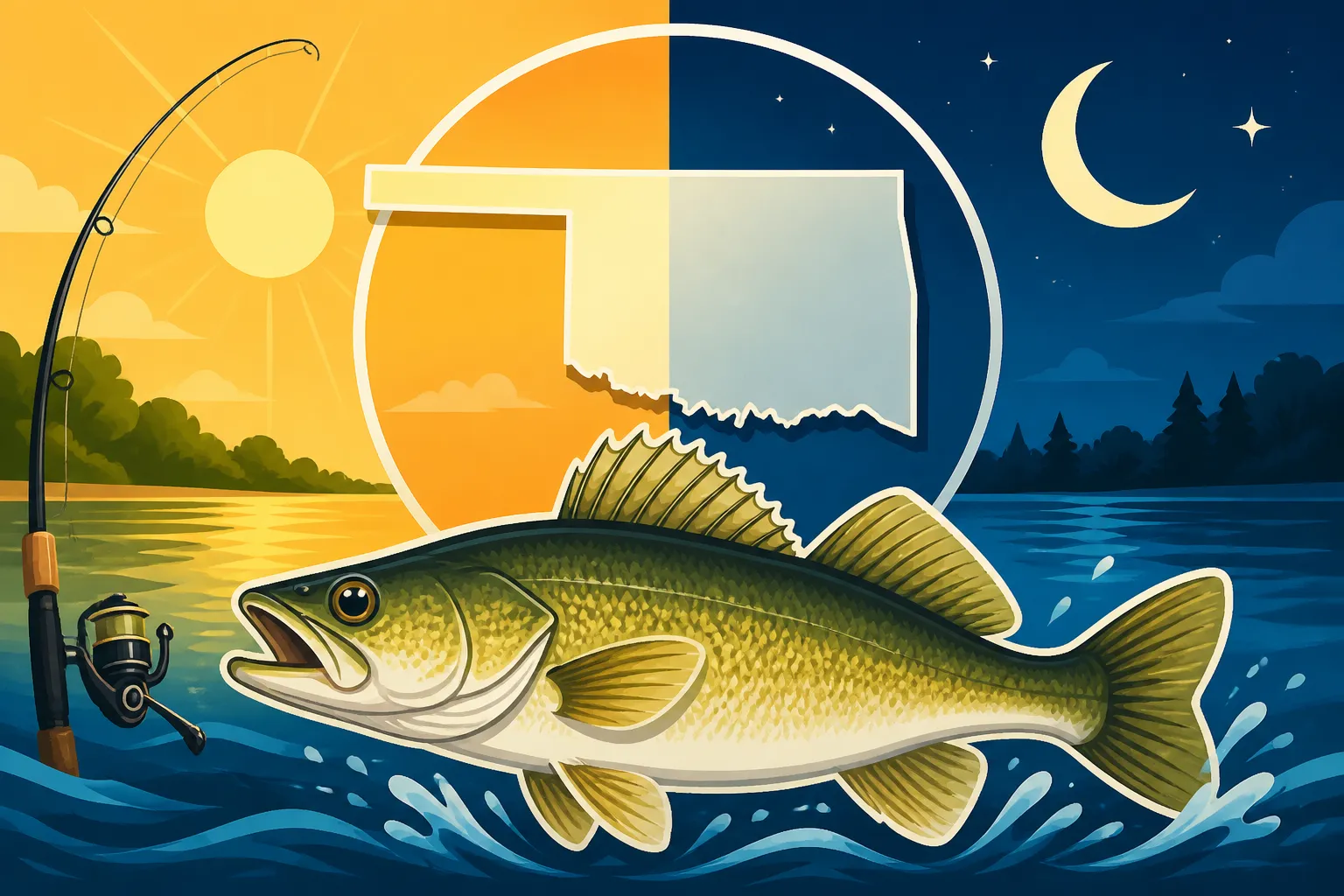
However, summer can also offer some incredible night fishing opportunities for walleye. As the sun sets and surface temperatures drop, walleye often migrate shallower to feed. They are ambush predators with excellent low-light vision, giving them a distinct advantage over their prey during the darker hours. This makes dawn, dusk, and nighttime prime windows. Anglers often find success trolling crankbaits, jigging spoons, or presenting live bait along ledges and breaks where walleye move up to feed. Investing in quality night fishing gear, like headlamps and glow-in-the-dark lures, is a smart move, and you can find a wide array of options on Amazon.
Fall: Feeding Frenzies Before Winter
As autumn arrives and water temperatures begin to cool again, Oklahoma walleye experience a resurgence of activity. This fall bite is often just as good, if not better, than the spring pre-spawn. The fish know winter is coming, and they need to pack on calories. They become incredibly aggressive, chasing down baitfish in shallower depths before retreating to deeper haunts. This is a fantastic time for casting or trolling crankbaits and working jigging spoons or blade baits.
Look for walleye to be schooling up, often following large schools of shad or other forage fish. They might be found shallower in the mornings and evenings, moving deeper during the brighter midday hours. Pay close attention to prominent points, humps, and creek channels, especially those with access to deep water. The consistent cooling trend means fish are often on the move and actively searching for food, making them more predictable and easier to intercept. Understanding Fall Crappie Fishing Patterns in Oklahoma can also give you insights into how other species react to similar conditions, helping you identify overall patterns.
Winter: Slow and Steady Bites
Winter fishing for walleye in Oklahoma can be tough, but it's not impossible. Activity levels drop significantly as metabolism slows down in cold water, usually below 40 degrees Fahrenheit. The fish become much more lethargic and less willing to chase fast-moving baits. However, they still need to eat, just less frequently. Success in winter often comes down to patience, precision, and a slow, methodical approach.
Walleye will typically hold in deeper basins, around submerged structures, or along main lake channels during the coldest months. They'll often school tightly, so if you find one, you've likely found a group. Vertical jigging with small spoons, blade baits, or live minnows becomes a highly effective technique. The key is to present your bait slowly and subtly, directly in front of their faces. Strikes can be incredibly light, sometimes feeling like just a bit of added weight or a slight tick. While it demands more perseverance, catching a plump, cold-water walleye is a truly rewarding experience. For those venturing out, consider researching Winter Catfishing Techniques in Oklahoma for other cold-weather angling tips.
Prime Times of Day for Walleye Success
While seasonal movements guide where walleye are generally found, the time of day often dictates when they are most active and willing to bite. Walleye are known for their exceptional low-light vision, which plays a crucial role in their feeding habits.
Dawn and Dusk: The Golden Hours
Without a doubt, dawn and dusk are often considered the "golden hours" for walleye fishing. As the sun rises or sets, the diminishing light gives walleye a significant advantage over their prey, which often includes shad and other small baitfish that don't see as well in low light. During these periods, walleye will often move shallower, particularly to points, humps, and flats adjacent to deeper water. They become more aggressive, actively hunting and ambushing prey.
Anglers should capitalize on these windows by focusing on transition areas – where deep water meets shallow feeding grounds. Trolling crankbaits that mimic baitfish, casting jerkbaits, or slow-rolling spinnerbaits can be highly effective. It's a prime time for power fishing techniques before the sun gets too high or after it has completely dipped below the horizon. Being on the water an hour before sunrise and staying an hour after sunset can drastically increase your catch rates. Don't underestimate the power of these low-light periods; they are when walleye are often at their most confident and predatory.
Night Fishing: A Secret Weapon
Many Oklahoma anglers overlook night fishing for walleye, but it can be an absolute secret weapon, especially during the warmer months. As mentioned, walleye's superior low-light vision extends into total darkness, making them formidable nocturnal predators. When summer temperatures push walleye deep during the day, they often move into shallower feeding areas after dark, where they can ambush baitfish more easily.
Successful night fishing usually involves slower presentations. Trolling deep-diving crankbaits or even shallow-running crankbaits in areas where walleye are known to come up. Another popular and effective method is vertical jigging with a spoon or a soft plastic, especially if you have a light source (like a submersible green light) to attract baitfish, which in turn attracts walleye. Safety is paramount when night fishing; always have proper lighting, know your surroundings, and consider bringing a fishing buddy. You can find excellent waterproof headlamps and other night fishing essentials on Amazon to ensure you're well-equipped. Learning Summer Night Fishing Techniques in Oklahoma can elevate your walleye game significantly.
Overcast Days and Low Light
Walleye thrive in low-light conditions, so it stands to reason that overcast, cloudy, or even rainy days can provide excellent fishing opportunities throughout the day, not just at dawn and dusk. On bright, sunny days, walleye tend to retreat to deeper, darker water or seek out heavy cover to avoid the intense light. But when the sky is obscured, the ambient light levels are reduced, making them more comfortable and active in shallower water for longer periods.
On such days, walleye might be found on flats, around submerged islands, or along shorelines where they wouldn't dare to venture under a bright sun. This opens up more areas to fish and allows for a wider range of techniques. Try casting crankbaits, spinnerbaits, or jigs in areas you'd typically reserve for early morning or late evening. The reduced light penetration also means that subtle bait presentations, which mimic an injured baitfish, can be particularly effective. Always be prepared for changing weather, but embrace those gloomy days – they might just be your best bet for a walleye bite.
Water Temperature: The Unseen Walleye Clock
Water temperature is arguably the single most critical factor influencing walleye behavior. It acts as an unseen clock, dictating everything from their metabolism and feeding activity to their spawning cycles and preferred depths. Understanding how walleye react to different temperatures is key to consistent success.
Ideal Spawning Temperatures
The annual spawning ritual is heavily dependent on water temperature. Walleye typically begin their pre-spawn movements when water temperatures are in the high 30s to low 40s Fahrenheit. This is when they start gathering near spawning grounds. The actual spawn, where eggs are laid, generally occurs when the water reaches a stable range of 42 to 50 degrees Fahrenheit. If the temperature drops significantly during this period, spawning can be delayed, or fish might hold off.
Once the spawn is complete, and water temperatures climb into the low to mid-50s, the post-spawn recovery bite kicks in. Fish are often depleted of energy after spawning and become incredibly hungry, offering another fantastic fishing window. Monitoring water temperature with a reliable gauge is crucial for timing these critical periods. Knowing that you're fishing in the right thermal window can be the difference between a barren day and a successful one. Check out How Water Temperature Affects Bass Spawning in Oklahoma for another example of how vital temperature is for game fish.
Summer Thermoclines and Walleye Locations
As Oklahoma lakes heat up in summer, a distinct thermocline often forms. This is a layer of water where the temperature changes rapidly with depth, separating the warmer, oxygen-rich surface water from the colder, less oxygenated deep water. Walleye, being cool-water fish, will often orient themselves around or just above the thermocline, especially in deeper lakes. This layer provides them with their preferred temperature range and often holds baitfish that are also seeking comfortable conditions.
Using a good fish finder with temperature-sensing capabilities becomes invaluable during the summer. You can identify the depth of the thermocline and target that specific zone. Walleye will suspend within this band, making vertical jigging, drop-shotting, or controlled trolling with downriggers or leadcore line effective techniques. Ignoring the thermocline in summer is like trying to find a needle in a haystack; keying into this thermal layer significantly narrows down your search area. The depth of the thermocline can vary from lake to lake and even day to day, so constant monitoring is important. You can find a range of reliable fish finders suitable for Oklahoma's large reservoirs on Amazon.
Cold Water Strategies
In colder water, typically below 40 degrees Fahrenheit during late fall and winter, walleye metabolism slows down considerably. They become less active and require less food. This doesn't mean they stop eating, but their feeding windows are shorter, and their movements are minimal. During these times, walleye will often seek out the deepest, most stable water available, often in main lake basins, deep channels, or around significant submerged structure.
The strategy in cold water shifts to slow, subtle presentations. Think small baits, slow retrieves, and a focus on keeping your lure right in the strike zone for extended periods. Jigging spoons, blade baits, or small soft plastics fished vertically are excellent choices. Live bait, particularly minnows, fished on a slow-sinking rig or under a slip bobber, can also be highly effective, as the natural movement is often enough to entice a lethargic walleye. Patience is paramount; don't expect aggressive strikes. Sometimes, the bite is just a slight pressure or a "mushy" feel on the line. Persistence and a deliberate approach will pay off.
Weather Patterns and Their Impact on Walleye Activity
Beyond temperature, general weather patterns significantly influence walleye behavior. Barometric pressure changes, wind, and even rain can either spur a feeding frenzy or shut the bite down entirely. Paying attention to the forecast and understanding these effects can help you plan your trips for maximum success.
Frontal Systems and Barometric Pressure
One of the most talked-about weather influences in fishing is the impact of frontal systems and changes in barometric pressure. Walleye, like many fish, are highly sensitive to these shifts. Before a cold front moves in, when barometric pressure is falling, fish often become very active and go on a feeding binge. This is an excellent time to be on the water, as they seem to know a change is coming and want to feed aggressively before conditions worsen.
Conversely, after a cold front has passed and high-pressure settles in, fishing can become notoriously difficult. The bright, clear skies and stable, high pressure tend to make walleye sluggish and less willing to bite. They'll often move deeper or tighter into cover. During these post-front conditions, a slow, methodical approach with subtle presentations is your best bet. Avoid fast-moving, aggressive lures that might spook them. Understanding How Cold Fronts Change Fishing Patterns on Oklahoma Lakes is key for adapting your approach.
Wind Direction and Current
Wind is often a fisherman's friend, especially for walleye. A moderate breeze can be beneficial for several reasons. First, it breaks up the surface of the water, making it harder for walleye prey to spot predators and for predators to see anglers. This reduced light penetration makes walleye more comfortable and willing to move into shallower areas. Second, wind creates current, even in lakes, which can push baitfish schools into specific areas, like wind-blown points or shorelines. Walleye will often position themselves on the downwind side of these structures, waiting to ambush bait that the current pushes their way.
However, too much wind can make boat control difficult and create unsafe conditions. A strong, consistent wind from a particular direction can also stack warm surface water against one shoreline, pushing baitfish with it, which then attracts walleye. Pay attention to how the wind has been blowing for a day or two before your trip. A sustained wind often creates a more predictable pattern for the fish. On the flip side, flat calm days with bright sun can be the toughest, as walleye retreat to deep, dark cover.
Rain and Runoff Influences
Rain can be a mixed bag for walleye fishing, but often, it's a positive. A light, steady rain can create excellent low-light conditions, similar to an overcast day, encouraging walleye to be more active. It also adds oxygen to the water and can wash terrestrial insects and nutrients into the lake, attracting baitfish, which in turn attracts walleye.
Heavy rain and significant runoff, however, can muddy the water and sometimes cool it rapidly, which might temporarily slow the bite. Walleye rely on their vision, so extremely muddy water can make it harder for them to hunt. That said, even in muddy conditions, walleye will often congregate at the "mud line" – the edge where stained water meets clearer water – or near the inflows of creeks and rivers, where fresh, often oxygenated water is entering the lake. These areas can concentrate baitfish, making them prime ambush points for walleye. Don't be afraid to fish in the rain, but be prepared to adjust your bait colors (brighter or darker profiles can work in stained water) and techniques.
Best Oklahoma Lakes for Targeting Walleye by Season
Oklahoma boasts several fantastic walleye fisheries, each offering unique opportunities throughout the year. Knowing which lakes shine at certain times, and why, can significantly improve your odds.
| Season | Lake/Region | Primary Locations | Key Techniques | Notes |
|---|---|---|---|---|
| Spring | Canton Lake, Kaw Lake, Fort Supply Lake | Rocky points, riprap, creek channels, dam faces | Casting jigs, trolling crankbaits, live minnows | Pre-spawn aggression, concentrated fish on spawning grounds |
| Summer | Tenkiller Ferry Lake, Lake Hefner, Grand Lake | Deep humps, main lake points, thermocline depths | Vertical jigging, drop-shotting, night trolling | Dawn/Dusk/Night bite, focus on cooler, deeper water and structure |
| Fall | Lake Carl Blackwell, Lake Overholser, Canton Lake | Main lake points, creek mouths, schooling baitfish | Trolling crankbaits, casting blade baits, jigging | Fish fattening up for winter, often aggressive and shallow |
| Winter | Kaw Lake, Lake Texoma, Eufaula Lake | Deep channels, submerged timber, main lake basins | Slow vertical jigging, dead sticking minnows | Lethargic fish, light bites, patience required, target schools |
Northeast Oklahoma Walleye Hotspots
Northeast Oklahoma is home to some of the state's most popular walleye lakes. Kaw Lake, near Ponca City, is a perennial favorite, particularly in the spring for its spawning runs on riprap and rocky areas, and in the fall as walleye chase shad in open water. Anglers here find success with crankbaits and jigs. Kaw Lake Fishing Guide is a great resource. Further east, Grand Lake O' the Cherokees also holds a good population of walleye, though often overshadowed by its bass and crappie fishing. Walleye on Grand Lake tend to relate more to the deep main lake points and humps, especially during summer and fall. Trolling techniques can be highly effective across its vast waters.
Tenkiller Ferry Lake, with its clear waters and deep structure, offers excellent summer and fall walleye fishing. The fish here often suspend over deep channels or relate to rock ledges and bluffs. It's a lake where understanding your electronics to find suspended fish is a huge advantage. Early morning and late evening, or even night fishing, can produce some quality walleye. Many anglers target walleye after dark, using submersible lights to attract baitfish, then jigging or casting soft plastics. For those serious about understanding techniques for other species, Tenkiller Ferry Lake Fishing Guide, Oklahoma is a valuable read.
Northwestern and Central Oklahoma Opportunities
Moving west, Canton Lake is synonymous with walleye fishing in Oklahoma. It hosts an annual Canton Walleye Rodeo, a testament to its strong fishery. Spring is prime time here, with walleye migrating into the river arms and shallower flats to spawn. Casting jigs and live bait rigs are very popular and productive during this period. As summer progresses, walleye move to deeper water but remain catchable. Fall offers another strong bite as they feed heavily. Canton's consistent productivity makes it a must-visit for any serious walleye angler.
In Central Oklahoma, right outside Oklahoma City, Lake Hefner and Lake Overholser provide urban walleye opportunities. These lakes are regularly stocked and can be highly productive, especially during the spring spawn along their riprap banks and causeways. Because they are city lakes, they see a lot of pressure, so quieter times, like weekdays or low-light hours, can be more productive. Trolling small crankbaits or casting jigs and live bait are standard tactics. While they might not yield the sheer numbers of a Canton, they offer convenient access for metropolitan anglers to chase these tasty fish. For specific guidance, you can also look into Best Walleye Fishing Lakes for a Weekend Trip.
Seasonal Lake-Specific Strategies
Beyond general seasonal movements, specific lakes often have unique characteristics that dictate the best approach. For instance, Fort Supply Lake in northwestern Oklahoma is another excellent walleye destination, particularly known for its spring and fall fishing. Its shallower nature compared to some other reservoirs means walleye might be found in different depths or structures.
On the other hand, a lake like Lake Eufaula, known as Oklahoma's gentle giant for its vast size and diverse fisheries, also holds walleye, especially in its deeper river channels and main lake points. However, the walleye population here might not be as concentrated as in a dedicated walleye lake like Canton. Fishing success on Eufaula would rely heavily on covering vast amounts of water and identifying key structures where walleye are known to congregate. Ultimately, while walleye follow general seasonal patterns, always consult local fishing reports and current conditions for the specific lake you plan to visit. Understanding Oklahoma's 181 Fish Species: A Quick Overview can give you an appreciation for the diversity you might encounter.
Disclaimer
This article is for general informational purposes only and does not constitute professional advice. Laws, prices and regulations vary by location and change over time. Consult a qualified professional for guidance on your specific situation.