Striped Bass Fishing Techniques for Oklahoma’s Lake Texoma
Many anglers dream of battling a powerful fish, and for those in Oklahoma, few experiences rival the thrill of tangling with a striped bass on Lake Texoma. This massive reservoir, straddling the Oklahoma-Texas border, is renowned as one of the premier striper fisheries in the entire country, but consistently catching these hard-fighting fish requires a deep understanding of their habits and a variety of specialized techniques. This comprehensive guide will equip you with the knowledge, strategies, and tips you need to maximize your success and truly enjoy the incredible striped bass fishing Lake Texoma has to offer.
Understanding Lake Texoma's Striped Bass Fishery
Lake Texoma isn't just a big lake; it's a unique ecosystem that supports an incredibly robust population of striped bass. These aren't your typical pond fish; they are powerful, schooling predators that behave more like ocean fish than freshwater dwellers. To consistently catch them, you first need to understand why Texoma is so special and how these fish thrive here.
The Texoma Striper Phenomenon: Why It's Special
What makes Lake Texoma the "Striper Capital of the World" for freshwater striped bass? It boils down to a perfect storm of environmental factors, most notably the unique salinity created by the Red River. Unlike most freshwater lakes, Texoma has a natural influx of saltwater from the Red River basin, which allows striped bass – a species native to saltwater – to naturally reproduce here. This isn't just about survival; they thrive and spawn successfully, which is a rare feat for an inland fishery. This natural reproduction cycle means Texoma has a self-sustaining population, reducing the need for constant stocking and leading to incredibly healthy, abundant fish.
Imagine a freshwater lake that feels a bit like the ocean for these magnificent creatures. The sheer size of Texoma, with its nearly 90,000 surface acres and over 1,250 miles of shoreline, provides vast expanses for these schooling fish to roam. It's not uncommon to encounter massive schools of stripers, sometimes numbering in the hundreds, pushing baitfish to the surface or suspending in deep water. This abundance and the fish's natural vigor are what draw anglers from all over the country, hoping to catch a true trophy or simply fill a cooler. If you're looking for more general information about the lake, check out our Lake Texoma Fishing Guide for Oklahoma Anglers.
Seasonal Movement and Feeding Habits
Striped bass on Lake Texoma are constantly on the move, driven by water temperature, forage availability, and their spawning instincts. Their movements are highly seasonal, which means your fishing techniques need to adapt throughout the year. In the spring, as water temperatures rise, stripers migrate up the Red and Washita River arms to spawn. This is a period of intense activity, where they can be found in shallower, current-heavy areas. Post-spawn, they disperse back into the main lake.
Summer sees stripers seeking cooler, oxygenated water, often retreating to deeper main lake channels, humps, and ledges, especially during the heat of the day. They'll frequently "school up" and feed aggressively at dawn and dusk, pushing bait to the surface in spectacular feeding frenzies known as "topwater boils." As fall approaches and water temperatures cool, stripers become incredibly active, feeding heavily to build up reserves for winter. They'll chase baitfish in vast schools across open water, often providing some of the best fishing of the year. In winter, they tend to congregate in deep channels and thermal refuges, becoming a bit more lethargic but still catchable with the right techniques. Understanding these broad seasonal patterns is key to knowing where to start looking and what methods to employ. For a more granular view, our guide on How Striped Bass Fishing Changes Through the Seasons at Lake Texoma, Oklahoma offers excellent insights.
Key Forage and Their Impact on Techniques
What do these powerful predators eat? Their diet is primarily driven by abundant populations of gizzard shad and threadfin shad, along with occasional other baitfish like silversides. These oily, silvery fish are the lifeblood of the Texoma striper fishery, and understanding their behavior is critical to catching stripers. When shad are schooling near the surface, stripers will often be right beneath them, or even pushing them into explosive topwater action. When shad retreat to deeper water, stripers follow.
This reliance on shad directly influences fishing techniques. Many of the most effective methods, from live bait fishing to artificial lure presentations, are designed to imitate or utilize these primary forage species. For instance, using live gizzard shad is often the most productive way to catch stripers, as it's precisely what they're accustomed to eating. Lure choices, whether it's a topwater plug, a swimbait, or a jig, are almost always selected for their ability to mimic the size, color, and action of a struggling shad. Paying attention to what the baitfish are doing – whether they're schooling tight, scattering, or suspending – will give you invaluable clues as to where the stripers are and how they're feeding.
Essential Gear for Lake Texoma Striped Bass
Tackling Lake Texoma's striped bass requires more than just a basic fishing setup. These fish are strong, and the environment can be demanding. Having the right gear isn't just about comfort; it's about being prepared for the fight and maximizing your chances of landing that trophy striper.
Rod and Reel Setups for Different Techniques
Given the variety of techniques used for Texoma stripers, it's wise to have a couple of different rod and reel setups. For trolling or live bait fishing in deeper water, a medium-heavy to heavy action casting rod, typically 7 to 7.5 feet in length, paired with a robust baitcasting reel is ideal. Look for reels with a good drag system and plenty of line capacity, capable of holding 200+ yards of 20-30 lb test line. Brands like Penn, Shimano, and Daiwa offer excellent options for these setups, often available on Amazon. This combination provides the power needed to handle big fish and the leverage for controlling deep-diving lures or heavy weights.
For casting artificial lures, especially topwater plugs or lighter swimbaits, a medium to medium-heavy spinning rod (7-foot range) with a fast action tip offers versatility and better casting distance. Pair this with a 3000-5000 size spinning reel that has a smooth drag. This setup allows for quicker retrieves and a more delicate presentation when needed, which can be crucial for enticing finicky stripers. When you hook into a big one, a quality reel with a smooth drag system is absolutely vital. Our guide to the Best Reels for Oklahoma Striped Bass Fishing delves into more specific recommendations.
Line Selection: Mono, Fluorocarbon, or Braid?
The choice of fishing line is more critical than many anglers realize, and each type has its advantages for striper fishing.
Monofilament (Mono): This traditional line offers good knot strength, stretch, and shock absorption, which can be beneficial when a striper makes a sudden run. It's also less visible than braid in clear water. However, its stretch can reduce sensitivity, making it harder to detect subtle bites, especially in deep water. It's a good choice for live bait presentations where a little give is appreciated.
Braided Line: Braid has virtually no stretch, offering incredible sensitivity and strength-to-diameter ratio. This means you can use a thinner, stronger line, allowing for better casting distance and less resistance in current. It's excellent for jigging, trolling, and detecting those light bites at depth. The downside is its visibility and lack of stretch, which can lead to hooks pulling out if your drag isn't set perfectly. Many anglers use braid as their main line and then add a fluorocarbon leader.
Fluorocarbon Line: Often used as a leader material, fluorocarbon is nearly invisible underwater, making it ideal for clear water conditions or when fish are line-shy. It has less stretch than monofilament but more than braid, offering a good balance of sensitivity and shock absorption. It's also more abrasion-resistant than mono, which is a plus when fishing around rocky structure. For most applications on Texoma, a braided main line with a 4-6 foot fluorocarbon leader (20-40 lb test) is a popular and effective choice, giving you the best of both worlds.
Terminal Tackle: Hooks, Weights, and Swivels
The small, yet mighty components of your terminal tackle play a huge role in your success. For live bait, you'll want sharp, strong hooks. Circle hooks (5/0 to 8/0) are highly recommended, especially when using live shad. They are designed to hook fish in the corner of the mouth, reducing gut-hooking and making catch-and-release easier and safer for the fish. J-hooks (4/0 to 7/0) are also common, particularly when anglers are actively setting the hook.
Regarding weights, you'll need a variety, depending on depth and current. Sinker slides are excellent for Carolina rigs, allowing your line to slide freely without the fish feeling the weight. Egg sinkers (1 oz to 4 oz) are commonly used for bottom fishing with live bait, while heavier pencil weights or downrigger balls are necessary for deep trolling. Swivels are crucial for preventing line twist, especially when trolling or fishing with live baits that can spin. Ball-bearing swivels are best for minimizing twist and ensuring smooth performance. Opt for strong, black swivels (size 1 to 5) to minimize visibility and ensure they can handle the fight of a powerful striper. Don't cheap out on terminal tackle; a broken knot or bent hook can cost you a trophy fish.
Top Live Bait Techniques for Striped Bass
There's no denying that for many Lake Texoma striper anglers, live bait is the undisputed champion. There's something inherently effective about presenting a real, struggling baitfish to a predatory striper. It's often the most consistent way to put fish in the boat, especially when other techniques are slow.
Fishing with Live Shad: The Texoma Standard
If there's one secret weapon for Lake Texoma stripers, it's live shad. Specifically, gizzard shad and threadfin shad are the preferred forage, and if you can get your hands on some live ones, you're already ahead of the game. Catching your own shad usually involves a good cast net and some skill, often requiring a bit of early morning effort in shallower coves or around marinas where baitfish congregate. Be sure to have a well-aerated livewell to keep your precious bait alive and frisky.
Once you have your live shad, there are several ways to present them. The most common is free-lining or slow trolling them without any weight, especially when stripers are busting on the surface or when fishing around suspended schools. Simply hook a shad gently through the nose or back, cast it out, and let it swim naturally. This is pure ambush predator fishing. Another highly effective method is to use a downline rig, especially in deeper water or when fish are suspended. This involves a heavy weight (like a bell sinker or a specialized striper weight) tied to the main line, with a short leader (2-4 feet) tied to a swivel above the weight, and your hooked shad on the leader. This allows you to present your live bait at a precise depth where you're seeing fish on your electronics. Remember, for detailed instructions, our guide on Best Live Bait for Striped Bass Fishing is a great resource.
Carolina Rigging for Bottom-Oriented Stripers
When stripers are holding tight to the bottom, whether it's over humps, along ledges, or in deep channels, a Carolina rig is an incredibly effective live bait presentation. This rig keeps your bait just off the bottom, making it easily visible and accessible to stripers without it getting lost in the mud or snagging on structure. The classic Carolina rig consists of a heavy egg sinker (1-4 ounces, depending on depth and current) threaded onto your main line, followed by a bead to protect your knot, then a barrel swivel. To the other end of the swivel, you tie a fluorocarbon leader (2-4 feet in length, 20-40 lb test), and finally, your circle hook with a live shad.
The beauty of the Carolina rig is that the weight slides freely on the main line. When a striper picks up the bait, it feels no resistance from the weight, allowing it to swim off naturally. This increases your hook-up ratio significantly. Anglers typically drift these rigs slowly over productive areas or anchor up and cast them out, letting them sit on the bottom. The key is to keep a slight bow in your line and watch for that tell-tale tap-tap or steady pull of a striper taking the bait. This technique is particularly effective during the warmer summer months when stripers are often holding deep, and also in the colder winter months when they become less active and prefer to feed closer to the bottom.
Float Fishing and Free-lining Live Baits
While Texoma is famous for its deepwater techniques, don't underestimate the power of float fishing or free-lining live baits, especially during certain times of the year or in specific situations. Float fishing, using a large slip bobber, is fantastic when stripers are suspended at a consistent depth over structure or when they're feeding in shallower water around submerged cover. The bobber keeps your live shad at a precise depth and gives a clear visual indicator of a bite. This method is particularly useful around bridge pilings, rocky points, or submerged timber where traditional bottom rigs might snag.
Free-lining, as mentioned briefly before, is perhaps the simplest yet most exciting live bait technique. It involves hooking a lively shad and simply casting it out with no weight, allowing it to swim naturally. This is devastatingly effective when you encounter stripers crashing bait on the surface (a "topwater boil") or when they are actively cruising just below the surface. The key here is stealth and a quick reaction. You want to get your bait into the feeding frenzy as quickly and naturally as possible. This technique shines during the spring and fall runs when stripers are often more aggressive and willing to chase active bait in the upper water column. Both float fishing and free-lining offer an exhilarating, hands-on experience, often resulting in explosive strikes.
Mastering Artificial Lure Techniques
While live bait certainly has its place, the satisfaction of fooling a powerful striper with an artificial lure is unmatched for many anglers. Artificial techniques offer a more active, dynamic style of fishing, allowing you to cover more water and experiment with different presentations.
Trolling for Open Water Stripers
Trolling is perhaps the most common and effective way to locate and catch striped bass on Lake Texoma, especially when they are scattered across large expanses of open water. This technique involves dragging artificial lures behind a moving boat at various depths and speeds. The goal is to cover as much water as possible until you find a concentration of fish. Deep-diving crankbaits, swimbaits, and even umbrella rigs are popular choices for trolling. For detailed advice, you should definitely check out our guide on Striped Bass Trolling Techniques.
The key to successful trolling is varying your spread. Use multiple rods, each rigged with a different lure or running at a different depth, until you figure out what the fish are responding to. Consider using planer boards to get some lures away from the boat, covering a wider path. Trolling speed is also crucial; typically, 2.5 to 4 mph is a good starting point, but you'll need to experiment. Sometimes a slight change in speed can trigger a strike. Trolling motors with GPS capabilities, like those from Minn Kota or Lowrance, can help you maintain precise speeds and follow contour lines, which is invaluable. Remember to adjust your trolling depth based on your fish finder readings; if you're seeing fish at 25 feet, make sure your lures are running at or just above that depth. Our How to Troll for Striped Bass in Deep Water article has even more specialized tips.
Casting and Jigging for Schools
When you find actively feeding schools of stripers, whether they're busting on the surface or holding tight to structure below, casting and jigging become incredibly exciting and productive methods.
Casting: If stripers are "boiling" on the surface, casting topwater lures like poppers, walk-the-dog baits, or lipless crankbaits can result in explosive strikes. These situations require quick reactions and accurate casts right into the heart of the action. Even if they're not on the surface, casting swimbaits (both soft plastic and hard-bodied), jerkbaits, or spoons to visible schools on your electronics can be deadly. Vary your retrieve speed and depth until you get a reaction.
Jigging: When stripers are holding deeper, perhaps suspended over a channel or hugging a ledge, vertical jigging is often the ticket. Heavy metal jigs, blade baits, or soft plastic swimbaits rigged on jig heads (1-3 oz) are excellent choices. Drop your jig directly down to the depth where you're seeing fish. The technique involves a sharp lift of the rod tip, followed by a controlled fall, mimicking a wounded baitfish. Strikes often occur on the fall, so pay close attention to your line for any twitch or slack. This is where the sensitivity of braided line truly shines.
Topwater and Suspending Baits
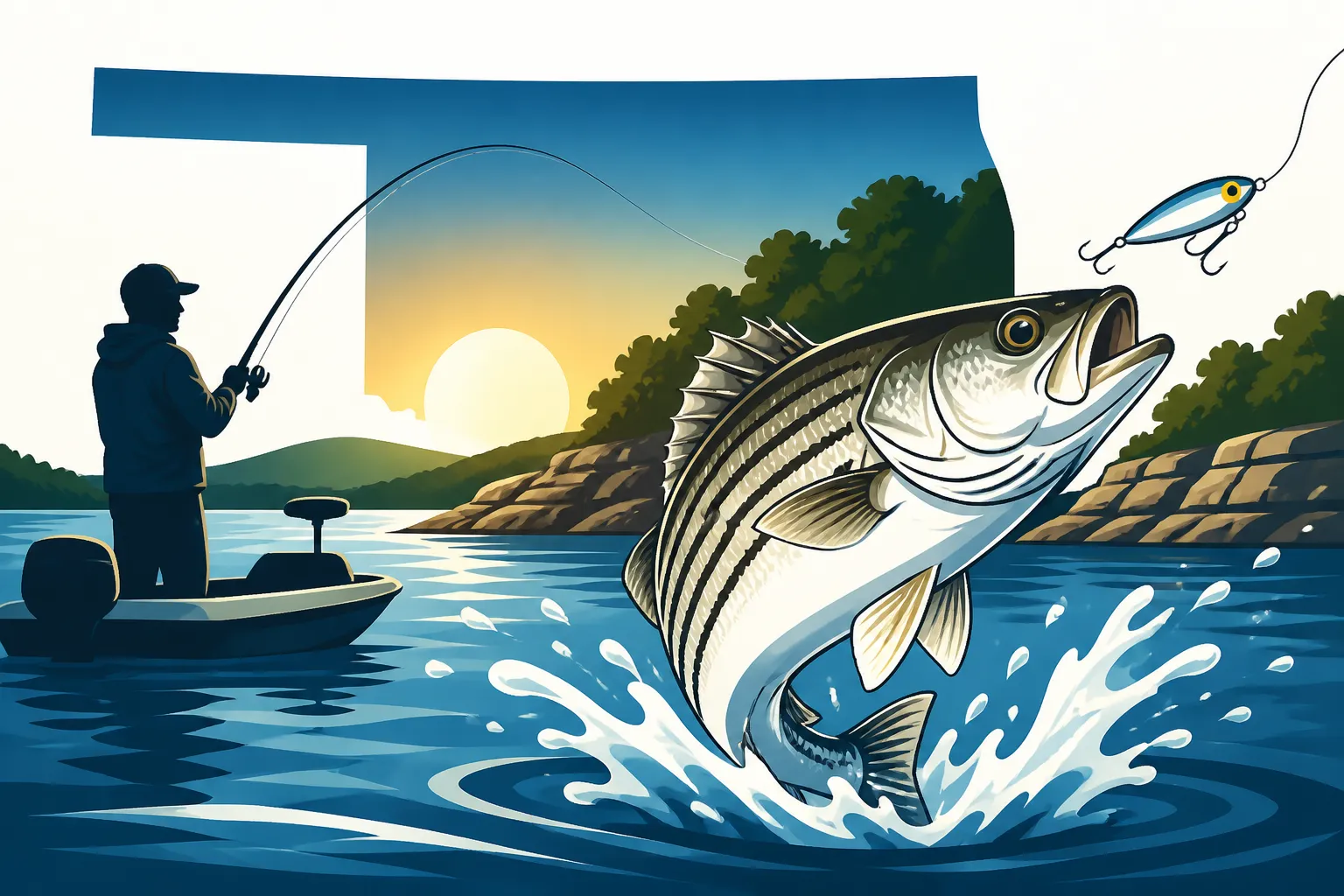
Few things in freshwater fishing are as exhilarating as a striper blowing up on a topwater lure. These explosive strikes are what many anglers live for. Topwater lures like Heddon Zara Spooks, Cotton Cordell Pencil Poppers, or similar "walk-the-dog" baits are fantastic when stripers are actively chasing shad on the surface, especially during the early morning and late evening hours of summer and fall. The key is to work these lures with a cadence that mimics a struggling baitfish, creating commotion that draws attention.
Suspending jerkbaits are another potent weapon, particularly when stripers are a bit more finicky or holding at a specific depth just below the surface. These lures, like the Rapala X-Rap or Lucky Craft Pointer, are designed to suspend at a certain depth when paused, imitating a stunned baitfish. Cast them out, retrieve them with a jerk-pause retrieve, and let them sit. Often, a striper will smash it during the pause. These baits are excellent for targeting stripers around points, humps, or submerged cover where they might be ambushing passing bait. Both topwater and suspending baits require a bit more active participation from the angler but can be incredibly rewarding when conditions are right. For general Bass Fishing Techniques by Season, these also apply to certain aspects of striper fishing.
Locating Striped Bass: Electronics and Scouting
Finding striped bass on a massive body of water like Lake Texoma can feel like searching for a needle in a haystack if you don't know what you're doing. This is where modern electronics and keen observation skills become your best friends. These fish are constantly moving, and without the ability to locate their schools, you're largely fishing blind.
Utilizing Fish Finders and Sonar
A high-quality fish finder is arguably the single most important piece of equipment for consistently catching striped bass on Lake Texoma. These aren't just for showing you depth; they are powerful tools for interpreting the underwater world. Modern units from brands like Humminbird, Lowrance, and Garmin offer features like 2D sonar, Down Imaging (DI), Side Imaging (SI), and even Live Sonar capabilities, which allow you to see fish and structure in incredible detail. If you are looking for a new one, many excellent options can be found on Amazon. Our Fish Finder Features That Matter Most on Oklahoma Reservoirs guide provides a comprehensive overview of what to look for.
When looking for stripers, you're primarily searching for dense schools of baitfish, often appearing as large clouds or arcs on your screen, with larger individual arcs (the stripers) positioned just below or within the bait. Pay close attention to channel edges, humps, points, and sudden depth changes. Side Imaging is fantastic for sweeping large areas and identifying structure or schools off to the sides of your boat, while Down Imaging provides a clearer, photographic-like view directly beneath. Once you locate a school, mark a waypoint on your GPS. This allows you to return to the precise spot if you drift off or need to make another pass. Understanding your electronics and what the different readings mean is a skill that takes time to develop, but it's absolutely essential for unlocking Texoma's striper potential.
Reading the Water: Bird Activity and Surface Disturbances
Before electronics became standard, anglers relied heavily on their eyes and ears, and these skills are still incredibly valuable. Striped bass are powerful predators that often herd baitfish to the surface, especially during low light conditions in summer and fall. This activity manifests as "topwater boils" – explosive disturbances where stripers are literally smashing baitfish on the surface. Spotting these boils from a distance is like finding a gold mine.
Even more common are diving birds. Gulls, terns, and sometimes even pelicans will congregate and dive into the water when stripers are pushing shad to the surface. The birds are after the same baitfish, and their presence is a dead giveaway that stripers are feeding below. Look for large groups of birds hovering, circling, or diving repeatedly. Often, the bigger the flock and the more aggressive their dives, the more intense the feeding frenzy below. These "bird schools" can be spotted from a great distance, allowing you to run your boat over to the action. However, approach cautiously and quietly to avoid spooking the fish. Sometimes, a subtle ripple or a slight discoloration on the surface can also indicate schooling bait or feeding fish below. Keep your head on a swivel and scan the horizon constantly.
Understanding Thermoclines and Oxygen Levels
While invisible to the naked eye, thermoclines and oxygen levels play a critical role in where stripers will hold, especially during the warmer months. A thermocline is a layer of water where the temperature changes rapidly with depth, separating warmer surface water from cooler, deeper water. In many lakes, the thermocline also coincides with a significant drop in dissolved oxygen levels below it.
Striped bass, being active fish, require good oxygen levels. During summer, the water below the thermocline in deeper parts of the lake can become deoxygenated, creating what's known as a "dead zone." This means that even if your fish finder shows schools of fish below the thermocline, they might not be stripers. Stripers will typically concentrate just above the thermocline, in the cooler, oxygen-rich water that offers both comfort and access to baitfish. Your fish finder may have a setting or the ability to show you the thermocline layer. Learning to identify this layer on your sonar and focusing your efforts on fishing just above it can be a game-changer for summer striper fishing. This is particularly relevant when employing Deep Water Striper Fishing Techniques, as it helps you avoid unproductive depths.
Seasonal Strategies for Lake Texoma Stripers
To truly master Texoma striper fishing, you need to understand how their behavior shifts with the seasons. What works in April might be completely ineffective in August. Adapting your approach based on the time of year is paramount to consistent success.
Spring Run and Post-Spawn Tactics
As winter fades and water temperatures begin to climb into the 50s and low 60s Fahrenheit, the spring striper run begins on Lake Texoma. This is arguably the most anticipated time of year for many striper anglers, as the fish move into the river arms (primarily the Red and Washita) to spawn. During this period, you'll find large concentrations of fish migrating upstream, often in areas with current and shallower water.
Spring Run Tactics: Focus your efforts in the main river channels, upstream of the main lake, particularly in areas with good current breaks or deeper bends. Live shad are incredibly effective here, either free-lined or fished on a Carolina rig. Artificial lures like swimbaits, jerkbaits, and even large jigs can also be productive when cast into current seams or along channel edges. The fish are aggressive and focused on reproduction, making them very catchable.
Post-Spawn Dispersal: After spawning (typically late April into May), stripers begin to disperse back into the main lake. They might be a bit lethargic immediately after spawning, but quickly recover and begin to feed heavily. Look for them congregating around main lake points, humps, and the mouths of creeks that feed into the river arms. Trolling deep-diving crankbaits or presenting live shad on downlines are excellent ways to target these post-spawn fish as they recuperate and resume aggressive feeding. For specific tips on fishing this prime time, our Lake Texoma May Striper Fishing in Oklahoma article is a must-read.
Summer Deep Water and Night Fishing
Summer on Lake Texoma brings intense heat, which significantly impacts striper behavior. As surface water temperatures soar, stripers retreat to deeper, cooler, and more oxygenated water. This means you'll typically find them in the main lake channels, over deep humps, and along ledges, often holding at depths of 20-50 feet or more.
Daytime Summer Tactics: Focus on locating schools using your fish finder. Once found, downlining live shad or vertically jigging heavy spoons and large soft plastic swimbaits are the most effective methods. Trolling deep-diving crankbaits or umbrella rigs can also be productive for covering water and finding scattered schools. Look for fish congregating around structure, especially near the thermocline. Early mornings and late evenings might see them pushing bait to the surface, offering exciting topwater action, but these windows are often short.
Night Fishing: When the sun goes down, the striper game changes dramatically. Night fishing for stripers on Texoma is legendary. Under the cover of darkness, stripers often move shallower to feed. Anglers frequently use submersible green lights to attract baitfish around their boats, which in turn draws in the stripers. Once the bait and stripers are around the lights, free-lining live shad or casting small jigs and swimbaits into the illuminated area can be incredibly productive. It's a completely different experience – quiet, often calm, and can lead to some truly impressive catches. Just make sure you have the proper Safety Gear Checklist for Oklahoma Boaters when you're out after dark.
Fall Feeding Frenzy and Winter Patterns
The fall on Lake Texoma is another peak time for striper fishing, often characterized by aggressive feeding and spectacular topwater action. As water temperatures cool, stripers become incredibly active, feeding ravenously to build up fat reserves for the winter. This is the time when massive schools can be seen chasing huge schools of shad across open water.
Fall Feeding Frenzy: Look for widespread bird activity and surface boils across the main lake. Trolling with large swimbaits or umbrella rigs is effective for covering water and finding these active schools. When you find a boil, switch to casting topwater lures, spoons, or swimbaits. Live shad free-lined into the action is also deadly. The fish are often shallower and more willing to chase, making for an exciting, visual fishing experience.
Winter Patterns: As temperatures continue to drop and reach their coldest points, stripers become more lethargic and congregate in deep channels, river bends, and thermal refuges where water temperatures are most stable. They'll often school tightly together.
Winter Tactics: Vertical jigging with heavy spoons, blade baits, or soft plastics directly over these deep schools is very effective. Downlining live shad can also work, but retrieves need to be slower and more subtle. Look for the deepest parts of the lake, especially near the dam or major creek channels. Winter striper fishing can be tough, requiring patience and precise boat control, but when you find them, you can often catch multiple fish from the same school.
Important Regulations and Conservation
As stewards of our natural resources, responsible angling means understanding and adhering to the rules. Lake Texoma is managed by both Oklahoma and Texas, so it's vital to be aware of the specific regulations for striped bass, which can vary slightly depending on which side of the border you're fishing.
Oklahoma's Striped Bass Rules and Limits
For Oklahoma waters of Lake Texoma, the regulations for striped bass are designed to maintain a healthy and sustainable fishery. It's crucial to consult the current Oklahoma Fishing Regulations Guide, as rules can change from year to year. However, generally, for striped bass and hybrid striped bass combined on Lake Texoma:
- Daily Bag Limit: Typically, anglers are allowed to keep 10 fish per day.
- Size Limit: Of those 10 fish, only two may be 20 inches or longer. This specific rule helps protect the larger, breeding-size fish, ensuring the future of the fishery.
It's important to measure your fish accurately from the tip of the nose to the end of the tail to ensure compliance. Ignorance of the rules is not an excuse, and game wardens actively patrol Lake Texoma. Always make sure your fishing license is up to date – you'll need an Oklahoma fishing license, or a valid Texas license with a Texoma endorsement for fishing both states' waters. For more general rules, check out Oklahoma's Striped Bass: An Introduced Species Guide. Also, be aware of the specific rules regarding tournament angling, which can sometimes have different reporting requirements, as detailed in our Tournament Angler Rules in Oklahoma.
Catch and Release Best Practices
While keeping some stripers for the table is part of the Texoma experience (and they are delicious!), practicing proper catch and release, especially for larger fish or when you've reached your bag limit, is crucial for conservation. Striped bass, particularly those caught from deep water, can suffer from barotrauma (the "bends") due to rapid changes in pressure.
Here are some best practices:
- Minimize Fight Time: Use appropriate tackle to land fish quickly, reducing stress.
- Handle With Care: Avoid touching the fish's eyes or gills. If possible, keep the fish in the water while unhooking.
- Use Proper Tools: Long-nosed pliers or a dehooker can help remove hooks quickly and safely.
- Consider a Release Tool: For fish caught from deeper water (e.g., 25+ feet), a descending device or fizzing tool can help release pressure and allow the fish to swim back down to depth. Learn how to use these tools properly before you need them.
- Support the Fish: If you must hold the fish for a photo, support its weight horizontally, ideally with one hand under its belly and the other gripping its lower jaw (lipping it). Never hold a large striper vertically by the mouth, as this can damage its jaw and internal organs.
- Revive If Needed: If a fish is lethargic, hold it gently in the water, facing into the current, until it can swim away on its own.
Safety on Lake Texoma
Lake Texoma is a vast body of water, and while beautiful, it can also be challenging and dangerous if not respected. Safety should always be your top priority.
- Weather: Texoma is known for its rapidly changing weather. Clear skies can quickly turn into violent thunderstorms with high winds and dangerous waves. Always check the forecast before heading out and keep an eye on the sky. If bad weather approaches, head for safe harbor immediately.
- Boat Safety Equipment: Ensure your boat is equipped with all necessary safety gear, including Coast Guard-approved life jackets for everyone on board (required for those 12 and under, and readily accessible for all adults), a throwable flotation device, a working fire extinguisher, sound-producing device (horn/whistle), and navigation lights if boating at night. This is not just a recommendation; it's the law. For a full rundown, refer to our comprehensive Safety Gear Checklist for Oklahoma Boaters.
- Navigation: While Texoma is large, it does have submerged hazards, especially in shallower areas. Pay attention to navigation markers and use your GPS charts to avoid running aground or hitting submerged stumps and rocks.
- Hydration and Sun Protection: During the warmer months, dehydration and sunburn are real risks. Drink plenty of water, wear protective clothing, a wide-brimmed hat, and quality sunglasses.
Pro Tips for Consistent Success
Even with the right gear and knowledge of techniques, becoming a consistently successful Texoma striper angler takes a bit more. It's about adapting, learning, and refining your approach.
Adapting to Weather and Water Conditions
Striped bass are highly sensitive to changes in their environment. A sudden cold front, a period of heavy rain, or even just a shift in wind direction can completely change where the fish are and how they're feeding.
- Cold Fronts: After a cold front, stripers often become less active and move deeper. Slow down your presentation, use live bait, and focus on vertical jigging or downlining. They might be less willing to chase.
- Rain and Runoff: Heavy rains can introduce stained, muddy water, especially in the river arms. Stripers might move out of these areas or hold tighter to structure where the water is clearer. On the flip side, runoff can also create current that aggregates bait and stripers at the mouths of creeks.
- Wind: Wind can be your friend or foe. A light chop can break up the surface, making stripers less line-shy and providing cover for you to approach. Strong winds, however, make boat control difficult and can create dangerous waves. Learn to drift with the wind or use your trolling motor to hold your position over fish. Adjust your lure weight or bait presentation to compensate for wind-induced drift. Sometimes, after a storm, fishing can actually improve as the fish become more active.
The Importance of a Good Guide or Network
If you're new to Lake Texoma or striper fishing in general, one of the best investments you can make is hiring a professional fishing guide for a day. A good guide knows the lake intimately, has up-to-the-minute information on where the fish are biting, and can teach you the nuances of the local techniques. They'll have all the right gear, live bait, and knowledge of current regulations. It's a fast-track to learning the lake and can save you countless hours of trial and error.
Beyond guides, building a network with other local anglers can be invaluable. Join online forums, local fishing clubs, or strike up conversations at the boat ramp. Sharing information about recent catches, water conditions, or successful techniques is a great way to stay informed and improve your own fishing. Texoma is a large, complex fishery, and there's always something new to learn.
Maintaining Your Gear for Peak Performance
Your fishing gear is an investment, and proper maintenance ensures it performs flawlessly when you need it most. Saltwater, even the slightly brackish water of Texoma, can be hard on equipment.
- Rods and Reels: After each trip, especially if you've been in splashing water, rinse your rods and reels with fresh water. Allow them to air dry. Periodically, clean and lubricate your reels according to the manufacturer's instructions. Pay special attention to the drag system.
- Line: Inspect your line regularly for nicks, fraying, or twists. Replace it when it shows signs of wear or after extended use. Fresh line makes a big difference in casting performance and knot strength.
- Terminal Tackle: Check all knots before each trip. Inspect hooks for sharpness and rust; sharpen or replace as needed. Keep your tackle box organized and free of corrosion.
- Boat and Electronics: Regularly check your boat's systems, especially lights, bilge pump, and engine. Keep your fish finder screens clean and ensure transducer cables are secure. A well-maintained boat and gear not only extend their lifespan but also contribute significantly to your safety and enjoyment on the water. For more general advice, consider reading about Boat Storage and Cover Gear for Oklahoma Weather to protect your investment during the off-season.
Striper Fishing Techniques: A Quick Reference
Here's a handy table summarizing the best techniques based on season and conditions for Lake Texoma striped bass.
| Season/Condition | Primary Location | Recommended Techniques | Key Lures/Baits | Notes |
|---|---|---|---|---|
| Spring (Spawn) | Red & Washita River arms, current breaks | Free-lining, Carolina rig, Casting | Live shad, Swimbaits, Jerkbaits, Jigs | Fish are migrating upstream, aggressive. Watch for concentrations in current. |
| Spring (Post-spawn) | Main lake points, humps, creek mouths | Trolling, Downlining Live Bait | Deep-diving crankbaits, Umbrella rigs, Live shad | Fish recovering, dispersing. Cover water to find active schools. |
| Summer (Day) | Deep channels, humps, ledges (20-50+ ft) | Downlining Live Bait, Vertical Jigging, Trolling | Live shad, Heavy spoons, Large swimbaits, Deep crankbaits, Umbrella rigs | Target thermocline. Early/late surface action possible. |
| Summer (Night) | Shallower main lake areas, lighted docks | Free-lining Live Bait, Casting | Live shad, Small jigs, Swimbaits | Submersible lights attract bait & stripers. Often excellent action. |
| Fall (Day) | Open water, main lake points, chasing bait | Trolling, Casting (Surface/Subsurface) | Live shad, Topwater lures, Spoons, Swimbaits, Umbrella rigs | Explosive surface boils & bird activity common. Fish feeding heavily. |
| Winter | Deep channels, river bends, thermal refuges | Vertical Jigging, Downlining Live Bait | Heavy spoons, Blade baits, Soft plastics, Live shad | Fish are lethargic, schooled tight in deep water. Slow, precise presentations needed. |
| Active Boils | Any open water where fish are busting | Free-lining, Casting (Topwater/Spoon) | Live shad, Poppers, Walk-the-dog baits, Spoons | Quick approach and accurate casts are key. |
| Deep Suspended Schools | Main lake (20-60+ ft), over channels/structure | Downlining Live Bait, Vertical Jigging | Live shad, Heavy spoons, Blade baits, Heavy jigs | Rely on fish finder. Precise depth presentation. |
| Shallow Structure | Rocky points, submerged timber (Spring/Fall) | Casting (Jerkbaits/Swimbaits), Float Fishing | Jerkbaits, Swimbaits, Live shad | Good for ambush points, especially during cooler temps. |
Disclaimer
The information provided in this guide is for general informational purposes only and is not intended as legal or professional advice. Fishing regulations, license requirements, and safety guidelines can change frequently. Always consult the latest official regulations from the Oklahoma Department of Wildlife Conservation (ODWC) and relevant authorities before engaging in any fishing activities. Adherence to all local, state, and federal laws is the responsibility of the angler. The author and publisher are not liable for any incidents or violations that may occur.