Paddlefish Snagging Season in Oklahoma
There's nothing quite like the thrill of paddlefish snagging in Oklahoma, but let's be honest, figuring out the season, the rules, and exactly what you need can feel like trying to untangle a hundred yards of monofilament. It’s a unique pursuit that draws passionate anglers, yet the specific regulations around the paddlefish snagging season can sometimes leave even experienced folks scratching their heads. This comprehensive guide is here to clear up all that confusion, breaking down everything you need to know to safely and successfully enjoy paddlefish snagging across Oklahoma's prime waters.
Understanding Oklahoma's Paddlefish Season
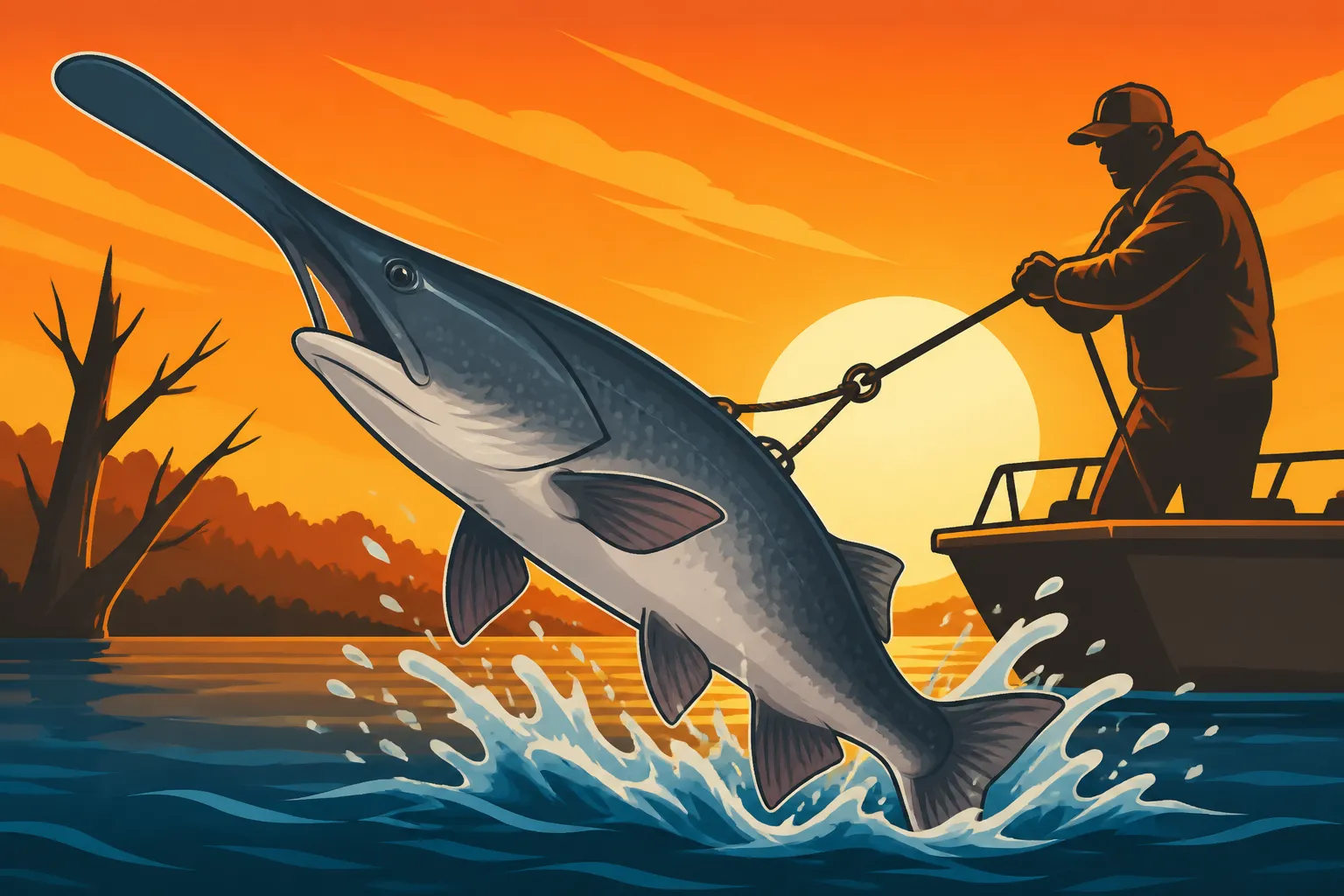
Paddlefish snagging is a truly distinct fishing experience, and it's heavily regulated in Oklahoma for good reason. These ancient fish, with their long, paddle-like snouts, are truly magnificent, and their populations need careful management to ensure they thrive for generations. Unlike traditional fishing where you entice a bite with bait, snagging involves blindly hooking the fish as it swims, typically in large congregations during their spawning runs. This method requires specific seasons and areas to prevent overfishing and to protect the species.
The Unique Nature of Paddlefish Snagging
Paddlefish are filter feeders, meaning they swim with their mouths open, filtering plankton from the water. They don't strike lures or bite bait in the conventional sense, which is why snagging is the accepted method for catching them. This makes paddlefish snagging less about finesse and more about brute strength and persistence, especially when you hook into a truly massive specimen. It's an active, engaging form of fishing that often involves a lot of casting, retrieving, and feeling for that tell-tale "thump" as your hook connects. The sheer size and power of these fish make landing one an unforgettable challenge, often requiring heavy gear and a strong back.
The season is carefully set to coincide with periods when paddlefish are concentrated and accessible, but also to avoid peak spawning times that could disrupt reproduction. Oklahoma's commitment to managing this unique fishery is evident in its detailed rules, which aim to balance angler opportunity with conservation imperatives. Missing these details can lead to fines, so understanding the nuances is paramount.
Why Seasons and Regulations Are Crucial
Imagine if everyone could snag paddlefish all year round, anywhere they pleased. It wouldn't take long for the population of these slow-growing, long-lived fish to dwindle. That's why the Oklahoma Department of Wildlife Conservation (ODWC) implements strict seasons, bag limits, and size restrictions. These rules aren't designed to make your life difficult; they're vital for the sustainability of the paddlefish population.
For instance, limits on the number of fish you can keep and specific no-snagging zones protect critical spawning habitats. The ODWC monitors paddlefish populations closely, using research and data to adjust regulations as needed. This proactive approach ensures that the resource remains healthy, providing fantastic opportunities for anglers today and tomorrow. Without these regulations, the incredible opportunity to pursue trophy paddlefish, some of which can weigh over 100 pounds, simply wouldn't exist. It's a delicate balance, and as responsible anglers, we play a crucial role in upholding it.
Key Dates and Locations for Snagging
When it comes to paddlefish snagging, timing and location are everything. Oklahoma is renowned for its paddlefish fishery, particularly in the northeastern part of the state. Knowing when and where to go is the first step toward a successful outing. The season is typically structured around the spring spawning migration, when these fish move upstream into rivers and shallower areas.
The Spring Snagging Season Overview
Oklahoma’s paddlefish snagging season primarily runs from March 1st through May 15th, offering a solid window for anglers. However, it’s not a uniform free-for-all across the state. Specific zones and days of the week are designated for snagging to manage angler pressure and protect the fish. For instance, the main season typically opens in early March and continues until mid-May, but certain areas might have shorter windows or be open only on specific days.
For example, on the popular Grand River, a major tributary to Grand Lake O' the Cherokees, snagging is usually permitted daily from March 1st to April 30th. However, from May 1st to May 15th, it might be restricted to just Tuesdays, Thursdays, and Saturdays. This staggered approach helps distribute fishing effort and prevents too much pressure on the fish during sensitive periods. Always double-check the latest regulations from the ODWC before heading out, as these dates can sometimes be adjusted based on biological surveys and weather conditions. You don't want to get caught on the wrong day.
Prime Snagging Locations in Oklahoma
When we talk about paddlefish snagging in Oklahoma, one name immediately comes to mind: Grand Lake O' the Cherokees. This massive reservoir and its tributaries are arguably the state's most famous paddlefish hotspot. Anglers flock to the upper reaches of Grand Lake and the Grand River arm, especially near Twin Bridges State Park and the areas upstream toward the low-water dams. The concentration of fish in these areas during the spring run is legendary. You can often see dozens of boats, and bank anglers lining the riverbanks, all trying their luck.
While Grand Lake gets a lot of the attention, other areas also offer excellent opportunities. The Neosho River arm of Grand Lake, and to a lesser extent, the Verdigris River system can also hold good numbers of paddlefish. These areas might offer a less crowded experience than the main Grand River, which can be a significant bonus for those looking for a bit more solitude. Regardless of where you go, understanding the specific local rules for that particular body of water is vital. Don't assume that Grand Lake rules apply everywhere. For those interested in deeper dives into specific locations, resources like Paddlefish Snagging at Grand Lake O' the Cherokees, Oklahoma can provide invaluable local knowledge.
Seasonal Factors and Best Times
The precise timing within the snagging season can make a huge difference in your success. Paddlefish movements are heavily influenced by water temperature and flow. A warm spell following heavy rains that increase river flow often triggers strong upstream migrations. This is when the fish are most concentrated and actively moving, making them more susceptible to snagging. Early spring, when water temperatures start to climb into the 50s Fahrenheit, is usually prime time.
Anglers often find the best action early in the morning or late in the afternoon, although paddlefish can be snagged throughout the day. Overcast days with stable weather patterns can also be productive. Conversely, sudden cold fronts can cause fish to become lethargic and drop back into deeper pools, making them harder to find. It's a bit like a treasure hunt, where understanding the weather and water conditions gives you the best map. Keeping an eye on local river gauges and temperature reports can be a game-changer for timing your trip just right.
Essential Gear for Paddlefish Snagging
Paddlefish are powerful, large fish, and trying to land one with lightweight bass gear is a recipe for heartbreak and lost fish. Proper tackle is non-negotiable for snagging. You need robust equipment that can withstand the incredible force these fish exert once hooked, often in fast-moving current. Investing in the right gear not only increases your chances of success but also ensures you're fishing responsibly by minimizing stress on the fish and preventing break-offs.
Heavy-Duty Rod and Reel Combos
Let's talk about power. For paddlefish snagging, you're not looking for finesse; you're looking for a beast of a rod and reel. A heavy or extra-heavy action rod, typically 7 to 9 feet in length, is essential. These rods have the backbone to launch heavy weights and withstand the violent head shakes of a large paddlefish. Many anglers prefer fiberglass rods for their durability and parabolic bend, which helps absorb shock. Graphite composites are also popular for their lighter weight, which can be a blessing after hours of casting.
Pair that rod with a large, robust spinning or baitcasting reel designed for saltwater or heavy freshwater applications. Think reels capable of holding 200-300 yards of heavy line. Brands like Penn, Daiwa, or Shimano offer models that fit the bill. The drag system on your reel must be incredibly smooth and capable of handling sustained pressure, as a large paddlefish can strip line off a lesser reel in seconds. You'll thank yourself for not skimping here when you're battling a 70-pound paddlefish. Finding reliable, tough gear for this can sometimes be a challenge locally, but you can often find a great selection of suitable combos on Amazon with detailed reviews.
Terminal Tackle Specifics
This is where the rubber meets the road, or more accurately, where the hook meets the fish. The core of your terminal tackle for paddlefish snagging consists of heavy line, substantial weights, and large treble hooks. For line, opt for 50 to 80-pound test braided line. Braided line offers superior strength, sensitivity, and resistance to abrasion compared to monofilament, which is crucial when fishing in snaggy river bottoms. It also has virtually no stretch, allowing for a more direct feel when you connect with a fish.
Your weights should be heavy enough to get your hooks down to the fish in the current, often ranging from 8 to 16 ounces, sometimes even more depending on the river flow. Pyramid or bank sinkers are common choices. And then, the hooks: you'll need large, stout treble hooks, typically sizes 8/0 to 12/0. These hooks are designed to effectively "snag" the paddlefish. Many anglers prefer strong, sharp hooks from brands like Mustad or Gamakatsu. Make sure your hooks are sharp – a dull hook might just slide off the fish, whereas a sharp one will find purchase. The whole setup, from leader to hook, needs to be incredibly strong because once you hook a paddlefish, it's an all-out tug-of-war. For a comprehensive look at what you'll need, check out What Gear Do You Need for Paddlefish Snagging in Oklahoma.
Safety and Comfort Essentials
Snagging paddlefish often means long hours on the water, sometimes in chilly spring weather, and dealing with powerful fish. Beyond your fishing tackle, several items are crucial for safety and comfort. First and foremost, a good quality PFD (Personal Flotation Device) is a must, especially if you're fishing from a boat or near fast-moving water. Hypothermia can be a real risk in early spring, so dressing in layers and having waterproof outerwear is smart.
You'll also want sturdy, non-slip boots, a good pair of gloves to protect your hands from braided line and fish handling, and polarized sunglasses to cut glare off the water. A long-handled net or a large gaff can be incredibly helpful for landing a thrashing paddlefish at the boat or from the bank. And don't forget essentials like a cooler with plenty of ice if you plan to keep your catch, as paddlefish meat needs to be chilled quickly. A measuring tape is also vital for checking length limits, and a pair of bolt cutters or heavy-duty pliers can be invaluable for quickly removing hooks if you plan to release a fish. Many of these practical items, from quality fishing gloves to robust coolers, are readily available on Amazon, often with convenient shipping.
Paddlefish Snagging Techniques That Work
Successfully snagging a paddlefish isn't just about having the right gear; it's also about employing effective techniques and understanding fish behavior. While it's called "snagging," there's still a significant amount of skill involved in consistently hooking and landing these powerful creatures. It often comes down to precise casting, controlled retrieves, and recognizing the subtle indications that a fish is nearby.
Casting and Retrieving Methods
The most common technique involves casting your heavy weight and treble hook rig out into the current, letting it sink to the bottom, and then sweeping your rod to drag the hooks through the water column where paddlefish are likely swimming. The retrieve isn't a steady reel in; it's a series of long, powerful sweeps of your rod, followed by reeling up the slack, and then another sweep. This action pulls the hooks through the water, increasing the chance of snagging a fish.
Many anglers experiment with the cadence of their sweeps. Some prefer a slow, steady sweep, letting the current work the hooks. Others opt for more aggressive, jerking motions. The key is to cover different depths and areas. If you're fishing from a boat, you might drift downstream, casting ahead of the boat, or anchor up in a known travel lane. From the bank, you'll want to fan-cast across the likely travel path of the fish. When you feel that distinct "thump" or sudden heavy resistance, it means you've snagged a fish. Set the hook hard, and prepare for a fight! This method is thoroughly detailed in guides like How Does Paddlefish Snagging Work in Oklahoma.
Reading the Water and Fish Behavior
Successful snagging relies heavily on your ability to read the water and anticipate where paddlefish will be. Look for areas with current breaks, deeper channels, or eddies where fish might rest or funnel through. During spawning runs, paddlefish will often congregate below dams or in the deeper pools of river bends. Areas where tributaries merge with the main river can also be hotspots, as these are natural travel corridors.
Pay attention to what other successful anglers are doing. Are they fishing in a specific depth? Are they concentrated in a particular stretch of river? These observations can provide valuable clues. Also, understand that paddlefish are migratory. Their location can change daily based on water levels, temperature, and current. If one spot isn't producing, don't be afraid to move and try another. The best time of year to try these techniques is generally covered in Best Time of Year to Snag Paddlefish at Grand Lake, Oklahoma.
The Fight: Landing Your Trophy
Once you've snagged a paddlefish, the real challenge begins. These fish are incredibly strong and can make powerful runs, often stripping significant amounts of line. The first few seconds after the hook-set are critical; you need to keep constant pressure and prevent the fish from getting into snags or structures. Keep your rod tip up and let your drag do its job. Don't try to muscle the fish in too quickly, or you risk breaking your line or pulling the hook.
It's often a game of give and take, allowing the fish to run when it wants to, and gaining line back when it rests. For larger fish, this battle can last 10, 15, or even 20 minutes. When the fish finally comes to the surface near your boat or the bank, use a large, strong net or a gaff designed for big fish to secure it. Bringing a partner along is highly recommended, as landing a heavy, thrashing paddlefish by yourself can be dangerous and extremely difficult. Be prepared for a mess and a workout, because a successful paddlefish snagging trip means you've earned your catch!
Navigating Regulations and Limits
Oklahoma's paddlefish regulations are comprehensive, designed to protect this unique species while providing fair opportunities for anglers. Ignoring these rules isn't just irresponsible; it can lead to hefty fines and loss of fishing privileges. It's every angler's duty to understand and adhere to them.
License Requirements and Endorsements
Before you even think about casting a line for paddlefish, you need to ensure you have the correct licenses. Every angler, resident or nonresident, generally needs an Oklahoma fishing license. Beyond the basic license, there's a specific Paddlefish Permit that is required for anyone participating in paddlefish snagging, even if you're not keeping a fish. This permit costs a nominal fee and helps fund paddlefish conservation efforts.
It's important to remember that these permits are often required in addition to any other fishing licenses or endorsements you might have. For example, if you're a senior angler, you might have a senior lifetime fishing license in Oklahoma, but you'll still need that separate Paddlefish Permit to legally snag. Children under 16 might be exempt from the basic fishing license, but the Paddlefish Permit still applies to them if they are actively participating in snagging. Always carry your license and permit with you while fishing, as game wardens regularly check for compliance. More details on overall licenses can be found at Fishing License Requirements in Oklahoma.
Daily and Possession Limits
The bag limits for paddlefish are quite strict, reflecting the conservation-focused management of the species. Typically, the daily limit for paddlefish is one fish per person. This means that once you keep a paddlefish, your snagging for the day is generally done, even if you decide to release it later. This rule is crucial because paddlefish, especially large ones, are highly vulnerable once brought to the boat or bank. The possession limit is usually two fish per person, meaning you can only have two paddlefish in your possession at any given time, regardless of how many days you've fished.
There are also specific size limits. For instance, sometimes paddlefish below a certain length (e.g., 30 inches eye-to-fork of tail) must be released immediately. These limits are in place to protect juvenile fish and allow them to reach reproductive maturity. It's absolutely critical to measure your fish accurately before deciding to keep it. If you're unsure, it's always best to release it unharmed. These rules are non-negotiable and are enforced to the letter by game wardens.
Special Rules and Reporting Requirements
Beyond the basic limits, there are several special regulations unique to paddlefish snagging. For example, only one rod and reel per person are allowed when snagging. You can't set out multiple lines hoping to increase your odds. Also, snagging is usually only allowed from sunrise to sunset in designated areas. Night snagging is generally prohibited to prevent illegal activities and aid in enforcement.
Perhaps one of the most important special rules is the mandatory reporting requirement for paddlefish. If you keep a paddlefish, you are typically required to immediately clip the dorsal fin (the fin on the fish's back) and then report your catch through the ODWC's online E-Check system within 24 hours. This reporting provides vital data for biologists to monitor the health of the paddlefish population. Failure to report your catch is a violation and can result in penalties. Always have a pair of robust shears or clippers ready to make that dorsal fin clip right after you decide to keep your fish.
Cleaning and Preparing Your Paddlefish
Catching a paddlefish is an achievement, but the work isn't over once it's on the bank. These fish are unique, not just in how they're caught, but also in how they need to be processed. Their cartilaginous skeleton and large size require a different approach than scaling and filleting a bass or crappie. However, once you learn the technique, you'll find paddlefish offers a delicious, firm, white meat that's excellent for various culinary applications.
Immediate Post-Catch Handling
The moment you decide to keep your paddlefish, prompt and proper handling is essential. First, if required by regulation, clip the dorsal fin immediately upon deciding to keep the fish. This is a critical step for compliance. Next, the fish needs to be bled out quickly. This helps preserve the quality of the meat. You can do this by cutting the main artery near the gills or tail. After bleeding, get the fish on ice as soon as possible. Paddlefish are large, so you'll need a substantial cooler filled with plenty of ice to cover the entire fish. Do not let the fish sit in warm conditions, as this can rapidly degrade the meat quality.
Transporting a large paddlefish can be challenging. If you’re fishing from a boat, having a large fish box or cooler on board is a necessity. For bank anglers, a wheelbarrow or a game cart might be helpful for getting a big fish back to your vehicle. Remember to check local regulations for transport, as some areas may require specific tagging or proof of legal catch during transport. The goal is to get the fish from the water to a clean processing station as efficiently and hygienically as possible.
Processing a Paddlefish
Processing a paddlefish is different from your typical bony fish due to its cartilaginous skeleton. You won't be dealing with scales, but rather a tough hide and cartilage instead of bones. The main prize is the thick, boneless fillets along its back and sides, often referred to as "steaks." Many anglers also value the roe (eggs) from female paddlefish, which is considered a delicacy and can be processed into caviar. If you're lucky enough to catch a female with roe, ensure you know the specific regulations for handling and possessing roe.
To process the fish, lay it on a clean, sturdy surface. You'll typically start by making a cut behind the head, down through the tough skin. Then, you'll need a sharp, strong knife to carefully slice down the sides, peeling back the skin and cartilage to access the meat. You’ll essentially be cutting around the central cartilage spine and thick hide to extract the pure white meat. This isn't a quick process, and it requires some patience and a good blade. There are many instructional videos online that can walk you through the precise cuts. Once you have your fillets, trim off any remaining red meat or bloodlines, as these can impart a stronger flavor. This process makes it clear why some anglers might ask Is Paddlefish Good to Eat?.
Culinary Uses and Storage
Paddlefish meat is highly versatile and delicious. It has a firm texture, a mild, slightly sweet flavor, and holds up well to various cooking methods. It's often compared to swordfish or sturgeon. Popular ways to cook paddlefish include grilling, baking, frying, or smoking. Many people love it marinated and grilled as steaks, or breaded and fried like fish and chips. Its firm texture also makes it suitable for stews or ceviche.
For storage, once processed, the fillets can be portioned, vacuum-sealed, and frozen for long-term enjoyment. Properly frozen paddlefish can last for several months without significant loss of quality. If you're planning to consume it fresh, keep it well-chilled in the refrigerator and use it within a day or two. Remember that if you're processing roe for caviar, that's a whole other specialized process involving brining and curing, and it's best to research that thoroughly if you intend to pursue it. Enjoying your catch is the reward for all your effort, from the snag to the table!
Conservation and Responsible Snagging
Paddlefish are an ancient and iconic species, often referred to as "living fossils." Their long lifespan and unique biology make them particularly vulnerable to overfishing and habitat degradation. As anglers, we have a profound responsibility to practice ethical and responsible snagging to ensure the long-term health of Oklahoma's paddlefish populations. This isn't just about following the rules; it's about being good stewards of the resource.
Protecting the Resource
The health of the paddlefish population is a top priority for the Oklahoma Department of Wildlife Conservation (ODWC). This is why the seasons are limited, the bag limits are strict, and specific gear is mandated. Responsible anglers understand that these regulations are the minimum standard. Going beyond that, by practicing careful handling of released fish, for instance, contributes significantly to conservation.
Consider the impacts of your actions. If you're repeatedly snagging and releasing fish in a short amount of time, the stress on those fish can be cumulative and potentially fatal, even if they swim away. Try to minimize the time a fish is out of water, handle it gently with wet hands, and support its body fully if you're taking a quick photo before release. These small efforts add up. By respecting the species, we help ensure that the thrill of Paddlefish Snagging Season in Oklahoma continues for future generations.
Catch and Release Best Practices
Not every paddlefish you snag will be a keeper, whether due to size limits, personal preference, or simply reaching your bag limit. When releasing a paddlefish, quick and careful handling is paramount to its survival. Avoid dragging the fish onto dry land if possible. Instead, try to unhook it while it's still in the water or only briefly bring it onto a wet, soft surface.
Use bolt cutters or heavy-duty pliers to quickly remove hooks. If a hook is deeply embedded and cannot be easily removed without causing further damage, it's often better to cut the line as close to the hook as possible. The hook will likely rust out over time. When returning the fish to the water, hold it gently by the tail and jaw until it regains its strength and swims away on its own. Don't simply toss it back; ensure it's upright and actively swimming before letting go. Minimizing stress during release is critical for the fish's chances of survival.
Supporting Paddlefish Research
Oklahoma's paddlefish program is one of the most proactive and successful in the country. A significant part of this success comes from ongoing research, much of which relies on angler participation. When you clip the dorsal fin and report your catch through the E-Check system, you are directly contributing to scientific data collection. This information helps biologists understand population trends, growth rates, and angler harvest.
Sometimes, you might even encounter tagged paddlefish. These tags, often located near the dorsal fin, provide crucial information about fish movement and migration patterns. If you catch a tagged paddlefish, report the tag number, date, and location to the ODWC as instructed on the tag. Your contribution, whether it's through mandatory reporting or voluntary tag returns, is invaluable to managing and sustaining this incredible fishery. Every piece of data helps paint a clearer picture of the paddlefish population, allowing for more informed and effective conservation strategies.
| Aspect | General Rule for Oklahoma Paddlefish Snagging |
|---|---|
| Season | Primarily March 1st – May 15th, but specific dates and days can vary by location (e.g., Grand River vs. other areas). Always check current ODWC regulations. |
| License Required | Valid Oklahoma Fishing License + Paddlefish Permit (for all participants, including children). |
| Daily Limit | 1 paddlefish per person. Once kept, daily snagging for that individual is usually concluded. |
| Possession Limit | 2 paddlefish per person. |
| Size Limit | Varies; typically, paddlefish under a certain length (e.g., 30 inches eye-to-fork) must be released immediately. Check current regulations as this can change. |
| Snagging Hours | Generally sunrise to sunset in designated areas. Night snagging is prohibited. |
| Rods/Reels | One rod and reel per person. Heavy or extra-heavy action rods, large robust reels with strong drag. |
| Terminal Tackle | 50-80 lb braided line, 8-16 oz weights, large (8/0 – 12/0) treble hooks. |
| Post-Catch Rules | If keeping, clip dorsal fin immediately upon decision to keep. Report catch via ODWC E-Check system within 24 hours. Prompt bleeding and icing are essential for meat quality. |
| Key Locations | Grand Lake O' the Cherokees (especially Grand River arm near Twin Bridges), Neosho River arm. |
| Conservation Tip | Practice careful handling of released fish, minimize time out of water, use bolt cutters for deeply embedded hooks. Support paddlefish research by reporting catches and tagged fish. |
Disclaimer
Please note that fishing regulations, including seasons, limits, and license requirements, can change. While we strive to provide the most up-to-date information, it is always your responsibility as an angler to consult the official Oklahoma Department of Wildlife Conservation (ODWC) regulations before heading out on the water. This guide is for informational purposes only and should not be considered a substitute for the official rules and guidelines.