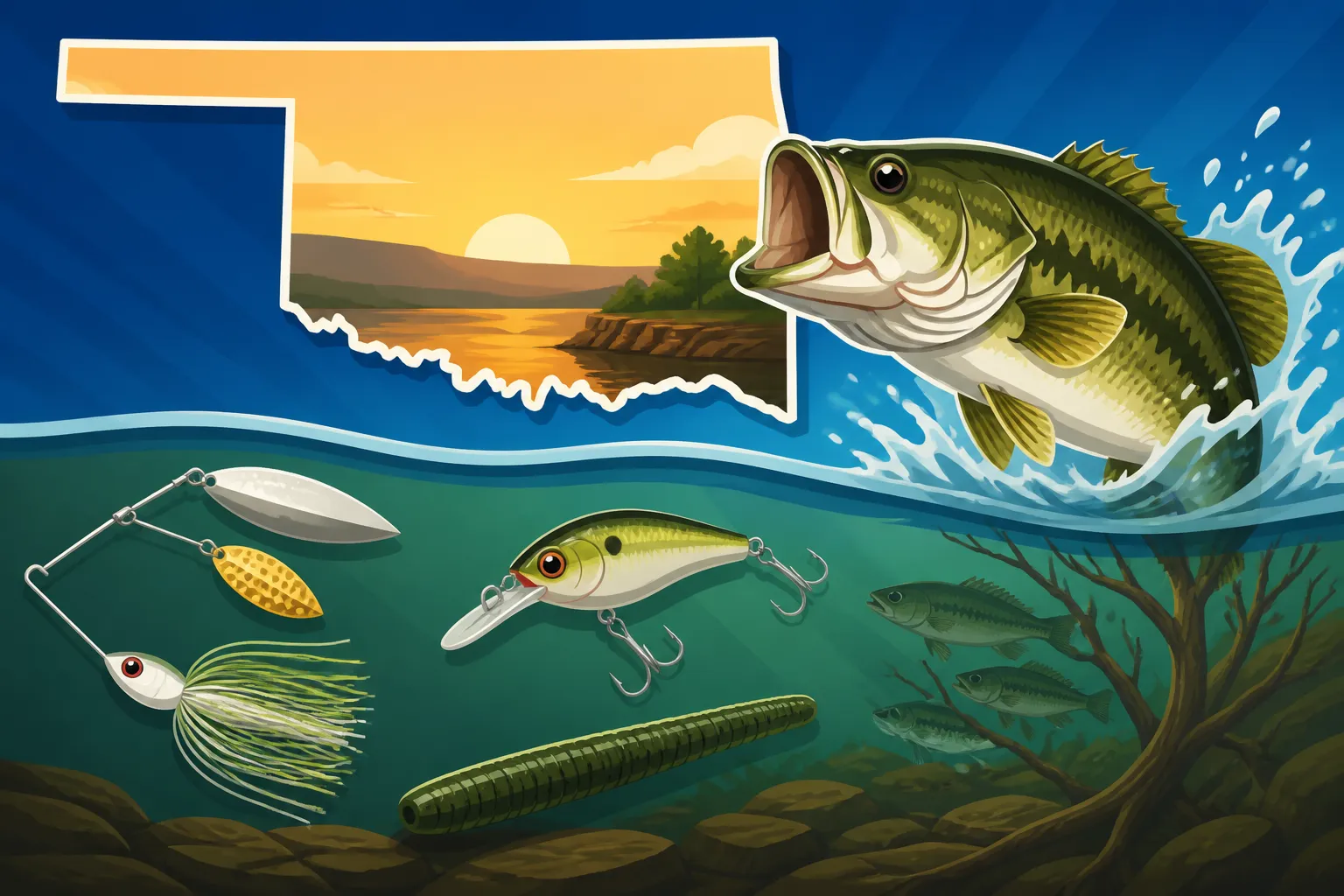
Pre-Spawn Bass Fishing Techniques Explained
It’s that exciting, yet often frustrating, time of year when bass are on the cusp of spawning, moving between their deep winter haunts and shallow breeding grounds. Figuring out their mood during this pre-spawn period can feel like cracking a secret code, leaving many anglers wondering where to even start. This comprehensive guide will break down the essential strategies and techniques to help you consistently find and catch more bass in Oklahoma as they prepare for the spawn.
Understanding the Pre-Spawn Period in Oklahoma
The pre-spawn phase is arguably one of the most exciting times to be on the water if you're chasing bass. This is when the fish are at their heaviest, aggressively feeding to build up energy for the arduous spawning process that's just around the corner. If you hit it right, you can have some truly unforgettable days.
What is Pre-Spawn and Why Does it Matter?
Think of pre-spawn as the bass's "carb-loading" phase. As water temperatures begin to rise in late winter and early spring, bass start to shake off their winter lethargy and embark on a migration from deeper, more stable water to shallower staging areas near their eventual spawning grounds. They're not quite ready to commit to beds, but they're actively on the move, hungry, and often grouped up. This period is critical because their aggressive feeding habits mean they’re more willing to strike a wide variety of baits. Missing this window means missing out on some of the biggest bass of the year.
The motivation behind this feeding frenzy is purely biological. Spawning is an incredibly energy-intensive process, especially for the larger female bass. They need to pack on as much weight as possible to develop and lay their eggs, and the males need energy to guard the beds. This intense need to feed makes them predictable in their movements, as they follow pathways from deep water to shallow coves and flats, pausing at various structural elements along the way. Understanding this instinctual drive is the first step to successful pre-spawn fishing.
Timing the Pre-Spawn in Oklahoma Waters
The exact timing of the pre-spawn in Oklahoma is heavily dependent on weather and water temperatures, which can vary significantly from year to year and even from lake to lake. Generally, you're looking for water temperatures to climb consistently into the low to mid-50s Fahrenheit. In southern Oklahoma lakes like Lake Texoma, this might happen as early as late February or early March, while northern lakes such as Grand Lake O' the Cherokees might not see it until late March or early April. Keeping a close eye on your fish finder's temperature gauge is absolutely key.
A cold front can temporarily push bass back to deeper water, prolonging the pre-spawn phase or making them less active. Conversely, a prolonged period of warm, stable weather can accelerate it, moving fish to beds quickly. This is why checking local fishing reports and observing water conditions daily is more important than relying on a fixed calendar date. For a deeper dive into how temperature impacts fish activity, check out our guide on how to tell when bass are spawning in Oklahoma lakes. Pay attention to those consistent days where the sun stays out and warms the shallows—that’s when the bass really start making their move.
Key Techniques for Pre-Spawn Bass
Once you understand when the pre-spawn is happening, the next step is knowing how to approach these hungry but sometimes finicky fish. It's often about finding the right balance between slow, deliberate presentations and understanding their migratory paths.
Slow and Steady Presentations
During the pre-spawn, especially in the earlier stages when water temperatures are still on the cooler side (low 50s), bass can be a bit sluggish. They're not always willing to chase down a fast-moving bait. This is where slow, methodical presentations shine. Think about baits that mimic slow-moving forage or offer a persistent presence in the strike zone. A jig and trailer, for instance, can be hopped or dragged slowly along the bottom, imitating a crawfish or an injured baitfish. The weight of the jig allows you to maintain contact with the bottom, feeling for subtle changes in structure where bass might be holding.
Another fantastic option is a lipless crankbait or a jerkbait. While these can be fished aggressively, in colder pre-spawn water, a retrieve with long pauses is often more effective. Cast out a jerkbait, reel it down to depth, and then let it sit motionless for several seconds before giving it a few short twitches. That suspended, vulnerable look can be irresistible to a bass that isn't quite ready for a full-on chase. Many anglers find quality jerkbaits on Amazon that mimic the local shad perfectly. These baits effectively target fish suspending in the water column or holding tight to cover, offering a tempting, easy meal that requires minimal effort from the bass.
Targeting Transition Zones and Structure
Pre-spawn bass are migrants, moving from deep winter haunts to shallow spawning coves. This means they're often found in "transition zones"—areas where deep water quickly gives way to shallower depths. These could be points extending into the main lake, channel swings within a creek arm, or the edges of flats near deep water. Bass will use these areas as highways, pausing at any available cover or structure along the way. Submerged timber, rock piles, ledges, and even isolated patches of vegetation can be prime holding spots.
Focus your efforts on these transitional areas, especially those with some form of cover. If you’re fishing a lake like Lake Eufaula, look for channels that swing close to main lake points or where shallow flats meet the river channel. Bass will stage on these structures, waiting for the water to warm sufficiently to make the final push to the bank. Using your electronics to identify these submerged features is incredibly beneficial. Knowing how cold fronts change fishing patterns on Oklahoma lakes is also vital during this period, as bass might temporarily retreat to deeper, more stable structure after a cold snap.
Reacting to Changing Conditions
Oklahoma weather can be notoriously fickle, especially in spring. One day it's sunny and 70 degrees, the next a cold front rolls in, dropping temperatures by 30 degrees and bringing rain. Successful pre-spawn bass fishing demands adaptability. If you start the day with warm, stable conditions, bass might be more active in shallower staging areas, and a faster retrieve with a squarebill crankbait or a spinnerbait could be effective. However, if a cold front pushes through, those same fish might retreat to deeper cover or become much more lethargic.
In these post-front conditions, you’ll need to slow down significantly. Opt for a jig or a Carolina rig, fishing it painstakingly slowly. Fish might be buried in brush piles or tight to ledges. During these tougher days, consider targeting areas with a slightly deeper slope where bass can quickly move up and down to adjust to temperature fluctuations. Our guide on Best Fishing Techniques Before a Cold Front can offer additional insights into preparing for these shifts. Always have a variety of baits and techniques ready to pivot based on what the bass are telling you through their activity levels and location.
Essential Gear and Baits for Pre-Spawn Success
Having the right tools in your tackle box and on your rod is non-negotiable for capitalizing on the pre-spawn bite. This isn't the time to skimp on quality, especially when you're targeting big, heavy bass.
Must-Have Lures and Soft Plastics
When bass are in their pre-spawn patterns, they're looking for substantial meals. This means favoring lures that have a good profile and offer a tempting presentation.
- Jigs: A tried-and-true classic. A 1/2 oz to 3/4 oz jig in black-and-blue, green pumpkin, or brown is a fantastic choice. Pair it with a bulky trailer that adds action and increases the profile. A football head jig is great for dragging along rocky bottoms, while a bladed jig can mimic a fleeing baitfish. Many anglers swear by Strike King jigs, readily available on Amazon, for their versatility.
- Jerkbaits: As mentioned, suspending jerkbaits like the Lucky Craft Pointer or the Megabass Vision 110 are deadly. Their ability to hang motionless in the water column is often what triggers a strike from a hesitant bass. Colors that mimic shad or sunfish are usually the most productive.
- Lipless Crankbaits: These baits, like the Bill Lewis Rat-L-Trap or the SPRO ArukuShad, are excellent for covering water quickly and eliciting reaction strikes. Their loud rattles and tight wobble can call in bass from a distance. Work them with a "rip-pause" retrieve near grass lines or over submerged hydrilla.
- Spinnerbaits: Chartreuse and white, or shad-patterned spinnerbaits with tandem willow leaf or Colorado blades, are perfect for fishing around stained water or when bass are slightly more active. They create a lot of flash and vibration, especially effective in slightly warmer water.
- Soft Plastics: A good selection of soft plastics is a must. Large creature baits, craws, and even big worms fished on a Texas rig or Carolina rig are fantastic. For example, a 5-inch Yamamoto Senko or a Zoom Brush Hog on a Texas rig can be irresistible when fished slowly through cover. Check out our guide on how to fish a Texas rig for bass for more detailed instructions. These can be rigged weedless, allowing you to probe dense brush piles and laydowns without snagging.
- Swimbaits: When targeting bigger bass that are feeding on larger shad or sunfish, a paddle tail swimbait (like a Keitech Swing Impact FAT) rigged on a weighted swimbait hook or a jig head can be incredibly effective. Fish these with a slow, steady retrieve near points or channel swings.
This table provides a quick reference for selecting baits based on common pre-spawn conditions:
| Water Temperature Range | Condition & Location | Recommended Baits & Techniques |
|---|---|---|
| 48-54°F | Early pre-spawn, deeper staging areas, lethargic fish | Jigs (slow drag/hop), suspending Jerkbaits (long pauses), Carolina Rigs |
| 52-58°F | Mid pre-spawn, transitional areas, more active fish | Lipless Crankbaits (rip-pause), Spinnerbaits, Texas Rigs (slow) |
| 56-62°F | Late pre-spawn, shallower staging, aggressive fish | Squarebill Crankbaits, Chatterbaits, Swimbaits, Jigs (faster hop) |
| Post-Cold Front | Bass retreated to deeper cover, inactive | Jigs (very slow), Ned Rigs, Drop Shots (finesse) |
| Stained/Murky Water | Reduced visibility | Dark colored Jigs, Bladed Jigs, Lipless Crankbaits, Spinnerbaits (Colorado blades) |
| Clear Water | High visibility | Natural colored Jerkbaits, Finesse Jigs, Swimbaits, Soft Plastics (subtle action) |
Rods, Reels, and Line for Heavy Fish
Pre-spawn bass are often the biggest and strongest of the year, so your gear needs to be up to the task. You'll want powerful rods and reels that can handle heavy lures and powerful fish, especially when extracting them from heavy cover.
- Rods: Medium-heavy to heavy power casting rods (6'10" to 7'6" in length) are ideal. A fast action tip will give you the sensitivity to detect subtle bites, while the strong backbone allows for powerful hooksets and control over big bass. For jigs and Texas rigs, a 7' to 7'3" medium-heavy rod is a great all-around choice. For throwing bigger swimbaits or heavier jigs, a heavy power rod might be necessary. To learn more about specific setups, you might find our guide on the best rod for largemouth bass fishing helpful.
- Reels: Pair your casting rods with baitcasting reels that have a good gear ratio (e.g., 6.4:1 to 7.5:1) for versatility. A reel with a strong drag system is crucial for fighting those heavy pre-spawn bass. Make sure your reel is well-maintained and has a smooth retrieve. Brands like Shimano, Daiwa, and Abu Garcia offer excellent options, many of which can be found with great deals on Amazon.
- Line: For most heavy cover applications during pre-spawn, 15-20 lb fluorocarbon or braided line is the way to go. Fluorocarbon offers excellent abrasion resistance and sensitivity, making it perfect for jigs and Texas rigs. For spinnerbaits and bladed jigs, 15-20 lb fluorocarbon or even 17-20 lb monofilament can work well. If you're fishing extremely dense cover, 30-50 lb braided line with a fluorocarbon leader can provide maximum strength and sensitivity. Don't forget to check the knot on your leader frequently—a big fish can exploit any weakness!
Locating Pre-Spawn Bass in Different Water Types
Finding pre-spawn bass isn't a shot in the dark; it's about understanding their predictable movements and focusing on key areas that offer both staging opportunities and proximity to spawning grounds. Whether you're on a massive reservoir or a cozy creek, the principles remain similar.
Finding Bass in Oklahoma's Large Reservoirs
Oklahoma is blessed with an abundance of large reservoirs like Lake Texoma, Lake Eufaula, and Grand Lake O' the Cherokees, all renowned for their bass fishing. In these expansive waters, locating pre-spawn bass requires focusing on key structural elements and understanding the transition. Bass will typically start moving out of their deep winter holes in the main lake basins or deep river channels. Their first stop will be the nearest staging areas, which often include main lake points, secondary points within creek arms, ledges, and humps.
Look for areas where creek channels wind their way into large coves. The bass will follow these channels, using them as migration routes. They'll pause at any point, rock pile, or submerged brush along the way. Think about the north-facing banks or those with prolonged sun exposure; these will warm up faster, attracting baitfish and, consequently, bass. As you work your way into creek arms, pay attention to the first available cover—brush piles, dock pilings, or even standing timber. These are excellent spots for bass to stage before moving into the flatter, shallower backs of coves to spawn. Our guide to the Best Bass Lakes in Oklahoma During the Spring Spawn provides more specific locations where these patterns hold true.
Pre-Spawn Strategies for Rivers and Smaller Lakes
Rivers and smaller lakes present a slightly different, but equally exciting, challenge for pre-spawn bass. In river systems, bass will move from the deeper main channel into calmer eddies, oxbows, and tributary creeks as water temperatures rise. Focus on areas where current is broken, such as behind submerged logs, rock jetties, or sharp river bends. These spots offer refuge from the current and often hold an abundance of baitfish. The mouths of creeks flowing into the main river are also prime locations, as they can carry warmer water and nutrients, attracting both forage and predatory bass.
For smaller lakes and ponds, the principles are scaled down but remain consistent. Bass will move from the deepest part of the pond towards any hard cover—docks, fallen trees, brush piles, or rock formations—that are adjacent to shallower flats or coves. Look for the warmest water, often found on the north side of the pond where it receives the most direct sunlight. In these smaller bodies of water, even a slight depth change of a foot or two can act as a significant "ledge" for bass to stage on. Don't overlook old pond dams or areas where small creeks feed into the pond; these are natural highways for bass movement. Always be mindful of Oklahoma's Bass Fishing Rules and Limits, even in smaller private waters.
Disclaimer
Fishing regulations and conditions can change. Always consult the latest Oklahoma Department of Wildlife Conservation (ODWC) regulations before heading out on the water. This information is for educational purposes only and should not be considered legal advice.