How to Troll for Striped Bass in Deep Water
There's nothing quite like the thrill of a striped bass hitting your line, especially when you've been working hard to dial in your deep-water trolling technique on a massive Oklahoma reservoir. Many anglers find themselves frustrated, cruising over acres of water without a bite, wondering how to consistently connect with those powerful, schooling fish lurking far below the surface. This guide is here to unravel the mysteries of deep-water striper trolling, offering you a comprehensive look at the strategies, gear, and locations to help you put more of those hard-fighting stripers in your boat.
Understanding Deep Water Striped Bass Behavior
Before you can effectively troll for striped bass in deep water, you really need to get inside their heads a little bit, or at least understand their natural instincts. These fish are masters of their environment, and their movements are often dictated by a few key factors: comfort, bait, and oxygen.
Why Stripers Go Deep and Where to Find Them
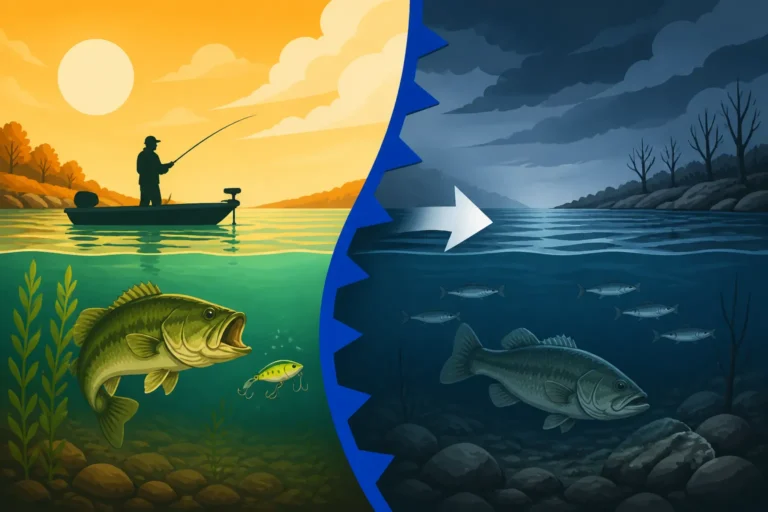
Striped bass, particularly the larger ones, aren't just swimming around aimlessly. They're often seeking out specific conditions that make them comfortable and provide easy access to food. In the hot Oklahoma summers, or even during colder months, deep water often offers the most stable temperatures and higher oxygen levels, especially below the thermocline. The thermocline is that invisible layer where the water temperature changes rapidly, and it's a critical depth for finding fish. Below it, oxygen can get depleted, so stripers will often suspend just above it, or patrol structure that rises into that sweet spot.
When you're out on a lake like Texoma, Keystone, or Grand Lake, think about the landscape beneath the surface. Stripers will congregate around deep humps, along ledges where the bottom drops off sharply, in the bends of old creek channels, and submerged riverbeds. These structures act like underwater highways and resting areas for baitfish, which in turn attract the stripers. Knowing how to read water temperature for better fishing in Oklahoma is a huge advantage here, as it helps you pinpoint those thermal comfort zones.
Reading Your Electronics: The Key to Success
Modern fish finders are an absolute game-changer for deep-water trolling. Gone are the days of just blindly dragging lures and hoping for the best. Learning to interpret what your sonar is telling you is arguably the most crucial skill for consistently catching deep stripers. You're not just looking for fish; you're looking for the entire ecosystem they're part of.
What you're really hunting for are bait balls – dense schools of shad or other forage fish that show up as big, cloud-like blobs on your screen. Where there's bait, there are usually predators. Beneath or around these bait balls, you'll start to see those tell-tale arcs that signify individual fish, often stripers, suspending and waiting for an opportunity. Pay close attention to the depth at which these baitfish and stripers are holding. This is your target zone. Features like side imaging and down imaging on your fish finder can help you visualize these underwater structures and suspended fish with incredible detail, allowing you to troll directly through productive areas. Many serious anglers will invest in a high-quality unit, and you can often find excellent options, sometimes even on retailers like Amazon, that offer the features you need without breaking the bank. Mastering how to find striped bass schools with sonar will dramatically increase your success.
Essential Trolling Gear for Deep Water Stripers
Deep-water trolling for striped bass isn't just about throwing out a line; it requires a specific setup designed to handle heavy lures, strong currents, and the incredible fight these fish put up. Investing in the right gear will save you a lot of headaches and lost fish.
Rods, Reels, and Line: Building Your Setup
When it comes to deep-water stripers, you need robust equipment. Think heavy-duty rods, often between 7 to 9 feet in length, with a medium-heavy to heavy action. These rods need enough backbone to handle the drag of deep-diving lures or umbrella rigs, but still enough sensitivity to feel a subtle strike. For reels, line counter reels are practically a necessity. They allow you to precisely measure how much line you have out, which is critical for replicating successful depths once you find them. Look for models with strong gears and a smooth drag system, as these stripers can really peel line.
For line, many anglers opt for a braided main line, typically 50 to 80-pound test. Braid has almost no stretch, which gives you excellent sensitivity and power to drive hooks home from deep depths. It also cuts through the water better than monofilament, helping your lures reach depth more efficiently. However, because braid is highly visible, you'll want to add a fluorocarbon leader, usually 20 to 40-pound test, to the end of your main line. Fluorocarbon is nearly invisible underwater and offers good abrasion resistance, which is vital when fishing around structure. You can often find a wide selection of these specialized fishing lines and leader materials on platforms like Amazon, making it easy to stock up before your next trip. This setup gives you the power to land a trophy while maintaining stealth. Having the best reel for striped bass trolling at Lake Texoma can truly make a difference.
Lures and Baits for Deep Water Trolling
The choice of what you're dragging behind your boat is paramount. For deep-water trolling, you're primarily aiming to mimic the baitfish stripers are feeding on.
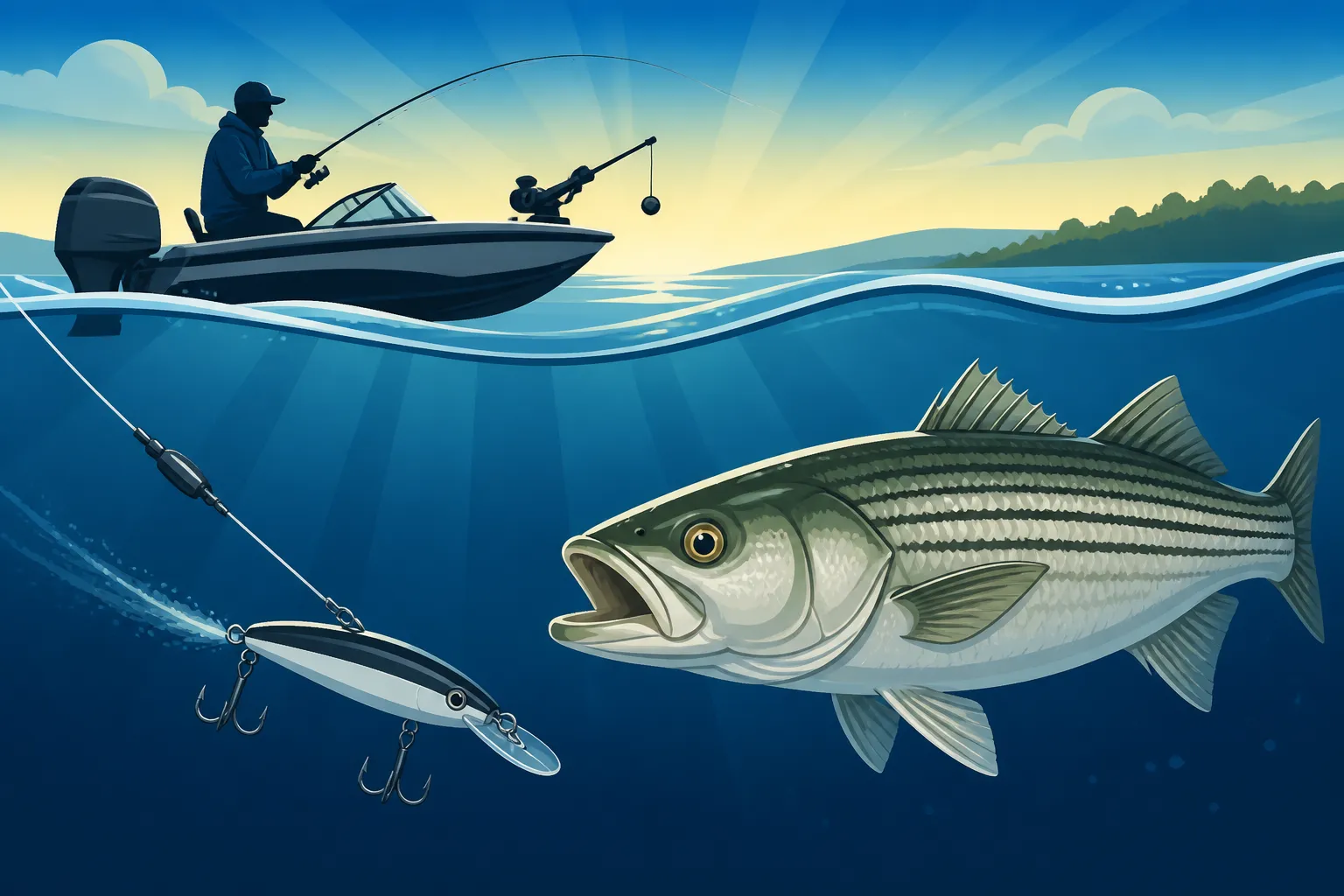
- Deep-Diving Crankbaits: These are workhorses for deep trolling. Look for models with long bills that are designed to dive 15, 20, even 30 feet or more. Colors that imitate shad (silver, white, blue/silver) are usually excellent choices, but don't shy away from bright colors like chartreuse or fire tiger in stained water or on overcast days. Lipless crankbaits, spoons, and large swimbaits can also be very effective, especially when paired with a downrigger or lead core line to get them to the desired depth.
- Live Bait: There's often no substitute for the real thing. Gizzard shad and threadfin shad are prime forage for Oklahoma stripers. When trolling live bait, you'll want to rig them to swim naturally. A popular method is to use a Carolina rig with a heavy sinker to get the bait down, or to simply attach them to a downrigger clip. Live bait usually requires slower trolling speeds, but the natural action can be irresistible to finicky stripers.
- Umbrella Rigs and Alabama Rigs: These multi-lure setups are fantastic for imitating a school of baitfish. They consist of multiple wire arms with swivels, allowing you to attach several swimbaits or smaller crankbaits. When pulled through the water, they create the illusion of a large school, often triggering aggressive strikes from schooling stripers. However, be mindful of your state's regulations on the number of hooks allowed per line, as these rigs can quickly exceed limits if not configured properly. Understanding striped bass fishing techniques for Oklahoma's Lake Texoma often involves these exact types of setups.
Downriggers, Planer Boards, and Lead Core Line
To get your lures and baits down to those deep-water zones where stripers are holding, you'll need some specialized tools for depth control.
- Downriggers: These are the ultimate in precision depth control. A downrigger uses a heavy lead ball (the cannonball) attached to a cable, which is lowered to a precise depth. Your fishing line is then clipped into a release mechanism on the downrigger cable, allowing your lure to run at the exact depth of the cannonball. When a fish strikes, the line releases from the clip, and you fight the fish directly on your rod. This method is incredibly effective for targeting suspended stripers at a specific depth, especially when you've identified that sweet spot on your fish finder.
- Planer Boards: While less commonly associated with deep-water trolling, planer boards are excellent for spreading out your lines horizontally, allowing you to cover a wider swath of water. They pull your lures out to the side of the boat, away from the prop wash. For deep water, you might use smaller in-line boards with lures that dive naturally, or combine them with lead core line. Their primary advantage is covering water, not necessarily reaching extreme depths with standard lures.
- Lead Core Line: This specialized fishing line has a lead core wrapped in a braided sheath. It's designed to sink, with each "color" (segment of about 10 yards) representing an approximate depth gained at a given speed. For example, at a certain speed, one color might get you about 5 feet deep. It requires a bit of math and experimentation to figure out precise depths, but it's a very effective way to get lures deep without the bulk of a downrigger. Many anglers use lead core to get lighter lures or live baits down into the striper zone. Learning how deep to troll for striped bass on Lake Texoma effectively means understanding these tools.
Mastering the Art of Deep Water Trolling
Trolling isn't just about driving in a straight line; it's a dynamic dance between boat, bait, and fish. It requires constant observation, adjustment, and a keen understanding of fish behavior.
Finding the Right Trolling Speed and Direction
This is where many anglers struggle, and it's often the difference between a slow day and a banner day. The "right" speed isn't fixed; it varies based on the lure you're using, the baitfish stripers are keying on, and the mood of the fish.
- Vary Your Speed: Start with a baseline, perhaps 2.5 to 3.5 mph for artificial lures. Then, experiment. Speed up, slow down, even stop for a moment. Often, a slight change in speed can trigger a reluctant strike. When you're using live bait, you'll typically want a slower speed, often around 0.8 to 1.5 mph, just fast enough to give the bait a natural swimming action.
- The Power of S-Turns: Driving in a perfectly straight line might seem efficient, but it often misses opportunities. Making gradual S-turns or sweeping arcs causes your lures on the inside of the turn to slow down and sink slightly, while those on the outside speed up and rise. This change in speed and depth can often be the irresistible trigger for a lurking striper. Imagine a baitfish suddenly darting or struggling – that's what your lure is mimicking.
- Wind and Current: Always consider the elements. Trolling with or against the wind and current will affect your boat speed over ground and your lure's action. Sometimes, trolling against the current can make your lures "swim" more enticingly, while other times, a drift with the current is what the fish want. Pay attention to your GPS speed over ground (SOG) versus your actual prop speed.
Setting Your Spread and Depth Precision
A well-organized trolling spread is crucial for efficiency and avoiding tangles, especially when you're running multiple lines.
- Stagger Your Depths: Don't run all your lures at the same depth. Use your downriggers, lead core, and different diving lures to cover a range of depths in the strike zone. If your fish finder shows stripers from 20 to 30 feet, try setting lures at 20, 25, and 30 feet. This helps you pinpoint the exact depth the fish are most active. You'll often find that the first strike comes at a particular depth, giving you a clue to adjust other lines accordingly.
- Line Counter Reels are Gold: This goes hand-in-hand with depth staggering. With line counter reels, you can accurately drop your lures back the same distance every time you reset a line or when you find a productive pattern. This precision is invaluable for replicating success.
- Monitoring and Adjusting: Your fish finder is your best friend here. Watch for bait balls moving up or down, or for individual fish changing their preferred depth. If the bite slows, don't be afraid to pull up your spread and make adjustments to depth, lure type, or color. It's a constant process of trial and error, but the data from your electronics will guide you. Remember to reference resources like the deep water striper fishing techniques guide to refine your approach.
Adapting to Conditions and Troubleshooting
Even the most seasoned angler encounters challenging days. Knowing how to adapt to changing conditions and troubleshoot common issues is part of the deep-water trolling game.
- Water Clarity: In clear water, stripers can be more skittish. Opt for more natural-looking baits and colors, and consider running your lures further behind the boat. In stained or muddy water, brighter, more vibrant colors (chartreuse, orange) and lures that produce more vibration can be highly effective in helping fish locate your offering.
- Wind and Waves: Windy conditions can make boat control difficult and create chop that affects lure action. You might need to adjust your trolling motor settings more frequently or use a drift sock to maintain a consistent speed. Strong waves can also cause your lures to "pump" more erratically; sometimes this is good, other times it requires a slower speed to keep the lure stable.
- When the Bite Stops: It happens to everyone. If the bite dies, first check your electronics. Have the baitfish moved? Are the stripers still there but just not active? Consider changing your lure selection, color, or depth. Speed adjustments, as mentioned before, are also key. Don't be afraid to move to an entirely new area if the fish seem to have vanished. Marking productive waypoints on your GPS is crucial, but equally important is noting where the fish aren't biting so you don't repeat mistakes.
Top Oklahoma Spots for Deep Water Striper Trolling
While Oklahoma has many fantastic fishing opportunities, a few lakes truly shine when it comes to deep-water striped bass trolling. These impoundments have the size, depth, and forage base to support thriving striper populations.
Lake Texoma: The Striped Bass Capital
Hands down, if you're talking about striped bass in Oklahoma, Lake Texoma fishing guide for Oklahoma anglers is going to be at the top of the list. Straddling the Oklahoma-Texas border, this massive reservoir is famous for its incredible striper fishery. The sheer size and depth of Texoma's main lake channels, especially near the confluence of the Washita and Red River arms, provide ample deep-water habitat for stripers.
Anglers regularly find large schools of stripers suspended in the 30-60 foot range, sometimes even deeper, depending on the season and water temperatures. Targeting these fish with downriggers, lead core, or heavy umbrella rigs is a common and highly effective strategy here. Look for those deep humps and ledges that rise up from the main channel, as these are natural ambush points for schooling fish. The lake's unique blend of fresh and saltwater species (due to its salinity) creates an incredibly rich ecosystem that supports these robust fish. If you're serious about trophy stripers and deep-water trolling, Texoma is where you want to be.
Other Notable Oklahoma Reservoirs
While Texoma is undoubtedly the king for striped bass, other Oklahoma lakes offer good opportunities for deep-water trolling, though often for slightly different species or with varying success rates.
- Grand Lake O' the Cherokees: Located in northeast Oklahoma, Grand Lake is known for its excellent fishing, including white bass and some hybrid striped bass. While not typically a deep-water pure striped bass destination like Texoma, deep-water trolling can still be effective here, particularly for hybrid stripers and white bass, especially in the main lake basin and deeper creek channels during summer.
- Keystone Lake: Near Tulsa, Keystone also has a healthy population of striped bass and hybrid stripers. The lake has deep areas, particularly near the dam and in the old Arkansas River channel. Trolling deep-diving crankbaits or umbrella rigs can produce good results here, especially when the fish are concentrated around schools of shad in deeper sections.
- Lake Eufaula: As Oklahoma's largest lake, Eufaula certainly has the acreage and some deep areas that can hold stripers and hybrids. While it's more famous for its bass and crappie fishing, deep-water trolling for stripers can be successful, particularly in the lower lake areas near the dam, where deeper channels and structure exist.
Always check local reports and current conditions for these lakes, as striper populations and their behavior can vary. While these lakes may not offer the consistent deep-water pure striper action of Texoma, they provide excellent opportunities for anglers looking to hone their trolling skills closer to home.
To help visualize some of the differences in gear and methods, here's a quick comparison:
| Gear Component | Primary Use for Deep-Water Trolling | Benefits | Considerations |
|---|---|---|---|
| Heavy Trolling Rod | Handling heavy lures/rigs and strong fish | Durability, backbone for fighting, ability to absorb shock | Can be less sensitive, requires appropriate reel pairing |
| Line Counter Reel | Precisely measuring line out to hit specific depths | Repeatability, consistency, easier depth management with multiple lines | Can be heavier, may require more maintenance |
| Braided Main Line | Strength, sensitivity, reduced diameter for depth | No stretch for solid hooksets, strong, good abrasion resistance | Highly visible, requires fluorocarbon leader, can be tough on knots |
| Fluorocarbon Leader | Stealth and abrasion resistance near the lure | Nearly invisible underwater, protects main line from abrasion | Can be stiffer than mono, proper knot tying is essential for strength |
| Deep-Diving Crankbaits | Reaching target depths without extra gear | Wide variety of actions and colors, effective for covering water | Depth achieved depends on lure design, speed, and line diameter |
| Live Shad (Gizzard/Threadfin) | Natural presentation for finicky fish | Highly attractive to stripers, can trigger strikes when artificial lures fail | Requires bait acquisition/storage, typically slower trolling speeds |
| Umbrella/Alabama Rigs | Mimicking a school of baitfish | High visibility, covers a lot of water, can attract multiple fish at once | Can be cumbersome to cast/retrieve, check local hook limits, prone to tangles if not managed |
| Downriggers | Precise depth control for any lure/bait | Exact depth targeting, allows use of lighter tackle for the fight | Equipment investment, requires boat mounting, can be complex to set up initially |
| Lead Core Line | Achieving depth without downriggers, for subtle presentations | Simple depth adjustment by letting out more line, no extra hardware on the line | Depth estimation can be tricky, heavier line requires larger reel capacity, less direct fish fight |
Deep-water trolling for striped bass is a rewarding challenge that combines boat handling, electronics savvy, and a deep understanding of fish behavior. With the right gear, a commitment to learning, and a bit of patience, you'll be well on your way to experiencing the thrill of these incredible Oklahoma game fish.
Disclaimer
This article is for general informational purposes only and does not constitute professional advice. Laws, prices and regulations vary by location and change over time. Consult a qualified professional for guidance on your specific situation.