Difference Between Striped Bass and Largemouth Bass Techniques
It's a common scenario out on the water in Oklahoma: you're excited to reel in a big bass, but are you mentally prepared for a striped bass, or are you honed in on a largemouth? Many anglers, especially those new to our diverse Oklahoma waters, can find themselves a bit perplexed by the sheer difference in how these two powerful fish behave and, more importantly, how you need to approach catching them. You can't just use a "one size fits all" technique and expect success with both. This guide is here to untangle that confusion, breaking down the distinct techniques required for targeting striped bass versus largemouth bass across our great state.
Understanding Your Target: Striped Bass vs. Largemouth Bass
Before you even think about casting a line, it's crucial to understand the fundamental differences between striped bass and largemouth bass. They might both be called "bass," but their behaviors, preferred habitats, and even their physical make-up mean you need to treat them like completely separate species when it comes to fishing techniques. Knowing your quarry is half the battle, and in Oklahoma, we're lucky to have robust populations of both, offering diverse angling experiences.
The Distinct Personalities of Stripers
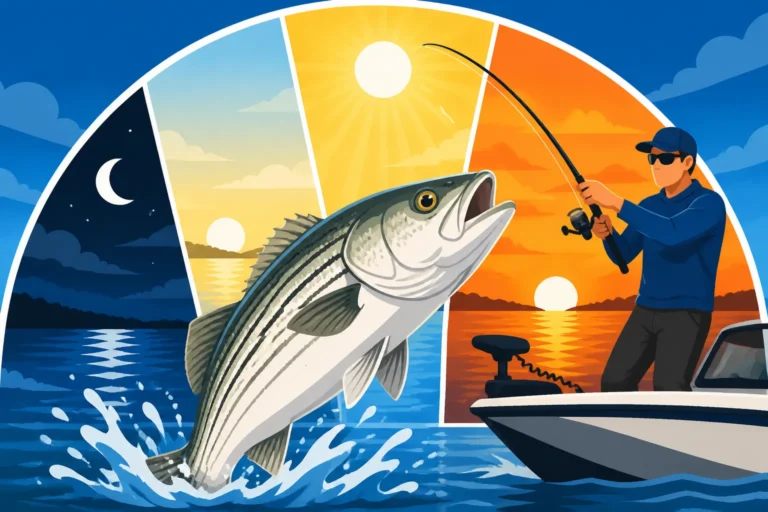
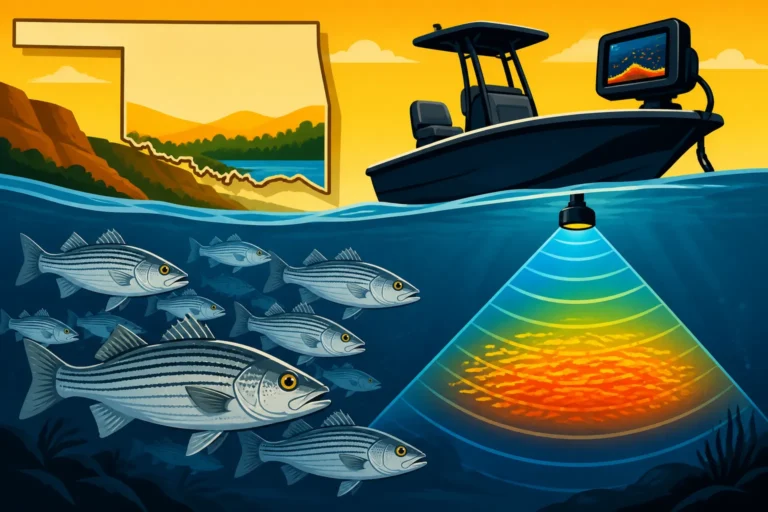
Oklahoma's striped bass, especially the inland hybrids and true stripers found in monster lakes like Texoma, are truly creatures of open water. They are pelagic, meaning they live in the open water column, often far from visible structure. They are notorious for schooling up, sometimes in massive groups, chasing baitfish like shad across vast expanses. When they're on a feeding frenzy, it can be an exhilarating experience, with birds diving and water erupting as they push bait to the surface.
Their predatory nature is aggressive and often involves sustained, powerful runs. Unlike a largemouth that might make a few strong initial bursts, a striper will fight hard for an extended period, pulling line and testing your gear to its limits. This behavior dictates a completely different approach to tackle, bait, and location. You're looking for nomadic, fast-moving schools rather than stationary targets. Think of them as the wolves of the open water, always on the hunt and moving in packs. Understanding these traits is the first step in successful Striped Bass Fishing Techniques for Oklahoma's Lake Texoma.
The Largemouth's Ambush Game
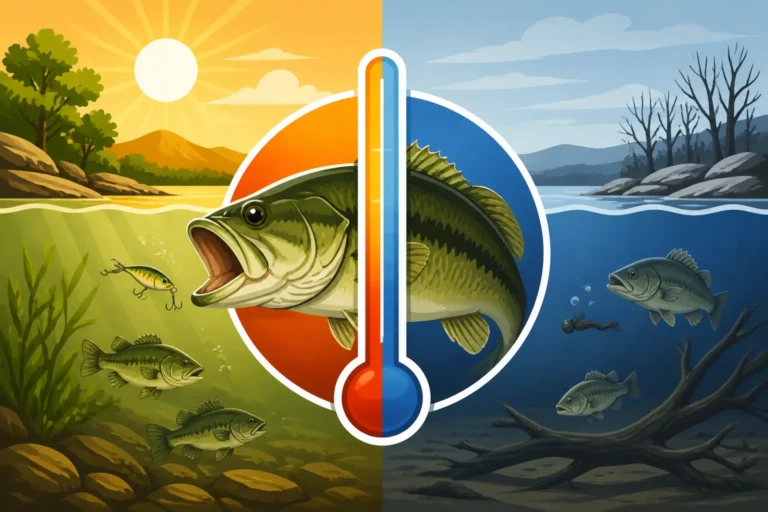
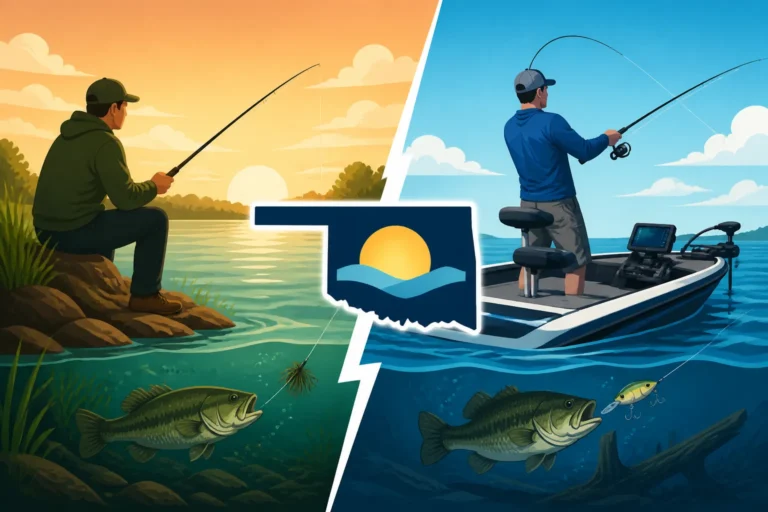
On the other hand, largemouth bass are the masters of ambush, preferring to lurk in or near some sort of cover or structure. They are territorial and will often hold tight to a specific piece of submerged timber, a weed line, a dock, or even a rock pile, waiting for an unsuspecting meal to swim by. They thrive in shallower, more vegetated areas, or around defined contours of a lake or pond. When a largemouth strikes, it's often an explosive, short-distance burst, trying to drag its prey back into the safety of its cover.
This "sit and wait" strategy means anglers targeting largemouth need to focus on precision casting, getting their lure right into the strike zone. You're not covering miles of open water; you're dissecting specific areas, looking for those prime ambush points. They might not make the same long, sustained runs as a striper, but their initial power and desire to bury themselves in cover can snap lines and pull hooks if you're not ready. If you're looking for more general guidance, check out our Largemouth Bass Fishing in Oklahoma: The Complete Guide.
Gear Up: Rods, Reels, and Line for Each Species
The tackle you choose is paramount, and trying to use a largemouth setup for stripers, or vice versa, is a recipe for frustration, lost fish, and potentially broken gear. Each species demands specific characteristics from your rod, reel, and line to handle their unique fighting styles and environments.
Striper Tackle: Power and Endurance
When it comes to striped bass, you need gear that can withstand a sustained beating. Think power, strength, and capacity. A medium-heavy to heavy action rod, usually 7 to 8 feet long, is a good starting point. This length provides leverage for long casts into open water and the backbone to turn a hard-fighting striper away from potential snags or towards the boat. You'll want a rod with a fast or extra-fast tip for sensitivity to detect subtle bites, but enough power in the blank to really lean into a fish.
For reels, a sturdy spinning reel in the 4000 to 6000 size range, or a baitcasting reel designed for heavy line and strong drag, is essential. Line capacity is key, as stripers can make incredibly long runs. A smooth, reliable drag system is non-negotiable, as it will be working overtime. As for line, braided line in the 30-50 pound test range is a popular choice for its strength, sensitivity, and thin diameter, allowing for more line on the spool. Many anglers will add a fluorocarbon leader (20-40 lb test) for abrasion resistance and invisibility. You can find a great selection of heavy-duty spinning reels and strong braided lines on Amazon, ensuring you're ready for those powerful striper battles. Remember, these fish aren't afraid to pull hard, so don't skimp on quality for your Best Rods and Reels for Oklahoma Fishing.
Largemouth Tackle: Finesse and Precision
Largemouth bass fishing often calls for a more nuanced approach with tackle that prioritizes versatility, sensitivity, and accuracy. Medium-heavy to heavy action rods, typically 6'6" to 7'6" long, are standard. The shorter end of this spectrum is great for casting accuracy into tight spots, while longer rods excel at pitching and flipping into heavy cover or making longer casts with specific lures. A fast-action tip is still favored for quick hook sets and better feel.
Both spinning and baitcasting setups have their place in largemouth fishing. Spinning reels (2500-3500 size) are excellent for lighter lines and finesse techniques, allowing for effortless casting of small jigs or weightless worms. Baitcasting reels are the workhorses for heavier lures, heavier lines, and targeting dense cover, offering superior power and control during the retrieve and fight. For line, a range of options is common: fluorocarbon (10-20 lb test) for its invisibility and sensitivity, monofilament (10-17 lb test) for its stretch and shock absorption, or even braided line (30-65 lb test) when fishing in really heavy cover. The choice depends heavily on the specific technique and cover you're targeting.
The Bait and Lure Game: What Works Best and Why
Just as their habitats and fighting styles differ, so do the most effective baits and lures for stripers and largemouth. Matching your presentation to their feeding habits is critical for consistent success.
Live Bait and Lures for Striped Bass
Striped bass are primarily piscivorous, meaning they eat other fish, and they often target schooling baitfish. This makes live bait incredibly effective. Shad (gizzard or threadfin) are king, whether fished free-lined, under a bobber, or on a downrigger. Herring and even smaller sunfish can also be successful. When fishing live bait, the key is to present it naturally where stripers are actively feeding, often identified by schooling activity or marks on your fish finder.
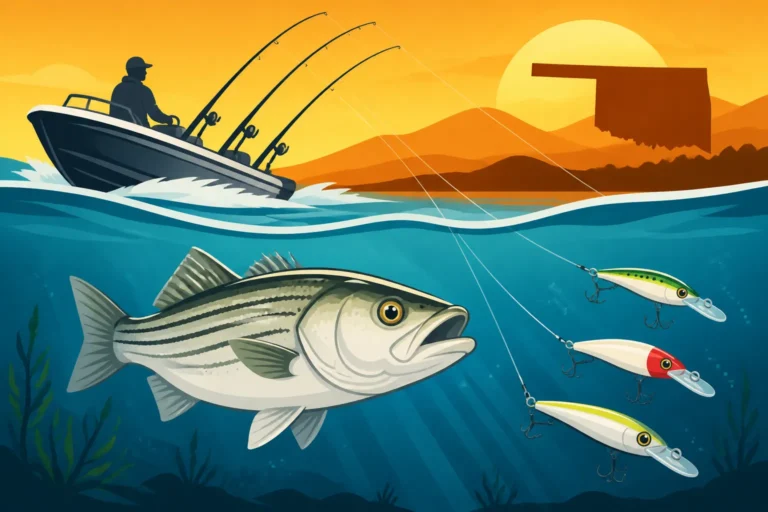
For artificial lures, you want presentations that mimic baitfish or provoke an aggressive reaction. Large swimbaits, both soft and hard-bodied, are excellent for imitating larger baitfish. Topwater lures, especially poppers and walk-the-dog style baits, can create explosive strikes during surface feeding frenzies. Metal spoons, jigging spoons, and big bucktail jigs are fantastic for targeting deep-water stripers, especially when they're congregated over structure or bait balls. Trolling with large crankbaits or umbrella rigs is also a highly productive method for covering vast areas and finding actively feeding schools. Learn more about Best Bait for Largemouth Bass in Oklahoma to see the contrast.
Largemouth Lures: Adapting to Cover and Ambush
Largemouth bass are opportunistic feeders, eating not just fish, but also crawfish, frogs, insects, and even small mammals or birds if the opportunity arises. This broad diet means a huge array of lures can be effective, but the key is typically matching the lure to the cover and the bass's mood. Crankbaits are fantastic for covering water and bumping off submerged structure, mimicking fleeing baitfish or crawfish. Spinnerbaits and chatterbaits are versatile choices, excellent for fishing through sparse cover or covering flats.
Soft plastic lures are perhaps the most diverse category for largemouth. Texas-rigged worms and creatures are weedless and perfect for punching into thick vegetation or flipping under docks. Carolina rigs are great for covering deeper structure, dragging a bait along the bottom. Jigs, especially football jigs and pitching jigs, are phenomenal for imitating crawfish around rocks and wood. And of course, topwater lures like frogs, poppers, and prop baits create exciting surface strikes when bass are looking up. The variety of lures for largemouth fishing is staggering, allowing anglers to adapt to almost any condition or habitat.
Where and How to Find Them: Locating and Presenting
Beyond gear and bait, the art of finding and presenting your offering correctly is where the true difference in techniques shines. Stripers demand a mobile, technology-driven approach, while largemouth often require patience and precision in specific locales.
Striped Bass: Open Water and Schooling Behavior
Finding striped bass often means covering a lot of water. In vast reservoirs like Lake Texoma or Keystone Lake, these fish are constantly on the move, following schools of shad. Your boat's electronics, particularly a good fish finder with sonar and mapping capabilities, become your best friend. Look for bait balls, arches (individual fish), or schools of fish in the open water or suspended over deep channels and humps. If you see birds diving into the water, it's a strong indicator of stripers pushing bait to the surface, and you need to get there fast! Consider how a Fish Finder Features That Matter Most on Oklahoma Reservoirs can dramatically improve your success.
Once you've located them, presentation can involve several techniques. Trolling with umbrella rigs, large crankbaits, or Sassy Shads is a classic method for actively searching for fish in deeper water. Jigging spoons or heavy bucktail jigs vertically is effective when you find a dense school. When they're breaking the surface, casting topwater lures or fast-retrieving swimbaits into the frenzy is exhilarating. Drifting live bait through known striper haunts or over prominent points and humps is also a highly effective, albeit slower, method. The key is to stay mobile and adapt to where the fish are moving. You'll find that How to Troll for Striped Bass in Deep Water is a completely different ballgame than fishing for largemouth.
Largemouth Bass: Structure and Cover
Finding largemouth bass is all about identifying prime habitat: docks, submerged brush piles, standing timber, rock beds, lily pads, grass beds, and creek channels. These fish relate heavily to structure and cover, using it for ambush points, shade, and protection. Unlike stripers, you're not usually looking for vast open-water schools; you're dissecting smaller, more defined areas. Even in a sprawling lake, a largemouth angler often focuses on specific features within a cove or along a shoreline.
Presentation for largemouth is usually about accuracy and stealth. Casting accurately to the edges or into the heart of cover is crucial. Flipping and pitching techniques allow you to drop a lure silently into dense brush or under docks with minimal disturbance. Texas rigging soft plastics makes your bait weedless for navigating heavy cover. You might work a crankbait along a rock wall, a spinnerbait through reeds, or a frog over lily pads. The retrieve speed and action you impart to the lure are often more critical than covering vast distances. It’s a game of patience and precision, often working one piece of cover thoroughly before moving on to the next. For more specific tactics, check out How to Fish a Texas Rig for Bass.
In summary, while both are thrilling to catch, the journey to hook a striped bass versus a largemouth bass in Oklahoma is paved with vastly different approaches. Embrace the challenge of learning both, and you'll unlock double the fishing fun!
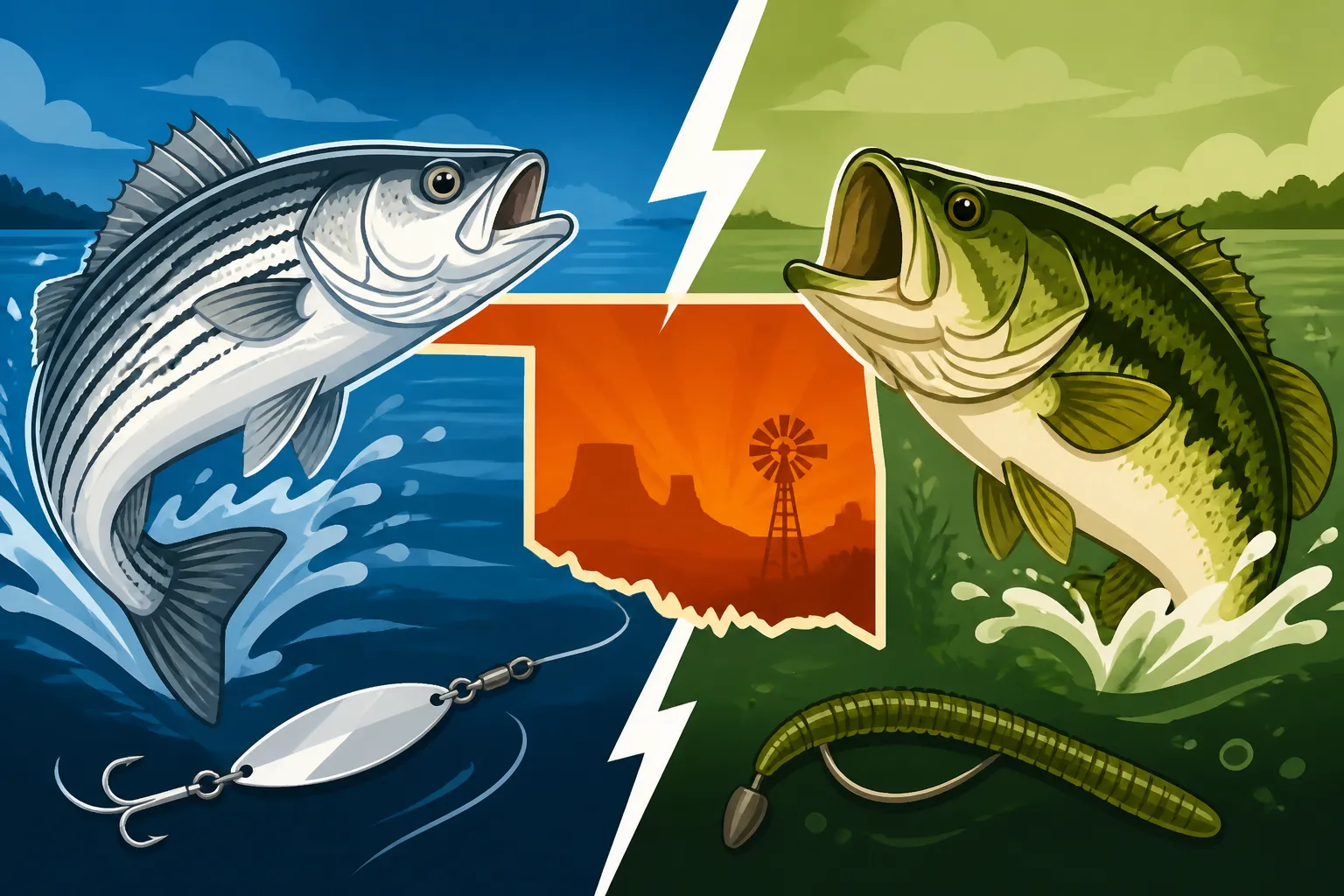
Here's a quick comparison to help solidify the differences:
| Feature | Striped Bass | Largemouth Bass |
|---|---|---|
| Habitat | Open water, deep channels, humps | Structure, cover (docks, timber, weeds) |
| Behavior | Schooling, nomadic, aggressive chases | Ambush predator, territorial, cover-oriented |
| Fight Style | Long, sustained, powerful runs | Explosive, short bursts, dives for cover |
| Rod Type | Medium-heavy to Heavy, 7-8 ft (longer) | Medium-heavy to Heavy, 6.5-7.5 ft (versatile) |
| Reel Size | 4000-6000 spinning, heavy baitcaster | 2500-3500 spinning, standard baitcaster |
| Line Strength | 30-50 lb braid, 20-40 lb fluoro leader | 10-20 lb fluoro, 10-17 lb mono, 30-65 lb braid |
| Primary Baits | Live shad, herring, large swimbaits | Worms, jigs, crankbaits, spinnerbaits |
| Lure Action | Mimic baitfish, provoke reaction | Imitate crawfish, frogs, fleeing baitfish |
| Locating Fish | Sonar, bird activity, trolling, covering water | Targeting visible & submerged structure/cover |
| Presentation | Trolling, jigging, long casts, drifting | Accurate casting, flipping, pitching, slow retrieves |
Disclaimer
This article is for general informational purposes only and does not constitute professional advice. Laws, prices and regulations vary by location and change over time. Consult a qualified professional for guidance on your specific situation.