Bank Fishing Techniques
It's easy to feel like you're missing out on the best fishing spots in Oklahoma if you don't own a fancy boat with all the bells and whistles. Many anglers get discouraged thinking they can't land big fish or enjoy a productive day without being out on the open water. But I'm here to tell you that bank fishing is not only incredibly accessible and often peaceful, but it can also be incredibly rewarding if you know the right techniques. This guide is dedicated to helping you master the art of bank fishing, transforming those shoreline frustrations into triumphant catches right here in Oklahoma.
The Unique Challenges and Joys of Bank Fishing in Oklahoma
Bank fishing offers a different kind of experience than boat fishing, with its own set of hurdles and distinct pleasures. It's about connecting with the water on a more intimate level, often with simpler gear and a more relaxed pace. Understanding these aspects is the first step to becoming a successful bank angler.
Overcoming Accessibility Hurdles
One of the biggest frustrations for bank anglers is the perceived limitation of reach. You're tethered to the shore, unable to chase schooling fish in the middle of a massive reservoir or easily access that honey hole tucked away on a distant island. This can lead to feelings of being at a disadvantage, especially when you see boats zipping past. However, this challenge forces you to be more strategic and observant. Instead of casting to every square foot of water, you learn to identify prime areas accessible from where you stand.
Scouting is paramount for bank anglers. Before you even make your first cast, you need to assess the shoreline, look for public access points, and understand what lies beneath the surface within casting distance. This often means exploring different stretches of a lake or river, hiking a bit, or even using satellite maps to find promising spots. Whether it's a popular fishing pier at Lake Hefner or a secluded creek bank along the Blue River, knowing your access options is key. Don't be afraid to put in a little legwork; those less-traveled spots often yield the best results because they see less pressure.
Mastering the Art of Observation
Without the luxury of a fish finder on a boat, the bank angler truly hones their observational skills. You become a detective of the water, looking for subtle clues that reveal where fish might be hiding. This means actively scanning the surface for baitfish activity, diving birds, or ripples that indicate feeding fish. It involves watching the wind's direction to understand how it might be pushing bait and subsequently, predatory fish, towards your shoreline.
Reading the water from the bank also means identifying visible structure like fallen trees, rock piles, weed lines, or changes in bottom composition indicated by water color. Even seemingly barren banks often have subtle depth changes or cover that hold fish. Learning to interpret these signs, like understanding how a slight current break could be an ambush point for bass, is a skill that develops over time and becomes incredibly rewarding. The more you observe, the better you'll become at predicting where the fish are without needing any electronics.
Simplicity and Serenity
While bank fishing does present challenges, it also offers a unique sense of peace and simplicity that's hard to replicate in a boat. There's no boat ramp hassle, no expensive fuel, and far less gear to load and unload. You can simply grab a rod, a small tackle bag, and a cooler, and be on your way. This low-barrier-to-entry makes it perfect for a quick evening trip after work or a spontaneous weekend outing with the family.
Moreover, bank fishing often provides a more immersive natural experience. You're right there on solid ground, listening to the birds, feeling the breeze, and truly becoming part of the environment. It's an excellent way to introduce beginners and children to fishing, as it minimizes complexity and maximizes the joy of a simple cast and catch. Many of my fondest fishing memories growing up were made sitting on a lake bank with a bobber, feeling the calm of the water and the anticipation of a bite.
Essential Gear for the Oklahoma Bank Angler
You don't need to break the bank to be a successful bank angler. The key is to choose versatile, durable, and easily transportable gear that can handle a variety of situations and species you'll encounter in Oklahoma's diverse waters.
Rods, Reels, and Line Choices
When it comes to rods, versatility is your best friend for bank fishing. I generally recommend a medium-light to medium power spinning rod, anywhere from 7 to 9 feet in length. The longer rod provides better casting distance, which is crucial for reaching deeper water or distant structures from shore. A medium-fast to fast action tip allows for good sensitivity to feel bites, while still having enough backbone to handle a decent-sized bass or catfish. You can find excellent, affordable options for these rods on platforms like Amazon, making it easy to get started without a huge investment.
For reels, a reliable spinning reel in the 2500-4000 series range is ideal. Spinning reels are user-friendly, excellent for casting lighter baits, and generally less prone to tangles than baitcasters, which is a big plus when you're casting repeatedly from the bank. Pair this with a good quality monofilament or fluorocarbon line in the 8-12 lb test range, or consider braided line (15-30 lb test) with a fluorocarbon leader for increased sensitivity and strength. Braided line really shines when you're trying to cast lighter lures a long way or if you're fishing around abrasive structures like rocks or submerged timber, where its abrasion resistance is a huge advantage.
Tackle Box Essentials: Baits, Lures, and Terminal Tackle
Your bank fishing tackle box should be compact but comprehensive. Think versatility and multi-species appeal. For live bait, always have nightcrawlers and some hooks appropriate for them. If you can get your hands on minnows or shad, they are deadly for crappie, white bass, and sometimes even bigger catfish. For artificials, a selection of soft plastics (worms, creature baits, swimbaits), spinnerbaits, small crankbaits, and jigs will cover most situations. Bright colors like chartreuse or white are great for stained water, while natural colors like green pumpkin or watermelon seed work wonders in clearer conditions.
Don't forget your terminal tackle: a variety of hooks (EWG hooks for soft plastics, baitholder hooks for live bait, treble hooks for lures), split shot, slip sinkers, and bobbers are crucial. A pair of pliers for hook removal and line cutters are also non-negotiable. I like to keep my bank fishing tackle in a small, organized bag that's easy to carry, rather than a bulky box. It minimizes clutter and keeps me mobile, allowing me to hike to different spots without feeling weighed down. You can pick up a decent selection of these essentials from local tackle shops or even in bulk from Amazon if you're stocking up.
Comfort and Safety on Shore
Bank fishing isn't just about catching fish; it's about enjoying the experience. Being comfortable and safe on the bank enhances your trip tenfold. A lightweight, foldable chair can make a world of difference during long waits for bites, especially on rocky or uneven terrain. A cooler with plenty of water and snacks is essential, particularly during Oklahoma's hot summers. Sunscreen, a wide-brimmed hat, and sunglasses are vital for protection from the intense sun.
Beyond comfort, safety is paramount. Always carry a small first-aid kit for minor cuts, scrapes, or insect bites. Bug spray is a must, especially if you're fishing near wooded areas or during dawn/dusk. Appropriate footwear, like sturdy hiking boots or waterproof shoes, will protect your feet and provide good traction on slippery banks. If you plan on fishing after dark, a reliable headlamp or flashlight is indispensable. Remember, even though you're on land, knowing basic safety protocols, like avoiding slippery banks near steep drops, will prevent accidents.
Strategic Location Scouting for Oklahoma Bank Anglers
One of the biggest advantages boat anglers have is mobility, but a savvy bank angler knows how to compensate by becoming an expert at scouting and identifying productive shoreline areas. It’s all about putting yourself in the fish’s shoes and thinking about where they’d feel safe, find food, and ambush prey.
Identifying Productive Bank Structure
Fish are creatures of habit, and those habits revolve around structure and cover. From the bank, you need to visually identify or infer where these holding spots are within casting range. Points that jut out into the water are classic fish magnets, as they act like underwater highways and current breaks. Coves, especially those with some sort of cover like lily pads or submerged brush, offer protection and a food source for crappie and smaller bass. You can find excellent fishing in coves on a lake like Lake Eufaula, often referred to as Oklahoma's Gentle Giant for Bass and Crappie.
Look for areas with visible submerged timber or fallen trees; these provide ambush points and shade, making them perfect for bass and catfish. Rocky shorelines and riprap (rocks lining the bank, often near bridges or dams) also attract a variety of species, from smallmouth bass to channel catfish, due to the food and cover they offer. Ledges or sudden drop-offs near the bank are prime real estate, as fish can quickly move between shallow feeding areas and deeper, cooler water. A little time spent walking the bank and observing, perhaps even using a pair of polarized sunglasses, can reveal a wealth of information about these hidden gems.
The Role of Current and Depth
Current is a game-changer, especially when bank fishing rivers or areas near dam discharges. Fish will position themselves in current breaks to conserve energy while waiting for food to be swept past them. Look for eddies, submerged rocks that break the flow, or the calmer water behind bridge pilings. The Illinois River, for example, has numerous spots where understanding current can lead to great catches of bass and panfish. Even in larger reservoirs like Keystone Lake, current created by wind or dam operations can concentrate baitfish and predators in predictable areas along the bank.
Depth also plays a significant role. While many bank anglers are limited to shallower water, smart scouting can reveal spots where deeper water is surprisingly accessible from shore. This might be a sharp drop-off directly off a point, a section of river where the channel runs close to the bank, or areas around boat ramps or jetties that extend into deeper water. Targeting these deeper spots can be particularly effective during the warmer summer months or colder winter periods, when fish often retreat to more stable temperatures. Learning to cast further and use heavier sinkers can help you reach these productive depths.
Utilizing Public Access Points and State Parks
Oklahoma is rich with public land and numerous state parks that offer fantastic bank fishing opportunities. These areas are often well-maintained, have designated fishing spots, and sometimes even offer amenities like fishing piers or cleaning stations. For instance, Lake Murray State Park near Ardmore provides abundant public access for bank anglers looking for bass, crappie, or catfish. Similarly, many of the smaller municipal lakes and ponds across the state are managed specifically for public fishing, often with easy bank access.
Before heading out, it's always a good idea to check the Oklahoma Department of Wildlife Conservation (ODWC) website for specific regulations pertaining to these public areas. Some parks might have special length or bag limits, or designated youth-only fishing areas. Knowing these rules beforehand ensures a legal and enjoyable trip. These public access points are a godsend for bank anglers, providing safe and convenient places to cast a line without trespassing or needing a boat. For details on statewide rules, you might want to review the article on Fishing Regulations You Need to Know in Oklahoma.
Species-Specific Bank Fishing Techniques in Oklahoma
While a general approach can catch fish, tailoring your techniques to specific species will significantly increase your success rate from the bank. Oklahoma's waters are home to a wide array of popular game fish, each with its own preferred habitat and feeding habits.
Bank Fishing for Bass (Largemouth, Smallmouth, Spotted)
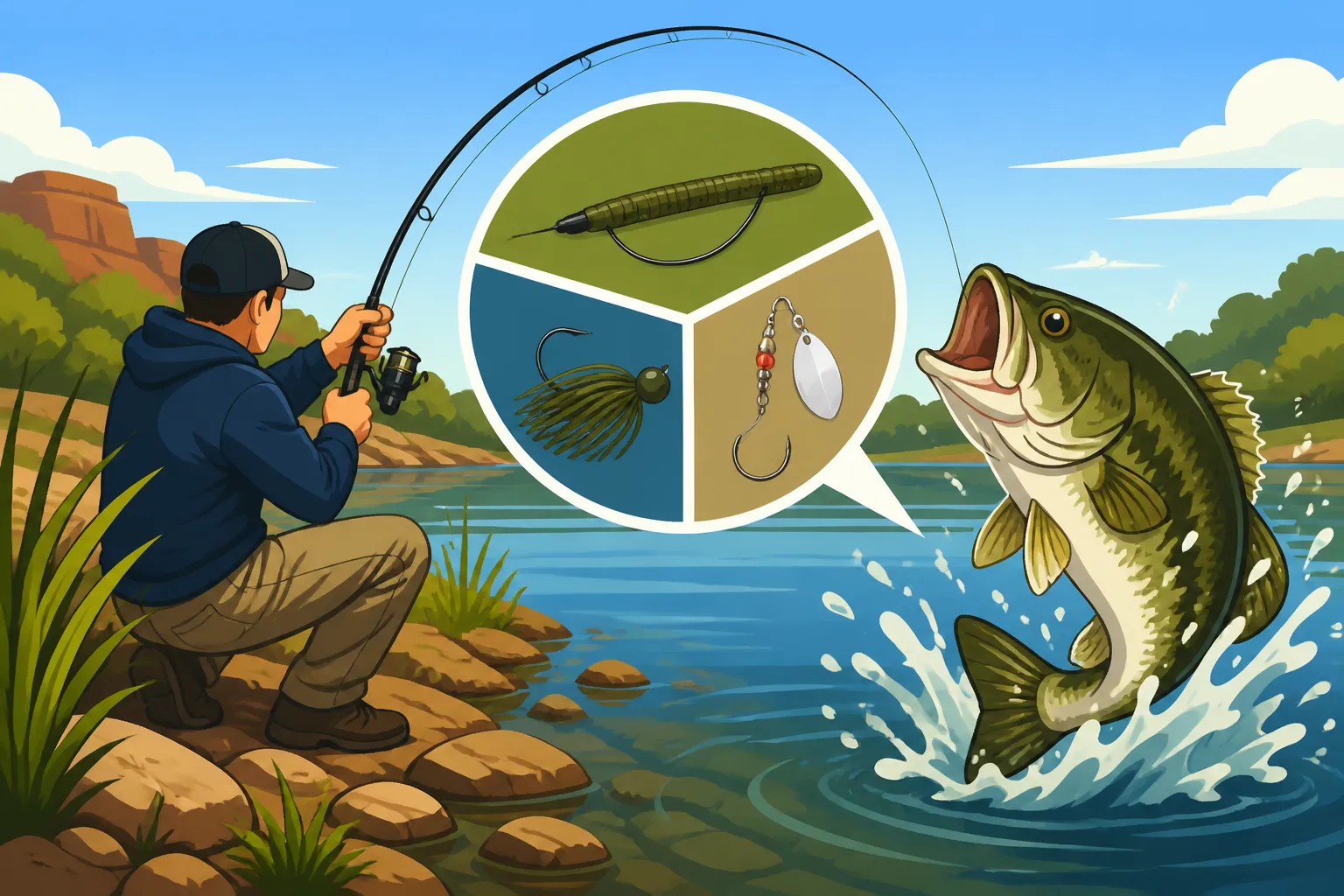
Oklahoma's bass species – largemouth, smallmouth, and spotted bass – are thrilling to catch from the bank. They are often found lurking near cover or structure, ready to ambush unsuspecting prey. From the bank, your goal is to present your lure or bait in these high-percentage zones. For largemouth bass, focus on casting soft plastics like Texas-rigged worms or creature baits into and around fallen trees, brush piles, and weed lines. A wacky-rigged Senko-style worm cast along shaded banks or near docks can also be incredibly effective. Small crankbaits or spinnerbaits retrieved parallel to the shoreline can entice aggressive strikes.
Smallmouth and spotted bass, often found in clearer, rockier waters or rivers, might prefer different presentations. Jigs with a craw trailer or small finesse crankbaits can work wonders when bounced off rocky bottoms or retrieved through current seams. Target points, rock piles, and areas where the current breaks. Remember, these fish are often ambush predators, so accurate casting right into their strike zone is crucial. If you're passionate about bass, definitely check out our guide on Largemouth Bass Fishing in Oklahoma: The Complete Guide for even more in-depth strategies.
Pursuing Crappie and Panfish from Shore
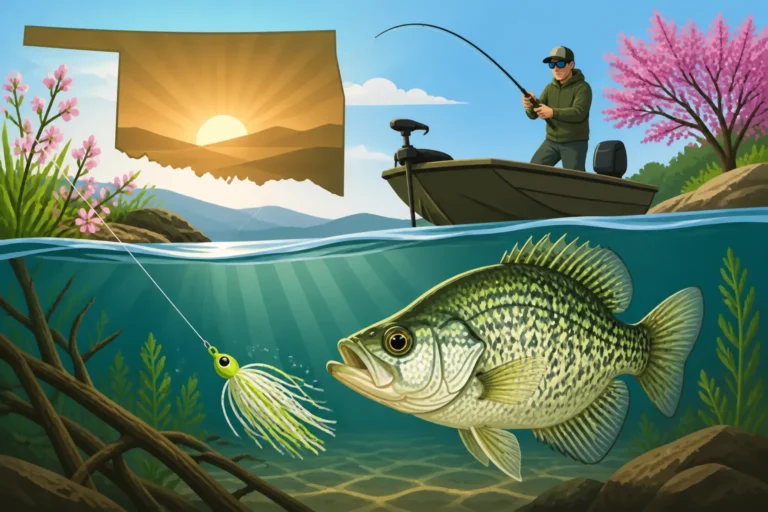
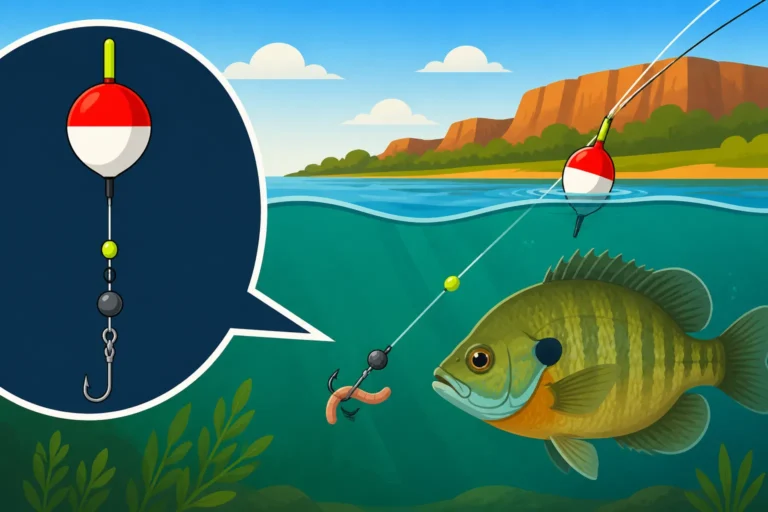
Crappie, bluegill, and other panfish are fantastic targets for bank anglers, especially for those looking for consistent action or fishing with kids. They tend to congregate in schools, often near submerged cover or shady areas. For crappie, a classic slip-bobber rig with a small minnow or a 1/16 to 1/8 ounce crappie jig is incredibly effective. Cast it near bridge pilings, submerged brush, dock pilings, or even around large cypress trees if available. Slowly twitching the jig or allowing the minnow to swim naturally under the bobber often triggers a bite.
Panfish like bluegill and sunfish are less picky. A small hook (size 8-12) with a piece of nightcrawler, a mealworm, or even a small beetle spin under a bobber will almost guarantee action. These fish are often found in shallower, calmer waters, especially near lily pads, reeds, or over gravel beds. Bank fishing for crappie can be particularly rewarding in the fall and spring when they move closer to shore for feeding or spawning. For more specific tactics, delve into Crappie Fishing Techniques and Seasonal Patterns in Oklahoma.
Catfishing from the Bank
Catfish are arguably one of the most popular species for Oklahoma bank anglers, and for good reason: they're abundant, fight hard, and are delicious to eat. Channel cats, blue cats, and flatheads can all be targeted successfully from shore. Bottom fishing is the most common and effective technique. A simple Carolina rig or a three-way swivel rig with a heavy sinker will keep your bait on the bottom where catfish feed.
For bait, channel catfish are notorious for loving stinky baits – punch bait, stink baits, or cut bait (shad, perch, or hot dogs) work wonders. Blue catfish often prefer fresh cut bait, especially shad or other oily fish, particularly when targeting larger specimens in deeper channels. Flatheads, the pickiest of the bunch, almost exclusively prefer live bait like a lively sunfish or goldfish. Focus your efforts on deeper holes, channel swings that come close to the bank, or areas below dams. Setting out multiple rods with different baits and letting them soak can increase your chances. Don't forget to check out Catfish Fishing Techniques for Oklahoma Anglers for more detailed advice.
Here's a quick comparison of essential gear and techniques for different species from the bank:
| Species Target | Recommended Rod & Reel | Primary Baits/Lures | Key Bank Structure | Optimal Technique |
|---|---|---|---|---|
| Largemouth Bass | Medium power, 7-8 ft spinning rod, 2500-3000 reel | Texas-rigged worms, crankbaits, spinnerbaits | Fallen trees, weed lines, docks, points | Cast & retrieve, pitching/flipping |
| Crappie | Medium-light, 6-7 ft spinning rod, 1000-2000 reel | Small jigs, live minnows | Brush piles, bridge pilings, shaded areas | Bobber fishing, slow jigging |
| Channel Catfish | Medium-heavy, 7-9 ft spinning/baitcasting rod, 4000-5000 reel | Stink bait, cut bait, nightcrawlers | Deeper holes, current breaks, mud flats | Bottom fishing (Carolina rig) |
| Blue Catfish | Heavy, 8-10 ft stout rod, 6000+ spinning/baitcasting reel | Fresh cut bait (shad), live perch | River channels, dam discharges, deep points | Heavy bottom fishing |
| Panfish (Bluegill) | Ultra-light, 5-6 ft spinning rod, 500-1000 reel | Worms, crickets, mealworms | Lily pads, shallow cover, shaded banks | Bobber fishing, small jigs |
Advanced Bank Fishing Strategies and Tips
Moving beyond the basics, there are several advanced strategies that can elevate your bank fishing game in Oklahoma, turning average days into truly memorable ones. It’s about being observant, adapting, and sometimes, thinking outside the box.
Understanding Seasonal Patterns
Fish behavior changes dramatically throughout the year, driven by water temperature and their biological clocks. A truly effective bank angler understands and adapts to these seasonal patterns. In spring, many species like bass and crappie move into shallower water for spawning, making them highly accessible from the bank. Target coves, flats, and any visible cover in shallow water. You can learn more about this by reading our guide on Spring Bass Spawn Timing in Oklahoma.
During the hot Oklahoma summer, fish often retreat to deeper, cooler water during the day. This is when bank anglers need to focus on accessing deeper drop-offs, fishing near dam structures, or considering night fishing. As fall arrives, fish often become more active, feeding heavily in preparation for winter, making them easier to catch in transitional areas from shallow to deep. Winter can be tough, but warmer afternoons or targeting deep holes can still yield fish. Familiarizing yourself with a comprehensive guide like Oklahoma Fishing Seasons: A Month-by-Month Guide will give you a huge advantage.
The Art of Stealth and Presentation
While bank fishing, stealth is often overlooked but incredibly important. Fish, especially those in shallower water, are highly sensitive to vibrations and shadows. Approaching the bank quietly, avoiding heavy footsteps, and staying low can prevent spooking fish before you even make a cast. Think about your silhouette against the sky; if you're standing tall on an open bank, you might be casting a shadow or appearing as a threat.
Your presentation is equally crucial. Instead of simply lobbing a bait out, consider how it will enter the water and behave. A gentle, accurate cast that lands quietly near cover is far more effective than a loud splash. Vary your retrieve speed and technique; sometimes a slow, subtle twitch is what's needed, while other times a faster, more erratic retrieve will trigger a reaction strike. Matching the hatch, or using baits that mimic the local forage, can also be a game-changer. For example, if you see small shad skipping on the surface, a small silver spoon or swimbait might be the ticket.
Night Fishing from Shore
Don't let the setting sun signal the end of your fishing day; for many species, night is prime feeding time, and it's a fantastic opportunity for bank anglers. Catfish are notoriously active after dark, as are some larger bass and even crappie under lights. The cover of darkness often brings bigger fish into shallower, more accessible water, making them perfect targets from the bank. It also offers a welcome reprieve from Oklahoma's daytime heat in the summer. If you're looking to try this, our article on Summer Night Fishing Techniques in Oklahoma has some excellent pointers.
However, night fishing requires extra precautions. Always bring a reliable headlamp or flashlight, and consider a light source for your fishing area, like a lantern. Let someone know where you're going and when you expect to return. Be extra vigilant about your surroundings, as tripping hazards are harder to spot. Bug repellent is non-negotiable. While it adds a layer of planning, the thrill of hooking into a trophy catfish or a monster bass under the stars from the comfort of the bank is an experience every Oklahoma angler should try.
Disclaimer
Please be aware that fishing regulations in Oklahoma can change. Always consult the latest Oklahoma Department of Wildlife Conservation (ODWC) rules and regulations before heading out to ensure compliance with all license requirements, bag limits, and fishing methods. This guide is for informational purposes only and does not supersede official regulations.