How to Jig for Crappie in Spring
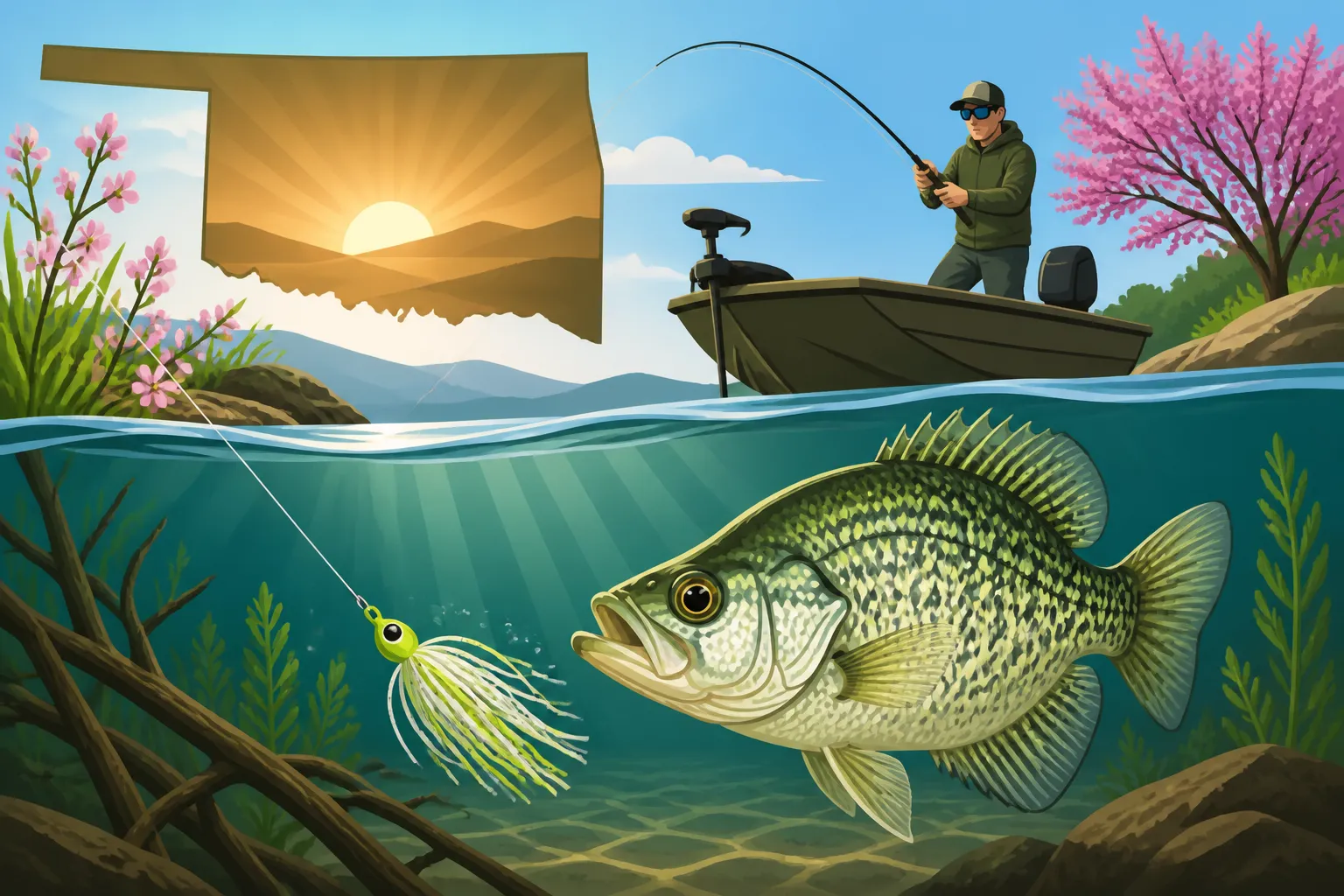
Trying to dial in those elusive crappie during the spring can feel like chasing ghosts sometimes, especially when they're transitioning from deep winter haunts to shallow spawning grounds. One day they're there, the next they've moved, leaving you scratching your head. This guide is all about cutting through that frustration, equipping you with the knowledge and jigging techniques you need to consistently locate and land slab crappie when the dogwoods bloom across Oklahoma.
Understanding Spring Crappie Behavior and Movement
Spring is a season of major changes for crappie, and understanding their movements is absolutely critical for successful jigging. They don't just magically appear in shallow water; it's a gradual migration driven by water temperature and their biological urge to spawn. If you know why they're moving, you'll have a much better idea of where to find them.
The Pre-Spawn Push: Deep to Mid-Depth Structure
As winter's chill finally begins to relent and water temperatures creep into the upper 40s to low 50s, crappie start to shake off their lethargy. This is the pre-spawn phase, and it's a time when they're actively feeding, trying to pack on calories before the energy-intensive spawn. They're usually not in the super shallow stuff yet. Instead, look for them staging in deeper areas close to their eventual spawning grounds.
Think about those submerged creek channels, deep brush piles, old roadbeds, and the edges of main lake points that drop off into deeper water. These are classic staging areas where crappie will gather in good numbers. They're still somewhat grouped up, making them a prime target for vertical jigging or slow-trolling techniques that allow you to cover water and pinpoint those congregations. Finding these groups often means finding success.
The Spawning Frenzy: Shallow Cover is Key
This is what most anglers envision when they think of spring crappie fishing: those magical days when the fish move shallow, aggressive, and seemingly everywhere. The crappie spawn typically kicks into high gear when water temperatures hit the mid-50s to low 60s. During this time, male crappie move into incredibly shallow water, often just a few feet deep, to fan out nests. Females follow, lay their eggs, and then often retreat to slightly deeper water, only to return to spawn again.
Identifying good spawning areas is crucial. Look for protected coves, shallow flats with standing timber, submerged brush, docks, and cattail lines. Any kind of vertical structure or cover in shallow water that warms up quickly in the sun is a magnet for spawning crappie. This is where precision jigging, casting small jigs into tight cover, and careful boat positioning really pay off. For more detailed information, be sure to check out our guide on When Do Crappie Spawn in Oklahoma Lakes?.
Post-Spawn Dispersion: A Brief Retreat
After the main spawning event winds down, and those water temperatures climb past the mid-60s, crappie tend to disperse a bit. The females are often exhausted from spawning and will move to slightly deeper, cooler water to recover. The males might hang around the nests for a short time to guard them, but eventually, they too will retreat. This post-spawn period can sometimes be a bit tougher to fish, as the large concentrations of fish break up.
However, they don't go far. Often, they'll simply move to the first available cover in deeper water adjacent to the spawning flats – perhaps the main lake points, deeper brush piles, or even suspended over creek channels where they can intercept baitfish. They're still catchable, but your approach might need to shift back to covering more water with slower presentations or targeting deeper structure. Many anglers looking for good crappie action in spring will refer to resources like Best Oklahoma Lakes for a Spring Crappie Run to find productive waters.
Essential Gear for Spring Crappie Jigging
Having the right tackle can make all the difference when you're trying to feel those incredibly subtle crappie bites, especially in cooler spring water. It's not about brute strength; it's about finesse and sensitivity.
Rods, Reels, and Line for Maximum Sensitivity
For crappie jigging, especially in the spring, you absolutely want to go light. An ultralight or light-action spinning rod, typically 5 to 7 feet long, is the ideal choice. The softer tip on these rods allows you to detect even the slightest tap from a crappie, which might just feel like your line going slack or a slight tic. Pair this with a small, lightweight spinning reel (think 500 to 1000 series) that balances well with your rod.
For line, fluorocarbon or monofilament in the 4 to 6-pound test range is perfect. Fluorocarbon offers excellent sensitivity and is nearly invisible underwater, making it a great choice for clear water conditions often found in lakes like Tenkiller or Broken Bow. Monofilament is more forgiving with stretch and usually more affordable, which you can easily find on Amazon. Some anglers even use braided line with a fluorocarbon leader for ultimate sensitivity, especially when fishing deeper structure. Choosing the right setup can greatly influence your success, as outlined in guides like Best Rod and Reel Combo for Crappie Fishing.
Jigs: Size, Color, and Style Matters
This is where the real fun begins with crappie fishing! Jigs come in an incredible array of sizes, shapes, and colors, and having a good selection is key for spring.
- Size: Generally, 1/32 to 1/16 ounce jigs are the most popular for crappie. In deeper water or windy conditions, you might go up to 1/8 ounce to get down faster and maintain better control. For super shallow, calm water, some anglers even use 1/64 ounce.
- Color: Crappie can be incredibly picky about color, and it often changes day by day, or even hour by hour! A good rule of thumb: in clear water, natural colors like clear/sparkle, smoke, or light greens often work well. In stained or muddy water, brighter colors like chartreuse, orange, pink, or hot green tend to stand out better. Don't be afraid to experiment. Sometimes, a bright color on the head with a natural body, or vice-versa, is the ticket. You can find vast selections of different colored jigs on Amazon. To dive deeper into specific color choices, check out our insights on Best Crappie Jig Colors for Clear Water and Best Crappie Jig Colors for Stained Water.
- Style: There are many jig body styles.
- Tube jigs: These are incredibly versatile, mimicking baitfish or even aquatic insects.
- Grub tails (curly tails): The vibrating tail creates a lot of action, making them great for active fish.
- Paddle tails: Offer a different thumping action that can entice strikes.
- Hair jigs: Often overlooked, these can be deadly for subtle presentations, especially in cold water.
- Soft plastic minnow imitations: Great for realistic baitfish profiles.
Many anglers will also tip their jigs with a small live minnow for added scent and appeal. This can be a game-changer when crappie are less aggressive.
Mastering Spring Crappie Jigging Techniques
Once you've got your gear dialed in, it's time to talk about how to present those jigs effectively. There's more to jigging than just dropping a lure in the water; subtle nuances can often be the difference between a slow day and a successful one.
Vertical Jigging: Precision in Deep Water
Vertical jigging is your go-to technique when you've pinpointed crappie on specific submerged structure, like a brush pile, standing timber, or a deep-water dock. The goal is to keep your jig directly below your boat, working it through the strike zone where the fish are holding.
Start by using your fish finder to locate schools of crappie or attractive structure. Once you're positioned, drop your jig down to the depth where you're seeing fish. The retrieve is usually a subtle lift and fall – a slow raise of your rod tip (maybe 6-12 inches) followed by a controlled drop, allowing the jig to flutter naturally. Pay extreme attention to your line on the fall; often, crappie will hit the jig as it descends, and the only indication is a slight twitch in the line or it simply stopping short. Many anglers find this technique indispensable, particularly in the pre-spawn phase, when consulting resources like Crappie Fishing Techniques and Seasonal Patterns in Oklahoma.
Casting and Retrieving: Covering Shallow and Mid-Depth Cover
When crappie move shallow to spawn, or when they're scattered in mid-depth cover, casting and retrieving jigs becomes incredibly effective. This allows you to fan-cast and cover a broader area, searching for active fish.
- Targeting Shallow Cover: Cast your small jig directly into or alongside visible cover like submerged logs, dock pilings, or weed lines. Let the jig sink for a few seconds, then begin a slow, steady retrieve with occasional pauses or slight twitches of your rod tip. The key is to keep the jig in the strike zone for as long as possible without getting snagged.
- Fan Casting Flats and Points: If you're on a shallow flat or point with scattered brush, fan cast your jig to cover the entire area. Cast out, let the jig settle, and retrieve it slowly, varying your retrieve speed and adding twitches. Sometimes a straight retrieve works, other times a stop-and-go retrieve triggers more bites. Don't be afraid to experiment! Many anglers find that the right Best Tackle Setup for Oklahoma Crappie makes all the difference here.
Slow Trolling and Drifting: The Search and Destroy Method
When crappie are somewhat scattered or suspended over open water, or if you're trying to quickly locate fish in a new area, slow trolling or drifting can be a highly productive strategy. This involves moving slowly, either under power or with the wind/current, dragging multiple jigs behind the boat.
Often referred to as "spider rigging," this method uses several rods spread out from the boat, each with a jig or minnow rig set at a different depth. This allows you to cover a wide range of depths and determine the crappie's preferred level. Speeds are typically very slow, often less than 1 mph. The key is to keep an eye on your rod tips for even the slightest bend or twitch, indicating a bite. This method is particularly effective in large reservoirs like Lake Eufaula when searching for suspended schools. If you’re looking to cover water, this approach can save a lot of time.
Where to Find Spring Crappie in Oklahoma
Knowing the general behavior is one thing, but knowing where in Oklahoma to apply these techniques is another. Our state offers fantastic crappie fishing, and specific types of structure and locations tend to hold fish consistently.
Brush Piles and Standing Timber: Crappie Magnets
Across virtually all of Oklahoma's major reservoirs, brush piles and standing timber are absolute crappie magnets, especially during the spring. These provide excellent cover, ambush points for baitfish, and important structure for crappie during all phases of the spawn.
- Submerged Brush Piles: Anglers often create and mark their own brush piles, but many lakes have natural ones too. These are phenomenal for vertical jigging. Use your electronics to find them, then drop your jig right into the heart of the brush. Lakes like Grand Lake O' the Cherokees, Lake Eufaula, and Fort Gibson Lake are well-known for their abundant brush piles.
- Standing Timber: In lakes with flooded timber, crappie will orient themselves to the trees and stumps. Cast your jigs alongside the trunks, letting them fall next to the cover. Often, the crappie will be suspended at various depths around the trees. Don't be afraid to cast into the tighter sections, just be prepared for snags!
Docks and Piers: Easily Accessible Crappie
For bank anglers, or those with smaller boats, docks and piers offer some of the most accessible crappie fishing in the spring. Crappie love the shade and protection these structures provide, and they'll often spawn right underneath them or around the pilings.
Cast your jigs under and around the docks, letting them sink. The crappie can be very shallow here, so a light jig is essential to avoid spooking them. Work every pilings and slip you can access. Many state parks and public access areas offer piers that become crappie hotspots in the spring. Just remember to be respectful of private property and other anglers. For example, if you're fishing at Lake Eufaula, you might have great luck near public docks and marinas. For specific insights on local nuances, you could consult something like How to Catch Crappie During the Spring Spawn at Lake Eufaula, Oklahoma.
Creek Channels and Main Lake Points: Migration Routes
As crappie transition from deep water to shallow spawning areas, they often use creek channels and main lake points as their migration routes. These are key areas to target, especially during the pre-spawn and post-spawn periods.
- Creek Channel Edges: Crappie will often stage along the drops-offs of submerged creek channels before moving onto the flats to spawn. Use your electronics to find these channels and fish the breaks, especially where there's some kind of cover like brush or timber on the edge.
- Main Lake Points: Points that extend into the lake, particularly those with access to deeper water, can hold large schools of crappie as they move in and out of coves. Fish both the shallow and deep sides of the point, varying your depth until you find where the fish are holding. This is a great area for slow trolling or even casting from the bank if the point is accessible.
Adjusting Your Approach for Oklahoma's Diverse Waters
Oklahoma is a diverse state when it comes to fishing environments. From the clear, rocky waters of Broken Bow Lake to the stained, timber-filled expanses of Lake Eufaula, crappie fishing conditions can vary significantly, even during spring. Being adaptable is key.
Clear Water vs. Stained Water Strategies
The clarity of the water you're fishing will heavily influence your jig selection and presentation.
- Clear Water: In clear lakes like Broken Bow, Lake Murray, or Tenkiller Ferry Lake, crappie rely more on sight. This means you generally want to use more natural-colored jigs (smoke, clear, light greens, gray), lighter lines (4-pound test fluorocarbon is excellent), and a stealthier approach. Long casts and subtle presentations are often more effective to avoid spooking fish. This is where a wide variety of jig colors found on Amazon comes in handy, as you can quickly switch to match the conditions.
- Stained/Muddy Water: In lakes with more stained or muddy water, such as portions of the Arkansas River chain lakes or parts of Keystone Lake after heavy rains, crappie rely more on lateral line vibrations and scent. Brighter, more vibrant jig colors (chartreuse, orange, pink, hot green) become more effective to provide better visibility. Adding a small minnow to your jig for scent can also be a huge advantage. You can sometimes get away with slightly heavier line in these conditions.
Weather and Water Temperature Considerations
Spring weather in Oklahoma is famously unpredictable. One day it's warm and sunny, the next a cold front blows through, dropping temperatures and bringing rain. These changes have a direct impact on crappie behavior.
- Warm, Stable Weather: During periods of stable warm weather, crappie will be more active and aggressive. They'll push shallower, and you can often find them suspended higher in the water column or tightly relating to shallow cover. Faster retrieves and more active jigging can be effective.
- Cold Fronts: A sudden cold front can shut crappie down instantly. They often retreat to deeper, more stable water and become much less aggressive. When this happens, slow down your presentation dramatically. Smaller jigs, very subtle movements, and tipping with a live minnow can coax bites from lethargic fish. Look for them to hold tight to the bottom or dense cover.
- Rising Water Temperatures: As water temperatures consistently rise into the spawning range (mid-50s to low 60s), crappie will become very active and move shallow. This is prime time for jigging around docks, submerged brush, and shallow flats. Conversely, falling temperatures will push them deeper.
The Crappie Angler's Spring Checklist
Before you head out, a quick review of these points can save you time and increase your chances of success. It's about being prepared for whatever those spring crappie throw at you.
| Spring Crappie Phase | Water Temp Range | Primary Location | Jigging Strategy | Key Gear |
|---|---|---|---|---|
| Pre-Spawn | 48-55°F | Deep creek channels, main lake points, submerged brush | Vertical jigging, slow trolling, targeting deep structure | 1/16 – 1/8 oz jigs, natural colors, minnow tips |
| Spawn | 55-65°F | Shallow coves, docks, standing timber, weed lines | Casting into cover, short pitches, precise vertical jigging | 1/32 – 1/16 oz jigs, varied colors, ultralight setup |
| Post-Spawn | 65°F+ | Deeper edges of spawning flats, main lake points, suspended over channels | Slow retrieve, covering water, targeting transition areas | 1/16 oz jigs, natural or brighter colors, small soft plastics |
Remember, this table is a general guide; crappie are fish, and they don't always read the rulebook! Always adapt to the conditions on the water.
Wrapping It Up: Consistency in the Spring
Spring crappie jigging in Oklahoma is one of the most rewarding forms of fishing our state has to offer, but it demands an understanding of the fish's behavior and a willingness to adapt your techniques. It's not just about throwing a jig; it's about interpreting the water, feeling those subtle bites, and knowing when to switch up your presentation. Keep an eye on water temperatures, scout out that key structure, and don't be afraid to experiment with jig sizes and colors. With a little patience and the right approach, you'll be consistently putting those tasty slabs in your livewell this spring.
Happy fishing, and I hope your spring crappie trips are filled with bending rods and full coolers! For those curious about the regulations, make sure to read up on Oklahoma Statewide Crappie Bag Limit before you head out, and if you're hitting specific lakes, don't forget to look into Stricter Crappie Limits at Six Oklahoma Lakes or even Checking Crappie Rules Before Fishing Grand Lake to stay within the law.
Disclaimer
This article is intended for informational purposes only and does not constitute professional advice. Fishing conditions, regulations, and fish behavior can change rapidly. Always consult the latest Oklahoma Department of Wildlife Conservation regulations before fishing, and prioritize safety on the water.