How to Fish Deep Structure for Bass in Summer
Summer in Oklahoma can be a real challenge for bass anglers. As the heat rises and the sun beats down, those feisty largemouth, smallmouth, and spotted bass don't just disappear; they simply relocate to deeper, cooler water, often hugging intricate underwater structures that can be incredibly hard to find. It's a frustrating situation for many, but this comprehensive guide is here to demystify deep structure bass fishing in the summer, helping you locate and successfully land those elusive lunkers.
The Summer Deep Dive: Understanding Bass Behavior
When Oklahoma's scorching summer temperatures hit, the shallow waters that were so productive in spring quickly become uncomfortable for bass. They seek refuge from the heat and intense sunlight, moving into deeper parts of the lake. But it's not just about depth; it's about finding that sweet spot where conditions are just right.
The Critical Role of the Thermocline
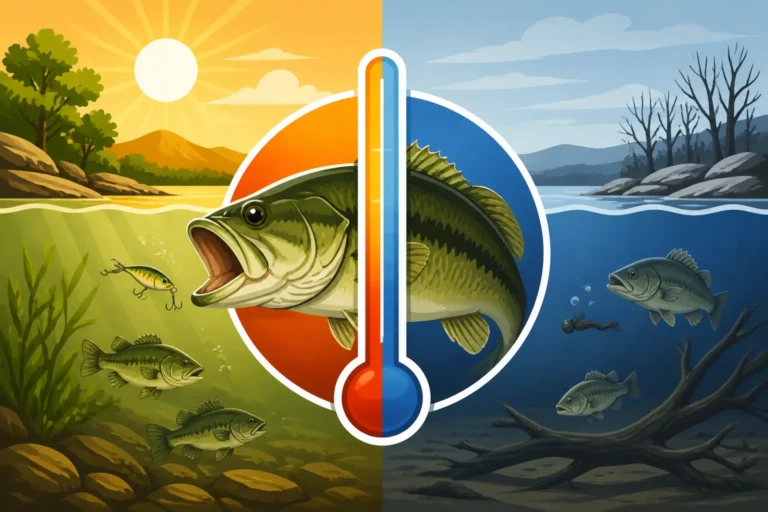
One of the most vital concepts to grasp for summer deep structure fishing is the thermocline. In most Oklahoma lakes, as the surface water heats up, it creates distinct layers. The top layer is warm and oxygen-rich, but often too hot for comfort. The bottom layer is much colder but can become oxygen-depleted. In between these two layers is the thermocline – a zone where the water temperature rapidly changes.
This thermocline acts like an invisible floor in the lake, and it's where baitfish, and consequently, the bass, tend to stack up. It offers cooler temperatures, sufficient oxygen, and often an abundance of food. Learning how to identify this layer on your fish finder is absolutely paramount. Without it, you might be fishing too deep in oxygen-depleted water or too shallow in water that's still uncomfortably warm. Often, this prime zone can be anywhere from 15 to 30 feet deep, but it varies from lake to lake and even throughout the summer, so constant monitoring is key.
Baitfish and Deep Structure Connection
Bass are ambush predators, and they rarely stray far from their food source. In summer, the baitfish, like shad and sunfish, also retreat to cooler, deeper waters, often congregating around underwater structures. This creates a perfect scenario for bass. They don't just hang out aimlessly in deep water; they position themselves strategically around underwater features that provide cover, shade, and easy access to passing meals.
These structures can include submerged creek channels, deep ledges, brush piles, rock piles, humps, points, and even old roadbeds or foundations. Where you find dense schools of baitfish suspended around or near these features, you're almost guaranteed to find bass lurking nearby. Understanding this critical connection will guide your approach and help you narrow down vast stretches of water to high-percentage fishing spots. It’s all about finding that optimal depth where baitfish are abundant and structure offers the perfect ambush point.
Why Bass Seek Deeper Water in Summer
It's a combination of physiological needs and predatory instincts that drive bass deep in the summer. First, the excessive heat at the surface can be stressful, impacting their metabolism and energy levels. Cooler water allows them to conserve energy. Second, intense sunlight penetrates shallow water easily, making bass feel exposed. Deeper water offers natural shade and protection from predators (though they are often the top predators!).
Finally, while food might be abundant in the shallows during spring, it becomes more concentrated and predictable in the deeper thermocline layer during summer. Bass are efficient hunters, and they know that the thermocline and associated deep structures are where they can find an easy meal. This behavioral shift is consistent across most Oklahoma reservoirs, whether you're on the expansive waters of Lake Texoma or the deep clarity of Broken Bow Lake. Adapting your tactics to this deep-water preference is the only way to consistently catch them during the dog days of summer.
Gearing Up for Deep Structure Bass
Fishing deep structure effectively requires a specific setup. You can't just use your shallow-water finesse rod and expect to crank a big plug down to 25 feet. The right rod, reel, line, and especially the right electronics are paramount to success.
Rods, Reels, and Line for Deep Presentation
When it comes to rods, you'll want something with a good backbone but still sensitive enough to detect subtle bites in deep water. A medium-heavy to heavy power rod, typically 7 to 7.6 feet long, is ideal. Longer rods help with casting heavy deep-diving crankbaits and provide better leverage for fighting big bass from depth. For jigs and worms, a fast action tip will help you feel the bottom and detect those light "thump" bites. You can learn more about specific setups in our guide on Best Rods for Oklahoma Largemouth Bass.
For reels, a baitcasting reel with a high retrieve ratio (7.1:1 or higher) is excellent for quickly taking up slack and making multiple casts with deep cranks, while a slightly slower gear ratio (6.4:1) might offer more power for cranking through resistance. When fishing jigs or Carolina rigs, a versatile 7.1:1 ratio works well. Line choice is critical:
- Fluorocarbon (12-20 lb test): This is often the go-to for deep applications due to its low stretch, high abrasion resistance, and near-invisibility underwater. It helps transfer sensitivity from your lure directly to your hands.
- Braid (30-65 lb test): Excellent for its zero stretch, which gives incredible sensitivity and hook-setting power. However, it's visible. Many anglers use braid as their main line with a fluorocarbon leader (15-20 lb test) for the best of both worlds, especially when fishing around heavy cover.
- Monofilament (15-20 lb test): Less common for deep applications due to its stretch and visibility, but it can be useful for topwater or some crankbait presentations where a bit of line stretch is desired. However, for deep structure, it's usually not the first choice.
The Indispensable Role of Sonar and GPS
Modern marine electronics are not just a luxury for deep structure fishing; they are an absolute necessity. Trying to find and fish deep structure without a good fish finder and GPS is like trying to navigate a dense fog blindfolded. You need to invest in quality electronics, and brands like Humminbird and Lowrance offer excellent options. On platforms like Amazon, you can find a wide range of models.
Your fish finder, ideally with 2D sonar, Down Imaging, and Side Imaging, will allow you to:
- Locate the Thermocline: As mentioned earlier, this invisible layer is where the fish will be. Your sonar will show it as a distinct line where the water changes temperature.
- Identify Structure: Humps, ledges, brush piles, rock formations – your screen will light up with these features. Side Imaging, in particular, lets you see many feet out to the sides of your boat, revealing hidden structures that you might otherwise miss.
- Spot Baitfish and Bass: Look for schools of baitfish or larger arches (bass) hovering around the structure, often in or just above the thermocline.
- Mark Waypoints: Once you find a promising spot, use your GPS to mark it precisely. This allows you to return to the exact location easily, especially when working a small brush pile or a specific rock formation. Check out our guide on Fish Finder Features That Matter Most on Oklahoma Reservoirs for more in-depth information.
Tackle Box Essentials for Deep Bass
Your tackle box needs to be well-stocked with lures designed to reach and effectively work deep structure. Forget your shallow-diving crankbaits and weightless worms for this kind of fishing.
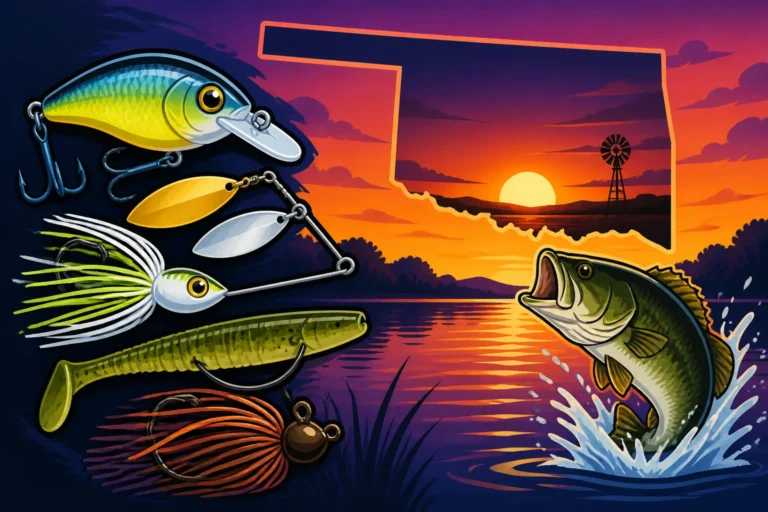
- Deep-Diving Crankbaits: These are your workhorses. Look for baits that dive 15-25+ feet, like those from Strike King, Rapala, or Berkley. Colors can vary, but natural shad, crawfish, and chartreuse patterns are often effective.
- Heavy Jigs: ½ oz to 1 oz football jigs or casting jigs with weed guards are excellent for dragging along the bottom or pitching into brush. Pair them with bulky plastic trailers.
- Carolina Rigs: This is a classic deep-water presentation. You'll need egg sinkers (¾ oz to 1 ½ oz), beads, swivels, and your favorite soft plastics (lizards, worms, or creature baits). For a full breakdown, see How to Rig a Carolina Rig for Bass.
- Texas Rigs: While often thought of as a shallow water presentation, a heavy-weighted Texas rig (½ oz to 1 oz tungsten weight) can be punched through deep brush or slowly worked down ledges. Our article on How to Fish a Texas Rig for Bass offers great insights.
- Drop Shot Rigs: For finicky deep bass, a drop shot is a phenomenal finesse technique. You'll need drop shot weights (¼ oz to ¾ oz) and small, straight-tail worms or minnow imitations.
- Spoons: Jigging spoons (½ oz to 1 ½ oz) are fantastic for vertical presentations over schools of deep bass or suspended baitfish. Look for chrome, white, or silver finishes.
Having a diverse selection ensures you can adapt to different bass moods and structural elements.
Mastering Deep Structure Lures and Techniques
Once you've got your gear dialed in and your electronics are showing you promising targets, it's time to put those lures to work. Deep structure fishing isn't just about casting and reeling; it requires precision, patience, and a nuanced understanding of each presentation.
Unleashing Deep-Diving Crankbaits
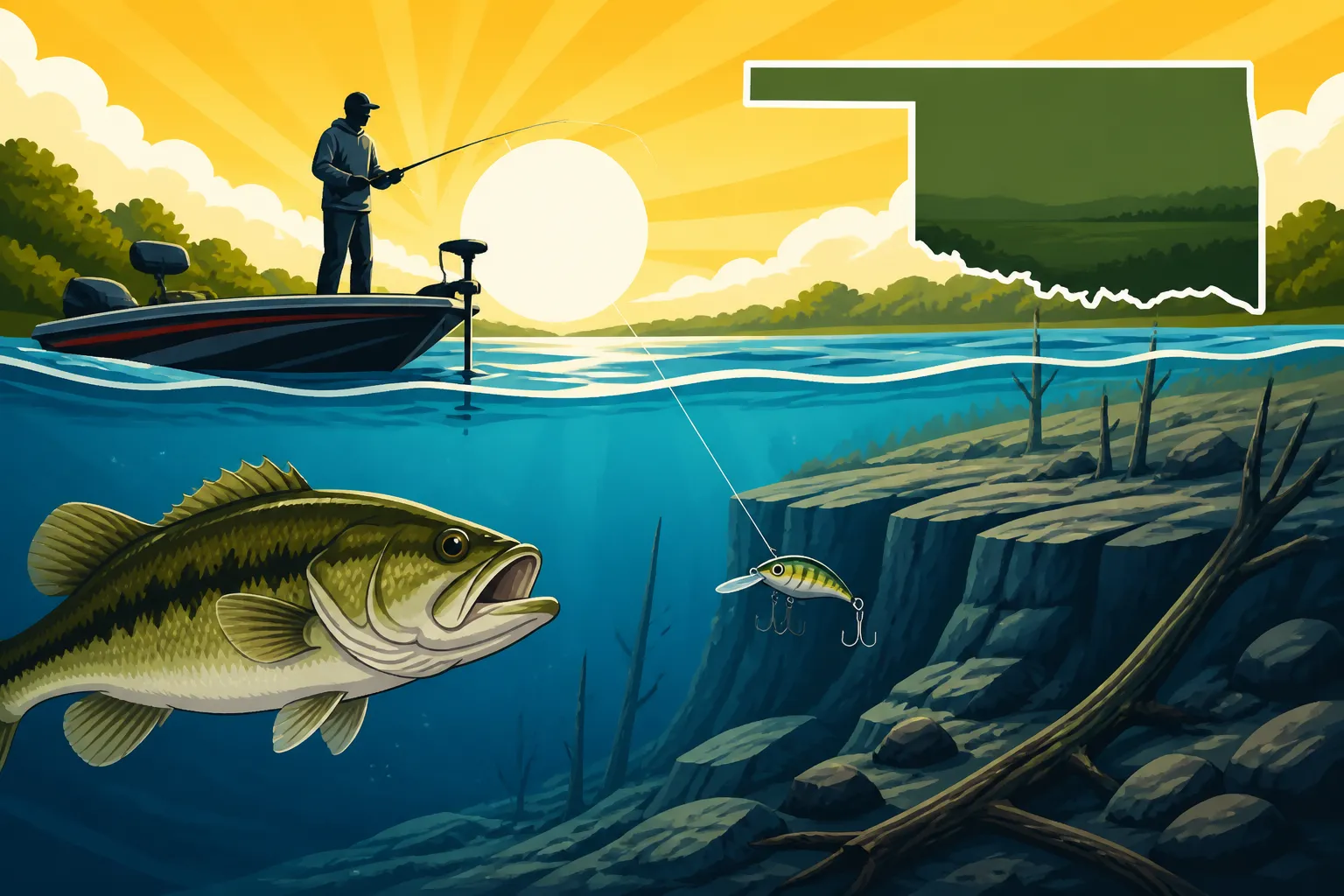
Deep-diving crankbaits are fantastic for covering water quickly and generating reaction strikes. The key is to find a crankbait that dives to the depth of the thermocline or just below it, allowing it to "crash" into the structure you've identified.
When retrieving, a steady, fast retrieve is often best. The goal is for the bait's lip to deflect off rocks, ledges, or submerged timber. This erratic action mimics a fleeing baitfish and often triggers aggressive strikes. Don't be afraid to experiment with pause-and-go retrieves, or even ripping the bait quickly through submerged brush. Pay close attention to your line, as many strikes in deep water will feel like a subtle "tick" or simply a sudden increase in weight. Using the right type of line, like fluorocarbon, will significantly enhance your feel.
Jigs and Carolina Rigs for Bottom Contact
These two presentations excel when bass are hugging the bottom or dense cover.
- Jigs: Football jigs are ideal for rocky bottoms or ledges, as their head shape helps them crawl over snags without getting hung up. Casting jigs with brush guards are perfect for pitching into submerged timber or thick brush piles. Work them slowly, dragging them along the bottom, feeling every rock, stick, and crevice. Most strikes will come on the fall or when you pause the jig. When you feel that distinct "thump," set the hook hard! Our guide on How to Rig a Jig for Bass Fishing can provide more details.
- Carolina Rigs: This rig is a master at presenting a soft plastic bait naturally while maintaining constant bottom contact. The heavy sinker drags along the bottom, kicking up sediment and attracting attention, while your bait floats freely behind it on a leader (typically 1-4 feet long). Slowly drag the weight with your rod tip, then reel in the slack. The separate weight and bait mean bass often won't feel the resistance when they pick up the bait, giving you more time to set the hook. This is especially effective on flat, featureless bottoms leading into deeper structure.
Drop Shot and Texas Rigs: Finesse and Power
Sometimes bass in deep water become finicky, especially after a lot of fishing pressure or during a major weather change. This is where finesse techniques shine.
- Drop Shot Rigs: This rig presents a small soft plastic horizontally and suspended above a weight, making it irresistible to hesitant bass. It's deadly when bass are suspended in vertical cover or holding tightly to a specific depth. Drop your rig directly onto a fish you see on your sonar, then lightly shake your rod tip to make the bait quiver without moving the weight. When a bass bites, they often just "load up" the rod tip.
- Heavy Texas Rigs: For getting through dense deep cover, a heavy-weighted Texas rig can be a power-fishing tactic. Use tungsten weights, which are denser and smaller, allowing them to penetrate cover more easily and provide better feel. Pitch or flip the rig into brush piles, let it fall, and then slowly work it through the cover. This is a great choice when bass are buried deep in thick stuff, and you need to punch through.
Vertical Jigging with Spoons
Jigging spoons are a highly effective, often overlooked, technique for deep-water bass, particularly when they are schooled up or suspended over structure. The beauty of a jigging spoon is its simplicity and versatility.
Cast it out over your target area or drop it vertically straight down if you're directly over a school of fish. Let it sink to the desired depth, then aggressively rip it upward with a sharp snap of your rod, letting it flutter back down on a semi-slack line. Most strikes occur on the fall, so watch your line carefully for any twitch or stop in its descent. Different retrieve speeds and "rips" will appeal to bass in various moods. Silver, gold, or white spoons are classic choices, mimicking dying shad.
Reading the Water and Locating Deep Structure
Finding deep structure isn't just about driving around and hoping for the best. It's a systematic process that combines understanding fish behavior with the effective use of your electronics and a bit of angling intuition.
Identifying Key Structure Types
Deep structures are the bass's summer condominiums. They offer cooler water, ambush points, and proximity to food. Knowing what to look for on your sonar and in your mind's eye is crucial.
- Humps and Ridges: These are elevated areas on the lake bottom. Bass will sit on top of them, on the sides, or around their base, depending on the depth and position of the thermocline.
- Ledges and Drop-offs: Where the lake bottom dramatically changes depth. Bass will often hold on the lip of the ledge, just over the break, or directly below it, ambushing baitfish moving between different depths.
- Creek Channels: Submerged riverbeds or creek channels that wind through the lake. Bass use these as highways to move between feeding and resting areas, often holding on the edges or where they intersect with other structures.
- Brush Piles and Timber: Submerged trees, stumps, and brush piles are classic bass magnets, offering shade and cover. Many lakes have man-made brush piles that are known hotspots.
- Roadbeds and Foundations: Old roads, bridges, or building foundations that were submerged when the lake was filled. These hard bottom areas often hold rock, concrete, and other debris that attract bass.
Each of these structures offers unique challenges and opportunities, and bass will relate to them in slightly different ways. For instance, fish on a rock hump might prefer a jig, while those in a submerged timber might smash a deep crankbait.
Using Electronics to Their Full Potential
As mentioned, your electronics are your eyes underwater. Make sure you understand how to interpret what you're seeing.
- 2D Sonar: Shows you arches (fish), bottom contour, and can help define the thermocline.
- Down Imaging: Provides a photographic-like view directly below your boat, excellent for distinguishing rock from brush, or seeing individual fish around structure.
- Side Imaging: Lets you scan wide areas to the left and right, revealing hidden channels, brush piles, and schools of fish off to the side without having to drive directly over them. This saves time and helps you map out entire areas quickly.
Practice is key. Spend time driving over known structures, experimenting with settings, and comparing what you see on your screen to what you envision below. Learn to differentiate between baitfish, individual bass, and submerged cover. Mark anything that looks promising as a waypoint on your GPS. You might be surprised at the hidden gems your electronics reveal.
Patterning Bass Movements and Behavior
Once you start catching fish, don't just keep casting aimlessly. Use every catch to develop a "pattern." A pattern is a repeatable set of conditions where you're finding fish. Ask yourself:
- What depth were the fish at?
- What type of structure were they holding on? (e.g., the deep side of a rock hump, inside a brush pile, or suspended over a creek channel)
- What was the water temperature at that depth?
- What type of lure and retrieve generated the bite?
If you catch a bass on a Carolina rig dragged along a deep point at 20 feet, then look for other similar deep points at that same depth. If you find a school of bass suspended at 25 feet over a creek channel, try jigging a spoon vertically in similar areas. Every fish you catch, or even every bite you miss, is a clue. The more clues you gather, the easier it becomes to predict where the next bite will come from. This is where a deep understanding of Bass Fishing Techniques by Season comes into play, as their behavior shifts with environmental factors.
Remember, deep structure fishing in Oklahoma during the summer isn't easy, but it's incredibly rewarding. It requires patience, persistence, and a willingness to embrace the technology and techniques designed for these challenging conditions. But when you feel that solid thump of a lunker bass from 20 feet down, you'll know all the effort was worth it.
Disclaimer
Fishing conditions and regulations can change rapidly. Always consult the official Oklahoma Department of Wildlife Conservation (ODWC) regulations before heading out. This guide provides general information and recommendations, but it is your responsibility to ensure compliance with all current local and state laws. Fishing involves inherent risks; always prioritize safety on the water.