Best Catfish Holes on Fort Gibson Lake
Finding the perfect catfish spot on a big lake like Fort Gibson can feel like searching for a needle in a haystack, leaving many anglers frustrated and empty-handed after a long day on the water. It’s easy to get lost in the sheer size of the reservoir, but with the right knowledge, you can unlock Fort Gibson's incredible potential for channel, blue, and flathead catfish. This comprehensive guide is designed to cut through the guesswork, pointing you directly to the best "catfish holes" on Fort Gibson Lake so you can spend less time searching and more time reeling in those whiskered beauties.
Fort Gibson Lake: A Catfish Paradise
Fort Gibson Lake, nestled in northeastern Oklahoma, isn't just another body of water; it's a dynamic and incredibly fertile environment that consistently produces some of the state's most impressive catfish catches. Fed by the mighty Grand and Neosho Rivers, this reservoir offers a diverse array of habitats, from shallow, nutrient-rich creek arms to expansive, deep river channels, making it a prime location for all three major catfish species found in Oklahoma.
Understanding Fort Gibson's Waters for Catfish
The characteristics of Fort Gibson Lake are what make it such a thriving ecosystem for catfish. Spanning over 19,000 surface acres with more than 225 miles of shoreline, the lake features a mix of rocky bluffs, timbered coves, and vast open water. The constant inflow from the Grand and Neosho Rivers not only brings a steady supply of nutrients and baitfish but also creates significant current in the main river channels, which blue and flathead catfish absolutely love. This current also helps scour out deep holes and maintain distinct riverbeds beneath the lake's surface.
Throughout the lake, you'll find an abundance of diverse cover that catfish rely on for shelter and ambush points. Submerged timber, rock piles, ledges, and sudden depth changes are common. These structural elements create perfect ambush points for flatheads, hiding spots for channel cats, and migration routes for blues following schools of shad. Knowing how to interpret these underwater features is key to consistently finding fish.
Why Fort Gibson is Ideal for Diverse Catfish Species
Fort Gibson Lake’s varied topography and abundant food sources make it a premier destination for all three major catfish species: channel, blue, and flathead. Each species has its preferred habitat within the lake, allowing anglers to target specific types or enjoy a mixed bag.
Channel catfish are often found in the shallower, warmer, and slightly murkier water of creek arms and coves, especially when they’re chasing smaller baitfish or foraging on the bottom. Blue catfish, on the other hand, are powerful, open-water predators that gravitate towards the deeper, cooler main river channels, following large schools of shad. They use the consistent current to their advantage, often stacking up on ledges and humps in the middle of the lake. Flathead catfish, the most elusive of the bunch, are ambush hunters that prefer heavy cover—think dense submerged timber, large rock piles, and deep snags—where they can lie in wait for live prey. This diversity means that no matter your preferred style of catfishing, Fort Gibson has a niche for you. For a deeper dive into statewide regulations, be sure to check out Oklahoma's Catfish Fishing Rules and Limits.
Unlocking Fort Gibson's Channel Catfish Hotspots
Channel catfish are arguably the most popular and widespread catfish species in Oklahoma, known for their strong fight and delicious fillets. On Fort Gibson Lake, they are abundant and can be found in various locations, but certain areas consistently produce better results.
Creek Arms and Inflow Areas
One of the absolute best places to start your search for channel catfish on Fort Gibson is in the numerous creek arms and areas where smaller streams feed into the main lake. Creeks like Greenleaf Creek, Ranger Creek, and those entering the upper reaches of the lake are prime examples. These areas tend to be shallower, warmer, and often have a muddy or silty bottom, which channel cats love. The inflowing water from these creeks carries nutrients and baitfish, creating a buffet line for hungry channels.
Fishing these areas after a rain shower can be particularly effective. The runoff washes food into the lake, stirring up activity. You’ll often find channel cats congregating near the mouths of these creeks or cruising further up into the arms, especially during the spring and early summer months when they’re more active in shallower water. Try using traditional stink baits, punch baits, or cut bait like shad on a simple slip-sinker rig. A common tactic is to anchor up near a promising looking creek mouth and fan-cast multiple lines into different depths.
Shallow Flats and Points with Cover
Channel catfish also frequent shallow flats and points that offer some form of cover. Look for areas with scattered brush, submerged stumps, or even gently sloping rocky points that transition into deeper water. These locations provide both protection from predators and ample foraging opportunities. During the warmer parts of the year, particularly at dawn, dusk, and even into the night, channel cats will move onto these shallower flats to feed.
Anglers targeting these areas often find success by drifting or slowly trolling across the flats with bait suspended just off the bottom. If you identify a promising brush pile or stump field, anchoring up and presenting your bait directly into the cover can yield good results. Pay attention to areas around islands or secondary points that extend into the main lake, especially those with some current flow or a distinct drop-off nearby. These subtle features can hold a surprising number of channel cats.
Seasonal Movements of Channel Catfish
Understanding the seasonal movements of channel catfish is critical for consistent success on Fort Gibson. In spring, as water temperatures rise, channel cats move into shallower waters, particularly the backs of creeks and coves, for spawning. This is an excellent time for bank anglers to target them. As summer progresses and water heats up, they might retreat to slightly deeper water during the day, often along channel edges or near submerged structure, but will return to shallower flats to feed during cooler periods or at night.
Fall sees a resurgence of activity as the water cools, and channel cats begin to fatten up for winter. They'll often be found transitioning between shallow and mid-depth areas, following baitfish. In winter, they tend to move to deeper holes and channels, becoming less active but still catchable if you present bait directly to them. For more insights into catching these fish year-round, exploring Catfish Fishing Techniques for Oklahoma Anglers can give you a significant advantage.
Deep-Water Secrets for Fort Gibson's Blue Catfish
Blue catfish are the giants of Fort Gibson Lake, offering a thrilling fight and the potential for true trophy catches. Unlike channel cats, blues prefer the deeper, more open waters, often associating with the lake's old river channels.
The Main River Channel and Deep Bends
The historical Grand River and Neosho River channels, which now lie submerged beneath Fort Gibson, are the absolute main highways for blue catfish. These channels offer consistent depth, cooler water, and often more robust current, which blue cats seem to crave. Areas where these channels make significant bends or where tributaries intersect them create natural "blue cat holes." Good examples can be found in the lower half of the lake, particularly near the dam and in deeper sections closer to the town of Fort Gibson itself.
To effectively target these areas, a good sonar unit is indispensable. You’ll want to look for schools of baitfish (primarily shad), which blue cats will follow relentlessly, as well as distinct depth changes, humps, or underwater ledges along the channel edges. Once located, dropping large pieces of fresh cut bait, like shad or carp, directly into these deeper zones is a proven tactic. You might even consider booking a trip through a service like FishingBooker to learn the specific nuances of these deep-water haunts from a seasoned local guide.
Humps, Ledges, and Submerged Structure
Beyond the main river channels, blue catfish will also congregate around prominent underwater humps, ledges, and large, deep-water brush piles. These features serve as ambush points and resting areas in the otherwise expansive open water. A hump rising from 40 feet to 25 feet, surrounded by deep water, can be a magnet for blues, especially if it holds baitfish. Similarly, ledges where the bottom drops sharply from one depth to another provide excellent vertical structure for blue cats to patrol.
When fishing these structures, heavy tackle is a must. Blues can grow to impressive sizes on Fort Gibson, with many fish exceeding 30 pounds, and sometimes even larger. Use robust rods, stout reels, and strong braided line. Anchoring upwind or upstream from a promising hump or ledge and letting your cut bait drift naturally into the strike zone can be incredibly effective. Remember, patience is a virtue when targeting these big blues, as they often travel in schools and might take some time to find your presentation.
The 30-Inch Blue Catfish Rule and Trophy Potential
Fort Gibson Lake is renowned for its trophy blue catfish potential, but anglers need to be aware of specific regulations. Oklahoma has a special rule for forked-tail catfish, which includes blue catfish: you can only keep one blue catfish over 30 inches per day. This regulation, designed to protect the trophy fishery, means that while you can catch multiple large blues, only one can go home with you if it exceeds that 30-inch mark. This is an important detail for anglers hoping to land a monster blue and is covered in more detail in The 30-Inch Blue Catfish Rule in Oklahoma.
Despite the limit, Fort Gibson consistently produces blue catfish well over the 30-inch mark, with some truly enormous specimens caught each year. This makes the lake a prime destination for those seeking a true trophy. Always consult the latest Oklahoma Department of Wildlife Conservation regulations before heading out to ensure you're fishing legally.
Hunting Fort Gibson's Elusive Flathead Catfish
Flathead catfish are perhaps the most challenging and rewarding of Fort Gibson's catfish species to target. These solitary, predatory fish have a strong preference for live bait and heavy cover, making them a true hunter's quarry.
Timbered Areas and Rocky Banks
Flathead catfish are synonymous with structure. On Fort Gibson, this means seeking out areas with heavy submerged timber, large rock piles, log jams, and downed trees along steep, rocky banks. The more tangled and impenetrable the cover appears, the more likely a flathead is calling it home. The upper reaches of Fort Gibson, where the Grand River and Neosho River inputs bring in more timber, often hold excellent flathead habitat.
Look for deep pockets or holes right next to fallen trees, under large root wads, or within dense brush piles. Flatheads are ambush predators, and they'll lie in wait in these dark, protected spots, darting out to grab unsuspecting prey. Fishing these areas can be tricky, as snags are common, so be prepared to lose some tackle. A stout rod and heavy line are essential, not just for fighting the fish but for muscling them out of their cover.
Live Bait and Night Fishing
When it comes to flatheads, live bait is almost always the key. They are strict carnivores and prefer their meal to be squirming. Bluegill, sunfish, shad, or small carp make excellent live bait choices. Hook your live bait through the back or lips to keep it lively and cast it as close to the heavy cover as possible, letting it swim naturally.
Night fishing is also highly productive for flatheads on Fort Gibson. These nocturnal hunters become much more active after the sun goes down, venturing out of their heavy cover to patrol for food. Setting up on a steep, timber-lined bank or near a prominent log jam just before dusk and fishing through the night can greatly increase your chances of hooking into a big flathead. Techniques like setting trotlines or jug fishing with live bait in strategic locations near known flathead cover can also be incredibly effective, allowing you to cover more water. If you're new to these methods, you might find guides like How to Set Up a Trotline for Catfish or How to Jug Fish for Catfish particularly helpful.
Essential Gear and Tactics for Fort Gibson Catfish
Success on Fort Gibson's catfish holes isn't just about finding the right spot; it's also about having the right tools and knowing how to use them. From rods and reels to baits and modern electronics, being prepared makes all the difference.
Rods, Reels, and Line for Each Species
Your gear choice should match the species you're targeting. For channel catfish, a medium-heavy spinning or baitcasting rod, about 7-8 feet long, paired with a reel spooled with 15-20 lb monofilament or braided line, is typically sufficient. This setup offers enough backbone for a good fight but is sensitive enough to detect lighter bites.
For the larger blue and flathead catfish, you'll need to step up your game significantly. Heavy-action baitcasting rods, often 8-10 feet in length, are preferred for their leverage and power. Pair these with robust reels capable of holding 50-80 lb braided line, or even heavier if you're chasing truly monster fish. Braided line offers superior strength, sensitivity, and resistance to abrasion when fishing around heavy cover. Many anglers also add a monofilament or fluorocarbon leader to their braided main line.
Best Baits and Rigs for Fort Gibson
Bait selection on Fort Gibson is diverse, mirroring the different preferences of each catfish species. For channel cats, prepared stink baits (like those from Catfish Charlie or Uncle Josh), punch baits, chicken livers, or cut shad are all excellent choices. For rig setup, a simple slip-sinker rig with a 1/0 to 4/0 circle hook is highly effective, allowing the fish to take the bait without feeling immediate resistance.
Blue catfish almost exclusively prefer fresh cut bait. Shad are king, but fresh carp, drum, or even skipjack herring can be incredibly effective. Larger chunks of bait are often better for larger blues. A Carolina rig or a three-way swivel rig with a heavy sinker to hold bottom in current is ideal. Use strong, sharp circle hooks in sizes from 7/0 to 10/0.
Flathead catfish, as mentioned, are particular about live bait. Bluegill, sunfish, perch, or small bullheads are prime choices. Hook them carefully so they stay alive and active. A stout slip-sinker rig or a strong float rig that keeps your live bait near cover is perfect. Ensure your hook size is appropriate for your bait and the potential size of the flathead, typically 8/0 to 12/0 circle hooks. You can learn more about specific baits and their effectiveness by checking out the Best Catfish Bait for Oklahoma Lakes and Rivers.
Using Technology: Sonar and GPS
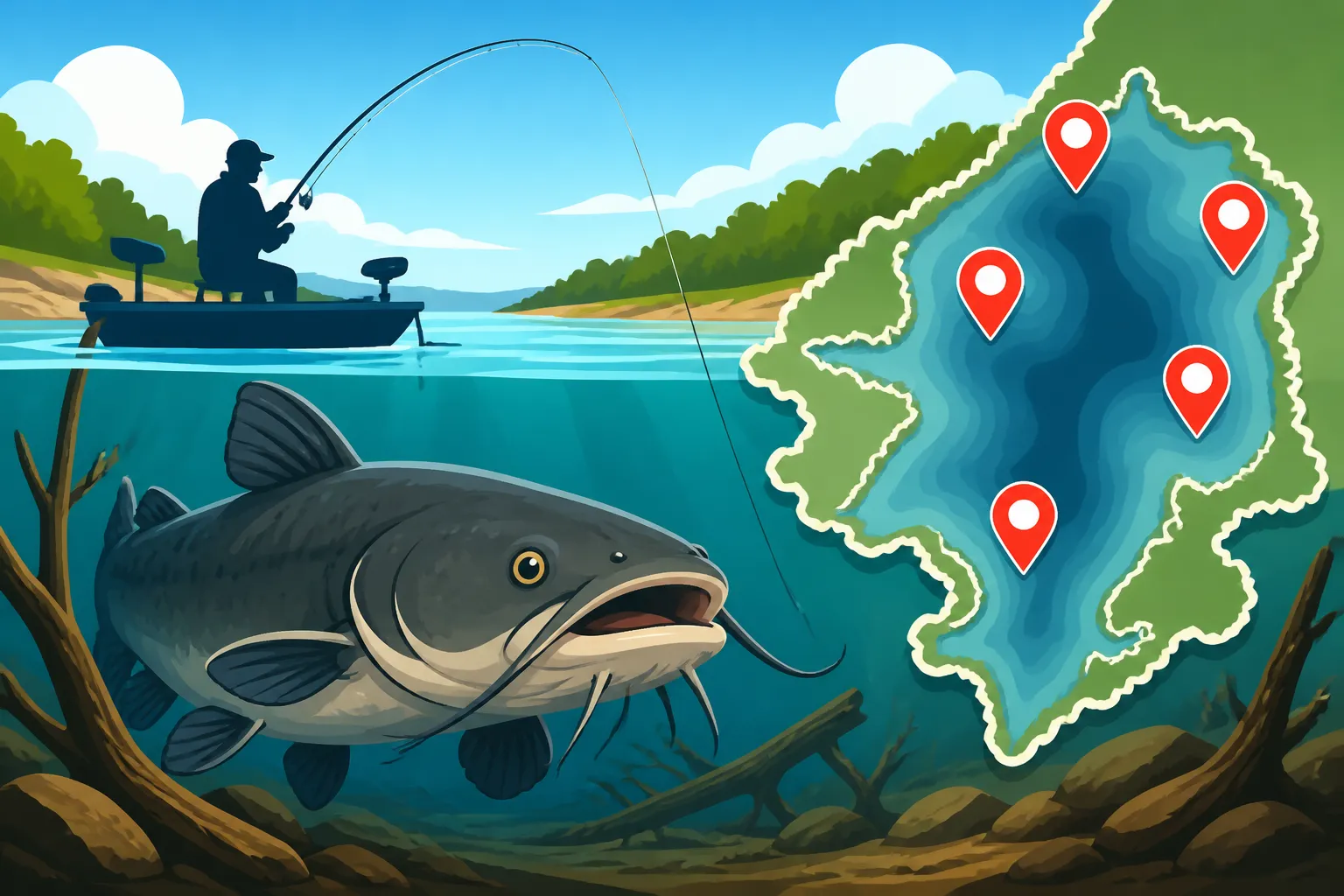
In today’s catfishing world, especially on large reservoirs like Fort Gibson, technology can be your best friend. A good fish finder with down imaging and side imaging capabilities can dramatically increase your success, particularly when targeting blue and flathead catfish. These units allow you to literally "see" the underwater topography, locate deep river channels, identify humps and ledges, and spot schools of baitfish, which are crucial for finding blues.
GPS functionality on your fish finder or a dedicated GPS unit allows you to mark productive spots, making it easy to return to them on future trips. This is invaluable when you find a particularly good brush pile or a deep-water concentration of blues. Furthermore, consider using online resources or apps that provide bathymetric maps of Fort Gibson Lake. These detailed maps reveal contour lines and depth changes, helping you identify potential catfish hotspots before you even launch your boat. Many experienced anglers even use services like FishingBooker to connect with local guides who are experts at interpreting sonar and navigating these complex underwater landscapes.
Planning Your Fort Gibson Catfish Adventure
A successful catfishing trip to Fort Gibson Lake involves more than just knowing where the fish are; it also requires practical planning, understanding access points, and leveraging local resources.
Navigating Access Points and Ramps
Fort Gibson Lake offers numerous public access points and boat ramps, catering to both boat and bank anglers. Popular ramps include Taylor's Ferry Public Use Area, Sequoyah State Park, and multiple facilities around Wagoner, such as Wagoner City Park. These ramps generally provide good access to different parts of the lake, from the wider, deeper sections to the narrower, more riverine upper reaches.
For bank anglers, state parks and public use areas often provide designated fishing access points, fishing piers, or shoreline areas where you can cast a line. While boaters have the advantage of reaching remote spots, many excellent channel catfish and even some flatheads can be caught from the bank, especially in creek arms and near bridge abutments. Always check ramp conditions, especially during periods of high or low water levels, as some ramps might be inaccessible.
Local Knowledge and Resources
Never underestimate the power of local knowledge. Before your trip, visit local bait and tackle shops around Fort Gibson. These establishments are often run by seasoned anglers who know the lake inside and out. They can provide invaluable, up-to-date information on recent catches, hot baits, and current patterns. They're also a great place to pick up fresh bait, especially live bait for flatheads or fresh cut shad.
Another fantastic resource, particularly if you're new to the lake or looking to learn advanced techniques, is to hire a local fishing guide. Services like FishingBooker allow you to find and book experienced guides who specialize in catfishing on Fort Gibson Lake. A guide can teach you how to read the water, operate your electronics more effectively, and take you directly to productive "catfish holes," saving you countless hours of trial and error. Furthermore, always check the official Oklahoma Department of Wildlife Conservation website for the most current regulations, as rules can change. You can find general information on the lake and its fishing opportunities in the Fort Gibson Lake Fishing Guide.
| Catfish Species | Preferred Habitat on Fort Gibson | Primary Baits | Key Tactics | Prime Seasons |
|---|---|---|---|---|
| Channel Catfish | Shallow creek arms, coves, brushy flats, current breaks | Stink bait, chicken liver, cut shad, worms | Bottom fishing, drifting, anchoring in creek mouths | Spring, Summer, Fall |
| Blue Catfish | Deep main river channels, humps, ledges, structure in current | Fresh cut shad, carp, drum | Vertical jigging, drifting, anchoring on structure | Year-round |
| Flathead Catfish | Heavy submerged timber, log jams, rock piles, steep banks | Live bluegill, sunfish, perch | Night fishing, targeting heavy cover, trotlines, jugs | Spring, Summer, Fall |
Disclaimer
Fishing regulations and conditions can change rapidly. Always consult the official Oklahoma Department of Wildlife Conservation website or local authorities for the most current fishing regulations, license requirements, and lake conditions before planning your trip to Fort Gibson Lake. The information provided in this guide is for general informational purposes only and should not be considered legal advice or a substitute for official regulations.