Is May Really the Best Month to Fish Lake Texoma, Oklahoma?
If you've been dreaming of chasing trophy fish on Lake Texoma, you've probably heard the whispers: "May is the month." It's a common refrain among anglers, painting a picture of unparalleled action and full livewells. But for those of us who plan our precious fishing trips carefully, a big question lingers: is May really the best month to fish Lake Texoma, Oklahoma, or is it just a well-worn legend? This guide dives deep into what makes May a fantastic, albeit busy, time to cast a line on this legendary Oklahoma lake.
The Allure of May on Lake Texoma: Why Anglers Flock Here
There's no denying the magnetic pull Lake Texoma has on anglers, especially as spring transitions into summer. By May, the lake's vast waters are truly coming alive, creating prime conditions for a variety of species. It's a time when the ecosystem hums with activity, and fish are often aggressively feeding after the cooler months.
The Spring Striper Run at Its Peak
When people talk about May on Lake Texoma, nine times out of ten, they're talking about striped bass. This is the absolute zenith of the spring striper run, and it's nothing short of spectacular. As water temperatures consistently climb into the upper 60s and low 70s Fahrenheit, the striped bass, often called "stripers," begin their annual spawning ritual up the Red and Washita River arms. This migration concentrates fish, making them more predictable and easier to locate.
During this period, these powerful fish are incredibly active, feeding voraciously to fuel their journey and post-spawn recovery. You'll find massive schools of stripers pushing shad to the surface, creating chaotic and exhilarating topwater blow-ups that any angler lives for. It's not uncommon to hook into multiple fish in a single outing, with many in the 5-10 pound range and the potential for true trophy-class stripers pushing 20 pounds or more. Techniques like live bait fishing with shad, often drifting or slow trolling, are incredibly effective. You can also have a blast throwing big topwater plugs or casting sassy shads into the feeding frenzies. For a deeper dive, check out our guide on how to Fish Live Shad for Striped Bass.
Crappie and Bass Action Heating Up
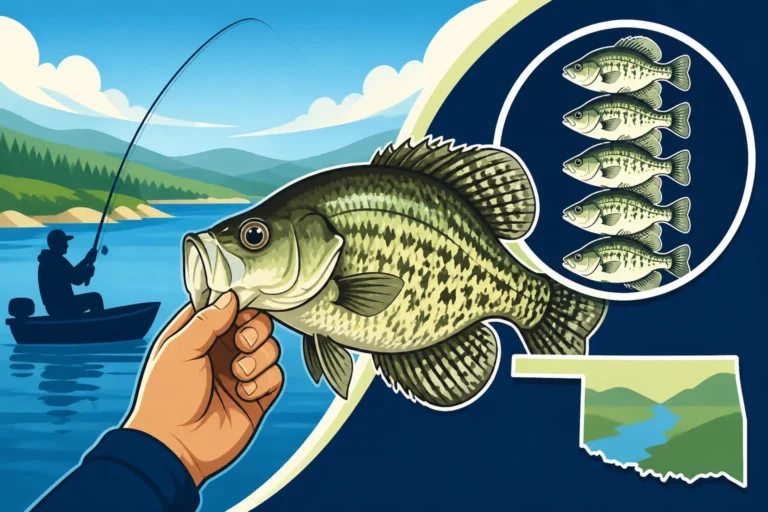
While stripers often steal the show, May is also a fantastic month for other popular species, particularly crappie and both largemouth and smallmouth bass. By this point, the crappie spawn is usually wrapping up or has recently finished, meaning these panfish are transitioning from their shallow spawning grounds to deeper, more structured areas. They're recovering and feeding heavily, making them eager to hit jigs and minnows.
You'll often find crappie congregating around brush piles, submerged timber, and bridge pilings in 10-20 feet of water. Targeting them with small jigs (1/16 to 1/8 ounce) in chartreuse, white, or black-and-chartreuse combinations can lead to quick limits. Similarly, the bass are usually in their post-spawn phase. This means they are aggressively feeding to regain strength and are often found around prime ambush points like submerged hydrilla beds, rocky points, and riprap. Lipless crankbaits, spinnerbaits, and soft plastics (like Texas rigs or shaky heads) can be incredibly productive for both largemouth and smallmouth bass, especially in the early morning and late evening hours. Understanding the seasonal patterns for these fish is key, and our comprehensive guide on Oklahoma Bass Fishing: Techniques by Season offers great insights.
Beyond Stripers: Other Species Thriving in May
Lake Texoma is a true multi-species lake, and while the striper run is undeniably a highlight of May, it would be a mistake to overlook the phenomenal opportunities for other fish. Many anglers focus solely on stripers and miss out on some truly fantastic fishing for other popular game fish that are also very active this month.
Catfish Feasting Opportunities
If you're a catfish enthusiast, May on Lake Texoma is a prime time. All three major species—channel, blue, and flathead catfish—are highly active. Blue catfish, in particular, are often found in great numbers, gorging themselves as they prepare for their late spring to early summer spawn. You might find them moving into shallower flats and humps, particularly near river channels, before they head into deeper holes for spawning.
Anglers targeting blue and channel catfish will have great success with cut bait (shad is a local favorite), punch bait, or dip baits fished on the bottom. Flatheads, the ambush predators, will be lurking around heavy cover like log jams, brush piles, and rocky outcrops, often preferring live bait like sunfish or perch. Whether you're drift fishing across main lake humps or anchored in a quiet cove, the chances of landing some hefty cats are excellent. To learn more about targeting these whiskered giants, check out our guide on Best Bait for Catfish in Oklahoma Lakes and Rivers.
White Bass Frenzy and Sand Bass Runs
For sheer numbers and non-stop action, it's hard to beat the white bass (often called "sand bass" locally) fishing in May. While their main spawning runs typically happen earlier in spring up the rivers and creeks, strong populations remain active in the main lake throughout May. These feisty fighters school up in massive numbers, chasing shad in open water.
When you find a school of white bass, you can often catch them one after another, making for incredibly fun and fast-paced fishing, especially for families and beginner anglers. Look for diving birds, surface activity, or use your fish finder to locate schools. Small inline spinners, spoons, and white or silver jigs are usually all you need. They provide an incredible fight for their size and are also excellent table fare. You'll find that their aggressive nature often makes for an unforgettable day on the water.
Navigating the May Crowds and Conditions
It's a bittersweet truth: when the fishing is phenomenal, so are the crowds. May on Lake Texoma is no exception. It's one of the most popular times to visit, and while this speaks to the quality of the fishing, it also requires a bit of strategic planning and patience.
Dealing with Increased Boating Traffic
Lake Texoma is huge, but its most productive fishing areas can get quite busy in May. Weekends, in particular, will see a significant increase in recreational boaters, jet skiers, and fellow anglers. This means you might contend with more boat wakes, competition for prime fishing spots, and longer waits at boat ramps. It’s important to understand and practice proper boat ramp etiquette at busy Oklahoma lakes.
To mitigate this, consider fishing during weekdays if your schedule allows. Early mornings and late evenings also tend to be less crowded and often offer the best bite. Exploring lesser-known coves or targeting species that aren't as popular as stripers (like panfish in brushy areas) can also help you find some peace and quiet. Remember, patience is a virtue, and sharing the water responsibly ensures everyone has a good time.
Weather and Water Level Considerations
May weather in Oklahoma can be a mixed bag, offering beautiful sunny days but also the potential for severe thunderstorms and heavy rain. These conditions can significantly impact your fishing plans and safety. Always check the local forecast before heading out and be prepared for sudden changes. Strong winds can make open-water fishing challenging and even dangerous on a lake as large as Texoma.
Heavy spring rains can also lead to fluctuating lake levels and increased current, especially in the river arms. While high water can sometimes bring fish closer to shore or into newly flooded cover, it can also make navigation tricky due to submerged hazards. The runoff can also muddy the water, which affects visibility for fish and anglers alike. Adapting your techniques—like using noisier baits or brighter colors in stained water—becomes crucial. It's wise to keep an eye on lake levels and conditions through the US Army Corps of Engineers website, which manages the lake.
Making the Most of Your May Texoma Trip
So, is May really the best month? For many, yes, especially if you're targeting striped bass and enjoy a lively atmosphere. To maximize your success and enjoyment, a little preparation goes a long way.
Essential Gear and Techniques for Success
Packing the right gear is paramount for a successful May trip to Lake Texoma. For stripers, a medium-heavy rod with a fast action, paired with a robust baitcasting or spinning reel spooled with 15-20 lb monofilament or braid, is ideal. You'll want a good selection of topwater plugs (like Pencil Poppers or Whopper Ploppers), spoons, bucktail jigs, and soft plastic swimbaits. Don't forget a livewell if you plan on using live bait or keeping your catch, and a good net is essential for landing those powerful stripers.
For crappie and bass, a lighter setup is usually preferred. A medium-light spinning rod with 6-8 lb line for crappie jigs and minnows, and a medium-action casting or spinning rod with 10-15 lb line for bass lures like crankbaits, spinnerbaits, and soft plastics. A quality fish finder can be a game-changer for locating schools of stripers, submerged structure for crappie, or sudden depth changes where bass might be hiding. If you're new to the lake or want to learn the ropes from a pro, considering a local guide can significantly improve your chances. Platforms like FishingBooker can help you find experienced Texoma guides who know the lake inside and out and can put you on the fish.
Here’s a quick overview of what to target and how:
| Species | Typical May Location | Best Time of Day | Recommended Baits/Lures | Notes |
|---|---|---|---|---|
| Striped Bass | River arms (Red/Washita), main lake humps, open water chasing bait | Early Morning, Late Evening, Overcast | Live shad, topwater plugs, swimbaits, bucktail jigs | Aggressive topwater action, spawning run |
| Crappie | Brush piles, submerged timber, bridge pilings (10-20 ft) | Morning, Evening | Small jigs (chartreuse, white), live minnows | Post-spawn feeding frenzy |
| Largemouth Bass | Hydrilla beds, rocky points, riprap | Early Morning, Evening | Lipless crankbaits, spinnerbaits, soft plastics | Post-spawn recovery, ambush feeding |
| Smallmouth Bass | Rocky banks, points, humps (often deeper than largemouth) | Early Morning, Evening | Small crankbaits, tubes, Ned Rigs | Strong fighters, target rocky structures |
| Catfish | Shallow flats, river channels, log jams | All Day, Night | Cut bait (shad), punch bait, live perch | Preparing for or post-spawn |
| White Bass | Open water, following baitfish schools | All Day, Anytime | Small inline spinners, spoons, white jigs | Fast action, great for beginners |
Planning Your Trip for Optimal Enjoyment
Beyond the fishing itself, planning your overall trip to Lake Texoma in May requires a bit of foresight. Accommodations, especially at popular spots like Eisenhower State Park or around towns like Kingston or Durant, can book up quickly. If you plan to hire a guide, booking through services like FishingBooker well in advance is highly recommended to secure your preferred dates. Boat rentals also disappear fast.
Think about combining different fishing strategies throughout your day. Maybe start with topwater striper action at dawn, transition to crappie fishing in shaded brush piles during the mid-morning, and then try for catfish in the evening. Don't forget to pack plenty of water, sunscreen, and appropriate rain gear. Always review Oklahoma's Bag Limit Rules by Species and make sure your Fishing License Requirements in Oklahoma are up to date before you even leave the house. A well-planned trip, even in crowded conditions, can still be incredibly rewarding and memorable, giving you the best chance to experience why so many anglers consider May truly special on Lake Texoma.
Disclaimer
Always check the latest fishing regulations and licensing requirements from the Oklahoma Department of Wildlife Conservation before heading out on any fishing trip. Conditions and rules can change.