Oklahoma Fishing Spots for Every Angler
It’s a truly glorious thing to stand on the banks of a shimmering lake or glide across the glassy surface of a vast reservoir, rod in hand, anticipating that tell-tale tug. But if you’re anything like me, or pretty much any angler who’s ever glanced at a map of the Sooner State, the sheer number of incredible fishing opportunities in Oklahoma can feel a little overwhelming. How do you pick just one, or even narrow it down to a few, when there are so many fantastic options calling your name? This guide is here to cut through that noise, leading you to the perfect fishing spots across Oklahoma, no matter what you’re hoping to catch or how you prefer to cast a line.
Understanding Oklahoma's Diverse Fishing Landscape
Oklahoma might be known as the Sooner State, but when it comes to fishing, it's more like the "Sooner-or-Later-You'll-Find-Your-Spot" State! We've got an incredibly diverse range of waters, from the deep, clear mountain lakes nestled in the southeastern hills to the sprawling, wind-swept reservoirs that dot the central and northern plains. This variety means that whether you're dreaming of a trophy bass, a cooler full of crappie, or a battle with a giant blue cat, Oklahoma has a place for you. But understanding this landscape is the first step to unlocking its secrets.
From Mountain Rivers to Vast Reservoirs
Think about the contrast: in the southeastern corner, places like the Mountain Fork River offer pristine, cold-water trout fishing, a truly unique experience that feels worlds away from the rest of the state. These river systems are often surrounded by dense forests, giving you that peaceful, secluded feel. You're casting into clear, flowing water, often targeting trout that have been specially stocked for the season. The dynamics of river fishing, with currents and different types of cover, require a slightly different approach than lake fishing, and it's a beautiful challenge.
Then you have our truly massive reservoirs – giants like Lake Eufaula, Lake Texoma, and Grand Lake O' the Cherokees. These aren't just big; they're huge, covering tens of thousands of acres. They were mostly built for flood control and hydroelectric power, but they've become incredible fisheries. These lakes offer expansive open water, deep channels, vast flats, and countless coves and creek arms. The scale alone can be daunting, but it also means there's room for everyone and a huge variety of habitats for different species. Navigating these waters often means needing a boat and some good electronics to find the best structure and schools of fish. It's a completely different ballgame from a quiet river, offering wide-open possibilities for anglers who love to explore.
Major Fish Species by Region
The kind of fish you'll encounter often depends on where you are in the state. For instance, the clear, rocky waters of northeastern lakes like Grand Lake are renowned for their incredible bass fisheries, particularly for largemouth and smallmouth, but also offer fantastic crappie and catfish. Head south to Lake Texoma, and you're entering the true domain of the striped bass, an introduced species that thrives in its open, saline-tinged waters, offering battles that will test your tackle and your stamina.
In the more central and western parts of the state, many reservoirs might not have the clear water of the eastern lakes but offer exceptional populations of white bass, channel catfish, and sometimes walleye or saugeye. Each region has its star players, and knowing what species typically flourish in a given area can greatly improve your chances of success. It's not just about what's there, but what's abundant and thriving. If you're planning a trip, taking a moment to consider which region aligns with your target species will save you a lot of guesswork and dramatically increase your odds of a memorable catch.
Best Fishing Lakes for Bass Anglers
Ah, bass fishing in Oklahoma! For many, it's not just a hobby, it's a way of life. The thrill of a jarring strike, the acrobatic leaps, the sheer power of a strong bass fighting its way back to cover – it's pure adrenaline. Oklahoma's lakes are absolute playgrounds for bass anglers, whether you're chasing massive largemouth, feisty smallmouth, or the aggressive spotted bass. We’ve got lakes famous for their consistent action and others known for producing true giants.
Trophy Largemouth Havens
If you dream of catching that once-in-a-lifetime largemouth bass, Oklahoma has some serious contenders. Lakes like Lake Eufaula, the largest lake completely within Oklahoma, are legendary. Eufaula offers an incredible mix of timber, hydrilla, and deep channels, providing perfect ambush points for big bass. Anglers here often target the vast stands of standing timber or the expansive weed beds that grow in its fertile waters. The key to Eufaula often lies in covering a lot of water and being persistent, as those big fish can be spread out. Many anglers favor flipping jigs or Texas-rigged worms into heavy cover, especially during the warmer months.
Another true trophy spot is Broken Bow Lake, nestled in the scenic Ouachita Mountains of southeastern Oklahoma. The clear, deep waters of Broken Bow are famous for producing healthy, chunky largemouth. Unlike the stained waters of Eufaula, Broken Bow's clarity often calls for more subtle presentations – think finesse worms, shaky heads, or clear-colored crankbaits. The fish here relate heavily to submerged timber and rocky points. Imagine cruising along the shoreline, spotting a shadowy figure near a submerged log, and making that perfect cast. It's a picturesque challenge that often rewards patience with truly exceptional fish. Don't forget to review Oklahoma's Bass Fishing Rules and Limits before you head out, as limits can vary!
Smallmouth and Spotted Bass Hotspots
While largemouth often steal the spotlight, Oklahoma also boasts fantastic fishing for smallmouth and spotted bass, two species known for their incredible fighting spirit. For smallmouth, your best bet is often in the clearer, rockier lakes and rivers, particularly in eastern Oklahoma. Tenkiller Ferry Lake, with its deep, clear waters and rocky bluffs, is a prime example. Smallmouth here love to hug deep ledges, rocky points, and submerged rock piles. You'll often find them chasing small crankbaits, jerkbaits, or tube baits that mimic crawfish. These fish fight with a tenaciousness that belies their size, making for an exciting battle on light tackle.
Spotted bass, often called "spots" or "Kentucky bass," are abundant in many Oklahoma reservoirs, sometimes even outnumbering largemouth in certain areas. Grand Lake O' the Cherokees is a fantastic example, with a healthy population of feisty spotted bass. These fish are generally more aggressive than largemouth and will often hit baits intended for their bigger cousins. They love current and rocky structure, making them a common catch around bridges, riprap, and main lake points. When you're out on the water, don't be surprised if a "small" bass turns out to be a solid spot with shoulders! You can learn more by checking out our Grand Lake O' the Cherokees Bass Fishing Guide.
Tournament Angler Favorites
Oklahoma is a popular destination for bass tournaments, and for good reason. Our lakes consistently produce good numbers of healthy bass, making for competitive and exciting events. Lake Texoma, straddling the Oklahoma-Texas border, is a perennial favorite, known for its incredible populations of both largemouth and smallmouth, as well as the famous striped bass. Tournament anglers here need to be versatile, ready to target fish from shallow cover to deep offshore structure. The sheer size of Texoma means there's always a new spot to explore, and the fish can be anywhere.
Another lake that sees its fair share of tournament action is Fort Gibson Lake. Known for its strong populations of both largemouth and spotted bass, Fort Gibson offers diverse fishing grounds, from timber-filled coves to open main lake points. The changing water levels and diverse forage base keep anglers on their toes, requiring adaptive strategies throughout the season. Whether you're a seasoned pro or just love the challenge of tournament fishing, Oklahoma's waters provide ample opportunity to test your skills against some fantastic bass.
Crappie Fishing Paradises Across the State
If there's one fish that truly unites Oklahoma anglers, it's the crappie. Whether you call them papermouths, slabs, or simply crappie, these delicious panfish are incredibly popular. The joy of filling a cooler with crappie, ready for a fish fry, is a quintessential Oklahoma experience. Thankfully, our state is absolutely loaded with lakes that offer exceptional crappie fishing, from the smallest jigs to bundles of minnows under a float.
Famous Lakes for Slab Crappie
When it comes to putting big crappie in the boat, certain lakes consistently rise to the top. Lake Eufaula, the "Gentle Giant," isn't just for bass – it's also a crappie powerhouse. Its extensive timber, brush piles, and shallow coves make it a perfect habitat for both black and white crappie. Anglers often find success slow trolling with multiple jigs, or spider rigging, across brush piles in deeper water, especially during the warmer months. In spring, the crappie move shallow to spawn, and you can find them in vast numbers around flooded timber and creek channels.
Another top-tier crappie lake is Tenkiller Ferry Lake. While known for its clear water, Tenkiller holds a fantastic crappie population. What's unique about Tenkiller is its 10-inch minimum length limit for crappie, which helps ensure the fish reach a respectable size, producing those coveted "slabs." Anglers here often target crappie around boat docks, submerged timber, and deep brush piles, using small jigs or live minnows. The clear water sometimes demands lighter line and more subtle presentations, but the reward is often a cooler full of beautiful, plump crappie. You can find out more about the specific rules for these waters by looking up Crappie Fishing Rules and Limits in Oklahoma.
Hidden Gems for Consistent Catches
Beyond the well-known crappie hotspots, Oklahoma has numerous smaller lakes and quieter spots that offer incredibly consistent crappie fishing, often with less pressure. Take Fort Gibson Lake, for example. While larger, it often flies under the radar compared to Eufaula or Texoma for crappie, but it consistently produces excellent catches. Its diverse structure, from shallow flats to deep channels and a mix of timber and riprap, provides ample habitat. Anglers here can find crappie in early spring in the shallow creek arms, and then transition to deeper brush piles and submerged structure as the water warms.
Another lesser-known but productive spot is Lake Hudson. While not as massive as its neighbors, Hudson is a fantastic lake for crappie, particularly for those who enjoy finding their own honey holes. It's known for its abundant standing timber and brush, which are magnets for crappie. Many local anglers will spend time mapping out these submerged structures or even sinking their own brush piles to create prime crappie habitat. The key to these hidden gems is often local knowledge or a good fish finder to locate those crucial pieces of structure. No matter your preference, whether you love the hustle and bustle of a popular lake or the quiet solitude of a lesser-known spot, Oklahoma has crappie fishing that will keep you coming back. Check out Oklahoma's Best Crappie Lakes for even more options!
Chasing Catfish: Oklahoma's Whiskerfish Wonders
Catfish! These powerful, often misunderstood fish are a backbone of Oklahoma's angling scene. Whether you're a seasoned catfisherman with specialized gear or a casual angler dropping a worm from the bank, the thrill of hooking into a big catfish is something special. Oklahoma is a true catfishing paradise, offering incredible opportunities for blue, channel, and flathead catfish.
Blue Catfish Giants
If you're looking to tangle with something truly enormous, blue catfish are your target. Oklahoma is home to some of the biggest blue cats in the country, with giants weighing over 100 pounds lurking in our deepest reservoirs. Lake Texoma is undeniably the undisputed king of blue catfish in Oklahoma. Its vast, fertile waters provide the perfect environment for these behemoths to grow to incredible sizes. Anglers often target blue cats in the main lake channels, river bends, and around humps and ledges, especially when they're congregating to feed on shad. Techniques range from anchoring on a deep flat and fan-casting multiple rods with cut bait (often fresh shad) to slow-trolling with large baits over structure. It's a game of patience and heavy tackle, but the reward of landing a massive blue cat from Texoma is unparalleled.
Other great spots for big blues include Lake Eufaula and Grand Lake O' the Cherokees. These lakes also have extensive populations and the forage base to support truly large fish. The key is finding their preferred habitat, which often means deep holes, ledges, and river channels, particularly near schools of baitfish. When fishing for these giants, be prepared with stout rods, heavy line, and strong hooks. These fish don't give up easily, and landing a trophy blue cat is an experience you won't soon forget. Make sure to understand Oklahoma's Catfish Fishing Rules and Limits, especially regarding the 30-inch blue catfish rule.
Channel Catfish Abundance
For sheer numbers and consistent action, channel catfish are hard to beat. These opportunistic feeders are found in virtually every lake, pond, and river system across Oklahoma, making them an accessible target for anglers of all skill levels. Channel cats are often what new anglers catch first, instilling a lifelong love for fishing. They thrive in a wide range of habitats, from shallow, muddy rivers to the open waters of large reservoirs.
Some of the best places to catch channel catfish include Lake Arcadia near Oklahoma City, Lake Stanley Draper, and the countless small ponds and municipal lakes scattered throughout the state. You don't need fancy gear to catch channels; a simple rod and reel with a slip-sinker rig or a bobber rig is often all it takes. Popular baits include punch bait, stink bait, chicken liver, hot dogs, and worms. Bank anglers especially love channel catfish because they often feed in shallow areas near shore, making them readily available without a boat. Fishing for channel cats is a fantastic way to spend a relaxing afternoon with family and friends, and they're delicious on the dinner table! For more locations, check out Best Catfish Fishing Spots in Oklahoma.
Flathead Catfish Challenges
Flathead catfish offer a different kind of challenge altogether. These solitary predators prefer live bait and often lurk in heavy cover, waiting to ambush their prey. Unlike blues and channels, flatheads are rarely caught on stink baits or cut bait; they want something alive and wiggling. This makes them a favorite target for anglers who enjoy "noodling" (hand-fishing) or those who prefer to fish with large live baits like sunfish, perch, or bluegill.
Major rivers and their associated reservoirs in Oklahoma are prime flathead territory. The Arkansas River, the Red River, and their tributaries offer excellent opportunities. Within lakes, look for flatheads around deep log jams, submerged trees, and rocky crevices. Lake Keystone and Lake Oologah are known for producing some respectable flatheads. Catching a flathead often requires a bit more stealth and strategy than other catfish species. You'll need to get your live bait right into their hiding spots, and when they hit, be prepared for a powerful, dogged fight as they try to return to the snags. It's a rewarding experience to outwit one of these elusive predators.
Diverse Species: Striper, Walleye, Trout, and More
Oklahoma's fishing scene isn't just about the "big three" – bass, crappie, and catfish. We've got a fantastic array of other species that offer unique challenges and exciting opportunities. From the hard-fighting striped bass to the delectable walleye and the serene pursuit of trout, there's something to pique every angler's interest.
Striped Bass Action at Lake Texoma
If you've ever wanted to experience a truly exhilarating fight, you absolutely have to try fishing for striped bass at Lake Texoma. This massive reservoir, shared with Texas, is renowned as one of the best inland striped bass fisheries in the entire country. Stripers, or "stripes" as they're often called, are a non-native species that were introduced and have absolutely thrived in Texoma's slightly saline waters. They grow large and fight with incredible power, often making long, drag-screaming runs.
The best time to target stripers is often in the spring and fall when they're actively feeding. Anglers commonly catch them by trolling with artificial lures or live bait (especially gizzard shad), or by casting topwater plugs and swimbaits into schooling fish, particularly during early morning or late evening feeding frenzies. The spring spawn run up the Red and Washita Rivers is legendary, with thousands of stripers migrating upstream, offering incredible bank and boat fishing opportunities. A guided trip on Texoma for stripers is a bucket-list item for many, and services like FishingBooker can help you find experienced local guides who know exactly where these powerful fish are holding. For a deep dive into this incredible fishery, check out our Lake Texoma Fishing Guide for Oklahoma Anglers.
Walleye and Saugeye Opportunities
For those who appreciate a fine-eating fish with a challenge, Oklahoma offers excellent walleye and saugeye fishing. Walleye, known for their keen eyesight and delicious white flesh, are found in several of our larger reservoirs, primarily in the northern and western parts of the state. Canton Lake is particularly famous for its walleye, drawing anglers from all over during its annual spring walleye run. These fish can be tricky to catch, often preferring low light conditions and specific structures like rocky points, humps, and submerged ledges. Trolling with crankbaits, jigging with minnows or nightcrawlers, and casting stickbaits are popular methods.
Saugeye, a hybrid cross between a walleye and a sauger, offer a similar, often more aggressive, experience. They tend to grow faster and be more readily available in some lakes. Lake Thunderbird and Lake Keystone are known for their saugeye populations, providing excellent opportunities, especially in the cooler months. Whether you're targeting pure walleye or their hybrid cousins, the reward of a fresh walleye fillet is well worth the effort.
Seasonal Trout Fisheries
Believe it or not, Oklahoma offers fantastic trout fishing! While we don't have natural, cold-water trout streams across the state, the Oklahoma Department of Wildlife Conservation (ODWC) manages several seasonal trout fisheries and one year-round "Trout Stream" area. The Lower Mountain Fork River, below Broken Bow Lake, is our only year-round trout fishery, a true gem in the southeastern corner of the state. This scenic river is regularly stocked with rainbow and sometimes brown trout, offering fly anglers and spin fishermen a unique experience. The cool, clear water and beautiful surroundings make it a serene escape.
Additionally, several urban lakes and tailwater areas are stocked with rainbow trout during the cooler months (typically from November through March). These seasonal programs bring trout fishing close to home for many Oklahomans. Lakes like Lake Carl Etling in the panhandle, Lake Pawhuska, and designated areas on the Illinois River offer great trout action during these periods. Light tackle, small spinners, power bait, or salmon eggs are usually the ticket. It's a wonderful opportunity to experience a different kind of fishing and enjoy the crisp air of an Oklahoma winter.
Unique Opportunities like Paddlefish
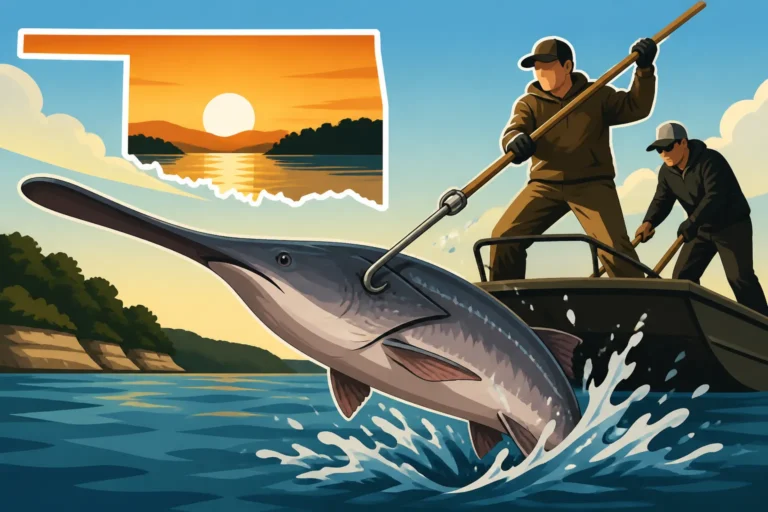
Oklahoma also offers some truly unique fishing experiences, none more distinct than snagging for paddlefish. These ancient, filter-feeding fish, also known as "spoonbill," can grow to immense sizes, and Oklahoma boasts one of the best paddlefish fisheries in the world. Grand Lake O' the Cherokees is the epicenter of paddlefish snagging, particularly in the spring when these fish migrate upriver to spawn. It's a physically demanding but incredibly exciting form of fishing.
Anglers use heavy tackle – stout rods, large reels, and heavy line – with a large treble hook weighted to sweep the bottom. The goal is to "snag" the fish as they swim by. It’s not about finesse; it’s about strength and endurance. Landing a 50-pound (or even 100-pound!) paddlefish is a serious workout! There are strict regulations around paddlefish snagging, including seasons and daily limits, so it's crucial to be aware of the rules. You can find more details in our guide on Paddlefish Snagging Season in Oklahoma. It's an experience unlike any other, connecting you to a prehistoric fish in a very direct way.
Bank Fishing and Family-Friendly Spots
Not everyone has a fancy bass boat or a deep-V crappie rig, and that's perfectly okay! Oklahoma offers a wealth of incredible fishing opportunities for bank anglers, kayakers, and families looking to introduce their kids to the joys of fishing. Accessibility, safety, and a good chance of catching something are key, and many of our lakes and state parks deliver on all fronts.
Accessible Shores and Piers
For those who prefer to keep their feet on solid ground, Oklahoma has numerous lakes with excellent bank access and fishing piers. These spots are often well-maintained, providing easy parking, restrooms, and sometimes even picnic areas. Lake Hefner and Lake Overholser in Oklahoma City are prime examples. While urban lakes, they offer great bank access and often produce good numbers of channel catfish, white bass, and sometimes even crappie. These lakes are perfect for a quick evening fishing trip after work or a relaxed weekend outing.
Many smaller municipal lakes, like Lake Stanley Draper or Lake Thunderbird, also have designated bank fishing areas and public piers that allow anglers to cast into deeper water without needing a boat. These locations are fantastic for targeting panfish like bluegill and sunfish, which are often eager biters and a perfect target for beginners. A simple worm under a bobber can lead to hours of fun. The key to successful bank fishing is often finding structure close to shore, like submerged brush, drop-offs, or even shaded areas where fish might congregate. Don't underestimate the power of a good pier to get you closer to the action!
State Park Fishing Destinations
Oklahoma's state parks are absolute treasures for family-friendly fishing. They combine beautiful natural settings with amenities that make a fishing trip enjoyable for everyone. Places like Lake Murray State Park, near Ardmore, offer excellent fishing for bass, crappie, and catfish, along with cabins, camping, hiking trails, and swimming beaches. You can spend the morning fishing from the bank or a rented boat, and the afternoon enjoying other outdoor activities.
Another fantastic option is Beavers Bend State Park, located on Broken Bow Lake. While the lake itself is a premier fishing destination, the park provides easy access, guided fishing tours, and family-friendly areas. Many state parks also have smaller ponds or designated "kids fishing" areas that are regularly stocked, ensuring a higher chance of success for the little ones. These environments are not just about catching fish; they're about creating memories, enjoying nature, and fostering a love for the outdoors. Remember, starting with simple techniques can make all the difference, so consider our Best Fishing Techniques for Beginners for some helpful advice.
| Lake/Spot | Primary Species | Best For | Key Feature |
|---|---|---|---|
| Lake Texoma | Striped Bass, Blue Catfish | Trophy Hunters | Nationally recognized striper fishery |
| Lake Eufaula | Largemouth Bass, Crappie | Diverse Action | Oklahoma's largest lake, abundant timber |
| Grand Lake O' the Cherokees | Largemouth Bass, Paddlefish | Bass & Unique Experiences | Northeast gem, major paddlefish snagging |
| Broken Bow Lake | Largemouth Bass, Smallmouth | Scenic Mountain Fishing | Clear water, stunning mountain backdrop |
| Tenkiller Ferry Lake | Smallmouth Bass, Crappie | Finesse & Clear Water | Deep, clear waters, 10-inch crappie minimum |
| Fort Gibson Lake | Largemouth Bass, Crappie | Consistent Catches | Diverse structure, popular for tournaments |
| Lake Murray | Largemouth Bass, Catfish | Family-Friendly | State Park amenities, good bank access |
| Lower Mountain Fork River | Rainbow Trout | Year-round Trout | Cold-water stream, unique to Oklahoma |
| Canton Lake | Walleye | Walleye Specialists | Premier walleye fishery, spring run |
| Lake Arcadia | Channel Catfish, White Bass | Urban & Accessible Angling | Good bank fishing, close to OKC |
Planning Your Oklahoma Fishing Adventure
So, you've got your sights set on an Oklahoma fishing trip – fantastic! But before you hit the water, there are a few practical considerations to ensure your adventure is smooth, safe, and legal. Getting your ducks in a row with licenses and gear can make all the difference between a frustrating outing and a truly memorable one.
Essential Gear and Licensing
First things first: you absolutely need an Oklahoma Fishing License Requirements in Oklahoma if you're 16 years or older. This isn't just a suggestion; it's the law. You can purchase them online through the ODWC website, at many sporting goods stores, or even at some lake marinas. Make sure you get the right type of license for your residency status and the duration of your trip. Ignoring this step can lead to hefty fines and ruin an otherwise perfect day on the water.
Beyond the license, consider the gear appropriate for your target species and location. If you're chasing trophy blue catfish on Texoma, you'll need heavy-duty rods and reels capable of handling powerful fish and heavy weights. For crappie, light action rods and small jigs or minnow rigs are key. Bank anglers will appreciate a sturdy rod holder and a comfortable chair. A tackle box stocked with a variety of lures, hooks, weights, and line is always a good idea. Don't forget essentials like a pair of pliers, a measuring tape (for those size limits!), and a cooler for your catch. If you plan on kayaking, our Kayak Fishing Gear Guide for Oklahoma Lakes can help you get equipped.
Hiring a Guide or Planning Solo
Once you know where you want to go and what you want to catch, you have a choice: go it alone, or enlist the help of a local expert. For many anglers, the joy is in the planning and execution of a solo or group trip, exploring new waters and figuring out the bite on their own. There’s a definite satisfaction in that. With good maps, fish finders, and research, you can absolutely have a successful trip. The Oklahoma Department of Wildlife Conservation website is an excellent resource for fishing reports, regulations, and public access points.
However, if you're new to an area, targeting a particularly challenging species like trophy striped bass, or simply want to maximize your chances of success without the learning curve, hiring a professional fishing guide is an excellent investment. A good guide knows the lake intimately, understands seasonal patterns, has all the necessary gear, and can teach you specific techniques for that body of water. They save you time and greatly increase your odds of catching fish. Websites like FishingBooker are excellent platforms for finding and booking reputable guides across Oklahoma, providing reviews and details about their specialties. They can make the difference between a decent day and a truly epic fishing memory.
Regional Hotspots: Northeast, Southeast, Central, and Southwest Oklahoma
Oklahoma is a big state, and its fishing opportunities are incredibly varied from one region to the next. What you'll find in the mountainous southeast is vastly different from the open plains of the northwest or the expansive reservoirs of the northeast. Understanding these regional differences can help you fine-tune your fishing plans and explore some truly unique fisheries.
Northeast Oklahoma's Grand Waters
Northeast Oklahoma is often considered the "Lakes Country" of the state, and for good reason. It's home to some of our largest and most famous bodies of water, offering incredible diversity for anglers. Grand Lake O' the Cherokees is arguably the crown jewel, a sprawling reservoir known for its fantastic bass fishing (largemouth and spotted), incredible crappie, and world-class paddlefish snagging. The sheer size and variety of structure, from rocky bluffs to numerous creek arms, mean there's always something to explore. You could spend a lifetime fishing Grand Lake and still discover new honey holes.
Just a short drive away, you'll find Fort Gibson Lake and Lake Hudson, both known for their excellent crappie and bass fisheries. These lakes offer a slightly different feel, with extensive timber and a strong forage base that keeps fish populations healthy. If you're looking for consistent action and a wide range of species, northeast Oklahoma is hard to beat. The infrastructure around these lakes is also well-developed, with plenty of marinas, bait shops, and lodging options.
Southeast's Scenic Mountain Lakes
Head to southeastern Oklahoma, and the landscape completely transforms into rolling hills and the stunning Ouachita Mountains. This region offers a distinct fishing experience, often characterized by clearer, deeper waters and picturesque surroundings. Broken Bow Lake is the star here, famous for its clear, cold water and impressive largemouth bass. It's a truly beautiful lake to fish, surrounded by pine forests, offering a serene and often secluded angling experience. The Mountain Fork River, below the lake, is Oklahoma's only year-round trout fishery, a unique gem that draws fly fishermen from across the region.
Smaller lakes like Sardis Lake and Lake Wister also offer excellent fishing for bass, crappie, and catfish, often with less pressure than the larger northern lakes. The focus here is often on the clear water fisheries, demanding a slightly more finessed approach. If you appreciate natural beauty as much as a good bite, southeast Oklahoma's fishing spots are sure to impress.
Central Oklahoma's Urban Angling
Even in the heart of our major metropolitan areas, central Oklahoma provides surprisingly robust fishing opportunities. While not boasting the massive reservoirs of other regions, lakes around Oklahoma City and Tulsa offer accessible, convenient fishing that often yields excellent results. Lake Hefner and Lake Overholser in Oklahoma City are popular for white bass runs, channel catfish, and even some largemouth. They provide a quick escape for urban anglers who don't have time for a long drive.
Lake Thunderbird, near Norman, is another central Oklahoma favorite. It's a large, diverse lake with good populations of bass, crappie, and channel catfish, making it a great all-around fishery. Many anglers find success here targeting brush piles for crappie or working the abundant riprap for bass and catfish. The convenience of these central locations means you can often squeeze in a few hours of fishing after work or on a busy weekend, proving that you don't always have to travel far to find a good bite.
Southwest's Unique Fisheries
Southwest Oklahoma offers its own distinct flavor of fishing, often characterized by more open, prairie landscapes and some unique fisheries. Lake Ellsworth and Lake Lawtonka, both near Lawton, are known for their strong populations of largemouth bass and channel catfish. These lakes can be particularly productive after rains, as nutrients wash into the system, sparking a feeding frenzy.
Further west, you'll find smaller lakes like Lake Altus-Lugert, which can offer decent catfish and white bass fishing, especially during seasonal runs. This region's lakes are often more susceptible to wind, so picking your days can be crucial. However, for those willing to explore, the southwest can deliver some rewarding angling experiences, often with fewer crowds and a true sense of being out in the vast Oklahoma landscape.
Disclaimer
Please remember that fishing regulations, including license requirements, bag limits, and length limits, can change. Always consult the latest Oklahoma Department of Wildlife Conservation (ODWC) regulations before heading out on the water. This guide is for informational purposes only and should not be considered legal advice. Stay safe and enjoy your time on Oklahoma's fantastic waters!