Best Time of Year to Snag Paddlefish at Grand Lake, Oklahoma
There’s nothing quite like the thrill of feeling that powerful tug on your line, knowing it could be one of Oklahoma’s prehistoric giants – the paddlefish. But let's be honest, trying to pinpoint the absolute best time to hit the water for snagging these elusive creatures can feel like chasing a ghost if you don't know the secrets. This guide is here to unravel the mystery, giving you the real lowdown on when to target Grand Lake for its incredible paddlefish snagging opportunities.
Understanding Paddlefish and Their Spawning Journey
Before we dive into the "when," it’s important to understand what makes paddlefish so special and why they behave the way they do. It’s not just about luck; it's about knowing their ancient rhythms.
The Unique Biology of Paddlefish
Paddlefish are truly incredible creatures, often called "living fossils" because their lineage dates back millions of years. They're characterized by that distinct, paddle-shaped rostrum (snout) which is packed with electroreceptors that help them find their zooplankton diet. Unlike most fish, they're filter feeders, constantly swimming with their mouths open, sifting tiny organisms from the water. This unique feeding strategy means they don't strike traditional baits, which is why snagging is the preferred method for catching them.
In Oklahoma, Grand Lake O' the Cherokees stands out as one of the premier locations for these magnificent fish. The lake's deep, nutrient-rich waters and its connection to major river systems like the Neosho and Spring Rivers provide the perfect habitat. These rivers are crucial because they serve as the paddlefish's natural highways during their annual spawning migrations. It’s this instinctual journey that brings them into concentrated numbers, making them accessible to anglers. Knowing that they rely on these river systems is key to understanding when and where to find them.
The Annual Spawning Run: Why it Matters for Snagging
The magic really happens during the paddlefish's annual spawning run. When conditions are just right, these otherwise solitary and dispersed fish gather in large groups and migrate upstream from the main lake into the river systems. This is an incredible natural phenomenon, driven by the primal urge to reproduce, and it's precisely why snagging becomes a viable and exciting fishing technique. Without this concentrated movement, trying to find a paddlefish in the vast expanse of Grand Lake would be like finding a needle in a haystack.
The impetus for this migration is a combination of environmental factors, primarily water flow and temperature. As spring rains swell the rivers and reservoirs, increasing water levels and current, and as the water temperature begins to climb out of its winter chill, paddlefish receive their biological cue. They follow these environmental signals, pushing upstream towards traditional spawning grounds. It's during this concentrated upstream movement, when they're navigating river channels and staging below dams, that anglers have their best shot. Their bodies are streamlined for these powerful upstream swims, and when they're stacked up in these areas, your chances of a successful snag dramatically increase.
Prime Time for Snagging: The Spring Window
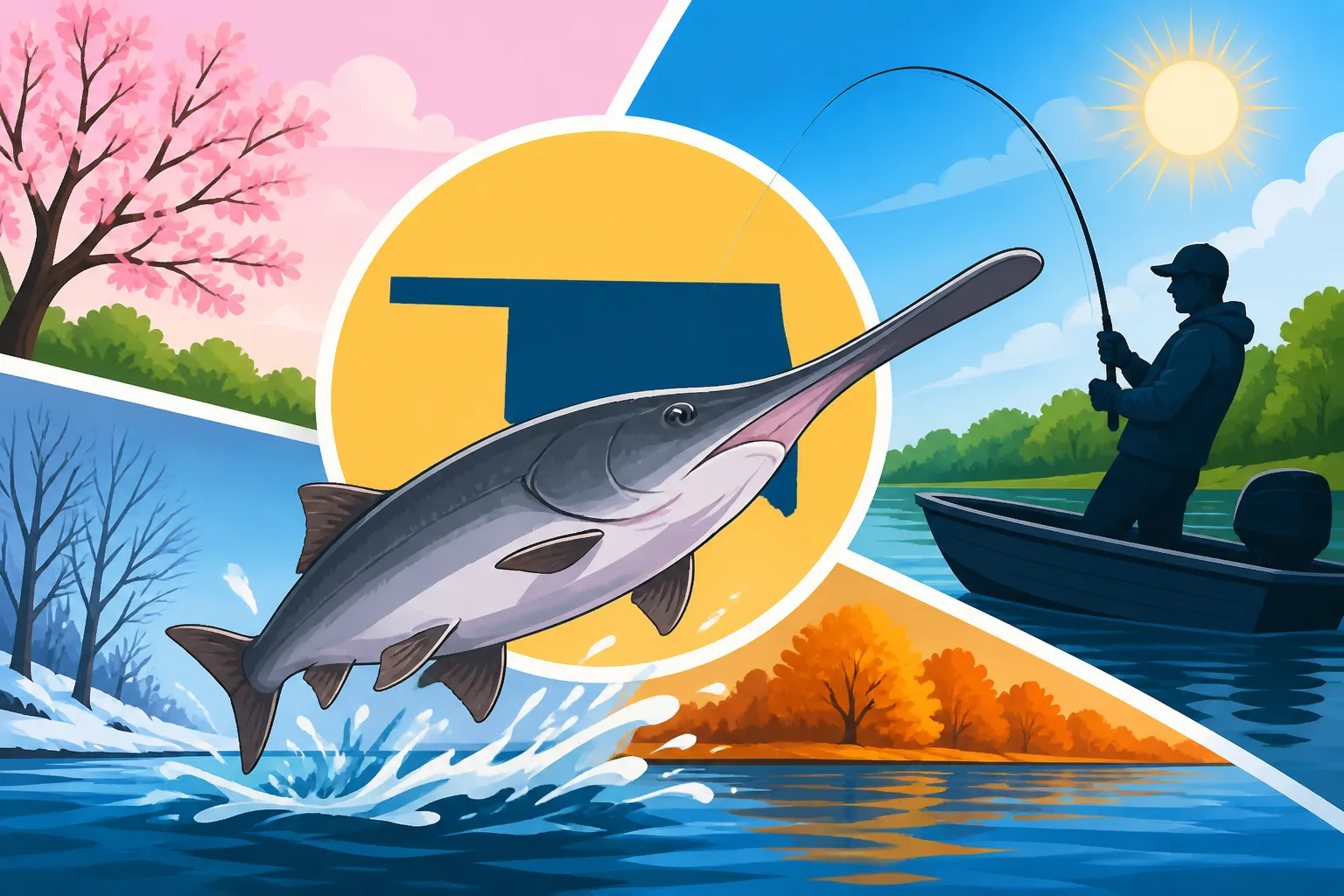
If you're serious about snagging paddlefish at Grand Lake, mark your calendar for spring. This is when all the stars align for the best action, creating an unforgettable experience.
Ideal Months: March and April
Without a doubt, the sweet spot for paddlefish snagging at Grand Lake is typically March and April. This two-month window is when the natural conditions converge to create peak activity. By mid-March, after the last gasp of winter, the water temperatures start to rise consistently, signaling to the paddlefish that it's time to begin their journey. The initial surge of fish often hits around this time, offering good opportunities, especially in the deeper channels leading into the rivers.
As April rolls around, especially into mid-April, the run often intensifies. You'll find a higher concentration of fish staging in the river arms and below the dams. The excitement on the water during these weeks is palpable; it’s a flurry of activity with boats and bank anglers all vying for a shot at these giants. It's important to remember that while this is the ideal window, the exact peak can shift a week or two earlier or later each year, entirely dependent on the specific weather patterns and water conditions. Always be prepared for a bit of variability from one season to the next, but if you're planning a trip, March and April are your best bets.
The Critical Role of Water Flow and Level
When it comes to paddlefish snagging, water flow and level are arguably even more critical than the calendar date. These fish are highly responsive to changes in their environment, and heavy rainfall and subsequent dam releases are their primary motivators. Specifically at Grand Lake, the operations of the Pensacola Dam on the Neosho River play a huge role. When the dam is generating power or releasing water to manage levels, it creates a strong current that paddlefish instinctively follow upstream. This surge of moving water acts like a siren call, drawing them from the main lake into the river channels.
Anglers who consistently do well keep a close eye on the discharge rates from the dam, as well as recent rainfall totals in the watershed. A good, strong flow in the river system helps to concentrate the fish in predictable areas, often in the deeper pools and eddies just downstream of rapids or current breaks. Too little flow, and the fish might not migrate as strongly or might disperse more widely. Too much, and the current can become too powerful for effective snagging, or even unsafe. Many experienced anglers will check online resources for current and projected water levels and flows from the Grand River Dam Authority (GRDA) before heading out. This vigilance can make or break a trip, ensuring you’re on the water when the fish are truly on the move.
Water Temperature Sweet Spot
While water flow gets a lot of attention, water temperature is the silent, underlying trigger for the paddlefish spawn. These fish typically begin their migratory movements when the water temperatures consistently climb into the 45-55°F (7-13°C) range. As the water warms further into the low to mid-50s, the spawning activity really ramps up, concentrating the fish in the spawning grounds. This temperature range is crucial because it directly influences their biological clock, telling them it's time to reproduce.
You might be thinking, "How do I know the water temperature?" Well, many modern fish finders have built-in thermometers, which are incredibly handy for boat anglers. For those fishing from the bank, a simple surface thermometer can give you a good indication, or you can often find real-time water temperature data through online resources provided by local authorities or fishing forums. If you hit the water when the temperature is too cold (below 40°F), the fish will likely still be deep and scattered in the main lake. If it gets too warm (above 60°F), the peak spawning activity may have subsided, and the fish will start to disperse again. Hitting that optimal window, where both water flow and temperature are working together, is the key to maximizing your chances.
Navigating the Snagging Season: Regulations and Practical Tips
Knowing when to go is just one piece of the puzzle. You also need to be prepared with the right information, gear, and an understanding of where to focus your efforts. Oklahoma has specific rules to ensure the health of the paddlefish population.
Key Regulatory Dates and Limits
It's absolutely essential to be aware of the specific regulations for paddlefish snagging in Oklahoma. The season is generally set, and it's not a free-for-all year-round. Typically, the paddlefish snagging season in Oklahoma, particularly for Grand Lake and its tributaries, runs from March 15th through May 15th. This tight window is specifically designed to coincide with the paddlefish's natural spawning migration, allowing anglers to target them during their most concentrated period while also providing protection outside of this crucial time.
Beyond the season dates, there are also daily and annual limits you need to adhere to. Anglers are usually allowed a daily bag limit of one paddlefish, and there's often an annual limit of two paddlefish per person. This means once you've kept two paddlefish in a license year, you're done for the season, even if you continue to fish. There can also be length restrictions, though these can vary. Always double-check the current year's Paddlefish Snagging Season in Oklahoma rules with the Oklahoma Department of Wildlife Conservation (ODWC) before you head out. These regulations are in place to ensure the sustainability of this unique fishery, and adhering to them is part of being a responsible angler.
Essential Gear for a Successful Outing
Paddlefish are powerful fish, and successfully snagging them requires heavy-duty gear that can withstand their incredible strength. This isn't a job for your ultralight spinning rod! You'll need a stout, heavy-action rod, typically 7 to 9 feet long, paired with a large, robust casting or spinning reel. Think reels designed for big catfish or saltwater species, capable of holding a substantial amount of heavy line. Many anglers opt for braided line in the 80 to 100-pound test range because of its incredible strength, lack of stretch, and abrasion resistance, especially when fishing around submerged timber or rocks. Monofilament in the 30-50 pound test can work, but braid offers a significant advantage.
When it comes to hooks, large, heavy-duty treble hooks are standard for snagging. Sizes like 8/0, 10/0, or even 12/0 are common. These hooks need to be strong enough not to straighten out under the immense pressure of a struggling paddlefish. You'll also need heavy weights, often 8 to 16 ounces, depending on the current, to get your hooks down to where the fish are holding. Many anglers find their gear online, with a wide selection of suitable rods, reels, and terminal tackle available on platforms like Amazon, offering convenience and competitive pricing. For a more detailed breakdown, check out our guide on What Gear Do You Need for Paddlefish Snagging in Oklahoma.
Best Locations Within Grand Lake
Grand Lake is vast, so knowing where to focus your snagging efforts is crucial. The key areas for paddlefish snagging are almost always found in the river arms and tributaries that feed into the main lake, particularly those influenced by dam operations. The most famous and productive spot is typically the tailwater area below Pensacola Dam, where the Neosho River flows into the lake. The powerful current and concentrated fish make this a prime location, drawing anglers from all over.
Other hot spots can include the main channel of the Neosho River arm and the Spring River arm as they wind their way into Grand Lake. Look for deeper holes, bends in the river, and areas just downstream of rapids or riffles where paddlefish might be staging before or during their spawning run. These areas act as natural funnels and holding spots. Bank anglers often find success from accessible points along these river sections, while boat anglers can explore a wider range of the river channel. Keep an eye out for other boats, as anglers tend to congregate in productive areas, which can sometimes indicate a good spot. Our article on Best Paddlefish Snagging Spots on Grand Lake, Oklahoma goes into even more detail about these specific honey holes.
Patience, Persistence, and Safety
Paddlefish snagging is not always about instant gratification; it requires a good dose of patience and persistence. You might spend hours casting and retrieving without a single bite, or rather, a snag. The fish are constantly moving, and conditions can change rapidly. Don’t get discouraged if the action isn't immediate. Sometimes, just a slight adjustment in your casting angle, the depth of your retrieve, or even moving 50 yards down the bank can make all the difference. The challenge and eventual reward are part of the allure.
Safety is paramount, especially when fishing in crowded areas or near swift currents below dams. Always wear a life jacket, even if you're an experienced boater, and make sure children on board are properly fitted in theirs. Be mindful of other anglers, both on boats and on the bank, to avoid tangles and accidents. The heavy weights and large treble hooks can be dangerous if not handled carefully. It’s also wise to check weather forecasts, as sudden storms or increased dam releases can quickly turn safe conditions into hazardous ones. Responsible angling includes being prepared and prioritizing safety, ensuring that your paddlefish adventure is both exciting and incident-free.
Beyond the Peak: What About Other Times?
While spring is the undisputed champion for paddlefish snagging, it's natural to wonder if there are other windows of opportunity or if these amazing fish can be targeted at other times. The short answer is usually no, but let's break down why.
Early Spring and Late Spring Opportunities
Sometimes, if the weather is unusually warm, the paddlefish run can start a little earlier than mid-March. If you're really keen and keeping a close eye on those water temperatures and river flows, you might find some success in late February or early March. The numbers might not be as high, but the advantage is usually fewer crowds, giving you more space to work your technique. It can be a bit of a gamble, but for those who love the peace and quiet, it's a consideration.
Similarly, if spring is prolonged with continued rainfall and moderate temperatures, the run can extend slightly past the May 15th official closing date. However, once the season closes, it closes. Before May 15th, during late spring, the fish that haven't spawned or are lingering in the river arms might still be present, but generally, their numbers are diminishing, and they're starting to disperse back into the main lake. The fishing pressure might also decrease, which can be a plus, but the overall odds of success will be lower than in the peak March-April window. So, while there are marginal opportunities, they rarely compare to the heart of the season.
The Rest of the Year: Why Snagging is Limited
Outside of that specific spring spawning window, trying to snag paddlefish is largely unproductive, if not impossible. During the summer, fall, and winter months, paddlefish revert to their natural, dispersed behavior in the vast open waters of Grand Lake. Since they are filter feeders and don't actively chase or strike lures, finding them when they are spread out in deep water is incredibly difficult. They simply aren't concentrated in predictable locations like they are during their spawning migration.
Their feeding habits also make them less susceptible to snagging outside of the spawn. When they are not actively migrating upstream against a current, they are often suspended in the water column, leisurely filter-feeding, and not as likely to encounter a snagging hook. Furthermore, the regulations specifically limit the snagging season to those spring months, meaning it's illegal to attempt to snag them outside of this period. This conservation measure is vital to protecting the species and ensuring healthy populations for future generations. So, for all intents and purposes, if you want to experience the thrill of paddlefish snagging, spring is truly the only game in town.
| Factor | Peak Snagging Season (March-April) | Early/Late Spring (Feb/May) | Off-Season (Summer-Winter) |
|---|---|---|---|
| Water Temperature | 45-55°F (7-13°C) | Varies (colder/warmer) | Warmer/Colder |
| Water Flow | High, Dam Releases | Variable | Low to Moderate |
| Fish Concentration | High, Spawning Migration | Moderate to Low | Very Low, Dispersed |
| Angler Crowds | High | Moderate | Minimal (Illegal) |
| Snagging Success | High | Low to Moderate | Virtually Zero |
| Legal Status | Legal (check specific dates) | Legal (check specific dates) | Illegal |
For those looking to explore other types of fishing throughout the year in Oklahoma, our guide on Oklahoma Fishing Seasons: A Month-by-Month Guide offers a broader perspective on what you can catch and when. But for paddlefish, stick to spring!
Disclaimer
Please remember that fishing regulations, including seasons, limits, and license requirements, can change. Always consult the official Oklahoma Department of Wildlife Conservation (ODWC) website or their current fishing regulations guide before planning your trip. This content is for informational purposes only and should not be considered a substitute for official legal guidance.