Striped Bass Trolling Techniques
There's nothing quite as frustrating as heading out to a vast Oklahoma reservoir, knowing those powerful striped bass are down there somewhere, but struggling to cover enough water or present your lure effectively to entice a bite. It feels like you're just drifting, hoping for luck, when what you really want is a consistent, repeatable method to put fish in the boat. This comprehensive guide will unravel the mysteries of striped bass trolling techniques, giving you the practical strategies and gear insights you need to confidently target these hard-fighting fish across Oklahoma's prime waters.
Why Trolling for Oklahoma Stripers is a Game Changer
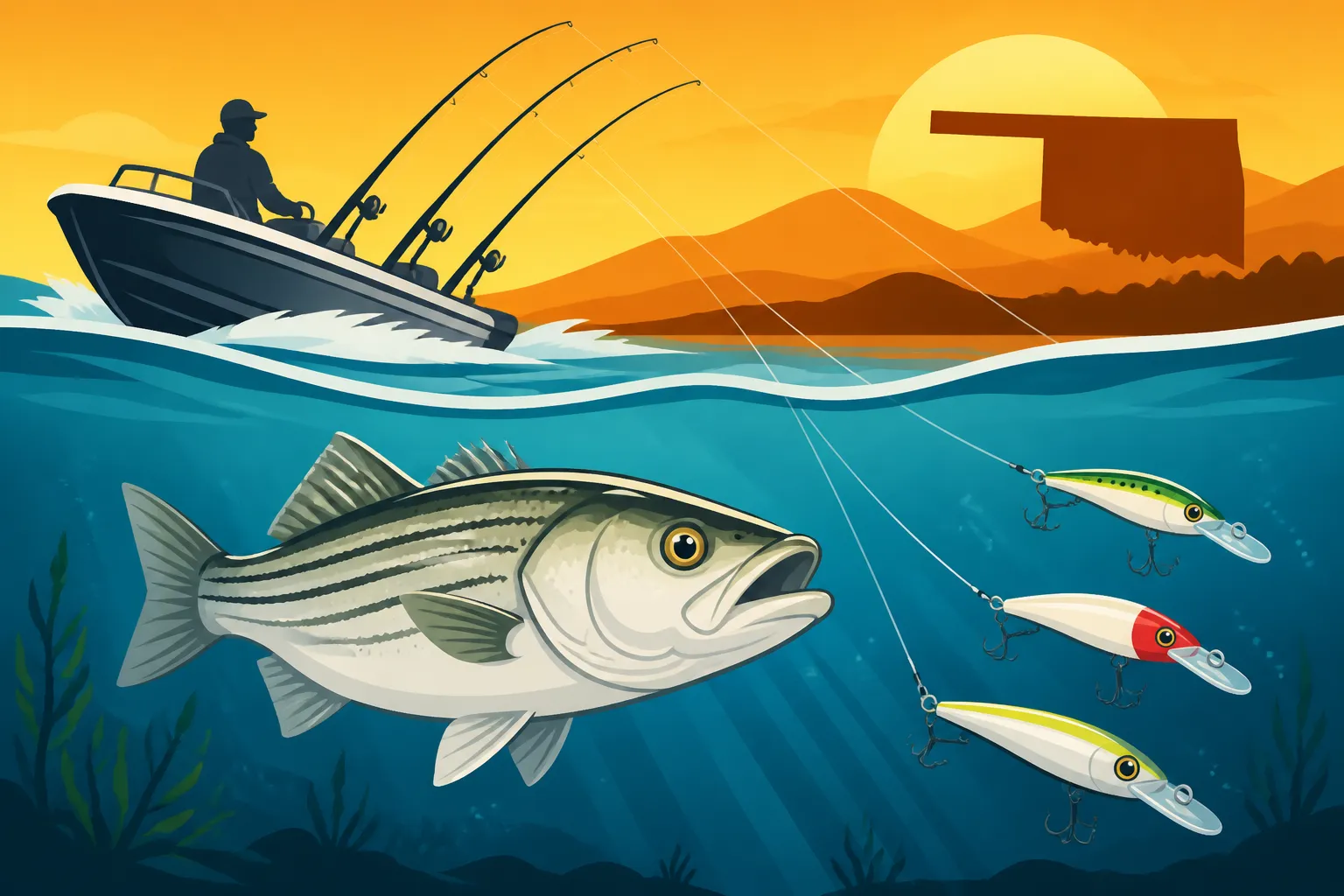
Trolling for striped bass isn't just a fishing method; it's a strategic approach that dramatically increases your odds of success on Oklahoma's massive lakes. Many anglers get stuck casting to visible boils or relying on live bait in one spot, but stripers are often on the move, chasing baitfish across vast open water. Trolling allows you to actively pursue them, covering significant territory and presenting your offerings to a much wider range of fish.
The Efficiency of Covering Water
Imagine you're on a lake like Texoma, a true striper paradise. This lake alone boasts over 89,000 acres, and the fish aren't going to be neatly packed into one corner waiting for you. Trolling, by its very nature, is about covering ground. Instead of casting into a small area and waiting, your boat becomes a mobile fishing platform, dragging multiple lures through different depths and across various underwater structures. This efficiency is paramount when trying to locate schools of nomadic stripers. You're constantly probing, searching, and increasing the chances of crossing paths with actively feeding fish. This strategy is particularly effective when you're exploring new areas or when the fish aren't showing themselves on the surface. It's an active hunt, not a passive wait, which can make all the difference on a slow day.
Targeting Deep-Water Giants
Oklahoma's reservoirs, especially in the warmer months, see striped bass retreating to cooler, deeper waters. These are often the biggest, most elusive fish, and they're not typically found near the surface in summer. Trolling, particularly with the aid of specialized gear like downriggers or lead core line, allows you to precisely target these deep-water haunts. You can place your lures exactly where the fish are holding, whether that's 30 feet down over a submerged creek channel or 50 feet deep along a thermocline. Without the ability to present your bait at these specific depths, you'd simply be fishing over their heads. This deep-water capability is a major advantage for trophy hunters and those looking for consistent action when the fish move off the shallows. Understanding how to use techniques like those outlined in "How to Troll for Striped Bass in Deep Water" will be crucial for these situations.
Equipping Your Boat for Striper Trolling Success
Successful striper trolling in Oklahoma hinges on having the right gear. This isn't just about having a rod and reel; it's about a complete system designed to withstand the power of these fish and effectively present your lures at the correct depths and speeds. Investing in quality equipment means less frustration and more fish in the cooler.
Rods, Reels, and Line Choices
When it comes to rods and reels for striped bass trolling, durability and power are key. You're not typically finesse fishing here. Look for medium-heavy to heavy action rods, often in the 7 to 8-foot range, with a sturdy backbone to handle the pull of powerful stripers and heavy trolling weights or downrigger balls. Graphite or composite blanks are excellent choices for their sensitivity and strength. Matching these with conventional reels, rather than spinning reels, is often preferred for trolling. Conventional reels, like those from Penn or Shimano, offer superior line capacity, cranking power, and drag systems necessary for fighting big fish while maintaining control over your trolling setup. Look for models with a high-quality, smooth drag that can handle long, sustained runs.
Your line choice is equally critical. For general trolling, a 20-30 lb monofilament line is a common choice due to its stretch, which acts as a shock absorber when a striper hits. However, many experienced trollers opt for braided line in the 30-50 lb range. Braid has virtually no stretch, offering increased sensitivity to detect subtle bites or changes in lure action, and its thinner diameter allows you to use lighter trolling weights to reach desired depths. If you go with braid, consider a 10-20 foot fluorocarbon leader (25-40 lb test) for abrasion resistance and invisibility in clearer water. For deep-water applications, specialized lines like lead core line are invaluable. This line has a lead center wrapped in nylon, allowing it to sink without additional weight. Each color segment (typically 10 yards) represents approximately 5 feet of depth at a common trolling speed, making depth control intuitive once you get the hang of it. You can find a wide range of these specialized lines and heavy-duty reels on platforms like Amazon.
Essential Lures and Baits for Trolling
The lures and baits you use while trolling for stripers are as varied as the conditions you might encounter. The goal is to imitate the primary forage fish in Oklahoma's reservoirs, which are often shad and sometimes sunfish or other small baitfish.
- Jerkbaits and Stickbaits: These are excellent choices for shallower to mid-depth trolling. Brands like Rapala (Deep Husky Jerk, Down Deep Rattlin' Fat Rap) or Bandit (Walleye Deep) are popular, as they dive to specific depths and have a realistic swimming action. Varying colors, from natural shad patterns to brighter chartreuse or firetiger, can be effective depending on water clarity and light conditions.
- Spoon Trolling: Heavy spoons, often called "striper spoons" or "flutter spoons," can be incredibly effective, especially when paired with downriggers or umbrella rigs. Brands like Tony Acetta's Pet Spoon or the Drone Spoon are well-regarded. Their wobbling action mimics a dying baitfish, which is irresistible to hungry stripers.
- Swimbaits and Grubs: Soft plastic swimbaits, often rigged on jig heads or as trailers on umbrella rigs, provide a very natural presentation. Large curly-tail grubs can also be very effective, especially when tipped with a piece of cut bait or a shad fillet for added scent.
- Umbrella Rigs: These are essentially multiple wire arms that spread out, allowing you to troll several lures or teasers at once, creating the illusion of a school of baitfish. They can be incredibly effective for enticing multiple strikes. You typically rig them with soft plastic swimbaits or small bucktail jigs on the arms and a larger "stinger" bait in the center. Knowing the "Best Trolling Rigs for Striped Bass Fishing" can really boost your success.
The key is to match the hatch and present your lure at the depth where the fish are holding, which can vary by season and time of day.
Investing in Fish Finders and Trolling Motors
Modern electronics are not just a luxury; they are indispensable tools for serious striper trollers in Oklahoma. A good fish finder allows you to "read" the underwater world, identifying bait schools, individual fish, and crucial submerged structures like humps, channels, and ledges where stripers often congregate. Look for units with clear, high-resolution screens and features like Down Imaging (DI) and Side Imaging (SI) from brands like Humminbird or Lowrance. These technologies provide incredibly detailed views of what's directly beneath and to the sides of your boat, helping you pinpoint exactly where the fish are. Understanding "Fish Finder Features That Matter Most on Oklahoma Reservoirs" is critical before making a purchase. You can find excellent models across various price points on Amazon.
A reliable trolling motor is another game-changer. While your main outboard engine handles the long runs, a bow-mounted electric trolling motor provides precise boat control, especially when trying to maintain a specific trolling speed or follow a contour. GPS-enabled trolling motors with features like "spot-lock" or "anchor mode" (e.g., from Minn Kota or Garmin) are incredibly useful. They can automatically maintain your boat's position or follow a pre-programmed route, freeing you up to focus on your rods. This is particularly advantageous when dealing with wind or current, ensuring your baits stay in the strike zone longer. A "Trolling Motor Setup for Oklahoma Striped Bass" can give you the nuanced control needed to refine your approach.
Mastering the Art of the Troll: Speed, Depth, and Patterns
Trolling isn't just dragging a lure behind a boat; it's a dynamic dance of variables. The most successful anglers understand how to manipulate their speed, depth, and boat patterns to consistently put their baits in front of hungry stripers.
Understanding Trolling Speeds and Depths
The "Trolling Speed for Striped Bass on Oklahoma Reservoirs" is not a fixed number; it's a range, typically between 2.5 and 4.5 miles per hour. The ideal speed depends on several factors: the type of lure you're using (some lures have optimal action at specific speeds), the activity level of the fish (aggressive fish might chase a faster bait, lethargic fish prefer slower), and the water temperature. In colder water, stripers are often less active, requiring a slower presentation. In warmer water, they might chase a faster-moving lure. Experimentation is key. Watch your rod tips – they should have a consistent, rhythmic throb, indicating your lure is swimming correctly. If it's erratic, your speed might be too fast or too slow for that particular bait.
Controlling depth is arguably the most critical aspect of trolling. Stripers are often found in specific depth zones, especially during warmer months when they follow the thermocline (the layer where warm surface water meets cooler deep water).
Here's a breakdown of common depth control methods:
- Lead Core Line: As mentioned, this line sinks at a predictable rate. Knowing how many colors you have out allows you to estimate your depth.
- Downriggers: These mechanical devices use a heavy ball to carry your main fishing line down to a precise depth, releasing the line when a fish strikes. They are the most accurate way to control depth and are often used for "Deep Water Striper Fishing Techniques."
- Planer Boards: These devices run out to the side of your boat, spreading your lines out laterally and allowing you to cover a wider swath of water without tangling. While they don't add much depth on their own, they are often used in conjunction with lead core or diving lures to target fish spread out horizontally.
- Diving Lures: Many crankbaits and stickbaits are designed to dive to specific depths, often indicated on their packaging. By varying line length, you can fine-tune their running depth.
A good rule of thumb is to start by trolling your lures slightly above the depth where you're seeing baitfish or stripers on your fish finder, as fish often look up to feed. If you're not getting bites, gradually adjust your depths deeper until you find the strike zone. Pay close attention to "How Deep to Troll for Striped Bass on Lake Texoma" as conditions can vary even on the same lake.
Effective Trolling Patterns and Routes
Just driving in a straight line isn't always the most effective strategy. Varying your trolling patterns can make a huge difference.
- S-Curves and Z-Turns: Instead of a straight line, make gentle S-curves or Z-turns with your boat. This causes your outside lures to speed up and rise in the water column, while your inside lures slow down and sink. This variation in speed and depth can often trigger strikes from following fish that were hesitant to commit. Many times, a strike will come just as you complete a turn.
- Contour Trolling: Use your fish finder and GPS to follow specific depth contours, like the edge of a submerged creek channel, a drop-off, or a hump. Stripers frequently patrol these transition areas, waiting to ambush baitfish.
- Structure-Oriented Trolling: Once you identify key underwater structure (e.g., old roadbeds, submerged timber, rock piles) on your electronics, make multiple passes over and around these features. Fish will often orient themselves to such structures.
Always mark the spot on your GPS when you get a bite. This allows you to make repeated passes through the productive area. If you consistently catch fish in a particular depth, speed, or pattern, try to replicate those conditions.
Reading Your Electronics for Optimal Placement
Your fish finder is your eyes underwater, and learning to interpret its readings is paramount for optimal lure placement. Don't just look for fish; look for baitfish schools. Stripers are predator fish, and they're rarely far from their food source. If you see dense clouds of baitfish, stripers are likely nearby, either below them, above them, or off to the sides.
Pay attention to:
- Thermocline: On many Oklahoma lakes during summer, you'll see a distinct line on your fish finder indicating the thermocline. This is often the comfort zone for stripers, providing cooler water and higher oxygen levels.
- Structure: Identify points, humps, ledges, and channels. Mark them on your GPS and actively troll over or along them.
- Individual Fish Marks: Distinguish between baitfish and larger arches indicating game fish. If you see large arches at a particular depth, adjust your lures to run at or just above that depth.
By continuously monitoring your electronics, you can make real-time adjustments to your trolling setup, ensuring your lures are always presented in the most productive zones.
Seasonal Adjustments for Year-Round Striper Trolling
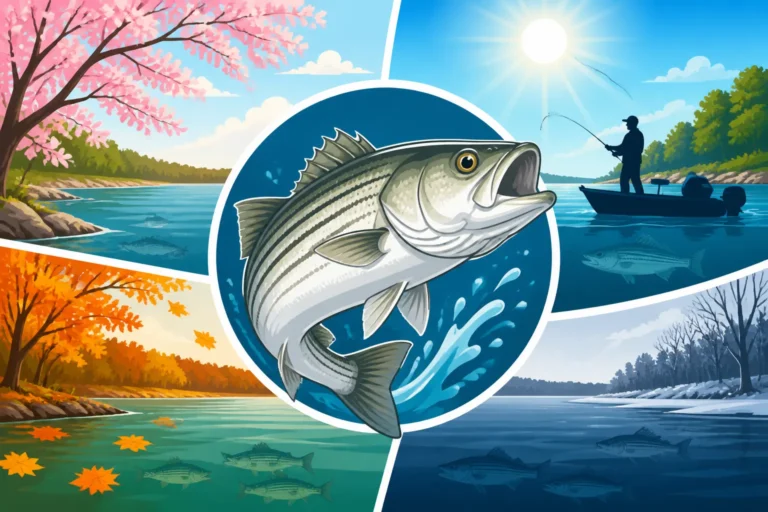
Striped bass behavior in Oklahoma is heavily influenced by water temperature and seasonal changes. To be a successful troller, you need to adapt your strategies throughout the year, understanding where the fish are likely to be and what they'll be feeding on.
Spring Migration and Spawning Runs
As winter gives way to spring, rising water temperatures trigger significant changes in striper behavior. In late winter and early spring, stripers will often begin to move up into shallower areas, especially river arms and main lake points, following baitfish that are also moving shallower to spawn. This is a fantastic time for trolling, as fish can be less scattered.
- Depth and Location: Look for stripers in the upper 10-25 feet of the water column, particularly in the warmer northern parts of lakes or river channels. Target main lake points, creek channel bends, and flats adjacent to deeper water.
- Lure Selection: Crankbaits that dive to 10-20 feet, lipless crankbaits, and medium-sized swimbaits are highly effective. Natural shad patterns are usually best.
- Trolling Speed: Start with moderate speeds (2.5-3.5 mph) and adjust based on fish activity. Sometimes a slightly faster pace can trigger a reaction strike from fish preparing to spawn or actively feeding.
- Example: On Lake Texoma, the spring striper run is legendary. Anglers often troll the main lake channels and creek mouths where stripers stage before moving into rivers like the Red and Washita for their pseudo-spawn. This period is prime for "Lake Texoma May Striper Fishing in Oklahoma."
Summer Deep Water Strategies
Summer is when Oklahoma's stripers move deep to escape the heat. This is typically when downriggers, lead core line, and heavy trolling spoons or umbrella rigs really shine. The thermocline becomes your best friend.
- Depth and Location: Stripers will generally hold in or just above the thermocline, which can be anywhere from 25 to 50+ feet deep, depending on the lake and specific conditions. Target main lake humps, deep points, submerged islands, and old river channels.
- Lure Selection: Heavy spoons, large swimbaits, and umbrella rigs are excellent for deep trolling. Use bright colors if the water is stained, or natural shad patterns if it's clear.
- Trolling Speed: Slightly slower speeds (2.0-3.0 mph) are often effective in deep, cool water, as fish may be less aggressive.
- Example: On Lake Eufaula, known for its deep structure, summer stripers will stack up on deep ledges. Trolling spoons behind downriggers set at the thermocline depth can be incredibly productive. Focus on areas where you see schools of baitfish suspended over deep structure on your electronics. This is precisely when "How to Troll for Striped Bass in Deep Water" becomes essential reading.
Fall Feeding Frenzy and Winter Holds
As water temperatures begin to drop in the fall, stripers become incredibly active, entering a "feeding frenzy" to bulk up for winter. This is a prime time for trolling, as fish are often shallower and very aggressive.
- Depth and Location: Fish will start to move shallower again, often chasing baitfish into large coves, major creek arms, and along main lake points. Depths can range from 15 to 40 feet, depending on how far into fall you are.
- Lure Selection: A wide variety of lures work well: deep-diving crankbaits, larger swimbaits, bucktail jigs, and even umbrella rigs. Keep those natural shad patterns handy.
- Trolling Speed: A moderate to fast retrieve (3.0-4.0 mph) can trigger aggressive strikes.
- Example: On Grand Lake O' the Cherokees, fall stripers will often be found chasing shad into the Honey Creek or Horse Creek arms. Trolling these areas with a spread of diving crankbaits can yield fantastic results.
Winter fishing can be tough, but trolling can still be effective, especially on milder days. Stripers will typically school tightly in deep main lake basins or river channels.
- Depth and Location: Look for them congregated in the deepest parts of the lake, often near the bottom in 40-70+ feet of water.
- Lure Selection: Slower presentations with spoons or large jigs trolled very slowly (1.5-2.5 mph) are often best. You might even want to tip your lures with cut bait for added scent.
- Trolling Speed: Very slow, just enough to get your lures working correctly.
- Example: On Lake Keystone, winter stripers will often school up in the deeper sections of the Arkansas River arm. Trolling over these schools with vertical jigs or heavy spoons on downriggers can produce strikes, although they might be more subtle.
Reading the Water: Interpreting Electronics and Conditions
Becoming a successful striper troller means becoming a student of the water, not just relying on luck. Your electronics are your classroom, and understanding environmental conditions is your curriculum.
Interpreting Your Fish Finder Readings
Your fish finder is more than just a depth sounder; it's a window into the underwater world. Learning to interpret the various marks, arches, and structures it displays is crucial for finding and catching striped bass.
- Baitfish Schools: These will appear as dense clouds or balls on your screen. Stripers are almost always near bait, so finding these schools is your first priority. Note their depth and size. Are they tightly packed or scattered? Tightly packed schools often indicate a predator nearby.
- Striper Arches: Larger, distinct arches often signify individual striped bass. If you see multiple arches, especially if they are oriented horizontally, you've likely found a school. Pay attention to the depth of these arches in relation to the baitfish. Are the stripers below, in, or above the bait? This dictates where you should present your lures.
- Thermocline: As mentioned, this is a visible line on your screen where the water temperature changes abruptly. In summer, stripers often hold at or just above this line. If your fish finder has a temperature graph, use it to track this crucial layer.
- Structure: Your side imaging and down imaging features will reveal ledges, humps, submerged timber, and old roadbeds. Mark these on your GPS. These are prime ambush points for stripers, and knowing their exact location allows you to troll precisely over or along them. Practice identifying these features and relating them to your position on the water.
The more you use your fish finder, the better you'll become at discerning what's below. Don't be afraid to adjust sensitivity and range settings to get the clearest picture of what you're looking for.
Understanding Water Temperature and Clarity
Water temperature and clarity are two of the most significant environmental factors influencing striped bass behavior.
-
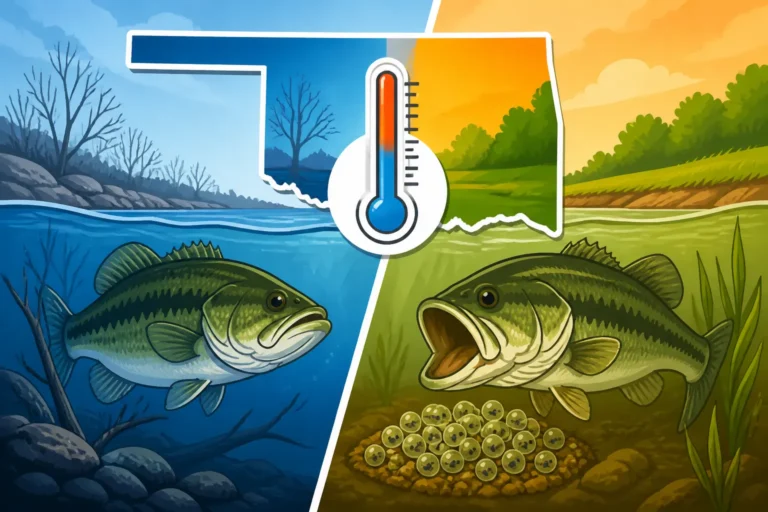
Water Temperature: Stripers are cold-blooded, and their metabolism is directly tied to water temperature. They generally prefer water temperatures between 55-75°F. Outside this range, they might become more lethargic or seek out specific thermal refuges.
- Spring: Look for rising surface temperatures in creek arms and northern lake sections as stripers move shallower.
- Summer: The thermocline becomes critical. Stripers will seek the cooler, oxygenated water below the surface heat.
- Fall: As surface temperatures cool, stripers become highly active and can be found across a wider range of depths.
- Winter: They will congregate in the deepest, most stable water temperatures available.
Keeping a portable water temperature gauge handy, or relying on your boat's built-in transducer, is a wise practice.
-
Water Clarity: This affects how fish see your lures and where they prefer to hide.
- Clear Water: In very clear water (common on lakes like Broken Bow), stripers rely heavily on sight. Lures in natural colors (shad, silver) are often best. Fish might be spooked by boat noise, so longer setbacks on your lines might be necessary.
- Stained or Murky Water: In stained or muddy water (which can occur after heavy rains), stripers rely more on their lateral line (vibration) and scent. Brighter, more vibrant lure colors (chartreuse, orange, firetiger) and lures with rattles or a strong vibration are more effective. Also, don't be afraid to tip your lures with cut bait to add a scent trail.
Being aware of these conditions before and during your trip allows you to make informed decisions about lure choice, color, and trolling depth, giving you a distinct advantage.
Navigating Oklahoma's Striper Hotspots with Confidence
Oklahoma is blessed with several fantastic striped bass fisheries, each with its unique characteristics. Knowing which lakes to target and what to expect from them will significantly improve your trolling success.
Lake Texoma: The Ultimate Striper Destination
When you think of striped bass fishing in Oklahoma, Lake Texoma immediately comes to mind. Straddling the Oklahoma-Texas border, this massive reservoir is renowned as the "Striper Capital of the World." Its immense size, abundant forage (primarily gizzard shad), and fertile waters allow striped bass to grow large and thrive. This is the place where many anglers specifically go to target stripers, often employing sophisticated trolling techniques.
- Key Areas for Trolling: The main lake body, particularly around the Red River and Washita River arms, offers vast expanses for trolling. Look for underwater humps, ledges, and channel swings. Areas around Platter Flats, the Eisenhower State Park side, and the mouth of Big Mineral Creek on the Texas side are consistently productive. Early mornings and late evenings during the summer often see stripers moving shallower to feed, but deep-water trolling is king during the heat of the day. Guides like "Striped Bass Fishing Techniques for Oklahoma's Lake Texoma" can provide invaluable specific insights.
- Seasonal Specifics: Spring brings the famous Texoma striper run up the rivers, but excellent trolling opportunities exist throughout the main lake as fish stage. Summer means deep-water trolling with downriggers. Fall sees a resurgence of aggressive feeding in shallower to mid-depths, and even winter can be productive with slow, deep presentations.
- Lure & Speed: Large crankbaits, heavy spoons, and umbrella rigs are staples here. Trolling speeds generally range from 2.5 to 4 mph, but always adjust to conditions. Knowing the "Lake Texoma May Striper Fishing in Oklahoma" patterns can give you a head start.
Other Productive Striper Lakes
While Texoma holds the crown, several other Oklahoma lakes offer fantastic striped bass trolling opportunities for those looking to explore.
- Lake Eufaula: Oklahoma's largest lake, Eufaula, also boasts a very healthy population of stripers, though perhaps not the sheer numbers of Texoma. Its expansive open water and numerous creek arms provide excellent trolling grounds. Focus on the main lake channels, deep points, and humps, especially where you see schools of baitfish. Eufaula stripers can often be found in the 20-40 foot range during summer.
- Keystone Lake: Located near Tulsa, Keystone is another excellent striper fishery. It’s known for its consistent production and often provides a good mix of smaller "schoolie" stripers and larger fish. The upper river arms (Arkansas and Cimarron) can be productive in spring and fall, while the main lake body offers deep-water trolling in summer.
- Grand Lake O' the Cherokees: In Northeast Oklahoma, Grand Lake is famous for its crappie and bass, but it also holds a respectable population of striped bass, particularly in its clear, deep waters. Trolling the main lake and larger creek arms like Honey Creek or Horse Creek can yield good results, especially during the fall feeding frenzy.
- Broken Bow Lake: This beautiful, clear-water lake in southeastern Oklahoma has a smaller but growing population of striped bass. Its clear water often means stripers are deeper and more wary, making precise trolling with natural-colored lures essential.
Each of these lakes presents unique challenges and rewards, but the fundamental trolling principles remain the same: find the bait, find the structure, and present your lure effectively at the right depth and speed. Consider checking out "Where to Catch Striped Bass in Oklahoma" for more localized insights.
Important Considerations for a Safe and Legal Trip
Before you even think about dropping a line, it's absolutely crucial to prioritize safety and ensure you're compliant with all Oklahoma fishing and boating regulations. A successful trip is a safe and legal one.
Boating Safety and Gear Essentials
Safety should always be your number one concern on the water, especially when you're out trolling in larger reservoirs where weather can change quickly and other boat traffic can be heavy.
- Life Jackets (PFDs): Ensure you have enough Coast Guard-approved personal flotation devices (PFDs) for everyone on board. By law, children 12 years of age and younger must wear a life jacket at all times when underway on any vessel in Oklahoma. It's highly recommended that everyone wears one while fishing, especially when trolling and potentially handling heavy gear or large fish. You'll want to review the "Oklahoma Life Jacket and PFD Rules for Boaters" to ensure full compliance.
- Throwable Device: If your boat is 16 feet or longer, you must have at least one Type IV throwable flotation device (like a cushion or ring buoy) on board, immediately accessible.
- Fire Extinguisher: All motorboats must carry a fire extinguisher if they have an enclosed engine compartment, an enclosed fuel tank compartment, or other permanent fuel tanks.
- Navigation Lights: Ensure your navigation lights (red/green bow lights and an all-around white stern light) are in working order, especially if you plan on fishing at dawn, dusk, or after dark.
- Sound-Producing Device: A whistle or horn capable of producing a two-second blast audible for at least half a mile is required.
- First Aid Kit: A well-stocked first aid kit is essential for any minor injuries that might occur.
- Weather Awareness: Always check the marine weather forecast before heading out. Oklahoma storms can pop up quickly. If high winds or lightning are expected, it's best to stay off the water. Your boat is a small vessel on a vast lake, and Mother Nature demands respect.
- VHF Radio/Cell Phone: Have a reliable means of communication for emergencies. A marine VHF radio is ideal for communicating with other boaters and rescue services, but a fully charged cell phone in a waterproof case is a good backup.
Oklahoma Regulations and Limits
Fishing without the proper authorization or disregarding the rules can quickly turn a great day on the water into a costly one.
- Fishing License: Every angler aged 16 and older needs a valid Oklahoma fishing license, unless otherwise exempt (e.g., during "Free Fishing Days in Oklahoma"). You can easily purchase these online through the Oklahoma Department of Wildlife Conservation (ODWC) website or from various vendors. Make sure you understand all the "Fishing License Requirements in Oklahoma".
- Striped Bass Bag Limits: For striped bass, the statewide daily bag limit in Oklahoma is 20 fish, with no more than 5 fish 20 inches or longer. On Lake Texoma specifically, the aggregate daily limit for striped bass and/or hybrid striped bass is 10 fish, and only 2 of those can be 20 inches or longer. These rules are put in place to ensure the sustainability of the fishery, so it's vital to know and follow them. Always check the current ODWC regulations guide, as rules can change annually.
- Size Limits: Pay close attention to any minimum or slot length limits for striped bass, especially on specific lakes. Misidentifying a fish or keeping one that's too small or too large can result in a fine.
- Method of Take: Trolling is a legal method for taking striped bass, but always be aware of any restrictions on the number of rods or lines you can actively fish simultaneously, which is typically seven per angler in Oklahoma.
- Boat Registration: Ensure your boat is properly registered and titled with the State of Oklahoma. Refer to "Oklahoma Boat Registration and Titling Rules Explained" for comprehensive details.
Being a responsible angler means not only knowing these rules but actively following them. It protects the fish populations for future generations and ensures everyone can enjoy Oklahoma's fantastic fisheries.
| Trolling Parameter | Spring (Cooler Water) | Summer (Warm Water) | Fall (Cooling Water) | Winter (Cold Water) |
|---|---|---|---|---|
| Typical Depth Range | 10-25 ft (moving shallower, river arms) | 25-50+ ft (thermocline, deep structure) | 15-40 ft (following bait into coves) | 40-70+ ft (deep basins, stable temps) |
| Recommended Speed | 2.5-3.5 mph (moderate to slightly faster) | 2.0-3.0 mph (slower, methodical) | 3.0-4.0 mph (moderate to fast) | 1.5-2.5 mph (very slow, just lure action) |
| Lure Type Focus | Diving crankbaits, lipless crankbaits, swimbaits | Heavy spoons, large swimbaits, umbrella rigs | Deep-diving crankbaits, swimbaits, bucktails | Heavy spoons, jigs (tipped with bait) |
| Color Preference | Natural shad, silver | Natural shad, silver, sometimes brighter for depth | Natural shad, silver, chartreuse | Natural, white, sometimes glow |
| Key Location | River arms, main lake points, creek mouths | Deep humps, channels, submerged islands | Large coves, creek arms, main lake points | Deepest main lake basins, river channels |
| Depth Control Gear | Diving lures, long lining | Downriggers, lead core line, diving lures | Diving lures, lead core | Downriggers, lead core |
Disclaimer
The information provided in this guide is for general informational purposes only and is not intended as legal advice. Fishing regulations, license requirements, and safety guidelines can change frequently. Always consult the most current regulations published by the Oklahoma Department of Wildlife Conservation (ODWC) before engaging in any fishing or boating activities. Personal safety is paramount; always exercise caution and good judgment when on the water.