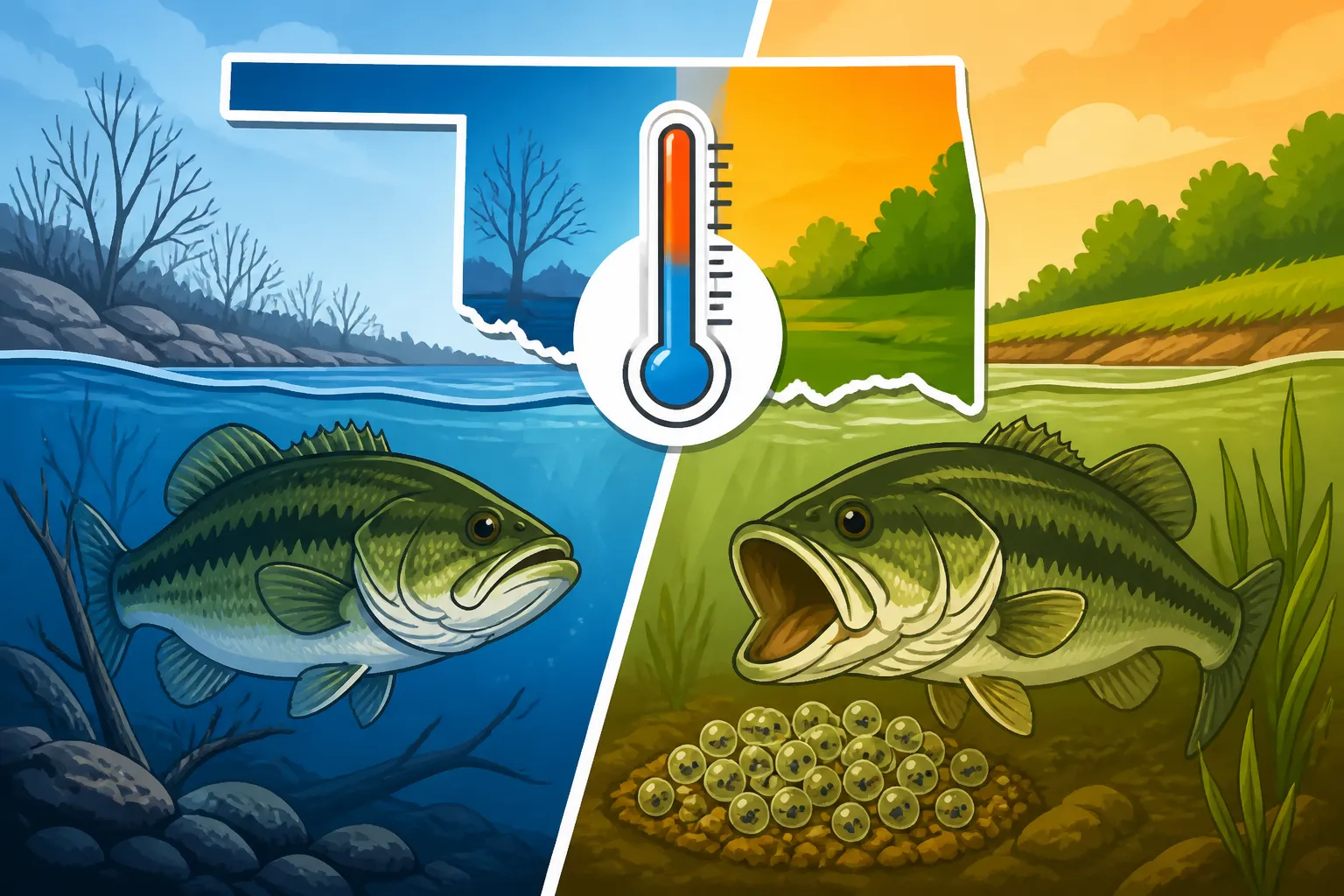
How Water Temperature Affects Bass Spawning in Oklahoma
One of the biggest head-scratchers for any Oklahoma angler, especially when spring rolls around, is figuring out exactly when the bass are going to get busy. It's not like they send out invitations! That feeling of missing the prime window because you're a week too early or too late is a real frustration. This guide is all about demystifying one of the most crucial elements of bass spawning: water temperature, and how it dictates everything for our favorite game fish in the Sooner State.
Understanding the Bass Spawning Cycle in Oklahoma
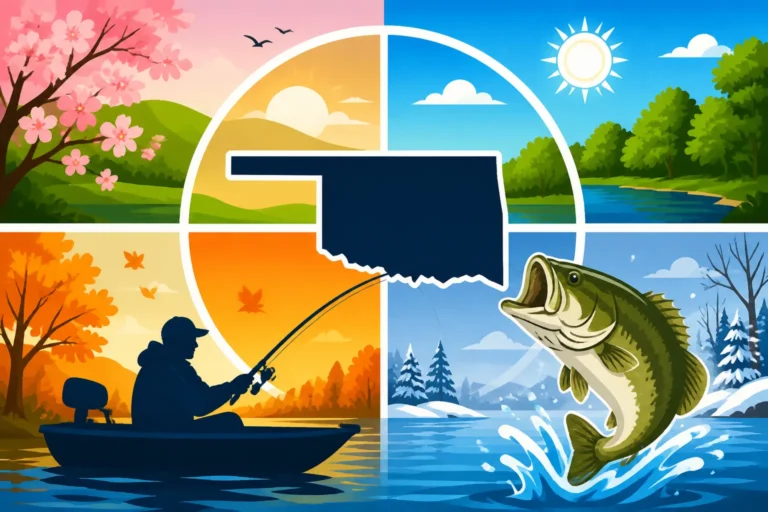
Spring in Oklahoma brings with it the promise of warmer weather, budding trees, and for us anglers, the much-anticipated bass spawn. But it's rarely a neat, calendar-driven event. Instead, it's a gradual process heavily influenced by environmental factors, with water temperature reigning supreme as the ultimate cue that tells bass it's time to reproduce.
The Tricky Dance of Spring Warm-Up
The bass spawning cycle isn't a flick of a switch; it's more like a slow, deliberate dance that unfolds as winter loosens its grip. Think about those beautiful, sunny spring days we get here in Oklahoma – they warm the shallows first, creating tantalizing pockets of comfort for bass that have been hunkered down in deeper, colder water all winter. This initial warming is what really kicks off the pre-spawn activities. The fish start to move shallower, feed aggressively to build up energy, and scout out potential nesting sites.
However, Oklahoma weather can be notoriously fickle. We often experience those classic "roller coaster" spring conditions: a few days of glorious sunshine followed by a sudden cold snap, maybe even a late-season freeze. These fluctuations don't just affect our comfort; they directly impact the bass. A sudden drop in water temperature can literally halt the pre-spawn migration or even cause bass already in the shallows to retreat to deeper, more stable environments, making them tough to locate. This is a critical period where understanding the subtleties of temperature changes becomes paramount for success. Many anglers often feel like they're playing a guessing game during this time, but with a bit of knowledge, you can read the signs a lot better. For a deeper dive into the seasonal rhythms, check out our guide on the Best Time of Year to Fish in Oklahoma.
Why Water Temperature is the Ultimate Trigger
While factors like photoperiod (daylight length) and lunar phases play minor supporting roles, water temperature is undeniably the lead actor in signaling the bass to spawn. It's deeply ingrained in their biological programming, a survival mechanism honed over millennia. As the water warms consistently into a specific range, it triggers hormonal changes within the bass, telling their bodies it's time to prepare for reproduction. This isn't just about comfort; it's about optimizing the chances for their eggs and fry to survive.
Stable, warm temperatures are vital for egg development and the subsequent hatching of fry. If bass were to spawn in water that was too cold, the eggs might not develop properly, or the newly hatched fry would be highly susceptible to sudden cold snaps, which could be lethal. This biological imperative ensures that bass only commit to spawning when the conditions are most favorable for their offspring. It’s why those consistent warm spells, often after the initial spring fluctuations, are so crucial. When you're out there, actively monitoring the water temperature can give you a significant edge in predicting when and where the bite will turn on, especially during the Spring Bass Spawn Timing in Oklahoma.
The Ideal Temperature Range for Bass Spawning
Knowing that water temperature is the key is one thing, but knowing which temperature is the magic number for different bass species in Oklahoma is where the real insight lies. It’s not a single, universally fixed temperature, but rather a sweet spot where they feel most comfortable to initiate and complete their reproductive rituals.
The "Magic Window" for Largemouth Bass
For most of us chasing bucketmouths in Oklahoma, the sweet spot for largemouth bass spawning typically falls within a water temperature range of 60 to 70 degrees Fahrenheit. This is often referred to as the "magic window" because when the water consistently hits these temperatures, you can expect largemouth to be actively building nests, laying eggs, and guarding their fry.
Let's break that down a bit:
- Pre-Spawn (50-60°F): As the water climbs into the low 50s, largemouth will start moving from their deeper wintering grounds towards shallower flats, points, and coves. They'll be on the hunt for food, bulking up for the energy-intensive spawn. This is a fantastic time for aggressive bites using baits like crankbaits, jerkbaits, and spinnerbaits.
- The Prime Spawn (60-70°F): Once the water consistently reaches that 60-degree mark and continues to warm, the male bass will begin fanning out beds in shallow, protected areas. Females will move in to lay eggs, and then the males will guard them fiercely. This is when sight fishing becomes a real possibility in clear water, and soft plastics like Texas rigs or Carolina rigs presented near beds can be incredibly effective. Sometimes, bass guarding nests can be finicky, but a well-placed bait can often provoke a territorial strike. For specific techniques, our Largemouth Bass Fishing in Oklahoma: The Complete Guide offers more detailed advice.
- Post-Spawn (70°F+): After spawning, the bass will typically move off the beds, often retreating to slightly deeper water near structure or shade to recover. They might still be caught, but often the bite can be a bit slower as they regain their strength.
Remember, this "magic window" isn't a strict boundary; bass are animals, not robots. You might find some early birds spawning at 58°F or some latecomers still on beds at 72°F, especially in large reservoirs where different areas warm at different rates.
Smallmouth and Spotted Bass: Subtle Differences
While largemouth bass are the most common focus, Oklahoma is also home to healthy populations of smallmouth bass and spotted bass, and their spawning preferences aren't exactly the same.
- Smallmouth Bass (58-65°F): Smallmouth, our bronzeback beauties, generally prefer slightly cooler water for spawning compared to largemouth. Their ideal range is often between 58 and 65 degrees Fahrenheit. You'll find them on rocky points, gravel bars, and often in areas with more current, which makes sense given their habitat preferences. In places like Broken Bow Lake or the mountain rivers in eastern Oklahoma, where smallmouth thrive, they'll be keying into these slightly cooler temperatures. If you're targeting these spirited fighters, understanding this slight difference is crucial. For more specifics on these feisty fish, our guide to Smallmouth Bass in Oklahoma: What Anglers Should Know is a great resource.
- Spotted Bass (62-68°F): Spotted bass, sometimes called "spots" or "Kentucky bass," also have a slightly different window. They tend to spawn in a range from about 62 to 68 degrees Fahrenheit. They often favor deeper spawning areas than largemouth, sometimes 10-20 feet deep, especially on clear-water reservoirs. This means you might not always be able to sight fish for them, but a good fish finder can certainly help you locate their beds. Their behavior is often a mix between largemouth and smallmouth, making them adaptable to many Oklahoma reservoirs.
The key takeaway here is that while the general spring warm-up triggers all bass species, their precise ideal temperatures can vary by a few degrees. Knowing these subtle differences allows you to fine-tune your approach, whether you're targeting a specific species or fishing a lake known for holding all three.
How to Monitor Water Temperature for Better Fishing
You’ve heard the saying, "Knowledge is power." In fishing, that translates directly to understanding the conditions around you, and water temperature is at the top of that list. You can guess, or you can know, and knowing will put more fish in your boat or on your bank.
Essential Tools for Anglers
Gone are the days when guessing was your only option. Today, anglers have a fantastic array of tools to accurately measure water temperature, making it easier than ever to dial in on those prime spawning conditions.
- Handheld Water Thermometers: These are straightforward, affordable, and incredibly effective. Many come on a lanyard or a retractable coil, making them easy to deploy from a boat or even the bank. You simply dip them in the water for a minute or two, and they give you a precise reading. Carrying one of these is a no-brainer. You can find reliable options on Amazon for very reasonable prices.
- Fish Finders with Temperature Sensors: Most modern fish finders, even entry-level models, come equipped with a temperature sensor built into the transducer. This is arguably the most convenient way to monitor water temperature, especially if you're covering a lot of water by boat. As you motor along, your fish finder will display the surface temperature, and often, more advanced models can even show you temperature changes at different depths. This feature is invaluable for understanding thermoclines or subtle temperature variations across a cove. Having a good fish finder is a game-changer for finding Best Bass Fishing Lakes Across Oklahoma and understanding what's going on beneath the surface. For advice on choosing the right one, consider our article on Fish Finder Features That Matter Most on Oklahoma Reservoirs.
- Smart Devices and Apps: Some newer technologies allow for smart temperature probes that connect to your phone via Bluetooth, giving you detailed readings and even logging data. While perhaps overkill for casual fishing, they offer advanced insights for serious anglers.
Don't just rely on the air temperature. The water can heat and cool much slower than the air, and what feels like a warm day to you might still be chilly to a bass. Trust your tools!
Reading the Signs: Beyond Just the Thermometer
While a thermometer gives you a hard number, experienced anglers know there are also visual and environmental cues that can hint at water temperature and bass activity. These signs, combined with your temperature readings, paint a much clearer picture.
- Sun Penetration: On sunny days, look for areas where the sun has had a chance to penetrate the water for an extended period. Shallow, dark-bottomed coves, protected pockets, and sun-drenched flats will always warm up faster than deep, open water or shaded banks. Think about those north-facing banks that stay shaded longer in spring; they'll hold cooler water.
- Wind Direction and Intensity: Consistent warm winds blowing into a cove can push warmer surface water into that area, creating a slightly warmer zone. Conversely, cold winds can cool down surface temperatures quickly, especially in shallow areas. Wind also affects turbidity; calm, clear water will typically warm faster than choppy, muddy water.
- Water Clarity: Clear water tends to warm faster because sunlight can penetrate deeper. Stained or muddy water absorbs sunlight closer to the surface, but overall, it can warm slower in deeper sections. During the spawn, clear water is also crucial for bass to see and maintain their nests.
- Vegetation Growth: The presence of new green growth in shallow water, like lily pads or submerged grasses, is a strong indicator that the water temperature is rising and stabilizing. These areas often attract baitfish, which in turn attract bass preparing for the spawn. These areas can also provide critical cover for bass during the Pre-Spawn Bass Fishing Techniques Explained phase.
By combining direct temperature readings with these environmental observations, you'll develop a much more intuitive understanding of where the bass are likely to be at any given moment, and how the overall conditions are trending.
Locating Spawning Areas Based on Temperature
Armed with your temperature data, the next step is to translate that information into finding actual bass. The consistent temperature range isn't just about when they spawn, but also where.
- Shallow, Protected Coves: These are classic spawning grounds. They are often the first areas to warm up in the spring due to less wind exposure and shallower depths. Look for small, north-facing pockets or coves with dark bottoms that absorb heat. These are prime candidates for holding bass once water temperatures hit the mid-to-high 50s and push into the 60s.
- Flats and Points: Large, shallow flats adjacent to deeper water offer both warmth and quick access to safety. Bass will move up onto these flats to spawn. Points that extend into deeper water also act as staging areas, with bass moving up the point to spawn once conditions are right.
- Structure and Cover: Within these warm, shallow areas, bass will seek out specific structure to build their nests. This could be a submerged stump, a rock pile, a patch of gravel, or even the base of a dock or boat ramp. The structure provides protection for the nest and helps the male bass defend it from predators. Pay close attention to these elements when you're searching for beds.
- Observing Other Anglers: While you should always follow ethical angling practices, observing where other successful anglers are concentrating their efforts can give you clues. If everyone is fishing a particular type of cover in a certain depth range, it’s a good bet the water temperature in that area is favorable for bass activity. Just remember, once you find them, be respectful of their spawning efforts and practice catch and release, especially during this critical period.
By systematically working through areas that meet the temperature criteria and offer suitable structure, you significantly increase your chances of finding active spawning bass. And if you’re looking to upgrade your spring tackle, check out some options for Best Bass Lures for Spring Fishing.
Common Mistakes and Misconceptions About Spawning Temperature
Even with the right tools and knowledge, it's easy to fall into common traps or hold onto misconceptions about how water temperature affects bass spawning. Avoiding these pitfalls can save you time, effort, and frustration on the water.
Don't Chase a Single Number
One of the biggest mistakes anglers make is fixating on a single "magic number" for the bass spawn, like "62 degrees exactly." While those ideal ranges (60-70°F for largemouth, for instance) are excellent guidelines, bass don't read thermometers with the same precision we do. The spawn is a process, not an instant event, and it's influenced by a confluence of factors, not just one specific degree.
Think of it this way: a lake might have an average surface temperature of 62°F, but one shallow, dark-bottomed cove might be 65°F while a deeper, wind-swept main lake point is only 59°F. Bass will be spawning in the warmer cove while still staging in the cooler main lake. Furthermore, a single warm day can spike the surface temperature, but if the overall water column hasn't stabilized, that temperature might drop back down just as quickly. The key isn't a single degree, but a consistent upward trend and stable conditions within that ideal range. This means monitoring temperatures over several days and looking for consistency rather than just one snapshot. Don't be afraid to try different depths and areas even if your thermometer reads slightly off the "perfect" number.
The Impact of Cold Fronts and Rapid Changes
Oklahoma weather is famous for its sudden shifts, and these cold fronts can wreak havoc on an otherwise promising bass spawn. A significant drop in air temperature, especially after a period of warm weather, will quickly cool down the shallow water where bass intend to spawn.
When a cold front moves in, several things can happen:
- Halt or Delay: If bass haven't started spawning yet, a cold front can completely halt their movement to the shallows, pushing them back to deeper staging areas. They'll essentially "wait out" the cold snap.
- Stall the Spawn: If bass are already on beds, a sharp drop in temperature can make them extremely lethargic or even cause them to abandon their nests temporarily. This isn't ideal for egg development and can be frustrating for anglers.
- Difficult Bite: Even if bass remain in the shallows, their metabolism slows down, and they become less aggressive. What was a hot bite yesterday can turn into a tough grind today.
It's crucial to pay attention to weather forecasts, not just for your comfort, but for predicting bass behavior. Fishing immediately after a severe cold front often means slowing down your presentation, using smaller baits, and focusing on areas that might retain warmth longer, like deep cover adjacent to spawning flats. Our article on How Cold Fronts Change Fishing Patterns on Oklahoma Lakes gives a more detailed look at how these weather events impact fish.
Shallow vs. Deep Water Temperatures
Another common oversight is only checking the surface temperature. While surface temps are a good indicator, especially in shallow spawning flats, it's vital to remember that water temperature can vary significantly with depth.
- Stratification: In deeper reservoirs, especially as spring progresses into summer, the water column can stratify, meaning distinct layers of different temperatures form. Bass might spawn in the warm surface layer, but if a sudden cold snap cools that layer, they may retreat to a more stable, slightly deeper thermocline.
- Localized Differences: Within a single lake, shallow coves will warm up much faster than the main lake body or deeper sections. A handheld thermometer or a fish finder that shows depth-specific temperatures can be incredibly useful here. Don't assume the temperature at your boat ramp is the same as a tucked-away cove a mile away.
- Targeting Species: Remember that smallmouth bass often prefer slightly cooler, rockier areas for spawning, which might mean slightly deeper or more current-laden spots compared to largemouth in a muddy backwater.
By understanding that water temperature isn't uniform across the entire lake or even the entire water column, you can make more informed decisions about where to focus your efforts. A good strategy is to start searching in the warmest, most protected shallow areas that offer ideal spawning cover, then expand your search to slightly deeper or more exposed areas as the season progresses or if conditions change. When the bass move off their beds after spawning, the Post-Spawn Bass Fishing Techniques Explained will become crucial for continued success.
Here's a quick look at the typical ideal spawning temperatures for different bass species in Oklahoma:
| Bass Species | Ideal Spawning Temperature Range (°F) | Typical Habitat Preference |
|---|---|---|
| Largemouth Bass | 60-70 | Shallow, vegetated coves, muddy bottoms |
| Smallmouth Bass | 58-65 | Rocky points, gravel bars, areas with current |
| Spotted Bass | 62-68 | Deeper structure, clear water, main lake humps |
Understanding how water temperature acts as the ultimate signal for bass spawning in Oklahoma can transform your spring fishing success. It's about more than just tossing a lure; it's about connecting with the natural rhythms of the lake. By diligently monitoring temperatures, observing environmental cues, and avoiding common misconceptions, you'll be well on your way to locating and catching more bass during this crucial time of year. So, grab your thermometer, keep an eye on the forecast, and get ready for some fantastic fishing! If you're looking for more general tips, don't forget to check out our main guide on Oklahoma Fishing: Techniques by Season.
Disclaimer
Please note that fishing regulations, conditions, and fish behavior can change. Always consult the latest Oklahoma Department of Wildlife Conservation (ODWC) regulations before heading out. This guide provides general information and recommendations based on common angling practices and biological understanding.