Where to Catch Crappie on Lake Murray
There's nothing quite like the thrill of feeling that gentle tug on your line, knowing it's a crappie, especially after you've spent hours trying to dial in their location. If you've ever found yourself staring at the vast expanse of Lake Murray, wondering exactly where those elusive papermouths are hiding, you're not alone. This guide is dedicated to helping you unlock the secrets of crappie fishing on Lake Murray, pinpointing the best spots and sharing the tactics that truly work.
Why Lake Murray is a Crappie Angler's Dream
Lake Murray, nestled in south-central Oklahoma near Ardmore, isn't just one of the state's most picturesque lakes; it's also a fantastic crappie fishery. Known for its clear, deep waters and diverse underwater structure, it provides an ideal habitat for both black and white crappie. Many anglers get caught up chasing bass or catfish, but the crappie here offer a consistent and rewarding challenge, often yielding impressive numbers and decent sizes if you know where to look. It's a lake that truly rewards those who take the time to understand its nuances.
Getting to Know Lake Murray's Crappie Population
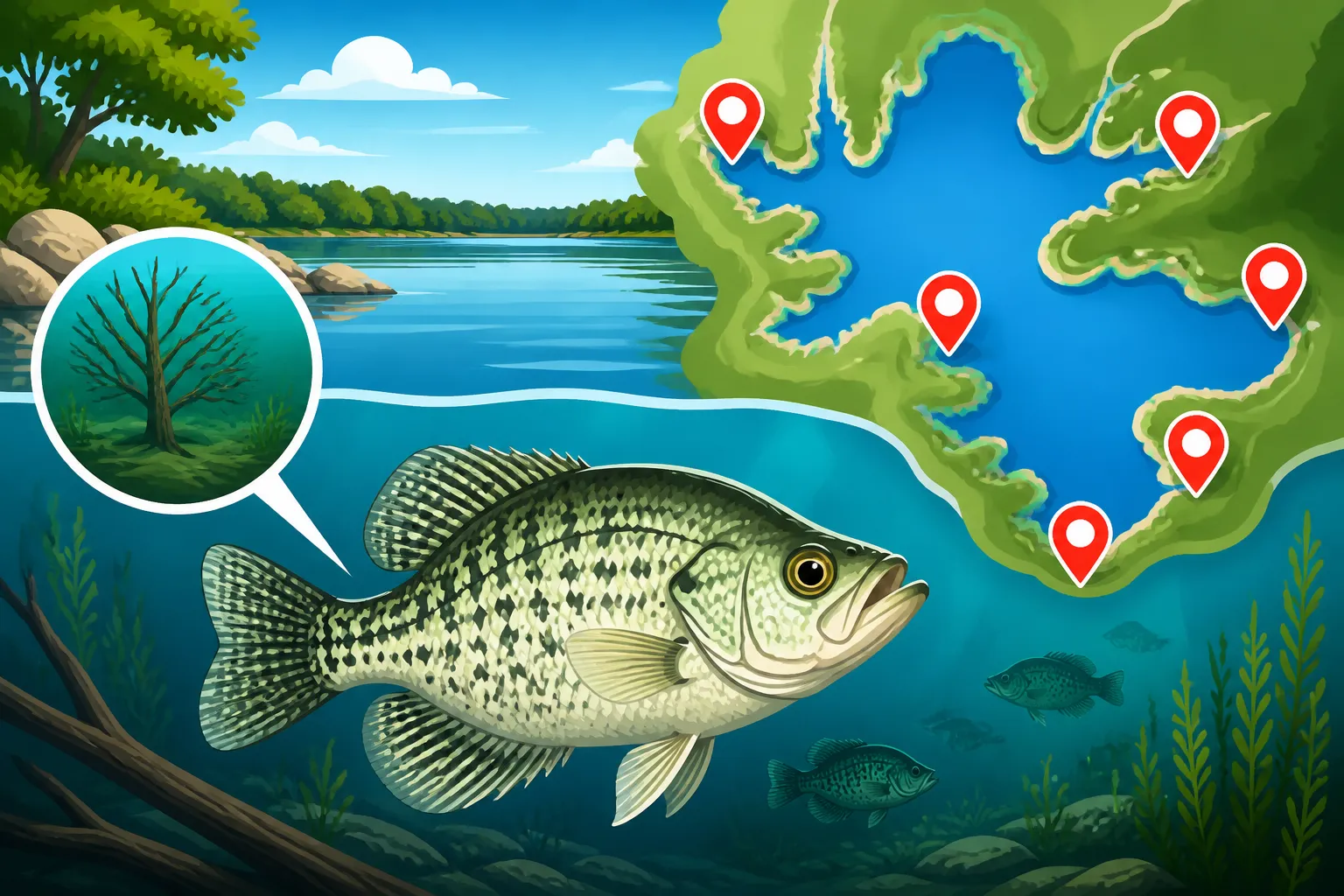
When you're out on Lake Murray, you'll primarily be targeting two species: black crappie and white crappie. While both are often grouped under the general term "crappie," there are subtle differences in their appearance and preferred habitats. Black crappie typically thrive in clearer water with more vegetation and structure, often having a more speckled pattern. White crappie, on the other hand, tolerate more turbid water and often frequent open areas or brush piles, distinguishable by their vertical bar patterns. Knowing these distinctions can sometimes help you fine-tune your approach, especially when trying to discern why one spot might be holding more fish than another. Both species grow well here, offering plenty of action for anglers.
Understanding the difference between these two species can be crucial for adapting your presentation. For a deeper dive, check out our guide on Black Crappie vs White Crappie: Key Differences for Oklahoma Anglers. While they often school together, a subtle change in your lure color or retrieval speed might trigger more bites from one species over the other, depending on the specific conditions of the cove or brush pile you're working. Lake Murray generally has a healthy mix, ensuring diverse catches throughout the year.
Understanding Seasonal Crappie Behavior
Crappie behavior on Lake Murray, like any body of water, is heavily influenced by the changing seasons and, critically, water temperature. During the spring, as water temperatures rise, crappie move from their deeper winter haunts into shallower waters for their annual spawn. This is often the most anticipated time for crappie anglers, as fish are more concentrated and aggressive. They'll seek out protected coves, submerged brush, and rocky banks in just a few feet of water.
As summer heats up, crappie retreat to deeper, cooler waters, often suspending over structure or congregating around thermal breaks. Finding them during this time often means looking for brush piles, creek channels, or ledges in 15-30 feet of water. Fall sees another surge of activity as water temperatures cool, and crappie become more active, feeding heavily in preparation for winter. They'll often be found in transitional areas between deep and shallow water, making this a great time for both trolling and casting. Winter crappie typically hold tight to deep structure, such as main lake points, submerged humps, or deep brush piles, and can be caught by vertical jigging or slow trolling. Understanding these patterns is key to consistent success on Lake Murray, regardless of the time of year you visit. Our detailed guide on Crappie Fishing Techniques and Seasonal Patterns in Oklahoma offers more broad strategies that apply perfectly to Lake Murray.
Top Crappie Hotspots on Lake Murray
Lake Murray boasts an impressive array of spots that consistently produce crappie. What makes this lake so special is its combination of clear water and abundant natural and man-made structure. From rocky points to dense brush piles, the crappie here have plenty of places to call home. When you're heading out, having a game plan for these specific areas can dramatically increase your chances of filling your cooler.
Productive Main Lake Structures and Coves
One of the best strategies for finding crappie on Lake Murray is to target main lake points and coves that feature submerged structure. Look for points that drop off sharply into deeper water, especially those with some rock or gravel mixed in. Crappie often stage on these points before moving into shallower coves to feed. Good examples include the numerous points around the Lake Murray State Park area, particularly those leading into quieter bays. These areas often have natural timber or rock formations that crappie adore.
The mouths of larger coves are also excellent starting points. Crappie will often suspend near these entrances, waiting for baitfish to move in or out. Coves like those found around the State Park marina or near the Tucker Tower area, offer ample opportunities. During the spring spawn, you'll want to push deeper into these coves, targeting brushy shorelines and protected pockets. Remember, crappie are ambush predators, so any feature that breaks up the current or provides cover is worth investigating. A good map or a fish finder showing contour lines and structure can be invaluable here.
Hidden Brush Piles and Submerged Timber
This is where the real crappie action often heats up on Lake Murray. The Oklahoma Department of Wildlife Conservation (ODWC) actively works to improve fisheries by sinking artificial brush piles, and Lake Murray benefits greatly from these efforts. These man-made structures are absolute magnets for crappie, providing both shelter and feeding grounds. You'll find these marked on some lake maps or through online resources from the ODWC. However, don't overlook natural submerged timber and laydowns, especially in areas where old creek channels once ran or where trees have fallen into the water.
Locating these brush piles and submerged timber usually requires a good fish finder. Once you've marked a brush pile, approach it cautiously to avoid spooking the school. Crappie will often be suspended just above, within, or around the edges of the brush. You might find them at different depths depending on the time of day and water temperature, so be prepared to adjust your presentation. Vertical jigging or dropping a minnow directly into the brush is often the most effective way to extract them. For those looking for an extra edge, booking a guided trip through services like FishingBooker can often get you directly to these proven, sometimes secret, spots with local experts.
Accessible Bank Fishing Opportunities
Not everyone has a boat, and that's perfectly fine because Lake Murray offers some fantastic bank fishing spots for crappie. The key to successful bank fishing is to find areas with good access to deeper water or submerged structure close to shore. Public access points within Lake Murray State Park, particularly those with rocky outcroppings, jetties, or public docks, can be very productive. Areas around campgrounds, such as Tipp's Point or Elephant Rock, often have good bank access and are known to hold crappie.
Look for areas where the bank drops off quickly, or where there's visible structure like fallen trees or large rocks near the shore. These provide ideal cover for crappie. During the spring, crappie will move right up to the bank in many of these locations, making them highly accessible to shore anglers. A simple setup with a slip bobber and a live minnow, or a small jig, can be incredibly effective from the bank. Even without a boat, you can still experience some thrilling crappie action on Lake Murray. Our guide on How to Catch Crappie from the Bank offers more specific tactics for shore anglers.
Mastering Crappie Techniques for Lake Murray's Waters
Catching crappie on Lake Murray isn't just about finding them; it's also about presenting your bait or lure in a way that they can't resist. Crappie can be finicky, and sometimes a slight adjustment to your technique or bait choice can make all the difference between a slow day and a banner day. Being versatile and willing to experiment is a hallmark of a successful crappie angler here.
Effective Baits and Lures to Entice Crappie
When it comes to crappie fishing on Lake Murray, there are a few tried-and-true baits and lures that consistently produce results. Live minnows are, without a doubt, a perennial favorite. There's something about the natural movement and scent of a live minnow that crappie simply can't ignore. Rig them under a bobber or on a small jig head, and let them do their work. For those preferring artificials, small jigs are king. These can range from 1/32 to 1/8 ounce, often tipped with soft plastic bodies. Popular brands like Bobby Garland's Crappie Pro series or Strike King's Mr. Crappie jigs are widely used and effective.
The color of your jig can be incredibly important, and it often depends on the water clarity and light conditions. In the clear waters of Lake Murray, natural colors like shad, smoke, or chartreuse might work best on sunny days. On cloudy days or in stained water after a rain, brighter colors like pink, orange, or a combination of chartreuse and black can be more visible and provoke strikes. Always carry a variety of colors and be prepared to switch if one isn't producing. For more specific advice, consider checking out our guide on Best Bait for Crappie in Oklahoma.
Jigging, Trolling, and Live Bait Strategies
Each season and location on Lake Murray calls for slightly different techniques.
-
Vertical Jigging: This is an excellent technique when crappie are holding tight to structure, such as those brush piles or deep ledges. Drop your jig or live minnow directly down to the depth where you're seeing fish on your sonar. A slow, subtle jigging motion is usually all it takes. Just enough to give the bait some action without pulling it out of the strike zone too quickly. This method is particularly effective during the colder months when crappie are less active.
-
Spider Rigging/Slow Trolling: For covering more water, especially when crappie are scattered or suspended in open water, spider rigging or slow trolling can be deadly. This involves deploying multiple rods from the front of your boat, each with a different bait or jig, and slowly moving across an area. Many anglers will use a combination of jigs and minnows, experimenting with different depths until they find the fish. This technique is fantastic for identifying active schools, especially during post-spawn or early summer.
-
Casting and Retrieving: When crappie are in shallower water, particularly during the spawn or in the fall, casting small jigs or spinnerbaits to visible cover is very effective. Cast to the edges of brush, around docks, or near rocky banks, and retrieve with a slow, steady pace, adding a few twitches to impart action. This technique allows you to be highly mobile and target specific pieces of cover from a distance.
| Crappie Fishing Technique | Best Time to Use | Best Locations on Lake Murray | Recommended Bait/Lure |
|---|---|---|---|
| Vertical Jigging | Winter, Deep Summer | Deep brush piles, creek channels, main lake points | Small jigs (1/32-1/8 oz), Live Minnows |
| Slow Trolling/Spider Rigging | Post-spawn, Summer, Fall | Open water, channel edges, large flats | Jigs with soft plastics, Minnow rigs |
| Casting to Cover | Spring (Spawn), Fall | Shallow coves, docks, rocky banks, visible brush | Small jigs, Spinnerbaits, Minnows under bobber |
Planning Your Successful Lake Murray Crappie Adventure
A successful fishing trip often starts long before you cast your first line. For Lake Murray, a bit of planning regarding the best times to visit and a solid understanding of the rules can make all the difference. You want to maximize your time on the water, not spend it figuring out logistics or worrying about regulations.
Best Times to Visit for Peak Crappie Action
While Lake Murray offers crappie fishing year-round, certain times are undeniably better for consistent action. As we touched on earlier, spring (typically March through May) is prime time, especially during the spawn. This is when crappie move shallow, making them accessible to both boat and bank anglers. The bite can be furious during these weeks, and limits are often attainable. However, expect more company on the lake during this period.
Fall (September through November) is another fantastic window. The cooling water temperatures invigorate crappie, and they begin to feed aggressively, often schooling up. This can be a great time for trolling or casting along transition areas. Summer (June through August) can be productive, but requires more effort to find the fish in deeper, cooler water. Early mornings and late evenings, or even night fishing under lights, become the most productive periods. Even in winter (December through February), patient anglers can find large schools of crappie holding tight to deep structure, making for some excellent vertical jigging opportunities. Ultimately, the "best" time depends on your preferred fishing style and tolerance for crowds.
Essential Gear and Regulations to Remember
Before you head out to Lake Murray, make sure your gear is in order. For crappie, a lightweight spinning rod (5'6" to 7' long) with a fast action is ideal, paired with a small spinning reel spooled with 4-6 lb test monofilament or fluorocarbon line. This lighter tackle allows for better sensitivity to detect those subtle crappie bites. Don't forget a variety of jigs, soft plastic bodies, and a healthy supply of live minnows if that's your preference. A landing net is always a good idea, especially for those bigger slabs. You might also want to consult our guide on the Best Rod and Reel Combo for Crappie Fishing to ensure you have the right setup.
Most importantly, ensure you have a valid Oklahoma fishing license. Anyone aged 16 or older needs one, and rules for residents versus nonresidents differ significantly. You can easily purchase these online through the ODWC website, or from numerous authorized vendors. It's not worth risking a fine or having your trip cut short over a forgotten license. For full details on the types and costs, you can read our comprehensive guide on Oklahoma Fishing License Costs and Types.
Beyond the license, familiarize yourself with Oklahoma's statewide crappie regulations, which currently stand at a daily limit of 37 fish and no minimum length limit for most lakes. While Lake Murray follows these statewide rules for crappie, always double-check the latest regulations from the Oklahoma Department of Wildlife Conservation, as rules can change. Understanding these rules ensures your trip is not only successful but also legal and responsible.
It's also worth noting that Lake Murray is part of the Lake Murray State Park, so be mindful of any specific park rules regarding access, camping, or boating. Respect the natural beauty of the area, dispose of your trash properly, and always practice safe boating if you're out on the water. A little preparation goes a long way in ensuring a memorable and rewarding crappie fishing experience on Lake Murray.
Disclaimer
Please note that fishing conditions, regulations, and fish populations can change. Always check the latest regulations from the Oklahoma Department of Wildlife Conservation before heading out on any fishing trip. Information provided in this guide is for general informational purposes only and does not constitute professional advice.