Best Fishing Spots in Oklahoma
There’s nothing quite as frustrating as having a few precious hours or even a full weekend free to hit the water, only to spend it wondering where the fish are hiding. We’ve all been there, casting into empty water, trying to guess which lake, river, or even specific cove might actually produce a bite. This guide is here to take the guesswork out of your next outing, revealing the absolute best fishing spots across Oklahoma so you can spend less time searching and more time reeling in your next trophy.
Northeast Oklahoma: Land of Giant Lakes and Diverse Fisheries
Northeast Oklahoma is a true angler's paradise, boasting some of the state's largest and most productive lakes. These aren't just pretty places; they're bustling ecosystems teeming with a variety of game fish, from hard-fighting bass to plentiful crappie and hefty catfish. The sheer size and diversity of these reservoirs mean there's always a new challenge or a familiar comfort to be found, whether you're a seasoned pro or just getting your feet wet.
Grand Lake O' the Cherokees: A Bass and Crappie Haven
Grand Lake O' the Cherokees isn't just a big lake; it's a legendary one, especially for bass and crappie enthusiasts. Spanning over 46,000 surface acres with 1,300 miles of shoreline, it’s truly immense, offering endless opportunities. Anglers here often boast about the robust populations of both largemouth and white bass, and the crappie fishing is simply phenomenal, especially during the spring and fall migrations. The lake’s diverse structure, from rocky bluffs and deep channels to sprawling shallow flats and abundant timber, creates ideal habitats for a variety of species.
For bass anglers, the key to success on Grand Lake often lies in understanding the seasonal patterns. During the spring spawn, you'll find largemouth bass moving into shallower coves and creek arms, where spinnerbaits, jerkbaits, and soft plastics like Texas-rigged worms can be incredibly effective. As summer heats up, the bass move to deeper structure, points, and humps, making crankbaits, jigs, and Carolina rigs the go-to choices. The sheer size of the lake means you can spend days exploring and still find new honey holes. If you're looking for an unforgettable experience targeting the green fish, check out our in-depth Grand Lake O' the Cherokees Bass Fishing Guide.
Crappie fishing on Grand Lake is equally rewarding. Locals often use small jigs, minnows, or a combination of both fished around brush piles, submerged timber, and bridge pilings. The many docks and marinas around the lake also offer excellent crappie habitat, especially in cooler months when the fish seek cover and stable water temperatures. Don't be surprised to limit out on both black and white crappie here; the populations are incredibly healthy. Many anglers find that hiring a local guide, perhaps even through a service like FishingBooker, can unlock some of the lake's best-kept secrets, especially if you're new to the area or short on time.
Keystone Lake: White Bass Runs and Catfish Galore
Just west of Tulsa, Keystone Lake offers a different but equally thrilling fishing experience, particularly renowned for its incredible white bass runs and prolific catfish populations. This reservoir, covering over 23,000 acres, is fed by the Arkansas and Cimarron rivers, which contribute to its fertile waters and dynamic fisheries. When the white bass start their spring runs up the rivers, Keystone becomes an epicenter of angling excitement.
The spring white bass run, typically from March through May, is nothing short of spectacular. Schools of hungry white bass surge upstream to spawn, creating frenzied feeding opportunities. Anglers line the banks and fill boats, casting small inline spinners, jigs, and spoons into the churning water. It's a fast-paced, action-packed experience that's perfect for anglers of all skill levels, and it’s a fantastic way to introduce kids to the thrill of fishing. The sheer numbers of fish caught during these runs are often astonishing, making for memorable outings and plenty of fish for the frying pan.
Beyond the white bass, Keystone Lake is a top-tier destination for catfish. Both channel and blue catfish thrive here, with many anglers reporting catches of impressive size. Bottom fishing with cut bait, punch bait, or stink baits is highly effective, especially in the deeper channels and around the many submerged timber areas. Jug lining and trotlining are also popular methods for targeting the bigger cats, particularly at night during warmer months. The consistent success for catfish anglers makes Keystone a reliable choice any time of year.
Fort Gibson Lake: Another Crappie and Bass Hotspot
Southeast of Tulsa, Fort Gibson Lake is another jewel in Northeast Oklahoma's fishing crown, celebrated for its fantastic crappie and bass fishing. With over 19,000 surface acres and nearly 225 miles of shoreline, it offers a varied landscape of rocky bluffs, sandy beaches, and timbered coves. The lake's clear to moderately stained water supports healthy populations of both black and white crappie, as well as an aggressive population of largemouth and spotted bass.
Crappie anglers at Fort Gibson often find success by targeting submerged brush piles and standing timber, especially in the creek arms and around the many private docks. Minnows and small jigs, often tipped with a piece of plastic, are the baits of choice. During the cooler months, crappie tend to concentrate in deeper water near structure, while in spring they move shallow for the spawn, making them more accessible to bank anglers and those in smaller boats. The lake is known for producing quality crappie, with many reaching healthy sizes, perfect for a fish fry.
For bass, Fort Gibson delivers consistent action. Largemouth bass relate heavily to the abundant submerged timber, laydowns, and rocky points. Spinnerbaits, crankbaits, and various soft plastics are effective throughout the year, depending on depth and water temperature. Spotted bass are also prevalent, often found on deeper, rocky structure and points, where they readily hit drop shots and shaky head jigs. It's a lake where you can truly fish for different species and different patterns all in one day, making it a versatile and exciting destination for any angler.
Southeast Oklahoma: Mountain Lakes and River Adventures
Venturing into Southeast Oklahoma, the landscape shifts to rolling hills and the foothills of the Ouachita Mountains, offering a different kind of fishing experience. Here, lakes are often deeper, clearer, and nestled amidst stunning natural beauty, providing not just excellent fishing but also a tranquil escape. This region is home to some of the state’s most picturesque waters, where anglers can target everything from elusive smallmouth bass to trophy trout.
Broken Bow Lake: Clear Waters and Scenic Beauty
Broken Bow Lake, nestled deep in the Ouachita Mountains near the town of Broken Bow, is renowned for its breathtakingly clear waters and exceptional smallmouth and largemouth bass fishing. It’s a truly magnificent lake, with towering pines reflected in its depths, making it a popular spot for both anglers and nature lovers. Covering over 14,000 acres, it's one of Oklahoma's deepest lakes, reaching depths of over 180 feet in places.
The clear water conditions at Broken Bow call for different tactics than some of the more turbid lakes. Light line, subtle presentations, and natural-colored baits often yield the best results. Smallmouth bass, a prized catch here, thrive on the rocky points, ledges, and deep main lake structure. Tube jigs, finesse worms, and small crankbaits that imitate crawfish or shad are often effective. For anglers who enjoy sight fishing, the clear waters can offer incredible opportunities during the spring spawn to spot bass on their beds.
Largemouth bass also flourish in Broken Bow, especially in the timbered coves and along the creek channels. Jig-and-pig combinations, Texas-rigged worms, and swimbaits are excellent choices for targeting these fish around cover. Beyond bass, Broken Bow also offers good populations of crappie and catfish, though they often require targeting deeper structure due to the lake's clarity. If you're planning a trip to this stunning area, our Broken Bow Lake Fishing Guide on the Mountain Fork River can provide even more detailed insights into maximizing your catch.
Lake Eufaula: Oklahoma's Gentle Giant
Lake Eufaula holds the title of Oklahoma's largest lake by surface area, covering a massive 102,000 acres. It’s affectionately known as "Oklahoma's Gentle Giant" due to its sprawling, relatively shallow nature and its incredible productivity across multiple species. Eufaula is a powerhouse for largemouth bass, crappie, and catfish, making it a perennial favorite among resident anglers and visitors alike. Its sheer size means there’s always an unpressured spot to discover.
For bass anglers, Eufaula is a dream come true. The lake features extensive hydrilla beds, standing timber, brush piles, and countless creek channels, offering endless cover and forage for largemouth bass. Spinnerbaits, shallow-running crankbaits, and soft plastics worked through the vegetation are highly effective. During the colder months, bass often stack up in the deeper creek channels, while in spring they invade the vast shallow flats for spawning. Many professional bass tournaments are held on Eufaula, a testament to its consistent ability to produce quality fish.
Crappie fishing on Lake Eufaula is equally stellar, particularly around the standing timber and brush piles that are so prevalent throughout the lake. Minnows, small jigs, and spider rigging techniques are popular and consistently successful. Given the lake's vastness, it's often wise to consult local bait shops or guides for the most current information on where the crappie are biting. If you're considering this massive reservoir for your next outing, our Lake Eufaula: Oklahoma's Gentle Giant for Bass and Crappie guide offers a deeper dive into its excellent fisheries. Catfish, too, are abundant, with plenty of channels, blues, and flatheads patrolling the lake’s fertile waters.
Lower Mountain Fork River: Premier Trout Fishing
While Oklahoma is largely known for its warm-water species, the Lower Mountain Fork River below Broken Bow Lake offers a rare and exceptional cold-water fishery: a premier destination for trout. This is a truly unique spot in the state, managed by the Oklahoma Department of Wildlife Conservation (ODWC) as a year-round trout fishery, stocking both rainbow and brown trout regularly. It’s a stark contrast to the large reservoirs, offering a completely different angling experience.
The river's clear, cold waters, sustained by the release from Broken Bow Lake's dam, create ideal conditions for trout to thrive. Anglers here typically employ light tackle, using small inline spinners, spoons, artificial flies, or natural baits like corn, power bait, or salmon eggs. Fly fishing is incredibly popular on the Lower Mountain Fork, with many stretches designated as "Delayed Harvest" or "Catch and Release" zones, which further enhance the quality of the fishing by protecting the populations.
Fishing the Lower Mountain Fork requires a bit more finesse and attention to detail than brute force. Understanding the water flow, identifying subtle holding lies, and presenting your bait or fly naturally are key to success. It's a tranquil and beautiful setting, perfect for those who enjoy a more contemplative style of fishing. Remember, a valid Oklahoma fishing license with a trout stamp is required to fish for trout in these designated areas, a crucial detail to check before you head out.
Southern Oklahoma: Texoma's Stripers and Murray's Charms
Southern Oklahoma is defined by the majestic Lake Texoma, a true national treasure for anglers, but it also boasts other fantastic, slightly less overwhelming, lakes. This region offers some of the most exciting and diverse fishing opportunities, from battling hard-fighting striped bass to enjoying serene family outings on historic waters.
Lake Texoma: Striped Bass Capital of the Southwest
Straddling the Oklahoma-Texas border, Lake Texoma is an iconic destination, largely famous as the "Striped Bass Capital of the Southwest." This massive reservoir, covering over 89,000 acres on the Oklahoma side alone, is one of only a handful of inland freshwater lakes in the United States where striped bass naturally reproduce. This natural reproduction ensures a robust and self-sustaining population of these powerful, ocean-going fish, making it a bucket-list destination for many anglers.
Striper fishing on Texoma is an experience unto itself. These powerful fish can grow to impressive sizes, offering a truly challenging fight. Anglers primarily target stripers by trolling with artificial lures like Sassy Shads, Road Runners, or specialized striper jigs, or by live baiting with shad. During the spring and fall, stripers can be found schooling and feeding on the surface, creating thrilling "topwater boils" where they erupt from the water to chase baitfish. These events offer incredible opportunities for explosive topwater action.
Beyond stripers, Texoma is also an excellent lake for largemouth and smallmouth bass, crappie, and monster blue catfish. The lake's abundant rocky points, ledges, and submerged timber provide ideal habitat for bass, while the expansive flats and river channels are prime catfish territory. Due to its size and diverse fisheries, many anglers opt for a guided trip, and you can easily find reputable guides on platforms like FishingBooker who specialize in Texoma’s unique challenges. For a comprehensive overview, our Lake Texoma Fishing Guide for Oklahoma Anglers details everything from target species to best techniques. Just remember, a special Lake Texoma fishing license or a valid Oklahoma and Texas license with a Texoma endorsement is often required when fishing both sides of the border.
Lake Murray: Oklahoma's Oldest State Park Lake
Lake Murray, near Ardmore, holds a special place in Oklahoma's history as the centerpiece of its oldest and largest state park. This beautiful 5,700-acre lake is known for its crystal-clear water, picturesque surroundings, and excellent fishing for a variety of species. It's a true family-friendly destination, offering not just fishing but also camping, hiking, and water sports, making it perfect for a multi-day getaway.
Lake Murray excels in producing quality largemouth bass, smallmouth bass, and spotted bass. The lake’s clear waters mean that finesse techniques often outproduce power fishing, especially on high-pressure days. Anglers often find success with drop shots, shaky heads, and smaller crankbaits fished around the abundant rocky points, humps, and submerged brush. The clear water also makes sight fishing a viable and exciting option during the spring spawning season.
Crappie and catfish are also popular targets on Lake Murray. Crappie tend to congregate around brush piles, docks, and submerged timber, especially in the shallower coves during spring and fall. Minnows and small jigs are effective. For catfish, night fishing with stink baits or cut bait in deeper channels can yield impressive results. Lake Murray provides a quieter, more serene fishing experience compared to the bustling Texoma, making it an excellent choice for a relaxing day on the water with consistent action.
Lake Arbuckle: Crappie and Clear Water
Nestled within the Chickasaw National Recreation Area near Sulphur, Lake Arbuckle is a smaller, often overlooked gem celebrated for its exceptionally clear water and fantastic crappie fishing. This 2,350-acre lake offers a serene and picturesque setting, surrounded by rolling hills and pristine wilderness. It's a great choice if you're looking to escape the crowds of the larger reservoirs and enjoy some high-quality fishing.
Lake Arbuckle is a consistent producer of both black and white crappie, and due to its clear water, anglers often find that lighter lines and subtle presentations are key. Crappie here relate closely to the abundant submerged timber, brush piles, and rock ledges. Small jigs, often in natural colors, tipped with a minnow or fished slowly, are highly effective. Spring is a prime time for crappie as they move into shallower water, but excellent fishing can be found year-round by targeting deeper structures. It's worth noting that Lake Arbuckle has specific Arbuckle Lake Crappie Rules in Oklahoma, so be sure to check those before you go!
Beyond crappie, Lake Arbuckle also boasts healthy populations of largemouth and smallmouth bass. The clear water allows for excellent sight fishing opportunities during the spawn, and anglers can have great success with finesse baits like drop shots, shaky heads, and clear or natural-colored crankbaits fished along rocky shorelines and points. The lake's unique blend of clear water, diverse structure, and solid fish populations makes it a rewarding destination for anglers seeking both quantity and quality.
Central and Western Oklahoma: Hidden Gems and Diverse Catches
While the eastern and southern parts of Oklahoma might grab more headlines for their colossal lakes, the central and western regions hold their own with fantastic fishing opportunities. These areas feature lakes that are often less crowded, sometimes offer unique species like walleye, and provide excellent urban angling opportunities right in the heart of Oklahoma City. Don't overlook these spots; they can offer some surprisingly productive and enjoyable fishing experiences.
Canton Lake: Walleye Wonderland
Canton Lake, located in Blaine County, is a true standout in Western Oklahoma, primarily famous for its outstanding walleye fishery. While walleye are not as widespread in Oklahoma as other species, Canton Lake maintains a strong population thanks to dedicated stocking efforts and its unique habitat. This 7,910-acre lake provides a distinct challenge and reward for anglers seeking this elusive and delicious species.
Walleye fishing at Canton Lake often peaks during the spring spawning run, typically in March and April, when the fish move into shallower rocky areas and along the dam. Jigs tipped with minnows or nightcrawlers, crankbaits, and trolling techniques are all effective for targeting walleye. During the warmer months, walleye move to deeper, cooler waters, often relating to submerged humps, ledges, and the old river channel. Knowing how to read your electronics and find subtle changes in bottom contour can be crucial for consistent success.
Beyond walleye, Canton Lake also offers good fishing for white bass, crappie, and channel catfish. The white bass runs up the North Canadian River arm can be explosive in spring, much like at Keystone. Crappie anglers find success around the lake's scattered timber and brush piles, and catfish are abundant throughout. Canton Lake offers a diverse multi-species experience, but it’s the pursuit of walleye that truly sets it apart from many other Oklahoma lakes.
Lake Overholser & Hefner (OKC Metro): Urban Angling Opportunities
For those living in or visiting the Oklahoma City metropolitan area, Lakes Overholser and Hefner provide incredibly accessible and surprisingly productive urban angling opportunities. You don't always need to drive hours to find good fishing; sometimes it's right in your backyard. These lakes, while primarily serving as water sources for OKC, are well-managed fisheries that offer a convenient escape for a quick fishing trip.
Lake Hefner, the larger of the two at 2,500 acres, is known for its excellent populations of channel catfish, white bass, and saugeye (a walleye-sauger hybrid). The lake's open waters and rocky shorelines provide good habitat, and numerous public fishing jetties and docks make it very accessible for bank anglers. White bass runs in spring can be very strong, with anglers catching them casting small jigs and spinners from the shoreline. Catfish are also a reliable target, especially in the evenings, using prepared baits or cut bait. For those interested in the unique saugeye, they often bite well on jigs, minnows, or small crankbaits fished near structure.
Lake Overholser, at 1,700 acres, offers similar opportunities but is often considered a great spot for family fishing and targeting species like channel catfish, white bass, and various sunfish. It has extensive shallow areas, making it easier for beginners to find fish. Both lakes are subject to specific city regulations in addition to statewide rules, so it’s always a good idea to check local signage or the ODWC website for any special permits or rules before casting a line. These urban lakes prove that you don't need wilderness to find a good bite.
Lake Lawtonka: Hybrid Striper and Saugeye
Southwest Oklahoma holds Lake Lawtonka near Lawton, a 2,400-acre reservoir that is particularly known for its strong populations of hybrid striped bass and saugeye. These hard-fighting species provide exciting action and a unique challenge for anglers in the region. The lake's clear to moderately stained water and diverse structure contribute to its productive fishery.
Hybrid stripers, a cross between striped bass and white bass, are incredibly strong fighters that grow to impressive sizes and are known for their voracious appetites. Anglers target them by trolling with crankbaits and spoons, casting large jigs, or live baiting with shad. They often school up and chase baitfish in open water, providing thrilling moments when you find a feeding frenzy. The hybrid striper action at Lawtonka can be fantastic, offering a taste of the striper fight without needing to head all the way to Texoma.
Saugeye, a sterile hybrid created by crossing a female walleye with a male sauger, offers excellent table fare and a rewarding challenge. They share many characteristics with walleye, preferring rocky structure, points, and deep ledges. Jigs tipped with minnows or nightcrawlers, small crankbaits, and blades are effective baits. Lake Lawtonka provides a consistent opportunity to catch both these exciting hybrid species, making it a popular choice for anglers in the Lawton area and beyond.
Panfish and Catfish: Accessible Fishing for Everyone
While bass and crappie get a lot of attention, Oklahoma's panfish (like bluegill and sunfish) and catfish populations offer some of the most consistent and accessible fishing experiences, perfect for beginners, families, or anyone just looking to relax and catch a lot of fish. These species are widely distributed across the state, making great fishing spots easy to find almost anywhere.
Best Spots for Bluegill and Sunfish
Bluegill and various other sunfish species (like green sunfish and redear sunfish) are truly the backbone of family fishing in Oklahoma. They are abundant, relatively easy to catch, and provide endless entertainment for anglers of all ages, especially children. The beauty of panfish is that you don't need fancy gear or a boat; often, a simple cane pole, a hook, a bobber, and some worms are all you need.
Almost every pond, small lake, and shallow cove of a larger reservoir in Oklahoma holds healthy populations of bluegill and sunfish. State parks often have designated fishing ponds that are regularly stocked and offer easy bank access, making them ideal for a family outing. Look for areas with submerged vegetation, fallen trees, or docks, as these provide cover for the panfish. Popular baits include live worms, crickets, small pieces of corn, or tiny artificial baits like micro-jigs. These fish are aggressive biters and provide constant action, teaching kids patience and the thrill of the catch. Many local community fishing ponds, maintained by cities and the ODWC, are specifically geared towards providing easy access to panfish, so don't hesitate to explore those options close to home.
During the spring and early summer, bluegill and sunfish move into very shallow water to spawn, often creating "beds" – circular depressions on the bottom. Finding these beds can lead to incredibly fast action, as these fish aggressively guard their nests. Casting a small worm or cricket near a bed almost guarantees a bite. This is an excellent opportunity to introduce new anglers to the sport, as the consistent success builds confidence and excitement, fostering a lifelong love for fishing.
Top Catfish Destinations
Oklahoma is a fantastic state for catfish, with healthy populations of channel, blue, and flathead catfish found in nearly every major body of water. These powerful bottom dwellers provide thrilling fights and delicious table fare, making them a popular target for anglers across the state. Whether you prefer to fish from the bank, a boat, or even try more traditional methods like trotlining or jug fishing, Oklahoma has a catfish spot for you.
Many of the large reservoirs we’ve already discussed are prime catfish destinations. Lake Texoma is legendary for its massive blue catfish, with anglers consistently pulling out fish over 50 pounds, and sometimes much larger. Lake Eufaula, Keystone Lake, and Fort Gibson Lake are also top-tier choices for channel and blue catfish, especially in their deeper river channels and expansive flats. Bottom fishing with a variety of baits, from cut shad and stink baits to chicken livers, is the most common and effective method. Night fishing for catfish is particularly popular during the warm summer months, as these nocturnal feeders become more active.
For those who enjoy river fishing, the Red River, Arkansas River, and Grand River all offer excellent opportunities for big flathead and blue catfish. Flatheads, in particular, prefer live bait like sunfish or perch, and they often relate to heavy cover like log jams and deep holes in river bends. The diverse river systems provide a different challenge, requiring anglers to read current and identify prime holding spots. Regardless of your preferred method or target species, Oklahoma's catfish fisheries offer endless opportunities for rewarding catches. For detailed regulations on what you can keep, our guide on Oklahoma's Catfish Fishing Rules and Limits is a must-read.
Unique Oklahoma Fishing Experiences
Oklahoma's fishing landscape isn't just about the usual suspects; it also offers some truly unique angling adventures that set it apart. From prehistoric paddlefish to cold-water trout, these specialty fisheries provide memorable experiences for those looking for something a little different.
Paddlefish Snagging at Grand Lake O' the Cherokees
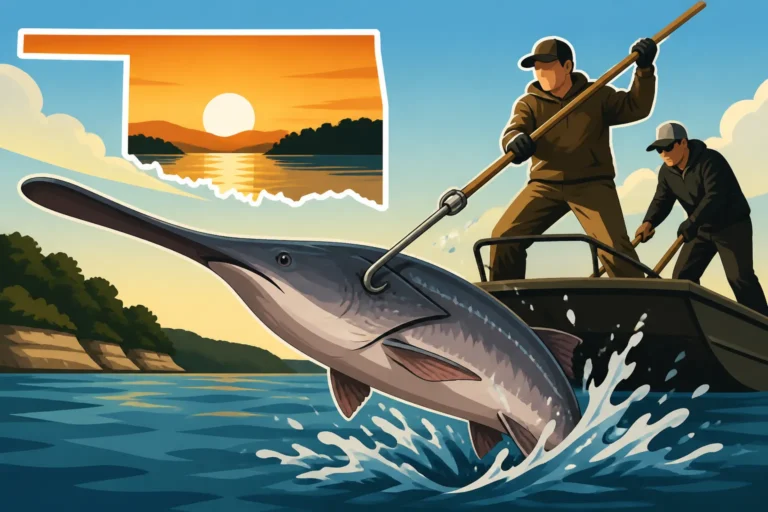
One of Oklahoma's most unique and exhilarating fishing experiences is paddlefish snagging, and Grand Lake O' the Cherokees is arguably the best place in the state to do it. Paddlefish, often called "spoonbill" due to their distinctive, elongated paddle-like snout, are ancient, filter-feeding fish that can grow to enormous sizes, sometimes exceeding 100 pounds! Since they are filter feeders, they cannot be caught on traditional bait and hook; instead, they are targeted by snagging.
The paddlefish snagging season in Oklahoma is highly anticipated, typically running from March 1st to May 15th, with a fall season also available in specific areas. Anglers use heavy-duty rods and reels, typically baitcasting setups, spooled with strong braided line, and equipped with large treble hooks weighted to sink quickly. The technique involves repeatedly casting and reeling in, sweeping the hook through the water column in hopes of "snagging" a passing paddlefish. When you hook into one of these giants, be prepared for a serious fight; their sheer size and power make for an incredible battle.
Grand Lake's Spring River and Neosho River arms are popular areas for snagging, as paddlefish congregate there during their spawning migration. It's a highly social and exciting form of fishing, often done with groups of friends or family. Due to the unique nature of this fishery, there are specific Paddlefish Snagging Season in Oklahoma rules and regulations regarding gear, bag limits, and reporting requirements, so it's absolutely crucial to familiarize yourself with these before participating. A specific paddlefish permit is also required in addition to your standard fishing license.
Trout Fishing in Oklahoma's Cold-Water Fisheries
As mentioned with the Lower Mountain Fork River, trout fishing is a distinctive and cherished angling pursuit in Oklahoma. While not a naturally widespread warm-water state for trout, the ODWC manages several "put-and-take" trout fisheries, ensuring that anglers can enjoy catching rainbow and sometimes brown trout year-round or seasonally. These unique spots offer a different kind of challenge and a beautiful change of scenery from the state's larger reservoirs.
Beyond the year-round Lower Mountain Fork River, Oklahoma maintains several seasonal trout areas. These include designated stretches of the Blue River, Lake Watonga, Lake Carl Etling, and the Illinois River. These areas are stocked regularly throughout the fall, winter, and spring months, providing consistent opportunities to catch freshly stocked trout. These stockings are often a big event, drawing anglers from across the state.
Trout fishing in these areas typically involves light spinning tackle with small inline spinners, spoons, power bait, corn, or worms. Fly fishing is also popular where conditions allow. The experience is often more about finesse and presentation, especially in the clearer waters. It's a fantastic way to extend your fishing season into the colder months when warm-water species might be less active. Remember, a valid Oklahoma fishing license and a trout stamp are required to fish these special areas.
Essential Tips for Planning Your Oklahoma Fishing Trip
Planning a successful fishing trip, especially to a new destination or for a different species, requires a little homework. Beyond knowing where to go, understanding the rules and having the right gear can make all the difference between a frustrating day and a fantastic one.
Understanding Oklahoma's Fishing Regulations
Before you even think about wetting a line in Oklahoma, it is absolutely vital to understand the state's fishing regulations. These rules are in place to manage fish populations, ensure sustainable fishing, and protect the state's natural resources for future generations. Ignoring them can lead to hefty fines and a ruined trip.
First and foremost, you'll need an Oklahoma fishing license. The requirements vary based on residency, age, and duration, so it's crucial to determine which one you need. Our guide to Oklahoma Fishing License Costs and Types and Fishing License Requirements in Oklahoma can walk you through the process, whether you're a resident, nonresident, senior, or fishing with kids. Remember that children under 16 generally don't need a license, but there are exceptions and special permits for certain species or areas.
Beyond the basic license, you'll need to be aware of species-specific regulations. Every game fish, including bass, crappie, and catfish, has statewide bag limits and often length limits. For example, there are specific Oklahoma's Bass Fishing Rules and Limits, Crappie Fishing Rules and Limits in Oklahoma, and Oklahoma's Catfish Fishing Rules and Limits that dictate how many fish you can keep and if they must be of a certain size. Even more critically, many individual lakes have special regulations that supersede the statewide limits. This is particularly common for crappie, where several lakes have a 10-inch minimum length limit or reduced bag limits. Always check the current Oklahoma Fishing Guide or the ODWC website for the most up-to-date rules for your specific destination.
Gear and Guides: Making the Most of Your Outing
Having the right gear is fundamental to a productive fishing trip. While you don't need the most expensive equipment, using tackle appropriate for the species you're targeting and the environment you're fishing in will significantly increase your success and enjoyment.
For general multi-species fishing in Oklahoma, a medium-action spinning rod with a matching reel spooled with 8-12 lb test monofilament or braided line is a versatile choice. This setup can handle everything from crappie and white bass to average-sized largemouth bass and channel catfish. If you're targeting specific species, however, you might want to specialize. For serious bass anglers, a variety of baitcasting setups with different actions and line sizes for various lures (jigs, crankbaits, topwaters) would be ideal. For heavy-duty catfish or striper fishing, heavier rods and reels with stout line are essential. Our guide to Best Rods and Reels for Oklahoma Fishing offers detailed recommendations to help you choose the right tools for your arsenal.
If you're new to an area, short on time, or simply want to maximize your chances of catching fish, consider hiring a local fishing guide. Oklahoma is home to many experienced guides who know the local waters intimately, understand seasonal patterns, and can provide all the necessary gear. A guide can teach you new techniques, take you directly to the hot spots, and ensure you have a safe and memorable trip. You can often find reputable guides for Oklahoma's popular lakes, like Lake Texoma or Grand Lake, through online booking platforms such as FishingBooker, which can connect you with certified professionals. This can be especially valuable if you're targeting a specialized species like striped bass or paddlefish. Ultimately, a well-planned trip, armed with knowledge and the right tools, will lead to the best Oklahoma fishing experience.
Disclaimer
Please be aware that fishing regulations, conditions, and fish populations can change. Always consult the latest Oklahoma Fishing Guide from the Oklahoma Department of Wildlife Conservation (ODWC) before planning your trip to ensure you have the most current information on licenses, bag limits, and specific lake regulations. Safety on the water is paramount; always wear a life jacket and be aware of weather conditions.