What Does a Spotted Sunfish Look Like
Have you ever reeled in a sunfish in Oklahoma and found yourself scratching your head, wondering exactly what kind of panfish you've caught? It's a common dilemma! With so many similar-looking species swimming in our waters, telling them apart can feel like a real challenge. This guide is here to help you confidently identify one of Oklahoma's often-overlooked but truly beautiful panfish: the spotted sunfish. We'll dive deep into its unique features, compare it to its close relatives, and give you the confidence to know exactly what's on the end of your line.
The Elusive Spotted Sunfish: An Introduction to Oklahoma's Lesser-Known Panfish
Oklahoma is teeming with incredible fishing opportunities, and while many anglers chase the big bass or elusive crappie, there's a whole world of panfish that offers fantastic sport, especially for beginners or those just looking for a relaxing day on the water. The spotted sunfish, Lepomis punctatus, often gets lumped in with its more famous cousins like the bluegill or green sunfish, but it has its own distinct charm and identification markers that, once you know them, make it stand out.
These fish might not grow to monstrous sizes, but what they lack in heft, they make up for in beauty and willingness to bite. Catching a vibrantly colored spotted sunfish, with its iridescent sheen and intricate patterns, is a rewarding experience. They're a testament to the diversity of Oklahoma's aquatic ecosystems, and knowing how to identify them correctly adds another layer to your fishing knowledge and appreciation. Understanding the specific characteristics of the spotted sunfish will empower you to become a more informed and accurate angler.
Why Identification Matters for Anglers
You might think, "A sunfish is a sunfish, right?" And while they all provide a good fight on light tackle, accurate identification isn't just about bragging rights. For starters, it helps with conservation. Understanding which species are present and thriving in certain waters helps wildlife managers make informed decisions. Beyond that, knowing what you've caught can inform your future fishing strategies. Different species often prefer slightly different habitats, baits, or presentations. If you know you're catching spotted sunfish, you can fine-tune your approach to catch more of them!
Another crucial aspect of identification, though less common for panfish, can be related to regulations. While most panfish share similar statewide limits, sometimes there are specific rules or length restrictions for certain species in particular bodies of water. While the spotted sunfish doesn't usually have highly specific individual regulations, understanding the difference between a spotted sunfish and, say, a Hybrid Sunfish: What Anglers Should Know is a good practice for any responsible angler. It's about being a good steward of our fishing resources.
Setting the Stage: Panfish in Oklahoma
Oklahoma's waters are a mosaic of habitats, from large reservoirs to small farm ponds and winding rivers. This diversity supports a wide array of fish species, and panfish are a cornerstone of this ecosystem. When we talk about panfish, we're generally referring to smaller, edible freshwater fish, typically members of the sunfish family, that are easy to catch and perfect for a meal in a frying pan – hence "panfish." This category includes bluegill, crappie, green sunfish, longear sunfish, redear sunfish, and, of course, the spotted sunfish.
These various sunfish species often coexist, which is precisely why telling them apart can be tricky. They share similar body shapes and often feed on similar diets of insects, small crustaceans, and larvae. However, each species has evolved its own subtle distinctions, both in appearance and sometimes in preferred microhabitats. By focusing on these distinctions, we can unravel the mystery of identification. Many anglers start their journey catching panfish, and understanding Best Beginner Fish for Kids Just Starting Out really lays a fantastic foundation for more complex fishing adventures later on.
Key Physical Characteristics of the Spotted Sunfish
Alright, let's get down to brass tacks. How do you really tell a spotted sunfish apart from the crowd? It comes down to a few key physical traits. Think of yourself as a fish detective, looking for clues that point specifically to our speckled friend. You'll want to pay close attention to the body color, the patterns, the fins, and even the operculum (that's the fancy name for the gill cover). Having a good, clear photo or even a small field guide (many of which you can find on Amazon) can be incredibly helpful when you're first learning to spot these differences.
Spotting the Spots: Body and Coloration
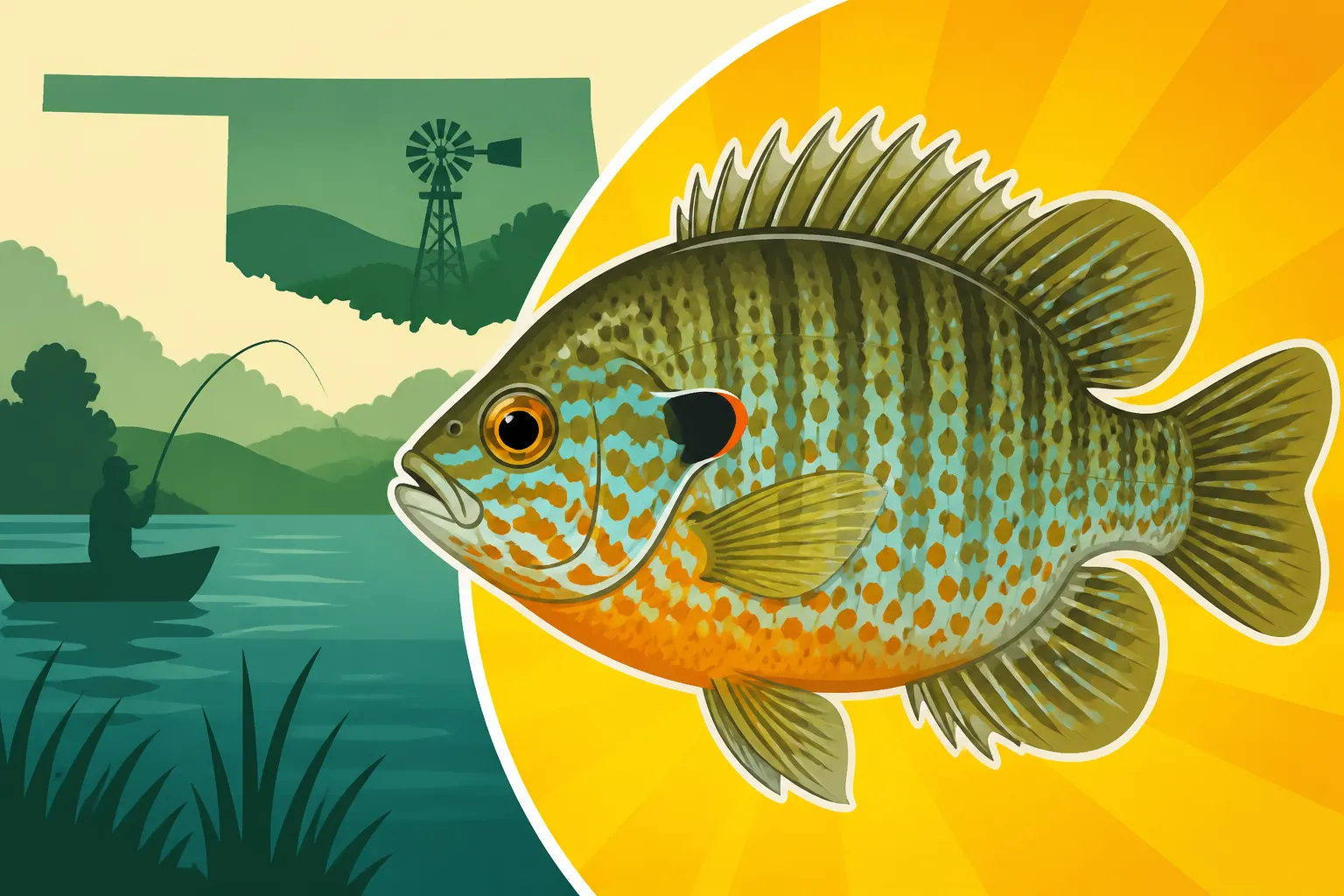
The most obvious clue, as its name suggests, is the presence of dark spots. The spotted sunfish has a greenish-brown back that fades into lighter sides, often yellowish or olive, and then a whitish or light yellow belly. What really makes it stand out are the distinct rows of dark, often brownish-red or black spots that run horizontally along its lower sides, below the lateral line. These spots are usually quite prominent and give the fish a speckled or mottled appearance. They aren't just random flecks; they often form clear, almost pearl-like rows.
Beyond the spots, the overall body shape is typical for a sunfish – a somewhat compressed, oval body, not overly deep like some bluegills, nor as elongated as some other species. The coloration can vary slightly depending on water clarity, diet, and even the time of year (spawning males can be particularly vibrant!), but those dark lateral spots are almost always present and are your primary visual cue. You won't typically see the distinct vertical bars that some bass species exhibit, nor the deep, uniform color of a spawning bluegill.
Fin Details and Distinctive Markings
Moving on to the fins, another excellent place to look for identifying features. The spotted sunfish's dorsal fin (the one on its back) is typically continuous, meaning the spiny front portion flows smoothly into the soft-rayed back portion without a deep notch, though there might be a slight indentation. The anal fin (on its underside, near the tail) will also have spines, usually three, which is pretty standard for sunfish.
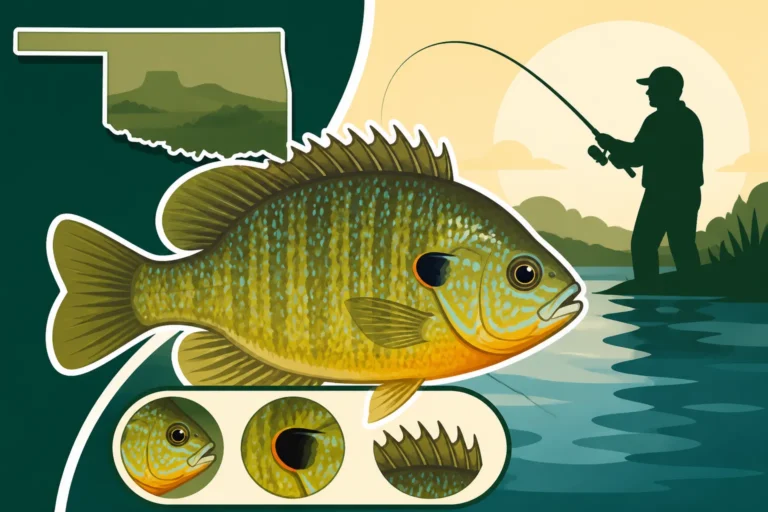
Now, for the really critical detail: the operculum, or gill cover flap. Like many sunfish, the spotted sunfish has a dark flap, or "ear tab," extending from the back of its gill cover. However, a key differentiator for the spotted sunfish is the presence of an orange or reddish margin around this dark ear tab. This colorful edge can be a vivid splash of red, orange, or even a deep brick color, especially on larger, healthier fish. This isn't just a faint hint; it's often a clear, vibrant border that acts like a neon sign for identification. Compare this to the entirely black ear tab of a bluegill or the often-elongated, sometimes less distinctly bordered flap of a longear sunfish.
Mouth and Gill Cover Features
Let's examine the head, particularly the mouth and gill covers. The mouth of a spotted sunfish is moderately sized, not as large as a green sunfish (which often looks like it can swallow larger prey) but larger than a bluegill's small, upturned mouth. When the mouth is closed, the upper jaw will typically extend to about the front edge of the eye, or perhaps slightly beyond it, but generally not past the middle of the eye. This intermediate mouth size is another good indicator when comparing it to other species.
On the gill cover itself, besides the distinctive ear tab, you'll notice small, rough patches of scales. Running along the cheek area, beneath the eye, there are often distinct rows of dark spots or wavy lines, further contributing to its "spotted" appearance. These lines can be more subtle than the body spots, but they're there if you look closely. It's these cumulative details – the body spots, the fin characteristics, the gill flap's colorful edge, and the mouth size – that paint a complete picture of the spotted sunfish.
Distinguishing Spotted Sunfish from Similar Species
This is where the real fun, and sometimes the frustration, begins. Oklahoma's waters are home to several sunfish species that can look quite similar at first glance. It's like trying to tell apart different breeds of dogs – they're all dogs, but the subtle differences define their breed. Let's break down the key distinctions between the spotted sunfish and its closest look-alikes. This is where a side-by-side comparison really comes in handy, perhaps in a good field guide you picked up from Amazon or a local tackle shop.
Spotted Sunfish vs. Green Sunfish: A Common Mix-Up
The green sunfish (Lepomis cyanellus) is perhaps the most common look-alike and the one most often confused with the spotted sunfish. Both are relatively robust panfish with some similar coloration. However, there are a few tell-tale differences. The green sunfish typically has a much larger mouth, extending back past the middle of the eye. It also usually exhibits wavy, iridescent blue-green lines on its cheek and operculum, which are very prominent. While it might have some irregular darker spots or blotches, it generally lacks the distinct, organized rows of spots found on the lower sides of the spotted sunfish.
Furthermore, the green sunfish's ear tab will typically have a wider, pale yellow or white margin, if any, rather than the distinct orange or reddish margin of the spotted sunfish. The dorsal fin of the green sunfish often has a more noticeable notch between the spiny and soft-rayed portions. If you're struggling, remember: big mouth, blue lines on the cheek, and a pale or absent margin on the ear tab often point to a green sunfish. For a deeper dive, check out Green Sunfish Identification for Oklahoma Anglers.
Spotted Sunfish vs. Bluegill: Understanding the Nuances
The bluegill (Lepomis macrochirus) is perhaps the most famous and widespread panfish in Oklahoma, and while it shares the sunfish body shape, it generally has some very clear differences from the spotted sunfish. The most striking difference is the bluegill's ear tab: it's almost always entirely black, without any colorful margin whatsoever. It truly looks like a solid black "ear." Bluegill also typically have a very small, upturned mouth that rarely extends beyond the front edge of the eye.
In terms of coloration, bluegill often have distinct vertical bars on their sides, particularly younger fish or those in clear water, though these can fade. They typically lack the prominent, organized horizontal rows of spots that define the spotted sunfish. The overall body color of a bluegill tends to be a deeper blue or olive on the back, fading to yellowish sides, often with a vibrant orange or yellow belly, especially in males. So, if you see a small mouth, solid black ear tab, and vertical bars, you're almost certainly looking at a bluegill. You can learn more about differentiating them by reading Bluegill's Blue-Black Ear Flap vs the Green Sunfish's Olive Body.
Spotted Sunfish vs. Longear Sunfish: Looking Closely
The longear sunfish (Lepomis megalotis) is another vibrant panfish that shares some similarities with the spotted sunfish, particularly in its rich coloration. As its name implies, the longear sunfish's opercular flap (ear tab) is usually quite long, often extending well beyond the posterior edge of the gill cover, sometimes with a red or orange margin. This long flap is usually the first thing that catches an angler's eye.
However, the longear sunfish typically features numerous wavy, iridescent blue or turquoise lines on its head, cheek, and operculum, similar to but often more pronounced than those on a green sunfish. While it can have some spotting, it doesn't usually display the distinct, organized rows of dark spots on its lower sides that are characteristic of the spotted sunfish. Its body often has a more mottled pattern with splashes of orange and red, but not the clean, pearl-like spots of our target species. If the ear tab is exceptionally long and you see prominent blue lines on the head, you've likely caught a longear.
Here's a quick comparison table to help visualize these differences:
| Feature | Spotted Sunfish | Green Sunfish | Bluegill | Longear Sunfish |
|---|---|---|---|---|
| Body Spots | Distinct horizontal rows of dark spots | Irregular spots/blotches, no distinct rows | Often vertical bars, no distinct horizontal spots | Mottled, sometimes with faint spots, but not rows |
| Ear Tab | Dark with a clear orange/red margin | Dark with a pale yellow/white or no margin | Solid black, no margin | Very long, often with red/orange margin |
| Mouth Size | Moderate (to front of eye or slightly beyond) | Large (well past front of eye) | Small (rarely to front of eye) | Moderate (to front of eye) |
| Head Markings | Often small dark spots/wavy lines on cheek | Prominent wavy blue/green lines on cheek/operculum | Faint or absent | Prominent wavy blue lines on head/cheek/operculum |
| Dorsal Fin | Continuous, slight notch | More noticeable notch | Continuous, no deep notch | Continuous, slight notch |
Habitat and Behavior Clues for Identification
Sometimes, a fish's appearance isn't the only clue. Where you catch a fish and how it behaves can also offer strong hints about its identity. Think of it as behavioral forensics. While panfish can be quite adaptable, each species often has a preferred environment or certain behaviors that make it more likely to be found in particular spots.
Preferred Environments in Oklahoma
Spotted sunfish are generally found in warmer, slower-moving waters. They absolutely thrive in vegetation-rich environments. Think of areas with lily pads, submerged grass beds, or brushy shoreline cover in lakes, ponds, and slow-moving streams and rivers. Unlike some other sunfish that prefer open water or deeper structure, spotted sunfish are often right in the thick of the weeds, using the cover for ambush points and protection. They tend to shy away from strong currents, so you won't typically find them in the main flow of a fast-moving river.
This preference for weedy, sheltered areas is a strong behavioral clue. If you're consistently catching sunfish out of dense cover, especially in smaller ponds or the back coves of larger reservoirs, there's a good chance you're encountering spotted sunfish. Best Bait for Bluegill in Oklahoma Ponds might also work well for these fish, as their diets and preferred habitats often overlap with other panfish species. You'll find them widely distributed across the eastern and central parts of Oklahoma where these conditions are prevalent.
Diet and Feeding Habits
Like most panfish, spotted sunfish are opportunistic feeders. Their diet primarily consists of insects and their larvae, small crustaceans, snails, and sometimes even small fish. Given their preference for vegetated areas, they are adept at picking off insects that fall onto the water's surface or larvae that hide among the weeds. Their moderately sized mouth makes them capable of eating a wider variety of prey than a bluegill, but they're not quite the aggressive insect-gobblers that green sunfish can be.
Anglers often catch spotted sunfish using small jigs, worms, crickets, or even tiny spinnerbaits. If you're casting near weed lines or submerged brush and getting bites on these types of offerings, it aligns perfectly with the feeding habits of a spotted sunfish. They aren't particularly picky, which is why they're such a fun fish to target. Understanding their diet can help you choose the right presentation, whether you're using live bait or artificial lures, increasing your chances of a successful outing.
Spawning Behaviors and Seasonal Changes
Spotted sunfish, like other sunfish species, are nest builders. Spawning typically occurs in late spring to early summer when water temperatures reach a comfortable range, usually between 68-75 degrees Fahrenheit. Males will create circular, shallow depressions in sandy or gravelly bottoms, often near aquatic vegetation in shallower waters. They are quite territorial during this time, guarding their nests diligently. This behavior can sometimes lead to very active fishing, as males are aggressive defenders of their spawning beds.
During the spawn, male spotted sunfish can exhibit even more vibrant colors, with their spots and the orange-red margin on their ear tabs becoming particularly intense. This makes identification even easier if you're lucky enough to catch one during this period. After spawning, they'll disperse back into their preferred cover. Knowing these seasonal patterns can not only help with identification but also greatly improve your chances of finding them throughout the year. For general fishing tactics that might also apply to spotted sunfish, you could explore Best Fishing Techniques for Beginners or Bluegill Fishing for Beginners.
In Oklahoma, understanding the nuances of each fish species enriches the entire fishing experience. The spotted sunfish, with its beautiful markings and adaptable nature, is a truly underrated gem. Next time you hook a sunfish, take a moment to really look at those spots, that ear tab, and the mouth. You might just be holding one of these distinct and delightful panfish.
Disclaimer
This article is for general informational purposes only and does not constitute professional advice. Laws, prices and regulations vary by location and change over time. Consult a qualified professional for guidance on your specific situation.