Bluegill’s Blue-Black Ear Flap vs the Green Sunfish’s Olive Body
It's a classic scenario: you're out on an Oklahoma pond, the bobber dips, you set the hook, and pull in a feisty little panfish. But then comes the moment of truth – is it a bluegill, or is it a green sunfish? For many anglers, especially those just starting out or taking the grandkids fishing, these two common species can look remarkably similar at first glance, leading to a bit of head-scratching. Getting it right isn't just about showing off your fish identification skills; it can sometimes matter for bag limits or even just accurately logging your catch. This guide is here to untangle that confusion once and for all, focusing on the tell-tale signs that help you confidently identify whether you've landed a true bluegill or a spunky green sunfish.
Why Differentiating Sunfish Matters for Oklahoma Anglers
You might be thinking, "What's the big deal? A sunfish is a sunfish, right?" And while they're both members of the expansive sunfish family (Centrarchidae), knowing the difference between a bluegill and a green sunfish isn't just an academic exercise. There are practical reasons why it's good to be able to tell them apart, especially if you're keen on following regulations or just improving your angling game.
First off, while both are abundant, different species sometimes have slightly different regulations, though often grouped under a general "panfish" category. Misidentifying your catch could lead to unknowingly exceeding a limit if there were species-specific rules in a particular water body, although statewide panfish limits in Oklahoma are usually quite generous. More commonly, it’s about pride and accurate record-keeping. Imagine telling your fishing buddies you caught a stringer of plump bluegill, only for a seasoned angler to point out half of them were actually green sunfish! It takes a little shine off the story, doesn't it? Knowing your fish also helps you understand their behavior better, which can make you a more successful angler in the long run.
Beyond that, understanding which species you're consistently catching in a particular spot can tell you a lot about the health and habitat of that water body. Green sunfish are notoriously hardy and can thrive in less-than-ideal conditions, often indicating shallower, warmer, or murkier water. Bluegill, while also adaptable, tend to prefer slightly clearer waters with more aquatic vegetation. So, your catch can be a natural indicator. If you're consistently pulling out more green sunfish, it might suggest the habitat isn't ideal for other, perhaps more desirable, panfish species.
Key Identification Features: Bluegill vs. Green Sunfish
Alright, let's get down to brass tacks. These two fish have some distinct features that, once you know what to look for, make identification much easier. Forget the overall "sunfishy" look and zoom in on these specific characteristics.
The Bluegill's Famous Blue-Black Ear Flap
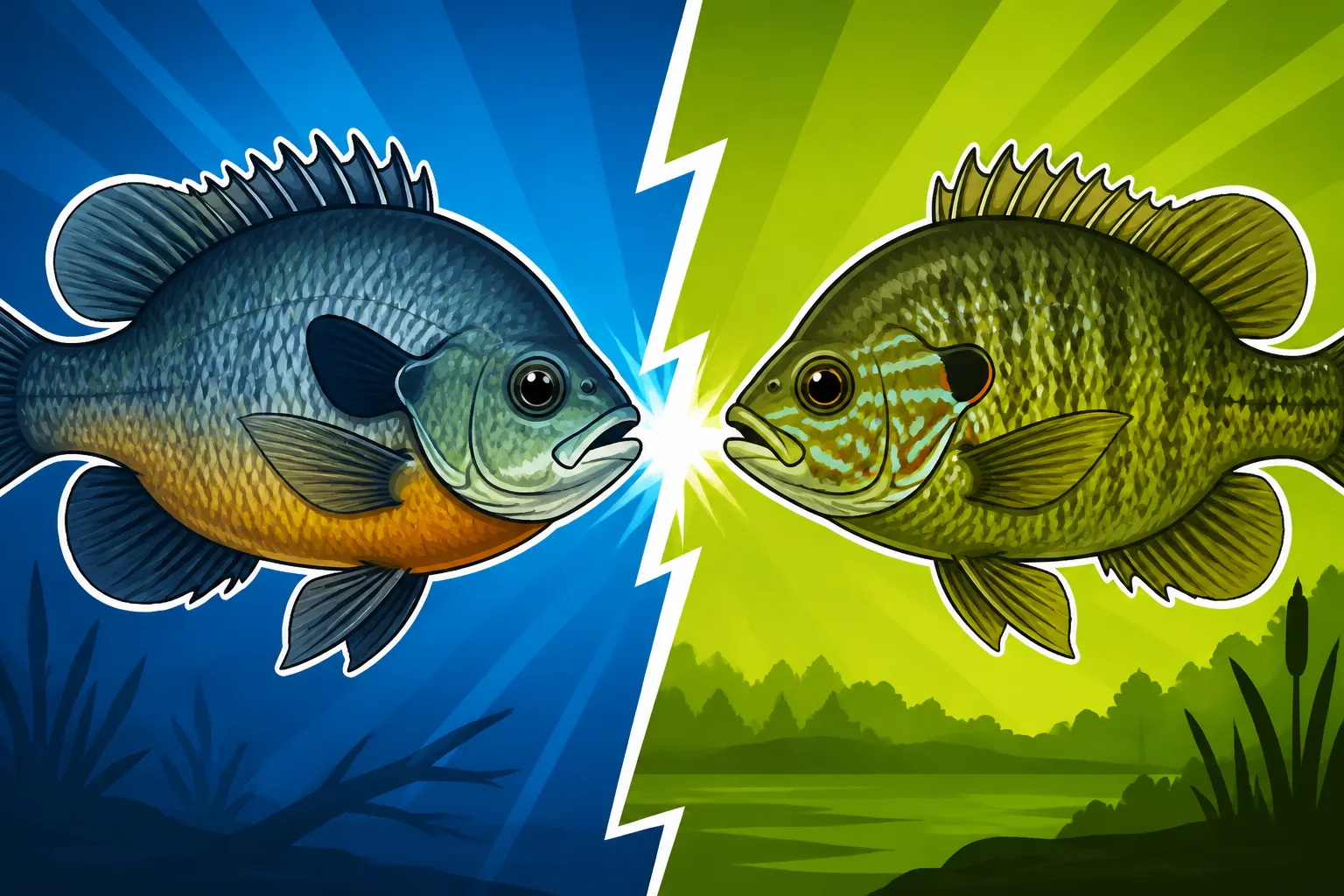
This is often the first and most definitive clue when you're trying to identify a true bluegill. The "ear flap" refers to the opercular flap, which is that little extension on the gill cover. On a bluegill, this flap is almost always a solid, deep blue or black color, and it lies flat against the body, lacking any noticeable fringe or light-colored trim. It's truly a distinctive, ink-blot-like mark.
Think of it like a dark, uniform patch of paint on the side of its head, usually without any bright edging. While the rest of the bluegill's body can vary in color from olive green to yellowish-brown, often with several faint vertical bars on its sides, that ear flap stays pretty consistent. Sometimes, especially on larger, male bluegill during spawning season, you might see a slight orange or reddish-orange spot on the lower part of the operculum, near the belly. This adds a splash of color but doesn't detract from the prominent dark flap itself. It's a reliable indicator and one of the easiest ways to confirm you've got a bluegill. For more on this popular panfish, check out Bluegill's Blue-Black Ear Flap vs the Green Sunfish's Olive Body.
Green Sunfish Body Coloration and Markings
Now, let's turn our attention to the green sunfish. As the name suggests, their primary body color tends towards an olive green, sometimes with a bronze or yellowish tint, but it rarely has the same vertical bars that bluegill often display. Instead, what really stands out on a green sunfish are those shimmering, iridescent blue or turquoise streaks and spots that radiate from their eyes and mouth across their face. These markings are quite striking and are a dead giveaway.
Also, look closely at the dorsal fin (the fin on its back). Green sunfish typically have a distinct black spot with a pale or yellowish margin at the rear base of their dorsal fin. This spot is usually more prominent than any similar marking you might find on a bluegill. Their overall body shape tends to be a bit more elongated or "torpedo-like" compared to the bluegill's rounder, deeper body. While the bluegill's ear flap is solid and dark, the green sunfish's opercular flap will often have a light, often reddish or orange, margin or edge, and it may not be as uniformly dark as a bluegill's. The contrast is key here – one is uniformly dark, the other has a distinct border. If you're curious about identifying other species, Green Sunfish Identification for Oklahoma Anglers offers more detailed insights.
Mouth Size and Body Shape
One of the most crucial differentiators, especially once you've handled a few of each, is the mouth size. This is probably the second most reliable indicator after the ear flap.
- Bluegill: These fish have a remarkably small, almost dainty mouth. When closed, their mouth typically does not extend past the front margin of their eye. It's a key reason why bluegill are often caught on tiny hooks with small baits like worms, crickets, or even fly-fishing nymphs. Their petite mouths are perfectly suited for picking small invertebrates off vegetation. Their body shape is generally rounder and deeper, giving them a "pan-shaped" appearance that gives the whole family its common name.
- Green Sunfish: In stark contrast, the green sunfish possesses a much larger, bass-like mouth. When closed, the corner of their mouth will extend at least to the middle of their eye, and often beyond it. This larger gape allows them to consume a wider variety of prey, including small minnows, insects, and even other small fish. It also explains why they're often caught on lures intended for bass or crappie. Their body is generally more robust and elongated than a bluegill, though still compressed laterally. Think of it as a tougher, more aggressive cousin with a bigger appetite. This larger mouth is a clear advantage in a competitive environment.
Pectoral Fin Length
Another subtle but helpful clue can be found in their pectoral fins, which are the pair of fins located just behind the gill covers, almost like "arms."
- Bluegill: Often, bluegill will have longer, more pointed pectoral fins. If you gently fold the pectoral fin forward, it will typically extend beyond their eye, sometimes even reaching the nostril. These longer fins contribute to their maneuverability in tight spaces and around aquatic plants.
- Green Sunfish: Their pectoral fins tend to be shorter and more rounded. If you try the same trick, a green sunfish's pectoral fin will usually only reach to about the front of its eye, or even just to the pupil. This difference isn't as dramatic as the mouth size or ear flap, but it's a consistent characteristic that can help confirm your identification, especially if you're still on the fence after examining other traits.
Here's a quick comparison table summarizing the key visual differences:
| Feature | Bluegill | Green Sunfish |
|---|---|---|
| Ear Flap | Solid blue-black, uniform, no light margin | Dark spot, but usually with a distinct light margin (often reddish-orange) |
| Body Color | Olive green to yellowish-brown, often with faint vertical bars | Olive green, bronze, or yellowish; fewer/no distinct bars |
| Facial Markings | Generally absent | Iridescent blue or turquoise streaks radiating from eye/mouth |
| Mouth Size | Small, rarely extending past front of eye | Large, extending to middle or beyond the eye |
| Pectoral Fin | Longer, pointed, often extends past eye when folded forward | Shorter, more rounded, usually only reaches front of eye |
| Dorsal Fin Spot | Absent or very faint | Prominent black spot with pale margin at rear base |
| Body Shape | Deeper, more rounded, "pan-shaped" | More elongated, robust |
Behavioral and Habitat Differences
Beyond the physical appearance, where and how you catch these fish can offer valuable clues about their identity. Their preferences for certain environments and their general demeanor often differ significantly.
Where They Hang Out
Understanding their preferred haunts can sometimes give you a strong hint before you even see the fish clearly. While both are widespread, they do have their favorites.
- Bluegill: These fish are generally found in clearer, cleaner waters with abundant aquatic vegetation, submerged timber, or other forms of structure. They love the cover of lily pads, weed beds, and submerged brush piles, which provide both ambush points for feeding and protection from predators. You'll often find them around docks, fallen trees, and shallow flats in larger lakes and ponds. They are very popular for beginners because of their widespread presence and willingness to bite, making them a top target for anglers learning the ropes. Many fishing guides, especially those on platforms like Amazon, will highlight these common bluegill habitats. Best Beginner Fish for Kids Just Starting Out goes into more detail about how easy they are to catch.
- Green Sunfish: These are the tough guys of the panfish world. Green sunfish are incredibly adaptable and can tolerate a much wider range of environmental conditions, including murkier, warmer, and even stagnant water that other species might shy away from. You'll often find them in shallow, slow-moving creeks, ditches, muddy farm ponds, and even roadside culverts. They don't require as much dense vegetation or structure, though they will certainly use it if available. Their ability to thrive in less-than-pristine conditions means they can sometimes be the dominant panfish in smaller, less managed water bodies. This adaptability is part of why you can catch them in so many different places across Oklahoma.
When you're exploring Best Fishing Spots in Oklahoma, observing the water clarity and available cover can give you a preliminary guess about which sunfish species you're more likely to encounter.
Feeding Habits and Aggression
Their personalities, especially when it comes to feeding, also differ, and this can be a strong indicator if you're paying attention to how they strike your bait.
- Bluegill: Bluegill tend to be more deliberate and methodical feeders. They'll often peck at bait, nibble it, or give a gentle tug before fully committing. Their small mouths are designed for picking off small insects, larvae, tiny crustaceans, and plant matter. When using a bobber, you might see it dance around a bit before it finally goes down. They can be very aggressive during spawning season, defending their nests, but outside of that, they're generally less "charge-first, ask questions later" than their green sunfish cousins. If you're fishing with light tackle and smaller baits like crickets, mealworms, or small pieces of earthworm, you're almost certainly targeting bluegill. Best Bait for Bluegill in Oklahoma Ponds offers some great suggestions.
- Green Sunfish: These fish are little eating machines with an attitude! Their larger mouths allow them to consume bigger prey, and they are notoriously aggressive feeders. When a green sunfish hits your bait, it's usually with a solid thump and a determined pull. They often strike hard and fast, sometimes even at baits that seem too large for them, displaying a fearlessness that bluegill often lack. They're opportunistic predators, eating insects, smaller fish, and anything else they can fit into their sizable mouths. If you're fishing a small, shallow pond and you're getting consistent, aggressive bites on almost any small lure or bait you throw, there's a good chance you're wrestling with a green sunfish.
In fact, green sunfish can sometimes outcompete bluegill for food and habitat in certain environments due to their aggressive nature and dietary flexibility. This competition is one reason why differentiating between the two can be useful for understanding the ecological dynamics of a pond or lake.
Beyond Bluegill and Green Sunfish: Other Oklahoma Panfish
While bluegill and green sunfish are two of the most commonly confused panfish, it's worth remembering that Oklahoma waters are home to a variety of sunfish species. It's easy to get tunnel vision when you're focused on just two, but knowing that others exist can help broaden your identification skills and prevent future misidentifications.
For instance, you might encounter redear sunfish, also known as shellcrackers, which have a distinctive red or orange margin on their opercular flap. They're often mistaken for a bluegill with a colorful ear, but the redear's mouth is much smaller and lacks any facial streaking. Redear Sunfish vs Bluegill: Key Differences offers a great comparison. Then there's the warmouth, which has a more robust body, a larger mouth than a bluegill (but smaller than a green sunfish), and usually three to five radiating dark lines from its eye. It also tends to have a brownish, mottled appearance. Even small Spotted Sunfish: A Lesser-Known Panfish can sometimes throw off an identification, though their distinct dark spots are usually a dead giveaway.
And let's not forget the juvenile stages of other game fish! Sometimes, a very small largemouth bass, especially one that's a bit "stubby" for its length, might briefly fool a novice angler. However, their much longer jaw that extends well past the eye and their distinct horizontal dark stripe usually distinguish them quickly. Check out How to Identify a Largemouth Bass for more clarity on this.
The key is to use a combination of features, not just one. No single characteristic is foolproof 100% of the time, especially with natural variations in color and size. Always look at the ear flap, mouth size, facial markings, and pectoral fin length together. The more details you check, the more confident you'll be in your identification. With a little practice, you'll be calling out "Bluegill!" or "Green Sunfish!" with seasoned confidence the next time you reel one in. It makes for a more informed and enjoyable fishing experience, allowing you to appreciate the specific characteristics of each unique catch.
Disclaimer
This article is for general informational purposes only and does not constitute professional advice. Laws, prices and regulations vary by location and change over time. Consult a qualified professional for guidance on your specific situation.