Best Fish Species for Trophy Hunting by Weight
Many of us dream of landing that monster fish, the kind that makes your arms ache and your reel scream, the one you can brag about for years to come. But if your goal is truly to hunt for a trophy by weight here in Oklahoma, meaning you want to put a truly massive fish on the scales, then you need to know which species offer the best opportunity for a truly gargantuan catch. This guide will help you understand which fish in our waters have the potential to grow to astounding sizes and what it takes to bring one of these giants to shore or boat.
Understanding Oklahoma's Heaviest Game Fish
When we talk about "trophy hunting by weight," we're not just looking for a long fish, but one with serious girth and mass. Oklahoma is blessed with a diverse range of freshwater species, but only a select few consistently push the tape measure and the scales into truly impressive, arm-stretching territory. These are the heavyweights, the fish that challenge your gear and your grit, offering the ultimate reward for anglers seeking that once-in-a-lifetime catch.
What Defines a "Trophy by Weight" in Oklahoma
For many anglers, a trophy isn't just about the state record, though that's the pinnacle. It's about catching a fish significantly larger than average for its species, something that truly stands out. When we focus on weight, we're thinking about the sheer power and size needed to pull a heavy fish out of the water. This means targeting species that have the biological capacity to reach weights well into the double or even triple digits. It requires specialized gear, immense patience, and often a different set of techniques than your everyday bass or crappie fishing. The thrill comes from the sheer physical challenge of battling a truly massive creature.
The Realistic Odds of Landing a Giant
Let's be real, landing a true trophy by weight isn't an everyday occurrence for most of us. It requires dedication, research, and often a bit of luck. These giant fish are usually older, smarter, and often inhabit deeper, less accessible parts of our lakes and rivers. They didn't get big by being easy to catch! However, understanding which species have the potential to reach these colossal sizes significantly improves your odds compared to simply throwing a line in and hoping. It's about strategic angling, knowing their habits, and being prepared when that big bite finally comes.
Top Contenders: Heaviest Fish Species in Oklahoma
When it comes to putting serious numbers on the scale, a few species in Oklahoma stand head and shoulders above the rest. These are the true giants of our waters, capable of growing to impressive, even intimidating, sizes. If you're serious about trophy hunting by weight, these are the fish you'll want to target.
Blue Catfish
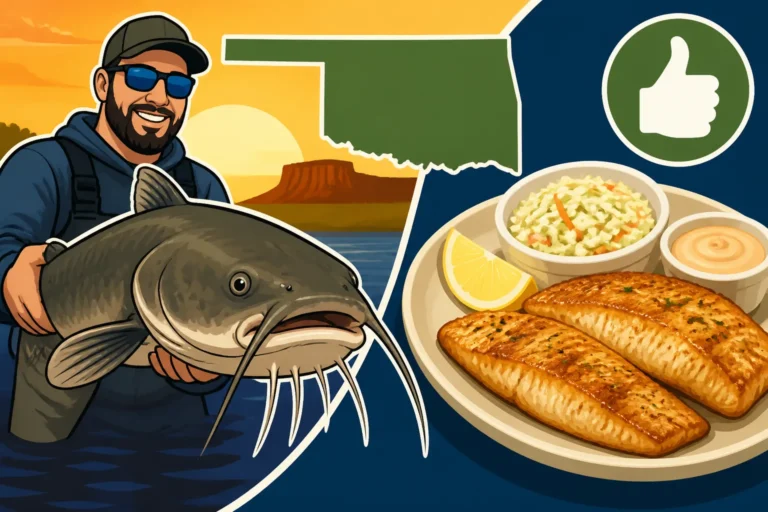
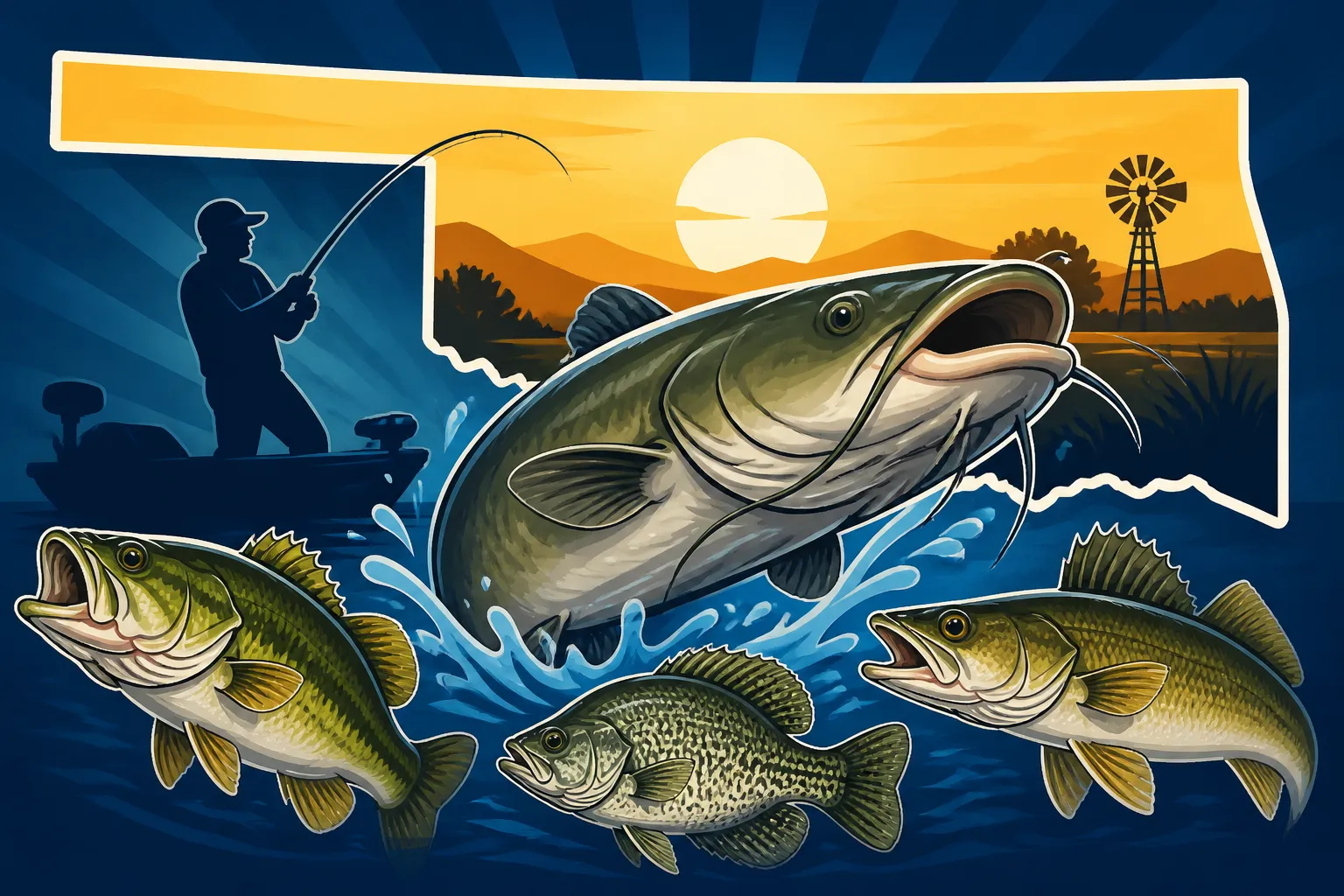
Without a doubt, the blue catfish is arguably the king of weight in Oklahoma's freshwater system. These powerful fish are renowned for their ability to grow to immense sizes, often pushing well over 50 pounds, with state records much, much higher. They are built for power, with broad shoulders and a deep body, making them a formidable opponent on the line. Blue catfish are prevalent in many of Oklahoma's larger reservoirs and rivers, particularly the Red River, Lake Texoma, and Grand Lake. Oklahoma's Catfish Fishing Rules and Limits are important to remember, especially the regulations around larger blue catfish.
For many dedicated trophy anglers, the blue catfish is the ultimate quest. They're often found in deeper channels, around submerged structure, or along river bends where current brings food. Targeting them requires heavy-duty gear, strong lines, and robust hooks, as a true trophy blue can test the limits of even the most well-prepared angler. Fresh cut bait, like shad or sunfish, is often the most effective offering for these giants. The fight from a big blue catfish is legendary, characterized by powerful, sustained runs and deep, head-shaking resistance that will leave your arms burning. You can often find specialized catfish rods and reels designed to handle these behemoths on platforms like Amazon.
Alligator Gar
If sheer ancient power and prehistoric size are what you're after, then the alligator gar is your undisputed champion. These incredible fish are living dinosaurs, capable of growing to truly astonishing lengths and weights, often exceeding 100 pounds and sometimes even 200 pounds in Oklahoma waters. While they might not be everyone's idea of a "game fish" in the traditional sense, their size and unique appearance certainly qualify them as a trophy by any measure of weight. You'll find alligator gar primarily in the Red River system and its associated tributaries and oxbow lakes in southeastern Oklahoma.
Targeting alligator gar is a specialized pursuit, often involving heavy-duty conventional gear, stout braided lines, and strong cable leaders to withstand their razor-sharp teeth. Large cut bait, like carp or buffalo, is typically presented on the bottom. The fight is less about finesse and more about raw strength, with big gar often making powerful, thrashing runs and spectacular leaps. Landing one often requires a team effort and extreme caution due to their size and dental armament. Researching Alligator Gar Fishing in Oklahoma can give you an edge, but remember, these are truly magnificent creatures that demand respect.
Paddlefish
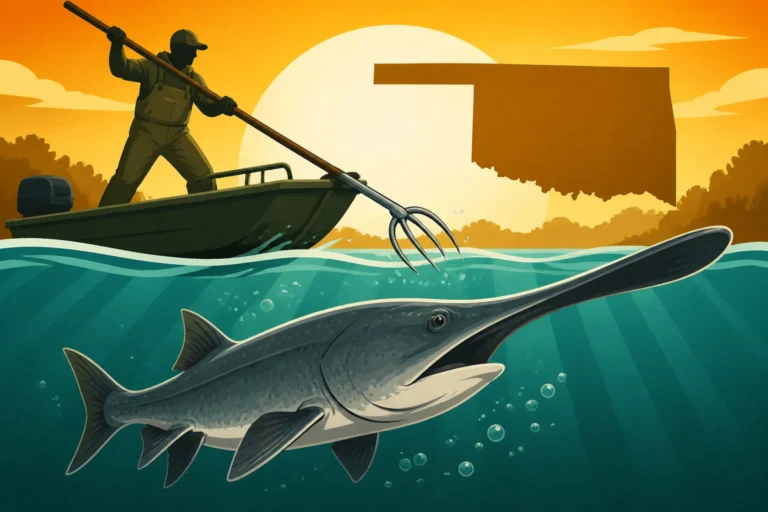
For a truly unique and massive freshwater trophy, the paddlefish is an unparalleled option. While technically snagged rather than caught on a hook and line in the traditional sense, these filter-feeding giants offer some of the most impressive weight numbers in Oklahoma. Paddlefish commonly weigh in the 50-100 pound range, with larger specimens easily exceeding that. Grand Lake O' the Cherokees is particularly famous for its incredible paddlefish snagging opportunities, especially during the spring spawning runs. Paddlefish Snagging Season in Oklahoma is a prime time for those seeking these colossal fish.
Snagging paddlefish requires very specific, heavy-duty gear designed to withstand the immense forces involved in pulling such large, powerful fish through the water. This includes long, heavy rods, large conventional reels spooled with heavy braided line, and enormous treble hooks. The fight is often described as feeling like you've hooked a submarine – a pure tug-of-war against an incredibly strong, deep-diving fish. While not a traditional "bite," the sheer weight and power of a paddlefish make it an undeniable trophy for anyone who brings one in. You'll definitely want to have a reliable boat anchor, which you can purchase from Amazon, for this kind of angling to keep your vessel steady against these giants.
Striped Bass
While perhaps not reaching the absolute maximum weights of blue catfish or alligator gar, striped bass in Oklahoma are another incredible species known for their significant size and tremendous fighting ability. Lake Texoma is legendary for its hybrid and pure-strain striped bass, where fish regularly reach weights of 10-20 pounds, with true trophies pushing well into the 30s and even 40-pound range. These powerful fish are often found in open water, chasing baitfish, and their explosive strikes and tireless fights are addictive.
Striped bass fishing is a high-energy pursuit, often involving trolling large artificial lures or fishing with live bait like shad. The sheer abundance of striped bass in a lake like Texoma, coupled with their aggressive nature and propensity for schooling, means that while trophy weights might be slightly less than the biggest catfish, your chances of hooking into multiple substantial fish are much higher. Striped Bass Fishing Techniques for Oklahoma's Lake Texoma details the methods for these strong swimmers. Their torpedo-like bodies deliver incredible power, making every hook-up a thrilling challenge.
Here's a quick comparison of these heavyweight contenders:
| Species | Common Trophy Weight Range (lbs) | Potential State Record (lbs) | Primary Habitat for Giants | Key Challenge for Anglers |
|---|---|---|---|---|
| Blue Catfish | 30 – 70 | 100+ | Large reservoirs, deep river channels, main lake basins | Heavy gear, patience, locating deep fish |
| Alligator Gar | 50 – 150 | 200+ | Lower Red River system, oxbows, backwaters, slow-moving rivers | Specialized gear, caution, immense strength |
| Paddlefish | 50 – 100 | 150+ | Grand Lake, large rivers, spawning runs | Specialized snagging gear, pure brute force |
| Striped Bass | 15 – 35 | 50+ | Large open-water reservoirs (Lake Texoma), main lake points | Fast runs, schooling behavior, consistent fight |
Strategies for Targeting Oklahoma's Weighty Trophies
Chasing truly massive fish isn't like casting for panfish. It requires a focused strategy, patience, and a deep understanding of the species you're pursuing. These fish are big because they've survived, grown wise, and learned to avoid less experienced anglers. To put yourself in the best position to land one, you need to think big, too.
Researching Prime Locations and Seasons
The first step to trophy hunting is knowing where these giants live and when they're most active. For blue catfish, focus on major river systems and large reservoirs like Lake Texoma, Lake Eufaula, and Grand Lake. During warmer months, they might be found in deeper holes and channels, while in cooler weather, they might move shallower to feed. For alligator gar, the Red River and its tributaries, especially in southeastern Oklahoma, are key. Their activity often picks up in warmer water. Paddlefish are synonymous with Grand Lake, particularly during their spring spawning migrations up the Neosho and Spring Rivers. Oklahoma Fishing Seasons: A Month-by-Month Guide can help you align your trips with peak activity.
It's not just about the lake, but specific areas within that lake. Look for deep river bends, significant submerged structure, old creek channels, or sharp drop-offs. These are ambush points or holding areas for large predators. Don't be afraid to study maps, talk to local bait shop owners, and even hire a guide if you're serious about increasing your odds. Experienced guides have invaluable knowledge about current patterns and hotspots for truly big fish.
Specialized Baits and Presentations
Forget the worms and small jigs; trophy-sized fish demand trophy-sized meals. For blue catfish, fresh cut bait is king. Gizzard shad, carp, or even smaller sunfish, cut into large chunks or used whole, are irresistible to big blues. The fresher the better. For alligator gar, larger, live or freshly dead carp, buffalo, or even smaller catfish presented on the bottom are often the ticket. Paddlefish, being filter feeders, aren't caught with bait, but understanding their migration patterns is the "bait" for successful snagging. Striped bass will hit large spoons, swimbaits, or topwater plugs, but for the biggest fish, live shad or other baitfish are often the most productive, especially when fished near schools of stripers.
Presentation is equally critical. For catfish and gar, a heavy bottom rig with enough weight to hold your bait in current is essential. For stripers, trolling at specific depths or anchoring near schooling baitfish can be highly effective. The key is to match the hatch, offering a food source that a large, lazy predator won't pass up.
The Importance of Heavy-Duty Gear
This cannot be stressed enough: trying to land a 50-pound blue catfish or a 100-pound alligator gar on light tackle is a recipe for heartbreak. Your gear must be up to the task. This means heavy-action rods, robust conventional reels with strong drag systems, and heavy-test braided line. For blue catfish, line in the 50-100 pound test range is not uncommon, and for gar, even heavier. Large, strong circle hooks are often preferred for catfish and gar, as they tend to hook in the corner of the mouth, making for easier release and less harm to the fish.
Don't forget the accessories: a large, sturdy landing net or a heavy-duty gaff (know the regulations on gaffing, especially for game fish) is crucial for securing your catch boat-side. A set of heavy-duty gloves can protect your hands from gill plates or sharp teeth. And, of course, a reliable, certified scale is essential for verifying that trophy weight! You'll find many high-capacity digital scales suitable for this purpose on Amazon. Investing in quality gear isn't just about durability; it's about having the confidence that when the fish of a lifetime bites, you have the tools to win the battle.
The Gear and the Glory: Landing a Record-Sized Fish
Landing a truly enormous fish is often a culmination of preparation, skill, and sheer will. It's a test of both angler and equipment, and when you finally bring that leviathan to hand, the sense of accomplishment is unlike anything else. But getting there requires more than just luck.
The Fight: Patience, Technique, and Adrenaline
When a truly massive fish hits, the fight is on. It's not usually a quick battle. These big fish are strong and determined, often making powerful, long runs that strip line from your reel. Your drag setting is crucial – tight enough to wear the fish down, but loose enough to prevent line breakage from sudden surges. Boat Fishing Techniques for Beginners might offer some foundational tips, but trophy hunting adds several layers of complexity.
Patience is paramount. Don't try to horse the fish in too quickly. Let it run when it wants to, gaining line back when it rests. Keep your rod tip up, maintaining constant pressure. It's a dance, a give and take, that can last for many minutes or even over an hour. You'll likely experience surges of adrenaline followed by moments of intense focus. For many, this protracted battle is the most rewarding part of trophy hunting, a true test of endurance and skill. When that fish finally surfaces, exhausted, it’s a moment of pure triumph.
Safe Handling and Release of Trophy Fish
Once you've landed your trophy, especially if it's not destined for the dinner table, proper handling and quick release are critical for its survival. Big fish, particularly catfish and striped bass, are often older, slower-growing specimens that contribute significantly to the fishery. If you plan to release, minimize its time out of the water. Have your camera ready, take a quick photo, and get it back into the water as soon as possible.
For very large fish, consider leaving them partially submerged while you get your measurements or photos. Handle them gently, supporting their full body weight, especially if lifting them for a photo. Avoid dragging them on rough surfaces. If using a net, choose a knotless, rubberized net to protect their slime coat and fins. Some anglers even carry a large sling or mat to cradle massive fish for measurements and photos, ensuring minimal stress. Practicing responsible catch and release helps ensure that future generations of anglers can also experience the thrill of landing a monster.
Documenting Your Catch for Bragging Rights and Records
You've put in the time, the effort, and battled the beast – now it's time to document it! Good photos are a must. Get a clear shot that shows the full fish and provides a sense of scale. A quality camera is often a worthy investment, but many modern smartphones can do the trick if used correctly. Make sure to get a photo of the fish with a certified scale showing the weight, and if possible, a measurement of its length and girth.
If you believe your fish might be close to a state record, immediately contact the Oklahoma Department of Wildlife Conservation (ODWC). They have specific procedures for verifying record fish, which usually involves having an ODWC official or a certified weigh station verify the weight on a certified scale. Knowing Oklahoma's Bass Fishing Rules and Limits, Crappie Fishing Rules and Limits in Oklahoma, or Oklahoma's Catfish Fishing Rules and Limits is crucial not just for fishing, but also for understanding potential record categories. Remember, the glory of a trophy isn't just in the catch, but in sharing the story and the evidence!
Disclaimer
This article is for general informational purposes only and does not constitute professional advice. Laws, prices and regulations vary by location and change over time. Consult a qualified professional for guidance on your specific situation.