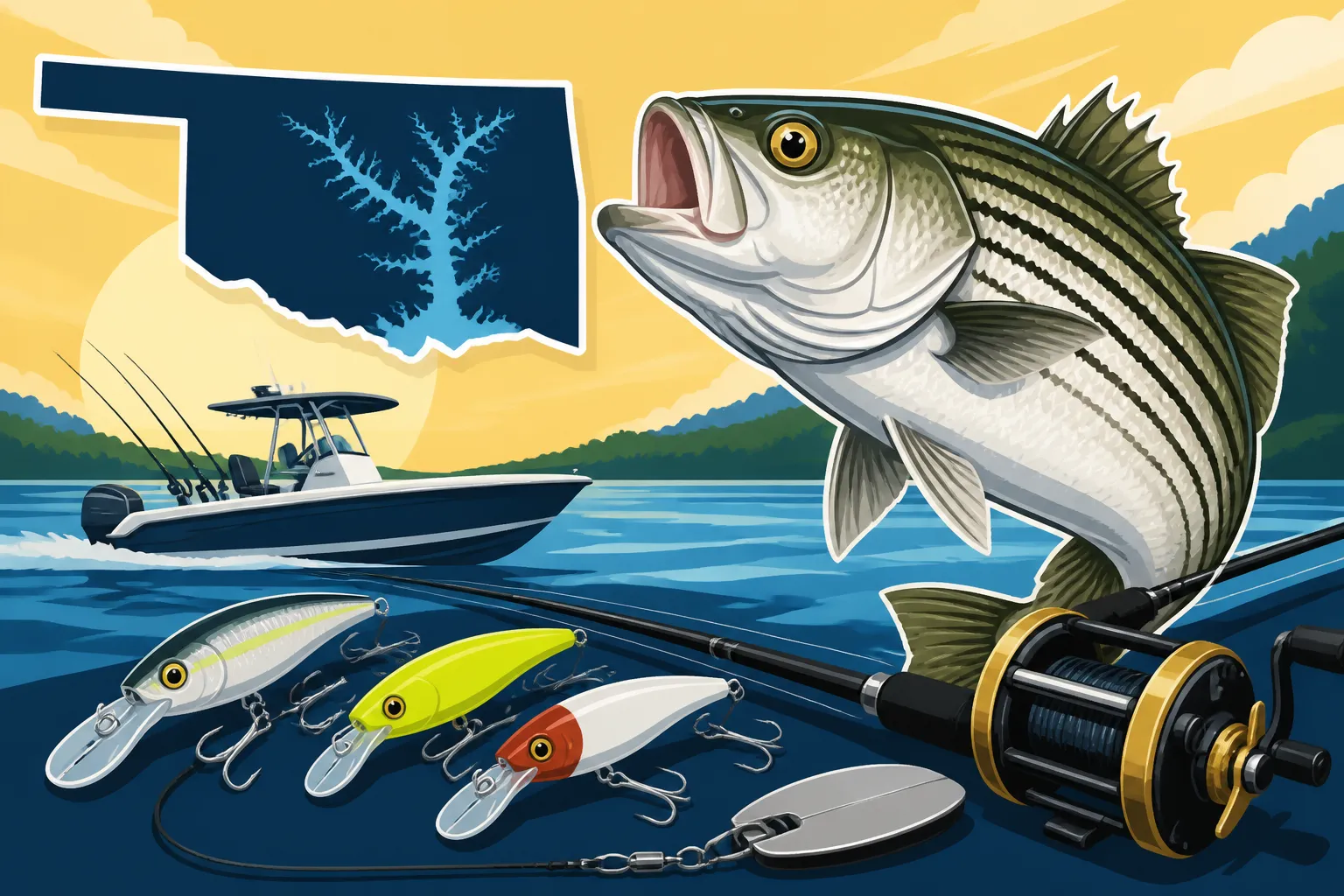
Trolling Gear for Striped Bass at Oklahoma’s Lake Texoma
There's nothing quite like the thrill of chasing striped bass on Lake Texoma, but let's be honest, it can feel like trying to find a needle in a haystack if you're not equipped properly. Those big, open waters demand a specific approach, and simply casting and retrieving often won't cut it for consistent success. This comprehensive guide is here to demystify the world of trolling for stripers on Texoma, covering everything from the foundational gear to advanced techniques, ensuring you're ready to tackle one of Oklahoma's most exciting fisheries.
Why Trolling is Your Go-To for Lake Texoma Stripers
When you're faced with a sprawling body of water like Lake Texoma, traditional casting and retrieving methods can quickly feel overwhelming and inefficient. Striped bass are known for their schooling behavior and their tendency to roam wide expanses in search of baitfish. This makes finding them a significant challenge, especially when they're not actively busting on the surface. That's where trolling becomes your most effective strategy, allowing you to cover vast areas and present your lures to fish that might otherwise remain unseen.
Covering Water and Finding the Fish
Imagine trying to locate a moving school of fish in a lake that spans over 89,000 surface acres. It's like searching for treasure without a map! Trolling solves this by systematically dragging multiple lines through different parts of the water column and across various underwater structures. Instead of waiting for the fish to come to you, you're actively moving your baits through their potential feeding zones. This proactive approach significantly increases your chances of intercepting a school of stripers, especially when they are suspended in open water or hugging the bottom in deeper sections of the lake. It's a game of probabilities, and trolling tilts those odds heavily in your favor.
The sheer scale of Texoma means that fish can be anywhere, from shallow flats to deep creek channels. Trolling allows you to explore these diverse habitats with relative ease. You can follow contour lines, cut across main lake points, or work along the edges of submerged islands, constantly presenting an enticing offering. This method is particularly effective during times when fish are less active or spread out, requiring you to literally go out and find them rather than relying on visible signs of feeding. It's less about luck and more about methodical exploration.
Mimicking Natural Baitfish Movements
Striped bass are apex predators, and their diet primarily consists of shad and other baitfish. When you observe shad schools, they don't just sit still; they're constantly moving, often in predictable patterns, trying to avoid predators. Trolling allows your lures or baits to replicate this natural movement almost perfectly. A properly trolled lure will swim with a consistent speed and action, mimicking a struggling or migrating baitfish, which is an irresistible target for a hungry striper.
The continuous, uninterrupted motion of trolled baits is key. Unlike casting, where your retrieve might be jerky or inconsistent, trolling provides a smooth, sustained presentation that big stripers find hard to ignore. When you combine this consistent action with the right depth and speed, you're essentially creating a moving buffet line for the fish. Whether you're pulling a deep-diving crankbait or a live shad on a weighted line, the natural swimming motion is a huge attractant. It's about making your offering look as real and as easy to catch as possible.
Consistency and Targeting Depth
One of the biggest frustrations in fishing is not knowing if your lure is even reaching the fish. Stripers on Lake Texoma often hold at very specific depths, sometimes just a few feet difference can mean the difference between a barren retrieve and a screaming reel. Trolling, especially with the right gear, gives you unparalleled control over the depth of your presentation. You can precisely target the thermocline in summer, the bottom in cooler months, or specific baitfish schools that you mark on your electronics.
This depth control isn't just about hitting a number; it's about maintaining that number consistently over long runs. A downrigger, for example, can hold your lure at exactly 30 feet, regardless of your boat speed or subtle changes in structure, ensuring your bait stays in the strike zone longer. This consistency is crucial for building a pattern. If you catch a fish at 28 feet over a specific type of structure, you can then replicate that scenario precisely, increasing your chances of finding more active fish. It takes the guesswork out of depth management, letting you focus on boat control and fish detection.
Essential Rod and Reel Combinations for Trolling
Equipping yourself with the right rods and reels is foundational to successful striper trolling on Lake Texoma. This isn't your average panfish setup; you need gear that can handle the powerful runs of a large striper, withstand the stresses of constant trolling, and provide enough backbone to effectively manage heavy lines and aggressive lures. Investing in quality gear here will save you headaches and heartbreak on the water.
The Right Rod Action and Length
For striper trolling, you'll generally want a medium-heavy to heavy action rod. This robust action is necessary to absorb the shock of a powerful strike, maintain control during a long fight, and effectively pull heavy trolling lures or bait rigs through the water. A rod that's too light will feel flimsy and won't have the power to drive hooks into a striper's tough mouth, especially when using larger baits or dealing with significant drag from trolling weights.
Length is another critical factor. While some prefer shorter rods for tight quarters, for open-water trolling on Texoma, rods typically range from 7 to 9 feet. Longer rods help spread your lines out, reducing tangles, especially when running multiple rods. They also provide more leverage when fighting a strong fish and can make it easier to clear prop wash. Look for rods with a moderate action, which means they bend well into the blank. This provides a forgiving tip for reading lure action and cushioning the initial strike, while still offering plenty of power in the midsection and butt to handle big fish. Many anglers find the "parabolic" bend of a fiberglass or composite rod ideal for trolling, as it acts like a shock absorber.
Matching Reels for Line Capacity and Drag
Your reel needs to be a workhorse. Conventional (baitcasting) reels are overwhelmingly preferred for striper trolling due to their robust construction, superior drag systems, and higher line capacities. A good trolling reel for Texoma stripers should have enough capacity to hold at least 250-300 yards of 20-30 pound monofilament or equivalent braided line. Stripers, particularly the larger ones, can make incredibly long, powerful runs, and you don't want to be spooled.
The drag system is paramount. It must be smooth, consistent, and capable of applying significant pressure without binding or chattering. Star drag reels are common and effective, but lever drag systems offer fine-tuning and quick adjustments, which can be a huge advantage when fighting a fish that's making repeated surges. Brands like Penn, Shimano, and Daiwa offer a range of reels specifically designed for saltwater trolling that work perfectly for Texoma's striped bass. Don't skimp on your reel; it's the critical link between you and that trophy fish. You can often find excellent options at sporting goods stores or online retailers like Bass Pro Shops or Amazon, where you can compare specifications and read reviews to ensure you're getting a durable, high-performance reel.
Line Choices: Mono, Braid, and Fluorocarbon
Choosing the right fishing line is more than just picking a breaking strength; it involves understanding the properties of different materials and how they interact with your trolling setup. Each type of line has its advantages and disadvantages for striper trolling.
Monofilament (mono) line is a traditional choice, often favored for its stretch, which acts as a shock absorber against powerful striper strikes and surges. It's also relatively inexpensive, easy to tie knots with, and less visible in the water. For trolling, many anglers will run 20-30 pound test monofilament as their main line. The stretch can be a double-edged sword, however, as it reduces sensitivity, making it harder to detect subtle bites or feel if your lure is fouled.
Braided line, on the other hand, offers virtually no stretch, providing incredible sensitivity and strength for its diameter. This means you can use a much lighter diameter line with a higher breaking strength, allowing for more line on your spool and less water resistance. The lack of stretch also means more direct power when setting the hook and fighting fish. Many striper anglers prefer 30-50 pound test braid as their main line. Because braid is highly visible and can be prone to abrasion, it's almost always paired with a leader.
Fluorocarbon is often used as a leader material due to its near-invisibility underwater and its excellent abrasion resistance. It has less stretch than monofilament but more than braid, offering a nice balance. Trolling outfits often feature a braided main line connected to a 20-30 pound fluorocarbon leader using a strong knot like an FG knot or a double uni-knot. This setup gives you the sensitivity and strength of braid with the stealth and abrasion resistance of fluorocarbon right where the fish sees it. Using a quality swivel between your main line and leader is also important to prevent line twist, especially with rotating lures. For more specific details on line choice, check out articles like Best Trolling Rigs for Striped Bass Fishing.
| Line Type | Key Characteristics | Pros for Trolling Stripers | Cons for Trolling Stripers | Common Use |
|---|---|---|---|---|
| Monofilament | Stretchy, good knot strength | Shock absorption, inexpensive, less visible | Less sensitive, larger diameter for strength | Main line for simpler setups, leader material |
| Braided Line | Zero stretch, high strength/dia | Extreme sensitivity, strong, thin diameter | Highly visible, less abrasion resistant, cuts | Main line for advanced setups |
| Fluorocarbon | Low stretch, abrasion resistant | Nearly invisible, good abrasion resistance | More expensive, stiffer than mono | Leader material (essential with braid) |
Diving Deeper: Downriggers and Planer Boards
When you're serious about striper trolling on Lake Texoma, especially if you're trying to hit those precise depths where the fish are holding, you'll eventually look beyond just weighted lines. This is where specialized depth control and line spreading tools like downriggers and planer boards come into play. These devices allow you to fine-tune your presentation and cover more water efficiently, making them invaluable assets for the dedicated striper angler.
Mastering Downriggers for Precise Depth Control
Downriggers are arguably the most effective tool for precise depth control in trolling. They consist of a heavy cannonball weight (often 8-12 pounds), a cable, a reel to deploy and retrieve the weight, and a release clip. Your fishing line is simply clipped into the release clip, and the cannonball is lowered to the desired depth. When a fish strikes, the line pulls free from the clip, and you fight the fish directly, without the drag of the heavy weight. This allows your lure to run completely unimpeded, giving it a much more natural action.
The beauty of downriggers is their ability to place your lure exactly where you want it and keep it there, even at varying boat speeds or through turns. If your fish finder shows a school of stripers at 40 feet, you can drop your downrigger ball to 40 feet and know your lure is right in their face. Many downriggers also come with depth counters and retrieve motors, making deployment and retrieval much easier. For deep-water striper fishing techniques on Texoma, a downrigger can be a game-changer, especially when the fish are suspended in the water column or hugging specific deep structures. They require a bit of practice to master, but the control they offer is unmatched.
Utilizing Planer Boards for Spreading Your Spread
While downriggers excel at vertical depth control, planer boards are all about horizontal spread. If you've ever tried to troll with multiple lines directly behind your boat, you know the frustration of constant tangles, especially when making turns or when a fish strikes. Planer boards solve this by carrying your lines out to the sides of the boat, creating a much wider trolling spread. This allows you to run many more lines simultaneously without tangles, effectively covering a much broader swath of water.
There are two main types: in-line planer boards, which clip directly to your fishing line and run out to the side, and mast-style planer board systems, which use a large board connected to a mast on your boat via a tow line, with your fishing lines clipped to the tow line with release clips. For Lake Texoma, where stripers can be spread out, planer boards are fantastic for presenting a wide array of lures at various distances from the boat. They also allow you to target fish that might be spooked by the boat's motor, as your lures are running far to the side in undisturbed water. Running a multi-line spread with planer boards can dramatically increase your chances of intercepting active fish.
Snap Weights and Trolling Sinkers: Simpler Depth Solutions
If downriggers or planer boards feel like too much of an investment or too complex for your current setup, snap weights and trolling sinkers offer simpler, more accessible ways to get your lures deeper. These methods might not offer the same pinpoint accuracy as a downrigger, but they are highly effective for many trolling scenarios.
Snap weights are lead weights that clip directly onto your fishing line, usually a certain distance in front of your lure. The beauty of snap weights is their versatility; you can add or remove them as needed to adjust your depth. They come in various sizes (e.g., 1 oz, 2 oz, 3 oz), and the amount of line you let out, combined with your boat speed and the weight's size, determines how deep your lure will run. This method is great for targeting mid-depth ranges or when you need to make quick depth adjustments. Many anglers use a system like the Precision Trolling Data app (though I can't name specific apps or data, just the concept) to estimate dive curves for different lures and snap weight combinations.
Trolling sinkers, such as bell sinkers or torpedo weights, are tied directly into your main line, typically a few feet in front of your leader and lure. While they're less adjustable than snap weights once deployed, they provide consistent depth and are very straightforward to use. They're a classic, reliable method for adding weight to get your lures down, particularly for those just starting out or when fishing shallower depths where complex equipment isn't strictly necessary. Understanding How Deep to Troll for Striped Bass on Lake Texoma often involves a combination of these weighting techniques.
The Art of Lure Selection for Trolling Stripers
Choosing the right lure is paramount when trolling for striped bass on Lake Texoma. Stripers are primarily sight feeders, and their aggressive nature means they'll often strike at anything that looks like a distressed or easy meal. However, matching the hatch – or at least presenting something appealing – can make a huge difference in your success rate. Your tackle box should be a diverse arsenal, ready for various conditions and preferences of these powerful fish.
Hard Baits: Crankbaits and Jerkbaits
Hard baits, particularly deep-diving crankbaits and lipped jerkbaits, are staples for striper trolling. These lures are designed to dive to specific depths when trolled, making them excellent for targeting fish suspended in the water column or holding near structure. Their built-in wobbling and rattling actions mimic baitfish, and their hard plastic or wood bodies are durable enough to withstand repeated striper attacks.
When selecting crankbaits, consider their diving depth ratings, which are usually indicated by the manufacturer. You'll want a range of lures that can hit depths from 10 feet all the way down to 30 or even 40 feet, allowing you to match the striper's preferred zone. Colors are also important; natural baitfish patterns like chrome/blue, shad, or chartreuse are often highly effective. For times when the water is stained or cloudy, brighter colors or those with UV finishes can sometimes trigger strikes. Trolling these lures at varying speeds and making subtle turns can impart a lifelike erratic action that drives stripers wild.
Jerkbaits, while often associated with casting, can also be trolled effectively, especially the longer, slender models that have a tight wobbling action. They're great for replicating fleeing baitfish. Some anglers will add a small trolling weight a few feet in front of a jerkbait to get it down to the desired depth. The key is to experiment with different sizes, colors, and dive curves to see what the stripers are keying in on that day. You can often find a wide selection of these lures on Amazon or at local tackle shops.
Soft Plastics and Swimbaits: Versatility is Key
Soft plastics and swimbaits offer a different presentation that can be incredibly effective, especially when stripers are being finicky or feeding on smaller bait. The versatility of soft plastics allows for a wide range of rigging options, enabling you to present them at virtually any depth.
Grub tails, swimbaits (especially paddle-tail varieties), and fluke-style baits rigged on jig heads or weighted swimbait hooks are popular choices. The natural, undulating action of soft plastics is hard for a striper to resist. For trolling, you'll often rig these on heavier jig heads (e.g., 1/2 oz to 2 oz, depending on depth) to get them down, or you can use them in conjunction with downriggers or snap weights. The colors can vary widely, but white, chartreuse, pearl, and various shad imitations are perennial favorites.
One of the big advantages of soft plastics is their cost-effectiveness compared to some hard baits, meaning you can afford to experiment more. They also present a softer, more natural feel to a striking fish, which can sometimes lead to longer hold times and better hookups. Don't underestimate the power of a simple, well-presented soft plastic swimbait when the stripers are keyed in on a specific size of baitfish.
Live Bait Rigs for Trolling Success
While artificial lures are highly effective, sometimes there's just no beating live bait. For striped bass on Lake Texoma, live shad (threadfin or gizzard shad) are the ultimate offering. Trolling live bait is a highly productive technique, especially when stripers are less aggressive or when you're targeting really big fish.
Live bait trolling typically involves rigging a single live shad on a weighted line. A popular setup involves a simple Carolina rig or a three-way swivel rig, with a trolling sinker or egg sinker ahead of a leader and a circle hook through the nose or back of the shad. The weight gets the shad down to the desired depth, and the live bait's natural swimming action is irresistible. Maintaining a very slow trolling speed is crucial when pulling live bait, just enough to keep the shad swimming naturally without spinning.
You'll need a good livewell to keep your shad healthy and lively throughout the day. A healthy, active shad will draw strikes much better than a sluggish one. Many serious striper anglers will spend time cast netting or sabiki rigging their own bait before heading out to troll. For more on this, you might want to look at Best Live Bait for Striped Bass Fishing. The investment in time and effort for live bait often pays off with bigger fish and more consistent action.
Electronics and Navigation: Your Trolling Command Center
Modern electronics are no longer a luxury for serious striper anglers; they're an absolute necessity. On a vast lake like Texoma, finding fish is half the battle, and staying on them once you do is the other. Your boat's electronics suite acts as your eyes and ears underwater, giving you an invaluable advantage in locating, tracking, and ultimately catching striped bass.
Fish Finders and Sonar: Locating Structure and Schools
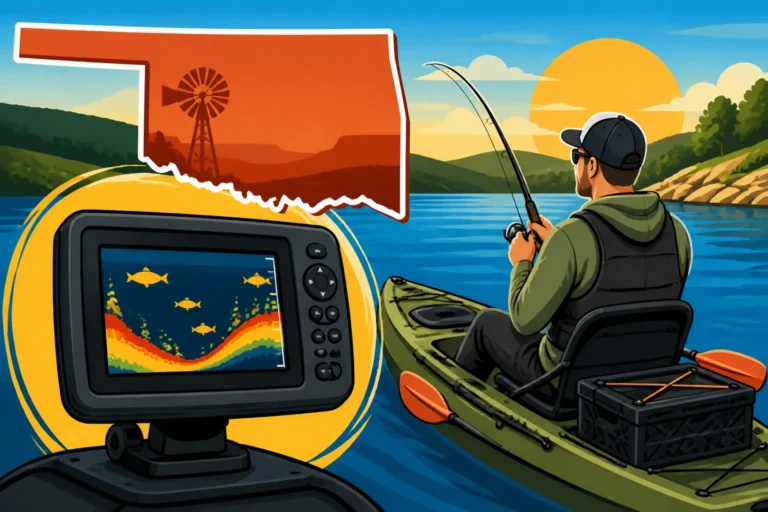
Your fish finder, equipped with robust sonar capabilities, is the most crucial piece of electronic gear for striper trolling. It’s your window into the underwater world, allowing you to see baitfish, individual stripers, and schools of fish, as well as the bottom structure they relate to.
Modern fish finders offer several types of sonar. Traditional 2D sonar provides a classic view of fish arches and bottom contours. Down Imaging (also called DownScan or ClearVü) offers photo-like views directly beneath your boat, making it easier to identify submerged timber, brush piles, or rock formations where stripers might be hiding. Side Imaging (SideScan or SideVü) is a game-changer for covering vast areas, allowing you to scan wide swaths of water to either side of your boat, pinpointing bait schools or striper concentrations that you might otherwise troll right over. For more, check out Best Fish Finder for Deep Water Striped Bass on Lake Texoma.
When trolling, constantly monitor your fish finder. Look for "bait balls" – dense schools of shad – because stripers are rarely far from their food source. Also, pay attention to arches or marks that indicate larger individual fish or schools of stripers. Note the depth at which these fish are holding. This information directly informs your lure selection and depth control strategy. If you see fish at 35 feet, you know exactly where to set your downriggers or snap weights.
GPS and Chartplotters: Staying on Course
Once you find a productive area or a school of fish, a reliable GPS and chartplotter become essential. Lake Texoma has numerous creek channels, main lake points, submerged humps, and ledges. A GPS allows you to mark these hot spots, navigate precisely back to them, and consistently troll productive contour lines.
With a chartplotter, you can view detailed maps of the lake, including depth contours, navigational aids, and previously saved waypoints. This is invaluable for running specific trolling passes. For instance, if you found fish along a certain depth break or a specific underwater point, you can program your chartplotter to follow that contour exactly, ensuring your lures stay in the strike zone. You can also "bread-crumb" your successful trolling paths, allowing you to replicate successful runs later in the day or on future trips. This removes guesswork and keeps you focused on fishing.
Autopilots and Trolling Motors for Effortless Control
For the ultimate in trolling efficiency and comfort, an autopilot or a GPS-enabled trolling motor can transform your experience. Long days of holding the wheel at a precise speed and direction can be tiring, and any deviation can pull your lures out of the strike zone.
An autopilot system, often integrated with your main motor, can maintain a set course and speed with incredible accuracy. This frees you up to focus on your rods, watch your lines, and manage your tackle. Even small shifts in boat direction can impart a unique action to your lures, and an autopilot helps you keep those subtle movements consistent or intentionally varied.
GPS-enabled bow-mount trolling motors, like those from Minn Kota or Motorguide (popular brands available at Bass Pro Shops), are another fantastic option. Many of these have "spot-lock" features that hold your boat in place against wind and current, as well as advanced autopilot functions that can follow pre-programmed routes or even track a specific contour line. This means you can focus entirely on fishing, letting the motor handle the boat control with incredible precision. For more, consider Best Trolling Motor for Striped Bass at Lake Texoma. These tools aren't just about convenience; they significantly enhance your ability to present lures effectively and consistently, leading to more strikes.
Accessories and Safety for a Successful Trolling Trip
Trolling for striped bass on Lake Texoma isn't just about the rods, reels, and lures; it's also about having the right supporting gear to make your trip comfortable, efficient, and, most importantly, safe. Ignoring these details can quickly turn a promising day on the water into a frustrating or even dangerous experience.
Rod Holders and Storage Solutions
When you're running multiple lines while trolling, having a robust system of rod holders is absolutely crucial. You can't hold six rods simultaneously! Quality rod holders will securely hold your rods in place, allowing you to set up your spread, monitor lure action, and wait for a strike without constant juggling. Look for heavy-duty, adjustable rod holders that can withstand the violent strike of a large striper without breaking or allowing the rod to be pulled out. They should be mounted securely to your boat, often along the gunwales or on specialized trolling trees.
Beyond just holding rods during trolling, good storage solutions are essential for keeping your deck clear and organized. This includes dedicated storage for spare rods, tackle boxes, and safety gear. A cluttered deck is not only a tripping hazard but also makes it harder to respond quickly when a fish strikes or if you need to access specific tackle. Consider tackle management systems like those offered by Bass Pro Shops, which include boxes and bags designed for specific lure types. Keeping everything organized means less time fumbling and more time fishing effectively.
Landing Gear: Nets and Grips
So, you've got a big Texoma striper on the line – congratulations! Now comes the critical part: getting it into the boat. This is where appropriate landing gear makes all the difference. Trying to hand-land a thrashing, toothy striper can lead to lost fish, bent hooks, and even injuries.
A large, sturdy landing net is a must-have. Look for a net with a wide hoop and a deep, rubberized or knotless mesh bag. The rubberized mesh is gentler on the fish if you plan to release it, and it's less prone to getting treble hooks tangled. The handle should be long enough to reach the fish comfortably from your boat. For really big stripers, a net with a telescoping handle can be invaluable. Make sure the net is easily accessible and ready to go when a fish is close to the boat.
Fish grips or lip grippers are another excellent tool, especially for larger stripers. These devices allow you to securely grab a fish by its lower lip, giving you control without having to handle a potentially sharp-finned or slippery fish directly. They are particularly useful for safely removing hooks and for quick photos before release. Just remember to support the fish's body weight, especially for larger specimens, to avoid jaw damage.
Essential Safety Equipment for Open Water Trolling
Fishing on a large body of water like Lake Texoma means you need to be prepared for anything. Safety should always be your top priority. While the thrill of the catch is exhilarating, it’s never worth risking your well-being or that of your passengers.
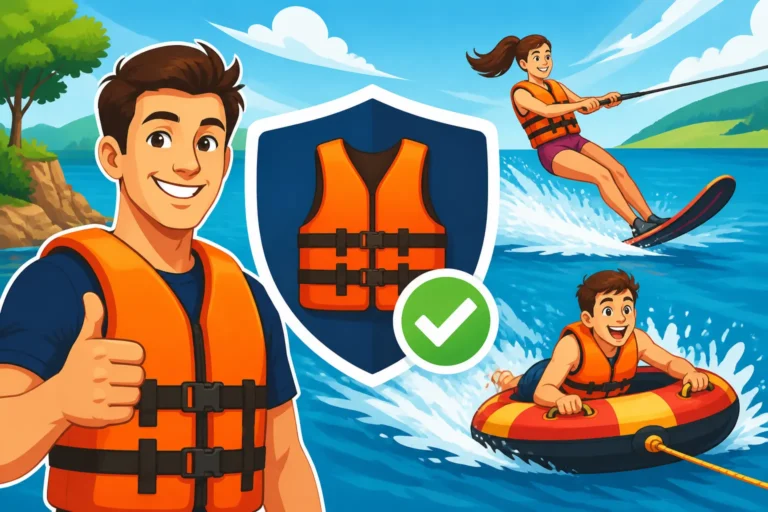
Your boat should always be equipped with all required safety gear, including Coast Guard-approved life jackets for everyone on board. For children, this means they must wear a life jacket at all times while the boat is underway. Even for adults, having them readily accessible is critical. A throwable floatation device (Type IV PFD) is also often required for boats over a certain length. You'll also need visual distress signals (flares or a flag), an audible signaling device (a horn or whistle), and a fire extinguisher. For a detailed checklist, refer to Safety Gear Checklist for Oklahoma Boaters.
Beyond the legally required items, consider adding a marine-band VHF radio for communication, especially if you venture far from shore where cell service might be spotty. A well-stocked first-aid kit is also a no-brainer. Always check the weather forecast before heading out, as Texoma can get rough quickly with strong winds. Having extra water, snacks, sunscreen, and appropriate clothing for changing conditions will also make your long days of trolling much more comfortable and safer. Being prepared means you can focus on the fishing, knowing you've taken the necessary precautions.
Trolling Strategies and Tips for Lake Texoma
Knowing your gear is one thing, but knowing how to use it effectively on a specific body of water like Lake Texoma is where the true art of striper trolling comes in. Texoma's unique characteristics, from its vast open water to its specific fish behaviors, require thoughtful strategy and adaptability.
Reading the Water and Seasonal Adjustments
Lake Texoma is dynamic, and what works one day or one season might not work the next. Successful striper trolling starts with reading the water and understanding seasonal patterns. In spring, stripers are often found in shallower areas, moving towards spawning grounds, and might be more aggressive towards lures. As summer heats up, they'll typically move to deeper, cooler water, often suspending in the thermocline or near deep structures, making downriggers and precise depth control crucial. Fall sees them becoming highly active again, often chasing massive schools of shad in the main lake. Winter can be a fantastic time for big stripers, but they'll often be congregated in deep, protected areas. For more on how seasons affect fishing, check out How Striped Bass Fishing Changes Through the Seasons at Lake Texoma, Oklahoma.
Beyond the seasons, pay attention to current, wind, and water clarity. Current, especially around dam releases or major river inflows, can concentrate bait and stripers. Wind can create chop that breaks up your boat's profile, making fish less spooky, but too much wind can make boat control difficult. Water clarity also influences lure color and size choices. A clear understanding of these environmental factors will help you make informed decisions about where to troll, what depth to target, and what lures to present.
Speed, Direction, and Pattern Changes
Trolling speed is a critical variable. For striped bass, a typical trolling speed ranges from 2.5 to 4.5 miles per hour, but this is a starting point, not a hard rule. Sometimes, a slower speed (2-2.5 mph) is more effective for finicky fish or when pulling live bait. Other times, a faster pace (4-5 mph or more) can trigger reaction strikes from aggressive stripers. Experiment with different speeds until you find what the fish prefer on a given day. Watch your rod tips – if your lures aren't swimming correctly, adjust your speed.
Direction is also key. Trolling in a straight line is often productive, but making subtle S-turns or gentle curves can dramatically increase your strike rate. As your boat turns, the lures on the inside of the turn will slow down and drop slightly, while those on the outside will speed up and rise. This change in action and depth can often be the trigger that gets a striper to bite. Pay attention to your fish finder during turns; you might notice strikes occurring more frequently on one side of the boat or at a specific point in the turn.
Don't be afraid to change your pattern. If you're not getting bites after 20-30 minutes, change something. Adjust your speed, alter your depth, swap out a lure color, or try a different type of bait. Sometimes, just changing your direction by 90 degrees can put you on fish. The stripers on Texoma can be moody, and successful trolling often comes down to constant experimentation and adaptation.
The Importance of a Trolling Spread
A well-planned trolling spread allows you to cover more water both horizontally and vertically, increasing your chances of finding active stripers. This means deploying multiple rods, each with a different lure or bait, at varying depths and distances from the boat.
A common spread might include:
- Deep lines: Two rods running downriggers at different depths (e.g., 30 and 40 feet) directly behind or slightly to the sides of the boat.
- Mid-depth lines: Two rods with heavy diving crankbaits or snap weights targeting 15-25 feet, perhaps deployed further out to the sides with planer boards.
- Surface/Shallow lines: One or two rods with lighter lures or shallow-running crankbaits, or even just bucktail jigs, running in the prop wash directly behind the boat. These can sometimes pick up aggressive fish or fish that move up to investigate the boat.
Using planer boards, as discussed earlier, helps immensely in widening this spread and preventing tangles. Staggering your lures at different distances behind the boat also helps prevent tangles when a fish strikes and allows you to test various presentations simultaneously. Pay attention to which rod gets hit and try to replicate that successful combination on another rod. This systematic approach is a cornerstone of effective trolling for Lake Texoma's striped bass. For a broader perspective on the lake, remember to consult a Lake Texoma Fishing Guide for Oklahoma Anglers.
Maintenance and Care for Your Trolling Gear
Your trolling gear represents a significant investment, both financially and in terms of the time it took to acquire and set it up. Protecting that investment through proper maintenance and care isn't just about prolonging the life of your equipment; it's about ensuring reliability when you're out on the water. The last thing you want is a malfunction to cost you a trophy striper or ruin a fishing trip.
Post-Trip Cleaning and Storage
Every time you bring your gear off the water, especially after fishing saltwater or brackish environments (like parts of Texoma), a thorough rinse is crucial. Saltwater is corrosive, and even freshwater can leave behind mineral deposits and grime.
- Rods: Rinse your rods thoroughly with fresh water, paying close attention to the guides and reel seat. Use a soft cloth to wipe down the blanks. Check for any nicks or cracks in the guides that could fray your line.
- Reels: This is perhaps the most critical component for post-trip care. Lightly rinse your reels with fresh water, ensuring you don't blast water directly into drag systems or bearings, which can force water into internal components. Wipe them dry with a soft cloth. Apply a light coat of reel oil to moving parts (following the manufacturer's recommendations) and a protectant spray to the exterior. Loosen your drag all the way down before storing to relieve pressure on the drag washers.
- Lures: Rinse all your lures, especially hard baits with treble hooks. Inspect hooks for rust, dullness, or bends. Replace or sharpen hooks as needed. Store lures in well-ventilated tackle boxes or trays to prevent rust and mildew.
- Downriggers/Planer Boards: Rinse downrigger cables, weights, and release clips. Wipe down the units themselves. Ensure planer boards are clean and free of debris.
Proper storage is key. Store rods vertically or horizontally where they won't be bent or damaged. Keep reels in a dry, temperate environment. A dedicated gear closet or storage area away from direct sunlight and extreme temperatures is ideal.
Routine Checks and Preventative Maintenance
Beyond the immediate post-trip cleaning, it's a good idea to establish a routine for more in-depth checks and preventative maintenance, especially before the start of a new fishing season or a big trip.
- Line Inspection/Replacement: Periodically check your fishing line for nicks, abrasions, or signs of wear, especially the first 20-30 feet. If you spool your own reels, consider replacing your main line every 1-2 seasons, or more frequently if you fish heavily. Even if it looks good, monofilament and fluorocarbon can degrade over time due to UV exposure and stress. Braided line is more durable but still needs to be checked.
- Reel Service: Depending on how heavily you fish, your reels will benefit from professional servicing every few years. This involves disassembling, cleaning, lubricating, and replacing worn parts. If you're mechanically inclined, you can learn to do some basic maintenance yourself, but for internal components, a pro often makes sense.
- Hardware Check: Inspect all hardware on your downriggers, rod holders, and boat mounts. Look for loose screws, worn bolts, or signs of metal fatigue. Lubricate moving parts where appropriate. Check all knots in your leaders and main lines regularly; a faulty knot is a direct path to a lost fish.
- Electronics: Keep your fish finder and GPS screens clean and protected from direct sunlight when not in use. Check all cable connections for corrosion or damage. Ensure your trolling motor battery is charged and properly maintained.
Preventative maintenance is about being proactive. Addressing small issues before they become big problems saves you time, money, and potentially that fish of a lifetime.
Addressing Common Trolling Gear Issues
Even with the best care, sometimes things go wrong. Knowing how to troubleshoot common issues can save your day on the water.
- Tangled Lines (The "Troll Mess"): This is perhaps the most common frustration. It's often caused by incorrect trolling speed, lures running at the same depth, sharp turns, or insufficient spacing. If you get a tangle, stop the boat immediately, reel in all lines, and carefully untangle them on a clear deck. Learning to correctly set up a multi-line spread, with varying depths and distances using techniques discussed in Deep Water Striper Fishing Techniques can greatly reduce this problem.
- Fouled Lures: Your lure stops swimming correctly, often due to picking up debris (like weeds or floating trash) or if a hook gets bent. If a rod isn't getting bites or its tip isn't vibrating normally, reel it in and check. Always keep a knife or pliers handy to clear debris quickly.
- Drag Issues: A sticky, jerky, or inconsistent drag can lose fish. This is usually due to dirty, dry, or damaged drag washers. Regular cleaning and lubrication of your reel's drag system can prevent this. If it persists, it might be time for new drag washers.
- Downrigger Malfunctions: Issues might include the cable fraying, the release clip not holding, or the counter not working. Carry spare release clips and periodically check the cable for wear. Sometimes the issue is simply user error, like not clipping the line in correctly.
Being prepared with a small toolkit (pliers, line cutters, spare hooks, a small screwdriver set) and some basic knowledge of your gear's mechanics will empower you to fix minor issues quickly and get back to chasing those Lake Texoma stripers.
Disclaimer
This article is for general informational purposes only and does not constitute professional advice. Laws, prices and regulations vary by location and change over time. Consult a qualified professional for guidance on your specific situation.