Used Boat Registration Fee After Five Years of Depreciation in Oklahoma
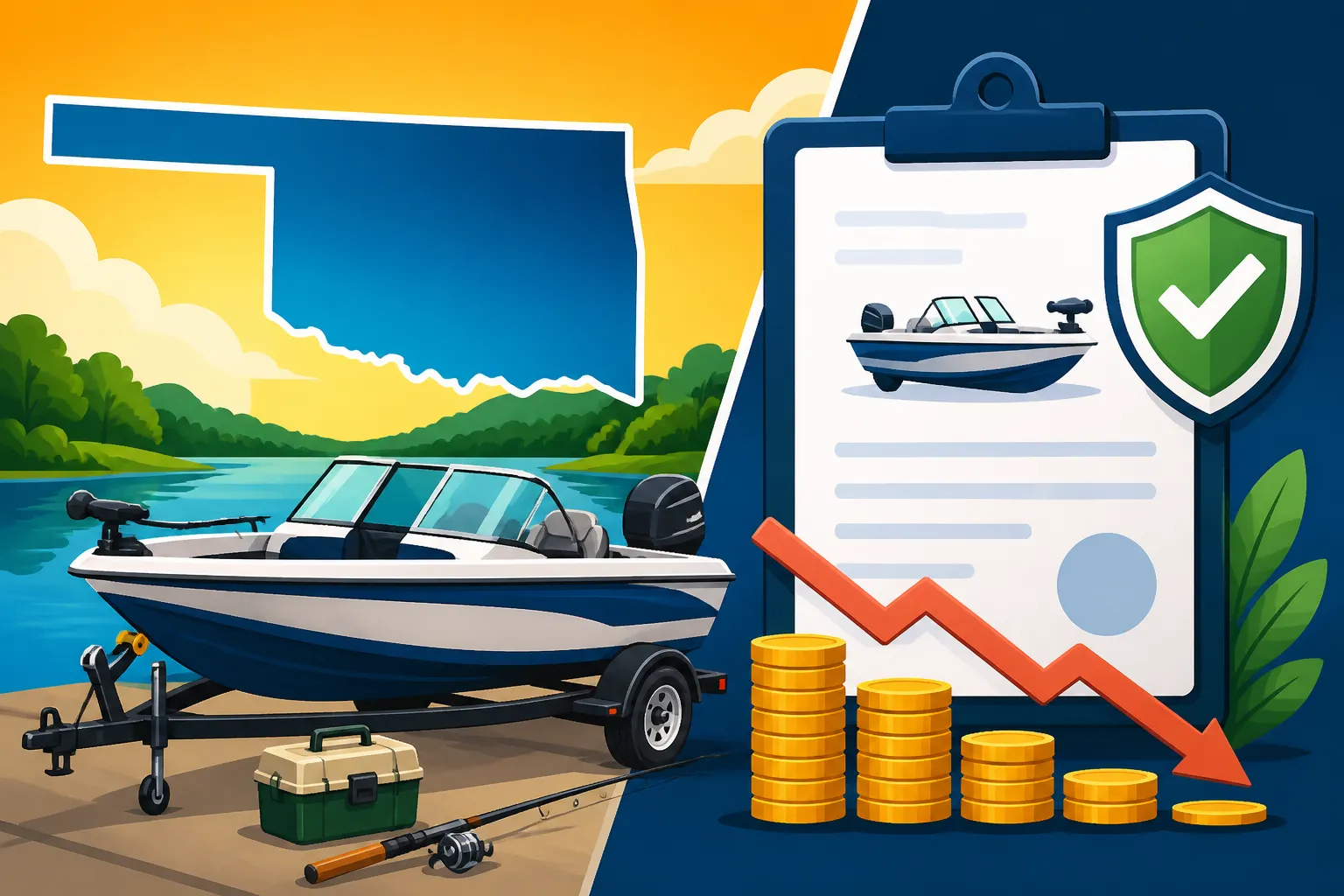
Navigating the ins and outs of boat registration fees in Oklahoma can feel like trying to untangle a particularly stubborn fishing line, especially when you're looking at a used vessel. Many folks get sticker shock at the idea of registering a boat, only to be even more confused about how the state assesses value for something that's already seen a few seasons on the water. This guide is here to shed some light on how Oklahoma calculates that registration fee for a used boat, specifically focusing on how depreciation over five years can significantly impact what you pay, helping you understand the process and avoid any unwelcome surprises.
Understanding Oklahoma's Boat Registration Fee Structure
When you first dive into the world of boat ownership, the paperwork can be daunting. Oklahoma has a specific way of determining what you owe for your boat's registration, and it's not always straightforward, especially for those of us who prefer to buy used. It's not just a flat fee; it's a calculation that takes a few factors into account, and understanding these elements is key to knowing what to expect.
The Initial Calculation: 3.25 Percent of Purchase Price or Value
At its core, Oklahoma's boat registration fee starts with a calculation based on a percentage of the boat's value. For many boats, this figure is often 3.25 percent of the purchase price or the manufacturer's suggested retail price (MSRP) for new vessels. Imagine you just bought a shiny new bass boat – that 3.25% would be applied to its brand-new value. But what if that "new" boat is actually new to you but has several years under its hull? That's where things get interesting, and thankfully, more favorable for used boat owners. It's a system designed to ensure fairness, reflecting that a boat, like a car, loses value over time. However, if you're not aware of the depreciation rules, simply applying 3.25% to an older boat's current sale price might still feel high, which is why the depreciation schedule is so vital. This initial percentage is a constant, but the value it's applied to isn't. To learn more about the initial calculations, you can explore How Oklahoma Calculates a 3.25 Percent Boat Registration Fee.
The Depreciation Factor: How Age Reduces Your Fee
This is where the state's system truly benefits those of us who love a good deal on a pre-owned vessel. Oklahoma understands that a boat isn't a static asset; its value goes down with each passing year, much like an automobile. The state applies a depreciation schedule that reduces the taxable value of the boat for registration purposes. This means that while the 3.25 percent rate remains, it's applied to a much lower, depreciated value, not the original sticker price from when the boat was new. For an older boat, this depreciation can make a significant difference, effectively lowering your annual registration cost. It’s a smart way to acknowledge the reality of ownership and maintenance costs over time, preventing you from paying a premium registration fee on a boat that's already shown some wear and tear. You can read more about how this works generally in How the Registration Fee Drops for an Older Used Boat in Oklahoma.
The $151 Cap: A Welcome Relief for Higher-Value Boats
Even with depreciation, some boats, especially those that were high-end even five years ago, might still have a considerable value. To ensure that registration fees don't become prohibitively expensive, Oklahoma has a maximum cap on its annual boat registration fee. Currently, this cap is $151. What this means for you is that no matter how valuable your boat might be, or how little it has depreciated, you won't pay more than this amount for your yearly registration. This cap is a real benefit for owners of larger, more expensive boats, even after several years, because it sets a predictable upper limit on your annual expense. It's a thoughtful aspect of the regulation that helps keep boating accessible across a range of boat types and values. To understand this cap more deeply, check out Oklahoma's $151 Boat Registration Fee Cap.
Calculating Your Registration Fee for a Five-Year-Old Boat
So, you've found that perfect five-year-old fishing boat, maybe a sturdy aluminum jon boat or a slightly used fiberglass bass boat. It's got history, it's got character, and it probably has a price tag that's much more appealing than something fresh off the showroom floor. Now comes the moment of truth: what will it cost to get it legally registered and out on the water? The calculation for a boat that's already five years old takes into account that depreciation we just discussed, making the fee considerably less than if it were a new purchase.
Estimating Depreciation Over Five Years
The key to your five-year-old boat's registration fee lies in its depreciated value. Oklahoma's system doesn't just guess at market value; it uses a structured depreciation schedule. While the exact percentage of depreciation applied each year can vary based on state guidelines and boat type (and isn't something I can provide exact current figures for), the principle is that the boat's initial value is systematically reduced year after year for calculation purposes.
For example, let's consider a boat that originally cost $20,000 when it was brand new five years ago. If the state's depreciation schedule dictates a certain percentage reduction each year, the taxable value after five years will be significantly lower. This isn't about what you paid for it today but what the state assesses its value to be after that period of time, starting from its original MSRP. This significantly impacts the 3.25% calculation. It's meant to reflect that a boat, like any piece of equipment, has natural wear and tear, and its working life and desirability change over half a decade. This understanding is crucial because it ensures you're not paying the same high fees as someone who just bought the latest model. You can often find general depreciation tables or calculators on the Oklahoma Tax Commission's website or through a tag agency, which can help estimate this reduced value.
Step-by-Step Calculation Example
Let's walk through a hypothetical scenario to illustrate how a five-year-old boat's registration fee might be calculated. Keep in mind, these numbers are for illustrative purposes only, as actual depreciation rates and initial values would need to come from official state resources.
Imagine a boat had an original manufacturer's suggested retail price (MSRP) of $20,000 five years ago.
Let's assume, purely for this example, that Oklahoma's depreciation schedule reduces the value by a certain percentage each year. After five years, that $20,000 initial value might be reduced by, say, 50-60% for registration purposes.
Hypothetical Calculation:
- Original MSRP: $20,000
- Depreciated Value (after 5 years): Let's use a hypothetical 55% depreciation for illustration.
- $20,000 * (1 – 0.55) = $9,000 (Depreciated Value)
- Registration Fee Calculation: 3.25% of the Depreciated Value
- $9,000 * 0.0325 = $292.50
Now, compare this to the $151 cap. Even though our hypothetical calculation came out to $292.50, the Oklahoma cap of $151 means you would only pay $151. This example beautifully demonstrates how both depreciation and the registration cap work in your favor when registering an older boat. If the boat's depreciated value had been lower, say $4,000 (maybe it was a smaller, less expensive boat to begin with), then the fee would be $4,000 * 0.0325 = $130, which is below the cap, so you'd pay $130.
This table illustrates the impact of depreciation and the fee cap:
| Original MSRP | Depreciation (Hypothetical) | Depreciated Value (After 5 Years) | Calculated Fee (3.25%) | Actual Fee (Applied $151 Cap) |
|---|---|---|---|---|
| $20,000 | 55% | $9,000 | $292.50 | $151.00 |
| $10,000 | 55% | $4,500 | $146.25 | $146.25 |
| $5,000 | 55% | $2,250 | $73.13 | $73.13 |
As you can see, the older the boat, and the more depreciation is applied, the more likely your actual fee will be below the $151 cap.
What the $151 Cap Means for Older, Higher-End Boats
While depreciation significantly reduces the taxable value of a five-year-old boat, it's still possible for certain models to hit the $151 registration cap. Think about those meticulously maintained, high-performance bass boats or offshore vessels that command a premium even after several years. Their original price might have been very high, and even with the state's depreciation factored in, their value for registration purposes could still be above the threshold where 3.25% of that value exceeds $151.
For instance, if a boat had an original MSRP of $50,000 and, after five years, its depreciated value for state purposes is still $15,000, then 3.25% of that would be $487.50. In this case, the $151 cap would kick in, and you would only pay $151 for its annual registration. This is a tremendous benefit for anyone owning or purchasing a higher-value used boat, as it ensures your yearly fee is manageable and predictable, regardless of how robust its depreciated value might remain. It’s a clear advantage that Oklahoma offers to all boat owners, recognizing that even well-maintained, older, higher-end boats deserve a fair registration cost. This cap is a significant reason Why Older Boats Pay Less to Register in Oklahoma is a common topic of discussion among anglers.
Beyond the Registration Fee: Other Costs and Considerations
While the annual registration fee is a primary concern, especially when buying a used boat, it’s really just one piece of the puzzle. Owning a boat, even a five-year-old one, comes with other responsibilities and associated costs that are important to factor into your budget. Being prepared for these helps ensure your boating experience remains enjoyable and financially sustainable.
Titling Fees and Other Initial Expenses
Beyond the registration, you'll also encounter a titling fee when you purchase a boat in Oklahoma. This is a one-time fee to transfer ownership and issue a new title in your name. It's separate from the annual registration, but equally important for establishing legal ownership. Think of it like buying a used car; you register it yearly, but you title it once to prove it's yours. This fee typically isn't subject to the same depreciation calculations as the registration, so it's a fixed cost you'll need to account for upfront.
Additionally, if you purchased your boat from a private seller, you might need to pay sales tax on the transaction, unless an exemption applies. Always factor in these initial costs when budgeting for your used boat. Don't forget, if you're bringing a boat in from another state, there are specific rules for getting it registered and titled in Oklahoma, which you can learn about in Registering a Boat Brought Into Oklahoma From Another State.
Ongoing Costs: Renewals and Maintenance
Once your boat is registered and titled, the process becomes much simpler: you'll just need to renew your registration annually. These renewal fees will be based on the same depreciated value formula, meaning they generally decrease slightly each year until the boat reaches a certain age where depreciation stabilizes, or it hits the $151 cap. It's a nice perk to see that annual cost tick down over time.
However, owning an older boat, even one that's five years old, comes with the reality of maintenance. Parts wear out, engines need tune-ups, and fiberglass can develop small issues. While you might save on the initial purchase and registration, it’s wise to set aside a budget for regular upkeep. Sometimes, finding specific parts for slightly older models can be a bit of a treasure hunt, but reputable marine suppliers or even online platforms like Amazon can be invaluable resources. Also, local shops like Bass Pro Shops often have a good selection of universal parts, lubricants, and cleaning supplies to keep your five-year-old pride and joy running smoothly.
Why Proper Documentation is Crucial for Used Boats
This might sound like a broken record, but I can't stress enough how absolutely critical it is to have all your ducks in a row when it comes to paperwork for a used boat. When you go to register a five-year-old boat, the tag agency is going to want to see a clear chain of ownership, especially the bill of sale and the previous owner's title. Without these, you could face significant delays or even be unable to register the boat. A clear title proves the boat isn't stolen and that the seller had the legal right to sell it.
Imagine showing up to the tag agency, excited to get your boat registered, only to be told they can't process it because the bill of sale is incomplete or the title is missing. It’s a frustrating scenario that's entirely avoidable. Always ensure you receive a properly executed bill of sale that includes the boat's Hull Identification Number (HIN), make, model, year, and the purchase price. The HIN is especially important; it's like the boat's VIN number and is essential for tracking and registration. Taking the time to ensure all documentation is correct upfront will save you headaches and heartache down the road. You can also review Do You Need to Title a Boat You Just Bought in Oklahoma? for additional information.
Where to Register and What to Bring
Okay, you've done your research, you understand the fees, and you've got your used boat. Now, where do you actually go to make it all official? In Oklahoma, the process is fairly streamlined, primarily handled through the state's motor license agents (often called "tag agencies"). Knowing what to expect and what documents to have in hand will make your visit quick and painless, getting you from paperwork to actual fishing time faster.
Navigating the Oklahoma Tax Commission and Tag Agencies
While the Oklahoma Tax Commission (OTC) sets the rules and rates for boat registration, you won't typically be heading directly to one of their offices. Instead, the vast majority of boat registrations and titling are handled by local, authorized tag agencies throughout the state. These are the same places where you renew your vehicle tags or get a driver's license. They are equipped to process all the necessary paperwork, collect fees, and issue your registration decal and certificate. It’s a convenient system designed to provide easy access for residents across Oklahoma. You can usually find a list of approved tag agencies on the Oklahoma Tax Commission's official website, or a quick online search for "tag agency near me" will point you in the right direction. Just remember, these agencies are often bustling, so having your documents organized can cut down on your wait time significantly. For a general overview of where to go, see Where to Buy a Fishing License in Oklahoma (though specific to fishing licenses, it points to similar access points).
Essential Documents for Used Boat Registration
To register your five-year-old boat, you'll need more than just good intentions. Here's a rundown of the typical documents you'll need to present at the tag agency:
- Original Title: If the boat was previously titled in Oklahoma or another state, you'll need the original, properly endorsed title from the seller. This is proof of ownership transfer.
- Bill of Sale: A detailed bill of sale signed by both the buyer and seller. This document should include the boat's make, model, year, Hull Identification Number (HIN), and the purchase price. It confirms the transaction and the value for tax assessment.
- Proof of Oklahoma Residency: A valid Oklahoma driver's license or state ID.
- Proof of Sales Tax Paid (if applicable): If you bought the boat from a dealer, they usually handle the sales tax. If it was a private sale, you might owe sales tax directly at the tag agency unless it's exempt.
- Manufacturer's Statement of Origin (MSO) or Manufacturer's Certificate of Origin (MCO): For very new boats, but sometimes relevant if the boat wasn't titled previously (less common for a 5-year-old boat, but good to be aware of).
Always double-check the specific requirements before you go, as procedures can sometimes have minor variations. Having everything in order prevents extra trips and frustration, especially considering you only have a short window to get things done. You typically have a specific deadline to register your boat after purchase, so don't delay, as penalties can apply. Oklahoma's 30-Day Boat Registration Deadline Explained provides more details on this.
Tips for a Smooth Registration Process
I've learned a few things over the years about making government paperwork as painless as possible. When it comes to registering your used boat in Oklahoma, these tips can save you time and hassle:
- Call Ahead: Before you head to the tag agency, call them or check their website to confirm their hours, what forms you'll need, and any specific requirements for used boat registration. Some agencies might have slightly different procedures or forms available online.
- Fill Out Forms in Advance: Many forms are available on the Oklahoma Tax Commission website. Print them out and fill in as much information as you can before you arrive. This speeds up the process significantly for both you and the clerk.
- Organize Your Documents: Keep your title, bill of sale, ID, and any other necessary paperwork neatly organized in a folder. When the clerk asks for something, you can hand it over immediately instead of fumbling through a stack of papers.
- Know Your Boat's Details: Have the HIN, make, model, year, and approximate value handy. The HIN is especially crucial and should be accurately recorded on all documents.
- Be Patient and Polite: Tag agencies can be busy places. A little patience and a friendly attitude can go a long way in ensuring a positive experience.
By following these steps, you'll be well-prepared to handle your five-year-old boat's registration and titling efficiently, getting you one step closer to casting your line on one of Oklahoma's beautiful lakes. The total cost to get everything squared away can sometimes be surprising, so reading Total Cost to Register and Title a Boat in Oklahoma can help you budget accurately.
Disclaimer
This article is for general informational purposes only and does not constitute professional advice. Laws, prices and regulations vary by location and change over time. Consult a qualified professional for guidance on your specific situation.