Paddlefish Snagging Gear Checklist for Grand Lake
Paddlefish snagging on Grand Lake is an exhilarating experience, a true test of strength and endurance that’s unlike any other type of fishing. But if you’re new to it, the specialized gear can feel overwhelming, leaving you wondering if your everyday bass rod will even stand a chance. This guide is here to cut through the confusion, detailing every piece of essential equipment you’ll need to confidently tackle Grand Lake’s massive paddlefish.
Understanding the Unique Demands of Paddlefish Snagging
Before we dive into the specifics of gear, it’s crucial to understand why paddlefish snagging requires such a robust setup. Unlike traditional fishing where a fish bites a baited hook, snagging involves blindly casting a large, heavy treble hook and reeling it in to "snag" the fish on its body. Paddlefish are massive, ancient fish, often weighing dozens of pounds and putting up an incredible fight. This unique method and the sheer power of the fish dictate every gear choice you make.
Why Standard Fishing Gear Won't Cut It
Many anglers, especially those accustomed to bass or crappie fishing, might think they can make do with a heavy-duty conventional setup. However, standard fishing rods and reels are simply not designed to withstand the violent impact of snagging a 50-pound fish on its side, nor the sustained power it exerts during the fight. Imagine hooking into a submerged log that suddenly decides to swim away with incredible speed and force – that's closer to the reality of snagging a paddlefish. The stress on your equipment, from the rod tip to the line, is immense, and lesser gear will fail quickly, leading to lost fish and broken spirits.
The sheer strength of these fish means that a typical bass rod would likely snap under the pressure, or your reel's drag system would quickly overheat and lock up. Even if your equipment holds, you'd be exhausting yourself for a fish you might never bring in. The whole experience would be frustrating rather than fun. This is a game of power and leverage, and your gear needs to be built for it, right down to the last swivel.
The Dynamics of Snagging: Power and Precision
Snagging paddlefish isn't just about brute force; it also involves a certain rhythm and understanding of where these fish congregate, especially during their spring migrations. When you cast out a heavy weight and a large treble hook, you're not waiting for a gentle tap. You're feeling for a sudden, jarring resistance as the hook makes contact with the fish's tough hide. Once you feel that contact, a powerful sweep of the rod is necessary to set the hook firmly. This setting motion itself can put immense strain on your rod and line.
From there, it’s a grueling battle. Paddlefish are known for their long, powerful runs and deep dives. You need a setup that can absorb these shocks, turn the fish, and slowly but surely bring it to the boat or shore. This isn't a finesse game; it's a testament to the strength of your tackle and your own determination. Thinking about the sheer power needed will inform every item on our gear checklist.
Your Power Setup: Rod, Reel, and Line Essentials
This is the core of your paddlefish snagging arsenal. Each component must be heavy-duty, robust, and designed to handle extreme stress. Compromising here is almost guaranteed to lead to disappointment.
The Heavy-Duty Snagging Rod
Your rod is arguably the most critical piece of equipment. You need something that can handle heavy weights, absorb shock from casting and fighting, and provide the leverage necessary to muscle in a large fish. Look for rods specifically labeled as "catfish rods," "surf rods," or "heavy-duty conventional rods" with an extra-heavy power rating and fast action. Fiberglass or composite blanks are often preferred for their durability and shock absorption over pure graphite, which can be too brittle for this kind of abuse. A rod in the 8 to 10-foot range is ideal, as the extra length helps with casting those heavy weights and provides better leverage during the fight. You’ll want a strong backbone to horse the fish and a sensitive tip to detect those subtle bumps when the hook makes contact.
Consider a rod that feels almost unwieldy at first glance; it should feel like you could stop a small car with it. Brands known for their heavy-duty offerings, often found at places like Bass Pro Shops, will have suitable options. If you've ever tried to cast a 12-ounce sinker with a medium-heavy rod, you know the feeling of fear when the rod bends precariously, but with a true snagging rod, it feels like it was born to do it.
The Robust Snagging Reel
Pairing your heavy rod with an equally robust reel is non-negotiable. Forget spinning reels for this kind of work; a large, heavy-duty conventional baitcasting reel is the standard. Look for models with a high line capacity – you'll need to spool on a lot of heavy line – and, most importantly, a powerful, smooth, and reliable drag system. A paddlefish can easily peel off 50-100 yards of line in its initial run, so having enough reserve and a drag that doesn't falter under sustained pressure is vital. Lever drag systems are often favored for their ease of adjustment during a fight.
When you're fighting a fish that measures several feet long and weighs as much as a small child, a flimsy drag will lock up or burn out, causing your line to snap or the reel to seize. A good reel will allow the fish to run when necessary, slowly tiring it out while maintaining constant pressure. It needs to withstand multiple long, hard runs without losing its effectiveness. Think about the strain on a reel that's constantly under load, and you'll understand why investing in a quality, robust model is so important for Grand Lake. You can find some excellent choices on Amazon with plenty of angler reviews.
The Indispensable Heavy Braided Line
For paddlefish snagging, there's really only one choice for mainline: heavy braided line. Monofilament or fluorocarbon lines, while excellent for other fishing applications, simply don't have the strength, abrasion resistance, or lack of stretch needed for snagging. Braided line in the 80 to 100-pound test range is standard. The lack of stretch in braid is critical; it allows you to feel even the slightest contact with a fish, improving your hook-setting ability, and it transfers the full power of your sweep directly to the hook.
Imagine trying to set a hook through thick hide with a stretchy mono line; much of your power would be absorbed by the stretch. With braid, it's direct. Furthermore, braided line is incredibly strong for its diameter and highly resistant to abrasion from rocks, logs, and the fish itself, especially as it thrashes near the boat. While it might seem like overkill for many anglers, this heavy braid is your direct link to these powerful fish and is absolutely essential for success.
The Critical Connection: Hooks and Terminal Tackle for Snagging Success
The business end of your line is where the action happens. The right hooks and weights are just as important as your rod and reel, ensuring your cast reaches the fish and, once snagged, stays put.
Large, Heavy-Duty Treble Hooks
This isn't the time for small, delicate hooks. You need large, extremely strong treble hooks that can penetrate a paddlefish's tough hide and hold securely. Sizes typically range from 8/0 to 12/0, depending on personal preference and local regulations (always check Paddlefish Snagging Season in Oklahoma for current rules). The key is sharpness and strength. These hooks need to be razor-sharp out of the package, and it’s a good idea to bring a hook sharpener for touch-ups throughout the day. Dull hooks will glance off the fish, leading to missed opportunities.
The strength of the hook is equally vital. Flimsy hooks will bend or break under the immense pressure of snagging and fighting a large paddlefish. Look for hooks made from heavy-gauge wire, designed for saltwater use or heavy catfish applications. You might be tying on two or even three hooks in tandem, spaced out on a leader, to increase your chances of contact. Some anglers prefer certain brands known for their robust trebles, often available at local sporting goods stores or through Amazon.
Heavy Weights and Sinkers
To get your large treble hooks down to where the paddlefish are often suspended or migrating, you'll need substantial weight. Sinkers ranging from 8 ounces up to 16 ounces (or even more in strong currents) are common. Pyramid, egg, or no-roll sinkers are popular choices, designed to sink quickly and hold their position on the bottom without rolling too much in the current, which can foul your line. The weight serves two purposes: to get your rig down to depth quickly after a cast and to maintain constant contact with the bottom or the desired water column during your retrieve.
Without enough weight, your rig will simply drift in the current or stay suspended too high, never reaching the fish. Too little weight also makes it harder to feel the bottom and detect subtle bumps from fish. It's a fine balance, and you might carry a variety of weights to adapt to different water depths and current conditions on Grand Lake. The ability to cast these heavy sinkers repeatedly is another reason why a stout rod and reel are so crucial.
Swivels, Leaders, and Connections
While often overlooked, the small components that connect your mainline to your hooks are critical failure points if not chosen correctly. Use heavy-duty, high-quality barrel swivels or ball bearing swivels to prevent line twist, especially with repeated casting and retrieves. Swivels rated for 150-200 pounds are not overkill here. Some anglers prefer to tie their treble hooks directly to their heavy braided mainline, while others will use a short, stout leader (e.g., 100-200 lb monofilament or fluorocarbon) for abrasion resistance or to easily add multiple hooks.
If you choose a leader, ensure it’s strong enough to handle the force of a snagged fish and tied with reliable knots. Your knots are the weakest link in your entire setup, so practice tying strong, reliable knots like the Palomar or improved clinch knot with your heavy braid. Nothing is more frustrating than losing a trophy paddlefish due to a poorly tied knot or a cheap swivel failing at the critical moment. For more on what gear you need, check out What Gear Do You Need for Paddlefish Snagging in Oklahoma.
Beyond the Rod: Must-Have Accessories for a Grand Lake Trip
While the rod, reel, line, and hooks are the core, a few essential accessories will make your paddlefish snagging trip safer, more comfortable, and more successful. Don't underestimate the importance of these items.
Landing and Handling Tools: Gaffs, Nets, and Gloves
Landing a large paddlefish is a challenge in itself. A standard bass net simply won't cut it. You'll need either a very large, heavy-duty landing net with a wide hoop and deep bag, or a stout gaff. Many seasoned paddlefish anglers prefer a gaff for its ability to quickly and securely bring a heavy fish into the boat, especially when dealing with fish over 50 pounds. Make sure your gaff has a strong hook and a secure grip. Always remember to check regulations regarding gaff use for paddlefish.
Heavy-duty gloves are also an absolute must. Paddlefish have rough skin, and their thrashing can easily cut your hands, especially when handling a large, powerful fish that's still full of fight. Plus, reeling in heavy weights and fighting these fish will put a lot of strain on your hands. Leather or synthetic gloves designed for heavy work will protect your hands from abrasion, cuts, and the constant friction of handling heavy lines.
Measuring, Weighing, and Conservation Gear
Once you've landed your paddlefish, you'll need to know if it meets the legal requirements before deciding to keep it or release it. A long, flexible measuring tape (often one that extends to at least 70-80 inches) is essential to measure the fish from the front of the eye to the fork of the tail. Many anglers also carry a heavy-duty scale to weigh their catch, especially if they're hoping for a state record. Always be aware of Oklahoma's Bass Fishing Rules and Limits and other species limits, as incidental catches can happen.
For those planning to harvest their catch, a large cooler with plenty of ice is indispensable. These are big fish, and you'll need a cooler large enough to hold a 40-70 pound fish, often requiring coolers that are 100 quarts or larger. Keeping the fish fresh is paramount. If you intend to release a fish, having the right tools to quickly and safely remove hooks and a clear understanding of proper handling techniques will increase its survival chances. Paddlefish Snagging Gear Basics for Oklahoma's Grand Lake has more details.
Personal Comfort, Safety, and Legal Necessities
Beyond the fishing gear, personal preparedness is key for any long day on the water. Dress in layers to accommodate changing weather, and bring rain gear. A wide-brimmed hat, sunscreen, and polarized sunglasses are essential for sun protection. Hydration is critical, so pack plenty of water and snacks. For safety on the boat, ensure you have all required safety equipment, including life jackets, especially if you're exploring the expansive waters of Grand Lake.
Last but certainly not least, never forget your Oklahoma fishing license and any required paddlefish permits or tags. Game wardens frequently patrol popular snagging areas like Grand Lake, and fishing without the proper documentation will result in penalties. Having your license readily accessible, whether on your person or easily retrievable on your phone, is crucial. Checking the Fishing License Requirements in Oklahoma before your trip ensures you're fully compliant with all state regulations.
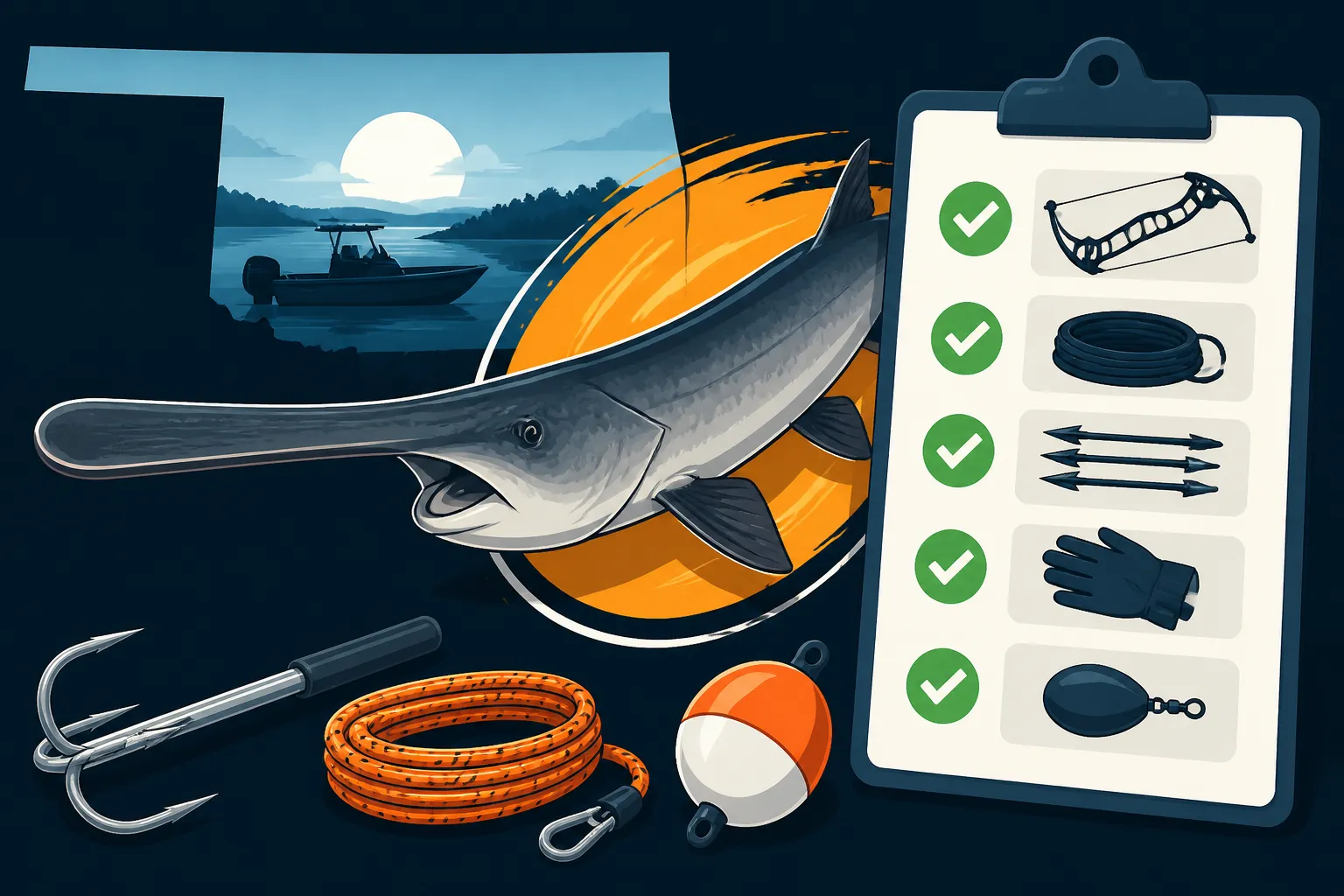
| Gear Category | Essential Items | Key Features |
|---|---|---|
| Rod | Heavy-Duty Snagging Rod | 8-10 ft, Extra-Heavy Power, Fast Action, Fiberglass/Composite |
| Reel | Large Conventional Baitcasting Reel | High Line Capacity, Powerful/Smooth Drag, Lever Drag Favored |
| Line | Heavy Braided Line | 80-100 lb Test, No Stretch, Abrasion Resistant |
| Hooks | Large Treble Hooks (8/0 – 12/0) | Razor Sharp, Heavy-Gauge Wire, Strong |
| Weights | Heavy Sinkers (8-16 oz+) | Pyramid, Egg, No-Roll, Fast Sinking, Bottom Holding |
| Terminal Tackle | Heavy-Duty Swivels (150-200 lb), Strong Leader | Prevents line twist, Abrasion resistance for leader, Reliable Knots |
| Landing Gear | Large Landing Net or Stout Gaff | Wide Hoop/Deep Bag Net, Secure Gaff Hook, Check Regulations for Gaff |
| Handling Gear | Heavy-Duty Gloves | Leather/Synthetic, Protects hands from cuts & abrasion |
| Measurement | Long Measuring Tape (70-80+ inches) | Flexible, Durable, For regulatory compliance |
| Conservation | Large Cooler (100+ quarts) with Ice | For keeping harvested fish fresh, Quick release tools |
| Personal Gear | Layered Clothing, Rain Gear, Hat, Sunscreen | Comfort and protection from elements |
| Safety Gear | Life Jacket | Required on board, Personal Flotation Device |
| Legal Essentials | Oklahoma Fishing License, Paddlefish Permit | Must be current and easily accessible |
Disclaimer
This article is for general informational purposes only and does not constitute professional advice. Laws, prices and regulations vary by location and change over time. Consult a qualified professional for guidance on your specific situation.