Best Trolling Rigs for Striped Bass Fishing
There's nothing quite like the thrill of a hard-fighting striped bass on the end of your line, especially when you're out on the vast, beautiful waters of an Oklahoma lake. But let's be honest, trying to find those elusive stripers and get them to bite can sometimes feel like a wild goose chase. This guide is all about cutting through that frustration, diving deep into the world of trolling rigs so you can confidently target striped bass and bring home a successful catch.
Why Trolling Rigs Are Your Secret Weapon for Oklahoma Stripers
When you're chasing striped bass, particularly on immense reservoirs like Lake Texoma, covering water efficiently is key. These fish are often pelagic, meaning they roam open water, sometimes in deep schools, sometimes chasing baitfish near the surface. Casting and retrieving can only get your lure so far, but trolling allows you to systematically cover vast areas, presenting your bait or lure to more fish over a longer period.
Think about it: Oklahoma's major lakes are huge, offering countless hideouts for baitfish and the stripers that pursue them. Without a strategy to search these expansive waters, you're essentially hoping a fish swims by your static cast. Trolling, especially with the right rig, transforms your boat into a mobile fish-finding and catching machine. It's not just about covering distance; it's about presenting your offerings at precise depths and speeds where stripers are most likely to feed. For anglers keen on understanding how these majestic fish behave, check out Striped Bass Trolling Techniques to further refine your approach.
The Advantage of Controlled Depth and Presentation
One of the biggest headaches when fishing for striped bass is figuring out where they are in the water column. Are they 15 feet down? Are they hugging the bottom at 40 feet? Are they chasing shad right at the surface? Trolling rigs give you the tools to present your baits at various depths simultaneously, greatly increasing your chances of finding that sweet spot.
Imagine you're targeting stripers on Lake Texoma. On a given day, they might be scattered, suspended over deep water, or congregated around submerged humps. A well-constructed trolling rig, possibly incorporating planer boards or downriggers, allows you to experiment with depths and presentations without constantly re-rigging. You can run one lure deep, another at a mid-range, and even one near the surface, effectively painting a picture of where the fish are actively feeding. This multi-depth approach is crucial, especially when you're just starting your day and haven't pinpointed the fish yet.
Overcoming Environmental Challenges
Oklahoma's lakes can throw all sorts of curveballs at anglers, from strong winds creating choppy conditions to varying water clarity. These factors directly impact how fish behave and how effectively your lures present themselves. A robust trolling rig is designed to handle these elements, keeping your baits running true and resisting tangles.
For instance, when the wind picks up on Grand Lake O' the Cherokees, it can be a nightmare trying to keep a lightweight lure down in the strike zone. Trolling rigs often incorporate heavier weights or specialized diving aids that counteract these forces, ensuring your offering stays where the fish are. Furthermore, in stained or muddy water after heavy rains, the vibration and profile of certain lures used in trolling rigs can make a huge difference, allowing stripers to home in on them even with reduced visibility. Understanding how your gear performs under these conditions is a game-changer for consistent success. You might also want to explore How to Troll for Striped Bass in Deep Water for strategies in more challenging environments.
Essential Components of a Robust Trolling Rig
Building an effective trolling rig for striped bass involves several key components working in harmony. Each piece plays a critical role in controlling depth, preventing tangles, and ultimately presenting your lure or bait in the most appealing way possible. Skimping on any one of these can lead to frustration, lost fish, and a less enjoyable day on the water.
Rods, Reels, and Line: The Foundation
Your rod and reel setup forms the backbone of your trolling operation. For striped bass, especially the larger ones found in Oklahoma, you'll want gear that can handle the strain.
- Rods: Look for medium-heavy to heavy-action trolling rods, typically 7 to 9 feet long. These rods need a strong backbone to handle heavy weights, planer boards, and the powerful runs of a striper, while still having a forgiving tip to absorb shock and protect your line. Fiberglass rods are often preferred for their durability and parabolic bend, which acts as a shock absorber.
- Reels: Conventional reels (baitcasters) are almost universally favored for trolling. They offer superior line capacity, a strong drag system, and the ability to handle heavier lines and weights. Look for models with a line counter, which is incredibly useful for replicating successful depths and patterns. Brands available at places like Bass Pro Shops often have a great selection of these specialized trolling reels.
- Line: Monofilament line is a common choice for its stretch, which acts as another shock absorber, and its affordability. However, many experienced striper anglers are turning to braided line for its no-stretch sensitivity and incredible strength-to-diameter ratio. If you go with braid, consider a monofilament or fluorocarbon leader for abrasion resistance and invisibility. For a deep dive into gear, see Best Rods and Reels for Oklahoma Fishing.
Leaders, Swivels, and Weights: The Business End
These are the unsung heroes of your trolling rig, connecting your main line to your lure and ensuring everything runs smoothly beneath the surface.
- Leaders: A strong leader is absolutely essential, especially if you're using braided main line. Fluorocarbon is an excellent choice for its low visibility in water and its superior abrasion resistance against rocks, timber, and the abrasive mouths of larger stripers. The length and strength of your leader will vary based on your main line and lure, but generally, 3 to 6 feet of 30- to 60-pound test fluorocarbon is a good starting point.
- Swivels: High-quality swivels are non-negotiable. Ball-bearing swivels are the best at preventing line twist, which can be a major issue when trolling lures that spin or when using multiple lines. A heavy-duty snap swivel at the end of your leader allows for quick lure changes, which is a blessing when you're trying to dial in the bite.
- Weights: This is where you control your depth. Various types of weights are used in trolling rigs:
- Egg sinkers/bullet weights: Simple, effective for light to moderate depths.
- Trolling weights (e.g., in-line weights, cigar weights): Designed to run true without spinning, often with a keel to prevent line twist.
- Bottom bouncers: Excellent for keeping your bait close to the lakebed without snagging as much.
- Diving planers (e.g., Dipsy Divers, Jet Divers): These are specialized devices that use water pressure to dive your lure to a specific depth, often without the need for additional weight on the line itself. They can also provide a "trip" mechanism when a fish hits, reducing drag during the fight.
- Downriggers: These are mechanical devices mounted to your boat that use a heavy ball weight and a release clip to precisely control the depth of your lure. When a fish strikes, the line releases from the clip, allowing you to fight the fish directly without the weight. This is a highly effective, though more involved, method for deep-water stripers.
Lures and Baits: The Attractors
The lure or bait you choose is, of course, what entices the striper to strike. For trolling, you'll want offerings that run well at speed and mimic the natural forage.
- Live Bait: Shad, bluegill, or even small carp are prime live bait for striped bass. When trolling live bait, you'll often use a weighted rig (like a Carolina rig or a three-way swivel rig) to present the bait at the desired depth. Live bait can be incredibly effective, especially when stripers are being finicky. For more on this, check out Best Live Bait for Striped Bass Fishing.
- Artificial Lures:
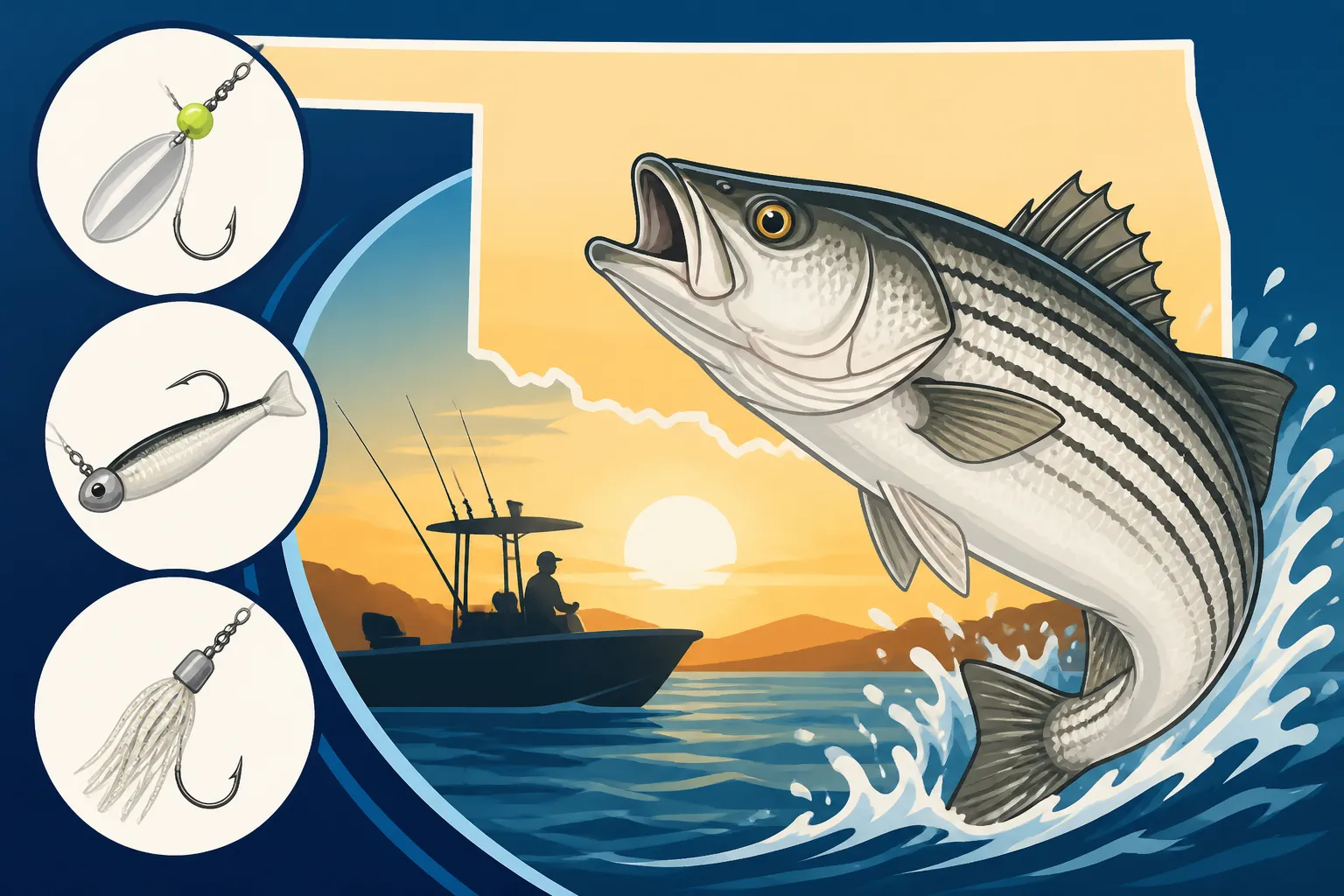
- Spoons: Large, heavy spoons like those from renowned manufacturers are classic striper trolling lures. They flash and wobble, imitating wounded baitfish.
- Deep-diving crankbaits: Designed to reach various depths, these lures come in a multitude of colors and patterns to match local forage. Look for models with a strong lip and robust hooks.
- Bucktail jigs: While often cast, bucktail jigs can be effectively trolled, especially in combination with a plastic trailer or a piece of bait.
- Swimbaits: Large soft plastic swimbaits on heavy jig heads are also excellent for trolling, offering a natural profile and swimming action.
- Umbrella Rigs: These are multi-lure rigs that mimic a school of baitfish. They typically consist of a main wire frame with several dropper wires, each sporting a swimbait, grub, or small spoon. Trolling an umbrella rig can be incredibly effective when stripers are aggressively feeding on schools of shad.
Popular Trolling Rig Setups for Oklahoma Stripers
Now that we've covered the components, let's explore some of the most effective trolling rig setups commonly used by seasoned anglers on Oklahoma's striped bass fisheries. Each rig has its strengths and is suited for different conditions and striper behaviors.
The Simple In-Line Weight Rig
This is probably the most straightforward trolling rig and a great starting point for beginners. It's effective for targeting stripers at moderate depths without a lot of complicated gear.
- Setup: You simply attach an in-line trolling weight or a keel sinker to your main line, followed by a leader (3-6 feet) and then your lure or bait. The weight keeps your lure down, and the keel or inline design helps prevent line twist.
- Best Use: Ideal for targeting stripers suspended shallower or when you're exploring different depths by varying your weight and line-out. It's also fantastic for smaller boats or when you want a minimalist setup. On lakes like Lake Texoma, where stripers can be found anywhere from 10 to 30 feet down, this rig allows for easy adjustment by simply letting out more or less line.
- Tips: Experiment with different weight sizes and trolling speeds. A general rule of thumb is that heavier weights and slower speeds keep your lure deeper, while lighter weights and faster speeds bring it shallower. This rig is particularly good for trolling deep-diving crankbaits or large spoons. You can find a good selection of these weights and lures at sporting goods stores or online at Amazon.
Three-Way Swivel or Carolina Rig for Live Bait
When live bait is the key to getting a strike, a three-way swivel or a modified Carolina rig is often the go-to. These rigs keep your live bait swimming naturally while still allowing you to control its depth.
- Three-Way Swivel Rig:
- Setup: Tie your main line to one eye of a three-way swivel. To the second eye, tie a short dropper line (1-3 feet) with a weight at the end. To the third eye, tie a longer leader (3-8 feet) to your live bait hook. The length of the dropper line determines how high your bait swims off the bottom, and the leader length allows the bait to swim more freely.
- Best Use: Excellent for drifting or slow trolling live shad or bluegill near the bottom or over submerged structure. This rig keeps your bait in the strike zone without letting it swim into snags as easily.
- Carolina Rig (Modified for Trolling):
- Setup: Thread an egg sinker onto your main line, followed by a bead (to protect the knot). Tie your main line to one side of a barrel swivel. To the other side of the swivel, tie a leader (3-6 feet) to your live bait hook.
- Best Use: While more commonly used for casting soft plastics, a heavier version can be slow trolled with live bait. It allows the bait to swim above the weight, creating a very natural presentation.
- Tips: Always use stout hooks when fishing live bait for stripers, as they have tough mouths. Circle hooks are often preferred to ensure a hook-up in the corner of the mouth, making for easier release if desired and preventing gut-hooking. Knowing How to Fish Live Shad for Striped Bass is crucial for maximizing your success with these setups.
Planer Board Rigs: Spreading the Love
Planer boards are game-changers for covering a wide swath of water, especially when fish are scattered or spooked by boat traffic. They take your lines out to the side of the boat, presenting lures in undisturbed water.
- Setup: Planer boards are attached to your main line, or to a dedicated "planer board mast" line, and float out to the side, carrying your fishing line with them. Once the board is out, you let out your fishing line with its lure or bait, usually with an in-line weight or a diving planer to get it to the desired depth. When a fish strikes, the line pops free from the release clip on the board, allowing you to fight the fish directly.
- Best Use: Ideal for clear lakes and sunny days when stripers might be skittish and avoiding the boat's shadow. They're also fantastic for fishing multiple lines (where regulations permit) to quickly find the feeding depth and preferred lure color. You can run several lines at different distances from the boat and at varying depths. This setup is popular on larger, open waters like Lake Eufaula or the main body of Lake Texoma, where stripers can be found cruising. For understanding how to spread out your offerings, check out Trolling Gear for Striped Bass at Oklahoma's Lake Texoma.
- Tips: Practice deploying and retrieving planer boards in calm conditions first. Make sure your release clips are set correctly – tight enough to hold your line but loose enough to release on a strike.
Downrigger Systems: Precision Depth Control
For ultimate control over lure depth, especially when stripers are holding deep, downriggers are hard to beat. They allow you to present your lures at an exact, consistent depth, regardless of trolling speed or current.
- Setup: A downrigger uses a heavy cannonball weight (often 8-12 pounds) on a steel cable, lowered by a crank or electric motor. Your fishing line is then clipped into a release mechanism on the downrigger cable. When a fish strikes, the line pulls free from the clip, and you fight the fish on your regular rod and reel, without the downrigger weight interfering.
- Best Use: Essential for targeting deep-holding striped bass, particularly during the hot summer months when they retreat to cooler, deeper water. This is a common technique on deep Oklahoma reservoirs like Tenkiller Ferry Lake or deeper sections of Lake Texoma when stripers are suspended 40-60 feet down.
- Tips: Invest in a good fish finder to locate schools of stripers and baitfish at specific depths. Match your downrigger depth to where you see the fish. Experiment with lead lengths (the distance from the downrigger release clip to your lure) to find what works best. For advanced strategies, delve into Deep Water Striper Fishing Techniques.
Umbrella Rigs: Simulating a Bait Ball
The umbrella rig is designed to imitate a school of baitfish, making it incredibly attractive to hungry striped bass. It’s essentially a "spread" of lures on a single line.
- Setup: An umbrella rig typically consists of a central wire with several "arms" extending outwards. Each arm has a snap swivel where you attach a small swimbait, grub, or spoon. You might have a "teaser" lure on the central wire and "active" lures on the arms. A heavy lead head or inline weight is usually incorporated to keep the rig running true and deep.
- Best Use: Highly effective when stripers are actively feeding on large schools of shad. It presents a tempting "school" of bait that even reluctant stripers often can't resist. This rig is particularly popular during the spring and fall when stripers are on the move and aggressively chasing forage.
- Tips: Ensure all your lures on the umbrella rig run true and don't tangle. Check for tangles frequently. Vary the size and color of the lures to see what the stripers prefer. Keep an eye on your rod tip – the extra drag of an umbrella rig means a striper strike can sometimes feel subtle.
Here's a quick comparison of these popular trolling rig types:
| Rig Type | Best Use Case | Depth Control | Complexity | Advantages | Disadvantages |
|---|---|---|---|---|---|
| In-Line Weight Rig | Moderate depths, simple setup, beginner-friendly | Moderate | Low | Easy to deploy, versatile with various lures | Limited depth, prone to line twist with some lures |
| Three-Way Swivel/Carolina | Live bait presentation, near bottom or suspended | Good | Moderate | Natural bait presentation, reduces snags | Can tangle easily if not set up correctly |
| Planer Board Rig | Covering wide areas, clear water, spooky fish | Moderate | High | Spreads lines, presents lures in undisturbed water | Requires practice, can be cumbersome, more gear |
| Downrigger System | Precise deep-water targeting, summer months | Excellent | High | Exact depth control, fights fish directly | Expensive, requires specialized boat mounting |
| Umbrella Rig | Mimicking bait balls, aggressive fish, open water | Moderate | Moderate | Highly attractive to schooling stripers, multiple lures | Heavy drag, can be bulky, prone to tangles if not right |
Tailoring Your Rig to Oklahoma Conditions
Oklahoma's diverse fishing environments, from the vast open waters of Lake Texoma to the clearer depths of Broken Bow, mean that a one-size-fits-all approach to trolling rigs simply won't cut it. Adapting your setup to the specific conditions you encounter is paramount for consistent success.
Water Depth and Temperature
These two factors are arguably the most critical in determining where striped bass will be holding and how they'll react to your presentation.
- Depth: In cooler months, stripers often cruise shallower, even near the surface, especially at dawn and dusk. During these times, lighter in-line weights, diving crankbaits, or even shallow-running umbrella rigs might be all you need. As water temperatures rise in summer, stripers seek out cooler, oxygen-rich water in deeper sections of the lake. This is when downriggers become invaluable, allowing you to accurately target fish suspended at 30, 50, or even 80 feet. Always pay attention to your fish finder – it's your window into the underwater world.
- Temperature: Striped bass are cold-blooded, and their metabolism is directly affected by water temperature. They'll be more active and aggressive in their preferred temperature range. Too cold, and they might be sluggish, requiring slower presentations. Too hot, and they'll go deep and might be less willing to chase, necessitating a lure presented right in front of their faces. Understanding these patterns, like those discussed in Water Temperature and Oklahoma Fishing Timing, can help you select the right depth-controlling elements for your rig.
Water Clarity and Forage
The visibility of the water and the type of baitfish present will significantly influence your lure choices and presentation speed.
- Water Clarity: In clear water, such as you might find on parts of Broken Bow Lake, visibility is high, and stripers can be more easily spooked by your boat or unnatural-looking presentations. This is where subtle lure colors, longer fluorocarbon leaders, and spreading your lines out with planer boards become effective. In stained or murky water, often found after heavy rains on lakes like Fort Gibson, visibility is low. Here, stripers rely more on vibration and scent. Brighter, more contrasting lure colors, larger profiles, and lures with built-in rattles or blades (like some spoons or lipless crankbaits) are often more effective. You might also want to speed up your troll slightly to increase the vibration signature.
- Forage: Matching the hatch is an old adage for a reason. Observe what baitfish are prevalent in the lake you're fishing – gizzard shad, threadfin shad, or even smaller sunfish. Choose lures that mimic their size, shape, and color. For example, if stripers are gorging on small shad, a multi-lure umbrella rig with small swimbaits can be deadly. If they're targeting larger bait, a single, big spoon or swimbait might be the ticket. Always carry a variety of lures to adapt to what the fish are feeding on.
Trolling Speed and Action
The speed at which you troll directly impacts the action of your lure and how effectively it appeals to stripers.
- Speed: Most striped bass trolling occurs between 2.0 to 4.5 miles per hour, but this is a broad range. Sometimes, a slower troll (2.0-2.5 mph) is best for finicky fish or when targeting deeper, less active stripers. Other times, a faster troll (3.0-4.0+ mph) can trigger aggressive reaction strikes, especially when stripers are chasing fast-moving schools of bait. The optimal speed also depends on your lure; some crankbaits are designed to "hunt" or wobble erratically at specific speeds, while spoons need enough speed to flash and flutter correctly.
- Lure Action: Pay close attention to how your lure is running behind the boat. A fish finder with side imaging can be invaluable here, allowing you to actually see your lure's action and depth. Ensure your lures are swimming correctly and not spinning unnaturally, which can twist your line and deter strikes. Sometimes, making slight turns with your boat can impart extra action to your lures, mimicking a fleeing baitfish or one struggling to keep up with the school. Experimentation is key; what worked yesterday might not work today. Consider reading Trolling Speed for Striped Bass on Oklahoma Reservoirs for more detailed insights on this critical factor.
By taking these environmental and behavioral factors into account and making thoughtful adjustments to your trolling rigs, you'll significantly increase your chances of connecting with those powerful Oklahoma striped bass. Whether you're assembling a new rig from components you picked up at Bass Pro Shops or ordering specialized gear from Amazon, understanding how to fine-tune your setup is what separates a good day from a truly exceptional one.
Disclaimer
This article is for general informational purposes only and does not constitute professional advice. Laws, prices and regulations vary by location and change over time. Consult a qualified professional for guidance on your specific situation.