Water Temperature and Oklahoma Fishing Timing
There's nothing quite as frustrating as heading out to your favorite Oklahoma fishing spot, armed with all the right lures and local knowledge, only to come up empty-handed. You see other anglers catching, but your lines are dead still. More often than not, the secret ingredient you might be missing, the one that unlocks why fish are biting (or not), is water temperature. This isn't just a number; it's the master key to understanding fish behavior, migration, and feeding patterns throughout the seasons. This guide will help you decode water temperature's crucial role in timing your Oklahoma fishing adventures for maximum success.
The Basics of Water Temperature and Fish Behavior
Understanding how water temperature influences fish is foundational to becoming a more consistent angler. It’s not just about comfort for them; it’s about survival and how their entire physiological system operates.
Why Temperature Dictates Everything for Fish
Think of fish as nature's thermometers. Unlike us warm-blooded humans, fish are poikilothermic, meaning their body temperature directly matches the water around them. This fundamental biological fact dictates almost every aspect of their existence. When the water is too cold, their metabolism slows down dramatically. They become sluggish, their digestion takes longer, and their need to feed decreases significantly. Conversely, when the water gets too warm, they can become stressed, lethargic, and even unable to properly absorb oxygen, leading them to seek cooler, deeper sanctuaries.
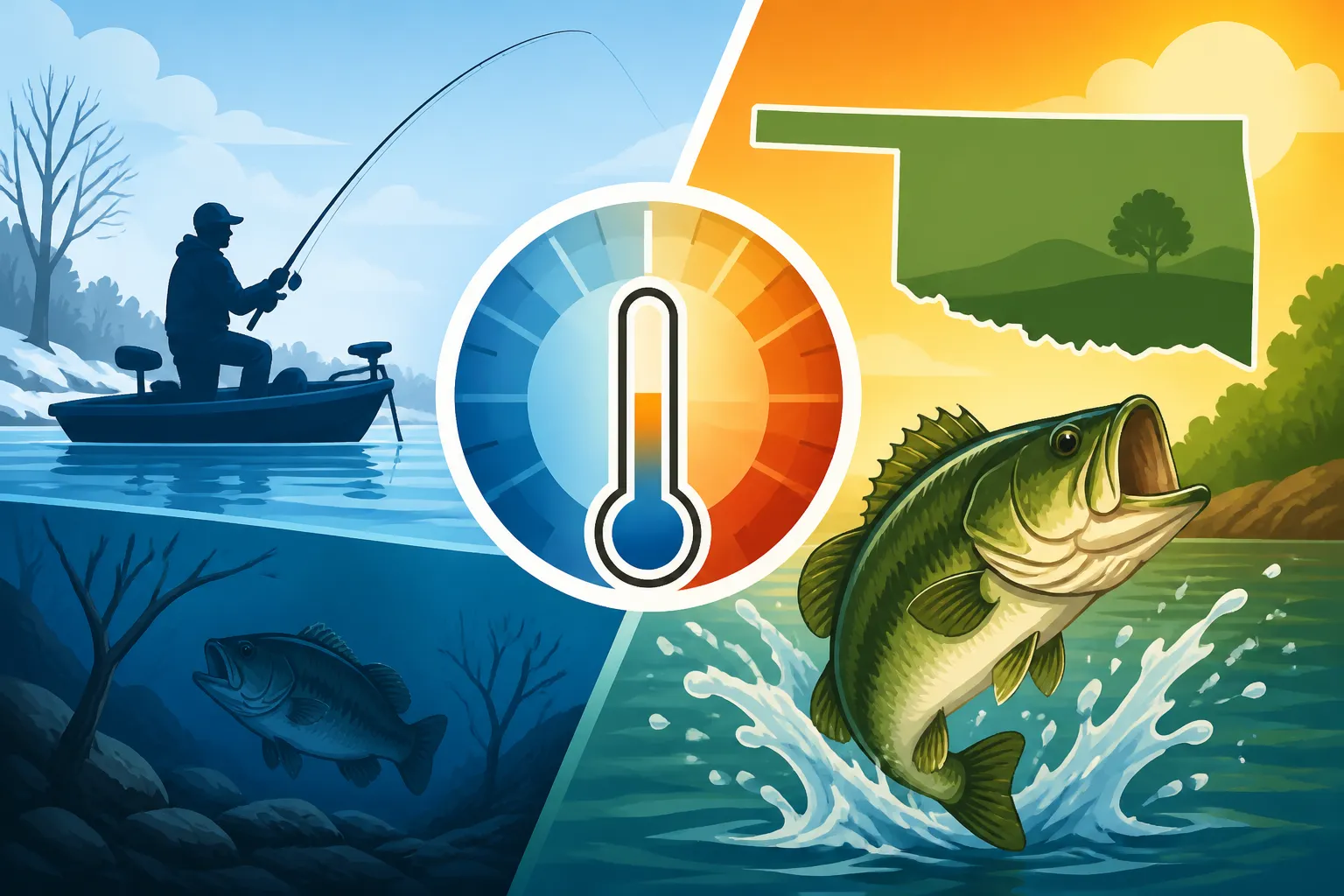
Every fish species has an "optimal" temperature range where they are most active, most comfortable, and most likely to feed aggressively. Outside of this range, their activity drops off, and their willingness to strike a lure or bait diminishes. For example, a largemouth bass might thrive in water between 65-75°F, actively chasing prey. Drop that temperature to 40°F, and you'll find them holding tight to structure, barely moving, and only taking a bite if it's practically dropped right on their nose. Understanding these critical temperature windows is the first step to unlocking consistent fishing success.
Understanding Thermoclines and Stratification
As the seasons change, especially from spring into summer and then fall, Oklahoma's deeper lakes and reservoirs don't just warm up or cool down uniformly. They undergo a process called stratification, where the water separates into distinct layers of different temperatures. The key player here is the thermocline.
The thermocline is a distinct layer within a body of water where the temperature changes more rapidly with depth than it does in the layers above or below. In summer, you typically have three layers: a warm, oxygen-rich upper layer (epilimnion), a middle layer where the temperature drops sharply (the thermocline), and a deeper, colder, and often oxygen-poor layer (hypolimnion). Fish, particularly game species like bass and crappie, will often congregate around the thermocline. Why? Because it offers the perfect balance of cooler water temperatures and sufficient oxygen levels. Below the thermocline, while cooler, the oxygen can be too depleted to support fish life. Modern fish finders equipped with good transducers can often show you this temperature stratification, helping you pinpoint the depth where fish are most likely to be holding. Learning how to read your electronics to find these invisible thermal barriers can be a game-changer, especially on large, deep bodies of water like Lake Texoma or Lake Eufaula.
Seasonal Water Temperature Changes and Their Impact
Oklahoma experiences four distinct seasons, and each brings significant changes in water temperature, completely reshaping fish behavior and where you'll find them. Learning to anticipate these shifts is crucial.
Spring Warm-Up: Pre-Spawn and Spawn
Ah, spring! This is arguably the most anticipated time for many Oklahoma anglers. As winter's icy grip loosens, the sun begins to warm the surface waters, especially in shallower coves and flats. This gradual warm-up triggers the pre-spawn phase, a period where fish, particularly bass and crappie, start to feed heavily to build up energy for their upcoming spawning rituals. Water temperatures between 50-60°F are often prime for this aggressive feeding, as fish become more active without yet being fully committed to spawning beds.
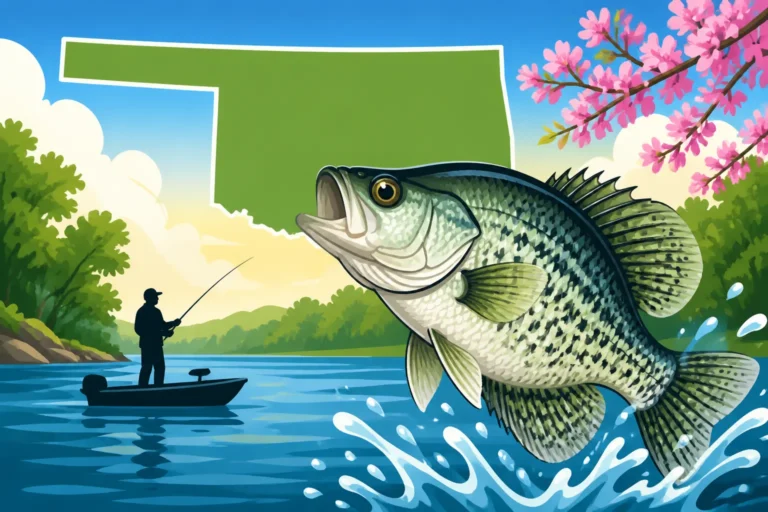
As the water continues to climb, hitting the mid-60s for bass (around 62-68°F) and slightly earlier for crappie (often in the high 50s to low 60s), the magic happens: the spawn. Largemouth bass will move into protected, shallow areas with hard bottoms to create nests. Crappie will do similar, often around brush piles or submerged timber. During this time, male fish become fiercely protective of their nests, making them highly susceptible to lures. Knowing the ideal spawning temperatures and watching your thermometer closely can help you time your trips perfectly to coincide with this exciting period. Remember to check out our guide on Spring Bass Spawn Timing in Oklahoma for more detailed information on specific lakes and patterns.
Summer Heat: Deep Water and Night Fishing
Oklahoma summers are legendary for their heat, and the water temperatures in many lakes can soar into the 80s, even low 90s, especially on the surface. When this happens, most game fish seek refuge. The thermocline, which we discussed earlier, becomes incredibly important. Fish will often suspend right above or within this layer, seeking cooler, more comfortable temperatures with adequate oxygen. Targeting these suspended fish requires different techniques, often involving vertical jigging, drop-shotting, or slow trolling with crankbaits or live bait in the deeper parts of the lake.
Another fantastic option for beating the summer heat is night fishing. As the sun sets, surface temperatures cool slightly, and many species, particularly striped bass, white bass, and catfish, become much more active. The cooler night air also makes fishing more comfortable for anglers. Using lights to attract baitfish can be very effective for crappie and white bass, while targeting channels and deep holes with cut bait works wonders for catfish. You can find some great advice on Summer Night Fishing Techniques in Oklahoma to maximize your success under the stars.
Fall Turnover and Feeding Frenzies
As autumn arrives and the air temperatures begin to drop consistently, the lake water starts to cool from the surface down. Eventually, the surface water becomes cooler and denser than the deeper water, causing it to sink. This process, known as "lake turnover," can mix the entire water column, equalizing temperatures and oxygen levels from top to bottom. During turnover, fishing can be tough for a few days as fish become disoriented and spread out.
However, once the turnover is complete and the water stabilizes, typically in the mid-to-high 60s and gradually cooling, a magnificent phenomenon occurs: the fall feeding frenzy. Fish know winter is coming, and they need to pack on calories. They become incredibly aggressive, chasing baitfish schools that are also on the move. This is a fantastic time for power fishing with crankbaits, spinnerbaits, and topwater lures, especially for bass and crappie. Catfish also remain active, often found along channels and ledges. This period often offers some of the most consistent and exciting fishing of the year.
Winter Chill: Slow Metabolism, Deep Holes
Winter in Oklahoma can bring freezing temperatures, and even though many lakes don't completely freeze over, the water gets mighty cold, often dipping into the low 40s or even upper 30s. At these temperatures, fish metabolism slows dramatically, and their activity levels drop significantly. They seek out the warmest, most stable water they can find, which is usually in the deepest parts of the lake, often near significant structure like humps, ledges, or deep timber.
Fishing in winter requires patience and a slower approach. Anglers often need to present baits very slowly, sometimes almost dead-sticking them, to tempt a bite. Species like blue catfish and channel catfish can still be caught consistently, often in deep holes or below dams. Walleye and saugeye also tend to congregate in deeper water during winter, making them a target for jigging or slow-trolling spoons or blade baits. Don't be fooled into thinking all fish stop biting; they just require a different, more nuanced approach. Our guide on Winter Catfishing Techniques in Oklahoma delves into how to find and catch these cold-weather fighters.
Key Oklahoma Game Fish and Their Temperature Preferences
To truly master fishing in Oklahoma, you need to know the specific temperature sweet spots for the species you're targeting. This knowledge will guide your timing and location decisions.
Bass Species: Largemouth, Smallmouth, and Spotted
Oklahoma is a bass angler's paradise, but each species has its own thermal preferences:
- Largemouth Bass: These are the most common bass in Oklahoma and prefer warmer waters. Their optimal feeding temperature range is typically between 65-75°F. They'll start their pre-spawn move when temperatures hit the low 50s and usually spawn when water temps are consistently in the low to mid-60s (around 62-68°F). In summer, they'll retreat to cooler, deeper water or thick cover if surface temps exceed 80°F.
- Smallmouth Bass: Found more in clearer, rocky lakes and rivers, smallmouth prefer slightly cooler water than largemouth. Their ideal feeding range is usually 60-70°F. They spawn a bit earlier or in cooler water than largemouth, often in the high 50s to low 60s. During the heat of summer, they'll typically be found deeper, relating to rocky ledges and offshore humps. Check out our detailed guide on Smallmouth Bass in Oklahoma: What Anglers Should Know for more specific insights.
- Spotted Bass: Often found alongside largemouth, spotted bass also prefer warmer water, with an optimal feeding range similar to largemouth, generally 65-75°F. They tend to school up more than largemouth and can be found deeper, especially in summer, making them a great target for vertical presentations. Their spawning temperatures align closely with largemouth.
When fishing for bass, always consider the water temperature. If it's cold, slow down your presentation. If it's warm and within their optimal range, speed up and cover more water.
Crappie: Black and White
Crappie are a beloved panfish across Oklahoma, and their behavior is heavily influenced by water temperature.
- Black Crappie: Tend to prefer slightly clearer and cooler water than white crappie, with an optimal feeding range of about 60-70°F. They often spawn a bit earlier, when water temperatures reach the high 50s to low 60s (around 58-64°F), often in heavier cover like submerged brush or timber.
- White Crappie: More tolerant of murkier water and slightly warmer temperatures, white crappie also thrive in the 60-75°F range. They typically spawn when water temperatures are consistently in the low to mid-60s (around 62-68°F), often in less dense cover than black crappie, such as around stumps or dock pilings.
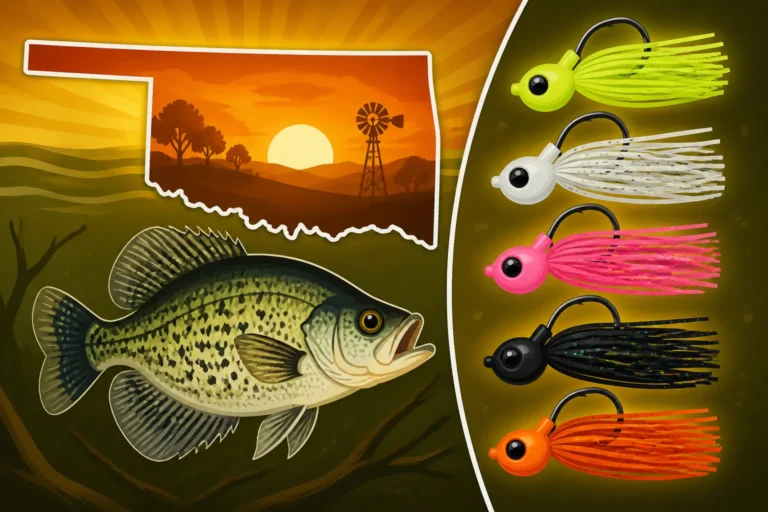
Both species will migrate to shallower coves and creeks during the spring spawn, often following baitfish that are also moving into warmer waters. In summer, they'll usually suspend over deeper structure or within the thermocline. Fall sees them scattering but actively feeding, while winter finds them tightly schooled in deep channels or around major structure. Understanding Crappie Fishing Techniques and Seasonal Patterns in Oklahoma is key to filling your cooler.
Catfish: Blues, Channels, and Flatheads
Catfish are known for their hardiness and ability to tolerate a wide range of temperatures, but they still have preferences that dictate their activity.
- Channel Catfish: These are perhaps the most widespread and adaptable, active in water from the 50s all the way into the 80s. Their optimal feeding range is broad, often 70-80°F, and they spawn when water temperatures reach the mid-70s. They're excellent targets for bank anglers in almost any season.
- Blue Catfish: The giants of Oklahoma waters, blue cats prefer cooler, well-oxygenated water, often found in major river channels and large reservoirs like Lake Texoma. While tolerant of cold, their most aggressive feeding often occurs when temperatures are in the 60s to low 70s. They're often caught deep in winter. Their spawning occurs around 70-75°F. Check out Oklahoma's Catfish Fishing Rules and Limits to ensure you're compliant.
- Flathead Catfish: These ambush predators prefer structure and live bait. They're more solitary than blues or channels and tend to be most active when water temperatures are in the 70s and 80s, spawning around 70-75°F. They often retreat to deep, dark holes or heavy timber in cooler water.
Catfish activity will slow significantly in very cold water, but they can still be caught with slow presentations of live or cut bait. Warmer water generally means more active feeding.
Striped Bass and Walleye: Temperature-Driven Migrations
These two species have unique temperature relationships that drive their behavior, especially in Oklahoma's larger lakes.
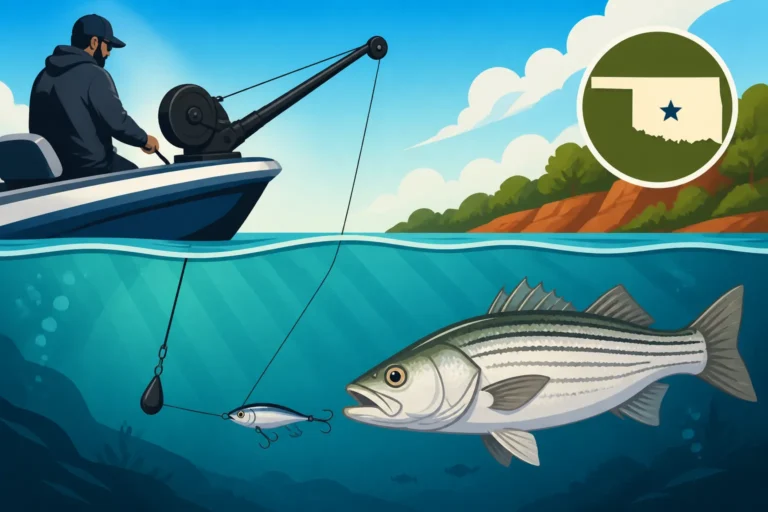
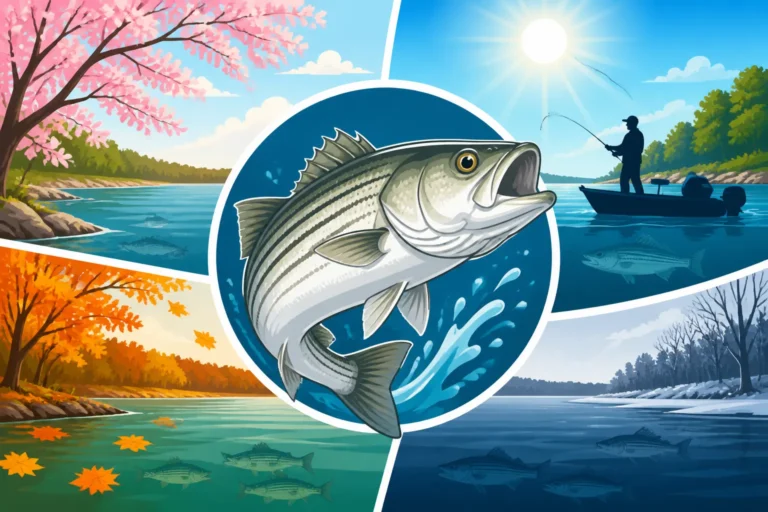
- Striped Bass: Non-native to Oklahoma but thriving, especially in Lake Texoma, striped bass are highly temperature-sensitive. They prefer cooler, well-oxygenated water, typically thriving in the 60-70°F range. During the heat of summer, they'll school up in deep water, often following the thermocline and baitfish that also seek cooler temperatures. Their famous "topwater blitzes" often occur in spring and fall when surface temperatures are in their optimal range and baitfish are abundant. Understanding Striped Bass Fishing Techniques for Oklahoma's Lake Texoma is vital for targeting these powerful fish.
- Walleye: These tasty game fish prefer cooler, clear water and are often found deeper than other species. Their optimal feeding range is usually 55-70°F. They're early spawners, moving into rocky areas or river inflows when water temperatures are in the 40s to low 50s. In summer, they'll retreat to deep, rocky structures or humps, often near the thermocline, and become more active during low light conditions or at night.
Both stripers and walleye are often found in areas with good current or flow, which typically means better oxygenation, another factor often linked to water temperature gradients.
Tools and Techniques for Measuring Water Temperature
You can't effectively factor water temperature into your fishing strategy if you don't know what it is! Fortunately, there are several ways to get accurate readings.
On-Boat Electronics and Transducers
For boat anglers, modern fish finders are invaluable. Almost all decent units sold today, from brands like Humminbird, Lowrance, and Garmin, come equipped with a transducer that reads surface water temperature in real-time. This is crucial for understanding the immediate environment you're fishing in.
Higher-end units might even have features that allow for temperature mapping or the ability to show the thermocline visually on the screen, which can be an absolute game-changer for finding suspended fish in summer. If your transducer is mounted correctly, you'll get accurate surface readings displayed directly on your unit. For deeper readings, some specialized thermometers can be deployed on a downrigger or weighted line to measure temperature at various depths, helping you pinpoint that elusive thermocline. Many anglers find excellent deals on these electronic units on platforms like Amazon, offering a range of options for every budget.
Handheld Thermometers and Probes
You don't need a fancy boat to read water temperature! For bank anglers, kayak enthusiasts, or even boaters who want to verify their electronics, a simple handheld water thermometer or a probe on a weighted line can be incredibly effective. These are often inexpensive and readily available.
To use one, simply lower it into the water to the desired depth, let it sit for a minute or two to stabilize, and then retrieve it for a reading. This is particularly useful for identifying subtle temperature changes in shallow coves, around submerged vegetation, or near inflows. Even a one-degree difference can sometimes be enough to concentrate fish. For example, finding a slightly warmer pocket of water in a creek arm during early spring can indicate a staging area for bass moving in to spawn. You can find reliable waterproof thermometers easily on Amazon, ensuring you always have this essential tool in your tackle box.
Interpreting Temperature Data for Fishing Success
Getting a temperature reading is just the first step; the real skill lies in interpreting that data. It's not always about finding an exact "magic number" but more about recognizing trends and subtle differences. Look for areas where the temperature is different from the surrounding water. This could be:
- Slightly warmer water: In spring, a shallow, dark-bottomed cove that warms up a few degrees faster than the main lake can be a magnet for pre-spawn fish.
- Slightly cooler water: In summer, a deep creek channel with a cool spring feed or an area shaded by high bluffs might offer a few degrees of relief, drawing fish to it.
- Temperature breaks: These are areas where warm water meets cool water. This could be caused by currents, inflows, or wind pushing surface water. These breaks are often feeding highways for predatory fish.
Always connect your temperature readings to the seasonal patterns we discussed. Is it spring? Look for warming trends. Is it summer? Seek out cooler, deeper water or the thermocline. Knowing what temperature should be doing for the time of year helps you adjust your expectations and strategies accordingly.
Combining Temperature with Other Factors for Optimal Timing
Water temperature is a huge piece of the puzzle, but it's rarely the only factor. Smart anglers combine temperature data with other environmental cues to truly dial in their fishing efforts.
The Role of Weather Fronts and Barometric Pressure
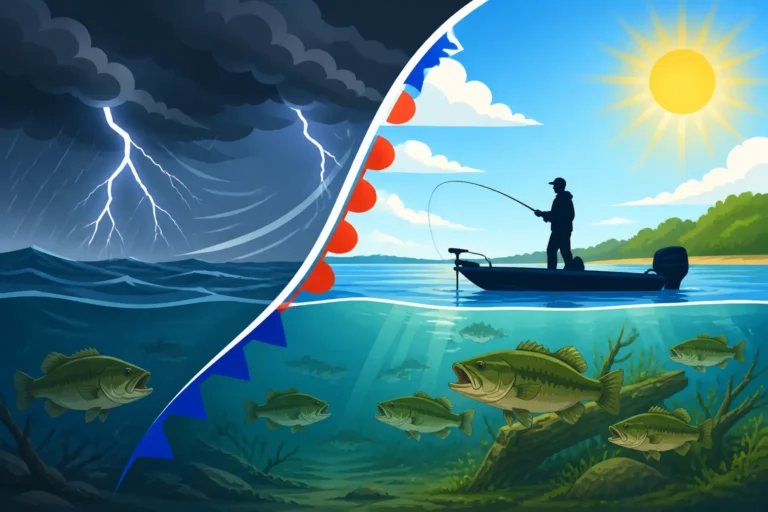
Weather fronts and changes in barometric pressure are intrinsically linked to water temperature and can drastically alter fishing conditions. A strong cold front, for instance, often brings with it plummeting air temperatures, which quickly cools surface water, especially in shallow areas. This sudden temperature drop can put fish into shock, making them lethargic and less willing to bite for several days after the front passes.
Conversely, a stable period of warm weather before a front can create a fantastic bite, as fish sense the impending change and feed aggressively. Barometric pressure changes also affect fish. A rising barometer (typically after a front passes) often corresponds with a slower bite, while a falling barometer (indicating an approaching front) frequently means active fish. Learning how Cold Front Fishing Techniques in Oklahoma can help you adapt to these conditions, even when water temperature is just one variable.
Structure and Cover in Relation to Temperature
Fish don't just swim aimlessly; they relate to structure and cover, and often, this relationship is dictated by temperature. A submerged roadbed, a brush pile, a rock pile, or a dense bed of hydrilla all offer refuge, and critically, they can hold different water temperatures than the open water around them.
In summer, a brush pile in 20 feet of water might be sitting right in the thermocline, providing the perfect cool, oxygenated hangout for crappie. In winter, a deep, dark rock ledge might absorb enough solar radiation to be a degree or two warmer than the surrounding water, concentrating sluggish bass. Understanding How a Fish Finder Helps You Find Structure on Oklahoma Reservoirs can guide you to these thermal anomalies. Always think about how the structure or cover you're targeting might be providing fish with their preferred temperature zone.
Baitfish Movement and Oxygen Levels
The food chain is heavily influenced by temperature, and baitfish are no exception. Shad, minnows, and other forage species also have optimal temperature ranges. When the water gets too hot or too cold, they'll migrate to areas that are more comfortable for them. Where the bait goes, the predators follow.
Using your electronics to locate schools of baitfish, and then cross-referencing that with your water temperature readings, can be incredibly effective. If you find a massive school of shad in 65°F water, you can bet that the game fish aren't far behind. Furthermore, oxygen levels are directly tied to temperature. Colder water holds more dissolved oxygen than warmer water. During summer stratification, the deeper, colder water can become oxygen-depleted, creating "dead zones" where fish cannot survive. The thermocline often becomes the perfect balance point, offering both preferred temperature and sufficient oxygen. Being able to read the Water Temperature and Oklahoma Fishing Timing accurately helps you eliminate unproductive water and focus your efforts where fish are most likely to be holding and feeding.
| Species | Optimal Feeding Temp Range (°F) | Optimal Spawning Temp Range (°F) | Typical Depth Preference (Warm Water) |
|---|---|---|---|
| Largemouth Bass | 65 – 75 | 62 – 68 | Deeper structure, cover |
| Smallmouth Bass | 60 – 70 | 58 – 64 | Deeper rock, humps |
| Spotted Bass | 65 – 75 | 62 – 68 | Deep structure, schooling |
| Black Crappie | 60 – 70 | 58 – 64 | Thermocline, submerged brush |
| White Crappie | 60 – 75 | 62 – 68 | Thermocline, submerged brush |
| Channel Catfish | 70 – 80 | 70 – 75 | Channels, deep holes |
| Blue Catfish | 60 – 75 | 70 – 75 | Deep channels, current areas |
| Flathead Catfish | 70 – 80 | 70 – 75 | Deep timber, structure |
| Striped Bass | 60 – 70 | N/A (stocked) | Open water, following bait, thermocline |
| Walleye | 55 – 70 | 45 – 50 | Deep rock, humps, ledges |
Disclaimer
Please remember that fishing regulations, including licensing requirements, bag limits, and specific rules for certain bodies of water, can change. Always consult the latest Oklahoma Department of Wildlife Conservation (ODWC) regulations before heading out. This guide is for informational purposes only and should not replace official ODWC resources.