Best Marine Radio for Fishing on Big Reservoirs
There's nothing quite like the feeling of being out on one of Oklahoma's vast, beautiful reservoirs – the sun on your face, the rod in your hand, and the peaceful quiet of the water. But as any seasoned angler knows, those serene moments can turn on a dime, especially on big, open lakes like Texoma, Eufaula, or Grand Lake. Cell phone service can be spotty, weather can roll in fast, and what started as a perfect day can quickly become a tense situation. That's why having the right marine radio isn't just a convenience; it's a vital piece of safety equipment that could literally save your trip, or even your life. This guide will walk you through everything you need to know about choosing the best marine radio for your fishing adventures on Oklahoma's big waters.
Why a Marine Radio is Essential on Oklahoma's Large Reservoirs
When you're out on a sprawling body of water like Lake Texoma, where the horizon seems to stretch endlessly, the usual comforts and connections of land just disappear. You might be focused on landing that trophy bass or a stringer full of crappie, but ignoring the need for reliable communication can put you in a tough spot.
Beyond Cell Service: The Limitations of Phones on Open Water
We all rely heavily on our cell phones these days, and it's easy to assume they'll always be there for us. But out on Oklahoma's big lakes, that assumption can be dangerous. Think about those dead zones you've probably encountered even on land, where your phone signal just vanishes. Now imagine that happening miles offshore on Lake Eufaula when a storm is brewing, and you need to call for help. The vastness of these reservoirs means cell towers are often too far away or blocked by terrain, leaving you with no bars, no calls, and no way to get vital information.
Beyond signal issues, there's the battery life. A full day of fishing, maybe with some navigation apps running or snapping photos of your catches, can drain a phone battery quickly. If you forget a portable charger or it gets wet, you're suddenly cut off. Plus, most cell phones aren't built to withstand the elements like a dedicated marine radio is. A dropped phone in the boat or an unexpected splash can render it useless. Relying solely on your phone for emergency communication on big water is, simply put, a gamble you don't want to take.
Emergency Communication: When Seconds Count
This is where a marine radio truly shines. In an emergency, whether it's an unexpected medical issue, a mechanical breakdown far from the ramp, or a sudden, severe weather event, quick and reliable communication is absolutely critical. Imagine a squall line developing rapidly over Grand Lake; the sky darkens, and whitecaps start to form. Trying to flag down another boat or hoping your phone magically gets service isn't a plan.
With a marine radio, specifically a VHF (Very High Frequency) radio, you can transmit a distress call on Channel 16, the international hailing and distress frequency. This broadcast goes out to all other vessels within range, as well as to the U.S. Coast Guard (even though Oklahoma is landlocked, state agencies monitor these channels for marine emergencies). The ability to instantly reach a wide network of responders and nearby boaters provides a level of safety and peace of mind that a cell phone simply cannot offer. When you're dealing with a rapidly unfolding situation, those precious seconds saved by direct radio communication can make all the difference.
Staying Connected: Weather Updates and Other Anglers
It's not all about emergencies, though. A marine radio is also invaluable for everyday safety and convenience on the water. Many units allow you to receive NOAA weather radio broadcasts, giving you real-time updates on changing conditions, severe weather warnings, and marine forecasts directly from the source. On unpredictable Oklahoma lakes, knowing about that thunderstorm headed your way an hour before it hits allows you to safely seek shelter or head back to shore.
Beyond official broadcasts, marine radios facilitate communication with other anglers. You can chat with buddies in another boat about fishing conditions, share tips on where the crappie are biting, or simply coordinate meet-ups. This makes fishing not just safer but also more social and collaborative. It's like having a dedicated party line just for boaters, allowing you to connect in ways that simply aren't possible with a private cell call. Think of it as a vital tool for both safety and community on the water. Oklahoma Boat Safety Equipment Checklist is a great resource to ensure you have all your bases covered before heading out.
Understanding Your Options: Handheld vs. Fixed-Mount Marine Radios
When it comes to marine radios, you essentially have two main categories: handheld units and fixed-mount units. Each has its own set of advantages and is better suited for different types of fishing boats and needs. Understanding these differences is key to making the right choice for your Oklahoma adventures.
Handheld VHF Radios: Portability and Personal Safety
Handheld VHF radios are essentially walkie-talkies designed for marine environments. They are compact, portable, and often waterproof or highly water-resistant. This makes them incredibly versatile for a wide range of anglers. If you're fishing from a smaller boat, like a Jon boat, a smaller bass boat, or even a kayak, a handheld radio might be your primary communication device. They are perfect for solo anglers who might jump from boat to shore fishing, or for having a backup on a larger vessel. Kayak Fishing Gear Every Oklahoma Angler Needs often includes a reliable handheld VHF.
One of the biggest benefits is that you can take it with you. If you need to abandon ship, or if your boat has an electrical failure, you still have a way to communicate. Many handhelds float, and some even have a water-activated strobe light for easy retrieval in the dark. The downside is typically their lower power output (usually up to 6 watts), which translates to a shorter range compared to fixed-mount units. This means on the vast, open expanses of say, Keystone Lake, your signal might not reach as far. However, for communicating with nearby boats or getting local weather, they are usually more than sufficient. You can find a wide selection of these versatile units, often with great reviews, on platforms like Amazon.
Fixed-Mount VHF Radios: Power and Range for Larger Vessels
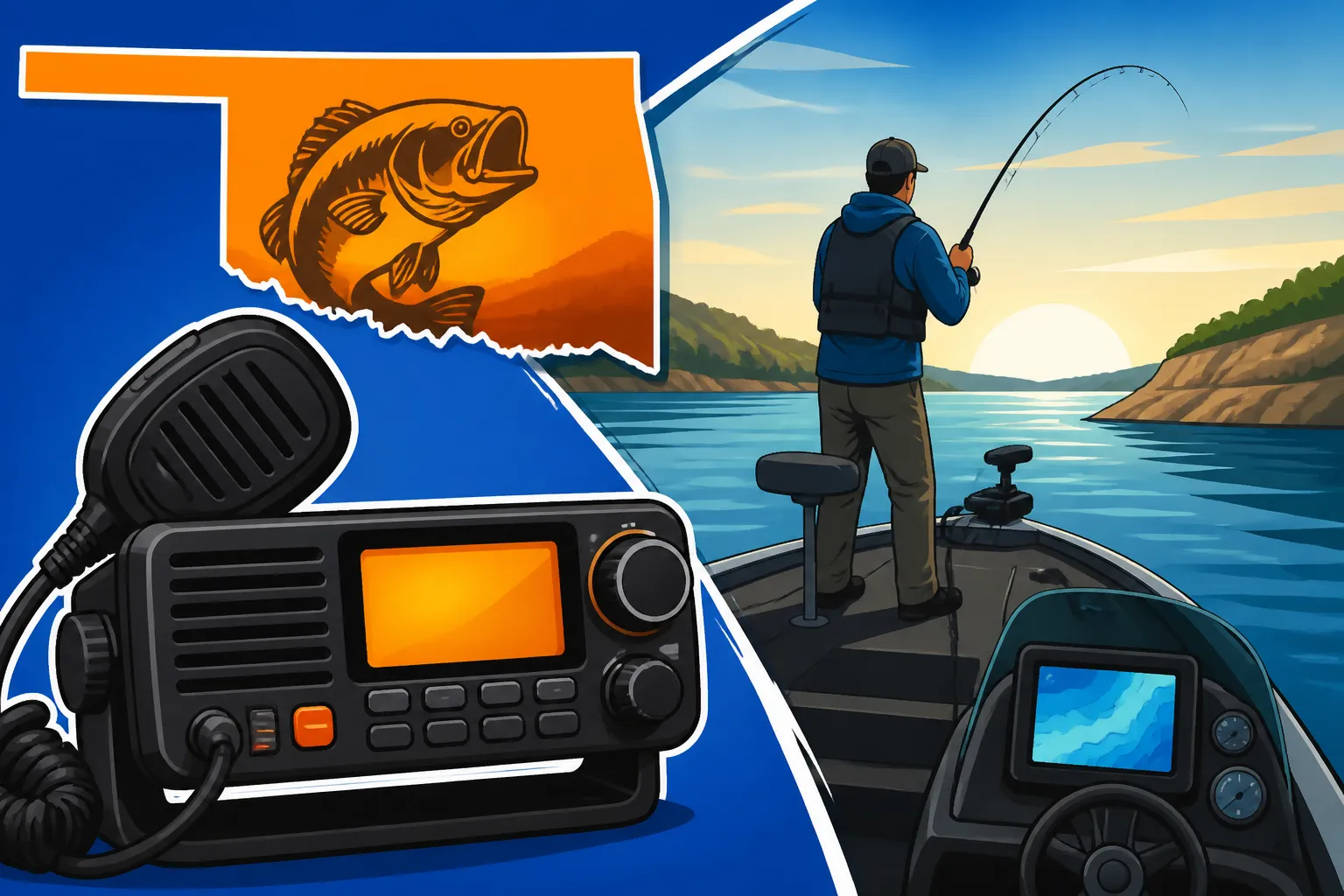
Fixed-mount VHF radios are permanently installed on your boat and are powered by the boat's electrical system. These are the workhorses of marine communication, offering significantly more power (typically 25 watts) and, as a result, a much greater range than handheld units. If you're running a larger bass boat, a pontoon, or a cruiser on bigger lakes like Grand Lake O' the Cherokees, a fixed-mount radio is often the preferred, and often safer, choice.
The higher power output means your signals can travel further, increasing your chances of reaching help or other vessels across those vast stretches of water. They usually come with larger, more robust antennas mounted higher on the boat, which also helps extend their range and improve signal clarity. Because they draw power from the boat's battery, you don't have to worry about charging them, though it's always wise to ensure your boat's electrical system is in good shape. These units often integrate seamlessly with other boat electronics, like GPS and fish finders, which opens up even more advanced safety features. Best Boats for Grand Lake's Open Water or Best Bass Boats for Oklahoma's Lake Texoma would almost certainly have one of these installed.
AIS Integration and GPS: Enhanced Features
Modern marine radios, especially fixed-mount units, come with features that go far beyond simple voice communication. Many now include built-in GPS receivers, which are absolutely critical for safety. When combined with Digital Selective Calling (DSC), a GPS-enabled radio can transmit your exact location along with your distress call. This means that if an emergency arises, rescuers know precisely where to find you, even if you're disoriented or unable to speak.
Some higher-end models also integrate with AIS (Automatic Identification System), which allows you to "see" other AIS-equipped vessels on your display and for them to "see" you. This is fantastic for collision avoidance, especially in busy waterways or during low visibility conditions, though less common on Oklahoma's inland lakes compared to coastal waters. However, being aware of nearby boat traffic, particularly during peak fishing seasons, can still be a huge advantage. Features like these transform a basic communication device into a sophisticated safety and navigation tool.
Here's a quick comparison of the two main types of marine radios:
| Feature | Handheld VHF Radio | Fixed-Mount VHF Radio |
|---|---|---|
| Power Output | Lower (typically 1-6 watts) | Higher (typically 25 watts) |
| Range | Shorter (line-of-sight, often 3-8 miles) | Longer (line-of-sight, often 10-25+ miles) |
| Portability | Highly portable, can be carried anywhere | Stationary, mounted to the boat |
| Power Source | Internal rechargeable battery | Boat's 12V electrical system |
| Durability | Often waterproof/submersible, floats | Robust, designed for marine environment |
| Installation | None, just charge and go | Requires mounting, wiring, and external antenna |
| Key Use Case | Small boats, kayaks, backup, personal safety | Larger boats, primary communication, longer range |
| DSC/GPS | Available on many models, often built-in GPS | Standard on most modern units, integrates with boat GPS |
Key Features to Look for in a Fishing Marine Radio
When you're outfitting your boat for a serious fishing trip on an Oklahoma reservoir, you want gear that's going to stand up to the conditions and perform when you need it most. Marine radios are no exception. Knowing which features truly matter will help you sift through the options and make an informed decision.
Waterproofing and Durability: Built for the Elements
Let's face it, fishing in Oklahoma means dealing with water, and sometimes a lot of it. Rain squalls can appear out of nowhere, waves can splash over the bow, and sometimes, well, things just get dropped. That's why waterproofing and overall durability are paramount for any marine radio. You don't want your communication lifeline to fail the moment it gets wet.
Look for radios rated for at least IPX7 waterproofing. This means the device can withstand submersion in up to 1 meter of water for 30 minutes. Even better if it floats! Many handheld units, especially those from reputable brands you might see at Bass Pro Shops, are designed to float and some even have a "flash and find" feature where they emit a light when submerged, making them easier to retrieve from the lake bottom. For fixed-mount units, while they're inside the boat, robust construction that can handle vibrations, salt spray (even if it's just from reservoir water), and extreme temperatures is crucial. A tough, rubberized casing on a handheld or a solid, well-sealed casing on a fixed-mount will ensure your investment lasts through many fishing seasons.
Battery Life and Charging Solutions
For handheld radios, battery life is a huge consideration. You're going to be out on the water all day, sometimes multiple days. A radio that dies halfway through your trip is no good to anyone. Look for models with long-lasting lithium-ion batteries and consider carrying a spare battery pack or a 12V charging cable that can plug into your boat's power. Some handhelds even offer alkaline battery trays as a backup, which can be a lifesaver if you're stranded without a charging source.
Fixed-mount radios don't have this specific battery concern since they run off your boat's electrical system. However, it's a good reminder to regularly check your boat's battery and charging system. A dead boat battery means a dead radio, along with everything else. Investing in a good marine battery and ensuring your alternator or charging system is functioning properly is just as important as the radio itself.
Digital Selective Calling (DSC) and GPS Capabilities
This is arguably the most critical safety feature to look for in any modern marine radio, especially for fixed-mount units, though many handhelds offer it now too. DSC allows you to send a digital distress signal with the push of a button. When connected to a GPS receiver (either built-in or externally linked to your boat's GPS system), this distress call will automatically transmit your boat's precise location.
Imagine this scenario: you're fishing alone on Lake Eufaula, and you suddenly have a medical emergency or your boat starts taking on water rapidly. With DSC, you simply press the distress button, and not only does it alert the authorities and other vessels, but it also tells them exactly where you are. This eliminates the need to verbally communicate your coordinates under stress, saving precious time for rescue efforts. Make sure the radio you choose has this capability and, if it's a fixed-mount, that it's properly wired to your boat's GPS. Registering your radio's MMSI (Maritime Mobile Service Identity) number is also essential for DSC to work effectively, allowing your vessel to be uniquely identified.
Channel Access and Weather Alerts
All marine VHF radios will give you access to standard VHF channels, including Channel 16 for hailing and distress, and Channel 9 for non-commercial calling. However, look for models that also have quick access to specific channels. Dedicated weather channels (often labeled "WX") are incredibly useful, especially on Oklahoma's unpredictable waters. Many radios have a "weather alert" function that will automatically switch to a weather channel or sound an alarm if a severe weather advisory is issued for your area.
Being able to quickly scan through channels for other boaters or listen to continuous weather broadcasts without having to manually tune is a huge plus. Some units even offer dual-watch or tri-watch features, allowing you to monitor multiple channels simultaneously, so you don't miss a distress call on 16 while chatting with a buddy on another channel. These seemingly small features contribute significantly to both safety and convenience on the water.
Choosing the Right Marine Radio for Your Oklahoma Fishing Adventures
Picking the perfect marine radio isn't a one-size-fits-all situation. It really comes down to how you fish, what kind of boat you have, and your personal priorities. Let's break down how to make the best choice for your specific needs when hitting Oklahoma's fantastic fishing waters.
Matching the Radio to Your Boat Size and Fishing Style
Your boat is the first and most important factor. If you primarily fish from a smaller aluminum Jon boat, a modest bass boat, or even a kayak on smaller lakes or close to shore, a high-quality handheld VHF radio is often the most practical and cost-effective solution. Its portability means you can take it with you if you switch vessels or even do some bank fishing. For many casual anglers or those on smaller craft, the convenience and sufficient range of a handheld from a brand like Icom or Standard Horizon available on Amazon make it a perfect fit.
However, if you're regularly venturing out onto the vast, open expanses of Oklahoma's biggest reservoirs—think Lake Texoma, Lake Eufaula, or Fort Gibson Lake—especially in a larger bass boat, a pontoon, or a cabin cruiser, a fixed-mount VHF radio should be your primary communication device. The superior range and power output of a 25-watt fixed-mount unit, combined with its integration into your boat's electrical system and potentially your GPS, offer a level of reliability and safety that handhelds simply can't match on big water. These larger units are often built into the console, making them easy to access but out of the way, and the external antenna gives you maximum reach. Trolling Motor Setup for Oklahoma Striped Bass often goes hand-in-hand with a robust communication system for those deep water excursions.
Budgeting for Performance and Reliability
Like any piece of essential gear, marine radios come at a range of price points. It's tempting to go for the cheapest option, but when it comes to safety equipment, reliability is key. For handheld units, you can find basic models that cover the essentials for a reasonable cost, but investing a bit more in features like IPX8 waterproofing (submersible beyond 1 meter), floating capability, and built-in GPS with DSC will significantly enhance your safety. You'll often find excellent deals and a good range of options that balance price and features at retailers like Bass Pro Shops.
For fixed-mount units, the initial cost might be higher, especially once you factor in the external antenna and potentially professional installation, but the long-term value in terms of safety and performance is undeniable. Consider this an investment in your peace of mind. Look for brands with a strong reputation for marine electronics. While specific prices fluctuate, a higher-end fixed-mount unit with all the bells and whistles will naturally cost more but will also deliver superior performance, range, and advanced safety features like AIS compatibility if that's something you desire. Remember, you're not just buying a radio; you're buying a lifeline.
Installation Considerations for Fixed-Mount Units
If you decide on a fixed-mount radio, remember that it's not just a plug-and-play device. Proper installation is crucial for it to perform optimally. This includes:
- Power Connection: The radio needs to be wired directly to your boat's 12V electrical system, usually through a dedicated fuse panel. Ensuring a clean, solid connection is vital to prevent power fluctuations or outages.
- Antenna Placement: The antenna is perhaps the most critical component for range. It needs to be mounted as high as possible on your boat, free from obstructions, to ensure the best line-of-sight signal transmission. A good quality, properly tuned antenna can make a huge difference in your radio's effective range.
- GPS Connection (for DSC): To utilize the full safety benefits of DSC, your fixed-mount radio must be connected to a GPS source. Many modern fixed-mounts have internal GPS, but if not, it will need to be wired to your boat's chartplotter or an external GPS antenna. This integration is what allows your distress signal to include your precise location.
- MMSI Registration: Once installed, you'll need to obtain and program an MMSI number into your DSC-capable radio. This unique nine-digit identifier links your radio to your vessel's registration information, allowing rescue services to identify you quickly in an emergency. It's usually a free and straightforward process through the FCC or other authorized bodies.
If you're not comfortable with marine electrical work or antenna installation, it's always a good idea to consult with a professional marine electronics installer. They can ensure your system is set up correctly, safely, and performs to its maximum potential. After all, when you're out on the water, you want to be confident that your gear will perform exactly as expected.
Disclaimer
This article is for general informational purposes only and does not constitute professional advice. Laws, prices and regulations vary by location and change over time. Consult a qualified professional for guidance on your specific situation.