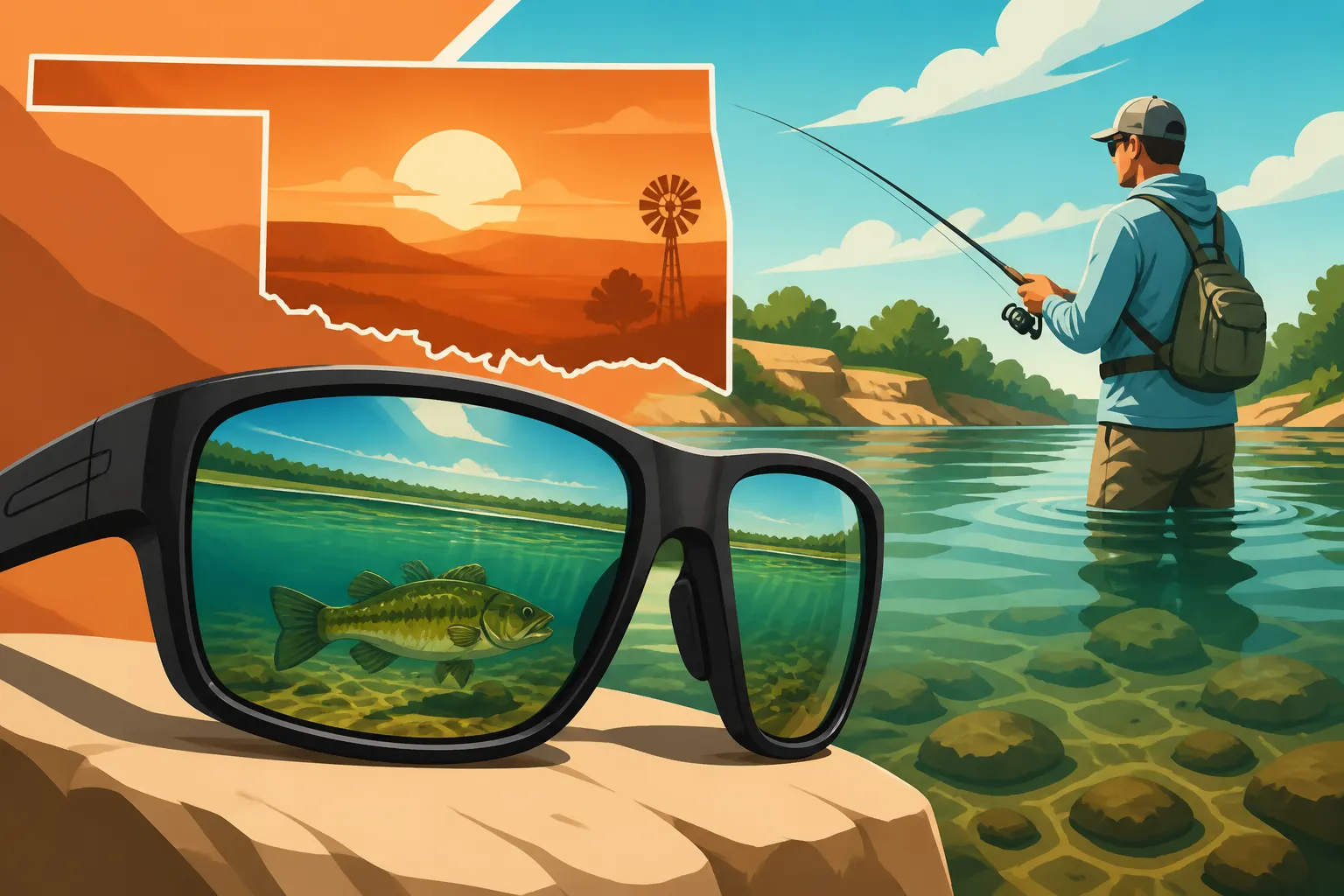
Best Sunglasses for Sight Fishing
Oh, the sheer frustration of being out on the water, knowing there are fish lurking just beneath the surface, but being completely blinded by the relentless glare! It's enough to make any angler want to pack up and go home. You spend all that time scouting, rigging, and practicing your cast, only to have the sun's reflection steal away your chance at a trophy catch. This guide is all about cutting through that shimmer and helping you pick out the best sunglasses specifically designed to give you a true advantage when you're sight fishing here in Oklahoma, allowing you to spot those elusive fish long before they spot you.
Why Quality Sunglasses Are a Game Changer for Oklahoma Sight Fishing
Let's be real: fishing isn't just about throwing a line in the water and hoping for the best, especially when you're targeting specific species or fishing in clear conditions. In Oklahoma, where our lakes and rivers offer everything from pristine clear waters to murkier, stained areas, the ability to see into the water, not just at it, can make all the difference. This isn't just about comfort; it's about genuine angling success.
The Frustration of Glare and Missed Opportunities
Imagine you're on a calm spring morning on Lake Arbuckle, known for its clear water, scanning the shallows for bedding bass. You see a ripple, a slight movement, but the sun is bouncing off the surface like a million tiny strobe lights. You squint, you shade your eyes with your hand, you turn your boat, but it's no use. That fleeting glimpse of a dark shadow or a subtle fin movement is lost. This isn't just annoying; it's heartbreaking when you know a big largemouth or a school of crappie is right there, teasing you. Many anglers have stories of what they thought they saw, only to realize later that they completely misjudged the situation because of blinding glare. It's a fundamental barrier to effective sight fishing, and frankly, it's a problem with a readily available solution.
Seeing What Others Miss: The Advantage of Polarized Lenses
This is where the magic happens. Standard sunglasses might darken your view, but they don't eliminate glare. Polarized lenses, on the other hand, are engineered to block horizontal light waves—the very waves that create that blinding glare off the water's surface. Think of it like this: regular light scatters in all directions. When it hits a flat, reflective surface like water, a significant portion of it bounces back horizontally, creating that intense glare. Polarized lenses have a special filter that only allows vertical light waves to pass through.
What does this mean for you, the angler? It means that instead of seeing a shimmering, white-hot blanket, you see through the surface. You'll be able to spot submerged structure like brush piles or rock formations, see changes in bottom composition, and most importantly, discern the actual shapes and movements of fish. On a lake like Tenkiller Ferry Lake, known for its clarity, the difference is astounding. You might spot a bass cruising a weed line, a crappie suspended near a stump, or even the subtle flick of a catfish tail near a submerged log. This isn't just a slight improvement; it's a whole new dimension to your fishing experience. The ability to react before a fish spooks or moves allows for more accurate casts and better presentation. It's a critical tool for anyone trying to master Oklahoma's Bass Fishing Rules and Limits or chasing specific fish like crappie or catfish.
Safety First: Protecting Your Eyes on the Water
Beyond the obvious fishing advantages, wearing proper sunglasses is a crucial safety measure. The sun's UV rays, especially when reflected off the water, can be incredibly damaging to your eyes over time, leading to conditions like cataracts and macular degeneration. Quality fishing sunglasses offer robust UV protection, often blocking 99-100% of UVA and UVB rays, which is non-negotiable for anyone spending extended periods outdoors.
Furthermore, fishing involves hooks, sinkers, and sometimes even aggressive fish that might thrash when brought into the boat. A sturdy pair of sunglasses acts as a physical barrier, protecting your eyes from stray hooks or other debris that might come flying your way. Imagine reeling in a feisty largemouth, and it makes one last jump, throwing a treble hook straight toward your face. Those lenses could literally save your eyesight. So, while you're focused on spotting that next bite, your eyes are also getting the protection they deserve.
Key Features to Look for in Sight Fishing Sunglasses
Choosing the right pair of sunglasses isn't a one-size-fits-all situation. The best choice for you will depend on the types of water you typically fish, the light conditions, and your personal preferences for comfort and style. However, there are some universal features that every serious sight fishing angler should prioritize.
Lens Material: Clarity, Durability, and Weight
The material of your lenses plays a huge role in both optical clarity and how well they stand up to the rigors of fishing. You'll primarily encounter a few main types:
- Glass Lenses: These are often considered the gold standard for optical clarity. They provide the sharpest, most distortion-free vision, which is a massive advantage when you're trying to pick out subtle movements underwater. The downside? They tend to be heavier and can shatter upon impact, though many modern glass lenses are impact-resistant. If absolute clarity is your top priority and you're careful with your gear, glass can't be beaten.
- Polycarbonate Lenses: These are incredibly lightweight and highly impact-resistant, making them a popular choice for active sports like fishing. They're much less likely to shatter than glass, which is a big plus for safety. While their optical clarity is excellent, some argue it's not quite as pristine as glass. However, for most anglers, the difference is negligible, and the durability and lighter weight often win out.
- Trivex Lenses: Often seen as a hybrid, Trivex offers a blend of qualities. They boast clarity that rivals glass while offering impact resistance similar to polycarbonate. They are also very lightweight. If you're looking for the best of both worlds – great clarity and excellent durability – Trivex is an outstanding option.
When you're out on the water, whether it's battling winds on Lake Texoma or navigating tight creeks, you want lenses that can take a bump without compromising your vision or safety.
Lens Color: Matching Your Environment
This is where things get really interesting, and it's not just about aesthetics. Different lens colors are optimized for varying light conditions and water types. Choosing the right tint can significantly enhance your ability to see fish.
- Gray/Smoke Lenses: These are fantastic for bright, sunny days and open water conditions. They offer true color perception, meaning everything looks natural, just darker. They're excellent for reducing overall brightness and glare without distorting colors. If you're fishing a vast, clear reservoir like Grand Lake O' the Cherokees on a cloudless day, gray lenses will serve you well.
- Brown/Amber Lenses: These lenses excel in variable light conditions, from partly cloudy to bright sun. They enhance contrast and depth perception, making them incredibly effective for spotting fish in shallower water or against structured backgrounds. They're particularly good for seeing into moving water or when fishing stained or slightly overcast conditions. Many bass anglers swear by brown tints for their ability to pick out shadows and movements near cover.
- Copper/Rose Lenses: Similar to brown, these tints offer even greater contrast enhancement, especially in lower light conditions or when fishing in slightly murkier water. They can be particularly useful on overcast days or in tannin-stained rivers and creeks. They really make greens and browns pop, helping you distinguish fish from vegetation or muddy bottoms.
- Green Mirror Lenses: These often have a brown or copper base lens with a green mirror coating. The mirror coating reflects even more light, reducing eye strain in very bright conditions, while the base tint provides excellent contrast. They're versatile and perform well in a wide range of light, from moderate to very bright.
- Blue Mirror Lenses: Typically built on a gray base, blue mirror lenses are specifically designed for extremely bright, open water conditions, often seen in offshore fishing or large, reflective lakes. The blue mirror coating reduces visible light transmission significantly. They are superb for reducing eye fatigue when you're staring at a wide expanse of water all day.
- Yellow/Vermillion Lenses: While less common for pure sight fishing, these lenses are excellent for extremely low light or foggy conditions, greatly enhancing contrast. You might use them at dawn or dusk, or on very dark, overcast days, but they don't block as much glare as darker polarized options.
For Oklahoma, where you might encounter everything from the crystal-clear waters of Broken Bow Lake to the slightly stained appearance of Lake Eufaula, having a versatile lens color or even multiple pairs is a huge advantage. Consider the typical conditions you fish most often, or perhaps even pick up a couple of pairs to swap out depending on the day.
| Lens Color/Coating | Ideal Conditions | Benefit for Sight Fishing | Common Base Tint |
|---|---|---|---|
| Gray/Smoke | Bright, sunny days; open water | True color perception, reduces overall brightness/glare | N/A |
| Brown/Amber | Variable light, partly cloudy to bright sun | Enhances contrast, depth perception, good for shallow water | N/A |
| Copper/Rose | Lower light, overcast, stained water | High contrast, makes greens/browns pop, good for vegetation | N/A |
| Green Mirror | Moderate to very bright; versatile | Reduced eye strain (mirror), excellent contrast (base) | Brown/Copper |
| Blue Mirror | Extremely bright, open water | Max glare reduction, ideal for intense sun on large lakes | Gray |
| Yellow/Vermillion | Low light, overcast, foggy, dawn/dusk | Boosts contrast significantly, brightens view | N/A |
Frame Design and Fit: Comfort and Coverage
What good are incredible lenses if the frames don't fit well or let light in from every angle? A proper frame design and fit are essential for comfort during long days on the water and for maximizing your sight fishing capabilities.
- Wrap-around Styles: These frames hug your face, blocking light from entering through the sides, top, and bottom. This is crucial for glare reduction, as even a small amount of peripheral light can diminish the effectiveness of your polarized lenses. They also offer superior physical protection against wind, spray, and errant hooks.
- Comfortable Fit: You'll be wearing these for hours, so comfort is paramount. Look for lightweight materials, adjustable nose pads, and temple arms that don't pinch or slip. Some frames feature rubberized sections on the nose and ear pieces to ensure they stay put, even when you're sweating or moving around a lot in the boat. Trying them on is vital – you can do this at local sporting goods stores like Bass Pro Shops to get a feel for different brands and styles.
- Ventilation: Especially in the humid Oklahoma summers, lenses can fog up. Some frames incorporate ventilation systems or channels to promote airflow and prevent fogging, which can be a real nuisance when you're trying to concentrate on a fish.
- Durability: Fishing gear takes a beating. Look for frames made from resilient materials that can withstand drops, bumps, and exposure to sun and saltwater (if you ever venture beyond freshwater). Hinges that are sturdy and resist corrosion are also a plus.
A well-fitting, wrap-around frame not only feels good but also ensures that the specialized optics are doing their job uninterrupted, letting you fully exploit the advantages of your high-quality lenses.
Top Lens Technologies and Coatings for Optimal Performance
Once you've got your head around lens material and color, it's time to dive into the specialized technologies and coatings that elevate a good pair of sunglasses to an exceptional pair for sight fishing. These aren't just fancy marketing terms; they genuinely improve your vision and the longevity of your eyewear.
Polarization: The Non-Negotiable Feature
We've talked about it, but it bears repeating: if your sunglasses aren't polarized, they're not truly fit for sight fishing. Polarization is the single most important feature. It's the technology that filters out the horizontal light waves responsible for glare. Without it, you're just looking through darkened glass, not into the water.
Imagine you're trying to locate a school of white bass boiling on the surface of Keystone Lake. With non-polarized lenses, all you'll see is a chaotic shimmering mess. With polarized lenses, that shimmer dissipates, allowing you to clearly see the distinct shapes of the fish, their direction of travel, and even how they're reacting to your lure. This isn't a luxury; it's a necessity for any serious angler. When you're shopping, always confirm that the lenses are indeed polarized – it's often explicitly stated on the product description or a sticker on the lens itself.
Anti-Reflective and Hydrophobic Coatings: Enhancing Vision and Maintenance
Beyond the core lens, specialized coatings can make a big difference in performance and convenience.
- Anti-Reflective (AR) Coatings: These coatings are typically applied to the back surface of the lens (the side facing your eye). Their purpose is to eliminate reflections that can bounce off the back of the lens and into your eye. Without an AR coating, sunlight coming from behind you can create distracting reflections, obscuring your vision and causing eye strain. This is especially important when you're in a brightly lit environment with the sun at your back. It essentially ensures a clear, unobstructed view through the lens, not just to the lens.
- Hydrophobic and Oleophobic Coatings: These are water-repellent and oil-repellent coatings, respectively. A hydrophobic coating makes water bead up and roll off the lens surface, preventing water spots and making it easier to see clearly if you get splashed or caught in light rain. An oleophobic coating repels oils, such as those from your skin or sunscreen, making the lenses easier to clean and resistant to smudges. For anglers who are constantly touching their glasses, battling spray, and reapplying sunscreen, these coatings are invaluable for maintaining clear vision with minimal effort. They keep your view pristine, allowing you to focus on the fish rather than constantly wiping your lenses.
These coatings work together to give you the clearest, most comfortable vision possible, reducing distractions and keeping your eyes on the prize.
UV Protection: A Must-Have for Every Angler
We briefly touched on safety, but let's dive deeper into UV protection. The sun emits harmful ultraviolet A (UVA) and ultraviolet B (UVB) rays. Prolonged exposure to these rays can lead to severe eye problems over time, including cataracts, pterygium (a growth on the eye's surface), and even certain types of eye cancers.
When shopping for fishing sunglasses, always look for lenses that block 100% of UVA and UVB rays, or are labeled as UV400, which means they block all light rays with wavelengths up to 400 nanometers (covering both UVA and UVB). Don't confuse lens darkness with UV protection; a very dark lens without proper UV filtering can actually be more dangerous, as it causes your pupils to dilate, allowing more harmful UV rays to enter your eyes.
Especially here in Oklahoma, where the sun can be intense for much of the year, protecting your eyes from UV damage is just as important as wearing sunscreen on your skin. It's an investment in your long-term eye health and a critical piece of gear for anyone who spends significant time on the water, whether you're targeting specific fish or just enjoying a day out.
Popular Brands and Where to Find Your Next Pair
Alright, now that you're armed with all the technical know-how, let's talk about where to find these glorious glare-cutting machines and some of the brands that serious anglers swear by. You want a pair that's going to stand up to the elements and perform when it counts.
Trusted Brands in the Fishing World
There are several brands that have earned their reputation in the fishing community for producing high-quality polarized sunglasses. They understand the specific needs of anglers and often incorporate features that directly address those challenges. While I can't name every single one, some of the consistently top-rated include:
- Costa Del Mar: A favorite among many professional and recreational anglers, Costa is renowned for its proprietary 580 lens technology, which selectively filters out harsh yellow and harmful blue light, enhancing color, contrast, and clarity. They offer both glass and polycarbonate lenses in a variety of tints and mirror options, specifically designed for different fishing conditions. Their frames are often rugged and built to last.
- Maui Jim: While popular for general eyewear, Maui Jim's polarized lenses are exceptional for cutting glare and enhancing color. They utilize a patented PolarizedPlus2® lens technology that eliminates 99.9% of glare and blocks 100% of harmful UV rays. Their clarity is outstanding, and they often come in stylish, comfortable frames suitable for extended wear.
- Oakley: Known for their sports performance eyewear, Oakley offers excellent polarized options with their Prizm™ lens technology, which fine-tunes vision for specific environments. While not exclusively fishing-focused, many of their models provide superb clarity, impact resistance, and comfortable, secure fits that work well on the water.
- Wiley X: This brand often emphasizes protection, with many models meeting stringent safety standards for impact resistance. Their polarized lenses are excellent for reducing glare, and their durable frames are designed to withstand tough conditions, making them a great choice for anglers who need maximum eye protection.
These brands often come with a higher price tag, but the investment is generally worth it for the superior optics, durability, and comfort they provide. Think of it as a crucial piece of your fishing arsenal, just like your rods and reels. Speaking of which, sometimes you're looking for that perfect Best Rod for Largemouth Bass Fishing or trying to figure out How to Rig a Kayak for Bass Fishing, and having crystal-clear vision is paramount for both.
Shopping Smart: In-Store vs. Online Options
When it comes to buying sunglasses, you have a couple of main avenues, each with its own advantages.
- In-Store Experience: Visiting a physical store, especially a dedicated outdoor retailer like Bass Pro Shops, is invaluable for trying on different pairs. This allows you to check the fit, feel the weight, and compare how different lens tints look in person. You can ask knowledgeable staff questions and get a real sense of what works for your face shape and preferences. It's the best way to ensure maximum comfort and prevent light leakage around the edges of the frames. You can also compare features side-by-side with other gear you might be considering, like a new Best Kayak Fish Finder for Oklahoma Reservoirs.
- Online Shopping: Retailers like Amazon offer an incredible selection of brands, models, and price points, often with competitive pricing. You can read countless reviews from other anglers, which can provide insights into real-world performance. The downside is that you can't physically try them on. However, many online retailers have generous return policies, so if you do order a pair that doesn't fit or feel right, you can usually send them back. This is also a great place to research specific models or find deals on brands you've already tried on in person.
Whether you're hitting up a local shop or browsing from your couch, take your time. This isn't a purchase to rush. The right pair of sunglasses can genuinely transform your fishing experience, turning frustrating glare into clear views of the underwater world, ultimately leading to more successful and enjoyable days on the beautiful lakes and rivers of Oklahoma. When you can spot that bass on its bed during the Spring Bass Spawn Timing in Oklahoma or track a school of crappie in the shallows, you'll know your investment was well worth it.
Disclaimer
This article is for general informational purposes only and does not constitute professional advice. Laws, prices and regulations vary by location and change over time. Consult a qualified professional for guidance on your specific situation.