Why Only One Blue Catfish Over 30 Inches Counts
It's incredibly frustrating when you're out on the water, having a fantastic day of fishing, and you hook into a truly magnificent blue catfish, only to remember there's a specific, often confusing, rule about how many of the really big ones you can actually keep. That moment of uncertainty can put a damper on an otherwise perfect outing. This guide is here to untangle the specifics of Oklahoma's blue catfish regulations, especially the one that limits you to only one fish over 30 inches, helping you fish confidently and legally.
Understanding Oklahoma's Catfish Regulations
Oklahoma is renowned for its fantastic catfish populations, particularly the hard-fighting blue catfish that can grow to impressive sizes. However, with great fishing comes important responsibility, and our state has specific rules in place to ensure these populations remain healthy for generations to come. It’s not always straightforward, but understanding these regulations is key to a successful and legal day on the water.
The Statewide Forked-Tail Catfish Limit
Let's start with the basics. In Oklahoma, the regulations often group blue catfish and channel catfish together under the umbrella of "forked-tail catfish." This means that when you're out chasing whiskers, your daily bag limit applies to both species combined. The statewide daily bag limit for forked-tail catfish is 15 fish. This isn't 15 blue catfish and 15 channel catfish; it's a total of 15 combined. So, if you catch 10 channel cats, you can only keep 5 more blue cats, or vice versa. This aggregated limit is something many anglers overlook, assuming separate counts for each species. It’s a crucial detail that ensures sustainable harvest across these popular species. You can find more details in our guide on Forked-Tail Catfish Limits in Oklahoma.
For instance, imagine you're fishing a popular spot on Lake Eufaula, known for both its channel and blue catfish. You've had a great morning, boating eight nice channel catfish, all under 30 inches. Then, your rod doubles over, and after a good fight, you land a beautiful 25-inch blue cat. You're now at nine fish for the day. You can continue fishing and keep up to six more forked-tail catfish, whether they are blue or channel cats, as long as they adhere to all other size restrictions. It's about managing the total pressure on these related populations.
The Special Rule for Blue Catfish Over 30 Inches
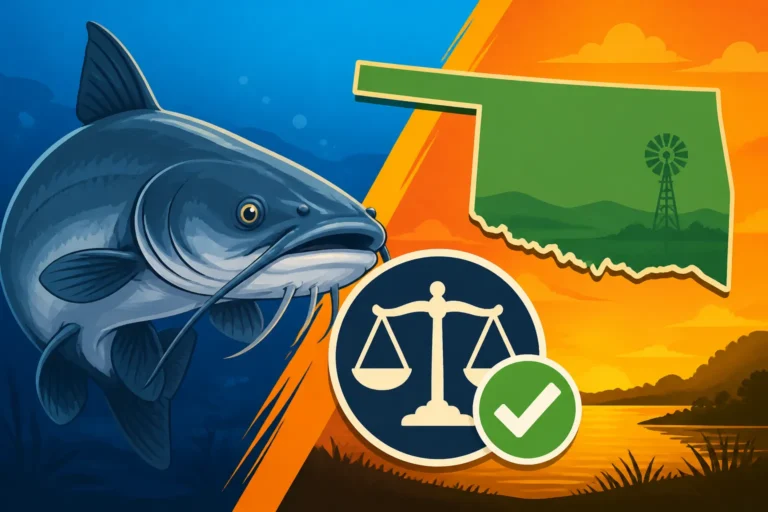
Now, for the specific regulation that often sparks confusion: the "one blue catfish over 30 inches" rule. While the statewide limit for forked-tail catfish is 15 total, there's a very specific carve-out for blue catfish that reach trophy size. Anglers are only allowed to keep one blue catfish per day that measures 30 inches or longer. This isn't an additional fish; it must be part of your overall 15-fish bag limit. So, if you keep a 32-inch blue cat, that fish counts as one of your 15, and you cannot keep any other blue catfish that is 30 inches or longer on that same day. However, you can still keep up to 14 more forked-tail catfish (blue or channel) as long as they are under 30 inches. This rule, often referred to simply as The 30-Inch Blue Catfish Rule in Oklahoma, is designed for conservation.
Consider this scenario: You're targeting trophy blue catfish on Lake Texoma. You land a magnificent 35-inch blue cat early in the morning. You decide to keep it, making it your one legal blue catfish over 30 inches for the day. Later, you hook into an even bigger one, a monster 40-inch blue. What do you do? According to the rules, you must release that second 40-inch blue catfish. It doesn't matter that it's bigger or perhaps your personal best; you've already kept your one allowed fish over 30 inches. You can, however, still keep up to 14 more blue or channel catfish, provided they are all under 30 inches. This regulation focuses on preserving the largest, most reproductively valuable fish in the population.
Measuring Your Catch Accurately
The difference between a legal keeper and a mandatory release often comes down to just an inch or two, especially when dealing with the 30-inch mark for blue catfish. Therefore, having a reliable and accurate way to measure your catch is absolutely critical. You need to measure your fish from the tip of its snout to the very end of its tail, with the tail pinched together to get the maximum length. Laying the fish flat on a measuring board or using a tape measure is the best approach to ensure accuracy.
Eyeballing a fish's length is a common mistake and can lead to violations. If you're not sure, it's always safer to measure. A sturdy fish measuring board can be a great investment, and many reliable options are available on online retailers like Amazon. Having one readily accessible in your boat or tackle bag can save you a lot of headache and ensure you stay within the legal limits. Remember, a game warden's measurement is the final word, so you want to be confident in yours before making a decision to keep or release.
Why This Regulation Matters for Trophy Blue Cats
It might seem counterintuitive to release a giant fish, especially when you’ve put in the effort to catch it. However, the "one blue catfish over 30 inches" rule isn't arbitrary; it's a cornerstone of sound fisheries management. This regulation is put in place by the Oklahoma Department of Wildlife Conservation (ODWC) with specific biological and ecological goals in mind, primarily focused on sustaining the health and future of our blue catfish fisheries.
Protecting Broodstock and Future Generations
The primary reason behind limiting the harvest of large blue catfish is to protect the species' broodstock. "Broodstock" refers to the mature, adult fish that are essential for reproduction. Blue catfish, especially the really big ones (over 30 inches), are the most productive spawners. They lay vast quantities of eggs, contributing significantly to the next generation of catfish in our lakes and rivers. Removing too many of these large, prime breeding individuals can have a devastating impact on the overall population's ability to reproduce and maintain its numbers.
Think of it like this: if you continually harvest all the largest, most productive apple trees in an orchard, eventually your orchard's overall yield will decline dramatically. The same principle applies to fish populations. By limiting anglers to just one trophy-sized blue catfish, the ODWC ensures that a healthy number of these vital breeders remain in the water to continue the cycle of life. This helps guarantee that there will be plenty of fish for your grandkids to catch decades from now. This long-term view is essential for sustainable fishing.
Balancing Angler Opportunity with Conservation
This specific regulation is a delicate balance. On one hand, the Oklahoma Department of Wildlife Conservation understands the incredible thrill and challenge of landing a truly massive blue catfish. Anglers love the pursuit of a trophy, and being able to keep one as a prized catch is part of the experience. On the other hand, the ODWC has a mandate to conserve Oklahoma's natural resources. The "one over 30" rule attempts to strike this balance by allowing anglers to experience the thrill of keeping a trophy while safeguarding the future of the fishery.
Without such a rule, there's a risk that increased fishing pressure, combined with improved gear and techniques, could lead to a rapid depletion of the largest blue catfish. This would not only reduce the chance of catching a trophy for future anglers but could also harm the overall genetic health and resilience of the population. This regulation permits a sustainable harvest for recreational purposes while still ensuring the health of the ecosystem. It's a compromise that benefits everyone who cares about fishing in Oklahoma. For a broader view of various species limits, check out Oklahoma's Bag Limit Rules by Species.
Practical Tips for Anglers Targeting Blue Catfish in Oklahoma
Navigating fishing regulations, especially when you're caught up in the excitement of a bite, can be tough. But with a little preparation and some common sense, you can ensure your blue cat fishing trips are both rewarding and fully compliant with Oklahoma’s rules. It’s all about being informed and ready for anything the water throws at you.
Planning Your Catfish Trip Around the Rules
Before you even launch your boat or cast a line, make sure you're clear on the specific regulations for the body of water you're fishing. While the "one over 30 inches" rule for blue catfish is statewide, it's always smart to double-check the latest regulations from the Oklahoma Department of Wildlife Conservation, as rules can occasionally change or have site-specific exceptions. Having a copy of the current regulations guide, either physical or digital, is always a good idea.
Consider how you’ll measure your fish immediately upon catching it. Bringing a reliable, easy-to-read measuring board or tape is a must. Many anglers keep a simple, foldable measuring board in their tackle box or boat. If you’re fishing with kids, teaching them how to properly measure a fish is also a valuable skill, ensuring they understand the rules from a young age. Setting clear intentions before you go – for example, deciding whether you're strictly catch-and-release for trophy fish or if you plan to keep one large fish – can help avoid confusion when the adrenaline is pumping. You might even consider specialized gear; some anglers purchase oversized catfish nets or cradles to ensure easy, safe measurement and release of large fish, often found on Amazon.
What to Do When You Catch Multiple Giants
This is the dream scenario for many catfish anglers, but it's also where the "one over 30 inches" rule comes most into play. Let's walk through it. Say you've already kept a 32-inch blue catfish earlier in the day. It's counted as one of your 15 forked-tail catfish, and it's your one legal fish over 30 inches. Then, later, you hook into another truly magnificent blue cat, measuring an astonishing 38 inches. What now?
The rule is clear: you can only possess one blue catfish 30 inches or longer. This means the second 38-inch blue catfish, as impressive as it is, must be immediately released back into the water. This is where proper catch-and-release techniques become vital. Ensure you handle the fish carefully, minimizing its time out of the water. Use a wet towel or gloves to protect its slime coat, support its body horizontally, and revive it gently before letting it go. Releasing a trophy fish back into its habitat is a powerful act of conservation that ensures it can continue to spawn and grow, offering another angler (or even you!) the chance to catch it again someday. For more on specific fish limits, our guide on Oklahoma's Catfish Fishing Rules and Limits can be very helpful.
Staying Informed on Regulatory Changes
Fishing regulations are not set in stone; they can and do change. The Oklahoma Department of Wildlife Conservation regularly assesses fish populations and adjusts rules to ensure sustainable fishing practices. It's your responsibility as an angler to stay current with these changes. The best way to do this is to check the ODWC's official website or pick up a new regulations guide each year. Don't rely solely on what you heard from a friend last season; rules can be updated.
Being informed means you won't accidentally break a rule that could lead to penalties, which can be significant, as highlighted in our article about Penalties for Fishing Without a License in Oklahoma (and similar penalties can apply to bag limit violations). The ODWC also provides updates through their social media channels and newsletters, which can be great ways to stay in the loop. Knowledge is power, and in fishing, it can save you from a costly citation while also contributing to the health of Oklahoma's fantastic fisheries.
Oklahoma Blue Catfish Regulations at a Glance
For quick reference, here's a summary of the key blue catfish regulations in Oklahoma. Remember, this applies to forked-tail catfish (blue and channel catfish combined).
| Regulation Type | Statewide Limit | Notes |
|---|---|---|
| Daily Bag Limit | 15 fish (Blue and Channel Catfish combined) | This is the total number of forked-tail catfish you can possess in a single day. |
| Size Limit (Trophy) | Only ONE blue catfish 30 inches or longer per day | This trophy fish counts towards your 15-fish daily bag limit. All other blue catfish must be under 30". |
| Possession Limit | Twice the daily bag limit after first day of fishing | If you're on a multi-day trip, you can possess up to 30 fish (with only two over 30" blue cats). |
| Measurement Method | Tip of snout to end of tail (tail pinched) | Accuracy is key; use a reliable measuring device. |
| Species Included | Blue Catfish, Channel Catfish | Flathead Catfish have separate regulations. |
This table provides a snapshot, but it's always best to consult the official ODWC regulations guide for the most up-to-date and complete information.
Disclaimer
Please remember that fishing regulations can change. While every effort has been made to provide accurate and up-to-date information, it is the angler's responsibility to consult the current Oklahoma Fishing Regulations Guide published by the Oklahoma Department of Wildlife Conservation before fishing. This content is for informational purposes only and should not be considered legal advice.