Mixing Blue and Channel Catfish in Your Daily Limit
It’s a fantastic feeling to be out on the water, reeling in catfish in Oklahoma. But let's be honest, that joy can quickly turn into a headache when you start trying to figure out exactly how many blue catfish and channel catfish you can keep on your stringer without breaking any rules. The regulations can seem a bit opaque, leaving many of us scratching our heads and wondering if we’re inadvertently committing a fishing faux pas. This guide is designed to clear up all that confusion, helping you understand precisely how to mix blue and channel catfish within your daily limit so you can enjoy your catch with complete confidence.
Navigating Oklahoma's Catfish Bag Limits
Oklahoma is renowned for its incredible catfish populations, and anglers often find themselves targeting both blue and channel catfish in the same trip. While these two species are distinctly different in appearance and behavior, the Oklahoma Department of Wildlife Conservation (ODWC) groups them together under a single daily bag limit, with one crucial exception for large blue cats. Understanding this combined limit is key to staying legal and contributing to sustainable fishing practices.
The Statewide Forked-Tail Catfish Regulation
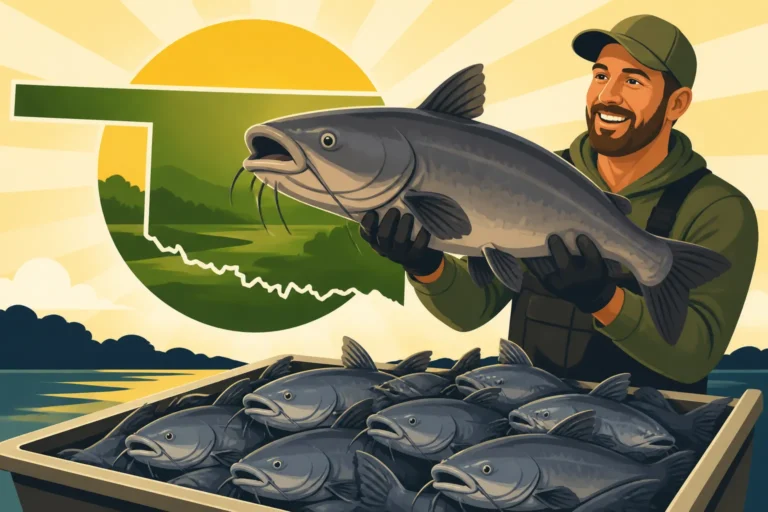
When the regulations talk about "forked-tail catfish," they are specifically referring to blue catfish and channel catfish. These two species, both popular targets for anglers across the state, share a common daily bag limit. In most Oklahoma waters, you are allowed to keep a combined total of 15 forked-tail catfish per day. This means that if you catch ten channel cats, you can only keep five blue cats, regardless of their size (with that one exception we'll dive into shortly). It's not 15 of each; it's 15 total between the two species. This rule is a cornerstone of Oklahoma's Catfish Fishing Rules and Limits, designed to ensure healthy populations for future generations of anglers. For a deeper dive, check out the specific details on Forked-Tail Catfish Limits in Oklahoma. It's a critical detail that can easily be overlooked, especially when the bite is hot and you're just focused on landing fish. Always remember, the 15-Fish Catfish Limit for Oklahoma Anglers applies to the collective total of these species.
Imagine you're out on Lake Eufaula, and the channel cat bite is on fire. You've already got eight chunky channel cats in your livewell. Suddenly, you hook into a monster blue catfish. That's awesome! But now you know you only have seven slots left for any combination of smaller blue or channel cats, plus that special rule for big blue cats. It really makes you think about each fish you decide to keep.
Distinguishing Between Blue and Channel Catfish
To correctly adhere to the regulations, it's absolutely vital to be able to tell the difference between a blue catfish and a channel catfish. While seasoned anglers might find this second nature, new fishermen and even some experienced ones can occasionally get them mixed up, especially with smaller specimens or in stained water.
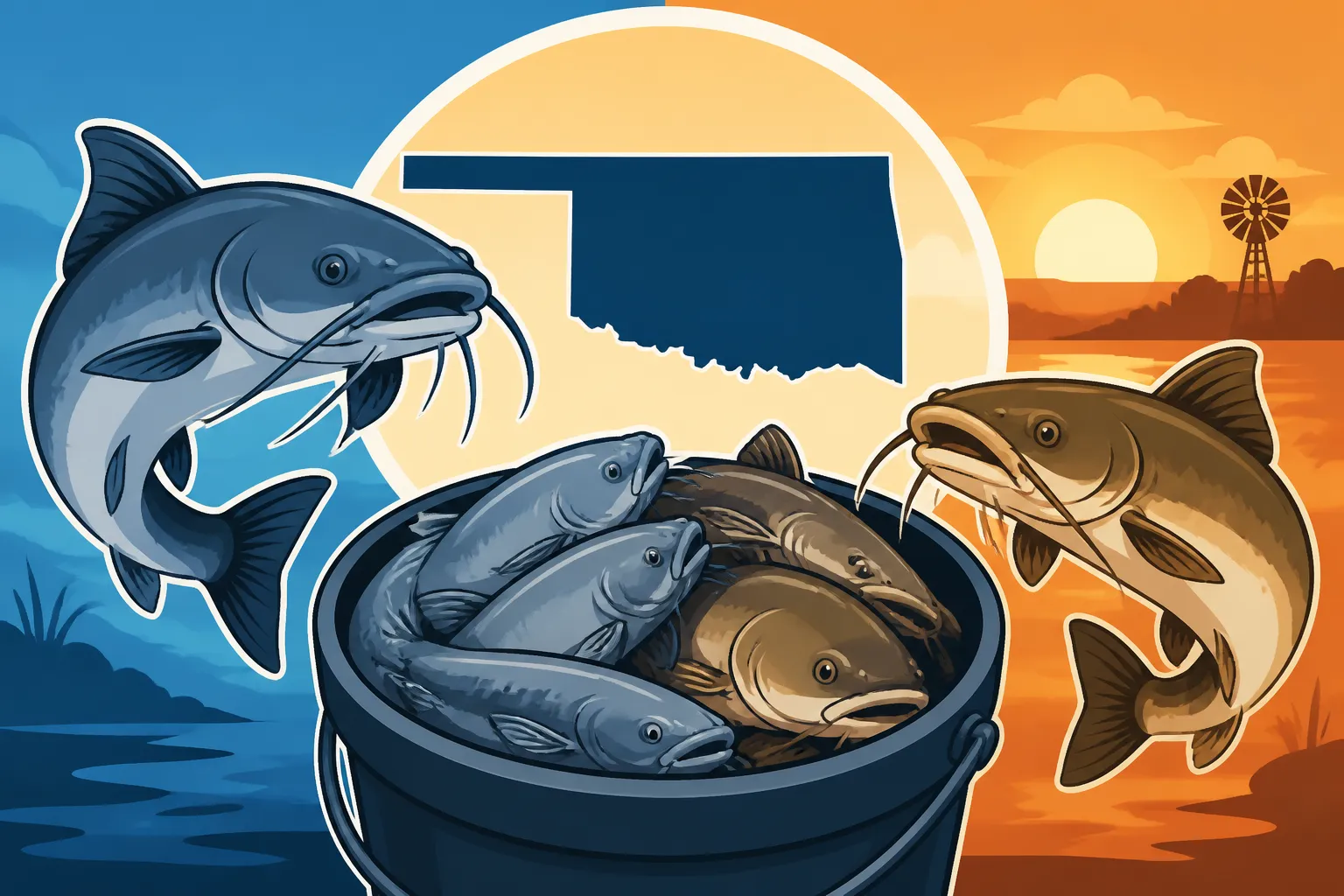
Blue Catfish (Ictalurus furcatus) typically have a deeply forked tail, a noticeable hump on their back just behind the head (especially in larger specimens), and a straight anal fin that has 30 to 35 rays. Their coloring can range from slate blue to silvery blue on their sides, fading to white on their belly. They generally do not have spots, though very young blue cats can sometimes exhibit a few faint spots. They also have a relatively smooth skin compared to channel cats.
Channel Catfish (Ictalurus punctatus) also have a forked tail, but it's usually not as deeply forked as a blue cat's. Their most distinguishing feature, especially in younger fish, is the presence of dark spots on their sides. These spots often fade as they get older, which can sometimes lead to confusion with blue cats. They have a curved anal fin with 24 to 29 rays. Their body color can vary widely depending on water clarity and diet, ranging from olive-brown to slate gray, often with a white or silver belly.
Accurate identification becomes particularly crucial because of the specific size limits for blue catfish. Mistaking a large channel cat for a blue cat, or vice-versa, can lead to unintended violations. If you're unsure, it's always better to err on the side of caution. Learning how to differentiate them is covered in detail in our guide on Channel Catfish vs Blue Catfish: How to Tell Them Apart. Knowing these differences will not only help you stay legal but also deepen your understanding of the fish you're targeting.
The Specifics of Mixing Blue and Channel Catfish in Your Daily Creel
Now that we've covered the overall combined limit and how to identify your catch, let's dive into the trickier part: how to actually mix these species on your stringer, especially considering that unique regulation for larger blue catfish. This is where most of the questions arise, and for good reason—it’s not always straightforward!
Understanding the 30-Inch Blue Catfish Rule
Oklahoma has a very specific regulation for large blue catfish that is designed to protect the breeding stock of these impressive fish. For blue catfish, anglers are only allowed to keep one fish over 30 inches in length per day. This is an individual fish rule, and it still counts towards your overall 15-fish forked-tail limit.
Let's break this down with a scenario. You're fishing the mighty Red River, known for its trophy blue cats. You land a magnificent 35-inch blue catfish. You can absolutely keep it! But now, that 35-inch fish takes up one of your 15 available slots for forked-tail catfish, and it means you cannot keep any other blue catfish that measures over 30 inches for the remainder of that fishing day. You would still have 14 slots left for any combination of blue or channel catfish, none of which can be a blue cat over 30 inches.
This rule is often where anglers get confused. They might think they can keep 15 fish plus one over 30 inches, but that's incorrect. The over-30-inch blue cat is part of the 15-fish limit, not an addition to it. For a comprehensive explanation, be sure to read The 30-Inch Blue Catfish Rule in Oklahoma and also Why Only One Blue Catfish Over 30 Inches Counts. If you've ever wondered, "Can You Keep a 30-inch Blue Catfish in Oklahoma?", the answer is yes, but only one, and it counts towards your total bag.
Combining Species in Your Daily Creel
Let's put it all together with some practical examples of how you can combine your blue and channel catfish catches while staying within the legal limits. Remember the two key rules: a total of 15 forked-tail catfish, and only one blue catfish over 30 inches.
Here's a table illustrating various legal combinations:
| Blue Catfish (under 30") | Blue Catfish (over 30") | Channel Catfish | Total Forked-Tail Catfish | Legal? |
|---|---|---|---|---|
| 10 | 1 | 4 | 15 | Yes |
| 14 | 0 | 1 | 15 | Yes |
| 5 | 0 | 10 | 15 | Yes |
| 0 | 0 | 15 | 15 | Yes |
| 15 | 0 | 0 | 15 | Yes |
| 10 | 2 | 3 | 15 | No (2 over 30") |
| 10 | 1 | 5 | 16 | No (over 15 total) |
| 14 | 1 | 0 | 15 | Yes |
As you can see, the limit of 15 fish combined is the absolute ceiling, and the single over-30-inch blue catfish is a hard limit within that total. This applies whether you're fishing a sprawling reservoir like Lake Texoma or a smaller, more intimate river system. It’s always Blue and Channel Catfish Counted Together in Oklahoma. This combined approach ensures that no single species is overharvested while still providing ample opportunity for anglers to enjoy their sport.
Avoiding Common Catfish Limit Mistakes
It's easy to get excited when the fish are biting, and sometimes, in the thrill of the moment, even experienced anglers can make mistakes regarding regulations. But knowing the common pitfalls can help you avoid fines and contribute positively to conservation efforts.
Confusing Flatheads with Forked-Tails
One of the most frequent and potentially costly errors anglers make is confusing flathead catfish with blue or channel catfish. Flatheads are a completely different species with their own distinct regulations. Unlike blue and channel cats, flathead catfish have a separate daily bag limit of 10 fish, and there is no statewide size limit (though local lake rules might differ, so always check local signage!). Critically, flatheads are not included in the 15-fish forked-tail limit.
Flathead Catfish (Pylodictis olivaris) are easily identifiable by their broad, flattened head, small eyes, and unique square or slightly rounded tail, which is not forked. They usually have a mottled brown and yellow coloration, often described as "calico," and a cream or white belly. Their lower jaw protrudes beyond the upper jaw.
If you mistakenly include flatheads in your 15 forked-tail limit, you could quickly find yourself over the limit for one or both categories. For example, if you keep 10 channel cats and 5 flatheads, you are legal for channel cats, but you are also legal for flatheads within their separate limit. However, if you thought those 5 flatheads were "blue cats" and you had 10 channel cats, you might think you were at 15 total, but you could still be over your actual flathead limit if you had already caught 10 flatheads earlier in the day. Understanding this crucial difference is vital. Our guide on How to Identify a Flathead Catfish and Blue Catfish vs Flathead Catfish: Key Differences offers great visual and descriptive cues to help you distinguish them on the spot. Always double-check your identification, especially when you have a mixed stringer.
The Risk of Exceeding the Over-30-Inch Blue Catfish Limit
As discussed, the "one blue catfish over 30 inches" rule is quite strict and often misunderstood. Anglers, especially those hunting for a trophy, might accidentally keep a second large blue catfish after already having one in their possession. This isn't just a minor oversight; it's a violation of state fishing regulations and can result in significant penalties.
Game wardens are out on the lakes and rivers to enforce these rules, and they are well-versed in catfish identification and measurement. Getting caught with two blue catfish over 30 inches, or exceeding the overall 15-fish limit, can lead to fines, confiscation of your catch, and even loss of fishing privileges. While it's a different violation, the seriousness is similar to facing Penalties for Fishing Without a License in Oklahoma, highlighting the importance of knowing and adhering to all regulations. These rules are in place not to make fishing difficult, but to ensure that everyone has the chance to catch quality fish for years to come. Always measure your fish carefully and release any blue cats over 30 inches if you already have your one permitted trophy. It’s better to let that fish go and catch another day than to face legal repercussions.
Conservation and Ethical Angling
Understanding and adhering to fishing regulations isn't just about avoiding fines; it's about being a responsible steward of Oklahoma's natural resources. Every angler plays a role in preserving the health and abundance of our fish populations.
The Logic Behind Catfish Regulations
The specific bag and size limits for catfish, including the nuanced rule for blue catfish over 30 inches, are not arbitrary. They are carefully developed by fisheries biologists based on scientific data about fish reproduction rates, growth patterns, and population health.
- Preventing Overharvest: The 15-fish forked-tail limit helps ensure that enough fish remain in the system to reproduce and maintain stable populations, preventing depletion, especially in heavily fished areas.
- Protecting Breeding Stock: Larger blue catfish, particularly those over 30 inches, are often the most prolific breeders. Protecting these larger, older fish ensures they can continue to contribute to the gene pool and produce countless offspring, strengthening the future of the blue catfish fishery. When these big fish are kept, it takes years for another to grow to that size and assume that crucial breeding role.
- Promoting Growth: In some cases (though not currently for channel or blue cats statewide), minimum size limits can allow fish to grow to a mature size and spawn at least once before being harvested, further bolstering future populations.
These regulations are a delicate balance, aiming to provide ample opportunity for anglers to enjoy their sport while simultaneously safeguarding the ecological health of Oklahoma's waterways. They reflect a commitment to sustainable fishing that benefits everyone, now and in the future.
Practicing Responsible Catch-and-Release
Even when you're within the bag limits, there will be times you catch fish you don't intend to keep, or fish that must be released due to size or species limits. Practicing responsible catch-and-release is an ethical obligation for every angler.
- Minimize Handling: Try to handle fish as little as possible, and always with wet hands to protect their protective slime coat. Avoid touching their gills or eyes.
- Quick Release: Have your tools (like needle-nose pliers or a dehooker) ready so you can quickly remove the hook. The less time a fish is out of the water, the better its chances of survival.
- Support the Fish: If you need to measure or photograph a fish, support its entire body horizontally. Avoid holding large fish vertically by their jaw, which can damage their internal organs.
- Revive If Necessary: For tired fish, especially larger ones, hold them gently in the water, facing into the current, until they swim away under their own power.
By understanding the rules for Mixing Blue and Channel Catfish in Your Daily Limit and practicing responsible angling, we all contribute to the vibrant future of Oklahoma fishing. It ensures that the next time you cast a line, there will still be plenty of those incredible catfish waiting to bite.
Disclaimer
The information provided in this guide is for general informational purposes only and is based on Oklahoma fishing regulations at the time of writing. Fishing regulations can change, and local rules may apply to specific bodies of water. Always consult the most current official Oklahoma Fishing Guide published by the Oklahoma Department of Wildlife Conservation or check their official website before heading out to fish. It is the angler's responsibility to know and follow all applicable laws and regulations.