Oklahoma’s Catfish Rules for Blue and Channel Combined
It's incredibly frustrating when you're out on the water, having a fantastic day catching fish, and then a nagging doubt creeps in: "Am I even allowed to keep this many? Is this fish too big, or too small?" Catfish are one of Oklahoma's most beloved species, but their regulations, especially concerning blue and channel catfish, can feel like navigating a maze. This guide is here to clear up all that confusion, breaking down the specific rules for blue and channel catfish in Oklahoma, including those tricky combined limits and size restrictions, so you can fish with confidence.
Understanding the Statewide Catfish Daily Bag Limit in Oklahoma
When you’re out on the water, whether you’re casting lines into Lake Texoma or setting jugs on the Arkansas River, it’s easy to get caught up in the thrill of the bite. But before you fill your cooler, you need to understand the fundamental rule for our beloved whiskered friends. Oklahoma has a statewide daily bag limit that applies to what we call "forked-tail catfish," which primarily includes both blue catfish and channel catfish. This isn't just an arbitrary number; it's a carefully determined limit designed to ensure healthy fish populations for generations of anglers.
The Overall 15-Fish Rule for Forked-Tail Catfish
So, let’s get straight to it: the statewide daily bag limit for forked-tail catfish in Oklahoma is 15 fish. This means that, in most public waters across the state, you can keep a combined total of up to 15 blue catfish and channel catfish per person, per day. It sounds simple enough, right? But the devil is often in the details, and misunderstanding this combination can lead to trouble. Imagine you're having an epic day on Grand Lake O' the Cherokees, pulling in channel cats left and right. You might think, "Okay, I've got my 15 channel cats, now I'll switch to blue cats!" But that's where the misconception lies. That 15-fish limit applies to both species together. You can't keep 15 channel cats and then another 15 blue cats; it's 15 total, no matter the mix. For more details on the general rules, check out the guide on 15-Fish Catfish Limit for Oklahoma Anglers.
Why Blue and Channel Catfish Are Grouped Together
You might wonder why the Oklahoma Department of Wildlife Conservation (ODWC) lumps these two popular species together. The primary reason is often biological and practical. Blue catfish and channel catfish share similar habitats, feeding behaviors, and ecological niches in many of Oklahoma's waters. From a management perspective, grouping them simplifies regulations and helps ensure that overall pressure on these highly sought-after species remains sustainable. If they had separate, high limits, anglers could potentially overharvest one species while targeting the other, leading to declines. By combining them, the ODWC can set a limit that protects both populations effectively. This approach also acknowledges that many anglers might not be able to instantly differentiate between the two, especially smaller specimens, making enforcement and compliance much clearer. It’s all about maintaining a healthy fishery for everyone.
What Counts Towards Your Daily Limit
Every single blue catfish and channel catfish you keep, regardless of its size (unless it falls under a specific size regulation, which we'll get to next), contributes to that 15-fish daily bag limit. This includes fish you intend to eat, fish you're saving for a fish fry with friends, or even those you might be showing off before a family photo. Once a fish is "kept" – meaning it's not immediately released – it counts. So, if you catch 10 channel catfish and 5 blue catfish, you've hit your limit. You'll need to decide which ones to keep and which ones to release if you're getting close to that number. Always remember to make those decisions quickly and release fish gently if you plan to let them go, giving them the best chance of survival. This ensures you're always fishing legally and responsibly.
Deciphering the Special 30-Inch Blue Catfish Exception
Now, here's where things get a little more specific and often cause the most confusion for anglers. While the general 15-fish rule applies to both blue and channel catfish combined, there's a very important exception that only applies to blue catfish: the 30-inch rule. This regulation is particularly crucial because blue catfish have the potential to grow to truly massive sizes, making them a prime target for trophy hunters. The ODWC wants to protect these larger, older breeding fish, which are vital for the long-term health of the population.
The "Only One" Over 30 Inches Rule
The statewide regulation states that within your 15-fish combined daily bag limit, only one blue catfish can be 30 inches or longer. This is a critical distinction. You can keep 14 blue catfish under 30 inches and one blue catfish over 30 inches, and that would be your limit for the day, assuming you kept no channel catfish. Or, you could keep five channel catfish and nine blue catfish under 30 inches, plus one blue catfish over 30 inches, and you’ve still hit your 15-fish combined limit. The key takeaway is that once you've put one blue catfish measuring 30 inches or more in your cooler or livewell, you cannot keep another one that size or larger for that day, even if you haven't hit your overall 15-fish limit yet. This rule is designed to ensure that the largest, most successful breeders continue to contribute to the fishery. You can dive deeper into this specific rule with our guide on The 30-Inch Blue Catfish Rule in Oklahoma.
How to Measure a Catfish Accurately
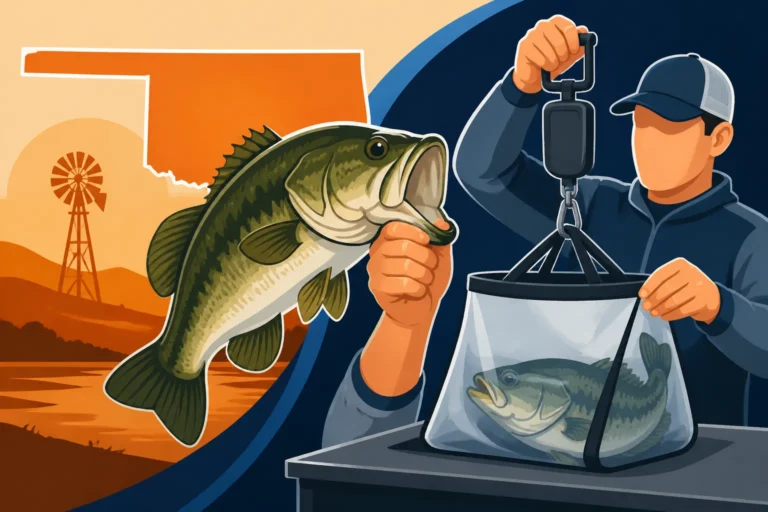
Getting your measurements right is absolutely essential to avoid breaking the rules. A game warden isn't going to accept "close enough" as an excuse. When measuring a catfish, you should measure its total length. This means laying the fish flat and measuring from the tip of its snout (with its mouth closed) to the very end of its tail, with the tail compressed to give you the longest possible measurement. Don't measure along the curve of the fish's body; always aim for a straight line. Many anglers keep a soft measuring tape or a rigid bump board on their boat or even on an item from Amazon, specifically for this purpose. A proper measurement tool ensures accuracy and peace of mind. It’s a good habit to measure every fish you’re considering keeping, especially when dealing with species that have length limits, like the blue catfish.
Real-World Scenarios with the 30-Inch Rule
Let's walk through a couple of hypothetical situations to really cement this rule:
Scenario 1: The Trophy Hunt
You're out on Lake Eufaula, specifically targeting giant blue catfish. You catch a beautiful blue cat that measures 32 inches. You're thrilled! You decide to keep it. This fish immediately counts as your "one over 30 inches" for the day. You can still catch and keep up to 14 more forked-tail catfish (blue or channel) as long as none of those subsequent blue catfish are 30 inches or longer. If your next blue cat is 29 inches, great! Keep it. If it's 31 inches, you must release it because you've already kept your one fish over 30 inches.
Scenario 2: Mixed Bag Day
You're enjoying a diverse fishing day on Fort Gibson Lake. You catch 8 nice channel catfish, all around 18-20 inches. You then hook into a monster blue catfish that stretches the tape to 34 inches. You decide to keep it. Now, you have 9 fish total (8 channel cats + 1 blue cat over 30 inches). You still have 6 spots left in your 15-fish combined limit. However, you cannot keep any more blue catfish that are 30 inches or longer. You can still keep 6 more forked-tail catfish, which could be channel catfish or blue catfish under 30 inches. Understanding these nuances is crucial for staying compliant.
Navigating Catfish Regulations on Shared Waters and Different Species
Oklahoma is blessed with some incredible waters, some of which are shared with neighboring states, like Lake Texoma with Texas. These shared waters can introduce additional layers of complexity to fishing regulations. Furthermore, while we've focused on blue and channel catfish, it's important to remember that not all catfish are created equal in the eyes of the law; flathead catfish, for instance, have their own distinct rules.
Catfish Rules on Border Lakes Like Texoma
Lake Texoma is probably the most famous example of a shared waterbody, straddling the border between Oklahoma and Texas. When fishing on Texoma, you need to be aware of the reciprocal agreement between the two states. Generally, if you possess a valid fishing license from either Oklahoma or Texas, you can fish the entire lake. However, the bag and length limits you must adhere to depend on the state in which you are licensed. For example, if you're an Oklahoma resident fishing on Texoma with an Oklahoma license, you must abide by Oklahoma's catfish regulations, even if you're on the Texas side of the lake. The same applies to Texas residents with a Texas license. It's vital to know your license state and its specific rules before you head out, especially if you're crossing state lines regularly. Always confirm current reciprocal agreements, as they can sometimes change. You might find our article on Texas Anglers Fishing in Oklahoma Waters helpful here.
Flathead Catfish: A Separate Species with Different Rules
While blue and channel catfish are grouped for their combined 15-fish limit, flathead catfish are managed entirely separately. Flatheads are a distinct species with different growth patterns and ecological roles. For flathead catfish, Oklahoma typically has a much more conservative daily bag limit, often set at 10 fish per day, and sometimes specific length limits or slot limits may apply depending on the body of water. For example, the Arkansas River might have different rules than a small local pond. It’s imperative not to mix flathead catfish into your forked-tail catfish count. They have their own category! Always consult the current Oklahoma Fishing Regulations Guide – available online through the ODWC website or in print at most sporting goods stores – before you fish, especially if you plan to target flatheads. Understanding the differences between Channel Catfish vs Blue Catfish vs Flathead Catfish in Oklahoma can save you a lot of grief.
Why Knowing Your Catfish Species Matters
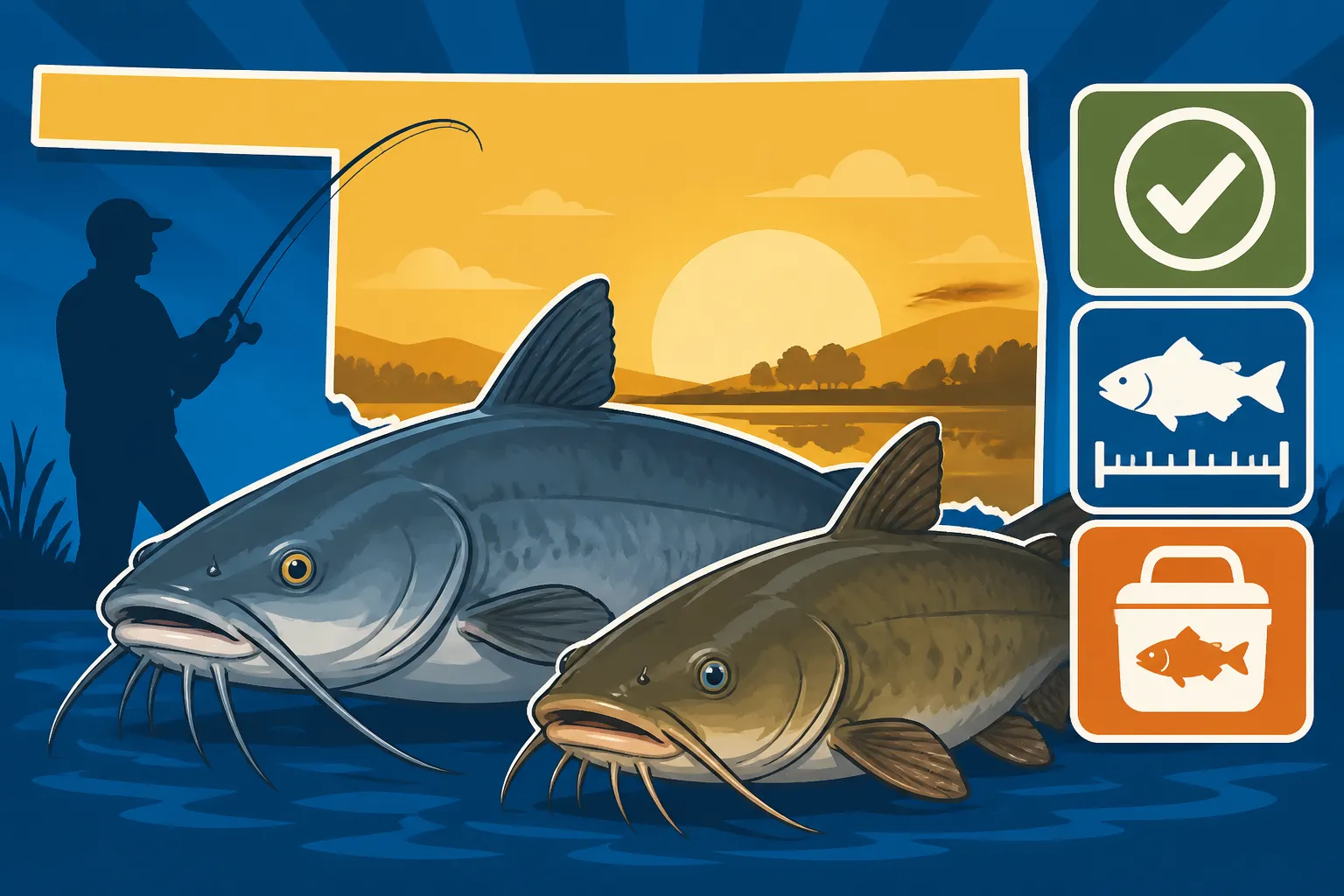
Accurate species identification is not just a point of pride; it's a legal requirement. Misidentifying a flathead catfish as a channel catfish, for instance, could lead to inadvertently exceeding the flathead limit or misunderstanding a specific regulation. While blue and channel catfish are often confused, especially when small, they do have distinguishing features. Blue catfish typically have a more forked tail, a humped back, and often lack the spots that young channel catfish exhibit. Channel catfish tend to have a more rounded head and a distinct, deep fork in their tail, with scattered dark spots, particularly when juvenile. Flathead catfish are easily identified by their broad, flattened heads, lower jaw that protrudes beyond the upper jaw, and a square or slightly rounded tail, which is never deeply forked. Taking the time to learn these identification cues, perhaps even by looking up a quick guide on your phone via an Amazon-purchased waterproof case, will make you a more confident and responsible angler.
Here's a quick reference table to help visualize the statewide rules:
| Catfish Species | Statewide Daily Bag Limit | Length Restriction | Notes |
|---|---|---|---|
| Blue Catfish | 15 (combined with Channel) | Only 1 over 30 inches | Large breeders protected |
| Channel Catfish | 15 (combined with Blue) | None (statewide) | No specific length limit statewide |
| Flathead Catfish | 10 | Varies by waterbody (check regs) | Managed separately; distinct tail |
Note: Always double-check current year's ODWC regulations, as rules can change.
Remember, these regulations are put in place not to make your fishing trip harder, but to ensure that Oklahoma's incredible fishing opportunities remain vibrant and productive. By understanding and respecting these rules, we all contribute to a healthier fishery for everyone. Happy fishing, and may your lines be tight!
Disclaimer
The information provided in this guide is for general informational purposes only and is based on typical Oklahoma fishing regulations. Fishing regulations can change frequently and may vary by specific waterbody, season, or other factors. It is the responsibility of every angler to consult the most current Oklahoma Fishing Regulations Guide published by the Oklahoma Department of Wildlife Conservation (ODWC) before engaging in any fishing activity. Always verify specific rules, bag limits, and length restrictions for your chosen fishing location and species. Non-compliance with fishing regulations can result in fines and penalties.