Entering a Bass Tournament on an Oklahoma Lake
Getting ready for your first bass tournament on an Oklahoma lake can feel like stepping into a whole new world of regulations, unwritten rules, and high-stakes angling. It's easy to get overwhelmed trying to figure out what licenses you need, what the specific lake limits are, or even where to find tournaments that fit your skill level. This guide is here to untangle all that confusion, walking you through everything from the essential paperwork to the gear you'll need, and how to successfully register and compete in a bass tournament right here in our great state.
Understanding the Basics: Licenses, Regulations, and Tournament Formats
Before you even think about casting a line in a competitive setting, you absolutely need to have your ducks in a row regarding licenses and understanding the rules of the game. It’s not just about what you catch, but how you catch it, and ensuring you’re doing it legally and ethically.
Essential Fishing Licenses and Permits
First and foremost, you cannot fish in Oklahoma without the proper licensing, and that goes double for any competitive event. Even seasoned anglers sometimes forget to check their expiration dates, and a game warden doesn't care if you're in the middle of a tournament – a missing license is a missing license. You’ll need a valid Oklahoma fishing license. If you're an Oklahoma resident, you'll be looking at options like the annual resident license, which is a fantastic value for year-round fishing. Non-residents, of course, have different options, including annual or temporary licenses.
Beyond the basic fishing license, some tournaments or certain areas might require additional permits. It's crucial to check with the tournament director or the Oklahoma Department of Wildlife Conservation (ODWC) regulations before you head out. Don't assume your general license covers everything, especially if you're fishing a unique body of water or targeting a specific species during a certain time. Always make sure to understand all Fishing License Requirements in Oklahoma before you hit the water. It’s a small step that prevents a huge headache and potential disqualification. If you're new to the state or just unsure, you can find out How to Get a Fishing License in Oklahoma online or at various vendors.
Navigating Statewide and Lake-Specific Bass Limits
This is where things can get a little tricky, and it's where many anglers, especially those new to tournaments, can make mistakes. Oklahoma has a statewide bass bag limit, which is typically six black bass (largemouth, smallmouth, or spotted bass in any combination) with specific size restrictions, like only one bass over 16 inches being allowed. However, and this is a big however, many lakes, particularly those known for their trophy bass fisheries, have special regulations that supersede the statewide rules. For example, a lake might have a slot limit, meaning you can only keep fish below a certain size and above another, with a protected slot in the middle.
It's your responsibility as an angler to know these specific rules for the body of water you'll be fishing. Tournaments will often adhere strictly to these lake-specific regulations, and sometimes even impose their own, slightly different ones for the competition itself, particularly concerning culling (replacing a smaller fish with a larger one). Always check the official ODWC regulations for the specific lake or river system you’re fishing, then double-check the tournament rules. Miscounting your fish or keeping an undersized or oversized bass could lead to immediate disqualification, or worse, a citation. This is a critical point covered in more detail in our guide on Oklahoma's Bass Fishing Rules and Limits and specifically about the Oklahoma Statewide Bass Bag Limit Explained.
Common Tournament Formats and Rules
Bass tournaments come in a few different flavors, each with its own quirks and rules. Understanding the format before you enter is key to developing your strategy and knowing what to expect on tournament day.
- Catch-and-Release: Most modern bass tournaments are catch-and-release, emphasizing the health of the fishery. Fish are typically placed in a livewell, brought to the weigh-in, measured/weighed, and then released. Maintaining the health of your catch is paramount, and many tournaments have penalties for dead fish. This is where a good livewell system comes into play.
- Big Bass vs. Total Weight: Some tournaments focus solely on the single heaviest bass caught by an individual or team (Big Bass tournament), while others focus on the cumulative weight of your legal limit of fish (e.g., your five heaviest bass for a five-fish limit). Knowing which one you're entering will dictate your approach. Are you swinging for the fences for one giant bite, or trying to consistently catch a limit of solid keepers?
- Team vs. Individual: You might fish solo, or as part of a two-person team. Team events often involve one angler operating the boat and the other focusing more on fishing, but both contribute to the team's total weight. Communication and coordination are vital in team tournaments.
- Time Limits and Boundaries: Every tournament will have strict start and end times, often with penalties for being late to weigh-in. There will also be defined boundaries, meaning you can't fish outside a certain area of the lake or river. Disregarding these rules is an immediate path to disqualification. Be sure to familiarize yourself with Tournament Angler Rules in Oklahoma to avoid any surprises.
Preparing Your Gear and Boat for Competition
Your success in a bass tournament isn't just about finding the fish; it's also about being prepared with the right equipment and ensuring your boat is up to snuff. Competition demands a higher level of readiness than your casual weekend outing.
Tournament-Ready Boat and Livewell Systems
If you're fishing from a boat, it needs to be more than just seaworthy. Tournament fishing places specific demands on your vessel, especially when it comes to keeping your precious cargo—the fish—alive and healthy until weigh-in. A good livewell system is non-negotiable. This isn't just a tub of water; it needs to be aerated, recirculated, and ideally, insulated to maintain a stable water temperature. Many tournament boats, like those from Ranger Boats or Bass Cat, come equipped with advanced livewell systems that can dramatically increase the survival rate of your catch.
You’ll want to check that your aerators are working perfectly, that all pumps are functioning, and that you have a reliable way to add fresh water and remove old water. Having an oxygenation system can be a huge advantage, especially on hot summer days. Consider additives like "Rejuvenade" or "Please Release Me" that help reduce stress on fish. Beyond the livewell, ensure your boat’s safety equipment is in order – proper lighting, a working kill switch, fire extinguisher, and all required personal flotation devices. Don't forget to review Oklahoma Boat Registration and Titling Rules Explained to ensure your vessel is fully compliant before you even think about tournament day. For more insights on this specific piece of equipment, check out our article on the Best Livewell Setup for Bass Tournaments.
Essential Rods, Reels, and Lures for Tournament Bass
Tournament anglers often carry a daunting array of rods and reels, each rigged for a specific technique or lure. While you don't need a boat full of gear for your first tournament, having a versatile selection is critical.
- Rods: You'll want a mix of casting and spinning rods, with different lengths and powers. For example, a heavy-action casting rod is great for flipping jigs into thick cover, while a medium-heavy rod might be better for throwing crankbaits or spinnerbaits. A medium-light spinning rod could be perfect for finesse techniques with lighter lines. You can find excellent options on Amazon from brands like St. Croix or Ugly Stik. For deeper dives, check out our guide on the Best Rod for Largemouth Bass Fishing.
- Reels: Pair your rods with appropriate reels. High-speed baitcasting reels are excellent for quickly retrieving slack or setting the hook, while slower gear ratios are better for power techniques. Smooth spinning reels are a must for finesse presentations.
- Lures: This is where personal preference and local knowledge really shine. You'll want a selection of confidence baits that have produced for you in the past, but also a variety of lures to match different conditions.
- Moving Baits: Crankbaits (deep and shallow divers), spinnerbaits, chatterbaits, and swimbaits are great for covering water quickly and finding active fish.
- Finesse Baits: Worms (Texas rig, Carolina rig), Senkos, drop-shot rigs, and small jigs are crucial when the bite is tough or fish are pressured.
- Topwater: Frogs, poppers, and walking baits can be deadly during low-light conditions or when fish are feeding on the surface.
- Jigs: Flipping and pitching jigs are staples for targeting cover.
Always bring plenty of extra line, hooks, weights, and soft plastics. You never know when you'll snag a lure or break a line.
Electronics and Navigation for Competitive Edge
Modern bass fishing is heavily reliant on electronics, and in a tournament setting, they become even more critical. Your fish finder isn't just for locating fish; it's for finding structure, depth changes, baitfish, and thermoclines that hold bass.
- Sonar/Down Imaging/Side Imaging: A good unit from brands like Humminbird or Lowrance will give you a detailed picture of what's beneath and around your boat. Side imaging, in particular, can help you scout vast areas quickly, revealing submerged timber, rock piles, or old roadbeds that might hold fish.
- GPS and Mapping: Integrated GPS with detailed lake maps is invaluable. You can mark waypoints where you caught fish, identify contour lines, and navigate safely, especially in unfamiliar waters or during early morning low light. This also helps ensure you stay within tournament boundaries.
- Trolling Motor: A powerful, reliable trolling motor, often with GPS-guided features like "spot-lock" (which holds your boat in place automatically), is a huge advantage. It allows for precise boat positioning, stealthy approaches, and hands-free fishing when you're working a specific piece of structure. Many anglers rely on Minn Kota or MotorGuide models.
Practicing with your electronics before the tournament will give you a significant edge. Knowing how to read your screen quickly and efficiently can mean the difference between finding a school of fish and just passing over them. Many tournament anglers spend hours learning to interpret their sonar readings.
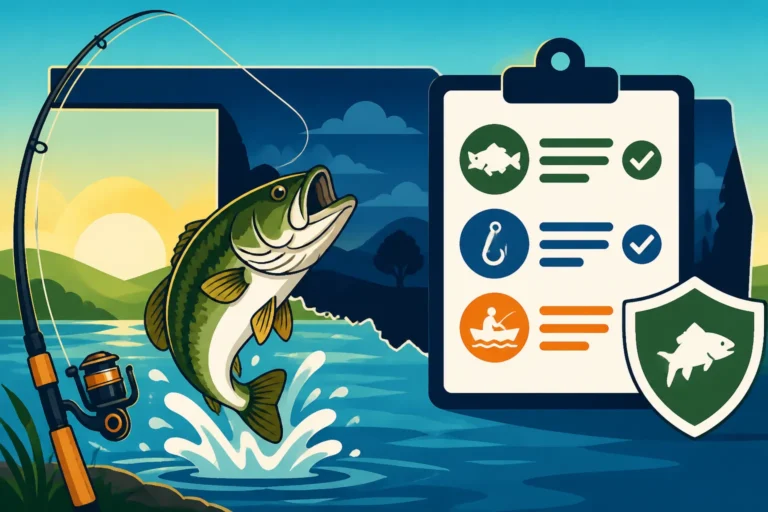
| Pre-Tournament Essentials Checklist | Notes |
|---|---|
| Valid Oklahoma Fishing License | Non-negotiable. Check expiration date! |
| Lake-Specific Regulations & Tournament Rules | Print out or save to your phone. Understand all limits and special conditions. |
| Tournament Entry Fee | Paid in advance or at registration. |
| Well-Maintained Boat & Trailer | Check tires, lights, engine, and all safety gear. |
| Fully Functional Livewell System | Aerators, pumps, fresh water, and fish care additives are essential for live release. |
| Diverse Rod & Reel Selection | Appropriate setups for various techniques and lures. |
| Wide Array of Lures & Baits | Confidence baits, plus options for different conditions (topwater, deep divers, jigs, soft plastics). Don't forget spare hooks and weights. |
| Reliable Electronics | Fish finder (sonar, side imaging), GPS with updated maps. |
| Charged Batteries | For boat, trolling motor, and electronics. |
| Safety Gear | Life jackets (PFDs for all on board, worn by those 12 and under, and those on plane), throwable device (Type IV for boats >16ft), fire extinguisher, first aid kit, horn/whistle, kill switch lanyard. |
| Snacks, Drinks, Sunscreen | Long days on the water require fuel and protection. |
| Rain Gear & Warm Clothing | Weather in Oklahoma can change fast! |
| Cull Tags or Marker Buoys | For keeping track of your limit and culling efficiently. |
| Weigh-In Bag/Bruma | Often provided by the tournament, but good to have your own sturdy one. |
| Net | A good, rubberized net for landing fish quickly and safely. |
Finding and Registering for Oklahoma Bass Tournaments
So you've got your gear ready and your regulations memorized. Now comes the exciting part: finding a tournament and officially entering the fray. Oklahoma has a vibrant tournament scene, from small local clubs to major national circuits.
Discovering Local and Major Tournament Trails
Oklahoma is a hotspot for bass fishing, which means there's no shortage of tournaments. You can usually find a tournament happening almost every weekend on one of our major reservoirs like Lake Texoma, Lake Eufaula, or Grand Lake O' the Cherokees.
- Local Clubs: The best way to start is often with local bass clubs. These are typically smaller, more casual events, perfect for beginners to learn the ropes without the high pressure of a major circuit. Check local tackle shops, community boards, or even Facebook groups for "Oklahoma Bass Club" or "[Your City] Bass Fishing." Many local clubs will announce their schedules and invite non-members to fish as guests.
- Regional Trails: As you gain experience, you might look into regional tournament trails like the Oklahoma Bass Federation or local divisions of larger organizations such as the Bass Anglers Sportsman Society (B.A.S.S.) Nation or the Major League Fishing (MLF) Phoenix Bass Fishing League. These offer more competitive fields and larger payouts, usually requiring membership.
- Major Circuits: For the pros, there are the big leagues: the Bassmaster Opens, MLF Toyota Series, or even the prestigious Bassmaster Elite Series. These are typically for highly skilled, sponsored anglers, but it's inspiring to follow their events on our local lakes!
Many tournaments will post their schedules online. A quick search on Google for "Oklahoma bass tournaments" or checking websites like BassFan or the ODWC fishing reports can lead you to event calendars. Also, don't underestimate the power of word-of-mouth at local marinas and tackle stores. Stores like Academy Sports + Outdoors or even online retailers like Amazon often carry promotional materials for upcoming events. Best Bass Fishing Lakes Across Oklahoma can give you ideas on where to start looking for tournaments.
The Registration Process and Pre-Tournament Briefings
Once you've picked a tournament, the registration process is usually straightforward. For most local tournaments, you can register in person on the morning of the event, or sometimes the evening before. Larger trails will almost always require online pre-registration and payment well in advance. This helps them manage participant numbers and logistics.
- Entry Fees: Expect an entry fee. This varies widely from $50-$100 for local club events to several hundred dollars for larger regional tournaments. These fees typically cover administrative costs and contribute to the prize money.
- Waivers and Rules: You’ll need to sign waivers acknowledging the risks of competitive fishing. This is also where you'll receive a copy of the official tournament rules. Read these carefully. Don't skim. These rules will detail everything from eligible fish species, size limits (which may differ slightly from ODWC general rules for that lake), livewell requirements, designated fishing times, and specific launch/weigh-in procedures.
- Pre-Tournament Briefing: Many tournaments will hold a mandatory pre-tournament briefing, either the night before or early on tournament morning. This is your chance to hear any last-minute rule changes, safety instructions, or specific lake conditions from the tournament director. It's also a great opportunity to meet fellow anglers and get a feel for the competition. Pay close attention to these briefings; important details are often shared.
Weigh-In Procedures and Sportsmanship Expectations
The weigh-in is the climax of any bass tournament, but it's also a critical stage where sportsmanship and adherence to rules are paramount.
- Fish Care: As you approach the weigh-in, fish care is your absolute top priority. Many tournaments will have a designated area where you transfer your fish from your boat's livewell to a "weigh-in bag" or "bruma" filled with fresh, oxygenated water. Move quickly but gently to minimize stress on the fish.
- The Scale: You’ll bring your bag of fish to the weigh-in station. A tournament official will weigh your catch, announce the weight, and often measure your largest fish for a "Big Bass" prize. It's common practice for officials to quickly check the fish for any signs of tampering or foul play. Your fish are then usually immediately released back into the lake by tournament staff.
- Penalties: Be aware of penalties. Dead fish are almost always penalized, often with a weight deduction, to discourage negligent fish handling. Late arrivals to weigh-in will incur time penalties, or even disqualification.
- Sportsmanship: Finally, and perhaps most importantly, uphold good sportsmanship. Congratulate the winners, offer commiserations to those who had a tough day, and always treat fellow anglers and tournament officials with respect. Fishing tournaments are competitive, but they’re also a community. Building a reputation as a fair and respectful angler will serve you well in the long run. Even when you're targeting that trophy Largemouth Bass Fishing in Oklahoma: The Complete Guide, remember to prioritize ethical angling.
Disclaimer
Please note that fishing regulations, license requirements, and tournament rules can change. Always consult the official Oklahoma Department of Wildlife Conservation (ODWC) website and the specific tournament director for the most current and accurate information before planning your trip or entering a competition. This guide is for informational purposes only and does not constitute legal advice.