Do License Rules Change Between Rivers and Lakes in Oklahoma?
One of the most common head-scratchers for any angler venturing out in Oklahoma is figuring out if the rules change depending on whether you're casting a line into a placid lake or a winding river. It's a valid concern, because nobody wants to accidentally break a regulation, and the thought of having to learn entirely different sets of rules for every body of water can be daunting. This guide is here to untangle that confusion, offering a clear, comprehensive breakdown of how Oklahoma's fishing license rules apply across its diverse aquatic landscapes.
Understanding the Foundation: Oklahoma's Universal Fishing License Requirement
Before we dive into the nuances of rivers versus lakes, it’s crucial to understand the bedrock principle of fishing in Oklahoma: generally, if you're 16 or older and plan to fish, you need a license. This isn't some arbitrary bureaucratic hurdle; it's how the Oklahoma Department of Wildlife Conservation (ODWC) funds critical conservation efforts, fish stocking programs, and habitat restoration across the state. Think of it as your small contribution to ensuring there's plenty of fish for everyone, for generations to come.
The Statewide Mandate for Anglers
The most important takeaway is that your standard Oklahoma fishing license is generally valid statewide. This means whether you're dropping a line into the deep waters of Lake Texoma, navigating the currents of the Arkansas River, or exploring a small farm pond, that same piece of paper (or digital license on your phone) covers you. The license itself doesn't differentiate between still or moving water; it simply grants you the general privilege to fish in public waters. Many first-time anglers wonder, "Do I need a separate permit for each lake?" The answer is usually no, as your annual or short-term license covers the state's vast network of fishing opportunities.
However, a universal license doesn't mean universal rules. While your license grants you access, the specific regulations governing what you can catch, how many, and how big, absolutely can and do vary. This is where the real complexity comes in, and it's why keeping an eye on the ODWC's current regulations is paramount. We'll get into those specific variations shortly, but for now, rest assured that one general license is your golden ticket to virtually all public fishing spots. If you're unsure about the general requirements, our guide on Fishing License Requirements in Oklahoma can clarify who needs one and who might be exempt.
Who Needs a License and Who Doesn't
While the "16 and older" rule is a good baseline, there are some important exceptions and special categories that can save you money or prevent an unintentional violation. For instance, Oklahoma residents who are 65 or older can purchase a discounted Senior Lifetime Fishing License, a fantastic deal for those who love to fish into their golden years. There are also specific rules for kids, with those under 16 generally not needing a license to fish. This is a wonderful incentive for families to get out on the water, ensuring that our younger generation can experience the joy of fishing without an extra financial burden. Our article on Do Kids Need a Fishing License in Oklahoma? dives deeper into this topic.
Beyond age, certain other groups might have different requirements. For example, some land ownership rules or tribal exemptions might apply, though these are more specialized cases. It's always best to check the latest ODWC regulations or contact them directly if you fall into a unique category. For non-residents, the license requirements are similar but often come with different pricing structures, so if you're visiting from out of state, be sure to check the specific Nonresident Annual Fishing License Cost in Oklahoma.
Purchasing Your Oklahoma Fishing License
Getting your fishing license these days is incredibly convenient. You don't have to hunt down a specific office or store if you're short on time. The easiest way for most folks is to simply hop online to the ODWC's website. You can purchase your license there, print it out immediately, or keep a digital copy on your smartphone. This instant access is a lifesaver when you decide last-minute to hit the water. I often grab a new annual license while planning my spring trips, making sure I'm covered for the whole year.
If you prefer a more traditional route, or maybe you're out running errands and remember you need a license, you can still buy one at most sporting goods stores, bait shops, and even some Walmart locations across the state. These authorized vendors are usually well-versed in the different license types and can help you pick the right one. Before you head out, make sure you know what you need by reviewing the Oklahoma Fishing License Costs and Types. Many anglers find it handy to purchase things like fishing line or tackle from Amazon and then swing by a local store for their license and some fresh bait.
Specific Rules and Exceptions for Rivers and Streams
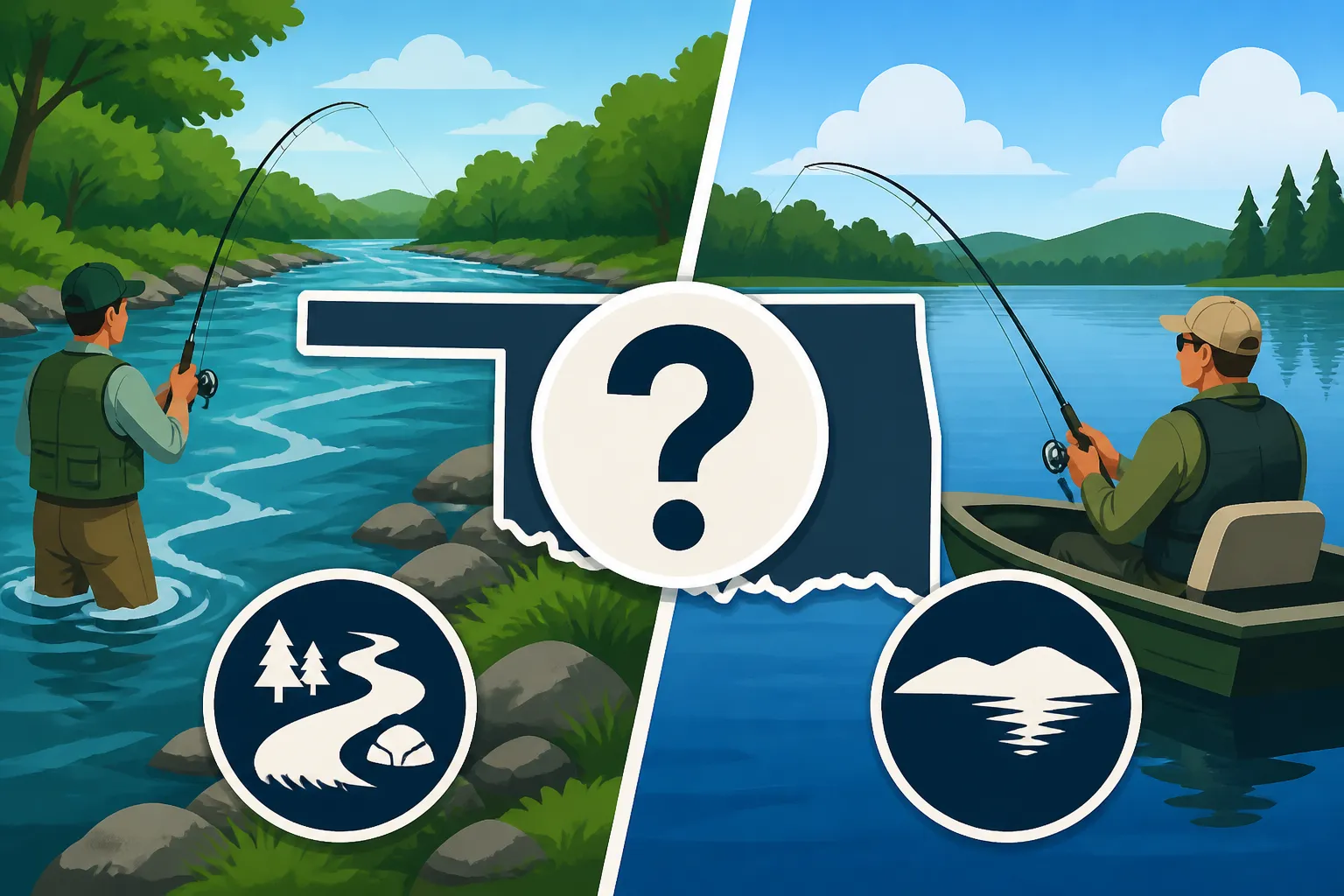
While your fishing license itself doesn't change from a river to a lake, the specific bag limits, size restrictions, and sometimes even methods of take can absolutely vary. Rivers and streams, with their dynamic environments and often smaller fish populations, sometimes have more restrictive rules designed to protect these unique ecosystems.
General Regulations for Flowing Waters
When you're fishing in a river or stream, the general statewide bag and size limits usually apply, but it's critical to be aware of any local variations. For instance, while a lake might have a more liberal bass limit, a specific stretch of river could have a reduced daily creel or a higher minimum size to protect spawning fish or encourage growth of larger individuals. This is often done to manage pressure on easily accessible areas or to conserve species that are particularly vulnerable in flowing water, like certain trout populations in designated trout streams.
River systems are also home to species like paddlefish and various catfish that have their own specific regulations. Paddlefish snagging, for example, is highly seasonal and often restricted to certain areas of major river systems like the Grand River. Catfish, particularly blue and channel catfish, are abundant in many Oklahoma rivers, but their limits, especially for trophy-sized blues, can have nuanced rules that differ slightly from still water bodies. Always check the Oklahoma's Catfish Fishing Rules and Limits before you head out.
Special Considerations for Border Rivers
One of the trickiest aspects of river fishing in Oklahoma is when those rivers form a state border. The Red River, for example, delineates a significant portion of the border with Texas. This creates a fascinating but potentially confusing situation where anglers might be fishing in Oklahoma waters one moment and Texas waters the next. Typically, there are reciprocal agreements in place, meaning your Oklahoma license might be valid in certain parts of the border waters shared with Texas, and vice-versa for Texas anglers. However, these agreements usually come with conditions, such as obeying the regulations of the state whose waters you are physically fishing in, or sometimes even requiring a specific border waters permit.
It's absolutely essential to be aware of these reciprocal agreements. Fishing on the Red River can be fantastic, but getting caught with a Texas limit while holding an Oklahoma license on the wrong side of the imaginary line can lead to penalties. The ODWC website usually provides clear guidance on these shared water agreements. If you're a Texas angler contemplating a trip to the Red River, checking out information like Texas Anglers Fishing in Oklahoma Waters is a must-do before you cast a line.
Unique Species-Specific River Limits
Rivers often have unique management strategies for certain species, especially those that are highly migratory or have specific habitat needs tied to flowing water. Smallmouth bass, for example, are often found in clearer, rocky streams and rivers, and their size and bag limits can be more restrictive than those for largemouth bass found in lakes. The ODWC might implement "catch and release only" sections, or special slot limits that require anglers to release fish within a certain size range to protect breeding stock.
Another great example is the occasional stocking of rainbow trout in designated areas like the Lower Mountain Fork River below Broken Bow Lake or the Illinois River. These "trout streams" have their own specific seasons, bait restrictions, and limits that are entirely separate from the general statewide fishing regulations. It’s a completely different kind of fishing, and you’ll need to familiarize yourself with these unique rules if you plan to target trout. These specialized rules are a perfect illustration of how diverse Oklahoma's fishing opportunities are, but also how crucial it is to consult the specific rules for the water body you plan to visit.
Specific Rules and Exceptions for Lakes and Reservoirs
Lakes and reservoirs make up the vast majority of Oklahoma's angling opportunities, from massive bodies of water like Lake Eufaula to smaller, community fishing ponds. While your general license covers all these, specific regulations are often tailored to the unique ecology and fishing pressure of each individual lake.
Standard Lake Regulations You Should Know
For the most part, when you're fishing a lake or reservoir in Oklahoma, you'll be adhering to the statewide bag and size limits for common species like largemouth bass, crappie, and catfish. These are the "default" rules that apply unless a specific lake has been designated with its own, stricter regulations. This consistency makes it relatively easy for anglers moving between different lakes, as long as they are generally aware of the statewide baseline. Knowing Oklahoma's Bass Fishing Rules and Limits, for example, gives you a strong starting point for most of the state's popular bass fisheries.
However, even within these standard regulations, there can be nuances. Certain smaller lakes or community ponds, particularly those managed by cities or state parks, might have slightly different rules regarding methods of take (e.g., no trotlines, rod and reel only) or even specific hours of operation. These are typically posted clearly at the lake access points. Always take a moment to read any posted signs, as they often contain critical, localized information.
Lake-Specific Size and Bag Limit Variations
This is where the distinction between lakes really comes into play. To manage fish populations effectively, especially for popular species like crappie and bass, the ODWC often implements lake-specific regulations. You might find a lake where the crappie size limit is 10 inches and the bag limit is 15 fish, while a neighboring lake adheres to the statewide 37-fish limit with no minimum size. These variations are usually the result of biological assessments, aiming to protect spawning populations, reduce harvest pressure on smaller fish, or encourage the growth of larger, trophy-sized individuals.
Some of Oklahoma's most well-known lakes have these special regulations. For instance, Tenkiller Lake and Fort Gibson Lake are often cited as examples of lakes with specific crappie regulations that differ from the statewide standard. It’s absolutely essential to check the current regulations for the specific lake you intend to fish. A quick search on the ODWC website or a glance at the current fishing guide before you head out can save you a lot of grief. Our guide on Why Bag Limits Change From Lake to Lake gives more insight into these management decisions.
Here's a simplified table illustrating potential differences, but always consult the official ODWC regulations for the most current and accurate information for specific bodies of water:
| Feature | General Statewide Rule (Often Lakes) | Potential River/Stream Variations | Potential Lake-Specific Variations |
|---|---|---|---|
| Fishing License | Required (Age 16+) | Same | Same |
| Bass Bag Limit | 6 (Largemouth & Smallmouth combined) | May be reduced in specific river stretches | May have slot limits or reduced bag limits |
| Crappie Bag Limit | 37 (Black & White combined) | Generally same | May be reduced to 15 or 25 on certain lakes |
| Crappie Size Limit | None | Generally none | May be 10-inch minimum on certain lakes |
| Blue Catfish Limit | 15 (only one over 30 inches) | Similar, but trophy limits might be stricter | Similar, but trophy limits might be stricter |
| Paddlefish Snagging | Seasonal/Specific Locations | Often limited to major river systems (e.g., Grand River) | Typically not applicable |
| Trout | Stocked in specific "trout streams" | Specific seasons, limits, and bait rules | Typically not applicable |
| Reciprocity | No (unless border waters) | Critical for border rivers (e.g., Red River) | No |
Special Designated Water Bodies
Beyond general rivers and lakes, Oklahoma also has special designated water bodies that might have their own unique set of rules. This could include urban fishing programs in city parks, which are often stocked with catfish or trout and might have specific hours, tackle restrictions, or even different daily limits to accommodate high angler pressure. These ponds are fantastic for introducing kids to fishing, but you still need to be aware of their specific guidelines.
Another example would be certain private lakes or tribal lands, where permission might be required even if you hold a state license, or where entirely different sets of regulations apply. While your state license is for public waters, it's always wise to confirm access and rules if you're venturing onto less common fishing spots. You might find great local information on sites like Amazon about fishing techniques for these specific smaller ponds or even general guides to fishing in Oklahoma.
Why These Distinctions Matter for Anglers
Understanding the subtle differences in fishing regulations between rivers and lakes, and even between individual bodies of water, isn't just about avoiding a ticket. It's about being a responsible angler, contributing to conservation, and ensuring that our fishing resources remain healthy and abundant for everyone.
Avoiding Penalties and Fines
Let's be real, no one wants a run-in with a game warden. These dedicated professionals are out there to protect our wildlife and ensure fair play, and they take their job seriously. Getting caught fishing without a license, or exceeding a bag limit (especially on a lake with specific, stricter rules), can result in significant fines and even confiscation of your gear. The financial sting alone can be a real damper on a fun day out. Imagine catching a limit of crappie on Fort Gibson, where the limit is often reduced, only to realize too late you were operating under the statewide assumption. That "limit" could suddenly become an expensive lesson. For more details, refer to Penalties for Fishing Without a License in Oklahoma.
Beyond the fines, repeated violations can lead to suspension of your fishing privileges, which would be a true nightmare for any passionate angler. The rules are there for a reason, rooted in scientific fish management, and respecting them is part of being a good steward of Oklahoma's natural resources. It’s always better to be overly cautious and double-check than to assume and regret it later.
Resources for Staying Informed
Staying up-to-date on fishing regulations is easier than ever, thanks to modern technology. The absolute best resource is the official Oklahoma Department of Wildlife Conservation (ODWC) website. They publish an annual fishing guide that details all statewide regulations, as well as specific rules for individual lakes and rivers. This guide is usually available online as a downloadable PDF, or you can pick up a physical copy at most license vendors. I always keep a digital copy downloaded to my phone for quick reference on the water, even if I'm out of cell service.
Many local bait shops and sporting goods stores are also fantastic sources of information. The folks who work there are often avid anglers themselves and know the local waters like the back of their hand. Don't be shy about asking them about current conditions or specific lake rules. They might even recommend specific baits or techniques that are working well. You can often find popular fishing apps on your smartphone (available on platforms like Amazon) that integrate real-time regulation updates and maps, which can be incredibly helpful when exploring new waters. Always double-check any third-party app info against the official ODWC regulations, though!
Planning Your Trip with Regulations in Mind
The key to a successful and stress-free fishing trip in Oklahoma is planning. Before you even pack your tackle box, decide where you're going to fish, and then consult the current ODWC regulations for that specific body of water. If you're targeting a particular species, like crappie or bass, make sure you know the current bag and size limits for that location. This is especially important for lakes with special regulations, such as the Stricter Crappie Limits at Six Oklahoma Lakes.
Consider printing out the relevant page of the fishing guide or taking a screenshot of the specific rules on your phone. If you're planning a multi-species day, make a quick checklist of all the different bag and size limits you need to remember. This proactive approach not only keeps you compliant but also helps you plan your day more effectively, from knowing when to stop catching certain species to understanding what size of fish you can legally keep. By understanding that "Do License Rules Change Between Rivers and Lakes in Oklahoma?" usually means "Do the specific fish regulations change?", you're already ahead of the game! Our guide on Oklahoma's Bag Limit Rules by Species offers a fantastic overview to help with this planning.
Disclaimer
The information provided in this guide is intended for general informational purposes only and is not a substitute for the official Oklahoma Department of Wildlife Conservation (ODWC) fishing regulations. Regulations can change, so always consult the most current official ODWC fishing guide or website before engaging in any fishing activities.