Deep Water Striper Fishing Techniques
There's nothing quite like the thrill of chasing monster striped bass, but anyone who's spent a sweltering Oklahoma summer day on the lake knows these powerful fish don't always hang out in easy-to-reach spots. When the surface action dies down, finding those deep-water stripers can feel like solving a complex puzzle. This guide is all about equipping you with the knowledge and techniques to locate and land those elusive giants lurking in the cool, dark depths of our big Oklahoma reservoirs.
Understanding Oklahoma's Deep Water Striped Bass
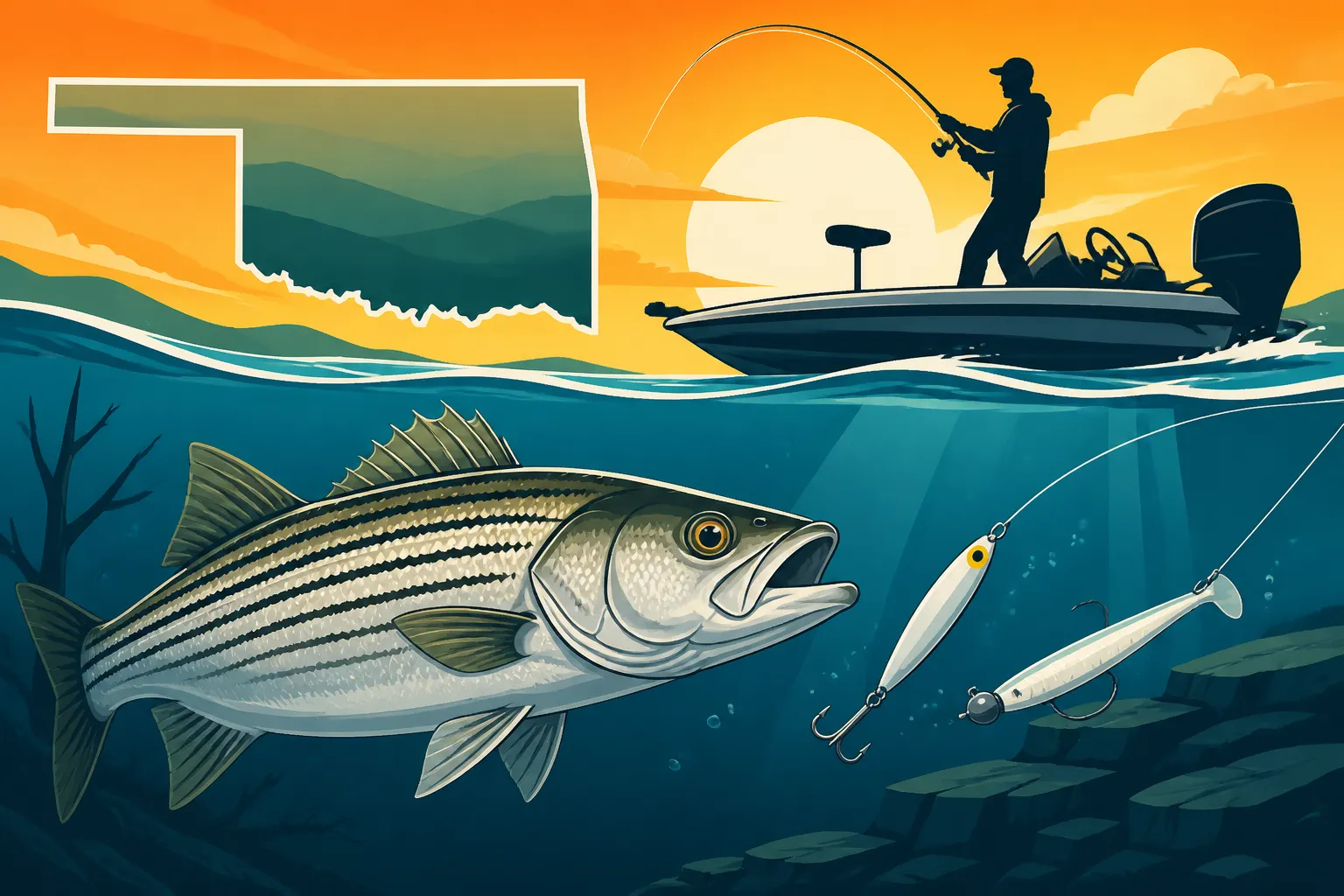
Striped bass, often called "stripers," are incredible sport fish that thrive in many of Oklahoma's larger reservoirs, particularly Lake Texoma. While they might be an introduced species, they've certainly made themselves at home, providing some of the most exciting fishing opportunities the state has to offer. But understanding their deep-water habits is key to consistent success, especially when conditions get tough.
Why Stripers Go Deep
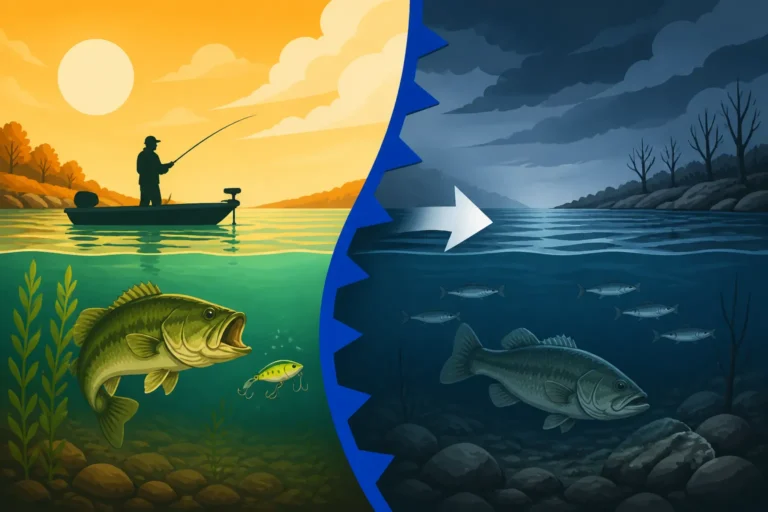
Stripers are cold-water fish at heart, even if they're forced to tolerate warmer surface temperatures in Oklahoma. As the surface waters heat up, especially during the long, hot summers, these fish will actively seek out cooler, more oxygenated water. This often means moving to deeper sections of the lake, sometimes 30, 50, or even 80 feet down, particularly in reservoirs like Lake Texoma, Keystone Lake, or Lake Eufaula. They're not just looking for comfort; they're following their forage. Shad, their primary food source, will also move to these thermocline layers where cooler water meets warmer water, creating a prime feeding zone.
It's a common misconception that stripers disappear in summer; they simply relocate. The transition can be gradual, often starting in late spring or early summer, and they'll stay deep until the fall cool-down. This makes deep-water fishing a year-round necessity for serious striper anglers, not just a summer technique. Knowing that they must go deep for survival, not just preference, changes your whole approach to finding them.
Key Deep Water Striped Bass Habits
When stripers are deep, they tend to school up much more tightly than their shallow-water counterparts. These schools can be massive, sometimes hundreds of fish, and they often relate to specific underwater structures. We're talking about old creek channels, humps, ledges, submerged roadbeds, and even standing timber that creates ambush points. They'll use these features to their advantage, waiting for schools of shad to pass by overhead or funnel through a natural choke point.
Understanding "Oklahoma's Striped Bass: An Introduced Species Guide" is helpful here, as it gives context to their behavior. These fish are constantly on the hunt, even in deep water. They might suspend over vast open water following bait, or they could be tight to the bottom in a channel. Their movements are largely dictated by baitfish and optimal water temperatures. Monitoring your electronics carefully becomes paramount to identifying these deep-water havens and active feeding schools. They are powerful, migratory predators, and even when deep, they are always looking for an easy meal.
Essential Gear for Deep Water Striper Success
Trying to fish for deep-water stripers with a light bass rod and a handful of shallow-running crankbaits is like bringing a spoon to a knife fight. You need specialized gear that can handle the heavy weights required to get down to the fish, the powerful strikes of a large striper, and the drag of fighting a fish from significant depths. Investing in the right tools makes all the difference, transforming frustration into successful hookups.
Rods, Reels, and Line for the Depths
For deep-water striper fishing, you'll want a stout rod, typically in the medium-heavy to heavy power range, and 7 to 8 feet in length. This provides the backbone needed to haul in a big fish and handle heavy sinkers or deep-diving lures. Many anglers prefer a fiberglass rod for its parabolic bend, which helps absorb the shock of a striper's powerful runs and reduces the chance of pulling the hook. Ugly Stik rods, available on Amazon, are a popular, durable choice known for their strength and sensitivity.
Pair that with a sturdy conventional reel, often called a baitcaster or trolling reel, capable of holding a lot of line and delivering immense cranking power. Look for models with a high-quality drag system that can withstand sustained pressure. Line capacity is crucial; these fish can make long runs, and you don't want to get spooled. Spool up with 20-30 lb monofilament or, even better, 30-65 lb braided line. Braid offers superior sensitivity, minimal stretch, and a thinner diameter for its breaking strength, allowing your baits to get deeper with less weight. A fluorocarbon leader of 30-50 lb test is often added for abrasion resistance and invisibility. If you're wondering which specific models to choose, check out articles like "Best Reels for Oklahoma Striped Bass Fishing" for detailed recommendations.
Baits and Lures That Reach the Bottom
Getting your offering into the striper's strike zone is the biggest challenge in deep water. This means heavy lures, specialized rigs, or a combination of both. When natural bait is the preferred choice, live gizzard shad or threadfin shad are king. These can be fished on a Carolina rig with a heavy weight (2-4 ounces or more, depending on depth and current) or on a downline with just enough weight to keep them in the strike zone directly below the boat.
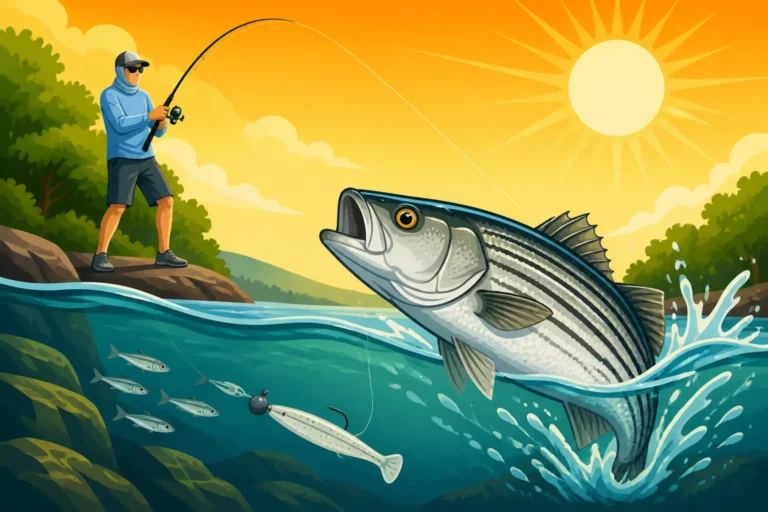
For artificials, vertical jigging spoons are incredibly effective. Heavy metal spoons, like a 2-ounce Sassy Shad spoon or a 3-ounce Kastmaster, dropped directly onto fish you see on your sonar, can trigger aggressive bites. Deep-diving crankbaits are another excellent option, especially for trolling. Look for lures like a Bomber Long A or a Rapala Down Deep Husky Jerk that are designed to dive 20-30+ feet on their own, and then consider adding additional weight to get them even deeper. Umbrella rigs, which mimic a school of baitfish, are also deadly when trolled at depth. Don't forget the power of soft plastics on heavy jig heads; a large swimbait fished vertically can be irresistible.
The Importance of Sonar and Electronics
You simply cannot consistently catch deep-water stripers without reliable electronics. Your fish finder isn't just a luxury; it's your eyes underwater. A quality unit with Down Imaging, Side Imaging, and traditional 2D sonar is invaluable. This technology allows you to pinpoint schools of baitfish, identify striper arches or blobs, and locate crucial underwater structure that holds these fish. Knowing "How to Find Striped Bass Schools with Sonar" is a game-changer for deep-water fishing.
Modern fish finders, even those available on Amazon, come packed with features like GPS mapping, which lets you mark waypoints on productive spots, follow contour lines, and even log your troll paths. Having a clear, high-resolution screen will make it much easier to differentiate between a school of shad and a tight ball of feeding stripers. Furthermore, understanding how to adjust your sensitivity, gain, and frequency settings for different depths and conditions is crucial for maximizing your screen's effectiveness.
Advanced Techniques for Deep Water Striper Fishing
Once you have the right gear and can "see" the fish, it's time to deploy techniques that effectively present your bait or lure in the deep-water strike zone. This isn't just about dropping a line; it's about precision, control, and understanding how to tempt a fish that might be 70 feet below the boat.
Vertical Jigging and Spooning
Vertical jigging is one of the most exciting ways to catch deep-water stripers. Once you've located a school of fish on your sonar, position your boat directly over them. Drop a heavy jigging spoon or a weighted soft plastic lure straight down into the school. The trick is to let it hit the bottom, then snap your rod tip up sharply about 2-3 feet, letting the lure flutter back down on a semi-slack line. Most strikes happen on the fall, so pay close attention to any twitch in your line.
This technique is incredibly active and requires constant vigilance of your sonar. If the fish are suspended at 40 feet, you'll want to stop your lure at 40 feet and work it within that column. If they're on the bottom, bounce it off the bottom. Experiment with different jigging cadences—fast and aggressive, or slower and more subtle. Sometimes a dying flutter is what seals the deal. The minimal line stretch of braided line is a huge advantage here, transmitting every subtle bite directly to your hands.
Downrigging and Planer Boards
For those vast stretches of open water where stripers are suspending, downrigging and using planer boards become indispensable. Downriggers are mechanical devices that deploy a heavy weight (cannonball) on a cable, allowing you to send your lure or bait down to a precise depth, often 30-100+ feet, while trolling. Your fishing line is temporarily clipped to the downrigger cable, and when a fish strikes, the line pops free, allowing you to fight the fish directly without the weight. This is a highly efficient way to cover water at specific depths.
Planer boards, on the other hand, are designed to spread your lines out horizontally from the boat, covering a wider swath of water. While often used for shallower trolling, large planer boards can be combined with heavy weights or deep-diving lures to get baits down and away from the boat's disturbance. This combination allows you to target different depths and widths simultaneously, maximizing your chances of hitting an active school. These methods are a staple when pursuing "Striped Bass Trolling Techniques".
Trolling Deep-Diving Baits
Trolling with deep-diving crankbaits is another highly effective strategy for deep-water stripers, especially when they are spread out or suspending in the middle of the water column. These lures are designed with large bills that force them to dive aggressively when pulled through the water. By selecting lures rated to reach depths of 20, 30, or even 40 feet, you can effectively present a bait in the striper's zone.
For even greater depths, many anglers will "lead" their deep-diving crankbaits with additional weight. This could be a snap-on weight a few feet in front of the lure, or a three-way swivel rig with a dropper weight. The key is to experiment with trolling speed, line length, and lure choice to find the perfect combination that puts your bait right in front of the fish you're marking on your sonar. Keep in mind that when you're trolling, particularly with heavy weights, a "Trolling Motor Setup for Oklahoma Striped Bass" optimized for speed and battery life will be extremely beneficial.
Reading the Water and Sonar for Striped Bass
Modern electronics are incredible tools, but they're only as good as the angler interpreting the information. Becoming proficient at reading your sonar and understanding the nuances of the water column will vastly improve your deep-water striper success. It’s about more than just seeing fish; it’s about understanding their behavior.
Interpreting Sonar Displays
A clear understanding of your fish finder is absolutely paramount. On a traditional 2D sonar screen, stripers often appear as distinct arches or, when tightly schooled, as a large, dense blob. Baitfish, typically shad, will show up as smaller, cloud-like masses. The key is to look for larger, more defined returns within or below these bait balls. An isolated arch slightly below a school of shad is often a striper lurking for an ambush. If you see multiple large arches grouped together, you've likely found an active feeding school.
Down Imaging and Side Imaging provide different, yet equally valuable, perspectives. Down Imaging gives you a photographic-like view directly below your boat, making it easier to distinguish fish from structure. Side Imaging allows you to scan wide areas to either side of your boat, revealing schools and structure that you might have otherwise passed over. This is particularly useful for locating deep channels, humps, or rock piles away from your direct path. Learning to adjust color palettes and sensitivity can make these images even clearer, helping you identify structure like submerged timber or rocky ledges where stripers often congregate.
Finding Structure and Schools
Deep-water stripers are intimately tied to structure and current breaks. They'll relate to channel edges, especially where a creek channel meets the main lake basin. Humps and ledges provide natural ambush points, allowing them to rise up and attack passing baitfish. Don't overlook submerged timber or brush piles, which can also hold concentrations of stripers. Use your GPS to mark these spots when you find them.
The best way to find these holding areas is by systematically cruising with your Side Imaging. If you're on Lake Texoma or Grand Lake O' the Cherokees, start by looking at contour maps to identify promising areas—points dropping into deep water, creek channels, or sharp breaks. Then, slowly motor through these areas, watching your sonar for structure and baitfish. When you locate a school of stripers, especially if they appear active (chasing bait), mark a waypoint immediately. This allows you to return to the precise location for vertical jigging or to set up a trolling pass. Think of it as painting a picture of the underwater landscape as you move.
Seasonal Considerations for Deep Water Striper
While deep water becomes the primary habitat for stripers in summer, their exact behavior and location can still shift with the changing seasons. Understanding these patterns allows you to refine your approach and be in the right place at the right time.
Summer Heat and Deep Water Retreat
As mentioned, summer is prime time for deep-water striper fishing. Once water temperatures consistently climb above 75-80 degrees Fahrenheit, stripers will move to the cooler, deeper parts of the lake. This migration is predictable, and serious anglers prepare for it. They'll often seek out the deepest available water in the main lake basins, or concentrate around deep channels. You might find them suspended over 80 feet of water, but only 30-40 feet down, if that's where the thermocline and bait are located.
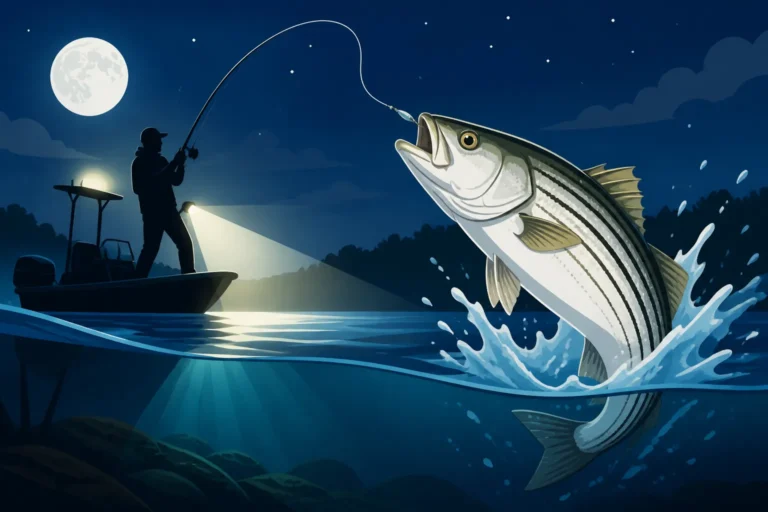
During the hottest months, fishing early in the morning, late in the evening, or even at night can be particularly effective. While they remain deep, periods of lower light can bring them slightly shallower in the water column or make them more aggressive. It's a critical time to be precise with your depth control. Articles like "Lake Texoma May Striper Fishing in Oklahoma" highlight how these fish transition into their deep-water patterns as summer approaches, and getting ahead of this movement can be very rewarding.
Winter's Deep Water Opportunities
Don't hang up your deep-water gear when the weather turns cold! Winter can offer some of the best deep-water striper fishing of the year in Oklahoma. As surface temperatures drop, the entire water column becomes more uniform in temperature. Stripers will still relate to structure, often congregating in deep creek channels, river bends, or around large humps. They might not be as active or aggressive as in warmer months, but they are often tightly schooled and relatively easy to locate on sonar.
The key to winter deep-water fishing is a slower presentation. Vertical jigging spoons still work, but a slower, more deliberate lift-and-fall might be more effective. Live bait, such as shad or large shiners, fished slowly on a Carolina rig directly into a deep school, can be deadly. While the fish might be lethargic, finding a large school often guarantees multiple hookups. Understanding "How Water Temperature Affects Fishing Timing in Oklahoma" is especially important in winter, as even small temperature differences can concentrate fish.
Safety and Regulations for Deep Water Striper Anglers
Fishing deep water, especially on large reservoirs, comes with its own set of challenges and responsibilities. Safety should always be your top priority, and understanding Oklahoma's fishing regulations is crucial for a legal and enjoyable outing.
On-Water Safety Essentials
Fishing on large, open bodies of water like Lake Texoma or Keystone Lake means you're dealing with potential hazards. Weather can change rapidly, and large waves can make navigation difficult. Always check the forecast before heading out and be prepared to cut your trip short if conditions deteriorate. Make sure your boat is in excellent working order, including your engine, battery, and safety equipment.
Every boater should have all required safety gear on board, as detailed in the "Oklahoma Boat Safety Equipment Checklist". This includes U.S. Coast Guard-approved life jackets for everyone on board – and remember, "Life Jacket Rules for Kids 12 and Under on Oklahoma Boats" are particularly strict, requiring them to wear a PFD at all times while underway. You'll also need a throwable flotation device, a sound-producing device (like a horn or whistle), navigation lights if you're out at dawn, dusk, or night, and a fire extinguisher. Furthermore, always tell someone your float plan—where you're going and when you expect to return. Mobile phone service can be spotty on some parts of our big lakes, so a VHF marine radio can be a lifesaver.
Understanding Bag Limits and Rules
Oklahoma has specific regulations for striped bass, and these can sometimes vary between different lakes, particularly on border waters like Lake Texoma. For example, while the statewide daily bag limit for striped bass (and striped bass hybrids) is often 20 fish, with only 5 of those being 20 inches or longer, Lake Texoma has its own unique rules for striped bass caught on the Oklahoma side. Always consult the current Oklahoma Fishing Regulations Guide before you head out, as rules can change annually.
It’s your responsibility as an angler to know these rules. Ignorance is no excuse, and game wardens frequently patrol the lakes. Getting caught with too many fish, or fish of an illegal size, can lead to significant "Penalties for Fishing Without a License in Oklahoma", which extends to other violations too. Carry a measuring tape to ensure your catch meets the legal length requirements, and if you're keeping fish, be sure to count them carefully. Conservation is key to maintaining our incredible striper fishery for future generations, so let's all do our part.
| Deep Water Striper Technique | Primary Target Depth | Pros | Cons | Ideal Conditions |
|---|---|---|---|---|
| Vertical Jigging/Spoon | 20-80+ feet | Highly active, targets specific schools, good for precise depth control, excellent for reacting to sonar marks | Requires constant boat positioning, can be physically demanding, best for smaller boat crews (1-2 anglers) | Fish tightly schooled, found directly under the boat, minimal wind/current |
| Downrigging | 30-100+ feet | Extremely precise depth control, covers a wide depth range, allows use of lighter tackle for the fight | Requires specialized equipment (downriggers), can be complex to rig, slower to adjust depth than jigging | Fish suspended at specific depths, widespread but at a consistent depth, great for larger boats and multiple lines |
| Trolling Deep-Diving Baits | 20-50 feet | Covers large areas efficiently, good for searching for fish, relatively simple once setup, uses standard rods/reels | Depth control less precise than downriggers, lure limited by its diving capabilities, requires boat speed management | Fish dispersed or actively cruising, searching for schools in known areas, moderate wind/current is manageable |
| Live Bait (Deep) | 20-80+ feet | Often irresistible to stripers, can be fished very slowly or stationary, effective on lethargic fish | Requires catching/keeping live bait (which can be a challenge), messier, requires heavy weights for deep presentation | Fish are finicky or less aggressive, winter fishing, when schools are holding very tight to structure |
Disclaimer
The information provided in this guide is for general informational purposes only. Fishing regulations, license requirements, and local conditions in Oklahoma can change frequently. Always consult the official Oklahoma Department of Wildlife Conservation (ODWC) regulations and local authorities before engaging in any fishing activities. Adherence to all laws and safety guidelines is the responsibility of the individual angler.