Alligator Gar vs Longnose Gar: How to Tell Them Apart
It can be incredibly confusing for Oklahoma anglers, especially when you're out on the water and staring down a prehistoric-looking fish, trying to figure out if you've landed an Alligator Gar or a Longnose Gar. Both are formidable, toothy creatures that call our waters home, but they have distinct differences that are important to recognize, whether for proper identification, understanding their behavior, or adhering to specific regulations. This guide is designed to cut through that confusion and give you the clear, practical identification tips you need to confidently tell these two fascinating fish apart.
Understanding Oklahoma's Gar Species
Oklahoma is blessed with several species of gar, each playing a unique role in our aquatic ecosystems. Among the most talked-about are the Alligator Gar and the Longnose Gar. They might look similar at a glance, with their elongated bodies and toothy grins, but they are as different as night and day when you know what to look for. Recognizing these distinctions isn't just a fun fact; it's key to appreciating the diversity of our local fish and complying with any specific fishing rules.
The Alligator Gar: A Prehistoric Powerhouse
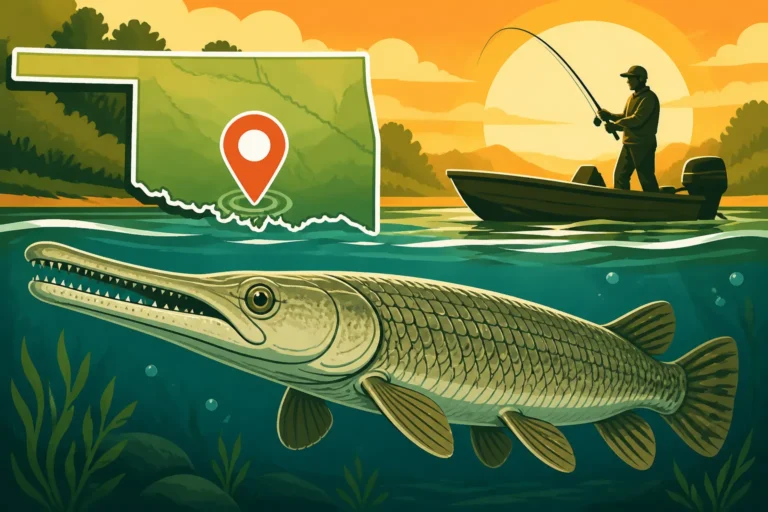
The Alligator Gar is truly a magnificent, almost mythical, creature. When you see one, it's easy to understand why it's called an "alligator" gar – its broad, flattened snout filled with powerful teeth bears a striking resemblance to its reptilian namesake. These fish are absolute giants, capable of growing to immense sizes, sometimes exceeding eight feet in length and weighing hundreds of pounds. Imagine pulling something that big out of the water! They are thick-bodied, muscular, and carry a raw, ancient power that is unmistakable. Their coloration tends to be olive or brown on the back, fading to a lighter belly, often with irregular dark spots across their body and fins.
In Oklahoma, Alligator Gar typically inhabit the larger, slower-moving rivers and associated backwaters, oxbow lakes, and vast reservoir systems, particularly in the southern and eastern parts of the state. Think of the mighty Red River or the lower reaches of the Arkansas River where they connect with large floodplains. They prefer areas with abundant cover, such as submerged timber, weed beds, or deep holes where they can ambush prey. Catching an Alligator Gar is often considered a bucket-list achievement for many anglers due to their size, strength, and relatively elusive nature. It's truly an experience that leaves you in awe of these living fossils.
The Longnose Gar: Graceful and Abundant
On the other end of the spectrum, we have the Longnose Gar, a species that is far more common and widely distributed throughout Oklahoma's waters. While they don't reach the colossal sizes of their alligator cousins, they are still impressive fish, frequently growing to lengths of three to five feet. The Longnose Gar, as its name cleverly suggests, is characterized by a very long, slender, and cylindrical snout, which is arguably its most defining feature. Their bodies are typically long and thin, almost torpedo-like, allowing them to move with surprising speed and agility through the water.
Longnose Gar are often found in a wider variety of habitats compared to the Alligator Gar. You'll encounter them in everything from large reservoirs like Lake Eufaula and Lake Texoma Fishing Guide for Oklahoma Anglers to medium-sized rivers, smaller lakes, and even some larger creeks. They are incredibly adaptable, comfortable in both clear and turbid waters, and can tolerate a broader range of temperatures and oxygen levels. Their coloration is usually olive-green to brown on the back, with a lighter underside, and they often have a distinctive pattern of small, dark spots arranged somewhat uniformly across their body and fins, including a prominent row of spots along the lateral line. These guys are prolific eaters and offer a challenging, exciting fight on appropriate tackle.
Key Identification Features: Snout and Scales
When you're trying to identify a gar, especially one you've just pulled from the water, there are a few key features that will instantly tell you what you're dealing with. It's like having a secret decoder ring for fish identification, and once you know the tricks, you'll be able to tell the difference every time. These distinctions are not subtle; they are quite pronounced and offer definitive markers for identification.
The Snout: The Most Obvious Difference
This is, without a doubt, the number one feature to look at when trying to distinguish between an Alligator Gar and a Longnose Gar. It's right there in their names, and it's practically foolproof.
-
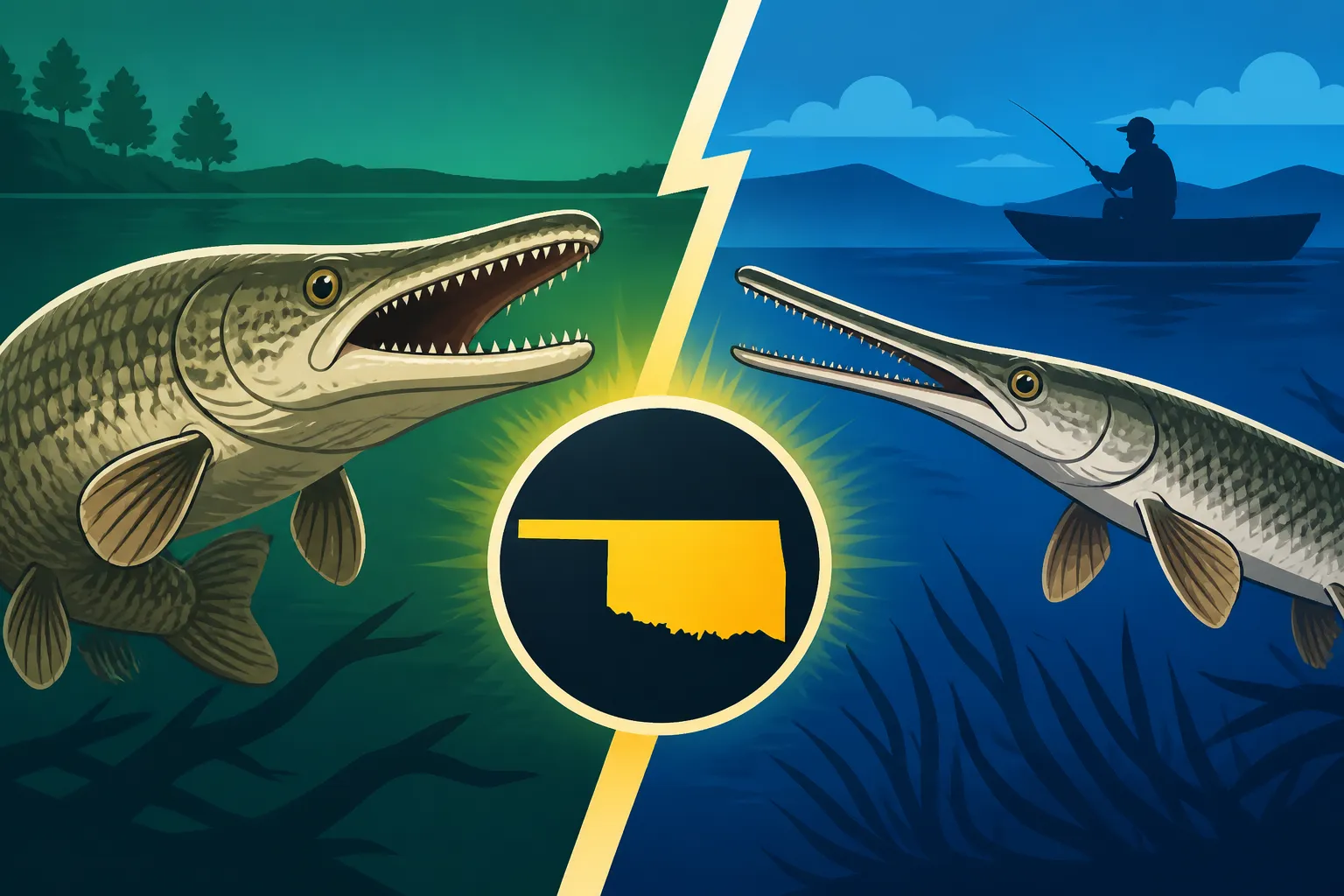
Alligator Gar: Picture the snout of an actual alligator – broad, flat, and relatively short compared to the rest of its head. That's exactly what you'll see on an Alligator Gar. Their snouts are significantly wider, almost paddle-like at the base, and taper only slightly towards the tip. When viewed from above, the width of the snout at its narrowest point (just behind the nostrils) is greater than the length of the rest of the head from the eye back to the gill plate. It gives them a truly reptilian appearance, incredibly stout and powerful. This broad snout is perfectly adapted for ambushing and crushing larger prey.
-
Longnose Gar: Now, imagine a long, slender pencil or a narrow pipe. The Longnose Gar has an incredibly elongated, cylindrical snout that is noticeably narrower than the Alligator Gar's. The width of its snout at its narrowest point is much less than the length from its eye to the back of its head. It’s almost needle-like at the very tip, a design that allows it to snatch smaller, fast-moving fish with precision. This distinctively slender and lengthy snout is what makes the Longnose Gar so unmistakable once you know this key difference. This feature alone is often enough to make a positive identification.
Body Markings and Scale Patterns
While the snout is the primary identifier, looking at the body and scale patterns can provide reinforcing clues. Gar are covered in ganoid scales, which are hard, diamond-shaped, and interlocking, almost like armor. These scales are unique and contribute to their prehistoric look.
-
Alligator Gar: These giants typically have larger, more irregular dark spots scattered across their bodies and fins. These spots might not be uniformly shaped or evenly distributed. The overall coloration often ranges from olive green to brownish-gray on the back, fading to a lighter, almost white, belly. The pattern is usually mottled, blending well with the murky, vegetated waters they often inhabit. The skin between the scales on the upper part of the body tends to be darker, adding to the overall dark appearance. You'll often notice a distinct line where the darker dorsal color meets the lighter ventral color. For more details on these beasts, check out What Does an Alligator Gar Look Like.
-
Longnose Gar: In contrast, Longnose Gar tend to have smaller, more numerous, and often more uniformly distributed dark spots. These spots are frequently concentrated along the sides, forming a distinct lateral line of spots, and are also prominent on their dorsal, caudal (tail), and sometimes pectoral fins. Their body color is generally a lighter olive to brownish-green, again with a pale belly. The overall impression is usually a cleaner, more streamlined appearance than the more mottled Alligator Gar. If you're comparing pictures of the two, the spotting difference becomes quite apparent.
Tooth Arrangement Insights
This feature is harder to observe safely on a live fish, but it's a definitive biological difference. Gar have fearsome teeth, and knowing their arrangement can confirm your identification, though it's not the first thing you'd check in the field.
-
Alligator Gar: These formidable predators possess two distinct rows of large, dagger-like teeth on each side of their upper jaw. This double row of teeth is a unique characteristic that allows them to hold onto and process large prey effectively. If you were ever to safely examine the inside of an Alligator Gar's mouth (which is not recommended without extreme caution and expertise), this double row would be immediately apparent.
-
Longnose Gar: The Longnose Gar, while still having plenty of sharp teeth, only has a single row of teeth on each side of its upper jaw. This difference in tooth arrangement, while not a practical field identification method for the average angler, is a crucial anatomical distinction used by biologists to classify the species. It further highlights how specialized these two gar species are in their feeding strategies, despite their shared family lineage.
Habitat and Behavior Clues
Beyond physical appearance, where and how you encounter a gar can offer strong clues about its identity. These fish have adapted to different niches within Oklahoma's waterways, leading to distinct preferences in their environment and typical behaviors. Knowing these patterns can help you anticipate what species you're likely to find in a given fishing spot.
Where Alligator Gar Roam in Oklahoma
Alligator Gar are generally more selective about their habitat. They are predominantly found in the larger, warmer, and often more turbid waters of major river systems and expansive reservoirs in Oklahoma. Think of places where large river channels slow down, forming vast pools, backwaters, and oxbow lakes, or the lower sections of some of our biggest impoundments.
Specifically, anglers often find success targeting Alligator Gar in the Red River, the lower Arkansas River, and portions of the Washita River. These areas provide the deep water, abundant cover from submerged logs and vegetation, and ample prey (often larger rough fish) that Alligator Gar prefer. They are often less common in smaller, clearer lakes or swift-moving rivers. Their sheer size dictates a need for bigger waters, and their ambush predatory style means they often hang around structure, waiting for an unsuspecting meal to swim by. If you're fishing a relatively smaller, clear water body, it's far less likely you've tangled with one of these giants. For those interested in pursuing these incredible fish, a good starting point is our guide on Alligator Gar Fishing in Oklahoma.
Longnose Gar's Widespread Presence
The Longnose Gar, on the other hand, is a much more ubiquitous resident of Oklahoma's aquatic landscape. They are incredibly adaptable and can be found in almost every type of freshwater habitat across the state, from sprawling reservoirs to winding rivers and even larger creeks and ponds.
You are likely to encounter Longnose Gar in pretty much any major lake, including popular fishing destinations like Lake Eufaula, Fort Gibson Lake, and Grand Lake O' the Cherokees. They thrive in a wide range of conditions, tolerating varying water clarity, flow rates, and temperatures. This broad distribution makes them a common sight for many anglers, whether they are specifically targeting gar or just out for bass or crappie. They are often seen cruising just below the surface in calm coves or near weed lines, making them accessible to both bank anglers and those fishing from boats. Their adaptability and widespread presence make them an excellent species to target for anglers looking to experience the thrill of gar fishing, and you can learn more about them in Longnose Gar: An Overlooked Catch in Oklahoma Waters.
Size and Shape: A General Indicator
While not a definitive scientific identifier, the general size and body shape of a gar can give you a strong preliminary hint about its species.
-
Alligator Gar: These are the heavyweights of the gar family in Oklahoma. They are built for power and bulk. If you've got a gar on the line that feels like a cinder block and looks thick and stocky even as it fights, there's a good chance you're dealing with an Alligator Gar. They are significantly thicker around the girth and have a more robust, powerful appearance. Catching one that's "only" four feet long will still feel like a monumental task due to its sheer mass. Our guide on How Big Do Alligator Gar Get in Oklahoma really puts their size into perspective.
-
Longnose Gar: Compared to the Alligator Gar, the Longnose Gar has a much more slender and elongated body. Even a four-foot Longnose will appear noticeably thinner and more graceful than an Alligator Gar of similar length. They are built for speed and agility, not brute force, which is reflected in their sleeker physique. While they can still put up a tremendous fight, their overall body mass is considerably less than an Alligator Gar of comparable length. So, if your catch looks like a long, skinny dart compared to a football, it’s most likely a Longnose.
Practical Identification Tips for Anglers
Alright, so you've hooked a gar, and it's thrashing around. Now what? Knowing how to quickly and safely identify your catch on the water is crucial. It’s not just about satisfying your curiosity; it’s about responsible angling and adhering to any specific regulations that might apply to different species, especially the more protected ones.
On the Water Visual Cues
When you're out there, things happen fast. You need quick visual cues to make a determination.
- First Glance at the Head: As soon as you get a clear look at the fish's head, focus on the snout. Is it broad and flattened like an alligator's jaw, or long, narrow, and cylindrical like a spear? This is your primary identifier. If it's wide and bulky, you're likely seeing an Alligator Gar. If it's long and thin, it's almost certainly a Longnose Gar.
- Body Shape Impression: Quickly assess the body's thickness. Is it stout and heavy-bodied, or slender and torpedo-like? Alligator Gar are much chunkier.
- Spotting Pattern (if visible): If the fish is calm enough or you get a good side view, look at the spots. Are they large and irregular, or smaller and more uniform, perhaps in a distinct lateral line? This can be a helpful secondary confirmation.
It’s often best to make a quick decision based on the snout, and then confirm with other features if the situation allows. This rapid assessment skill comes with practice, so don't be discouraged if you're not an expert on your first few encounters.
Taking a Closer Look: Safety First
Gar, regardless of species, have formidable teeth. They are predators, and their mouths are designed for catching and holding onto slippery prey. This means handling them requires extreme caution. Always prioritize your safety and the fish's well-being.
- Tools are Your Friends: Never try to handle a gar by hand near its mouth. Use a sturdy pair of long-nosed pliers to remove hooks. A specialized fish gripper designed for toothy fish can be incredibly useful to control the head safely. You can find robust options for these kinds of tools from online retailers like Amazon, or at any well-stocked local tackle shop. Some anglers even use heavy-duty gloves, also often available on Amazon, to protect their hands when handling the body, but the head area remains the most dangerous.
- Controlling the Fish: If you intend to photograph or measure the fish, try to keep it calm and minimize its stress. A wet rag over its eyes can sometimes help. Be aware that larger gar can thrash violently, so have a plan before you try to get your hands on it.
Remember, a gar's scales are also incredibly tough and can be sharp, so careful handling applies to its entire body. Getting a picture is great, but getting bitten or injured is not.
When in Doubt: Document and Release
Sometimes, especially with smaller or juvenile fish, the identification might not be 100% clear. Or, you might hook a truly massive fish that might be a record. In these situations, the best course of action is almost always to document and release.
- Take Clear Photos: If you're unsure, or if you believe you've caught a significant fish, take several clear photos from different angles. Make sure to get shots of the head (especially the snout from both side and top views), the entire body, and any distinct markings. These photos can be shared with wildlife experts or experienced anglers later for positive identification.
- Release Safely: All gar are valuable components of our ecosystem. If you're not keeping the fish (and you're aware of the Fishing Regulations You Need to Know in Oklahoma for gar), release it quickly and gently. Use proper catch-and-release techniques to ensure the fish has the best chance of survival.
- Know the Rules: Specific regulations can vary for different gar species, particularly for Alligator Gar which are sometimes considered a trophy species with tighter harvest limits or even catch-and-release only rules in certain areas. Always check the current Oklahoma's Bag Limit Rules by Species before heading out to fish. Being informed protects both you and the fish. For general guidance, our Gar Fishing Guide: Alligator Gar and Longnose Gar provides more comprehensive information.
By following these tips, you'll not only become a more skilled angler in identifying our incredible gar species but also a more responsible steward of Oklahoma's precious fishing resources.
| Feature | Alligator Gar | Longnose Gar |
|---|---|---|
| Snout Shape | Broad, flattened, alligator-like, short | Long, slender, cylindrical, pencil-like |
| Snout Width | Wider than the distance from eye to gill cover | Much narrower than the distance from eye to gill cover |
| Body Shape | Stout, thick, heavy-bodied, powerful | Slender, elongated, torpedo-like, graceful |
| Body Spots | Large, irregular, mottled pattern | Smaller, more uniform, often in a distinct lateral line |
| Upper Jaw Teeth | Two rows of teeth on each side | Single row of teeth on each side |
| Typical Size | Can reach over 8 feet and hundreds of pounds | Typically 3-5 feet, up to 50 pounds or more |
| Habitat Preference | Large rivers, backwaters, big reservoirs | Widespread in most lakes, rivers, and larger creeks |
Disclaimer
This article is for general informational purposes only and does not constitute professional advice. Laws, prices and regulations vary by location and change over time. Consult a qualified professional for guidance on your specific situation.