How to Fish a Carolina Rig for Bass
Many bass anglers in Oklahoma have spent frustrating days on the water, watching their jigs and Texas rigs get hung up in stubborn brush piles or disappear into deep, mucky bottom without a single bite. It can feel like you’re throwing money into the lake, especially when the fish are holding just off the bottom but won’t commit to a fast-moving bait. This guide is all about one of the most effective, yet often overlooked, setups for these exact scenarios: the Carolina Rig. We're going to break down how this versatile rig works, how to put one together, and how to fish it like a seasoned pro to entice those hesitant Oklahoma bass.
Understanding the Carolina Rig: A Versatile Bass Setup
The Carolina Rig is a staple in the bass fishing world for a reason. It's a fantastic technique for presenting a soft plastic bait subtly, yet effectively, in a variety of depths and covers. If you've ever felt like your other rigs weren't getting the job done when bass are deep or spread out, the Carolina Rig might just be your new best friend.
What Makes a Carolina Rig Unique?
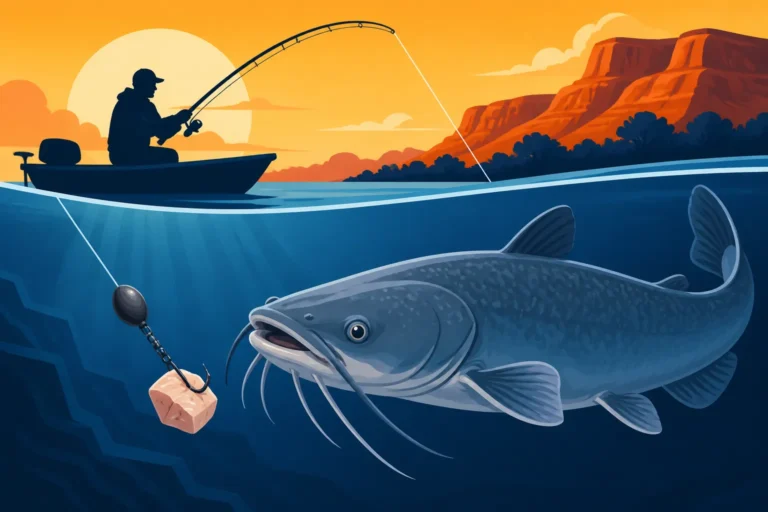
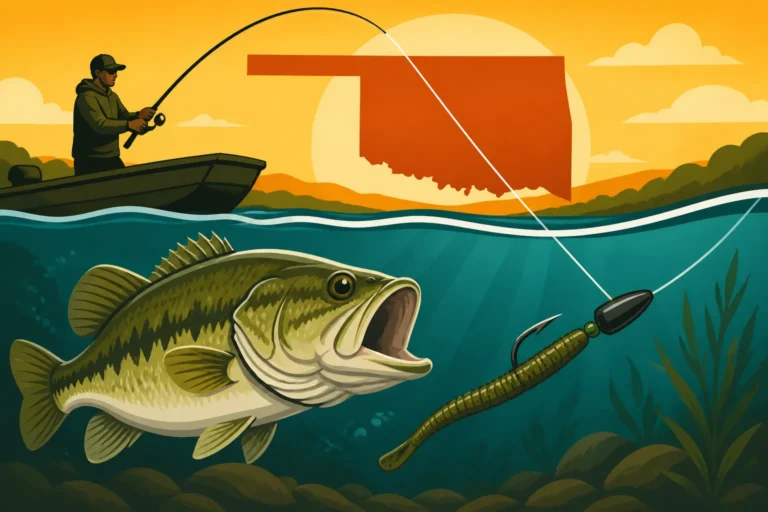
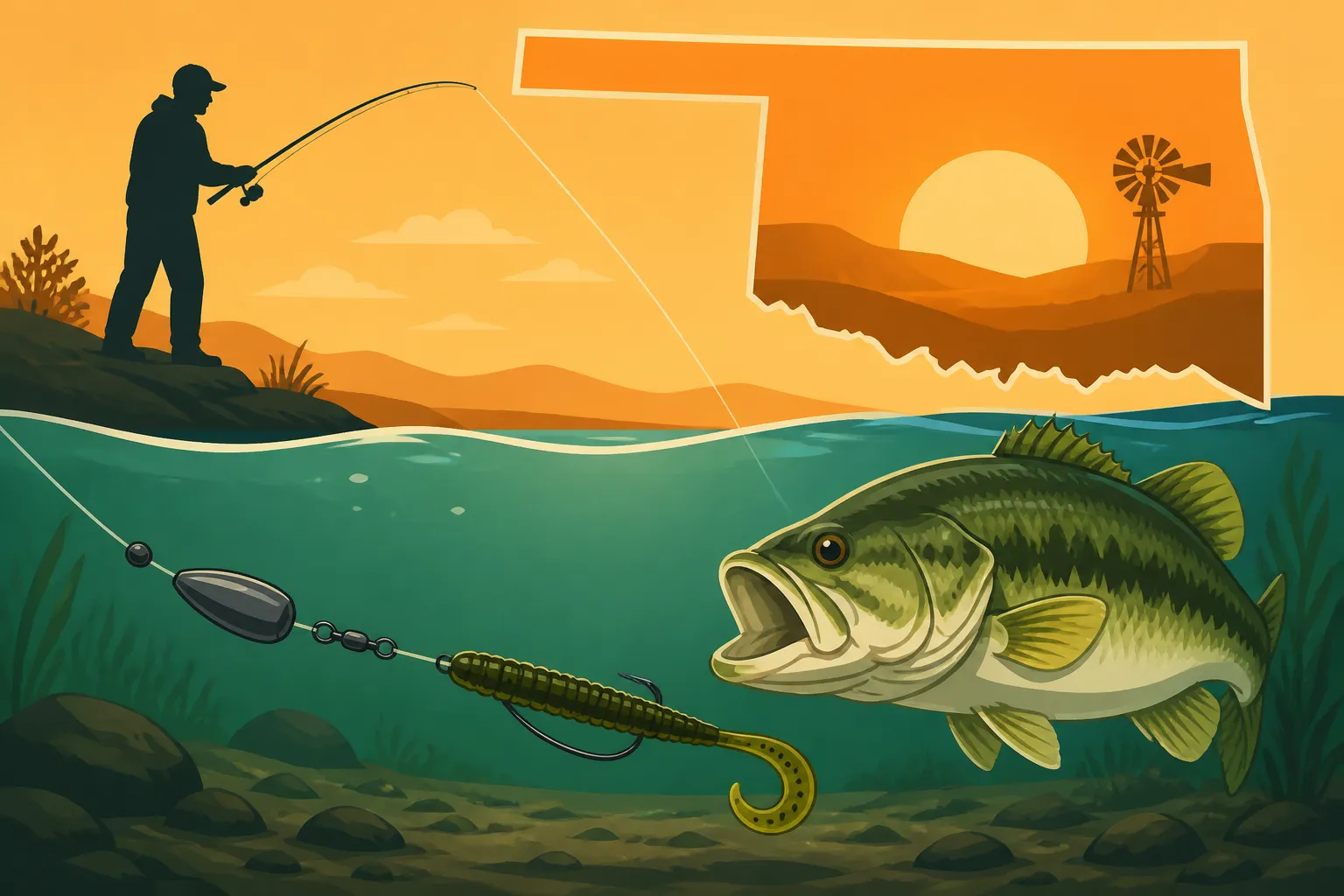
At its heart, the Carolina Rig is designed to separate your weight from your bait, allowing the bait to drift and flutter more naturally behind the main line. Imagine a heavy lead sinker clunking along the bottom, kicking up dust and making a commotion. Then, several inches or even a few feet behind it, your soft plastic bait is suspended, dancing freely in the current, mimicking a foraging creature. This separation is key. The weight keeps your line on the bottom, giving you excellent feel for structure, while the unweighted bait drifts enticingly. It’s this unique presentation that makes it so deadly when bass are being finicky or are hanging out in those sparse areas where other rigs just don't look natural.
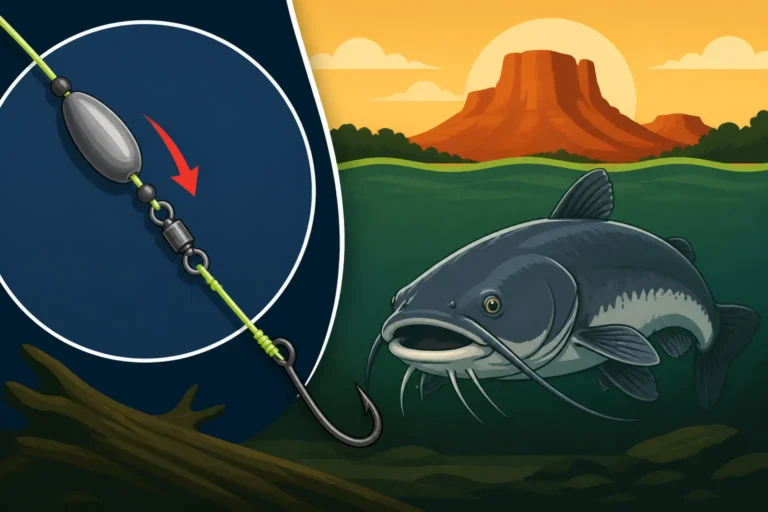
The core components are simple: a heavy sinker, usually an ounce or more; a plastic or glass bead; a swivel; a leader of fluorocarbon line; and finally, your hook and soft plastic bait. Each piece plays a critical role in creating that distinct "thump" as the weight drags and that irresistible, weightless presentation of the bait. It’s truly different from, say, a Texas Rig, which keeps the weight directly on the hook, providing a much more compact, direct fall. For more on other bass techniques, you might want to check out our comprehensive guide on Oklahoma Bass Fishing: Techniques by Season.
Why the Carolina Rig Shines in Oklahoma Waters
Oklahoma's diverse fishing landscape, with its vast reservoirs like Lake Texoma, Lake Eufaula, and Grand Lake O' the Cherokees, offers countless scenarios where the Carolina Rig truly excels. These lakes are characterized by extensive areas of submerged humps, deep ledges, offshore points, and scattered rock piles – all prime real estate for bass, especially during the warmer months when fish move deeper.
The Carolina Rig allows you to effectively cover these deep, expansive areas. Instead of painstakingly picking apart every little piece of cover with a jig, you can drag a Carolina Rig across large sections of bottom, feeling every change in structure, every pebble, every stump. When you hit a change in depth or a hard spot, that's often where the bass are holding. This rig is particularly effective for finding those deep, transition areas where bass ambush prey. It’s also incredibly useful in clear water conditions often found in places like Broken Bow Lake, where a subtle presentation is crucial, and the separated bait drifts so naturally it doesn’t spook wary fish. It’s a tool that every angler should have in their arsenal, especially when targeting larger bass that are often holding deeper.
Assembling Your Carolina Rig for Oklahoma Bass
Putting together a Carolina Rig isn't overly complicated, but selecting the right components makes a world of difference in its effectiveness. Think of it like building a custom fishing machine – each part has a job, and the better the parts, the better the performance.
Essential Components and Their Roles
Let's break down what you need and why:
- Sinker (Weight): This is the leading edge of your rig. It needs to be heavy enough to maintain bottom contact and transmit feedback to your rod. For most Oklahoma applications, you'll want something from 3/4 oz to 1.5 oz. Tungsten weights are generally preferred over lead because they are denser, smaller, and transmit vibrations much better, allowing you to "feel" the bottom more effectively. While they cost a bit more, the feedback you get from a tungsten weight often justifies the expense, and you can find a good selection on platforms like Amazon. For rocky bottoms, some anglers opt for bullet weights, but egg sinkers or barrel weights are also common.
- Bead: The bead serves a critical purpose: protecting the knot of your swivel from the abrasive action of the weight. As you drag the rig, the weight constantly slides up and down the main line, bumping into the swivel. Without a bead, your knot would quickly fray and fail. Glass beads are popular because they create an audible "clack" when the weight hits them, which can attract curious bass. Plastic beads work just as well for protection, though they lack the sound.
- Swivel: A quality barrel swivel or even a ball bearing swivel is essential. Its main job is to prevent line twist, especially when dragging the rig and using soft plastics that might have a slight rotation. It also serves as the connection point between your main line and your leader line.
- Leader Line: This is arguably the most crucial component after the weight. Your leader line connects the swivel to your hook. It should almost always be fluorocarbon. Why? Fluorocarbon is virtually invisible underwater, which is a huge advantage in clear Oklahoma lakes. It also has less stretch than monofilament, giving you better feel and more positive hooksets. For typical bass fishing, a leader length between 18 inches and 4 feet is common. A shorter leader provides more direct contact and a faster bait action, while a longer leader gives your bait more freedom to wander and a more subtle, gliding action. For instance, on a windy day, a shorter leader might keep your bait more controllable. You can find quality fluorocarbon leader material from brands like Seaguar or Berkley on Amazon.
- Hook: Your hook choice will depend on the soft plastic bait you're using. A wide gap (EWG) hook is very popular for most creature baits and worms, allowing for weedless rigging and good hook penetration. Offset shank hooks also work well. Make sure your hook is sharp and strong enough to handle a feisty Oklahoma bass. A general guideline is to match the hook size to your bait – a 3/0 EWG for a 6-inch lizard, for example. When considering a Best Rod for Largemouth Bass Fishing, remember that a medium-heavy to heavy action rod is ideal for setting the hook with this rig.
Here's a quick reference table for your Carolina Rig components:
| Component | Typical Size/Type | Primary Role | Key Considerations |
|---|---|---|---|
| Sinker (Weight) | 3/4 oz – 1.5 oz, Tungsten (preferred) | Bottom contact, feel, attraction | Tungsten for sensitivity, lead for cost. Match depth. |
| Bead | Glass or Plastic | Knot protection, sound attraction (glass) | Glass for sound, plastic for basic protection. |
| Swivel | #5-7 Barrel or Ball Bearing | Prevents line twist, leader connection point | Strong, smooth rotation is key. |
| Leader Line | 10-20 lb Fluorocarbon (18" – 4 ft) | Bait presentation, stealth, sensitivity | Fluorocarbon for invisibility/feel. Adjust length. |
| Hook | EWG, Offset Shank (match bait size) | Secure bait, hook fish | Sharpness, strength, and appropriate size for bait. |
Step-by-Step Rigging Instructions
Alright, let's get down to the nitty-gritty of actually tying this thing up. It's easier than it looks, I promise!
- Thread Your Main Line: Start by taking your main line (which should be braided or fluorocarbon, often 15-20 lb test for a good balance of strength and feel) and slide your sinker onto it. The tapered end of a bullet weight usually faces the rod tip. If it’s an egg sinker, it doesn’t really matter which way it goes on.
- Add Your Bead: Immediately after the sinker, slide one or two beads onto your main line. The bead will sit between the sinker and the swivel. Remember, this protects your knot.
- Tie on the Swivel: Now, tie your main line to one end of your swivel. A Palomar knot or an improved clinch knot works great here. Cinch it down tightly, making sure both the sinker and bead are free to slide on the line above the knot.
- Attach the Leader: Take a length of fluorocarbon leader material (remember, 18 inches to 4 feet is a good range to start with) and tie one end to the other eye of the swivel. Again, a Palomar or improved clinch knot is a solid choice. This is where your chosen leader length comes into play. For instance, if you're fishing shallow humps, a shorter leader might be better; for deep, open water, a longer one.
- Tie on the Hook: Finally, tie your chosen hook to the tag end of your fluorocarbon leader. Another Palomar or improved clinch knot will do the trick.
- Rig Your Bait: Now, rig your soft plastic bait onto the hook in a weedless fashion, just like you would a Texas Rig. This means threading the hook point into the head of the bait, bringing it out the belly, rotating the hook, and re-burying the point back into the body of the bait. This ensures it won't snag on submerged timber or rock, which is a common occurrence in many Oklahoma lakes.
And there you have it! Your Carolina Rig is ready to hit the water. It might seem like a lot of steps at first, but after you tie it a couple of times, it'll become second nature.
Mastering the Retrieve: How to Fish a Carolina Rig Effectively
Once your rig is assembled, the real art of Carolina Rig fishing comes down to how you work it. It's not about speed or flashy movements; it's about subtle control and a deep connection to what's happening on the bottom of the lake.
The Signature Drag and Pause Retrieve
The most effective retrieve for a Carolina Rig is a slow, methodical drag-and-pause motion. This is where the heavier weight truly shines, acting as a feeler for the bottom structure.
Here's how to do it:
- Cast it Out: Make a long cast, letting the rig sink to the bottom. It's crucial that the weight makes contact with the bottom first, followed by your bait. Pay attention as it falls; if you feel a "thump-thump," that might be the weight and then the bait hitting bottom.
- The Drag: Point your rod tip towards the water, roughly at a 45-degree angle. Slowly sweep your rod sideways, from, say, 9 o'clock to 11 o'clock. This isn't a reel-in motion; it's a drag. You're pulling the weight along the bottom.
- Feel the Bottom: As you drag, pay very close attention to what you're feeling through your rod. A sensitive rod and braided main line will transmit every pebble, every stick, every change in bottom composition. This is your underwater radar, helping you map out those hidden humps and ledges. If you want to learn more about how water temperature impacts fishing, consider reading How to Read Water Temperature for Better Fishing in Oklahoma.
- The Pause: After your drag, pause for a few seconds. This allows your bait, which is trailing behind the weight, to settle and flutter enticingly. Many bites happen during this pause as the bass investigates the "meal" that just appeared. The length of your pause can vary – sometimes a short one is enough, other times a longer, 5-10 second pause can trigger a strike.
- Reel in Slack: As you pause, reel in any slack line, bringing your rod back to the starting position (9 o'clock) for your next drag. You want to maintain just enough tension to feel the weight and the bait, but not so much that you're pulling the bait unnaturally.
- Repeat: Continue this drag-and-pause sequence, covering water slowly and meticulously. This isn't a power-fishing technique; it's a finesse approach designed to present a bait where bass are likely holding.
Recognizing Bites and Setting the Hook
One of the biggest challenges for beginners with a Carolina Rig is distinguishing a bite from hitting bottom structure. It takes practice, but you'll get the hang of it.
- What a Bite Feels Like: A bass bite on a Carolina Rig can manifest in several ways. Sometimes it's a distinct thump – much like hitting a rock, but often softer and more elastic. Other times, your line might just feel heavy, or you might notice your line starting to move sideways. Occasionally, it's a complete stop, as if your weight is suddenly wedged, but you know you haven't hit anything. Trust your gut; any irregularity in the feel or movement of your line should be treated as a potential bite.
- The Hookset: Once you suspect a bite, don't set the hook immediately like you might with a crankbait. Instead, reel down quickly until you feel the weight of the fish. Then, execute a long, sweeping hookset, pulling the rod straight up and slightly to the side. With the long leader and the fish often swimming towards you, a hard, fast hookset can pull the bait away. A firm, sweeping motion ensures the hook penetrates the bass's mouth effectively. Continue reeling as you sweep, maintaining constant pressure. It's a different feel than setting the hook on a jig, but once you get it right, it's incredibly satisfying.
Optimizing Your Carolina Rig for Different Oklahoma Scenarios
The beauty of the Carolina Rig is its adaptability. You can tweak components and techniques to match various conditions you'll encounter across Oklahoma's diverse fisheries.
Best Baits for the Carolina Rig
While the rig itself is a constant, the bait you choose to trail behind it can make all the difference. Soft plastics are the name of the game here, offering a variety of profiles and actions.
- Lizards (e.g., Zoom Lizard): These are classic Carolina Rig baits. Their flapping legs and curly tail create a lot of subtle action as they're dragged and paused, mimicking a variety of forage or even a crawfish. A 6-inch lizard is a great all-around choice.
- Plastic Worms (e.g., Zoom Trick Worm, Senko-style): Longer worms, like 8-10 inch ribbon tail or straight tail worms, can be incredibly effective, especially in deeper water. The ribbon tail offers a seductive wiggling action, while straight tails provide a more subtle, gliding fall during the pause. For specific advice, our guide on Best Bait for Largemouth Bass in Oklahoma can provide more detail.
- Creature Baits (e.g., Zoom Brush Hog, Strike King Rage Craw): These baits, with their numerous appendages, displace a lot of water and create a lifelike presentation. They're excellent for mimicking crawfish, a primary forage for bass in many Oklahoma lakes.
- Flukes/Swim Baits: Sometimes, a weightless fluke or small swimbait rigged behind a Carolina Rig can imitate a fleeing baitfish. This can be particularly effective when bass are keying in on shad.
- Floating Worms: For an ultra-subtle approach, some anglers will use a soft plastic worm that is naturally buoyant or slightly floating. This allows the bait to rise off the bottom during pauses, creating a very unique presentation that can entice hesitant bass.
Remember, the key is to choose a bait that has good action even when unweighted, as it needs to move naturally behind the heavy sinker. You can easily find a wide variety of these soft plastics on Amazon to experiment with.
Adapting the Rig to Oklahoma's Seasons and Conditions
Oklahoma weather and water conditions can change dramatically, and a good angler knows how to adjust their tactics. The Carolina Rig is flexible enough to handle these shifts.
- Spring (Pre-Spawn/Spawn): During the pre-spawn, bass are often migrating from deep wintering holes to shallower spawning areas. The Carolina Rig is excellent for intercepting them on main lake points, channel swings, and deeper staging areas. A shorter leader (18-24 inches) can offer a more compact presentation, and creature baits or lizards are often deadly. As bass move to beds, the Carolina Rig is less effective, but it can still catch those non-spawners hanging nearby. For specific tips on this period, check out Pre-Spawn Bass Fishing Techniques Explained.
- Summer: This is prime time for Carolina Rig fishing. As water temperatures rise, bass often retreat to deeper, cooler water, congregating on offshore structure like humps, ledges, and submerged timber. Use heavier weights (1 oz+) to maintain bottom contact in deeper water (15-30+ feet) and slightly longer leaders (3-5 feet) to give your bait more natural movement. Longer worms and creature baits are excellent choices here. Consider focusing on major creek channels and points. You'll find many useful lures for this season discussed in Best Lures for Summer Fishing.
- Fall: As water temperatures begin to cool, bass will start moving shallower, following baitfish that are also moving towards the backs of creeks. The Carolina Rig can still be effective on secondary points and channel swings, but you might want to use lighter weights (3/4 oz) and shorter leaders. Pay attention to schools of baitfish, as bass won't be far behind. Different lures shine in fall, which you can read about in Best Lures for Fall Fishing.
- Water Clarity:
- Clear Water: Use longer fluorocarbon leaders (3-5 feet) for maximum stealth. Natural bait colors like green pumpkin, watermelon seed, and smoke are usually best. The subtle action of the Carolina Rig is perfect for clear water.
- Stained/Muddy Water: A shorter leader (1-2 feet) will keep your bait closer to the weight, making it easier for bass to find. Darker, more opaque bait colors like black and blue, junebug, or even chartreuse can offer better visibility. A glass bead can add an auditory element to help fish locate your bait in low visibility.
By understanding these nuances and making small adjustments, you can keep the Carolina Rig productive throughout the year, maximizing your chances of a great day How to Catch Bass Through Every Season.
Disclaimer
Fishing involves inherent risks, including but not limited to, changing weather conditions, slippery surfaces, and sharp fishing hooks. Always prioritize safety, wear appropriate personal flotation devices (PFDs) when on the water, and be aware of your surroundings. Adhere to all local and state fishing regulations, including licensing requirements and bag limits. This guide is for informational purposes only and does not guarantee fishing success. The author and publisher are not responsible for any injuries or incidents that may occur while fishing.