Cold Front Fishing Techniques
There's nothing quite like the crushing disappointment of planning an epic fishing trip, only for a sudden cold front to roll through and seemingly shut down every fish in the lake. You arrive with high hopes, ready to cast away, and suddenly the bites disappear, your favorite spots go cold, and the fish seem to have vanished into thin air. It’s a frustrating reality many Oklahoma anglers face, but it doesn't have to mean a wasted day. This comprehensive guide will equip you with the knowledge and tactics to effectively tackle those challenging post-cold front conditions, turning potential frustration into surprising success.
Understanding What a Cold Front Really Means for Fish
When we talk about a "cold front," it's more than just a drop in air temperature. For fish, it’s a multifaceted environmental shock that drastically alters their comfortable world. Ignoring these underlying shifts means you’re essentially fishing blind.
The Atmospheric Shift and Its Impact
The most immediate and profound impact of a cold front is the change in barometric pressure. Before a front arrives, you often notice a drop in pressure. This is when fish tend to go on a feeding frenzy, becoming more active and aggressive. It’s their biological response, almost like they know bad weather is coming and they need to fuel up. This "pre-front bite" is legendary among anglers, and if you can time it right, it’s some of the best fishing you'll ever experience. We've talked extensively about how to capitalize on this in our guide to Best Fishing Techniques Before a Cold Front.
However, during and immediately after the front passes, the barometric pressure rises sharply. Think of it like a heavy blanket pressing down on the water. Fish, particularly those with swim bladders, are highly sensitive to these pressure changes. The sudden increase in pressure can cause discomfort, making them feel lethargic and less inclined to move or feed actively. It's a physiological response that slows down their metabolism and their willingness to chase a bait. This isn't just about surface conditions; the pressure affects their entire world underwater, causing them to seek relief in deeper, more stable environments. This is a critical factor in understanding How Cold Fronts Change Fishing Patterns on Oklahoma Lakes.
Rapid Water Temperature Drops and Their Effect
Beyond barometric pressure, cold fronts bring a significant drop in air temperature, which, in turn, can rapidly cool the surface water. While deeper water temperatures are more stable, shallow areas and the upper water column can cool quite quickly, especially on smaller lakes or during strong, sustained winds. Fish are cold-blooded creatures, meaning their body temperature is regulated by their environment. A sudden drop in water temperature can slow down their metabolism considerably.
When their metabolism slows, fish become less active. They need less food, and their digestion slows, making them less likely to strike at fast-moving lures or engage in long chases. They’ll often seek out areas with more stable or even slightly warmer water, which might be in deeper sections, near thermal springs, or in dense cover that offers some insulation. This search for thermal comfort is a primary driver of their post-front movement, and understanding this thermoregulation is key to locating them when everything else feels dead.
Fish Behavior Before, During, and After a Cold Front
Understanding the stages of a cold front is like reading a fish's mood ring. Their behavior changes dramatically, and if you don't adjust your approach, you'll be left wondering where all the fish went.
Pre-Front Feeding Frenzy: Capitalizing on the Opportunity
As a cold front approaches, typically a day or two before the actual temperature drop and high pressure set in, the barometric pressure begins to fall. This dip often triggers a significant increase in fish activity. It's as if they sense the impending weather change and go into overdrive, feeding aggressively to stock up before conditions worsen. This is your prime window for some of the most exciting fishing.
During this pre-front phase, fish tend to be higher in the water column and more willing to chase down fast-moving baits. Topwater lures, spinnerbaits, crankbaits, and even aggressive jigging can be incredibly effective. They're not just looking for an easy meal; they're actively hunting. If you're targeting bass, this is when they're most likely to hit a buzzbait or a fast-retrieved lipless crankbait near cover. Crappie might be schooling up and hitting jigs with abandon, while catfish might be on the prowl, looking for a substantial meal. Timing your trip to coincide with this pre-front window can make all the difference, turning an otherwise slow week into a memorable outing.
Post-Front Lethargy: Why Fish Shut Down
Once the cold front has passed and the high-pressure system dominates, fish tend to become incredibly lethargic. This is the stage where many anglers pack up and go home, convinced the fish aren't biting. The combined effect of high barometric pressure and dropping water temperatures makes fish uncomfortable and inactive. They retreat from shallow, exposed areas and suspend themselves or hug tight to deep cover or bottom structure.
Their metabolic rate slows significantly, reducing their need to feed. When they do feed, they're not looking to chase anything; they want an easy, slow-moving meal right in front of their faces. This is when you'll often hear anglers say the fish have "lockjaw." They're still there, but their priorities have shifted from active hunting to conserving energy and finding comfort. This is where the real challenge—and opportunity for dedicated anglers—begins. You need to adjust everything: your location, your presentation, and your patience. Fast retrieves or flashy, aggressive baits will often be completely ignored.
Recovery Phase: When Fish Start Biting Again
The good news is that the post-front shutdown doesn't last forever. As the high-pressure system begins to stabilize and water temperatures gradually start to rebound (or fish acclimate to the new normal), fish will slowly resume their feeding patterns. This "recovery phase" might take anywhere from 24 hours to several days, depending on the severity of the front and the specific body of water.
During this phase, fish won't immediately return to their pre-front aggression. They'll start by taking very subtle, slow-moving baits. Think slow rolls, gentle twitches, and prolonged pauses. As conditions continue to normalize, their activity will steadily increase. You might notice them moving a bit higher in the water column, perhaps venturing out from the densest cover. This phase requires persistence and observation. A few subtle bites can signal that the fish are starting to turn back on, allowing you to gradually increase your presentation speed and try slightly more active lures. It's a slow transition, but understanding it means you won't miss the subtle cues that indicate fishing is improving.
Essential Gear Adjustments for Cold Front Conditions
Fishing after a cold front is not the time for your usual run-and-gun setup. It calls for a complete overhaul of your gear and approach. Think finesse, precision, and the ability to detect the lightest of bites.
Rods, Reels, and Line: Opting for Finesse
When fish are lethargic and their bites are barely perceptible, your gear needs to be incredibly sensitive. This often means switching from heavy baitcasting setups to lighter spinning gear. A medium-light or medium-action spinning rod, typically 6'6" to 7' long, provides the necessary sensitivity to feel those subtle "thumps" or "mushy" takes that characterize post-front bites. A fast tip on your rod is crucial for detecting strikes and setting the hook quickly without overpowering a light line.
Pair your sensitive rod with a high-quality spinning reel loaded with light line. Fluorocarbon line, ranging from 6 to 10-pound test, is an excellent choice. Its low stretch provides superior sensitivity, allowing you to feel even the most timid bites. Plus, it's nearly invisible underwater, which is a huge advantage when fish are wary and clear conditions often prevail after a front. Braided line can also be used for its incredible sensitivity, but consider tying a long fluorocarbon leader (6-8 feet) to reduce visibility. On our blog, we often discuss the importance of matching your rod and reel to the conditions, like in our guide to Best Spinning Reel for Crappie Fishing or Best Baitcasting Reel for Bass Fishing, but for cold fronts, finesse is paramount.
Lures and Baits: Downsizing and Slowing Down
This is perhaps the most critical adjustment you can make. Forget the loud, flashy, fast-moving baits that worked pre-front. After a cold front, fish want small, slow, and easy. Downsizing your lures is key. Instead of a 1/2-ounce jig, try a 1/8-ounce or even a 1/16-ounce. Worms, creature baits, and small finesse jigs become much more effective.
Natural baits, especially live bait, also become incredibly appealing. Live minnows, shiners, or nightcrawlers presented slowly under a bobber or on a bottom rig can often entice bites when artificials fail. For artificial lures, think about soft plastics like shaky head worms, drop shot rigs, Ned rigs, or small finesse jigs with a subtle trailer. Colors should often be more natural or muted, like greens, browns, and blacks, especially in clearer post-front waters. However, sometimes a touch of chartreuse or orange can trigger an impulse strike. You can find a huge variety of these specialized finesse baits on Amazon, often at better prices than your local tackle shop. Experimenting with different presentations and colors is key, but always start with the assumption that slower and smaller is better. When thinking about Best Bass Lures for Fall Fishing, many of those slower presentations also apply here.
Proven Techniques for Catching Fish After a Cold Front
Once you've adjusted your mindset and your gear, it's time to talk about the actual techniques. These aren't always the most exciting ways to fish, but they are often the most effective when fish are stubborn.
Slow Presentations and Bottom Bouncing
The golden rule for post-front fishing is "slow down, then slow down some more." Fish are not going to chase. You need to present your bait directly to them, lingering in their strike zone for as long as possible. This means embracing techniques like "bottom bouncing" or "dead sticking."
With a shaky head or Ned rig, cast it out, let it sink to the bottom, and then impart very subtle twitches with your rod tip, moving the bait only a few inches at a time. The pauses are just as important, if not more important, than the movement. Let the bait sit for 10, 20, or even 30 seconds between movements. For crappie, a small jig or minnow suspended under a bobber and slowly drifted, or gently jigged vertically, can be deadly. For catfish, a good old-fashioned bottom rig with cut bait or a worm, allowed to sit still for extended periods, can work wonders. This methodical, patient approach contrasts sharply with aggressive pre-front tactics, but it's what often triggers reluctant bites. Think of it like serving a gourmet meal directly to a finicky eater. We have a lot more detail on this slow game in our guide on How to Catch Bass After a Cold Front.
Targeting Deep Structure and Cover
As fish retreat from the shallows, they often seek refuge in deeper, more stable environments. This means focusing your efforts on submerged structure like ledges, creek channels, humps, deep points, rock piles, and standing timber. These areas offer both stable temperatures and a sense of security. Fish might suspend just above these structures or hug tight to them.
Your fish finder becomes an invaluable tool here. Look for baitfish schools, which often indicate the presence of predatory fish nearby. Target the edges of creek channels, where depth abruptly changes. On a lake like Grand Lake O' the Cherokees, those deep rock piles or bluff ends can hold significant numbers of fish after a front. For crappie, focus on brush piles or timber in 15-30 feet of water. Catfish will often move to the deepest parts of channels or basins. Being able to accurately pinpoint these deep structures and present your bait effectively to them is crucial. A good quality fish finder, which you can often research on Amazon, can greatly improve your success rate.
Adapting to Specific Oklahoma Species
While the general principles of slowing down and going deep apply, each species in Oklahoma has its own nuances during a cold front.
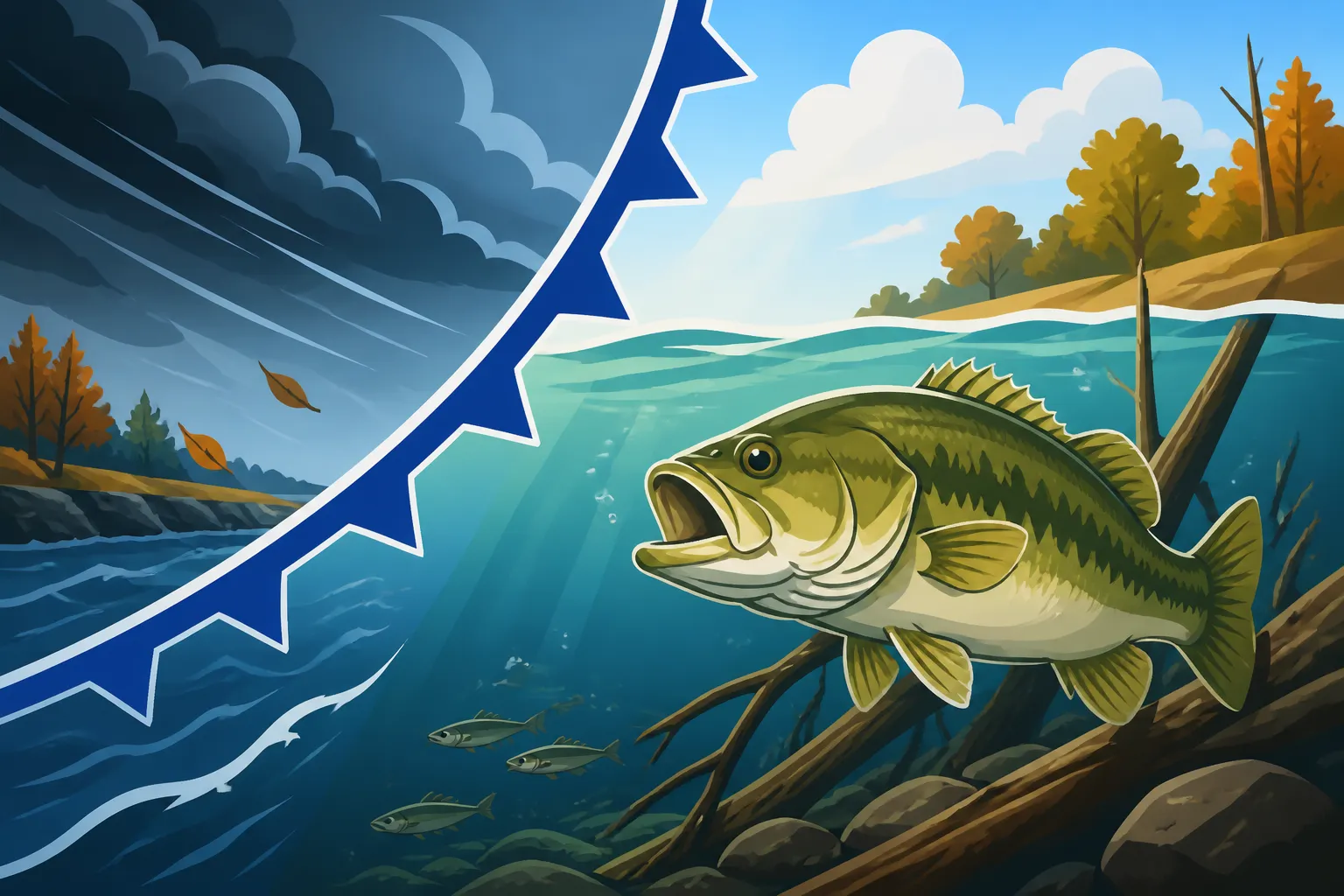
- Bass (Largemouth, Smallmouth, Spotted): These fish will often move to deeper offshore structure, suspending near creek channels, deep points, or the base of bluffs. Finesse techniques like drop-shotting, Ned rigs, or a very slow-rolled jig are excellent choices. They'll hug tight to cover, so pitching small jigs or creature baits into dense brush piles or laydowns in slightly deeper water can also pay off. In areas like Lake Texoma, even smallmouth will seek out rocky deep ledges. Learn more about their behavior in our Oklahoma's Bass Fishing Rules and Limits article.
- Crappie (Black and White): Crappie are particularly sensitive to cold fronts. They'll often pull off shallow cover and move to deeper brush piles, standing timber, or suspend in open water over creek channels. Vertical jigging with tiny jigs (1/32 or 1/16 ounce) tipped with a minnow or small plastic is highly effective. Spider rigging, where multiple rods are deployed from the front of the boat to cover a wider area, can also work. Remember, the retrieve needs to be painstakingly slow, almost imperceptible. For specific techniques, check out How to Find Crappie in Deep Water in Summer.
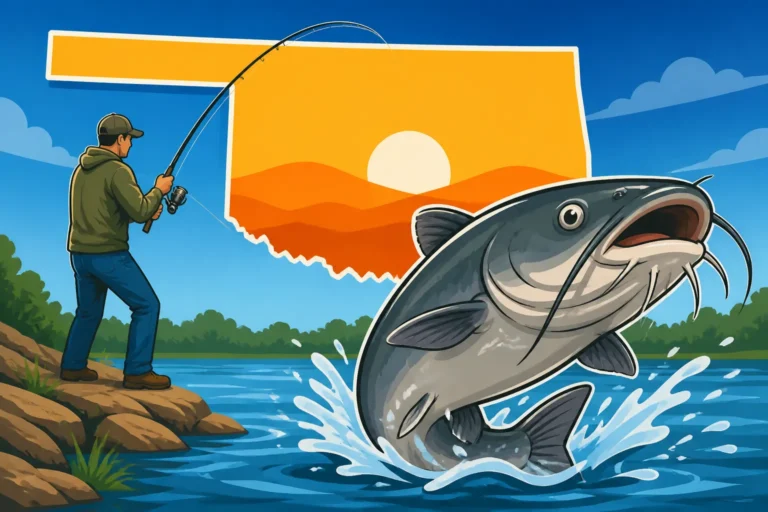
- Catfish (Channel, Blue, Flathead): Catfish, especially blues and channels, will also head for deeper water. They'll congregate in the deepest holes, channels, and humps. They might still feed, but often less aggressively. Bottom-fishing with cut bait, punch bait, or large worms presented directly on the bottom is still the go-to. If you're targeting blue catfish, those deeper channels in Lake Texoma are often key. Patience is absolutely paramount, as they might take a long time to commit to a bait. Dive deeper into Winter Catfishing Techniques in Oklahoma for more tips.
Strategies for Specific Oklahoma Lakes and Rivers
Oklahoma boasts an incredible diversity of fishing environments, and while general cold front rules apply, adapting to the unique characteristics of each body of water will give you an edge.
Lake Texoma and Grand Lake: Deep Water Strategies
These massive reservoirs, Lake Texoma and Grand Lake O' the Cherokees, present unique challenges and opportunities during cold front conditions. Their sheer size means fish have a lot of places to hide, but also offers abundant deep-water structure.
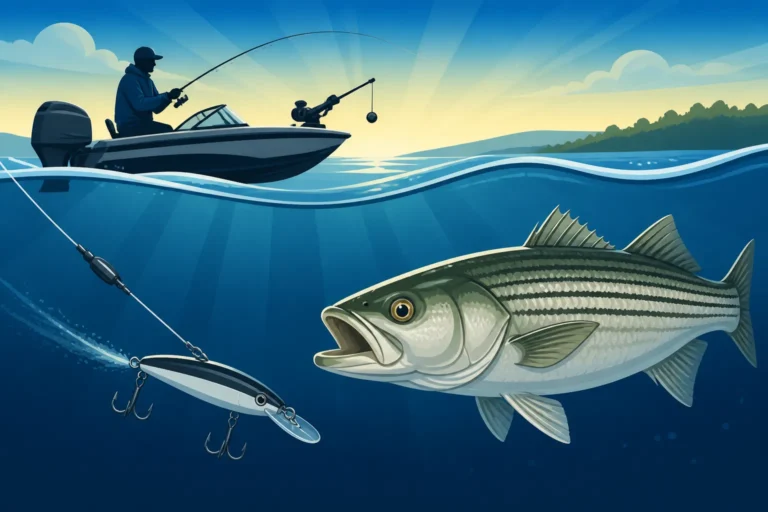
On Lake Texoma, renowned for its striped bass, a cold front can make finding active stripers tough. They'll often move to deeper areas of the main lake, suspending over old river channels or congregating around submerged humps. Trolling deep with umbrella rigs or large crankbaits can sometimes work, but you'll need to slow your speed significantly. Many anglers switch to live bait, fishing shad on downriggers or free-lining them in deep water where schools are marked on sonar. For bass, focus on deep points and ledges, especially those with rock or brush. Our Lake Texoma Fishing Guide for Oklahoma Anglers provides excellent insights into its unique characteristics.
Grand Lake O' the Cherokees, with its clear waters and abundant rock and timber, also requires deep-water tactics. Bass will often retreat to the base of bluff walls, deep rocky points, or submerged timber lines. Jigging spoons, football jigs, or a shaky head rig worked slowly along these deep structures can be effective. Crappie will suspend in the deeper timber and brush piles within creek channels, often 20-30 feet deep. Vertical jigging or tight-lining minnows are prime tactics. Consult the Grand Lake O' the Cherokees Bass Fishing Guide for specific hot spots. The key on both these big lakes is using your electronics to find those subtle depth changes, baitfish, and isolated pieces of cover in deeper water.
Smaller Lakes and Ponds: Finding Warmer Pockets
Smaller lakes and farm ponds in Oklahoma can be even more susceptible to rapid temperature drops due to their limited water volume. However, they also offer opportunities to find subtle temperature refuges that fish will gravitate towards.
Look for areas with deeper holes, especially those with a north-facing bank that receives less direct cold wind. Submerged springs, if present, can also offer slightly warmer water. Thick, submerged vegetation or dense timber can act as insulators, providing fish with cover and a bit more thermal stability. For bass, pitching small jigs or plastic worms into the thickest cover available, even if it's only 5-10 feet deep, can often draw a strike. In ponds, the deepest part of the pond, or areas around old creek beds, will be where fish gather. Don't overlook the sunny side of the pond later in the day, as even a slight warming of the shallow water can draw fish out to feed briefly. Our guide to Best Fishing Spots Near Oklahoma City often highlights smaller, accessible fishing spots where these tactics can be applied. The colder water often clears up, making finesse presentations with light line even more critical.
Here’s a quick overview of key adjustments for cold front fishing:
| Element | Pre-Front Strategy | Post-Front Strategy |
|---|---|---|
| Fish Activity | Aggressive, higher in water column | Lethargic, deep, tight to cover |
| Barometric Pressure | Falling | Rising, High, Stable |
| Water Temperature | Stable to slightly dropping | Rapidly dropping (surface), stable (deep) |
| Location | Shallower, open water, active hunting | Deep structure, dense cover, bottom |
| Lure Size | Standard to large | Small, finesse (e.g., 1/8 oz jigs, Ned rigs) |
| Lure Speed | Fast, aggressive | Ultra-slow, dead stick, prolonged pauses |
| Line Type/Weight | Heavier mono/fluoro/braid (10-20lb+) | Lighter fluoro/braid (6-10lb) with fluoro leader |
| Rod Action | Medium-heavy to heavy casting | Medium-light to medium spinning, fast tip |
| Bait Choice | Crankbaits, spinnerbaits, topwater | Soft plastics, jigs, live bait (minnows, worms) |
| Patience Level | Moderate | Extreme, methodical |
This table highlights the stark contrast in approach needed. The ability to adapt quickly and completely is what separates a successful cold front angler from one who goes home frustrated. Always remember, the fish are still there; you just have to speak their language, which means slowing down, going small, and being relentlessly patient.
Disclaimer
Fishing conditions and regulations in Oklahoma can change. Always check the latest Oklahoma Department of Wildlife Conservation (ODWC) regulations before you head out, and prioritize your safety on the water. This guide is for informational purposes only and does not constitute professional advice.